
REVIEW · OXFORD UNIVERSITY & BLENHEIM PALACE
90 Minute Classic Walking Tour of Oxford
Oxford hits different when you hear the stories. I love the small group of 10, which keeps the pacing friendly and makes it easier to ask questions, and I also love the top sights in under two hours, from Martyrs’ Memorial to Radcliffe Camera and the Bridge of Sighs. One possible drawback: Carfax Tower admission is not included, so you may pay extra if you want to go up for views.
This tour runs daily at 11 am and 2 pm, starting at Martyrs’ Memorial on Magdalen Street. Guides such as Nick, Andrew, and Graham come in strong with story-telling, a good sense of humor, and helpful pointers about where to go next after the walk.
In This Review
- Key Highlights Worth Your Time
- A 90-Minute Oxford Walking Tour That Actually Fits Your Schedule
- Start at Martyrs’ Memorial, Then Let Oxford Explain Itself
- Bodleian Library Area: From Reformation Ashes to Scholarly Power
- Christopher Wren’s 1669 Architecture and the Museum Moment
- High Street and the Bridge of Sighs: Beauty With a Backstory
- Radcliffe Camera: The University Precinct in One Stop
- St Aldates Gate to Christ Church: Views, Gardens, and Name Meanings
- Carfax Tower for Views, Queens Lane for Spooky Stories
- New College on a Plague Pit, Plus a Few More City Corners
- Group Size, Guide Style, and How to Get More From the Walk
- Price and Value: What You Pay For, What You Might Pay Extra
- Who This Tour Fits Best, and Who Might Want a Different Style
- Should You Book This Oxford Walking Tour?
- FAQ
- How long is the 90 Minute Classic Walking Tour of Oxford?
- What does the tour cost?
- Where is the meeting point?
- When does the tour start?
- What group size should I expect?
- Is the tour offered in English?
- Is Carfax Tower admission included?
- Can children join?
- Are dogs or service animals allowed?
- What if the weather is bad or I need to cancel?
Key Highlights Worth Your Time
- Max 10 travelers for a calmer pace: less crowd noise, more time to ask questions.
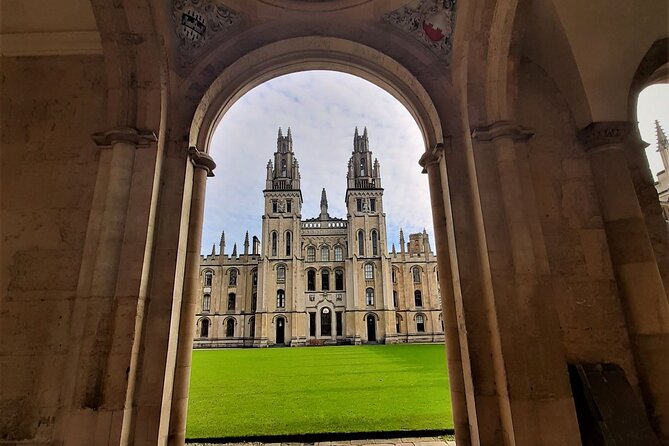
- A tight route of Oxford icons: Bodleian Library area, Radcliffe Camera, High Street, and the Bridge of Sighs.
- Real architectural standouts: Christopher Wren’s first major project (1669) plus major university landmarks.
- Small moments between the big stops: narrow lanes, famous walkways, and the little details that connect it all.
- A guide who adjusts to you: people describe guides tailoring the tour and keeping it engaging, rain or shine.
Other Oxford colleges and Blenheim days
- Oxford University Walking Tour With University Alumni Guide
★ 5.0 · 6,905 reviews - Oxford: University and City Walking Tour with Alumni Guide
★ 4.7 · 4,429 reviews - Oxford: City and University Tour, including college entry
★ 4.5 · 2,243 reviews
A 90-Minute Oxford Walking Tour That Actually Fits Your Schedule
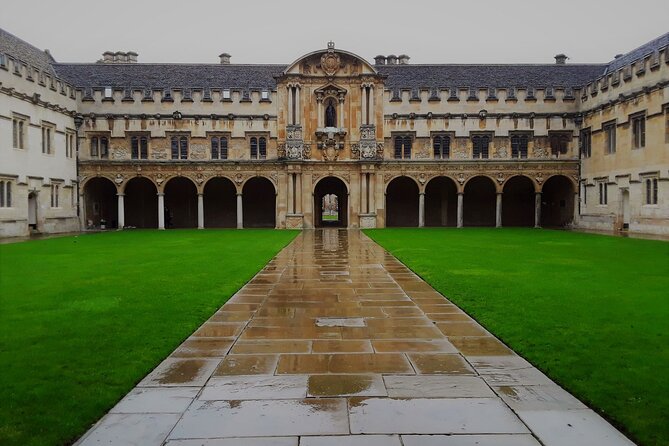
Oxford can feel like a maze on day one. That is why I like a guided loop that hits the key places fast, without turning your afternoon into a full-day project. This tour is designed for short-attention schedules, with a runtime of about 1 hour 30 minutes to 2 hours, and it starts right where you can orient yourself.
The best part is the group size. With a maximum of 10 people, you are not stuck watching the back of someone else’s phone while a crowd presses forward. You get a more natural rhythm, plus a real chance to ask, Why is that building here? Who lived there? What does that street name mean?
The other thing you will appreciate is focus. You are not just taking photos. The guide is connecting Oxford’s university world with church history, architecture, and street-level stories, so the city makes sense as you walk.
Start at Martyrs’ Memorial, Then Let Oxford Explain Itself
Your walk begins at Martyrs’ Memorial at 13 Magdalen St, Oxford OX1 3AE. That is a smart starting point because it sets the tone: Oxford is not only colleges and courtyards. It is also deeply tied to religious conflict, punishment, and belief.
At the meeting point, the tour talks about three Anglican clerics burned at the stake for heresy in the 16th century. Even if you know little about the Reformation era, this framing helps you understand why Oxford’s buildings, institutions, and traditions carry the marks of history.
It is also practical. If you are arriving from central Oxford, this spot is easy to find and is close enough that you can get there with public transportation. The tour ends back at the same meeting point, so you are not forced into a different neighborhood with luggage or aching feet.
Bodleian Library Area: From Reformation Ashes to Scholarly Power
Next, you head to the Bodleian Library area, moving into the Scholastic Quadrangle. This stop is where the story shifts into Oxford University’s research identity.
You learn how the world-famous library grew from the ashes of the Reformation. That matters, because it reframes the Bodleian as more than a pretty landmark. It becomes part of a larger pattern: ideas, institutions, and power surviving political shocks.
You are only on this section for a short time, so treat it like orientation. If you want to spend hours reading plaques later, you can, but the tour’s value is the context that makes those details click.





Christopher Wren’s 1669 Architecture and the Museum Moment
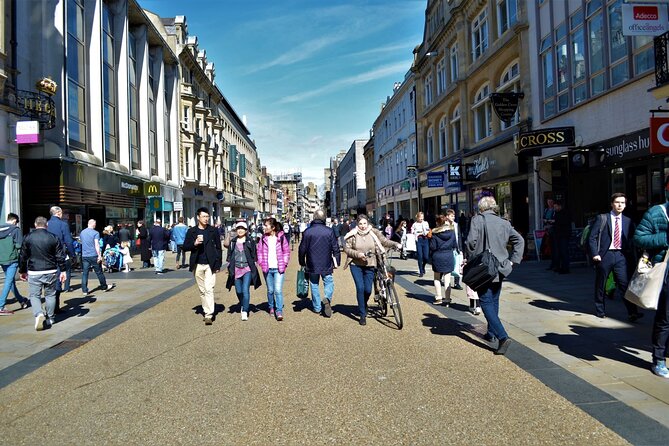
After Bodleian area, the walk focuses on several architecture and culture anchors.
One highlight is the ground-breaking work of architect Christopher Wren’s first major project, built in 1669. Even if you are not an architecture fanatic, this is a strong way to see how Oxford’s buildings blend ambition with function. Wren’s presence also helps you connect Oxford to England’s wider architectural story.
Then you move to what the tour describes as the very first purpose-built public museum. That is a big statement, and it is worth paying attention to how the guide explains why that idea mattered. Public access to knowledge sounds normal today. In earlier centuries, it was a major shift.
High Street and the Bridge of Sighs: Beauty With a Backstory
Oxford’s High Street is a history lesson in motion. The guide points out the colleges you associate with big names like C.S. Lewis, Shelley, Bob Hawke, and Bill Clinton, plus it draws attention to the architecture lining the street over centuries. Even when you cannot enter every college you see, this is where the city begins to feel legible.
Right after that, the tour threads you through Magpie Lane, described as narrow and winding. That contrast, wide famous street to tight lanes, is exactly what makes Oxford walkable. You go from grand facades to human-scale streets without needing to think about directions.
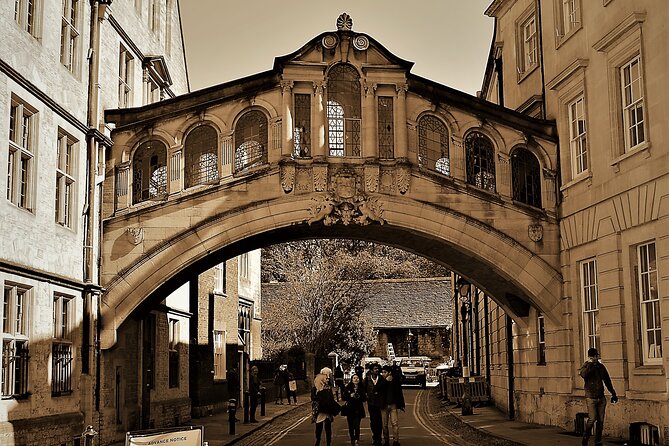
Then you hit the Bridge of Sighs, built in 1913. It adds a romantic note to the route, but it is not just a photo stop. The guide uses it to connect architecture to daily life, and to show how Oxford’s “small stories” can sit beside bigger institutional tales.
Radcliffe Camera: The University Precinct in One Stop
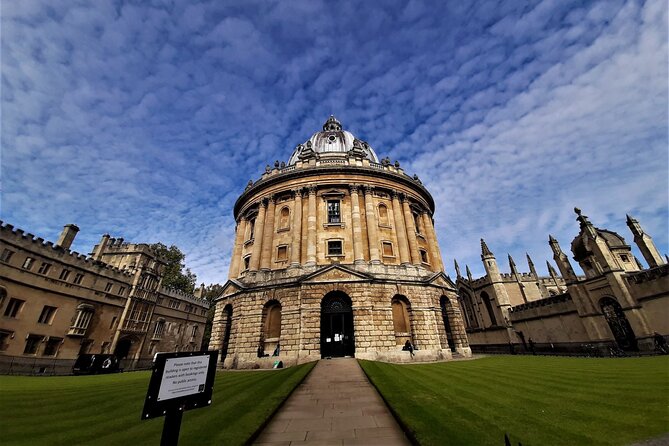
Radcliffe Camera is set in Radcliffe Square, and this is one of those places where even a quick visit feels like a reset button. The tour frames it as the heart of Oxford’s university precinct, and it gives you that feeling of standing in the center of something bigger than the street you walked in on.
You are there for about 10 minutes, which is enough time to look up, notice the surroundings, and get the guide’s connections. The tour emphasizes how this area helped shape the beginning point of Oxford’s university identity, so you will likely walk away with an easier mental map of where everything sits.
If you like to linger, do it after your quick viewing. The tour pace is built to keep the group moving, but you can usually take a few extra moments if you do not block sightlines.
St Aldates Gate to Christ Church: Views, Gardens, and Name Meanings
From Radcliffe Camera, the route continues with a sequence of university-edge landmarks and viewpoints.
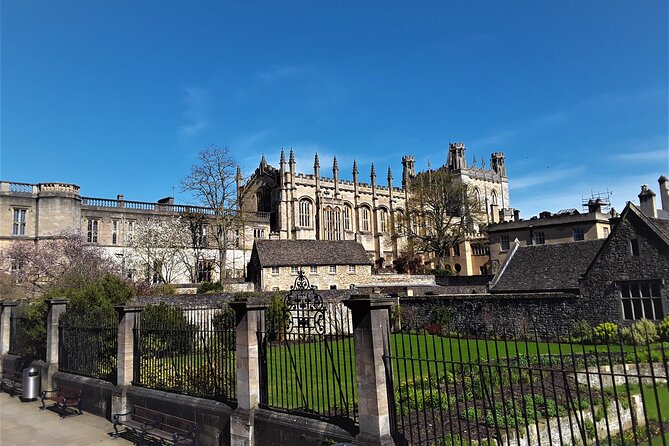
You enter through St Aldates gate and get splendid views of Christ Church and the Meadow Building. Then you pass Merton Field, where James Sadler became the first English aeronaut. That kind of detail is what makes an Oxford walk feel more alive. It is not only scholars and sermons. It is also experimentation and people doing bold things.
You also get moments in Deans Garden and on Dead Man’s Walk, then you exit through the Kissing Gate. Those names are not just cute. They carry the kind of local flavor that helps you feel like you understand how people experience this place in day-to-day life, not only through textbooks.
Even if you have never heard of these spots before, the guide’s job is to make you curious enough to return later without overwhelming you.
Carfax Tower for Views, Queens Lane for Spooky Stories
Now you are back into the cityscape, and the walk leans into landmarks.
Carfax Tower is a 23m-high bell tower, once part of a 12th-century church. The tour notes admission is not included, so if you want to go up for city views, that is on you to plan for. Still, it is a worthwhile option because the tower gives you a perspective that ground-level photos cannot.
From there, you pass Queens College and head through Queens Lane, claimed to be the most haunted site in Oxford. It is a fun shift in tone, and the guide uses it to keep the walk from turning into a single-note lecture.
You also pass St Edmund’s Hall, described as the very last medieval hall in Oxford. That stop matters because it is one of those rare chances to picture how Oxford lived in older centuries, long before the modern visitor route formed.
New College on a Plague Pit, Plus a Few More City Corners
The route finishes with more striking place-based history.
You see the ancient St Peter’s Church in the East, then you continue to New College, which the tour describes as built on a plague pit. That is a heavy fact, but it is also exactly the kind of detail that makes Oxford feel real. The city is not a museum of smooth surfaces. It has layers, including the dark parts.
The guide also takes you through the lovely winding back streets, where the “Oxford vibe” starts to feel personal. You get the best of both worlds: grand buildings and everyday alleys.
Group Size, Guide Style, and How to Get More From the Walk
The most praised aspect of this tour is the guiding. People consistently talk about guides bringing stories to life, using humor, and adjusting the tone to the interests of the group. Names that show up often include Nick and Andrew, plus Graham in at least one account.
If you want to get more out of it, do two simple things:
- Ask at least one question about what you are seeing, not what you heard in advance. Guides can usually connect it to something nearby on the route.
- Tell the guide what you care about most, like architecture, unusual history, or university life. The better the match, the more the tour clicks.
Because the group stays small, you can actually have a back-and-forth conversation, not just listen and hope you are heard.
Also, keep in mind the tour is outdoors. It requires good weather. If you are planning for a rainy day, a skilled guide makes a big difference in how fun the walk stays.
Price and Value: What You Pay For, What You Might Pay Extra
The price is $38.82 per person. For Oxford, that is a practical spend because you are paying for orientation plus interpretation. You are not just buying a seat; you are buying help turning a pile of sights into a story you can remember.
Most major stops listed here have admission marked as free, including Martyrs’ Memorial, Bodleian Library, and Radcliffe Camera. That keeps the cost predictable.
The main exception mentioned in the tour details is Carfax Tower, where admission is not included. So if views from the top are a must for you, expect a little extra expense. It is not a dealbreaker, it just means you should decide ahead of time if you are climbing.
Who This Tour Fits Best, and Who Might Want a Different Style
This tour is ideal if you:
- Are visiting Oxford for the first time and want a fast, structured overview
- Have limited time and want the key sights grouped into one plan
- Prefer a small-group walk where you can ask questions and keep a conversational pace
- Like seeing how architecture and institutions connect to ordinary streets
It is also a decent choice for families with older kids, since children are welcome but the tour is not suitable for infants and children under seven. Service animals are allowed, and the walk is positioned as easy for most travelers to participate.
Two groups should think twice:
- Dog owners, because dogs are not allowed on university and college property
- Anyone who wants lots of extended interior time, since this is a walking tour built around outdoor viewing and quick stops
Should You Book This Oxford Walking Tour?
Yes, you should book it if your goal is to get your bearings fast and understand why Oxford looks the way it does. The small group size, the short runtime, and the mix of major university landmarks plus street-level stories make it a smart first step.
Skip it or plan around it if you cannot manage extra stairs for tower views, you are traveling with a dog, or you are traveling with very young children. And if weather is shaky, pick a time slot you can shift easily in your schedule.
If you want Oxford to make sense from day one, this is one of the best-value ways to do it, especially when you are trying to decide where to go next after the walk.
FAQ
How long is the 90 Minute Classic Walking Tour of Oxford?
It runs for about 1 hour 30 minutes to 2 hours.
What does the tour cost?
The price is $38.82 per person.
Where is the meeting point?
You meet at Martyrs’ Memorial, 13 Magdalen St, Oxford OX1 3AE, UK. The tour ends back at the meeting point.
When does the tour start?
Tours commence at 11 am and 2 pm daily.
What group size should I expect?
The tour has a maximum of 10 travelers.
Is the tour offered in English?
Yes, it is offered in English.
Is Carfax Tower admission included?
No. Carfax Tower admission is not included, though you can see it as part of the route.
Can children join?
Children are welcome, but the tour is not suitable for infants and children under seven years.
Are dogs or service animals allowed?
Dogs are not allowed on university and college property. Service animals are allowed.
What if the weather is bad or I need to cancel?
The experience requires good weather. If it is canceled due to poor weather, you will be offered a different date or a full refund. Free cancellation is available up to 24 hours in advance for a full refund.
Oxford Colleges and Blenheim
- Oxford University Walking Tour With University Alumni Guide★ 5.0 · 6,905 reviews
- Oxford: University and City Walking Tour with Alumni Guide★ 4.7 · 4,429 reviews
- Oxford: City and University Tour, including college entry★ 4.5 · 2,243 reviews
- Oxford: Harry Potter Walking Tour Including New College★ 4.6 · 1,446 reviews
Fresh off the Oxford review pile



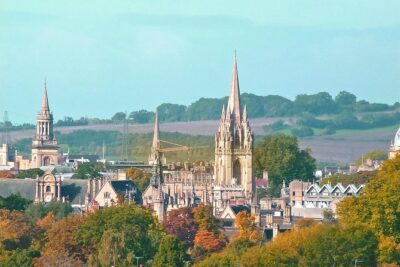


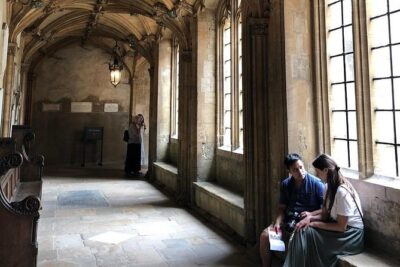

Oxford University & Blenheim Palace, compared.
 ★ 5.0Oxford University Walking Tour With University Alumni GuideFrom $416,905 reviews
 ★ 4.4London: Full-Day Windsor, Stonehenge, and Oxford TourFrom $1205,368 reviews
 ★ 4.5Windsor Castle, Stonehenge, and Oxford Day Trip from LondonFrom $1235,292 reviews
 ★ 4.7London: Harry Potter Studio Tour and Oxford Day TripFrom $1745,098 reviews
 ★ 4.7Oxford: University and City Walking Tour with Alumni GuideFrom $404,429 reviews
 ★ 4.7From London: Cotswolds and Oxford Guided Day-TripFrom $1063,720 reviews
 ★ 4.5Oxford, Stratford-upon-Avon, Cotswolds & Warwick Castle Day TripFrom $1092,943 reviews
★ 4.5Windsor Castle, Stonehenge, and Oxford Day Trip from LondonFrom $1232,474 reviews
★ 4.5Oxford, Stratford-upon-Avon, Cotswolds & Warwick Castle Day TripFrom $1092,943 reviews
★ 4.5Windsor Castle, Stonehenge, and Oxford Day Trip from LondonFrom $1232,474 reviews
Also filed under