
REVIEW · LIVERPOOL & THE MERSEY WATERFRONT
A Walk Through Time: History of Liverpool Walking Tour
Liverpool’s waterfront tells stories fast. In under two hours, you’ll follow a guided history route from the Liver Building to the docks, with Three Graces moments built in.
It is the kind of walk that helps you make sense of why Liverpool looks the way it does, from medieval street corners to the ports that helped reshape the world.
I also like the way the guide turns buildings into a timeline, with local historian storytelling that connects each stop to the next. You are not just looking at landmarks, you are learning how commerce, shipping, and city growth shaped them.
One thing to weigh, it is outdoors-focused and depends on good weather, so you will want to dress for wind and you should expect a brisk walking pace.
In This Review
- Key highlights you will feel right away
- Royal Liver Building and the Three Graces: your tour’s opening chapter
- Medieval Liverpool in plain view: St Nicholas Gardens to Old Hall Street
- Liverpool Town Hall and Castle Street: Georgian prestige and port street logic
- Queen Victoria Monument to Liverpool ONE: from castle era to modern city framing
- The Old Dock and Royal Albert Dock: why the port era changed everything
- Ending back at the waterfront: finishing at Queen Victoria Monument and the Three Graces
- Price and time value: what $27.74 really buys you
- Weather, walking pace, and what to wear so you enjoy it
- Who this walk is perfect for, and who should pick another option
- Should you book A Walk Through Time: History of Liverpool walking tour?
- FAQ
- How long is the A Walk Through Time walking tour?
- Where do I meet the tour, and where does it end?
- What language is the tour offered in?
- Is there a mobile ticket?
- Are admission tickets included for every stop?
- How large is the group?
- What weather does the tour require?
- Are service animals allowed?
- What is the cancellation window for a full refund?
- If the tour is canceled due to poor weather, what happens?
Key highlights you will feel right away
- A nearly two-hour “time walk” that hits the city’s waterfront landmarks in a tight, easy arc
- Historian guide energy, including guide names you may hear like John or Julio, with plenty of room for questions
- Medieval roots in the center, including the St. Nicholas area tied to Liverpool’s early origins
- Dock history with real stakes, from an early wet dock to the major 19th-century port era
- Small group size with a maximum of 40 people, so you get more than just a megaphone talk
More of Liverpool, docks included
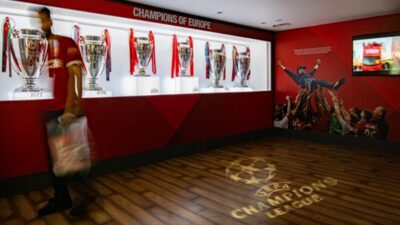
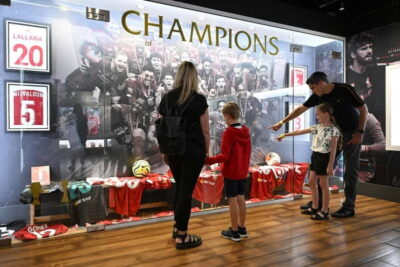
- Liverpool: Liverpool Football Club Museum and Stadium Tour
★ 4.8 · 10,764 reviews - Liverpool: “Blue Route” – City & Beatles Tour
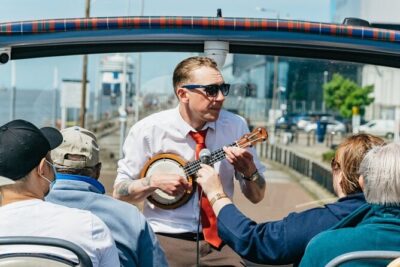
★ 5.0 · 8,562 reviews - Liverpool: City & Beatles Tour with Live Guide & Live Music
★ 4.8 · 5,249 reviews
Royal Liver Building and the Three Graces: your tour’s opening chapter
The walk begins at the Royal Liver Building on Pier Head, right by the water. This is where you get the intro to the tour and a first look at Liverpool’s iconic Three Graces.
This opening matters because it frames what you will keep seeing. The buildings along the waterfront were never random decorations. They grew out of Liverpool’s trade power and civic pride, so once you learn the story here, the rest of the route clicks faster.
You should also know the practical bit: the stop includes an introduction, but admission is not included. In other words, treat this first stage as orientation and exterior viewing. You’ll get the best value if you arrive ready to spot details, not hoping for a paid entry experience at that stop.
If you like photo moments, you’re in the right place. Even with a tight itinerary, the opening at Pier Head sets you up with memorable landmark views that you will connect to the centuries ahead.
Medieval Liverpool in plain view: St Nicholas Gardens to Old Hall Street
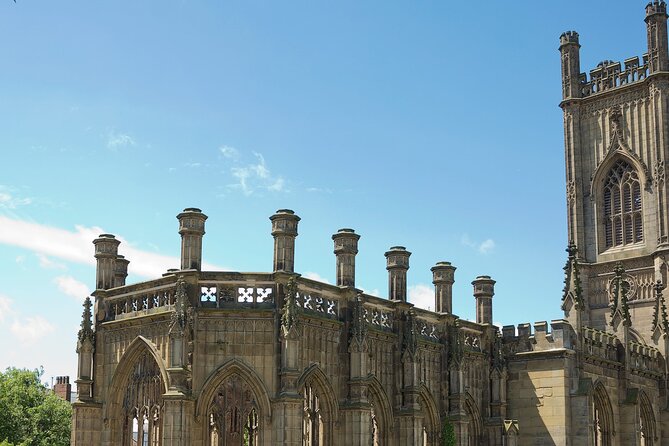
Next you cross Liverpool Strand toward the area tied to the oldest building in Liverpool city centre, St. Nicholas Church. The guide shares the medieval origins that connect the city’s start to the sea, including the mention of Liverpool’s creation dating to 1207 and evidence from the site itself.
This is a smart stop for first-timers because it grounds the tour. You stop thinking of Liverpool as a single era, pop culture and docks included, and you start seeing it as a place with deep roots. The name St. Nicholas points to the sea patron, which fits Liverpool’s trading story like a key fits a lock.
Then the route moves down Old Hall Street. Here you are looking at the old town layout and the buildings associated with civic life after Liverpool received its town charter. The tour also points you toward landmark Grade I listed buildings and the Cotton Exchange area, described as the center where global cotton trade took place, helping Liverpool grow by the late 18th century.
A nice touch is that the focus stays practical. The guide keeps explaining what these places meant for trade and city growth, not just what they look like. It also sets up a bigger theme you keep hearing on this walk: Liverpool rose by moving goods fast, and that shaped everything from streets to structures.
Both of these stops are free to visit, which is a big part of the tour value. You can stay focused on learning, not on budgeting separate entrances for early segments.
Liverpool Town Hall and Castle Street: Georgian prestige and port street logic
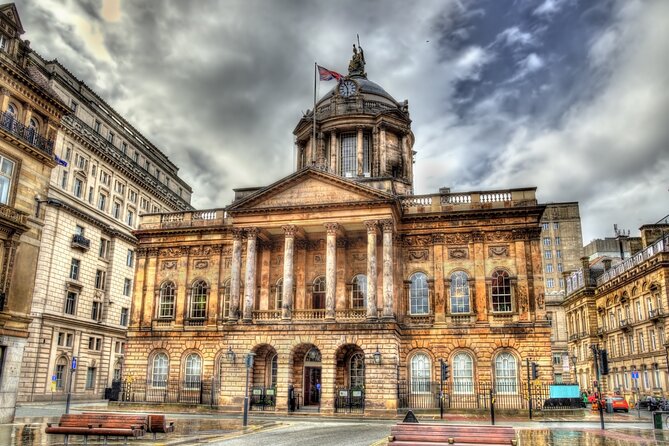
After the medieval layers, you shift into Georgian and early modern Liverpool. The tour heads to Liverpool Town Hall, built in 1749, described as the finest surviving Georgian building in the UK. This stop is all about how Liverpool became a global port and commerce hub.
Again, it is an orientation stop with an emphasis on understanding. The building is important, but the tour note says admission ticket is not included here. If you are hoping to spend extra time inside, plan for that separately.
From there you walk to Castle Street. This is one of those streets where the architecture helps you read the city’s evolution. The guide frames the area as a literal time walk, and you’ll learn about Liverpool Castle and why Castle Street became so important to the city’s story.
One tip: Castle Street is also a good stretch to practice “slow looking.” The walking pace is fairly steady, so if you want to catch architectural details, take a few seconds at natural pauses to scan building shapes, materials, and street alignment. That’s where the tour’s explanation sticks.
This portion is where the tour starts feeling like it has momentum. You’re moving from early trade foundations into the era when Liverpool’s port power really mattered. If you enjoy seeing how streets and civic buildings connect, you’re going to like this section.



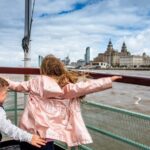
Queen Victoria Monument to Liverpool ONE: from castle era to modern city framing
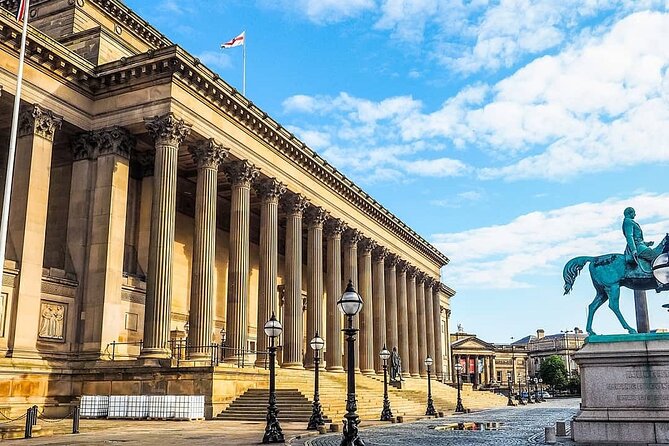
The tour then reaches the Queen Victoria Monument. Here the guide connects Liverpool Castle and the city’s development toward becoming one of the world’s largest ports for global trade by 1800. It’s a short stop, but it helps tie earlier centuries to the big port era.
Then you move into modern Liverpool ONE. This part shifts gears from docks and old streets to today’s city layout. You get a guided tour of Liverpool ONE and its shops and attractions, still kept to a time-boxed segment.
This blend is useful if you are trying to plan the rest of your day. You get both the historical explanation and a quick sense of where the modern energy of the city lives, without turning the whole tour into a shopping detour.
Also, most people appreciate this: the transition from waterfront history to a modern commercial district tells you how Liverpool has continued to use its central space. Trade may look different now, but the city still organizes itself around what brings people in.
The Old Dock and Royal Albert Dock: why the port era changed everything
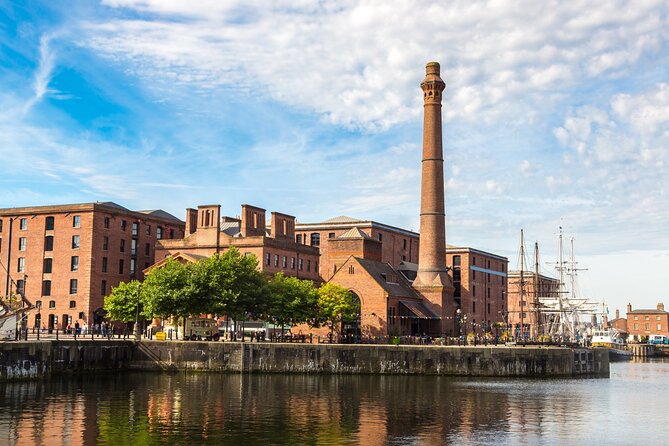
The heart of the tour is the dock story, and it starts at the Old Dock site. You get an exclusive guided history tour here, focused on the first commercial wet dock on the planet built in 1715. The guide explains how this dock helped Liverpool become a more efficient port and set a standard for what followed.
This is the section where the tour really earns its price. Dock history can feel abstract if all you know is ships and warehouses. But when the guide explains the mechanics and timing, the port boom stops being a vague label and becomes a cause-and-effect story.
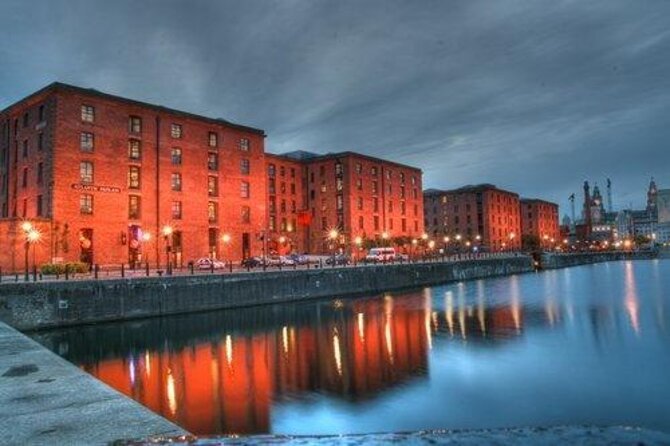
The walk continues to Royal Albert Dock Liverpool, built in 1846. Here you learn about the 19th-century center of Liverpool’s commerce, plus Liverpool’s involvement in the First and Second World Wars. That is important context because it shows how the docks were not only economic engines, they were also part of major global events.
Both of these stops are described as admission free within the tour. So you can keep your spending predictable while still getting a clear, guided understanding of why Liverpool mattered.
If you care about darker chapters of maritime trade, you should know the tour includes topics connected to Atlantic trade, and that can include references to the transatlantic slave trade. The guide keeps it within the larger story of commerce and port growth.
Ending back at the waterfront: finishing at Queen Victoria Monument and the Three Graces
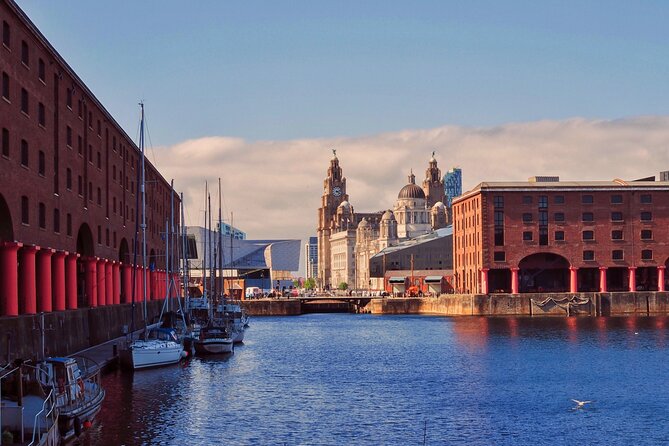
The tour reaches its final destination back at the Three Graces with a closing look at the waterfront story. The end point is Queen Victoria Monument at the bottom of Castle Street, a very practical location if you want to keep exploring on your own afterward.
This matters for planning. You get a strong arc, but you are not stuck far from the next thing. You can branch out into nearby streets, the shopping areas around Liverpool ONE, or just stay in waterfront mode and keep connecting landmarks to what you learned.
The tour’s structure also helps you remember it. It starts with landmark identity, then moves backward and forward through medieval to Georgian to dock power, then lands on the waterfront visual you started with. That “bookends” style learning is one reason the walk works so well as an orientation tour.
Price and time value: what $27.74 really buys you
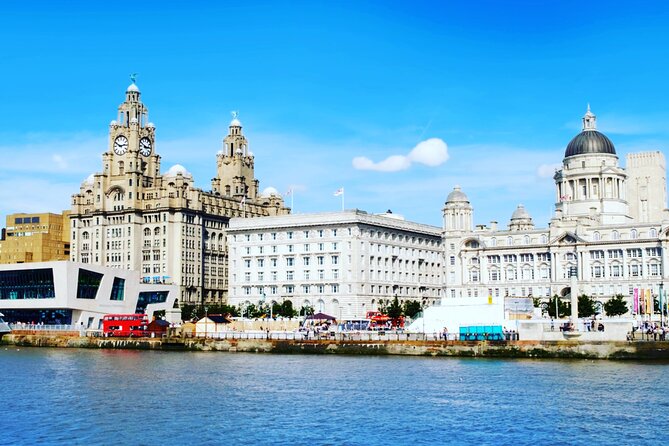
At $27.74 per person, the value comes from the density of stops and the guide format. You get about 1 hour 50 minutes and multiple major landmark areas, with a historian-style guide doing the heavy lifting of connecting scenes and centuries.
The split on admissions is also worth understanding:
- Royal Liver Building and Liverpool Town Hall are called out as not including admission tickets.
- The other listed stops are free within the tour context.
So if you only want exterior viewing and guided interpretation, this pricing is strong. If you are trying to add inside-the-building time at the two paid stops, you might need to budget extra depending on what you choose to do at those locations.
One more value point: the tour caps at 40 travelers. Smaller groups usually mean you can hear the guide better and ask questions more easily, especially at busy waterfront stretches.
Finally, the tour is described as offered in English with a mobile ticket. That is low-friction travel. No extra admin stress means more time focused on the walk itself.
Weather, walking pace, and what to wear so you enjoy it
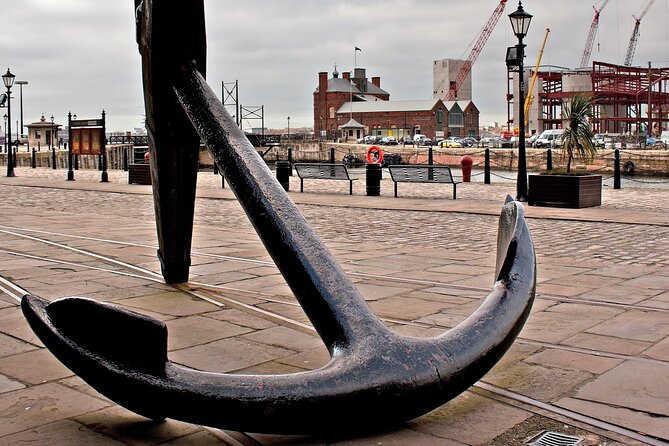
This experience requires good weather. That is not just a fine print detail. A lot of the stops sit on or near the waterfront, where wind can show up fast.
If you are visiting in cooler months, I’d treat this like a jacket day. One practical lesson from the route experience is that river wind can be unpleasant, so bring something warm and comfortable. Comfortable shoes are also a must since you are moving through multiple stops in under two hours.
Pace is another consideration. The itinerary moves through many locations with short segments. The guide covers a lot, and on some visits the pace can feel quick. If you want slower, museum-style reading time, you may prefer adding a separate stop later. Use this walk to build understanding first, then zoom in where you care most.
Who this walk is perfect for, and who should pick another option
This tour is ideal if you want:
- A fast orientation to Liverpool’s layout and waterfront story
- A guide who connects architecture to commerce, not just dates
- A compact way to cover medieval roots, Georgian civic buildings, and dock-era power
- A history framing that touches trade in the Atlantic world
It may not be your best match if you:
- Want lots of time inside buildings during the tour itself
- Prefer a slow, lingering pace with fewer stops
- Are visiting on a day where you cannot handle outdoor walking
Should you book A Walk Through Time: History of Liverpool walking tour?
Yes, if you want a guided overview that helps Liverpool make sense quickly. This is the type of walk that turns scattered sights into a coherent story, especially around the waterfront and docks.
Book it if you value a local historian guide and want to understand why the city rose to global importance through trade and port infrastructure. The stop sequence is built for people who want momentum without feeling rushed through history.
Skip it only if you are seeking deep museum time inside major buildings during the tour window, or if weather conditions are likely to make outdoor walking miserable.
FAQ
How long is the A Walk Through Time walking tour?
The tour lasts about 1 hour 50 minutes.
Where do I meet the tour, and where does it end?
It starts at Liver Building, Pier Head, Liverpool L3 1HU, UK, and ends at Queen Victoria Monument, One Derby Square, James St, Liverpool L2 1AB, UK.
What language is the tour offered in?
The tour is offered in English.
Is there a mobile ticket?
Yes, the tour uses a mobile ticket.
Are admission tickets included for every stop?
Admission is not included for Royal Liver Building and Liverpool Town Hall. The other listed stops are marked as free.
How large is the group?
The tour has a maximum of 40 travelers.
What weather does the tour require?
This experience requires good weather.
Are service animals allowed?
Yes, service animals are allowed.
What is the cancellation window for a full refund?
You can cancel up to 24 hours in advance for a full refund.
If the tour is canceled due to poor weather, what happens?
If canceled due to poor weather, you will be offered a different date or a full refund.
Liverpool and the Waterfront
- Liverpool: Liverpool Football Club Museum and Stadium Tour★ 4.8 · 10,764 reviews
- Liverpool: “Blue Route” – City & Beatles Tour★ 5.0 · 8,562 reviews
- Liverpool: City & Beatles Tour with Live Guide & Live Music★ 4.8 · 5,249 reviews
- Liverpool: The Beatles Story Ticket★ 4.7 · 4,197 reviews
Fresh off the Liverpool review pile





Liverpool & the Mersey Waterfront, compared.
 ★ 4.8Liverpool: Liverpool Football Club Museum and Stadium TourFrom $3310,764 reviews
 ★ 5.0Liverpool: “Blue Route” – City & Beatles TourFrom $278,562 reviews
 ★ 4.8Liverpool: City & Beatles Tour with Live Guide & Live MusicFrom $295,249 reviews
 ★ 4.7Liverpool: The Beatles Story TicketFrom $264,197 reviews
 ★ 4.4Liverpool: Sightseeing River Cruise on the Mersey RiverFrom $173,427 reviews
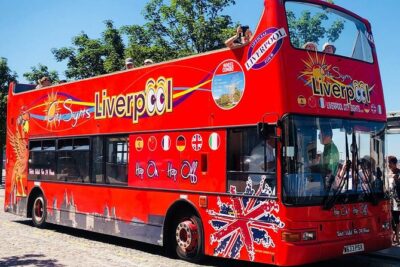 ★ 4.5Liverpool City Sights Hop On Hop Off City Tour – 24hr TicketFrom $192,555 reviews
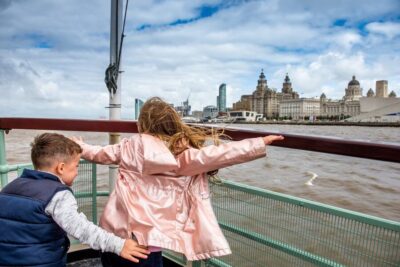 ★ 4.5Liverpool: River Cruise and Hop-On Hop-Off Bus TourFrom $331,864 reviews
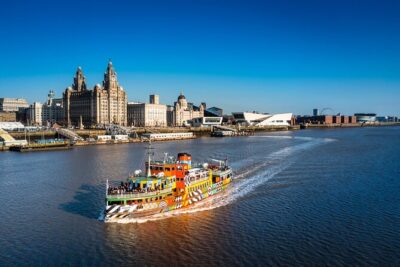 ★ 4.0Liverpool: 50-Minute Mersey River CruiseFrom $171,232 reviews
Also filed under