
REVIEW · BLACK CAB & TAXI TOURS
Black Taxi Tour Of London
London snaps into focus fast. This private black cab experience lets you steer the day, then settle into spacious taxis with big windows and a glazed roof for sightseeing. I like how it stays customized to what you actually want to see, and I like that you avoid the shuffle of waiting around with bigger groups. One thing to consider: at about four hours, you cannot do a deep museum day, so you’ll want to prioritize the sights you most care about.
Pickup helps too. You can meet near Trafalgar Square, and there’s hotel pickup (plus airport and port options when available). In past tours, drivers like Morris, Bryan, Dave, Boris, Brian, Tony, and Sheldon have guided groups with a “tell me your interests” approach, which is exactly what makes this format feel personal instead of canned.
In This Review
- Key reasons this tour is worth your time
- Private black cab touring: how you actually get a custom London day
- Price and value: what $603.08 per group buys you
- Getting started near Trafalgar Square, and how timing affects the day
- Westminster highlights by taxi: Apsley House, Wellington Arch, Parliament, Big Ben
- Apsley House and the Wellington Arch across Constitution Hill
- Westminster’s royal buildings: Westminster Hall and what survived destruction
- The Houses of Parliament: Pugin and Barry rebuilt after 1834
- Big Ben, now officially the Elizabeth Tower
- Downing Street: Numbers 10 and 11
- Westminster Abbey: where coronations and royal weddings have played out
- Thames bridges and river memorials: London Bridge, Tower Bridge, Albert Bridge
- London Bridge, the long-inhabited old one, and the modern version
- Tower Bridge: bascule plus suspension, built 1886 to 1894
- Albert Bridge and the “break step” sign
- Victoria Embankment to St Paul’s Cathedral: from river ceremony to city power
- Victoria Embankment and Joseph Bazalgette’s engineering
- St Paul’s Cathedral: Wren’s dome and the spot where fires changed everything
- What your driver does that a map never tells you
- Quick sanity check: who this tour is for
- Should you book this black taxi tour of London?
- FAQ
- How long is the Black Taxi Tour of London?
- How many people can fit in one group?
- Is the tour private?
- What language is the tour offered in?
- Is pickup included?
- Where is the meeting point?
- Does the tour end where it starts?
- Can you request stops or customize the route?
- Do you get a mobile ticket?
- Are service animals allowed?
Key reasons this tour is worth your time
- Black cab comfort for viewing: big windows and a glazed roof make it easy to photograph and point.
- True customization in a tight timeline: request stops, adjust priorities, or let the driver choose.
- A route that tells London’s story: Westminster power, Thames landmarks, then the City and St Paul’s.
- Less waiting, more seeing: you’re not loading and unloading like a bus tour.
- Family and mobility friendly in practice: guides have helped families with kids and mobility needs get comfortable and moving.
More tours run from the back of a cab
- The Premier Classic London: Private 4-Hour Tour in a Black Cab
★ 5.0 · 2,737 reviews - London Sightseeing Private Black Cab Tour with Hotel Pick Up
★ 5.0 · 917 reviews - Rock Cab Tours presents Music Legends Private Taxi Tour of London
★ 5.0 · 637 reviews
Private black cab touring: how you actually get a custom London day
This is a private tour, which sounds obvious until you feel the difference. In a normal group tour, you follow a schedule. Here, your driver can respond to what your group cares about in real time.
You can request stops, ask for specific themes, and shift the plan if you realize you want more photos at one place and less time at another. That flexibility matters because London’s “highlights” are scattered. With one flat fare for groups up to six, you can spend the time where it counts instead of wasting minutes coordinating with strangers.
The black cab itself is part of the win. The taxis are described as spacious and accessible, and the big windows plus glazed roof give you a built-in viewing setup. Even when traffic slows you down, you still get something useful out of the ride.
And for many visitors, the biggest surprise is how quickly the city stops feeling overwhelming. One driver can connect the dots: rulers and government, why bridges look the way they do, and what you’re seeing before it turns into just “another famous building.”
Price and value: what $603.08 per group buys you
The price is listed as $603.08 per group (up to six) for about four hours. That’s not “cheap,” but it often works out better than you’d expect if you’re traveling as a small group or family.
Here’s why this can be good value:
- You’re paying per group, not per head. Six people splitting a group fare makes the per-person cost far more reasonable than per-person sightseeing.
- You’re paying for decision-making help. Your driver’s job is not just to drive. It’s to shape the day so you see the right mix of Westminster, the Thames, and the City.
- You’re buying time efficiency. Four hours is short. Private transport helps you use those hours on landmarks instead of transit stress.
Is it the best deal for a solo traveler? Probably not. But if you’re two to six people, especially with kids or mixed interests, this is the kind of spend that can protect your vacation from “we did not plan enough” regret.
Getting started near Trafalgar Square, and how timing affects the day
The tour begins back at the meeting point on Embankment Place near the river (WC2N). Pickup is offered within a five-mile radius of Trafalgar Square for free, and pickup from a hotel or Airbnb is supported. You can also arrange airport or port collections for an extra charge, subject to availability, with possible parking charges.
A general starting time is 10:00 AM, and tours run during a window listed from 9:00 AM to 11:00 AM. That timing matters because London looks different at different hours, and some photo spots work better when you’re not fighting peak crowds.
If you’re on a tight schedule, like an early start before a cruise day, this “start in the morning and cover big landmarks fast” approach can be a lifesaver. The tour length is about four hours, so you’ll likely end the day with clear bearings for the rest of your trip.




Westminster highlights by taxi: Apsley House, Wellington Arch, Parliament, Big Ben
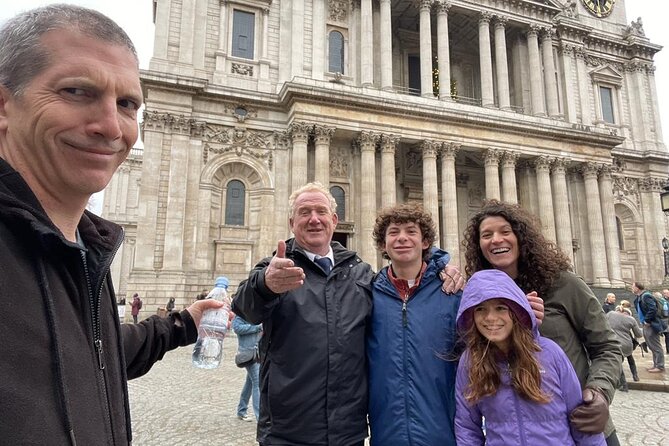
Your day begins in the Westminster orbit, where power and spectacle sit side by side.
Apsley House and the Wellington Arch across Constitution Hill
Apsley House is tied to the Duke of Wellington, dating back to 1825, with the famous address of Number One London. The guide’s explanation adds texture fast: you’re not just seeing a grand facade, you’re hearing how the area connected to military fame and national identity.
Opposite, you’ll spot Wellington Arch and the story behind its moving parts. It originally faced Apsley House, then shifted to become an outer gateway for Buckingham Palace. Today, a smaller Wellington statue stands where the arch once faced, while the larger quadriga statue sits on top.
If you enjoy sculpture and symbolism, this is a strong stop. The centerpiece features Nike, the Goddess of Victory, riding the chariot. It’s one of the largest equestrian statues in Europe, so even if you are not a “statues person,” it’s hard to miss.
Why I like this stop for first-timers: it gives context before the big political buildings. You learn the cast of characters early.
Westminster’s royal buildings: Westminster Hall and what survived destruction
Next comes the area around Parliament, with the kind of history that explains why London’s oldest layers feel so close to its modern identity.
You’ll hear that the original buildings here date back to the 11th century under William the Conqueror. The palace burned in 1512, then was destroyed again in 1834. Even after that, key pieces remained, including the Crypt, the Jewel Tower, and especially Westminster Hall, which dates to 1097 under King William Rufus.
Westminster Hall is one of those “you can feel the age” places. It’s a reminder that before Parliament looked like today, these grounds still held a political center that mattered.
The Houses of Parliament: Pugin and Barry rebuilt after 1834
The Parliament buildings you see now were rebuilt from 1834 to 1870 by Augustus Pugin and Charles Barry. That detail matters because it gives you a lens for what you’re looking at: this is not random architecture. It’s a specific rebuilding era with specific designers.
Seeing it by taxi also helps because you’re not boxed into one angle. You can look, turn, and keep going.
Big Ben, now officially the Elizabeth Tower
No London intro feels complete without the clock tower. You’ll hear the nickname Big Ben used for the bell, clock, and tower together, while the official name is the Elizabeth Tower, renamed in 2012 to commemorate Queen Elizabeth II’s Diamond Jubilee.
The tower opened in 1859, designed by Augustus Pugin in a Gothic Revival style. Even if you’ve seen photos, it lands differently in person, especially when your driver connects it to the broader story of Westminster’s rebuild and royal symbolism.
Downing Street: Numbers 10 and 11
Downing Street is the Prime Minister’s official residence at number 10, and the Chancellor of the Exchequer at number 11. It was built in 1680 by Sir George Downing and sits between two major reference points for visitors: near Whitehall and also toward Trafalgar Square.
You won’t get an up-close street tour here, but that’s not the point. The value is in the framing, so when you see the street, you understand why it’s famous and how the government functions sit literally next door to the landmarks you’ve been photographing.
Practical tip: if your group includes kids, this is a good set of stops to keep their interest. The stories are clear, and the architecture is big enough to stay engaging.
Westminster Abbey: where coronations and royal weddings have played out
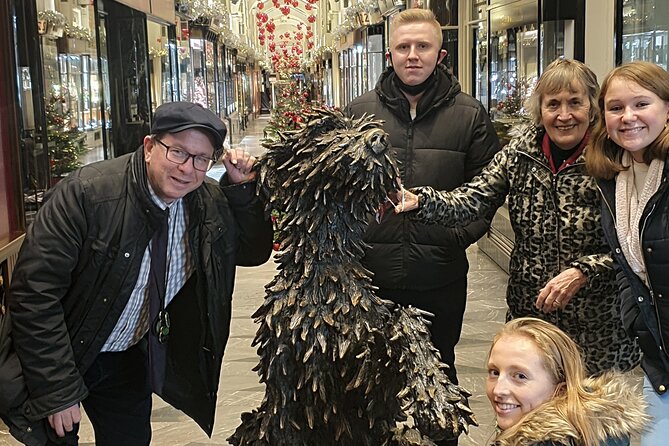
Westminster Abbey is often thought of as a single sight, but on this tour it works like a mini history course.
It’s formally known as the Collegiate Church of Saint Peter and is mainly Gothic in design. You’ll hear that it’s one of the UK’s most notable religious buildings and, crucially, the place where every coronation has taken place since William the Conqueror. It has also hosted sixteen royal weddings.
Then there is the “who is buried here” angle, which gives the stop a gravity beyond tourism photos. The Abbey is a Grade One listed building and a World Heritage Site, founded in 960 AD.
The current guide version of the Abbey includes alterations in the 13th century under King Henry III (earning him the nickname Henry the Builder) and rebuilding during King Henry VIII’s reign in 1517. The two towers you see today were added in the 18th century by Nicholas Hawksmoor, working under the influence of Christopher Wren’s circle.
Why this stop works on a taxi tour: your driver’s commentary stitches the facts together. You see a famous building, but you also leave knowing what makes it central to English and later British royal tradition.
Thames bridges and river memorials: London Bridge, Tower Bridge, Albert Bridge
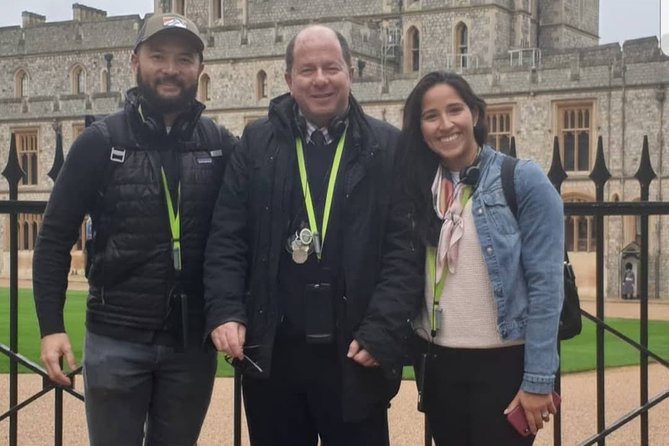
The tour then shifts from government and royalty to the river, where London’s identity becomes visual.
London Bridge, the long-inhabited old one, and the modern version
You’ll learn that London Bridge has deep roots. Historical bridges here date back to the Roman era, when wooden bridges crossed the Thames.
The old London Bridge, built between 1176 and 1209, was the first stone bridge across the Thames. It was also the longest inhabited bridge in Europe, measuring almost 906 feet, and it hosted shops, houses, restaurants, and even a chapel. Today’s London Bridge is the third (stone) London Bridge.
This kind of context changes your view. You stop seeing a bridge as a background object, and start seeing it as a place where commerce and daily life once lived.
Tower Bridge: bascule plus suspension, built 1886 to 1894
Tower Bridge was built between 1886 and 1894. It is a combined bascule and suspension bridge, and the word bascule refers to a see-saw or balance idea.
You’ll also hear Tower Bridge described as the Wonder Bridge, which fits because the engineering is part of its appeal. Taxi viewing works well here because you can keep the landmark in your camera frame while your driver explains what makes it different.
Albert Bridge and the “break step” sign
Albert Bridge connects Chelsea to Battersea and is known for spectacular river lighting used in films. It also has a story you do not forget once you hear it: it was once unstable, which led to a sign on the foot of the north side telling troops to break step.
It’s still known as The Trembling Lady. That single phrase makes a bridge story feel human.
Victoria Embankment to St Paul’s Cathedral: from river ceremony to city power
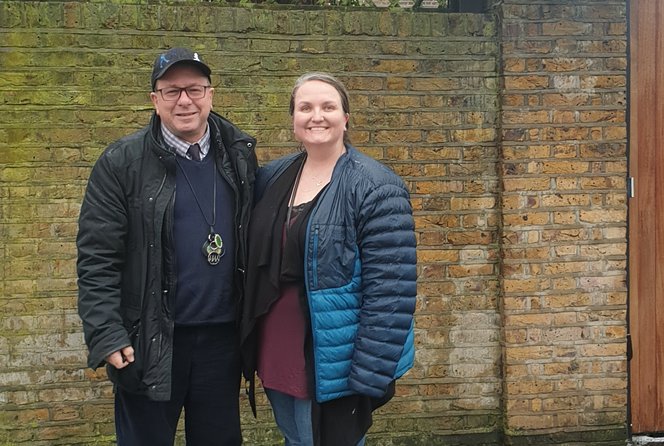
After the bridges, the ride takes you along the river’s managed spaces.
Victoria Embankment and Joseph Bazalgette’s engineering
Victoria Embankment runs along the North Bank of the Thames from the Palace of Westminster to Blackfriars Bridge in the City of London. It’s noted for memorials such as The Battle of Britain and includes permanently retired vessels like H.M.S. President, along with public gardens like the Victoria Embankment Gardens.
Construction took place between 1865 and 1870 under Joseph Bazalgette. His work influenced the Thames in a practical way, narrowing it.
This is a great stop for people who like “why things are the way they are.” It’s not just monuments, it’s infrastructure with a human purpose.
St Paul’s Cathedral: Wren’s dome and the spot where fires changed everything
The final big landmark focus is St Paul’s Cathedral.
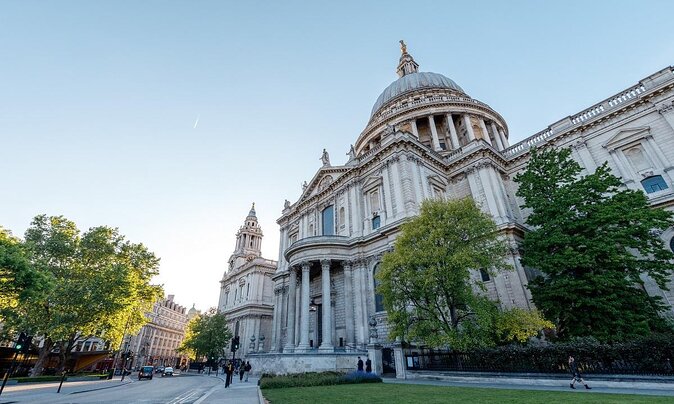
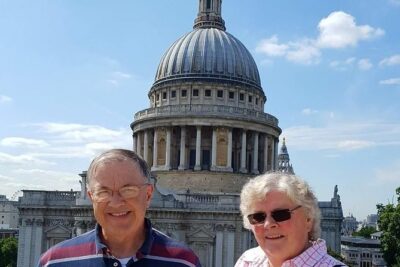
You’ll hear the first record of a building on the site dates back to 604 AD under Bishop Mellitus. There have been four cathedrals here. The one you see today was built between 1675 and 1710, and it’s Christopher Wren’s masterpiece. Wren is buried under the dome.
What you might not expect is how the earlier St Paul’s shaped the story. Old St Paul’s was built between 1087 and 1314 and was the largest building in the UK until 1666, when the Great Fire of London destroyed it. The new St Paul’s Cathedral was built in English Baroque style, with a dome height of 365 feet and a weight listed as 65,000 tons. It served as among the highest structures in the world from 1710 to 1967.
It’s also an Anglican Cathedral and the seat of the Bishop of London and Mother Church of the Diocese of London.
Why ending here feels satisfying: Westminster is about ruling power, while St Paul’s represents civic and spiritual authority. Put together, you get a fuller London picture.
What your driver does that a map never tells you

The best part of this tour is how the driver connects details into a story you can actually use.
In the strongest experiences, guides like Morris have matched the plan to personal interests and then kept it moving efficiently. People praise them for taking the time to answer questions, identify places clearly, and keep the group engaged with interesting side stories.
Family-friendly trips show up often in the feedback too. One guide’s style has been described as patient with kids and friendly when questions come up. If your group has mobility needs, there are also examples of guides making getting in and out smoother, including for mobility scooters and wheelchair users with ramp support.
One nice extra mentioned in a review: when a group asked for a Cornish pasty, the driver tried multiple spots after a holiday meant some places were closed. The follow-up went beyond the tour, with pasties delivered after dropping the group off. That’s the kind of “service as part of the travel story” moment you remember.
Quick sanity check: who this tour is for
This tour is a great fit if:
- You want a high-impact overview without the stress of buses and crowds.
- Your group includes people with different interests, and you want one plan that can flex.
- You care about history but do not want to spend your day inside ticketed attractions.
- You’re traveling with kids or mobility needs and want comfort and patience built into the plan.
It might feel less ideal if:
- You’re hoping for long, timed entry visits inside major sites.
- You want a slow, detailed walk through one neighborhood.
- Your priorities are only one narrow topic and you want a specialty tour.
Should you book this black taxi tour of London?
If you’re picking one way to get oriented fast, I think this is a strong choice. The price makes most sense for groups, and the private format is where you really get value: your driver can adjust the route, explain what you’re seeing, and help you get photos and context without wasting your four hours.
Book it if you want a clean, efficient highlights route with custom stop control. Pass if you need a museum marathon or you prefer wandering without guidance.
If you do book, do two things before you go: decide what three stops matter most to your group, and share any themes early (royals, architecture, the Thames, or a specific person like Winston Churchill era topics if that’s your thing). Then let your driver connect the dots and you’ll end up with a London day that feels organized, not rushed.
FAQ
How long is the Black Taxi Tour of London?
The tour duration is about 4 hours.
How many people can fit in one group?
The flat fare is for up to 6 people per group.
Is the tour private?
Yes. It is private, so only your group participates.
What language is the tour offered in?
The tour is offered in English.
Is pickup included?
Pickup is included within a 5-mile radius of Trafalgar Square, and pickup is also offered from your hotel or Airbnb.
Where is the meeting point?
The tour starts at Embankment Place (London WC2N, UK).
Does the tour end where it starts?
Yes. It ends back at the meeting point.
Can you request stops or customize the route?
Yes. You can request stops, explain your interests, or let the guide choose for you.
Do you get a mobile ticket?
Yes. A mobile ticket is provided.
Are service animals allowed?
Yes, service animals are allowed.
Seen From a Black Cab
- The Premier Classic London: Private 4-Hour Tour in a Black Cab★ 5.0 · 2,737 reviews
- Private Tour: Black Taxi Tour of London★ 5.0 · 1,153 reviews
- London Sightseeing Private Black Cab Tour with Hotel Pick Up★ 5.0 · 917 reviews
- Rock Cab Tours presents Music Legends Private Taxi Tour of London★ 5.0 · 637 reviews
Fresh off the London review pile

Black Cab & Taxi Tours, compared.
 ★ 5.0Cab Tours Belfast Famous Black Taxi ToursFrom $1003,633 reviews
 ★ 5.0The Premier Classic London: Private 4-Hour Tour in a Black CabFrom $5532,737 reviews
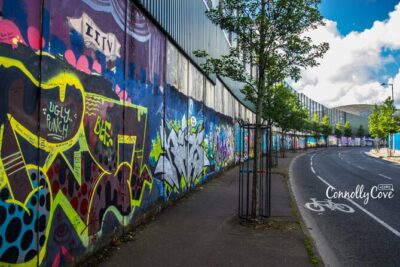 ★ 5.0Private Black Taxi Belfast City TourFrom $1102,188 reviews
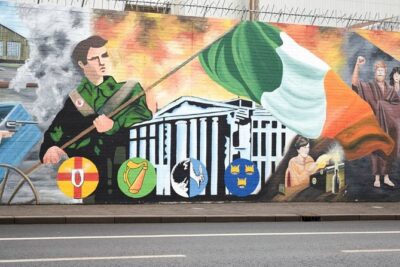 ★ 5.0Belfast’s Political Mural Taxi TourFrom $481,180 reviews
 ★ 5.0Belfast black taxi toursFrom $551,166 reviews
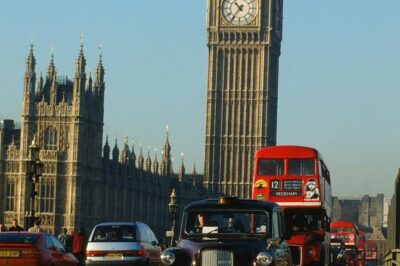 ★ 5.0Private Tour: Black Taxi Tour of LondonFrom $3061,153 reviews
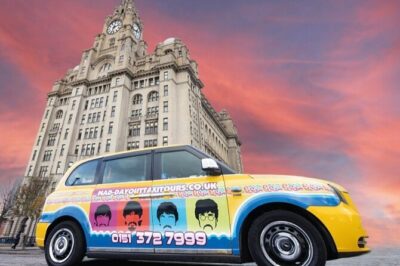 ★ 5.0Mad Day Out Beatles Taxi Tours in Liverpool, EnglandFrom $2081,013 reviews
 ★ 5.0London Sightseeing Private Black Cab Tour with Hotel Pick UpFrom $441917 reviews
Also filed under