
REVIEW · BUCKINGHAM PALACE & CHANGING OF THE GUARD
Buckingham Palace, St James Palace & Tea at Kensington Palace
Three palaces, one tidy walking loop. I love the small-group feel with guides like Simon sharing street-level royal stories, and I love the included Kensington Palace high tea at the Orangery. One thing to keep in mind, though, is that most palace viewing here is exterior and street-based, with true inside access only if you select the State Rooms option.
This is a short day built for people who want maximum wow in about 2 hours without sprinting all over London. The group stays small (max 10, usually 4-6), so you actually get time for questions instead of just following a sea of umbrellas.
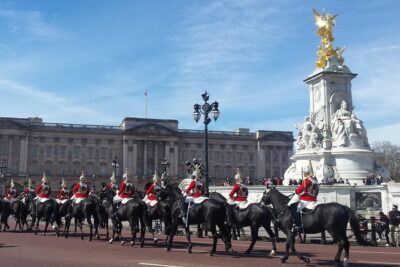
I also like that the pace is relaxed, with frequent mini stops where you get context before you look at the next façade. If you’re hoping to time the changing of the guard, plan your schedule carefully, because this itinerary is designed for history stops plus tea, not a perfect parade-watch window.
In This Review
- Key highlights worth planning around
- Green Park to St James’s: getting away from the crowds fast
- What I like here
- One practical drawback
- Spencer House and the Mall area: fine homes and royal rules you can actually see
- Photo tip, without the tourist stress
- Clarence House and St James’s Palace: two royal addresses with different reasons to exist
- What’s valuable about this section
- Who this part suits best
- Buckingham Palace, Wellington Arch, and the Tyburn clue you might miss
- Expect the quick-hit format
- Bomber Command Memorial and Apsley House: big-scale London with a sobering center
- A value note
- Royal Albert Hall and the Albert Memorial: ceremonial London in full view
- Why this works after tea later in the day
- Kensington Palace grounds and the Orangery high tea
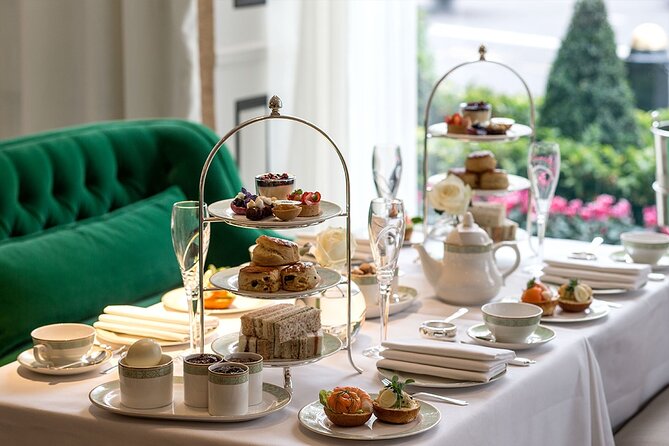
- High tea menu, what’s included, and what it means
- A nice extra from the experience: Princess Diana royal china
- Drinks and dietary options
- Price and value: what you’re really paying for at $173.45 per person
- Who gets the best deal from this tour
- Practical tips so you enjoy it, not just survive it
- Should you book Buckingham Palace, St James Palace, and Kensington High Tea?
- FAQ
- How long is the tour?
- Where does the tour start and end?
- Is high tea included?
- Is there a choice for palace State Rooms entry?
- What dietary options are available for tea?
- How big is the group?
- Do I need tickets or a phone ticket?
- Can I use public transport to get to the meeting point?
- What is the cancellation window for a full refund?
Key highlights worth planning around
- Small groups (max 10, typically 4-6), so the walk feels personal, not like a bus ride on foot
- Three royal stops in one loop, built around Buckingham Palace, St James’s area, and Kensington Palace
- A real high tea with scones, sandwiches, and cake, served at Kensington’s Orangery
- Tea history lesson included, so you get more than just food and photos
- Short, smart stop times (often 5-10 minutes) that help you see a lot without wearing yourself out
Guard change and palace entry, other versions
- Buckingham Palace: The State Rooms Entrance Ticket
★ 4.6 · 7,395 reviews - London: Buckingham Palace & Changing of the Guard Experience
★ 4.3 · 2,971 reviews - London Sightseeing Tour: Guard Change with Tower of London Option
★ 4.5 · 2,672 reviews
Green Park to St James’s: getting away from the crowds fast
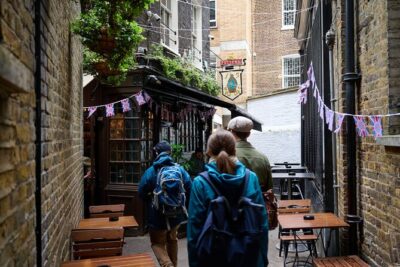
The tour starts at Green Park, and the first clever move is where you go right away. Instead of staying glued to the busiest main routes, your guide steers you toward quieter corners and discreet passages that help you get a calmer look at the royal neighborhood.
Green Park itself has a personality. You’ll hear it formally connects to Upper St James Park, and you’ll also understand how this area sits right next to royal and government London. That little bit of framing matters, because otherwise it’s easy to treat the park as just a place to cross the street.
From there, you move into St James’s, London’s aristocratic quarter. You get a guided stroll through back streets with a story behind them, including how chocolate houses and taverns in the 1600s turned into prestige clubs. It’s the kind of detail that makes you look up at the architecture instead of just watching traffic.
What I like here
This section feels like a guided “get your bearings fast” walk. You’re learning while you move, and you’re not stuck waiting in long lines or doing long museum circuits.
One practical drawback
Expect it to be a walking tour with quick stops. If you’re the type who wants to linger at one building for 30 minutes, you may feel a bit rushed during the transition moments.
Palaces, gardens and Greenwich, other visits
Spencer House and the Mall area: fine homes and royal rules you can actually see
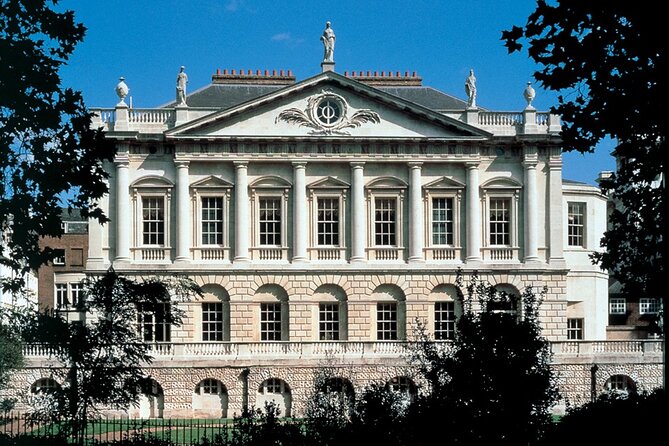
The next stop that grabs attention is Spencer House. It’s a beautifully preserved eighteenth-century town house built between 1756 and 1766 for John, the first Earl Spencer, an ancestor of Princess Diana. Even if you only see it briefly, the guide’s context helps you notice why this kind of residence mattered to power and status in its day.
Then you reach the Mall area, close to where St James Palace remains the official London royal palace. Here’s the key point the guide will put plainly: it is not regularly open to visitors. You’ll hear that public access is mostly through specific occasions like Sunday services at the Chapel Royal and the Queen’s Chapel.
This is a good moment to calibrate your expectations. You’re not buying a big palace ticket to roam hallways all day. Instead, you’re learning what’s behind the walls and why certain spaces are visible only on particular schedules.
Photo tip, without the tourist stress
Bring your camera ready for building exteriors and street angles. Since your palace time is mostly outside, the best photos are about viewpoint and timing, not about trying to capture interior rooms you cannot enter.
Clarence House and St James’s Palace: two royal addresses with different reasons to exist
Clarence House comes next, and it’s worth a pause because it explains a very human royal decision. The house was commissioned by the Duke of Clarence (later King William IV) and built between 1825 and 1827, designed by John Nash. The point the guide emphasizes is that William IV preferred Clarence House over the older St James’s Palace because he found St James’s too cramped.
Then you circle back into St James’s Palace area. Since the tour also includes context about the neighborhood from earlier, the repetition actually helps. You start to see patterns: where the elite lived, how politics and social clubs overlapped, and why streets and squares shaped power as much as palaces did.
What’s valuable about this section
You’re connecting dots. Exteriors start to feel like evidence, not scenery.
Who this part suits best
If you enjoy political history, architecture, and “how London power worked,” this is the section where you’ll feel the guide’s stories click.
Buckingham Palace, Wellington Arch, and the Tyburn clue you might miss
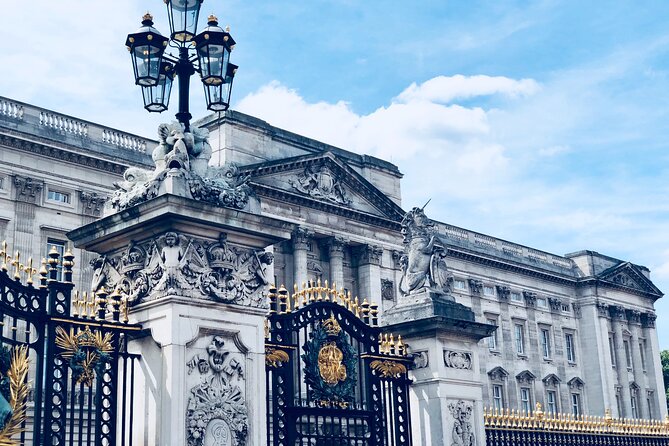
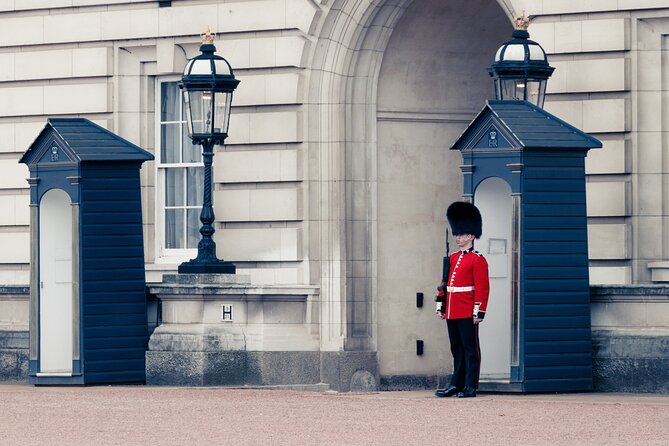
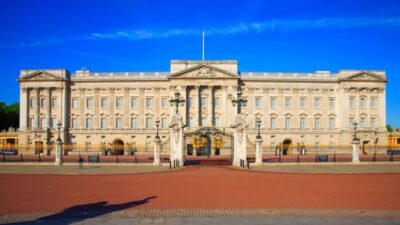
Now you get to Buckingham Palace, and the guiding theme here is the site itself, not just the famous gates. You’ll hear how, in medieval times, the future palace site belonged to the Manor of Ebury. There’s also a neat detail about the river Tyburn still flowing below parts of the courtyard and the south wing. If you love the idea that London streets sit on older London, this is your moment.
You’ll also get quick orientation around where the village of Eye Cross grew and how ownership shifted across centuries, including figures like Edward the Confessor and William the Conqueror’s era of land grants.
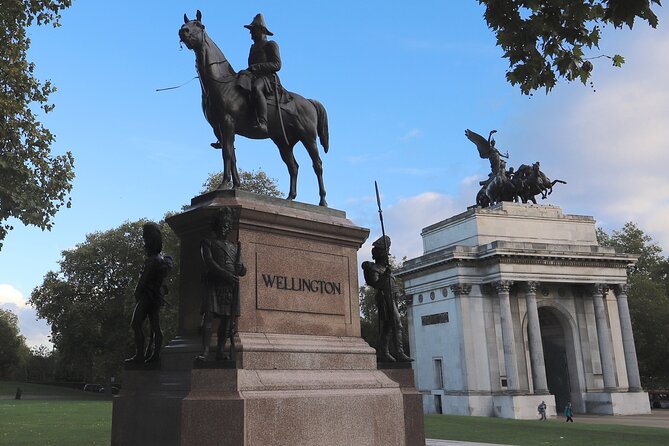
Then the tour crosses to Wellington Arch, designed by Decimus Burton and completed in 1828. You’ll hear that famous four-horse chariot with a figure of peace dates to 1912, and that there’s a central passage reserved for royalty. It turns the arch from a monument into a system: ceremonial movement, controlled access, and symbolism all packed into one spot.
Expect the quick-hit format
Most of these stops are brief, often around 5 minutes. That’s not a problem if you treat the tour like a guided tour of what to notice, then use the rest of your day to return later for deeper exploring.
Bomber Command Memorial and Apsley House: big-scale London with a sobering center
The walk moves toward the Bomber Command Memorial, located on the south side of Piccadilly facing Hyde Park Corner. The guide focuses on the scale of what it commemorates, including the sacrifice of 55,573 aircrew from Britain and multiple allied countries, plus civilians killed during raids.
This stop changes the mood in a good way. It keeps the day from being only pageantry. You get to remember that modern London was shaped by wartime decisions and human losses.
Next is Apsley House, tied to Lord Apsley, the Lord Chancellor, and built in red brick by Robert Adam between 1771 and 1778. You’ll hear that some Adam interiors survive, including the Piccadilly Drawing Room and its Adam fireplace, plus the Portico Room behind the giant Corinthian portico added by Wellington. Even if your time inside is not guaranteed on this tour, the outside details are easier to read after the guide gives you the architectural terms.
A value note
A memorial plus a grand residence in the same loop gives you emotional balance. It’s not just royal romance, and that makes the experience feel more honest.
Royal Albert Hall and the Albert Memorial: ceremonial London in full view
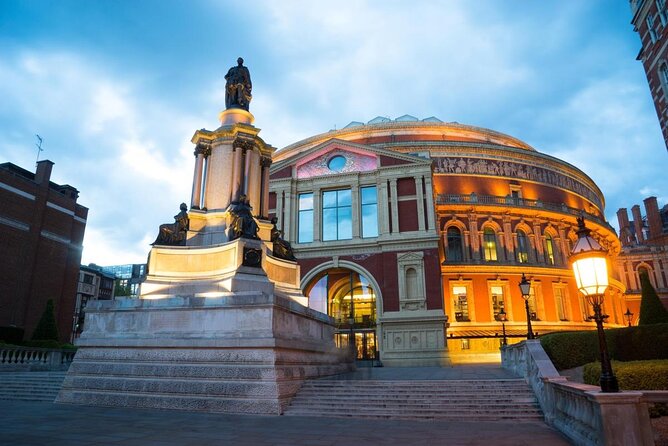
After the sobering stop, the route opens up toward South Kensington. You’ll see Royal Albert Hall, a concert hall with a seating capacity of 5,272. The guide also mentions that it opened in 1871, initiated by Queen Victoria, and that major performers across genres have appeared there over the years.
Then you’ll take in the Albert Memorial in Kensington Gardens, built to commemorate Prince Albert, who died in 1861. It’s a classic “London does big monuments” moment, and it’s also useful for orienting yourself if you plan to wander South Kensington later.
Why this works after tea later in the day
By the time you reach Kensington Palace, you’re ready for something calmer and more intimate. This part breaks up the pace so the day feels like a sequence, not a single long royal wall.
Kensington Palace grounds and the Orangery high tea
The tour ends at Kensington Palace, specifically at the Orangery where your high tea is hosted. Kensington is one of those places where the royal feeling is more relaxed than Buckingham. The palace grounds help, and the tea setting does the rest.
You’ll get a guided story about the palace as well. A memorable example your guide may share is about George II. The account includes him rising early in 1760, drinking hot chocolate, then collapsing after a crash while alone, with the king dying shortly after. The details given include the post-mortem result of a thoracic aortic dissection and his burial in Westminster Abbey, with instructions about the coffins so their remains could mingle.
Even when you’re not going inside every room, these stories make Kensington feel lived-in. It’s not just a stop on a checklist.
High tea menu, what’s included, and what it means
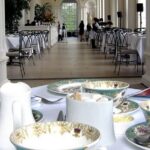
Your included afternoon tea focuses on classic English favorites:
- Delicate finger sandwiches, with seasonal variety and dietary accommodations like gluten-free, vegan, and halal options
- Welsh scones, with and without raisins, served with clotted cream and strawberry jam
- A Royal cake selection that shifts with the season
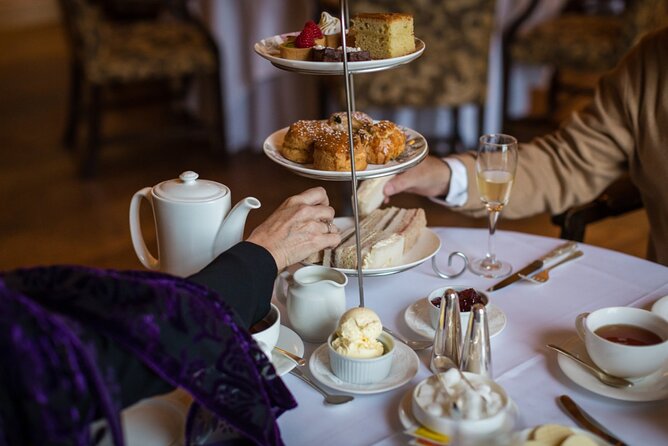
You also get the history of tea drinking in England as part of the experience, not just a casual set-and-eat moment. That extra layer is part of what makes this feel like a tour, not a pricey lunch.
You’ll be seated at a private table at the tea venue. If you’re celebrating or traveling with family, this matters more than it sounds. It cuts down the awkwardness of sharing space with strangers while you’re trying to actually enjoy the moment.
A nice extra from the experience: Princess Diana royal china
One detail that shows up in the feedback is that the tea service may be served on Princess Diana’s royal china. If that’s part of your seating, it adds a fun, very London-specific touch.
Drinks and dietary options
Alcoholic beverages can be purchased during the tea service. If you have dietary needs, gluten-free, vegetarian, vegan, and halal options are available when requested ahead of time.
Price and value: what you’re really paying for at $173.45 per person
At $173.45 per person, this tour is not a bargain. But it is a solid value if you want both guidance and a proper tea experience in a royal setting.
Here’s what you’re getting that you would otherwise pay for separately:
- A guided royal history walk through key royal-area locations
- Afternoon tea with sandwiches, scones, and cake
- A private table during the tea service
- Dietary flexibility when requested
- Small-group size, which is usually where travel deals start to feel expensive if you skip it
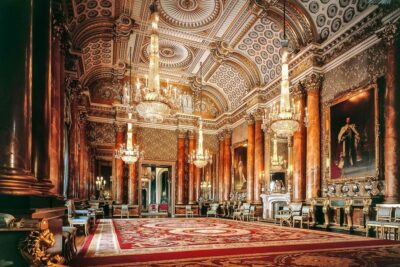
The one thing that can affect value for some people is inside access. Entrance to palace State Rooms is only mentioned as available if you select it at checkout. Without that selection, you should expect mostly exterior viewing and guided context, not a full palace interior circuit.
Who gets the best deal from this tour
- First-time London visitors short on time
- People who want a guided day that mixes royal landmarks with a relaxing end
- Travelers who enjoy stories tied to streets and buildings, not only big museum rooms
Practical tips so you enjoy it, not just survive it
This is a walking tour in a central area, with stops that are short but frequent. Wear comfortable shoes. Plan for a steady pace rather than a long linger-at-each-stop strategy.
You’ll want your transit card ready for getting around. The tour mentions bringing a Contactless Card or Oyster Card, with a cost of £1.75 per person for bus fare. Since your start is at Green Park Underground and your tour ends at Kensington Palace, transit planning is part of making the day feel easy.
Also, bring a light layer. London weather can switch fast, and your time outside happens before and between the tea portion.
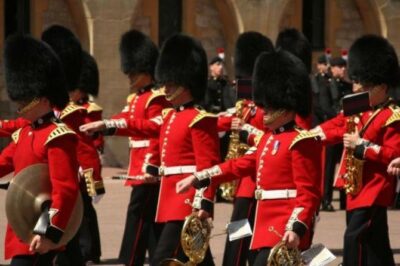
Finally, if you care about the changing of the guard, treat this as a history and tea tour first. The time on each stop is built for variety, not for lining up for one specific ceremony.
Should you book Buckingham Palace, St James Palace, and Kensington High Tea?
If you want a compact, story-led way to cover Buckingham Palace, the St James’s area, and Kensington Palace in a single morning-to-afternoon span, I think this is a great fit. The high tea at Kensington Palace is the emotional payoff, and the small-group royal walk is what makes the landmarks feel connected instead of random.
I’d skip it if you specifically want full interior palace touring, because the default experience described here leans toward street and exterior viewing, with State Rooms only if you choose them at checkout. I’d also be cautious if you hate walking and need long seating breaks every 10 minutes.
If you can do light walking and you want a very British end to the day, book it. You’ll leave with sharper context, better photos, and a tea service that feels like part of the royal story, not an afterthought.
FAQ
How long is the tour?
The duration is about 2 hours.
Where does the tour start and end?
It starts at Green Park, Piccadilly, London W1J 9DZ and ends at Kensington Palace, Kensington Gardens, London W8 4PX, at the Orangery where high tea is hosted.
Is high tea included?
Yes. Afternoon tea is included, with sandwiches, scones, and cakes.
Is there a choice for palace State Rooms entry?
Entrance to the State Rooms is available if you select it at checkout. If you do not select it, the tour does not include palace entrance by default.
What dietary options are available for tea?
You can request gluten free, vegetarian, vegan, and halal options ahead of time.
How big is the group?
The maximum group size is 10 travelers, typically 4-6 guests.
Do I need tickets or a phone ticket?
You receive a mobile ticket.
Can I use public transport to get to the meeting point?
The tour is near public transportation, and it notes you should bring a Contactless Card or Oyster Card for bus fare.
What is the cancellation window for a full refund?
You can cancel up to 24 hours in advance of the experience for a full refund. If you cancel less than 24 hours before the start time, the amount paid is not refunded.
Palaces, Kew and Greenwich
- London: Westminster to Greenwich River Thames Cruise★ 4.5 · 22,836 reviews
- Westminster to Greenwich Sightseeing Thames Cruise in London★ 4.5 · 2,969 reviews
- Kew Gardens Entrance Ticket★ 4.0 · 1,055 reviews
- The Kensington Palace Gardens Royal High Tea★ 4.5 · 934 reviews
More Palace and Guard Change Slots
- Buckingham Palace: The State Rooms Entrance Ticket★ 4.6 · 7,395 reviews
- London: Buckingham Palace & Changing of the Guard Experience★ 4.3 · 2,971 reviews
- London Sightseeing Tour: Guard Change with Tower of London Option★ 4.5 · 2,672 reviews
- London: Changing of The Guard Tour★ 4.8 · 2,510 reviews
Fresh off the London review pile
Buckingham Palace & Changing of the Guard, compared.
 ★ 4.6Buckingham Palace: The State Rooms Entrance TicketFrom $447,395 reviews
 ★ 4.3London: Buckingham Palace & Changing of the Guard ExperienceFrom $262,971 reviews
 ★ 4.5London Sightseeing Tour: Guard Change with Tower of London OptionFrom $952,672 reviews
 ★ 4.8London: Changing of The Guard TourFrom $152,510 reviews
 ★ 4.2London: Buckingham Palace Entry & Changing of the Guard TourFrom $972,221 reviews
 ★ 4.5London: Westminster and Changing of the Guard TourFrom $242,171 reviews
 ★ 4.8London: Westminster Abbey, Big Ben & Buckingham Guided TourFrom $1012,170 reviews
 ★ 5.0Changing of the Guard Guided Walking Tour in LondonFrom $251,793 reviews