
REVIEW · OXFORD UNIVERSITY & BLENHEIM PALACE
Extended: Oxford University & City Tour With Christ Church
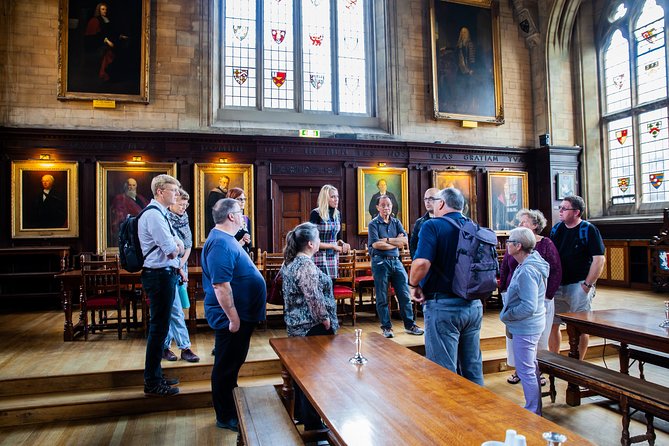
Oxford has a way of turning facts into stories. This 3-hour loop through the University’s best-known colleges and landmarks is built for seeing a lot without rushing, led by an Oxford student guide. You’ll also get a special self-paced visit to Christ Church, including a multimedia headset.
Two things I really like are the focus on the college experience and the small-group feel, with a maximum group size of 19. I also appreciate the pacing that mixes quick photo stops with meaningful moments, like time at Magdalen College and the chance to learn how Oxford’s top buildings function day to day.
One drawback to plan for: access can be unpredictable because this is a working institution. In some cases, interiors may be limited, and in peak summer months the Divinity School can be especially hard to enter.
In This Review
- Key things that make this tour worth your time
- The 3-hour Oxford loop, and why the walk works
- Balliol to Magdalen: the oldest colleges and the big differences between them
- Einstein at the History of Science Museum, and the architecture curveball at Weston Library
- New College, All Souls, and St Mary the Virgin: tradition you can actually read
- Bodleian Library and Divinity School: what you should plan for
- Christ Church Meadow and Christ Church: the Harry Potter connection, with real time to explore
- Price and value: where the money goes in this 3-hour format
- Who should book, and who might want a different plan
- Should you book the Oxford University and Christ Church tour?
- FAQ
- How long is the Oxford University and Christ Church tour?
- How big is the group?
- Is Christ Church included, or is it an upgrade?
- Are admission tickets included for the stops?
- Will I be able to enter the Bodleian Library and Divinity School?
- Where does the tour start in London versus Oxford?
Key things that make this tour worth your time
- Oxford student-led stories that explain traditions and student life, not just dates
- Christ Church with a multimedia headset, so you can explore at your own speed
- A smart mix of architecture and ideas, from Einstein-related history to Brutalist Weston Library
- Iconic exteriors with practical context, like what Radcliffe Camera is actually used for
- Small-group scale (up to 19), which keeps the walk from feeling like a stampede
Other Oxford colleges and Blenheim days
- Oxford University Walking Tour With University Alumni Guide
★ 5.0 · 6,905 reviews - Oxford: University and City Walking Tour with Alumni Guide
★ 4.7 · 4,429 reviews - Oxford: City and University Tour, including college entry
★ 4.5 · 2,243 reviews
The 3-hour Oxford loop, and why the walk works

This tour is designed like a greatest-hits sampler, but with enough stops that it still feels grounded in place. You cover Oxford’s older university fabric, then pivot to science, architecture, and a few of the most photographed spots. The length matters: at roughly 3 hours, you get momentum and context without needing a full day.
Expect moderate walking. Even when individual stops are short, Oxford’s college streets add up. Good shoes are not optional here. If you’re someone who likes to pause for details, you’ll want to move with the group when the guide signals it, then slow down when you have entry time.
The group size is also a big deal. With a maximum of 19 travelers, you’re more likely to hear the guide clearly and keep the flow through busy areas. Several guides on past departures were recently Oxford grads or current students, like Luke, Antonia, Rose, Ben, Sam Day, Olli, and Martin, and that student angle tends to make the history feel less like a lecture and more like how Oxford actually operates.
Balliol to Magdalen: the oldest colleges and the big differences between them
The first part of the walk sets the tone. Oxford colleges can look similar at postcard glance, but the character changes fast once you start paying attention to what each place values, how it’s run, and what it’s known for.
- Balliol College kicks things off with an emphasis on age. It’s argued as Oxford’s oldest college, and even with limited time, it gives you an early sense of why Oxford’s campus is more than one institution. This is where you start thinking in centuries, not seasons.
- Trinity College adds beauty and longevity. Dating back to 1555, it’s one of the most visually striking stops on the early stretch. If you like to compare architectural styles across Oxford’s timeline, this is a good moment to do that.
- Exeter College brings in literary lore through Tolkien. Knowing that he attended here helps the place feel personal, like a real study community rather than a museum facade. You get a brief stop, so it’s more about getting oriented than going deep.
- Hertford College is where the tour steers you toward a modern Oxford thread. It’s described as among the more progressive colleges, and the guide can use that context to explain how Oxford has changed over time, not just how it looks now.
- Magdalen College is the anchor. It’s established in 1458, and it’s the largest college, with its own Deer Park. This is also where names like C.S. Lewis and Oscar Wilde come into the picture, so it’s not only an architectural stop. It’s a chance to connect the idea of an Oxford education to the writers who lived inside that world. If you’re a book person, this is one of the stops you’ll remember later.
Keep expectations realistic: many of these colleges are quick turns. The value is learning what each one represents, so when you later wander on your own, you recognize the differences instead of seeing a row of matching stone walls.
Einstein at the History of Science Museum, and the architecture curveball at Weston Library
After the core college loop, the tour changes gear. This is where it becomes more than a set of pretty buildings and turns into a story about ideas, tools, and learning.
At the History of Science Museum, the headline is Albert Einstein’s chalkboard, with markings preserved from his lecture series at Oxford. Even if you do not consider yourself a science traveler, it’s a memorable pivot point because it connects a global icon to a specific Oxford setting.
Then comes Weston Library, and this is the architecture curveball. You’ll notice the shift from Oxford’s typical Victorian neo-Gothic look to Brutalist style. The library is also tied to scale, with over 5 million books, and after renovation it has a modern interior. If you’re used to thinking of old libraries as dusty and still, this stop can reset your mental picture.
Two other landmarks here help you broaden what Oxford means religiously and architecturally:
- Martyrs’ Memorial is often overlooked, but it points to the brutal Protestant and Catholic conflict in England. It’s a sobering counterweight to the cheerful college-sightseeing mood.
- Sheldonian Theatre, finished in 1669 by Sir Christopher Wren, adds ceremonial context. It’s used for major Oxford ceremonies, so you can connect the building to university life beyond academics.
And just when you think you’ve seen everything, you hit:
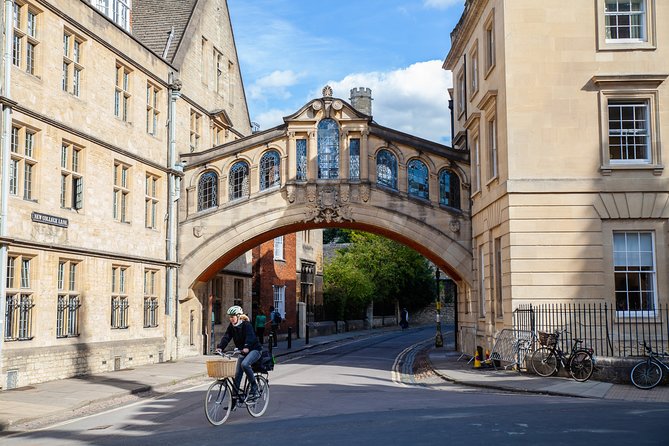
- Bridge of Sighs, a famously photographed spot.
- Radcliffe Camera, the postcard icon. It’s worth the hype, but the tour focus is practical, helping you understand that it’s used for a different purpose than most people assume.
That blend is one reason the 3-hour format feels effective. You get visual hits, plus the meaning that makes them stick.





New College, All Souls, and St Mary the Virgin: tradition you can actually read
The midsection of the walk leans into Oxford’s identity, where the buildings reflect institutional tradition and social structure. Some of the most striking stops are also the ones that are easy to misread if you only skim them.
New College gets called out because it’s often mistakenly treated as “new.” It actually dates back to 1379, and the point of the stop is understanding why it matters as a model for how later colleges formed.
All Souls College is the exclusivity moment. It’s described as one of the most exclusive academic institutions in the world, tied to names and traditions that show how Oxford can feel both academic and ceremonial. You’ll only get a brief look, but it’s the kind of stop that makes the university feel like a living system with internal culture.
Then there’s University Church of St Mary the Virgin, described as the epicentre of Oxford University. The tour also notes detailed grotesques, which is the kind of detail that you might miss if you rush. Even a short stop can be satisfying if the guide points out what to look for.
If you’re wondering how all of this connects, here’s the simplest link: Oxford colleges are not one-size-fits-all. Each place has its own norms, and the “feel” of Oxford changes depending on which college you’re standing in.
Bodleian Library and Divinity School: what you should plan for
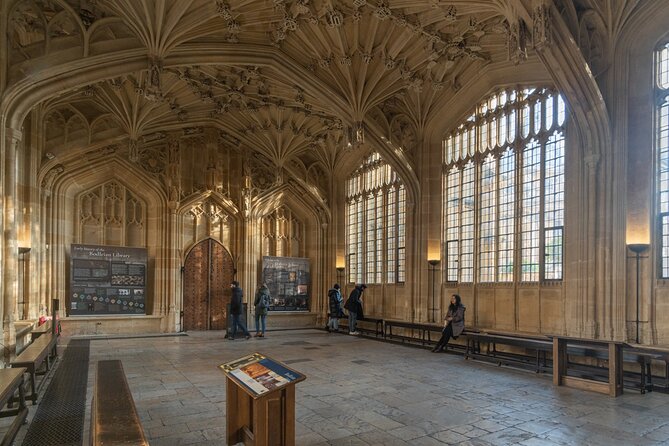
This is the part that can swing from perfect to frustrating, and the tour sets the expectation clearly. Oxford is a working institution, and some sites may close without notice. That’s not a failure. It’s just how a live university can operate.
The Bodleian Library is one of the main attractions. It’s built in 1602, and the tour framing highlights the scale: over 12 million books plus documents dating back to the Pharaohs. If you come here expecting a quick look, you’ll still likely feel the weight of it. If you come expecting full access on day one, be ready for limitations.
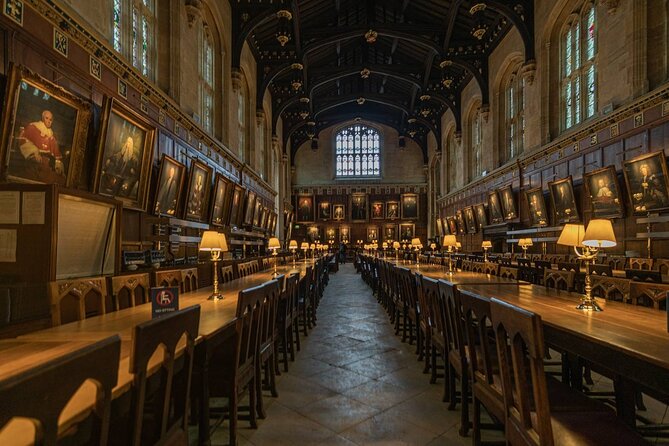
The Divinity School is the other major interior target. It’s described as the first purpose-built lecture room and a standout example of medieval architecture. It’s also tied to film locations, and the tour generally treats it like a performance space for ceremonies, not a classroom set.
But there’s a key seasonal consideration. In June to August, access to the Divinity School is described as extremely limited due to closures and high demand, and it may not be included. In that case, the tour substitutes another University College entrance.
How should you use this info? Build your confidence around the overall experience, not one single room. The walk still delivers plenty of Oxford highlights, even if one interior is restricted. If Bodleian or Divinity entry is your absolute top priority, consider scheduling flexibility in your trip plans.
Christ Church Meadow and Christ Church: the Harry Potter connection, with real time to explore
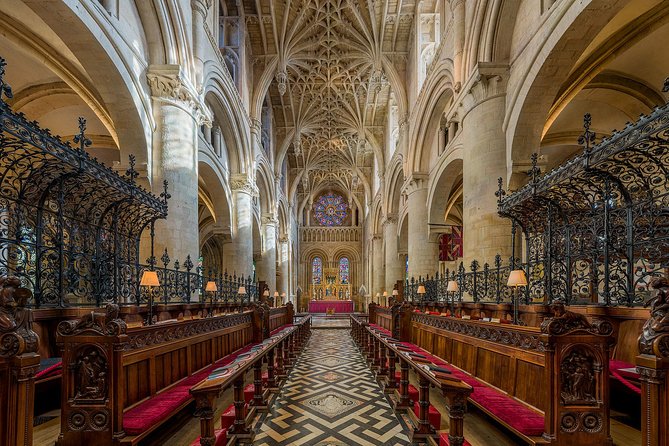
Christ Church is where the tour becomes a blend of legend and practicality. Christ Church Meadow gives you the central green space and a strong Alice in Wonderland connection. It’s a breather before you step into the busiest, most in-demand part of the day.
At Christ Church, the format is worth paying attention to. The guide provides a comprehensive external overview first, then you enter on your own with a multimedia headset created by the Christ Church team. After that independent portion, the experience ends. Plan your time so you do not feel rushed.
How long is enough? The tour sets expectations at about 1 hour inside Christ Church. That tends to work for most people because you’re not only looking at one room. You’re moving through a larger set of spaces, and the headset structure helps you navigate what to prioritize.
A very practical tip from the way the tour is run: follow the order the guide recommends. One tour-day issue involved people arriving late and then feeling squeezed because Christ Church is located at the end of the experience. If you want a calmer visit, arrive on time at the start, keep up with the group, and treat the Christ Church hour as your main event.
Also, Christ Church can be busy during peak periods. While the headset helps you get your bearings, it still helps to go in with a strategy:
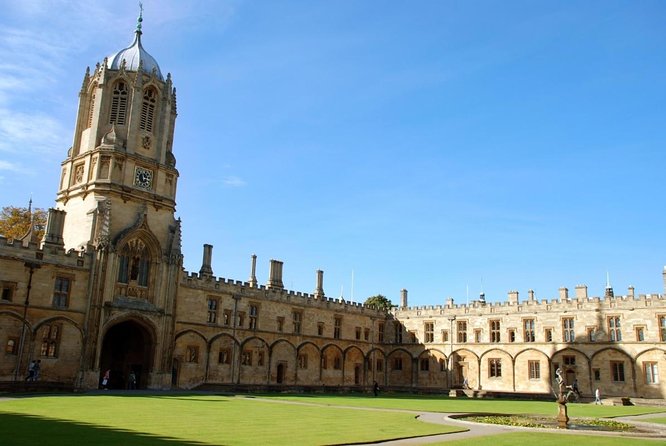
- spend a few minutes taking the main courtyard and iconic views in
- then use the headset to choose which rooms you want to linger in
If you’re a Harry Potter fan, you’ll appreciate the connection. If you’re not, you can still enjoy it as one of Oxford’s best-known college complexes, with historic architecture and a feel for how the university presents itself to visitors.
Price and value: where the money goes in this 3-hour format
At about $110.90 per person for a 3-hour experience, the value depends on what you want most from Oxford.
What you’re paying for:
- a focused walk that covers many signature Oxford stops in one go
- small-group guidance from an Oxford student, which often turns history into stories about how students think and live
- admission where included for key sites like Trinity College, Bodleian Library, and Christ Church, plus the option to enter Divinity School when available
- a headset experience inside Christ Church that reduces the stress of deciding what to do
For first-time visitors, this is often the sweet spot. You get orientation fast, and you leave with a mental map. For repeat visitors or people who mostly want photo time, the price might feel steep if you prefer to roam independently with no structured explanation.
Weather also affects value. Several guides and group experiences mention cold and rain readiness. A rain jacket can keep your day comfortable, and that comfort matters because you are walking the whole time.
Finally, note that demand can be high. This tour is typically booked around 33 days in advance, which is a hint that you should not wait until the last minute if your dates are firm.
Who should book, and who might want a different plan
This works best if you:
- are visiting Oxford for a short time and want the big sights with context
- like student-life perspective, not only stone-and-dates explanations
- want Christ Church access without figuring out separate tickets and routes
- enjoy walking tours as long as the pace stays organized
You might want to think twice if you:
- need guaranteed entry to specific interior spaces like the Bodleian or Divinity School, since access can change with demand and closures
- are primarily in Oxford for heavy photo shoots, because this is built around learning and visiting multiple stops, not long uninterrupted photo sessions
- have limited stamina, since the tour has a lot of ground covered even when individual stops are short
Should you book the Oxford University and Christ Church tour?
If you want an efficient first taste of Oxford that blends iconic architecture with real-world explanations, I think this is a strong choice. The combination of student-guided storytelling and structured highlights makes it easier to understand why Oxford looks the way it does and how the university functions as a place where people still study, work, and hold ceremonies.
Book it if Christ Church is a must and you want help prioritizing what to see. Skip it or plan alternatives if your top priority is one interior room with no flexibility. The smartest move is to treat the tour as your Oxford backbone, then build any extra time around the specific buildings you love most.
FAQ
How long is the Oxford University and Christ Church tour?
It runs for about 3 hours.
How big is the group?
The maximum group size is 19 travelers.
Is Christ Church included, or is it an upgrade?
Christ Church access is an optional upgrade. On the Christ Church portion, you enter with a multimedia headset.
Are admission tickets included for the stops?
Admission is included for some key locations such as Trinity College, the Bodleian Library, and Christ Church. Other stops are listed as free.
Will I be able to enter the Bodleian Library and Divinity School?
You should expect entry for these sites as part of the tour, but access can be restricted because Oxford is a working institution and closures can happen without notice. Divinity School access is especially limited during June to August.
Where does the tour start in London versus Oxford?
If you choose the pickup option, the meeting point is Gloucester Road Tube Station in London. Otherwise, the meeting point in Oxford is at 15 Broad Street.
Oxford Colleges and Blenheim
- Oxford University Walking Tour With University Alumni Guide★ 5.0 · 6,905 reviews
- Oxford: University and City Walking Tour with Alumni Guide★ 4.7 · 4,429 reviews
- Oxford: City and University Tour, including college entry★ 4.5 · 2,243 reviews
- Oxford: Harry Potter Walking Tour Including New College★ 4.6 · 1,446 reviews
Fresh off the Oxford review pile



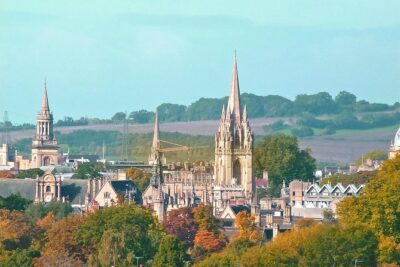


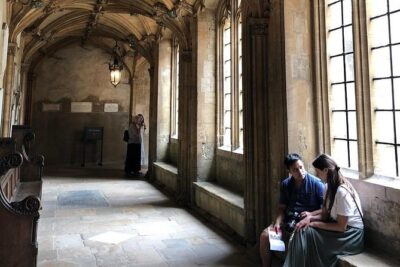

Oxford University & Blenheim Palace, compared.
 ★ 5.0Oxford University Walking Tour With University Alumni GuideFrom $416,905 reviews
 ★ 4.4London: Full-Day Windsor, Stonehenge, and Oxford TourFrom $1205,368 reviews
 ★ 4.5Windsor Castle, Stonehenge, and Oxford Day Trip from LondonFrom $1235,292 reviews
 ★ 4.7London: Harry Potter Studio Tour and Oxford Day TripFrom $1745,098 reviews
 ★ 4.7Oxford: University and City Walking Tour with Alumni GuideFrom $404,429 reviews
 ★ 4.7From London: Cotswolds and Oxford Guided Day-TripFrom $1063,720 reviews
 ★ 4.5Oxford, Stratford-upon-Avon, Cotswolds & Warwick Castle Day TripFrom $1092,943 reviews
★ 4.5Windsor Castle, Stonehenge, and Oxford Day Trip from LondonFrom $1232,474 reviews
★ 4.5Oxford, Stratford-upon-Avon, Cotswolds & Warwick Castle Day TripFrom $1092,943 reviews
★ 4.5Windsor Castle, Stonehenge, and Oxford Day Trip from LondonFrom $1232,474 reviews
Also filed under