
REVIEW · YORK & THE YORKSHIRE DALES
J & M York City Walking Tours
York has layers, and this walk keeps pace.
J & M York City Walking Tours is a well-structured, local-guided way to see the best of York without plotting a route. I especially like how it links big landmarks, like York Minster and the Shambles, to the stories that explain why York looks the way it does.
You’ll get that “start with the essentials, then wander with confidence” feeling. Two things I really like are the guide’s nonstop context on the streets you walk (not just photos), and the way the route hops through eras, from Roman defenses to medieval guild life and later myths like Dick Turpin.
One heads-up: a couple of stops are brief, and the most in-demand interiors, like York Minster, are not included. If you want long wall-walking time or a full museum visit, you will likely need to add extra time on your own.
In This Review
- Key Highlights That Make This Tour Worth Your Time
- Starting at Minster Yard, Ending Near the Shambles
- How the First Big Stories Set Up York’s 2000 Years
- York Minster: The Gothic Giant and Your Best Options
- Medieval Castle Motte Grounds: Dark Secrets Without the Time Sink
- Guild Streets, Women’s Roles, and the Medieval Levels
- The Shambles and St Margaret Clitheroe Shrine
- St Cuthbert’s Church: Roman Brick, Saxon and Norman Pieces, and Devils Door
- York City Walls: Roman, Danish, Medieval, and Victorian Changes
- Constantine the Great Statue: York’s Imperial Roots
- Black Swan and Hungate Parish: Quebec Battle Links and Black Cats
- Merchant Taylors’ Hall and Guild Economics
- Shambles Market: York’s Trade Engine
- Monk Bar and Wild Men of York
- Ogleforth and the Dutch House: After London’s Great Fire
- Kings Square: Street Names, Viking Threads, and Jorvic
- York Castle Museum Outside: Prison Reform and Dick Turpin Stories
- Price and Value at About $18
- Who Should Book This Walk, and Who Might Skip It
- Should You Book J & M York City Walking Tours?
- FAQ
- How long is the J & M York City Walking Tours experience?
- What does it cost?
- Where does the tour start and where does it end?
- Is admission included for York Minster?
- Is admission included for York Castle Museum?
- How big are the groups?
- Is the tour offered in English?
- Are alcoholic beverages included?
- What happens if the weather is poor?
- Is there free cancellation, and until when?
Key Highlights That Make This Tour Worth Your Time
- Local storytelling across eras: Romans, Vikings, kings and queens, plus darker city legends you’ll recognize later
- Minster and Shambles, without the guesswork: you get orientation fast, then can explore further afterward
- City Walls with layered history: Roman defenses, Danish earthwork, medieval sieges, and Victorian changes
- Legends with explanations: Dick Turpin, Devils door, Wild men of York, and what the guide says lies behind the myths
- Convenient end point near more sights: the finish is close to the river walk, Jorvik Viking Centre, and the Castle Museum area
More of York and the dales beyond it
- Mad Alice’s The Bloody Tour of York -Best Tour Award Europe
★ 5.0 · 2,749 reviews - York: Daytime Sightseeing Boat Cruise with Live Commentary
★ 4.2 · 2,618 reviews - Comedy Horror Show: York Ghost Bus Tour
★ 4.4 · 2,496 reviews
Starting at Minster Yard, Ending Near the Shambles
You begin at Constantine the Great, 4 Minster Yard, York YO1 7JB. It is a smart start because it drops you right into the historic core, with easy connections to nearby sites.
The walk finishes at the Parish of All Saints, Pavement High Ousegate, York YO1 8RZ. The exact end point may vary, but it stays close to major draws, including the Jorvik Viking Centre and the Castle Museum zone, and it is only a short walk from the Shambles.
This matters because the tour is about 2 hours. You do not want an end point that leaves you stranded. Here, you finish in an area where you can keep going on foot. That is a real value perk when you only have one day in York.
Also, the tour uses a mobile ticket and runs in English. Group size is capped at 30, which usually keeps things lively but not chaotic.
How the First Big Stories Set Up York’s 2000 Years
Before you get stuck in single-site mode, the guide lays out the city like a timeline you can walk through. You get the “inside scoop” on York’s medieval walls and gateways, York Minster, the ancient Shambles, Lantern towers, the rivers, and the castle area.
You also hear about the grave of Dick Turpin and follow the city’s heritage through ancient tribes, Romans, and royal eras. It is the kind of overview that makes the rest of your day click into place, especially if York is new to you.
If you want, the guide can also take you around museums of your choice for an additional fee. That is useful if you are the type who likes the walking tour first, then decides on museum time based on what you care about most.
One practical thought: this is story-driven walking. You will get the most from it if you show up ready to pay attention, not just to collect stops.
York Minster: The Gothic Giant and Your Best Options
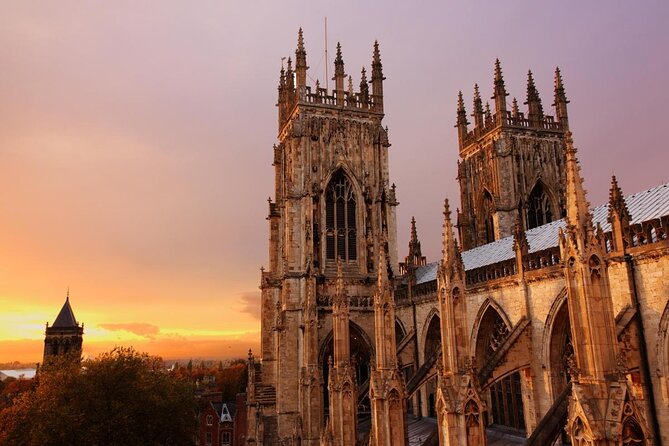
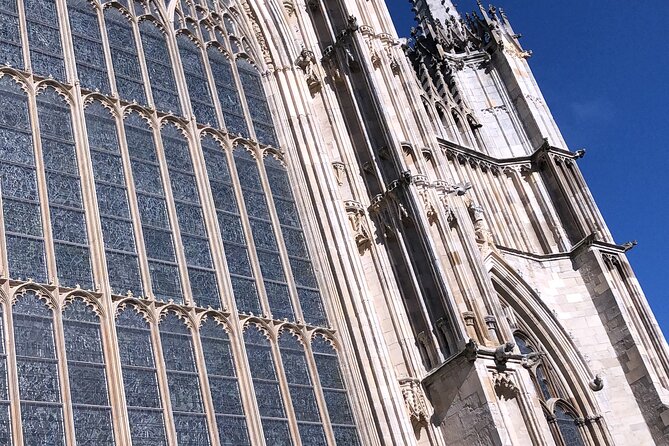
York Minster is the standout religious landmark on the route. This Gothic cathedral is described as the largest of its kind in Northern Europe, and construction took 252 years.
You spend about 20 minutes here, and admission is not included in the tour. If you want more time inside, York Minster has its own guides, and those interior tours last about an hour.
That timing is key. With only 20 minutes on the schedule, you are mostly getting the exterior experience plus the key points your guide wants you to notice. If you choose to go inside, you might need to plan that as a separate block.
If you are deciding in the moment, ask yourself one question: do I want deep church time, or do I want to keep moving through the city? This tour is built for movement, so it fits best if you treat Minster as a major highlight, not your entire afternoon.





Medieval Castle Motte Grounds: Dark Secrets Without the Time Sink
Next up is a walk around the motte of the castle, built in 1069. The guide turns the grounds into a story, including the darker secrets tied to how power and violence played out in medieval York.
You do not get a long museum-style visit here. Instead, you get the “why this place matters” explanation while you are literally standing in the location.
This is a good stop if you want atmosphere, not logistics. York has plenty of places where you can get stuck reading walls without context. Here, you get the context first, then you can appreciate what you see.
The only drawback is also simple: if you want to spend an hour or more on castle grounds, this stop will feel short. But if your goal is coverage plus story, it fits.
Guild Streets, Women’s Roles, and the Medieval Levels
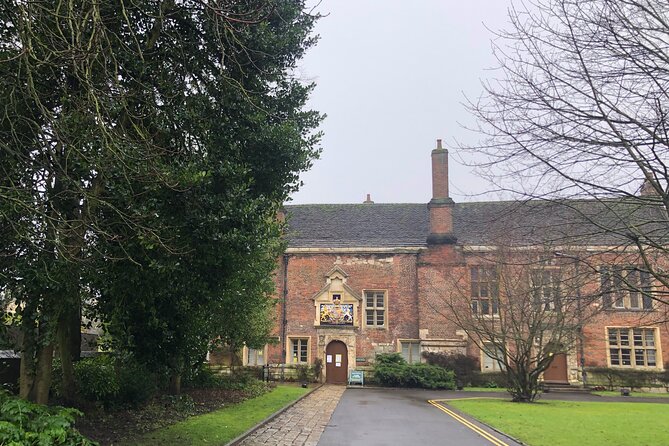
Another short segment takes you down into the medieval levels of the city. The guide talks about the richest guild in York and the role traders played in York’s prosperity.
One of the more interesting angles is how the stories include women’s importance in this guild. It is a detail that helps York feel more human and less like a postcard of stones.
You also get the sense of how medieval cities worked. This is not just “look at old buildings.” It is “here is how commerce, power, and community shaped the streets.”
If you like history that explains everyday life, this section is one of the most satisfying parts of the walk.
The Shambles and St Margaret Clitheroe Shrine
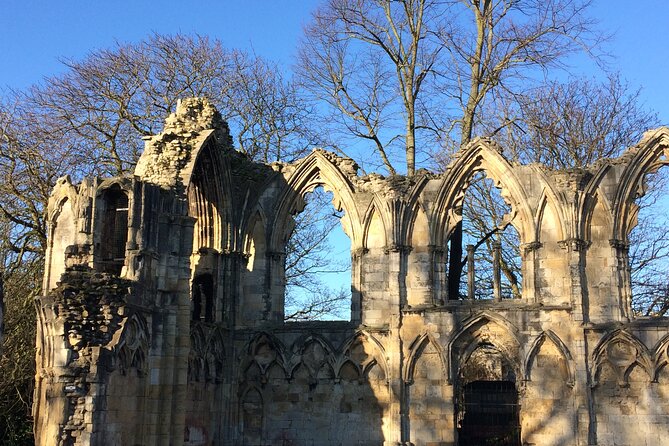
Then comes the Shambles, famous as the butcher street. You do not just pass it, you get a guided look at what makes it special and older than it seems.
You also stop for the shrine of St Margaret Clitheroe. You will hear secrets tied to one of York’s oldest streets, and that mix of daily-market York plus sacred story makes the Shambles more than a photo stop.
The tour includes about 10 minutes here, and there is free admission for the stop. In that short time, you will likely get enough context to understand what you are seeing, but you will not “finish” the Shambles unless you add time afterward.
Tip: if you love browsing, plan to return after the tour ends. You’ll already know what to look for.
St Cuthbert’s Church: Roman Brick, Saxon and Norman Pieces, and Devils Door
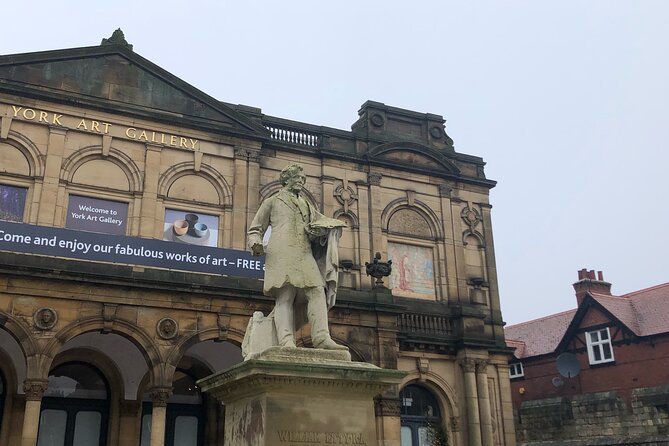
St Cuthbert’s Church is one of those stops where the guide makes you look twice. You learn it has Roman brick work, plus Saxon and Norman architecture, showing how York reused and layered building materials through time.
The unique feature is its Devils door, and the guide unravels the truth behind the myth. It is exactly the kind of “legend plus explanation” stop that keeps the tour feeling lively.
You spend about 6 minutes, and it is a free admission stop. That short window works because the guide gives you the “what to notice” list, then you can spot details yourself.
If you are the type who loves architectural clues, this is a strong payoff for the time.
York City Walls: Roman, Danish, Medieval, and Victorian Changes

This section is one of the most educational parts of the walk. You take in a slice of the medieval walls and the guide connects it to multiple time layers.
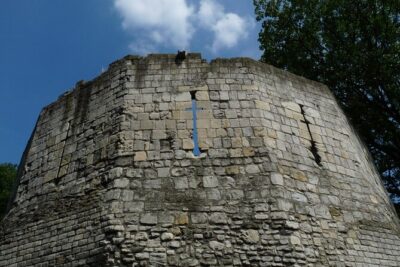
You will see Roman defenses, Danish earthwork, and hear about the medieval past, including sieges. The walls also had Victorian alterations, so you get a reminder that “historic” does not mean frozen in time.
You also pass by the old Jewish quarter of the city. That adds weight to the walk because the walls are not just military structures, they are boundaries around real communities.
The time here is about 15 minutes, and it is free admission.
One consideration: people sometimes expect more wall-walking than a story stop allows. If you want a longer walk along the walls, treat this as your guided introduction, then plan your own route afterward.
Constantine the Great Statue: York’s Imperial Roots
The tour includes a stop at the statue of Constantine the Great, and it is more than a background piece. You learn about the origins of York and its visiting emperors.
You also hear the story of Constantine the Great and his effect on Christianity, tied back to York’s place in that larger arc.
This is a great pause if you have ever wondered why York feels so Roman, even when you are surrounded by medieval architecture. It helps explain the city’s position before the later stonework took over.
Black Swan and Hungate Parish: Quebec Battle Links and Black Cats
Next you enter the old Hungate Parish area and encounter the Black Swan. The guide shares its famous residents and links to the battle of Quebec.
You also get a chance to spot one of York’s famous black cats. Along the way, the architecture is described as reflecting Irish heritage, which gives the neighborhood a distinct feel compared with the older core.
This stop is short, about 5 minutes, and it is free admission. Think of it as a “color and character” interlude, not a major sight. It still adds variety to the tour pace.
Merchant Taylors’ Hall and Guild Economics
As you move along, you see Merchant Taylors’ Hall from the city walls. The guide explains how guilds became the economic center of cities like York.
You also learn about the Taylors’ significance to York and how their role continues today. It is one of those stops that makes the medieval trade story feel grounded, not abstract.
You spend about 4 minutes here, and it is free admission.
If you enjoy learning how institutions worked, this section is a nice bridge between the medieval guild talk earlier and the market-and-commerce stops later.
Shambles Market: York’s Trade Engine
Shambles Market is the next quick stop, about 5 minutes. The guide connects it to York’s economic growth.
This part helps you understand the Shambles area as a living commercial corridor, not just a preserved street for visitors. Even if you do not buy anything, it gives you context for how the city kept functioning over centuries.
It is a free stop, so it is low-risk and easy to enjoy.
Monk Bar and Wild Men of York
Monk Bar is another gate in York’s defenses, and the guide uses it to explain how the city protected itself.
You also hear the legend of the Wild men of York and the gate’s more gruesome uses. It is not scary for the sake of being spooky, it is explanation of how stories attach to places.
Time is short, about 5 minutes, and it is free admission.
If you like walking gates and walls, this is a satisfying way to connect the defenses theme to the city streets.
Ogleforth and the Dutch House: After London’s Great Fire
Ogleforth is described as a Saxon street, and the guide points out the Dutch House and its significance after the Great Fire of London.
You also hear about the emergence of insurance policies and how architecture and commerce connect. It is a neat example of how York was shaped not just by local events, but by wider changes in British life.
This stop is about 5 minutes, and it is free admission.
Kings Square: Street Names, Viking Threads, and Jorvic
Then you reach Kings Square, where the guide connects street names to the city’s layered past, including Viking heritage.
The center is linked to the city of Jorvic, giving you another “this place has an older core” moment.
You spend about 5 minutes, and it is a free stop.
If you like the idea that modern York is built over earlier settlements, this is a helpful closing note. It sets up the last stop as more than a museum name.
York Castle Museum Outside: Prison Reform and Dick Turpin Stories
The tour ends at York Castle Museum from the outside, with about 7 minutes. Admission is not included.
The guide talks about prison reform, how the building used its space in the past, and the myths and stories behind the real Dick Turpin.
Even without going in, this gives you enough context to decide whether you want to spend more time there later. Since the finish area is near the Castle Museum zone, it is easy to add if you feel like it.
Price and Value at About $18
At about $18.02 per person for roughly two hours, this is one of those deals where you are paying for local context, not admissions. Most stops are free to enter, and the paid ticket items you might want, like York Minster and the museum interior, are clearly not included.
That keeps the tour flexible. If you want to go inside Minster, you can. If you do not, you still get a guided “what matters” walk through the city’s highlights.
The small-group cap of 30 helps too. It means you are less likely to feel like you are in a marching line with no room for questions.
Just remember the trade-off: the tour is designed for broad coverage. You will not get a full, slow crawl through every landmark. If you prefer deep time at one site, plan a second block on your own.
Who Should Book This Walk, and Who Might Skip It
This tour fits best if you want fast orientation and story-driven walking. It is ideal for a first visit to York, especially if you only have a day or you want a “setup tour” before you choose what to do next.
It also suits people who enjoy legends with explanations. Stops like Devils door and Dick Turpin are the kind of cultural clues you will see again later around York.
You might consider skipping, or pairing differently, if your top priority is long inside time at York Minster or a full museum afternoon. The guide gives you the spark, not the entire day.
A final practical note: the tour needs good weather. Wear solid shoes. York’s streets are historic and can be uneven underfoot.
Should You Book J & M York City Walking Tours?
If your goal is to see the major sights and understand what you are seeing, this is a smart booking. The route touches the city’s biggest icons, plus gates, churches, walls, markets, and a few story stops most people miss.
I would book it if you like your history with real-world place details, and if you want to end near more sights instead of backtracking. Guides such as Nick or James have been praised for a clear, engaging style and the right pacing, and that matters when you are compressing 2000 years into a two-hour walk.
If you already know York well and want only one landmark in depth, you might get better value spending that time on a museum day. But for a first pass through the city, this walk is built for exactly that job.
FAQ
How long is the J & M York City Walking Tours experience?
It runs for about 2 hours.
What does it cost?
The price is $18.02 per person.
Where does the tour start and where does it end?
It starts at Constantine the Great, 4 Minster Yard, York YO1 7JB, UK. It ends at the Parish of All Saints, Pavement High Ousegate, York YO1 8RZ, UK, and the end point may vary.
Is admission included for York Minster?
No. York Minster admission is not included. There are Minster guides inside, and those tours last about an hour.
Is admission included for York Castle Museum?
No. Admission for York Castle Museum is not included.
How big are the groups?
The tour has a maximum of 30 travelers.
Is the tour offered in English?
Yes, it is offered in English.
Are alcoholic beverages included?
No, alcoholic beverages are not included.
What happens if the weather is poor?
The tour requires good weather. If it is canceled due to poor weather, you will be offered a different date or a full refund.
Is there free cancellation, and until when?
Yes. You can cancel for a full refund up to 24 hours in advance. If you cancel less than 24 hours before the start time, the amount you paid will not be refunded.
York, the Moors and the Dales
- Mad Alice’s The Bloody Tour of York -Best Tour Award Europe★ 5.0 · 2,749 reviews
- York: Daytime Sightseeing Boat Cruise with Live Commentary★ 4.2 · 2,618 reviews
- Comedy Horror Show: York Ghost Bus Tour★ 4.4 · 2,496 reviews
- Ghost Bus Tour of York★ 4.5 · 2,404 reviews
Fresh off the York review pile

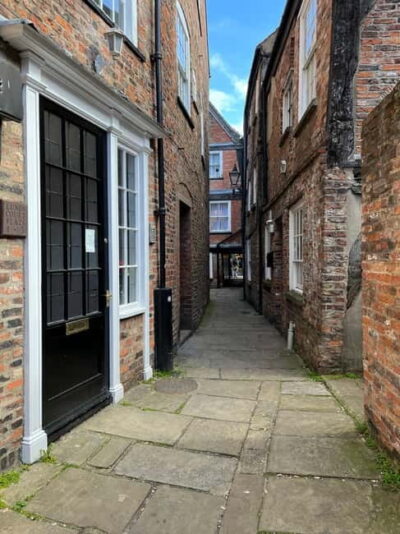

York & the Yorkshire Dales, compared.
 ★ 5.0Mad Alice’s The Bloody Tour of York -Best Tour Award EuropeFrom $202,749 reviews
 ★ 4.2York: Daytime Sightseeing Boat Cruise with Live CommentaryFrom $202,618 reviews
 ★ 4.4Comedy Horror Show: York Ghost Bus TourFrom $262,496 reviews
 ★ 4.5Ghost Bus Tour of YorkFrom $272,404 reviews
 ★ 5.0Shadows of York: Ghost Walk and Horrible History.From $181,403 reviews
 ★ 5.0Private Historical Walking Tour of YorkFrom $1951,324 reviews
 ★ 4.5Daytime Sightseeing Boat Cruise in YorkFrom $201,256 reviews
 ★ 4.5York: Harry Potter Guided Walking TourFrom $181,231 reviews
Also filed under