
REVIEW · GHOST WALKS & HAUNTED HISTORY
London: Witches and History Bankside Walking Tour
Witches meet real London history. On this Witches and History Bankside Walking Tour, a costumed guide threads alleged witchcraft trials through classic Southbank landmarks, with stops that feel like scenes from a play. I like that it is story-first, but still points you to real places, from Southwark Cathedral to St Paul’s.
I also love the short, manageable 75-minute route. You get a lot of variety, river views included, without turning it into an all-day endurance test. The one thing to weigh is that it is outdoors in rain or shine, and the tour runs quickly, so it can feel a bit short if you want a longer sit-with-the-stones history session.
In This Review
- Key things to look forward to
- Starting at Southwark Viewpoint by Minerva Square
- Southbank cobbles, Borough Market edges, and the Golden Hinde
- Winchester Walk and the idea of Tudor Southwark
- The Clink Prison Museum, where the grim turns real
- Shakespeare’s Globe and the Thames: theater, water, and myth
- Millennium Bridge to St Paul’s: ending with big-city scale
- Price and value: getting more than a lecture for about $24
- Who this Bankside witch walk fits best
- Tips to enjoy it without getting cold or rushed
- Should you book the London Witches and History Bankside Walking Tour?
Key things to look forward to
- Costumed guides who genuinely perform, with humor and energy that keep the group engaged.
- Real London witch names in the story mix, including Nicholas Culpepper, Elizabeth Barton, Jinny Bingham (Mother Damnable), and Old Joan Butts.
- A tight loop of major Southbank landmarks, from Southwark Cathedral to Shakespeare’s Globe, the Thames, Millennium Bridge, and St Paul’s.
- The Clink Prison Museum area, where the darker side of the city turns up close and personal.
- A pace that works for kids too, with guides who can keep children asking questions and laughing.
- Outdoor walking comfort matters, because it is a rain or shine tour with only a limited time window.
More after-dark walks with a body count
- Ghost, Ghouls and Gallows Tour : Guided Tour with Boat Ride
★ 4.5 · 3,212 reviews - London: Comedy Horror Ghost Tour on a Bus
★ 4.4 · 2,084 reviews - London: Ghost Walk and River Thames Boat Ride
★ 4.5 · 1,251 reviews
Starting at Southwark Viewpoint by Minerva Square
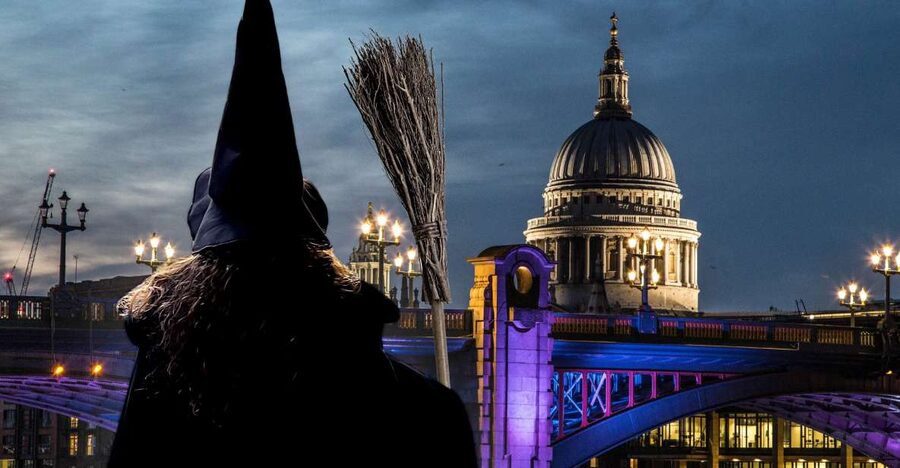
Your tour begins at Southwark Viewpoint, right by Minerva Square, opposite Southwark Cathedral’s entrance. That location is smart because you are already in the heart of old Southwark, close to the river, close to history, and not stuck in a distant meeting spot.
Southwark Cathedral is your first proper anchor. Even if you have seen big churches elsewhere in London, this one hits differently because you are in the exact neighborhood where the stories in the tour sit. The guide uses the setting to frame the theme, witches and history, and then starts pulling the thread into how fear, gossip, medicine, and religion all collided in past centuries.
If you are hoping for a purely academic lecture, you might find the approach more theatrical than textbook. If you want a walk that feels like street-level storytelling, you are in the right place.
Southbank cobbles, Borough Market edges, and the Golden Hinde
After you get going, the route leans into Southbank’s texture, cobbles and compact streets, then opens up toward landmarks you will recognize fast. You pass the edges of Borough Market, which is a useful stop even if you do not buy anything. The market area gives the guide a chance to talk about everyday life and how places where people gather can also become places where rumors grow.
Next comes the Golden Hinde. This Tudor ship is a perfect “history object,” something visual you can react to on the spot. In a tour like this, that matters because the witch stories can get heavy, and a tangible landmark gives your brain a breather while you keep moving.
One of the best-reviewed parts of the experience is how the guides balance humor with facts. Names like Gary the Grey and Witch Veronica show up again and again in feedback, and the pattern is consistent: jokes, character acting, and then an explanation that ties back to why the place matters.
If you are traveling with kids, this portion tends to work well. People described children staying curious, asking questions, and laughing without the tour turning into something childish.
Winchester Walk and the idea of Tudor Southwark
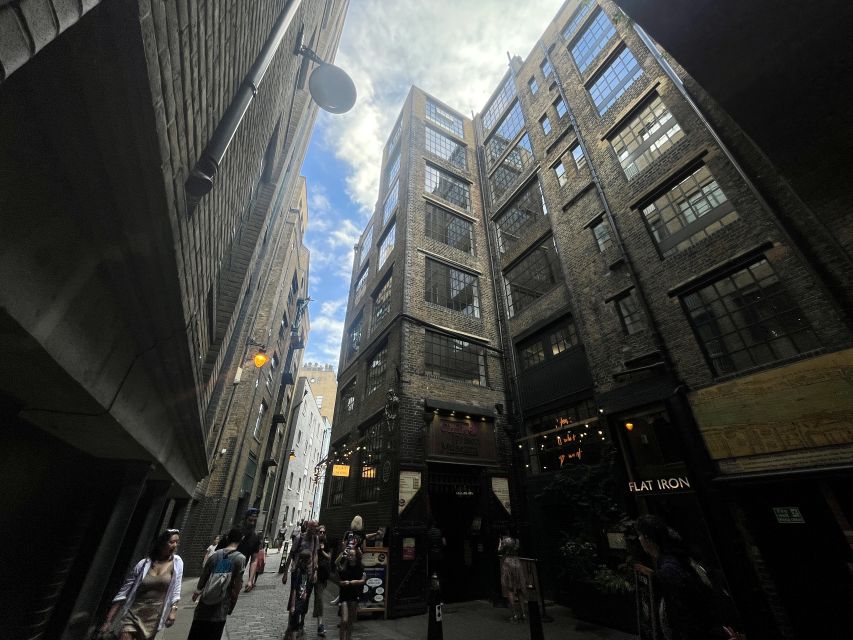
Your walk then winds down Winchester Walk, a street that feels like it belongs to a different era. This is the section where the tour starts to feel like it is slowing down just enough for you to notice details you normally would skip.
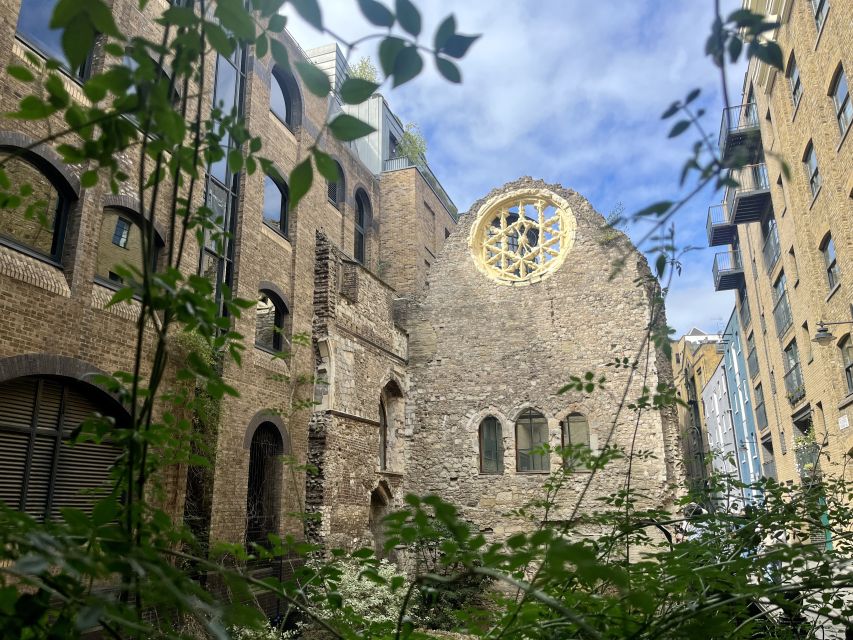
You are in the orbit of Winchester Palace, with the ruins and historic context used to set the scene for Tudor-era London. Even if you do not catch every historical reference, the value here is the way the guide connects a physical location to the mood of the time: powerful institutions, rough justice, and ordinary people living close to everything.
This segment can be a highlight if you enjoy atmosphere. It is not about ticking boxes on a list, it is about learning how the same neighborhood held both power and vulnerability.
The only drawback is that if you prefer landmarks with easy photo angles and wide squares, you might have fewer “postcard moments” during this particular stretch. The payoff is in the storytelling and the sense of place rather than huge skyline views.





The Clink Prison Museum, where the grim turns real
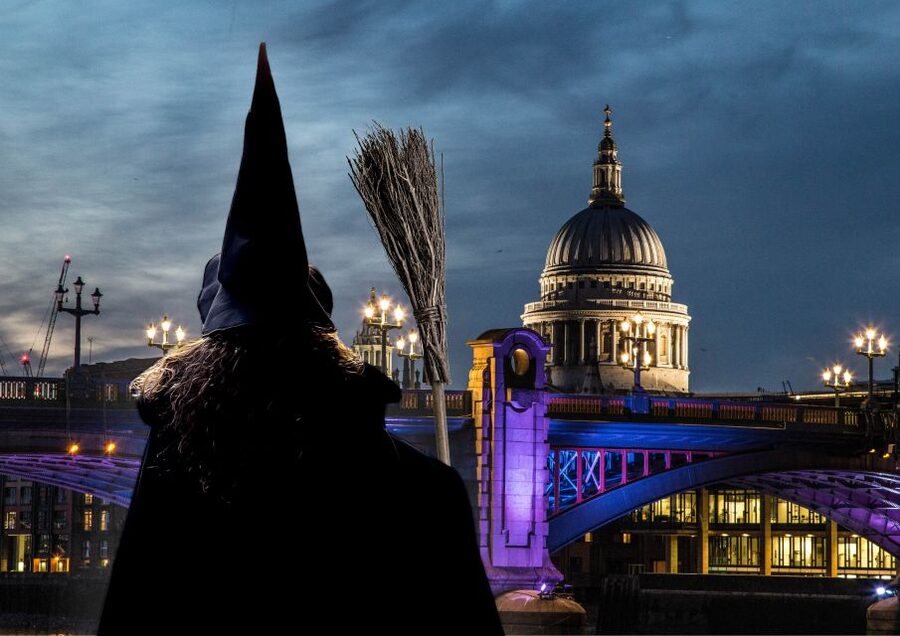
The tour gets noticeably darker as you head toward Clink Street and the Clink Prison Museum area. This is one of the most compelling stops because it turns your witch stories from spooky folklore into something grounded in real punishment.
The Clink is notorious in the popular imagination, and the guide uses that reputation carefully. You are not just hearing “witch trials happened,” you are being pointed toward a place tied to the justice system and the way people were processed when society decided someone was to blame.
This is also where you learn to read the city’s contradictions. London can be theatrical, beautiful, and grand, and at the same time it contains the infrastructure of fear. That contrast is exactly what makes the tour memorable.
If you are sensitive to grim topics, consider that the tour includes darker history and references to persecutions. Based on feedback, the tone can also touch on sexism in witch persecutions, but it is not presented as partisan ranting. It is more about showing the mechanisms of injustice and the human cost.
Shakespeare’s Globe and the Thames: theater, water, and myth
Next you pass Shakespeare’s Globe Theatre, and the experience makes a clever shift. Suddenly, you are in a part of London built for performance, and that matters because the entire tour is built like performance. The guide’s costumed storytelling pairs naturally with a theater location, even if you have never visited the Globe before.
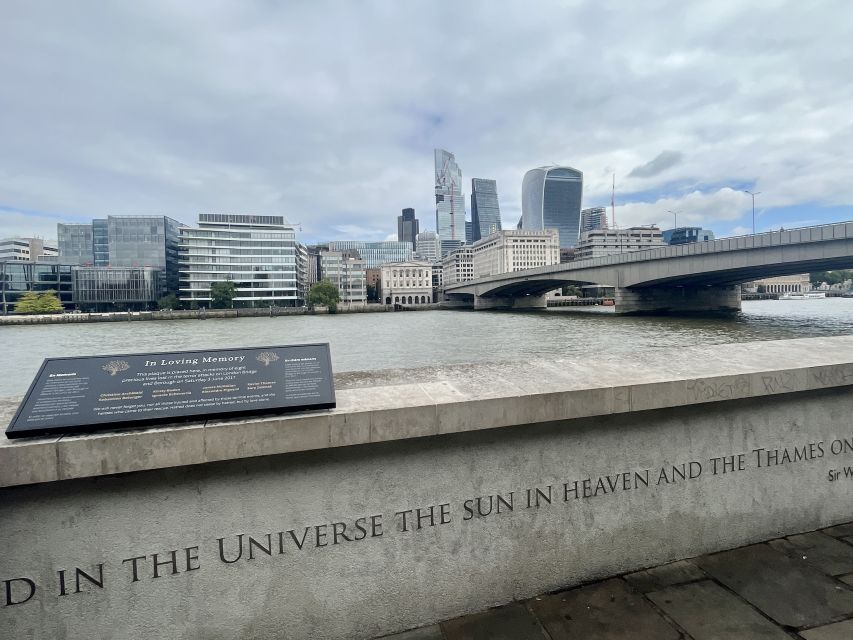
Then you move to the Thames and the river-facing moments. This is where the walk gives you a physical reset. You get open air, better sightlines, and a visual reminder that London is a city of movement, trade, and communication. In other words, it is the perfect backdrop for stories about rumors traveling fast.
Some people also mention filming-location possibilities connected to Harry Potter. You should treat that as a fun maybe, not a promise. The bigger win is the way the guide uses the river setting to frame the stories as part of a larger city web, not isolated anecdotes.
If you are lucky with timing, you may also catch the river at its best. Reviews include one evening where a full moon made the mood extra spooky, which tells you the experience can benefit from lighting and weather the way theater does.
Millennium Bridge to St Paul’s: ending with big-city scale
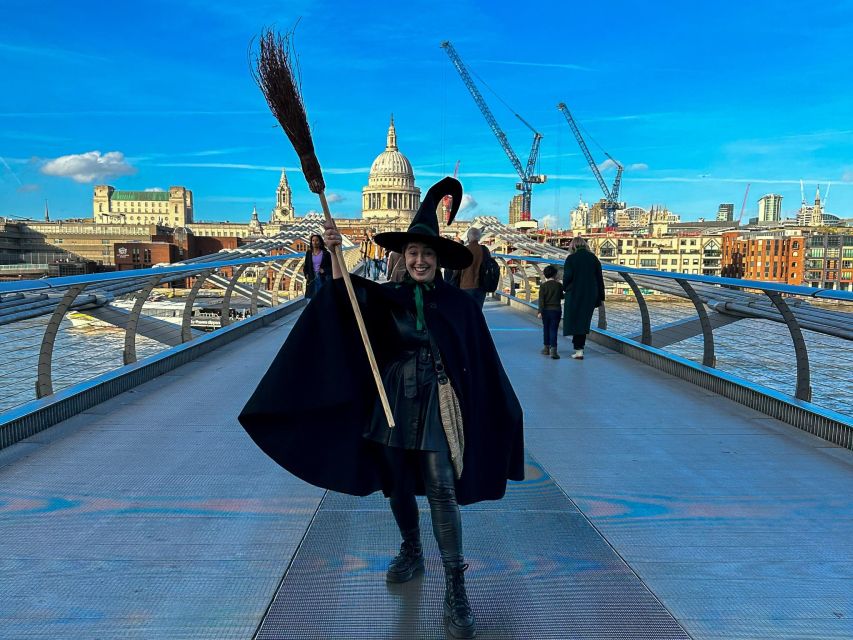
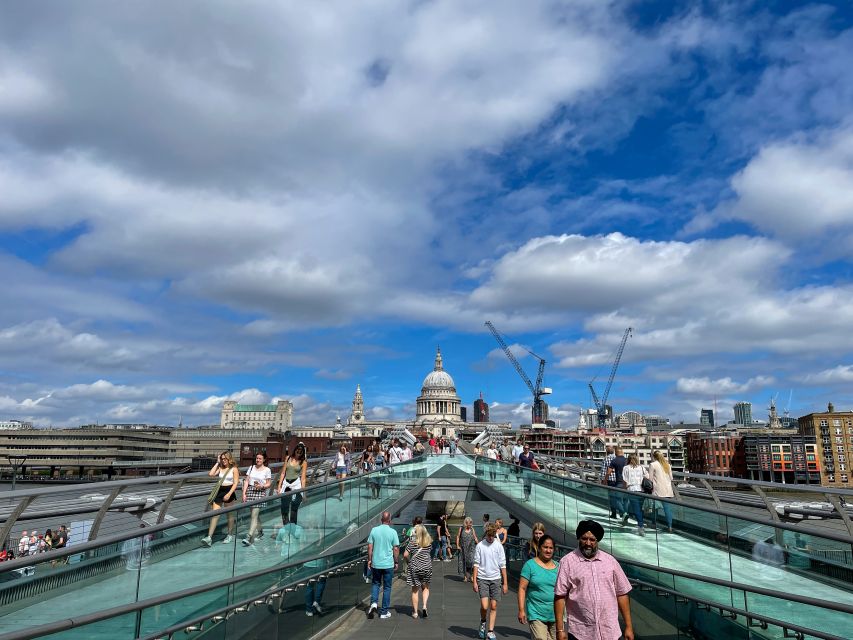
One of the nicest pacing choices is how the tour caps with iconic views. You cross through the Millennium Bridge area, then finish near St Paul’s Cathedral. Even if you have already toured St Paul’s on your own, having it as the final destination changes how it feels. It becomes a conclusion, a symbol, and a contrast to the earlier darker stops.
This is also a practical win. The ending region is central and easy to re-enter into your own plans afterward. You finish at 101 Queen Victoria St, which puts you within reach of transit and nearby sights.
What you should expect here is a sense of London as an ongoing story. The guide threads the witch theme through the walk, but the ending landing near St Paul’s helps you see the theme as part of a much bigger historical picture: belief systems, power structures, and the city’s ability to transform fear into legend.
If you are traveling with older relatives or anyone who tires easily, this ending section is a reminder that you do not have to sprint to get value. The tour stays short by design.
Price and value: getting more than a lecture for about $24
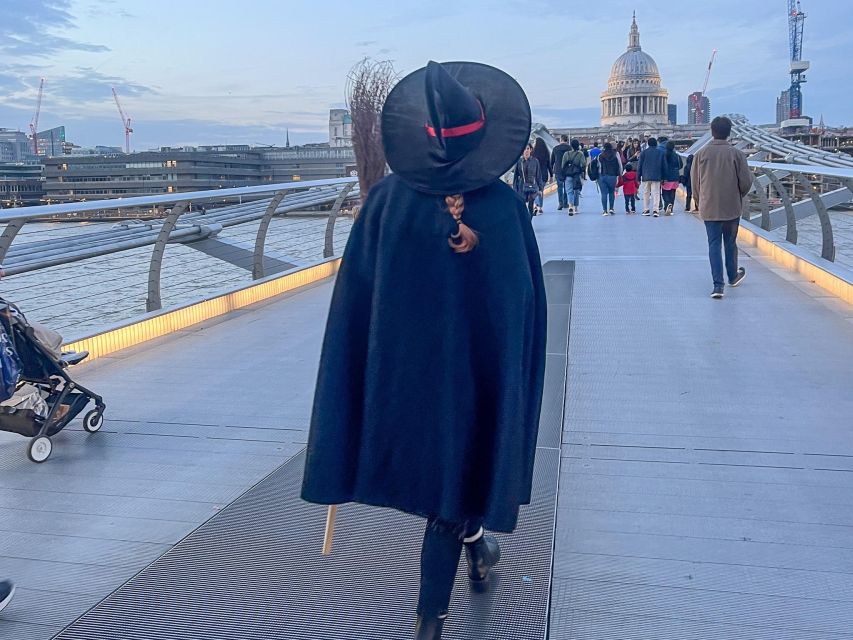
At $24 per person for a 75-minute character walking tour, the value comes from how the experience is packaged. You are not just paying for information, you are paying for a guide who acts, adapts, and keeps the group moving through multiple landmark zones.
You also get value in the mix. In one walk you touch Southwark Cathedral, Borough Market area, the Golden Hinde ship, Winchester Palace ruins, the Clink prison site, Shakespeare’s Globe, the Thames, Millennium Bridge, and the St Paul’s area. That is a lot of geography for one evening.
The best reviews repeatedly credit the guides for warmth, humor, and staying in role. When the performance is good, the “price per minute” becomes less about time and more about how fast you forget you are walking.
If you want value, show up ready to participate. Bring questions. Listen for the connections between the place and the witch story. That is when a tour like this feels like money well spent.
Who this Bankside witch walk fits best
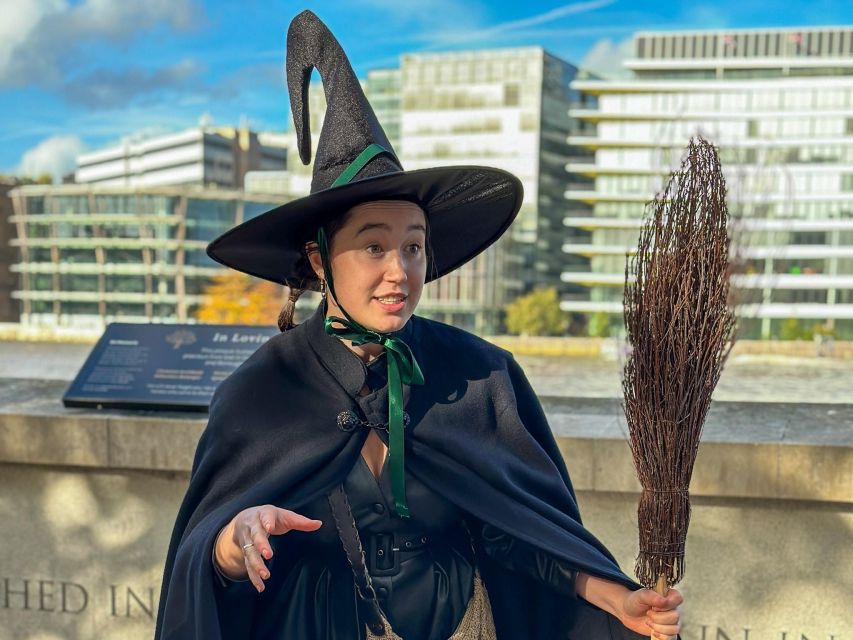
This is a great match if you want London history with personality. If you like spooky stories but also enjoy real locations, the structure works. You get witch tales and the real places they relate to, not just generic ghost vibes.
It also fits families and mixed ages better than many evening tours. Multiple reviews mention children staying hooked, with guides using humor and question prompts that keep kids engaged. The walk is described as not too long on foot, which matters when you are balancing adult curiosity with kid patience.
It is less ideal if you prefer strictly serious museum-style narration and want zero humor or theatrical acting. This tour leans into character work, puns, and banter, and that is part of the point.
If you are traveling solo, you can still enjoy it. One review even mentions a personalized feel when the group was small, which suggests you are not necessarily going to get lost in a crowd dynamic.
Tips to enjoy it without getting cold or rushed
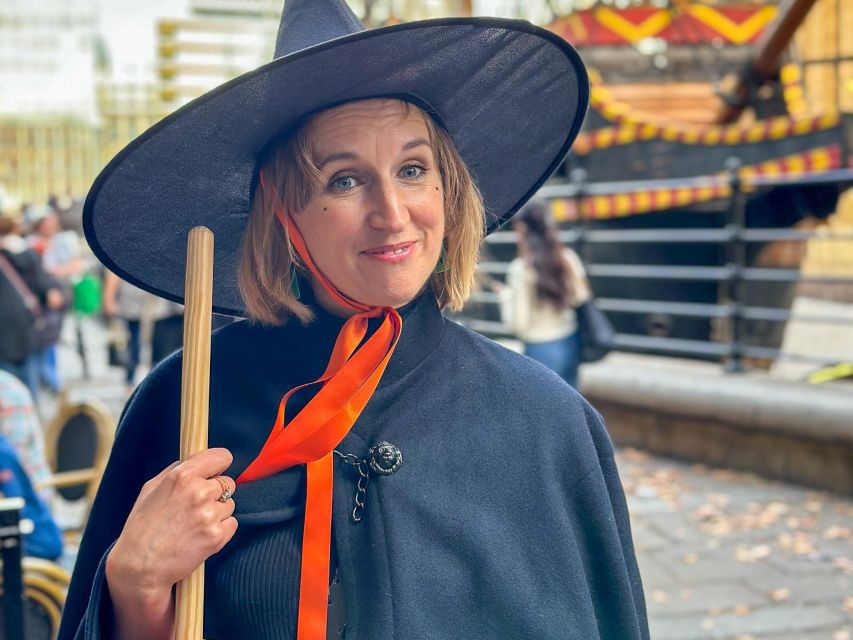
Since it is outdoors in rain or shine, treat clothing as part of your plan. Wear shoes with grip for cobbled and uneven street sections around Southbank. Bring a light rain layer even if the forecast looks friendly, because London weather can change its mind quickly.
Timing matters too, because 75 minutes goes fast. If you want photos, you will get them, but you should expect to move rather than linger at every corner. The guide will set the pace, and the tour works best when you trust that flow.
If you are the type who likes to understand and not just watch, listen for names and themes. Nicholas Culpepper, Elizabeth Barton, Jinny Bingham, and Old Joan Butts are easy anchors. After the tour, those names can help you search or read more without starting from scratch.
And if you want a little theater energy, lean into the roleplay elements. Some reviews mention witch apprentice-style participation with no pressure, which sounds like the kind of optional fun that keeps the tour welcoming.
Should you book the London Witches and History Bankside Walking Tour?
Book it if you want a short evening walk that mixes witch storytelling with real Southbank locations. The big reasons to choose it are the character-guide performance, the humor that makes darker topics easier to digest, and the tight route that still delivers major landmarks like St Paul’s and the Thames.
Skip it if you want a long, slow, academic tour with lots of indoor stops and minimal spooky material. Also skip it if you hate outdoor weather and standing in open air for viewpoints, because the format is built around walking.
If your ideal London experience includes theater energy, a few shivers, and then a satisfying “wrap up” near St Paul’s, this is an easy yes.
Ghost Walks After Dark
- Ghost, Ghouls and Gallows Tour : Guided Tour with Boat Ride★ 4.5 · 3,212 reviews
- London: Comedy Horror Ghost Tour on a Bus★ 4.4 · 2,084 reviews
- London: Ghost Walk and River Thames Boat Ride★ 4.5 · 1,251 reviews
- Ghost Bus Tour of London★ 4.0 · 961 reviews
Fresh off the London review pile

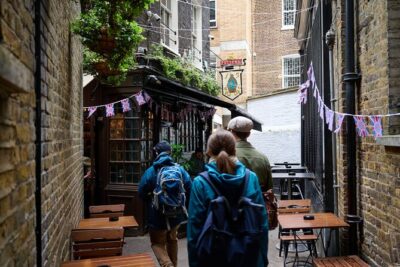
Ghost Walks & Haunted History, compared.
 ★ 4.5The World Famous Underground Ghost TourFrom $269,272 reviews
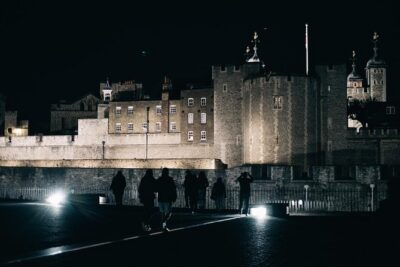 ★ 4.5Ghost, Ghouls and Gallows Tour : Guided Tour with Boat RideFrom $293,212 reviews
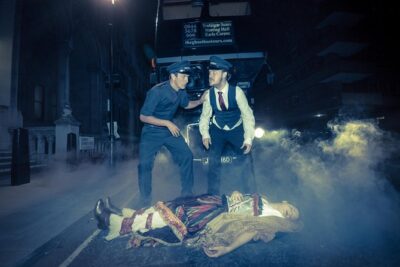 ★ 4.5Ghost Bus Tour of EdinburghFrom $242,761 reviews
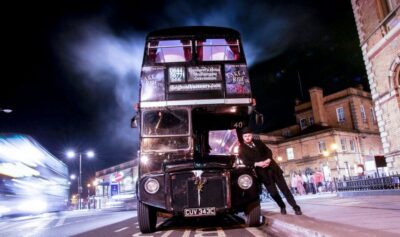 ★ 4.4Comedy Horror Show: York Ghost Bus TourFrom $262,496 reviews
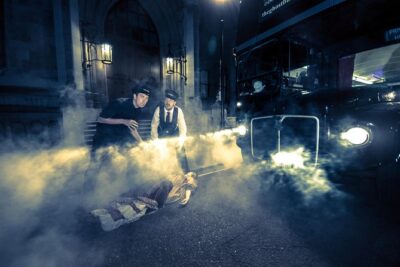 ★ 4.5Ghost Bus Tour of YorkFrom $272,404 reviews
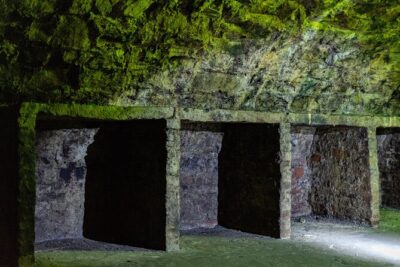 ★ 5.0Haunted Vaults Walking Tour in EdinburghFrom $332,183 reviews
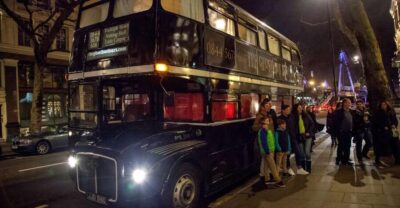 ★ 4.4London: Comedy Horror Ghost Tour on a BusFrom $372,084 reviews
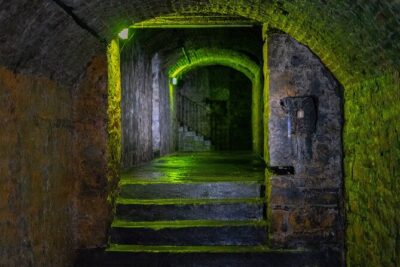 ★ 4.5Haunted Vaults and Graveyard Walking Tour in EdinburghFrom $361,702 reviews
Also filed under