

REVIEW · OXFORD UNIVERSITY & BLENHEIM PALACE
Oxford Official University & City Tour
Oxford feels closer when you walk it. This 2-hour Oxford Official University & City Tour is built for first-timers who want the main sights and the stories behind them, all on foot. You start on Broad Street and move through the university core and the surrounding city landmarks with a guide leading the pace, plus a mobile ticket to keep things simple.
I love that you get both Oxford University and Oxford city cues in one tight loop. I also like the chance for an afternoon college visit (when available), since it is the part that can be hard to replicate on your own. One thing to consider: a portion of the tour is primarily outside views, and depending on the day and time slot, some entrances you might hope for are not included.
In This Review
- Quick hits before you go
- The real appeal, a tight loop through Oxford’s university core
- Broad Street meetup, where the walking tour gets its rhythm
- Trinity College stop, the face of Oxford University on your first glance
- Balliol College and the claim of oldest college energy
- Martyrs’ Memorial and the Broad Street story you will not see by accident
- Sheldonian Theatre, an Oxford ceremonial space glimpsed from the street
- Bodleian Library and the Radcliffe Camera, two iconic views from outside
- The University Church and the medieval Town and Gown conflict
- One of Oxford’s oldest Saxon towers, why it changes your view of time
- College entry in the afternoon: the value depends on your time slot
- What guides do best here, pace, stories, and customization
- Price and value: $41.61 for 2 hours, where the money goes
- How to combine this tour with a full Oxford day
- Who should book this, and who might want something longer
- Should you book this Oxford Official University & City Tour?
- FAQ
- Where is the meeting point for the Oxford tour?
- How long is the Oxford Official University & City Tour?
- Is the tour offered in English?
- Do I get a mobile ticket or a paper ticket?
- Do I get to visit a college during the tour?
- Are entrance tickets included for every stop?
- What is the maximum group size?
- Will the tour run in bad weather?
- Are service animals allowed on the tour?
- Is free cancellation available?
Quick hits before you go

- Two hours, maximum 20 people keeps it focused and easy to ask questions
- Broad Street anchor stops like Trinity College and the Martyrs’ Memorial set the tone fast
- Classic Oxford views include Sheldonian Theatre, Bodleian Library, and the Radcliffe Camera (from the outside)
- Afternoon tours may include a college visit for a taste of areas most visitors do not access
- Weather-aware planning is built in, and the tour usually runs unless conditions get truly nasty
Other Oxford colleges and Blenheim days
- Oxford University Walking Tour With University Alumni Guide
★ 5.0 · 6,905 reviews - Oxford: University and City Walking Tour with Alumni Guide
★ 4.7 · 4,429 reviews - Oxford: City and University Tour, including college entry
★ 4.5 · 2,243 reviews
The real appeal, a tight loop through Oxford’s university core
This is the kind of Oxford tour that makes sense if you have limited time but still want the big ideas. In about 2 hours, you cover a strong set of landmarks tied to the university, the city, and the tensions between them.
The route is also practical. It is not a long bus-and-stop day. You are walking, with short stops to look up, take photos, and then get the story so the buildings stop being random façades. With a group capped at 20, it is manageable even in busy areas, and you are not just shuffled along behind a line of strangers.
And the guide matters. The strongest versions of this tour, the ones people rave about, are driven by guides who can keep the momentum going, work at an easy pace, and turn Oxford names and architecture into something you actually remember.
Broad Street meetup, where the walking tour gets its rhythm
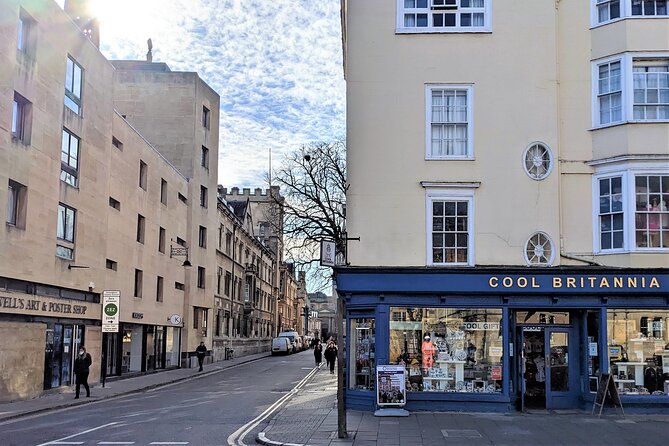
You meet at Cool Britannia, 23-25 Broad St, Oxford OX1 3AX. That puts you right where Oxford’s university and city start to commingle. From the first minutes, you are oriented around Oxford’s most iconic corridor, and that helps the rest of the tour click.
The tour is offered in English, and it runs on a guided walking format that returns back to the starting point. A lot of people underestimate how much you can feel you are “seeing” in a short window, but Oxford’s concentration of famous buildings makes it work.
A practical tip: wear comfortable shoes. Even with short stop times, Oxford stone streets add up fast. If you are sensitive to cold or rain, dress for it. People have noted the difference that a winter day can make, even when the tour still goes ahead.
Trinity College stop, the face of Oxford University on your first glance
The first stop is Trinity College. You get views quickly, and it is positioned right near the Broad Street action. Trinity is one of Oxford’s most famous colleges, so even if you only know Oxford from books or films, it feels familiar on sight.
Why this stop works: Trinity is not just a name. It is a reference point. Once you understand where Trinity sits in relation to Broad Street, the rest of the university buildings you pass later start making more sense as a connected world rather than a scatter of postcard locations.
Also, the tour includes a free admission ticket for this college stop, based on the tour details. That is a meaningful difference versus “only looking from outside” for everything. It is one of the reasons this tour can feel better value than some other quick highlights options.





Balliol College and the claim of oldest college energy
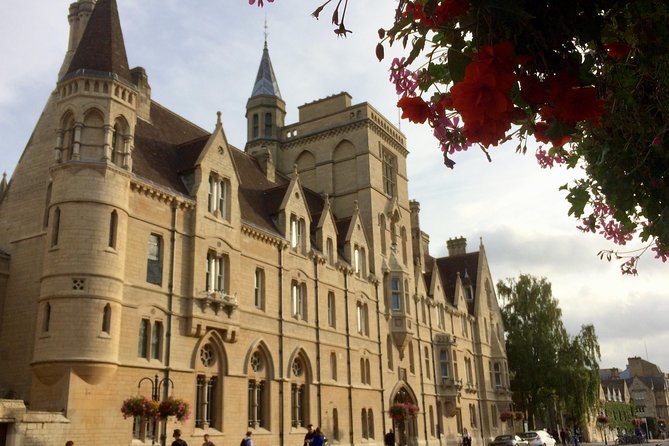
Next up is Balliol College. The big hook here is the college’s claim to be the very oldest Oxford college. That sounds like pure trivia until your guide ties it to how Oxford formed, why colleges became powerful institutions, and how identity got built over centuries.
This stop is only about 5 minutes, so do not expect a long wander. But it is a classic “set your mental map” moment. Balliol helps you connect the university’s medieval roots with the Oxford you see today, where colleges still shape everything from traditions to architecture.
One note to plan for: admission is not included at this stop. In practice, that usually means you should be ready for what you can see within the time window rather than assuming full entry access.
Martyrs’ Memorial and the Broad Street story you will not see by accident

Then you hit Martyrs’ Memorial, including the cross in the cobbles on Broad Street and a nearby monument on St Giles dedicated to martyred bishops in the 1600s. This is the kind of Oxford stop that feels more grounded than the big theatres and famous libraries, because it deals with conflict, faith, and public memory.
You also pass a key cluster of landmarks around this area, including references to the Randolph Hotel and the Ashmolean Museum. The tour uses these nearby points as wayfinding anchors, so you get a sense of where Oxford’s main museum district sits relative to the university core.
Why I like this part: it adds stakes to the walking. Oxford is not just pretty buildings. It has a record of serious events, and the guide’s job is to connect monuments like this to the bigger narrative of who held power, and what happens when power shifts.
Sheldonian Theatre, an Oxford ceremonial space glimpsed from the street
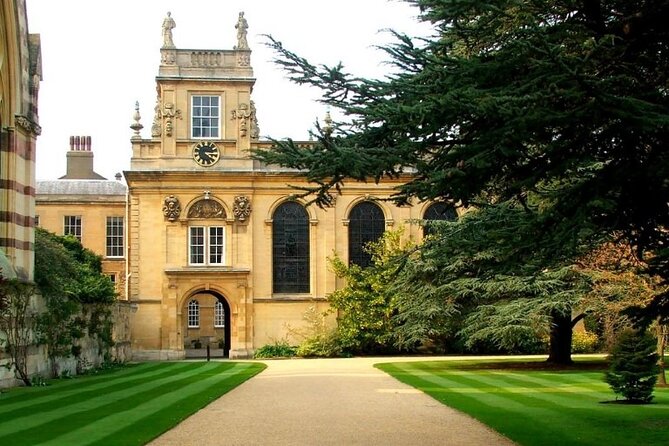
You then arrive at the Sheldonian Theatre, with time for a quick look at the stone heads outside. The theatre is connected to Oxford’s official ceremonial life, so it is a natural bridge from college identity to university ritual.
Like Balliol, the tour details show admission is not included at this stop, so you are mostly seeing it from outside in the time allotted. But even from the street, it gives you a sense of scale. It is one of those Oxford structures that makes you feel how formal and planned university life was, even before modern tourism made it easy to look in.
If you love architecture, this is a strong moment. If you are less into stonework, focus on the story: why a theatre like this mattered to Oxford’s self-image, and how it helped cement the university’s public presence.
Bodleian Library and the Radcliffe Camera, two iconic views from outside

Next comes the Bodleian Library. You see it from the outside, which can feel limiting until you remember why Oxford tours often do it this way. The Bodleian is a working institution and visitor access can vary by time. From the street, you still get the visual identity and the credibility of the place, without needing to schedule a long interior block.
Then you walk around the square for the Radcliffe Camera, the domed landmark that practically defines Oxford in photos. The time here is longer than most stops, about 10 minutes, which gives you a chance to step back, frame shots, and really see the building’s shape instead of rushing past it.
What these two stops do well together is contrast. The Bodleian signals the university as a knowledge machine. The Radcliffe Camera signals how Oxford packaged its learning into recognizable, almost ceremonial imagery.
Also, both are not included for admission on this tour schedule. So keep your expectations aligned with what you paid for: exterior views plus guided context.
The University Church and the medieval Town and Gown conflict
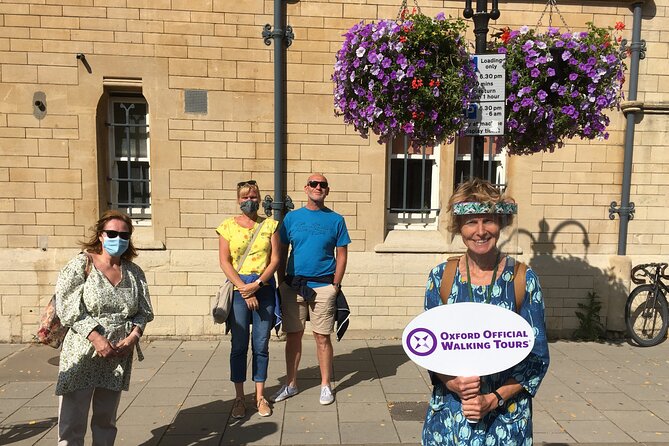
After the major university sights, the tour pivots to something that often feels like the emotional core of Oxford. You see the University Church for the University of Oxford, where the original university library was housed. Even if you never read the church interior during your visit, the idea matters. Oxford’s learning story started here, and the tour makes that connection.
Outside the church, you also get context about Town and Gown conflicts in the middle ages. This is one of those parts where the guide’s tone really matters. You are not just hearing dates. You are hearing why the university and the city acted like separate worlds, and why that separation caused friction.
This is also where you should listen closely if you want the big picture. A lot of Oxford attractions are impressive, but this explains the tension behind them.
One of Oxford’s oldest Saxon towers, why it changes your view of time
The final element mentioned in the tour route is one of the oldest Saxon towers in Oxford. That detail is easy to pass over if you are scanning for the next famous name, but it is one of the best “mind reset” points in the tour.
Saxon-period survivals are not what most people picture when they think of Oxford. Seeing one in the middle of a tour loaded with colleges and theatres helps you realize the city keeps layers. Oxford did not start as a university campus. It became one, on top of older structures and older history.
If you want a single takeaway from this stop, it is this: Oxford’s identity is built in layers, and the guide uses each stop to help you place that timeline in your head.
College entry in the afternoon: the value depends on your time slot
Here is where the tour can be a great deal for the right plan. The experience includes a college visit for afternoon tours (subject to availability). Morning tours do not include a college visit, according to the tour details.
Why this matters: walking past college walls is nice, but Oxford colleges are the reason many people come. If you schedule this as an afternoon tour, you stand a better chance of seeing at least one college interior area. And that is often the difference between a tour that feels like highlights and a tour that feels like you got access.
If you are choosing between morning and afternoon and you care about interiors, lean afternoon when possible. If you are short on flexibility and only morning works, do not panic. You still get a strong overview, just more exterior viewing.
What guides do best here, pace, stories, and customization
The best tours are not about throwing facts at you. They are about pacing and turning names into characters. This one shines when your guide keeps things moving, sets an easy rhythm, and adjusts on the fly.
People have specifically highlighted how some guides use an easy pace and make room for extra stops based on what the group wants. There are also examples of guides customizing around interests, like requests connected to C.S. Lewis stops. That is a smart use of time. Oxford trivia becomes personal when the guide connects it to what you are actually curious about.
One more practical point: if the group gets noisy, stand where you can hear. Oxford streets can be windy and echoey. A few people noted issues with volume and clarity on certain days, so being closer to the front helps a lot.
Price and value: $41.61 for 2 hours, where the money goes
At $41.61 per person for about 2 hours, the value comes from three things.
First, you get a guided walking tour with a structured route through the university center. Paying for a guide matters more in Oxford than in many cities because the buildings are dense and the meaning is not always obvious from the street.
Second, some stops include free access elements tied to the specific college and memorial moments. Others are outside viewing with admission not included, so you are paying for the guidance and the route, not a full set of paid entries.
Third, the group size cap at 20 helps. This is not a giant cattle-cart. You can actually ask questions without shouting over the crowd.
If you want maximum value, choose the afternoon option for potential college entry. If you can only do morning, still book it if your goal is Oxford orientation fast and efficient.
How to combine this tour with a full Oxford day
This tour works best as a first move. It gives you the layout of the university area and sets you up to explore on your own afterward with better instincts.
Here is how I’d plan your day around it:
- Start with this walk, then pick one or two places to return to on your own based on what grabbed you
- If you are a library and theatre fan, consider spending extra time near the Bodleian and Radcliffe Camera area after the tour
- If you want more “college atmosphere,” use the afternoon college visit chance as your anchor, then add a slower wander through the nearby lanes
A time-saver tip: Oxford is crowded in seasons. After a guided loop, you will know where to go when you re-enter the streets without feeling lost.
Who should book this, and who might want something longer
This is a smart fit if:
- You are visiting for a short time and want Oxford University highlights without a half-day commitment
- You want a guided narrative that ties buildings to broader themes like university power and city conflicts
- You like photo-worthy landmarks like the Radcliffe Camera, but also want the context behind them
You might choose a different option if:
- You specifically want lots of interior visits every stop, because this route includes several outside viewing moments and some stops with admission not included
- You hate walking, even though it is a manageable 2-hour duration
- You need very detailed access to multiple specific colleges, since college entry depends on afternoon availability
Should you book this Oxford Official University & City Tour?
I’d book it if you want an efficient, well-paced orientation to Oxford in a couple of hours. It is highly rated, with strong feedback on guide quality and the way the walk connects Oxford’s university and city life. The route hits the famous names fast, then adds meaning through memorials and Oxford’s medieval tensions.
If your schedule allows it, book an afternoon slot to maximize your odds of a college visit. If not, it still does its job: helping you understand where you are standing and why it matters, without turning your day into an itinerary marathon.
FAQ
Where is the meeting point for the Oxford tour?
The tour starts at Cool Britannia, 23-25 Broad St, Oxford OX1 3AX, UK.
How long is the Oxford Official University & City Tour?
The tour lasts about 2 hours.
Is the tour offered in English?
Yes, the tour is offered in English.
Do I get a mobile ticket or a paper ticket?
You get a mobile ticket.
Do I get to visit a college during the tour?
A college visit is included for afternoon tours, subject to availability. Morning tours do not include a college visit.
Are entrance tickets included for every stop?
No. Some stops note admission tickets as free, while others state admission tickets are not included, such as Balliol College, Sheldonian Theatre, and the Bodleian Library.
What is the maximum group size?
The tour has a maximum of 20 travelers.
Will the tour run in bad weather?
It requires good weather. If there are severe and dangerous (Yellow) weather warnings, the tour may be postponed. If canceled due to poor weather, you are offered a different date or a full refund.
Are service animals allowed on the tour?
Yes, service animals are allowed.
Is free cancellation available?
Yes. You can cancel for a full refund if you cancel at least 24 hours in advance. Changes within 24 hours are not accepted, and cancellations less than 24 hours before the start time are not refunded.
Oxford Colleges and Blenheim
- Oxford University Walking Tour With University Alumni Guide★ 5.0 · 6,905 reviews
- Oxford: University and City Walking Tour with Alumni Guide★ 4.7 · 4,429 reviews
- Oxford: City and University Tour, including college entry★ 4.5 · 2,243 reviews
- Oxford: Harry Potter Walking Tour Including New College★ 4.6 · 1,446 reviews
Fresh off the Oxford review pile



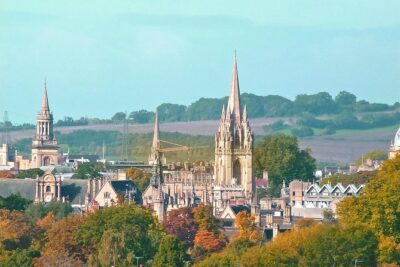


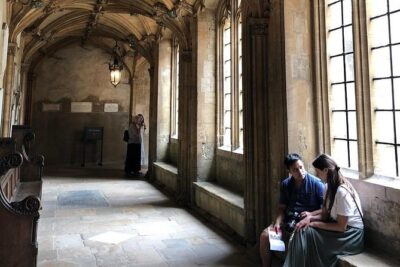

Oxford University & Blenheim Palace, compared.
 ★ 5.0Oxford University Walking Tour With University Alumni GuideFrom $416,905 reviews
 ★ 4.4London: Full-Day Windsor, Stonehenge, and Oxford TourFrom $1205,368 reviews
 ★ 4.5Windsor Castle, Stonehenge, and Oxford Day Trip from LondonFrom $1235,292 reviews
 ★ 4.7London: Harry Potter Studio Tour and Oxford Day TripFrom $1745,098 reviews
 ★ 4.7Oxford: University and City Walking Tour with Alumni GuideFrom $404,429 reviews
 ★ 4.7From London: Cotswolds and Oxford Guided Day-TripFrom $1063,720 reviews
 ★ 4.5Oxford, Stratford-upon-Avon, Cotswolds & Warwick Castle Day TripFrom $1092,943 reviews
★ 4.5Windsor Castle, Stonehenge, and Oxford Day Trip from LondonFrom $1232,474 reviews
★ 4.5Oxford, Stratford-upon-Avon, Cotswolds & Warwick Castle Day TripFrom $1092,943 reviews
★ 4.5Windsor Castle, Stonehenge, and Oxford Day Trip from LondonFrom $1232,474 reviews
Also filed under