
REVIEW · SHAKESPEARE'S STRATFORD & WARWICK CASTLE
Shakespeare in the City Walk – In Shakespeare’s footsteps North of the Thames
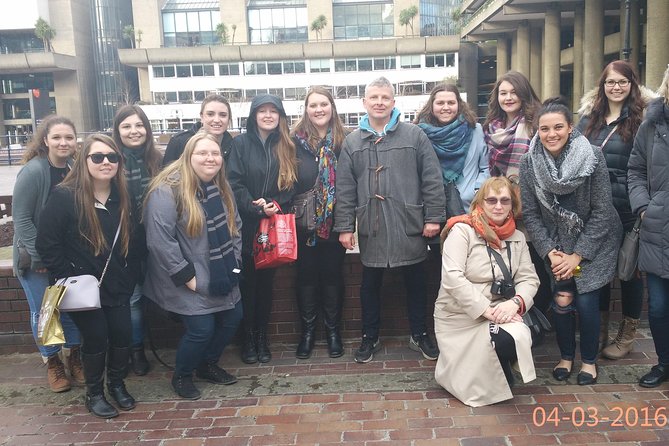
Shakespeare comes alive on city streets. This North of the Thames walk is led by Declan and turns everyday corners into stage sets, with Shakespeare facts tied to real locations you can stand on. I loved the way myths get punctured with clean explanations, and I loved the live performance bits that make the language feel immediate. The only real drawback is that it is outdoors most of the time, so pack for cold or drizzle.
For the money, this one is hard to beat. At $20.83 per person for about 2 hours, you get a small group, a professional guide, and lots of story time without the pressure of a museum crowd.
It is also a smart pick if you want Shakespeare beyond the usual highlights. The route focuses on neighborhoods north of the Thames, so you see London as a lived-in web, not just a postcard.
In This Review
- Key things I’d circle before you go
- Starting at Blackfriars Underground, and why it matters
- A small-group Shakespeare walk that actually feels like theatre
- Blackfriars stops that explain how theatre, power, and money connect
- Saint Andrew’s Hill: Shakespeare’s house site and a hidden sculpture
- Queen Victoria Street and the speech you can hear clearly
- St Paul’s Cathedral: the big reveal without the crowds
- Cheapside, Love Lane, and the parts people skip
- London Wall and the uncomfortable side of family life
- St Giles Cripplegate: actors, Edmund, and a goodbye speech
- Price and value: $20.83 for performance-based city storytelling
- Who this walk is best for
- Should you book Shakespeare in the City Walk?
- FAQ
- How long is the Shakespeare in the City Walk?
- What time does the tour start?
- Where do I meet the guide for the walk?
- Which Blackfriars station should I use?
- Do we go inside St Paul’s Cathedral?
- Are there entrance fees at the stops?
- What age is recommended for children?
- Is there free cancellation?
Key things I’d circle before you go
- Meet at Blackfriars Underground, not the Overground station: one wrong station and you will waste time.
- Declan is a former professional actor, so the tour leans into performance, not just recitation.
- Small groups (up to 15) mean you actually notice the guide responding to your questions.
- Free admission at the stops is part of the design, so you spend on food and transport, not tickets.
- You do not go inside St Paul’s Cathedral, but you still get a big reveal from outside.
Thames trips we boarded as well
- London: Westminster to Greenwich River Thames Cruise
★ 4.5 · 22,836 reviews - London Big Bus Hop-On Hop-Off Tour with Optional River Cruise
★ 3.5 · 10,803 reviews - London: Westminster to Tower Bridge River Thames Cruise
★ 4.5 · 6,127 reviews
Starting at Blackfriars Underground, and why it matters

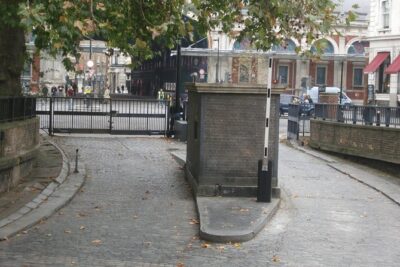
The tour starts outside Blackfriars Underground Station. You want the Underground station on the Circle and District Lines. The key practical detail is this: do not head to the Blackfriars Overground station south of the river. They are close on a map, but they do not feel close when you are trying to meet a guide on time.
The good news is that the meeting point is simple. There is only one exit at the Underground station, so you should spot the guide quickly. Declan will be standing near that exit with a sign on his rucksack featuring Shakespeare’s face. Even if you are arriving a few minutes early, you can get your bearings without sprinting.
The tour start time is 11:00 am, and the whole walk runs about 2 hours. That timing matters because it is long enough to feel like a real circuit, but short enough that you can still eat your way through the area afterward.
A small-group Shakespeare walk that actually feels like theatre
This is not a museum tour where the guide talks at you from behind a rope. The format is walking and stopping, with lots of short pauses where Declan shares the story behind what you are seeing.
The reason that works is simple: Shakespeare’s London is mostly layers. You are looking at streets and buildings that have changed. Declan uses that reality to connect the Bard’s life, his plays, and the local sites. The stories move fast, but they are anchored to real place names, small monuments, church sites, and plaques.
And because Declan has the background of a former professional actor, you get live delivery. At a couple of stops, you do not just get a summary. You get the full speech moment, delivered as performance. That single shift makes old text easier to follow, even if you are not a Shakespeare scholar.
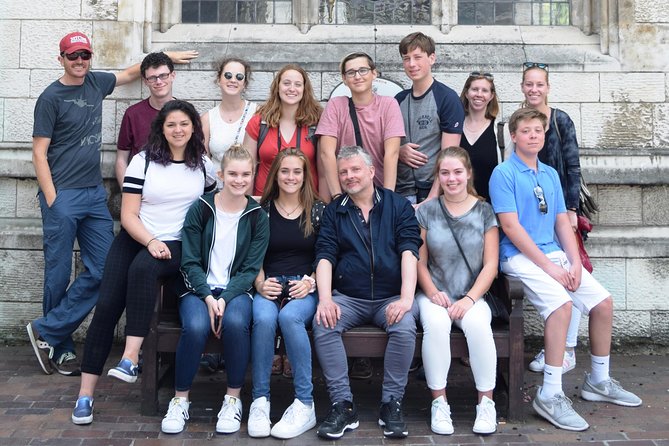
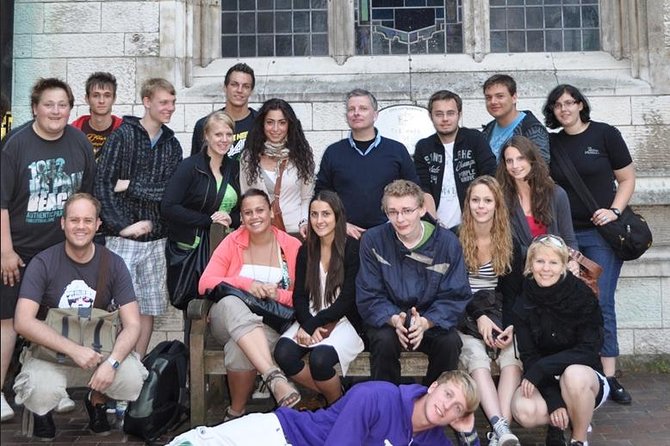
Group size is capped at 15 per booking, with a maximum of 45 travelers overall. In practice, that usually means you are not swallowed by a crowd. You will have more chance to hear details clearly and ask questions before the group moves on.
Blackfriars stops that explain how theatre, power, and money connect
The first segment is all about setting the stage, literally. Early on, you see a Shakespeare statue most people miss. That sounds minor until you understand why it is useful: the guide uses that moment to talk about Shakespeare’s popularity and to deal with conspiracy-style claims head-on. The tone is calm and practical, not preachy.
From there, the walk shifts into Blackfriars Theatre territory. You pause at a church-connected location tied to where the original Blackfriars Theatre once stood. Declan walks you through why access mattered and what it meant to be rich enough to attend certain kinds of events.
Then you head toward Ireland Yard, where there is a remaining fragment of the Blackfriars Monastery. This stop is a nice reminder that Shakespeare’s world did not start as a theatre district. It was a place with older religious roots that later got repurposed. Declan links that physical leftover to thematic obsessions, basically showing how Shakespeare keeps circling ideas like devotion, confinement, and the cost of public life.
Carter Lane shows up twice on the route, and both times it has a different job. The first Carter Lane stop is a quiet, tucked-away spot that connects Shakespeare and King James. It is the kind of location you would walk past without realizing it had a story, which is exactly why guided walking works.
Other Stratford visits and castle days





Saint Andrew’s Hill: Shakespeare’s house site and a hidden sculpture
This part of the walk leans into the feeling of detective work. At Saint Andrew’s Hill, you learn about the site of a Shakespeare house in London, and what happened to it. Declan also suggests the play likely written here, so you get a sense of how the Bard might have used domestic space for writing.
There is also a church stop with a hidden sculpture of Shakespeare praying. That detail is easy to miss on your own, even if you are looking for it, because it is not the obvious tourist sculpture. The guide adds a story about a very important document and a researcher tied to American pride, but the point for you is the method: you are learning how to read the built environment, not just memorize dates.
If you like your Shakespeare talk tied to place rather than trivia alone, this stretch is the one that tends to stick.
Queen Victoria Street and the speech you can hear clearly
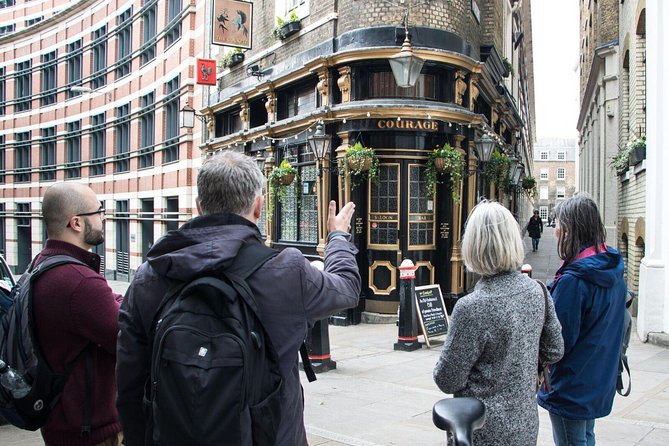
Queen Victoria Street is where the walk gets fun and slightly theatrical in the best way. There is an extraordinary hidden totem pole made from a famous Shakespeare speech. You would not find this by accident, and that is the whole point of this kind of city walk.
Declan then gives the entire speech. Not the idea of it, not a summary of a summary. He delivers it in full, as part of the experience rather than as a lecture component. If you find Shakespeare intimidating, that is a big deal. Hearing the language in a setting like this helps you catch rhythm and emphasis, even when you do not follow every word.
Right after that, you connect to the College of Arms and the Shakespeare family coat of arms. You learn why the honour came two months too late, plus a joke from Ben Jonson at Shakespeare’s expense. You also get details about Shakespeare’s children. It is a concentrated burst of “status and paperwork” that balances the theatre story with the real-world system that supported a writer’s reputation.
St Paul’s Cathedral: the big reveal without the crowds

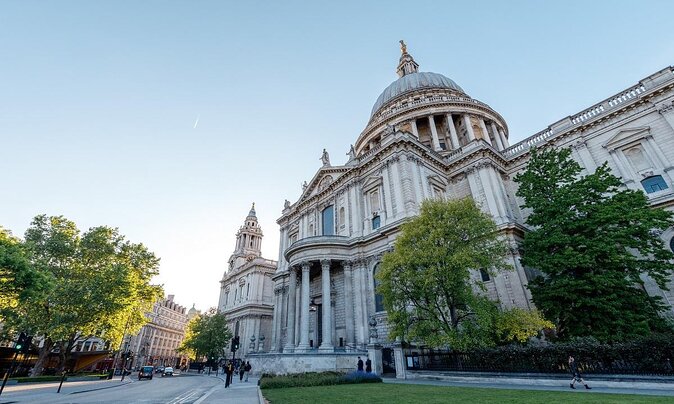
You reach St Paul’s Cathedral next. The tour does not go inside, but you still get a major revelation from outside. Declan ties the cathedral moment to Shakespeare’s best-known commercial success, his sonnets, and a reasonable interpretation of his sexuality.
If those topics are personal or sensitive for you, take comfort in the phrasing: you are not being asked to treat it like a court verdict. The guide frames it as interpretation and context, using the material and the era to build a cautious read.
There is also a standout “Declan’s favourite words” clue that he shares in this area. It is only four words, and he calls them cosmic. You might not know what he means until he delivers the line, which is part of the charm. You leave this stop thinking about Shakespeare not just as a playwright, but as a writer of punchy, memorable language.
Cheapside, Love Lane, and the parts people skip
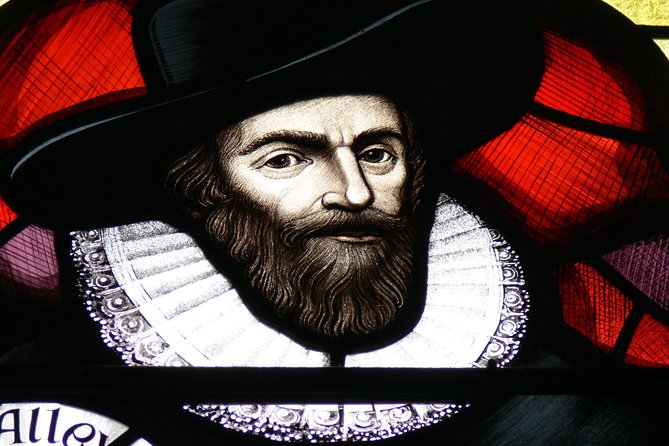
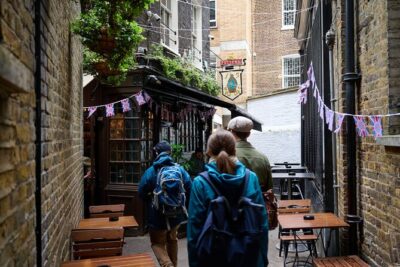
Cheapside is next, and the vibe shifts toward the craft of writing. Declan talks about Shakespeare’s vocabulary and why it was not enough by itself. He also connects the area to religion and loneliness, including a note about a pub Shakespeare drank in and who else might have been there.
This stop helps you understand something important: Shakespeare’s London was not only grand palaces and theatres. It was also everyday spaces where people gathered, argued, drank, and carried private beliefs. That mix explains why his characters feel both elevated and human.
Love Lane follows, and it is both story and caution. You see a bust of William Shakespeare, plus the men who honoured him. You also hear how those people affected which plays survived and got remembered. Then Declan discusses writing style, plus why you should not get starry-eyed thinking about Love Lane.
That last bit is useful. A guide who only praises can turn your walk into a long pep talk. Here, you get perspective, including reminders that monuments and plaques come with their own spin.
London Wall and the uncomfortable side of family life
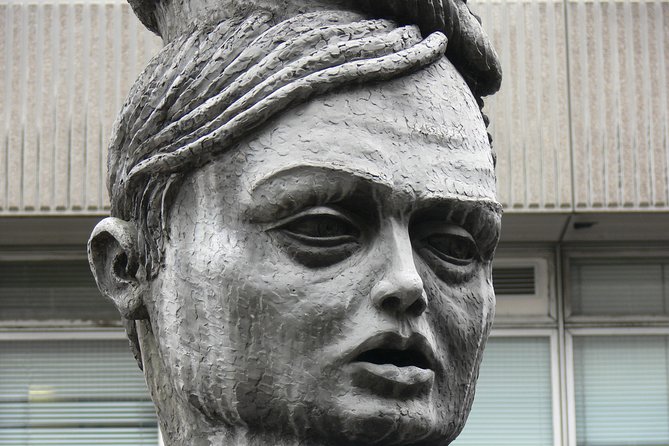
London Wall is one of those places where geography turns into biography. You learn about Shakespeare’s second house and why he ended up in this area. The guide also tells the story of how Shakespeare made a marriage and then regretted it.
That sounds heavy, and it is, but the tour handles it as context. The point is not to turn Shakespeare into a tabloid character. It is to show how personal decisions and public life overlap in his work and in the city around him.
Carter Lane returns again after Love Lane and London Wall. This second stop at Carter Lane focuses on a plaque revealing Shakespeare’s generosity, plus the background to his two daughters and their very different fortunes. It is a reminder that Shakespeare’s legacy is not only in plays. It is also in family outcomes and the long tail of adult choices.
St Giles Cripplegate: actors, Edmund, and a goodbye speech
The final storyline hits St Giles Cripplegate. Declan talks about a church he knew, and he connects the area to two of the best known actors of Shakespeare’s age.
Then comes the sad case of his brother Edmund. It is not presented as melodrama. It is presented as a real thread, a reminder that the people behind the plays had lives with grief and consequences.
The walk ends with performance again. Declan finishes with another complete, hauntingly beautiful speech from Shakespeare’s last play, where Shakespeare gets cosmic again. The guide points out why the speech lands emotionally: it is about saying goodbye.
By the time you reach the end, you have gone from place to place, but you have also moved through themes. Theatre, faith, family, reputation, and language all show up multiple times along the route.
If you want to keep rolling, Declan walks to Barbican Underground Station if you want to join the Underground train system. Barbican is served by three lines: Circle, Metropolitan, and Hammersmith and City.
Price and value: $20.83 for performance-based city storytelling
At $20.83 per person, the price makes sense because you are not paying for entry tickets. The stops on this route are marked as admission ticket free, and the value is in the guide and the live moments.
Two hours is a sweet spot for this format. Enough time for multiple stops and a full arc, short enough that you do not feel stuck. And with a max of 15 people per booking, it is the kind of tour where you can actually hear the delivery, including the full speech moment.
If you are deciding between a bus tour and a walking tour, this one is better when you want connection. It gives you details you can carry into the rest of your London day, like the neighborhoods’ names and the way Shakespeare’s stories link to specific places north of the Thames.
Who this walk is best for
This is a great fit if you:
- like walking and want a guided route with stops that you would otherwise miss
- enjoy Shakespeare, but also want non-academic clarity
- want performance energy, not just facts on a page
- are staying in central London and want a focused half of your day
It is also a solid choice for London locals who want to revisit the city with a new lens. The route is designed to reveal what most people do not notice on their usual commutes.
Should you book Shakespeare in the City Walk?
Yes, if you want Shakespeare tied to real street corners and you enjoy hearing speeches delivered out loud. The guide quality seems to be the core strength, and the small group size makes it feel personal without turning it into a long lecture.
Skip it only if you hate outdoor walking or want an inside-only experience. This tour is built for the city, and a good part of the fun comes from seeing the places in the open air.
If you have two hours and a curiosity about how theatre, power, religion, and family all show up in London, this walk is a strong way to spend your morning.
FAQ
How long is the Shakespeare in the City Walk?
It runs for about 2 hours.
What time does the tour start?
The start time is 11:00 am.
Where do I meet the guide for the walk?
Meet outside Blackfriars Underground Station, right by the Underground station exit. The guide will be near the exit with a sign on their rucksack featuring Shakespeare’s face.
Which Blackfriars station should I use?
Use Blackfriars Underground Station on the Circle and District Lines. Do not go to the Blackfriars Overground station south of the river.
Do we go inside St Paul’s Cathedral?
No. The tour has a stop at St Paul’s Cathedral, but it does not go inside.
Are there entrance fees at the stops?
The stops are marked as Admission Ticket Free.
What age is recommended for children?
The recommended age is 10 years and above, and children must be accompanied by an adult.
Is there free cancellation?
Yes. Free cancellation is available up to 24 hours in advance for a full refund.
Stratford, Warwick and the Bard
- Oxford, Stratford-upon-Avon, Cotswolds & Warwick Castle Day Trip★ 4.5 · 2,943 reviews
- England in One Day: Stonehenge, Bath, the Cotswolds and Stratford-upon-Avon Day Trip from London★ 4.5 · 1,344 reviews
- Warwick Castle, Oxford, Stratford-upon-Avon & Cotswolds Day trip★ 4.5 · 828 reviews
- Oxford, Stratford, Cotswolds & Warwick Castle Tour from London★ 4.5 · 756 reviews
Thames Water, Further Trips
- London: Westminster to Greenwich River Thames Cruise★ 4.5 · 22,836 reviews
- London Big Bus Hop-On Hop-Off Tour with Optional River Cruise★ 3.5 · 10,803 reviews
- London: Westminster to Tower Bridge River Thames Cruise★ 4.5 · 6,127 reviews
- London: London Eye, River Cruise, & Hop-on Hop-off Bus Tour★ 4.4 · 5,332 reviews
Fresh off the London review pile
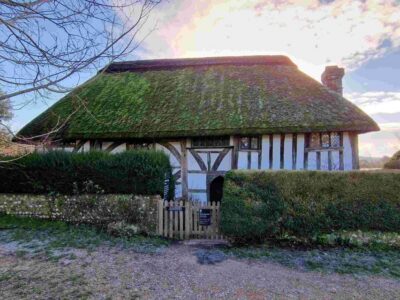

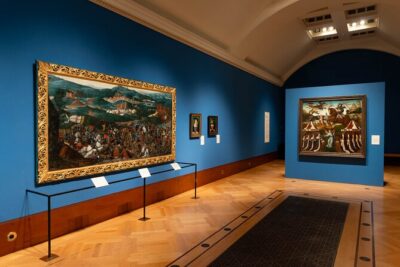
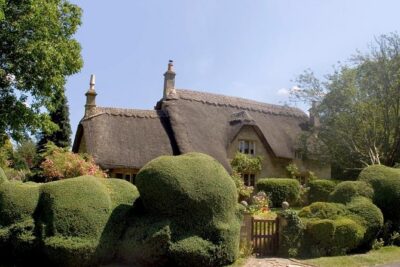
Shakespeare's Stratford & Warwick Castle, compared.
 ★ 4.5Oxford, Stratford-upon-Avon, Cotswolds & Warwick Castle Day TripFrom $1092,943 reviews
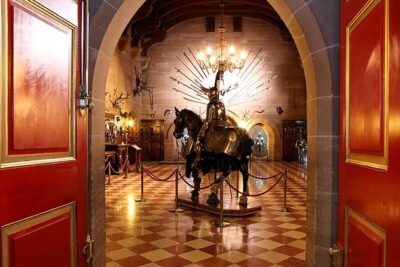 ★ 4.0Warwick Castle Admission TicketFrom $302,096 reviews
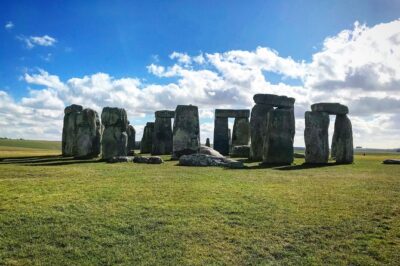 ★ 4.5England in One Day: Stonehenge, Bath, the Cotswolds and Stratford-upon-Avon Day Trip from LondonFrom $1871,344 reviews
 ★ 5.0Cotswolds in a Day Tour from Moreton-in-Marsh / Stratford-on-AvonFrom $1101,216 reviews
 ★ 4.5Warwick Castle, Oxford, Stratford-upon-Avon & Cotswolds Day tripFrom $109828 reviews
 ★ 4.5Oxford, Stratford, Cotswolds & Warwick Castle Tour from LondonFrom $106756 reviews
 ★ 4.4London: Oxford, Stratford, Cotswolds, and Warwick Day TripFrom $103755 reviews
 ★ 5.0Shakespeare Distillery Tour – 1pm TicketFrom $27598 reviews