

REVIEW · LONDON NEIGHBOURHOODS & STREET ART
Walking Tour around Spitalfields in the East End of London
Spitalfields feels like another London. This small-group walking tour through the East End trades postcard London for close-up neighborhood details you can actually see. You start at Christ Church Spitalfields and move through layers of faith, food, work, and housing that still shape the streets today.
I love the small group size capped at 5 people. It means you can hear the story, stop for questions, and look up close at places like Nicholas Hawksmoor’s English Baroque church work and the side streets that most visitors race past.
One thing to consider: the walk is about two hours and you need to stand and walk most of the time, so it is not ideal if that is hard for you.
In This Review
- Key Points You Should Know Before You Go
- Spitalfields on Foot: A Different London Starting at Christ Church
- The East End Story Behind the Bricks: Immigrants, Markets, and Work
- A Priory Site, and Why One Old Place Can Explain So Much
- Two Women and a Brewery Story You Will Remember
- A Thoroughfare Under Debate: Change in Real Time
- From Huguenot Chapel to Synagogue to Mosque
- Eighteenth-Century Houses: How Style Reveals Social Change
- A Herb Garden and Nicholas Culpeper’s Practical Genius
- Tea and Cakes in an 18th-Century Drawing Room Overlooking Christ Church
- Why the Small Group and Storytelling Style Matter
- What You Get for the Price, and Who It Fits Best
- Should You Book the Spitalfields Walking Tour?
- FAQ
- How long is the Spitalfields walking tour?
- How many people are in the group?
- What does the tour cost?
- Where does the tour start?
- Is the tour in English?
- What should I know about weather and cancellation?
Key Points You Should Know Before You Go
- Christ Church Spitalfields and Hawksmoor’s Baroque design set the tone right from the start
- Personal stories tied to Jewish immigrant life bring the East End into focus, not just architecture
- Medieval survival points connect the market area to older structures and purposes
- A single building’s dramatic role shifts from Huguenot Chapel to synagogue to mosque
- Nicholas Culpeper’s herb garden adds an unexpected, practical angle to the neighborhood
- Tea and cakes using a 1720 recipe gives the tour a satisfying, finished feeling
More streets worth an afternoon
- Soho Music & Historic Pubs Tour
★ 5.0 · 1,993 reviews - London Bridge & Borough Market Food Tour with 7 Authentic Dishes
★ 5.0 · 1,972 reviews - London: Street Art and Graffiti Guided Walking Tour
★ 4.9 · 1,354 reviews
Spitalfields on Foot: A Different London Starting at Christ Church
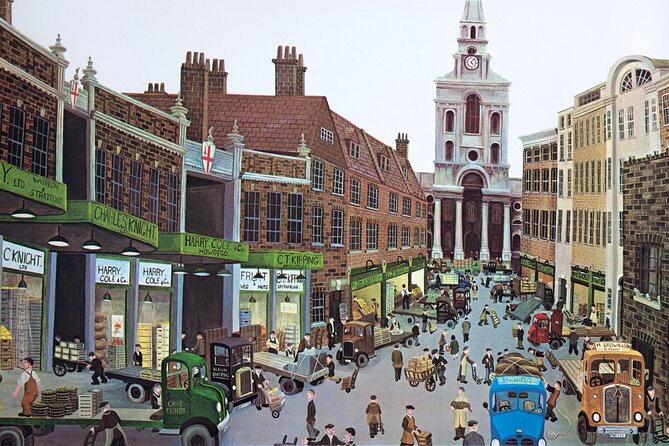
If you already know the big London sights, Spitalfields is the curveball you will enjoy. This tour begins at Christ Church Spitalfields on Commercial St. From that first moment, you are not just walking through streets, you are reading the neighborhood in layers.
The pace is made for feet and eyes. You are outdoors, stopping when something matters, then moving on before you get tired. With only up to 5 people, the guide can keep the story tight and still give time for questions. That is a big deal in London, where most walking tours turn into a loud shuffle.
The early stop is Nicholas Hawksmoor’s masterpiece of English Baroque. Hawksmoor’s work has a way of pulling your gaze upward, even when you are on a sidewalk. Expect to notice how the design frames the street, not only how it looks as a standalone building.
The East End Story Behind the Bricks: Immigrants, Markets, and Work
Spitalfields has always been a place where people arrived, settled, worked, and changed the local rhythm. The tour leans hard into the human side of that. Instead of only naming buildings, you hear how institutions supported Jewish immigrants coming from East Europe, an area now associated with Ukraine. That part matters because it explains why certain places in Spitalfields exist where they do, and why the community kept building, adapting, and worshipping.
Then you shift into the market story. You learn how an ancient market formed part of daily life, and how it endured through changing eras. This is where the tour does something smart: it teaches you to spot clues. You will be looking at street-level details with a new question in your head, what was this for, and what does that say about how people lived?
You also hear the purpose of an astonishing medieval survival. That phrase is basically a promise that you will see a piece of the past still functioning in the present. You might not expect this in a neighborhood that also contains newer landmarks and modern debate, but Spitalfields is built that way. Old functions do not always disappear. Sometimes they get repurposed.
A Priory Site, and Why One Old Place Can Explain So Much
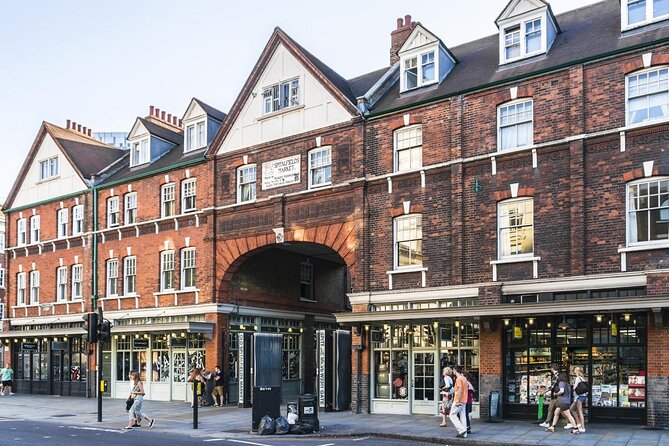
One stop focuses on the site of the Priory of St Mary Spital. Even without dramatic ruins, this kind of place helps you understand why the area developed in the first place. Priories were not just prayer spaces. They were linked to land, services, and local economies.
What makes this stop work on a walking tour is the framing. The guide connects the priory to later developments so it feels like a timeline you can walk through. You are not stuck with a single era. You are watching the area evolve, then noticing how those earlier layers leave fingerprints in the urban layout.
If you like history that connects to real streets, this is one of the tour’s strengths. You leave thinking about Spitalfields as a living system, not a museum district.





Two Women and a Brewery Story You Will Remember

Not every neighborhood tour gives you a working-life story. Here, the guide tells the story of a brewery through the lives of two women who worked there. That choice changes the whole tone.
You move from grand design and religious shifts into the daily reality of labor, schedules, and skills. You also get a clearer sense of how women shaped local work, not just as background characters, but as people whose lives were tied to the area’s industry.
It is also a refreshing break from the usual walking tour pattern of architecture, then another architecture. A brewery story grounds the East End in practical life, and you will feel it when you walk past shopfronts or side streets later on your own.
A Thoroughfare Under Debate: Change in Real Time
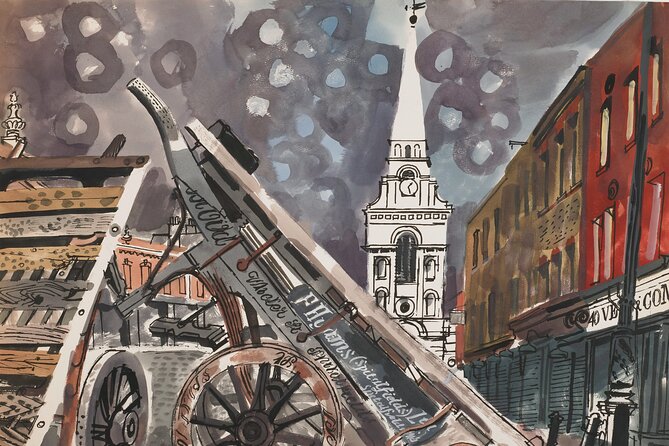
As the walk continues, you talk about a famous thoroughfare and the ongoing controversy over its future. You do not just hear opinions or vague nostalgia. You get the sense that Spitalfields is negotiating with itself, how to keep what matters while handling what comes next.
This part of the tour is valuable for two reasons. First, it reminds you that cities are always in motion, even in places that feel historic. Second, it gives you a lens for the street-level details you might otherwise ignore.
When you are done, you will probably notice things like signage, storefront changes, and street design differently. That is the point of a tour that wants to teach you how to look.
From Huguenot Chapel to Synagogue to Mosque
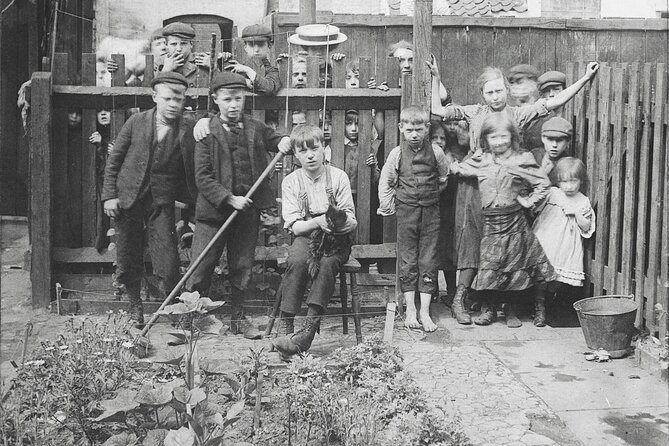
One of the most striking stops is the history of a single building that became a Huguenot Chapel, then a synagogue, then a mosque. Seeing that kind of transformation on foot hits you in the practical way.
You realize the building is not just an object. It is a tool that communities used when they needed a place to gather, worship, and be seen. The shift across faiths also tells you something about London’s history of refugee and immigrant settlement, and how different groups made room for one another over time.
This is the kind of stop that can feel emotional, even if you are not a religious history specialist. The guide’s storytelling style helps, because the story stays close to people and community needs.
Eighteenth-Century Houses: How Style Reveals Social Change
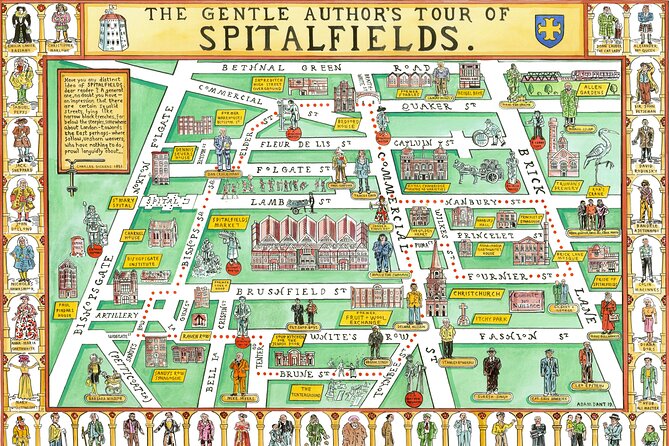
After the religious building story, you turn to the story behind fine eighteenth-century houses. This stop helps you connect “who lived here” to “what the area was becoming.”
Look for what the guide points out about the layout and the feel of the street. Eighteenth-century townhouses often signal stability, status, and investment. In Spitalfields, that matters because the area has long been tied to newcomers and changing work patterns. Housing style becomes a clue to economic shifts.
If you like architecture, you will enjoy this section. If you do not, you will still get something from the way the guide uses the houses to explain social change without getting stuck in jargon.
A Herb Garden and Nicholas Culpeper’s Practical Genius
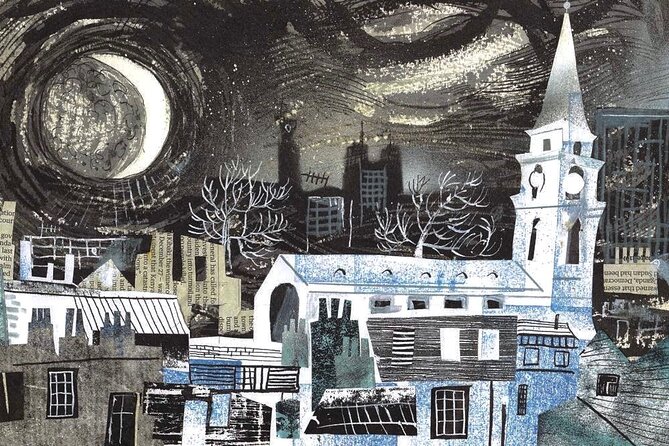
Then you get something delightfully unexpected: the herb garden of the 17th-century herbalist Nicholas Culpeper.
This is one of those stops that makes the tour feel different from other “look at this building” walks. Culpeper represents a side of history that is hands-on. Herbs were not only about gardens. They were part of medicine, remedies, and daily life knowledge.
On a walking tour, a garden stop can easily become a pause with no payoff. Here, it has a payoff because the guide ties it back to the neighborhood’s broader story, and helps you understand why such knowledge would matter in a place like Spitalfields.
Even if you only have a passing interest in botany, you will likely leave with a few names in your head and a better sense of how people used what they grew.
Tea and Cakes in an 18th-Century Drawing Room Overlooking Christ Church
The tour ends with a 30-minute stop in a townhouse drawing room from the 18th century. You get a view over Christ Church Spitalfields, then you enjoy tea and cakes baked to a recipe of 1720, with an admission ticket included for this final part.
This is not just a cute add-on. It is smart tour design. The walking portion is active and story-heavy, and the tea break gives your brain a chance to settle. It also makes the ending feel tied to the era you just heard about, instead of ending with a generic snack.
If you care about food history at all, you will appreciate the specificity of the 1720 recipe. It is also a nice way to turn a historical neighborhood into something you can taste.
And yes, this ending gets praised for a reason. It is one of those “small” experiences that makes the whole tour feel complete.
Why the Small Group and Storytelling Style Matter
A lot of walking tours say small group, then deliver a crowded vibe anyway. This one keeps the group to 5. That changes how the tour feels.
You get personalized attention. The guide can slow down when a question lands. You can hear the story without turning your ear into effort. You also get more real conversation, the kind that makes a place stick in your memory.
The storytelling itself also leans on the why, not just the what. You get to understand why historical facts exist in the first place. It is a style that helps you remember details later, because you understand the connections behind them.
What You Get for the Price, and Who It Fits Best
The price is $90.28 per person for about two hours. That is not a bargain-basement London price, but it is also not “private tour only” pricing.
You are paying for a high-touch format: a small group, multiple narrative stops, and that included tea and cakes moment. In other words, you are not just buying sightseeing. You are buying a guided story with a real local break at the end.
This tour is a good match if you:
- Want to see a side of London outside the typical city-center checklist
- Like history that explains people, not only buildings
- Enjoy walking tours that include thoughtful stops where you can actually look and absorb
- Would rather be in a group small enough to feel human scale
It is also a good choice if you want a gentle pace. The walk is only around two hours, but it is still walking, so plan comfortable shoes.
Should You Book the Spitalfields Walking Tour?
Book it if you want an East End tour that feels focused and personal. The blend is strong: Hawksmoor’s English Baroque start, immigrant and market stories, medieval and religious transformations, Nicholas Culpeper’s herb garden, and a proper 18th-century tea finish with a 1720 recipe.
Skip it only if standing and walking for about two hours is hard for you. Otherwise, this is one of those tours where the details make the neighborhood click, and the ending leaves you with more than photos. You end with a clearer sense of how Spitalfields became what it is.
FAQ
How long is the Spitalfields walking tour?
It is approximately 2 hours, including the final tea and cakes stop that lasts about 30 minutes.
How many people are in the group?
The tour has a maximum of 5 travelers.
What does the tour cost?
The price is $90.28 per person.
Where does the tour start?
You meet at Christ Church Spitalfields, Commercial St, London E1 6LY, UK. The tour ends back at the meeting point.
Is the tour in English?
Yes, the tour is offered in English.
What should I know about weather and cancellation?
The experience requires good weather. If it is canceled due to poor weather, you will be offered a different date or a full refund. You also have free cancellation, with full refund if you cancel at least 24 hours before the start time.
Neighbourhood Walks and Street Art
- Soho Music & Historic Pubs Tour★ 5.0 · 1,993 reviews
- London Bridge & Borough Market Food Tour with 7 Authentic Dishes★ 5.0 · 1,972 reviews
- London: Street Art and Graffiti Guided Walking Tour★ 4.9 · 1,354 reviews
- London Bike Tour: Landmarks, Secret Gems, Pub Stop & Street Art★ 5.0 · 943 reviews
Fresh off the London review pile
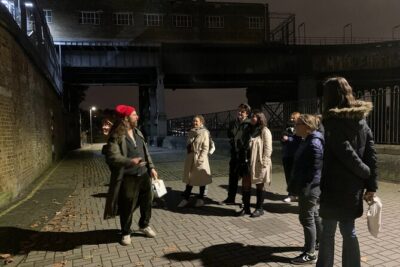


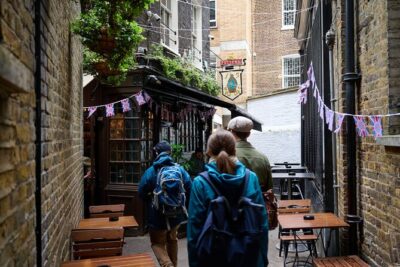
London Neighbourhoods & Street Art, compared.
 ★ 5.0Soho Music & Historic Pubs TourFrom $441,993 reviews
 ★ 5.0London Bridge & Borough Market Food Tour with 7 Authentic DishesFrom $1131,972 reviews
 ★ 4.9London: Street Art and Graffiti Guided Walking TourFrom $331,354 reviews
 ★ 5.0London Bike Tour: Landmarks, Secret Gems, Pub Stop & Street ArtFrom $104943 reviews
 ★ 4.5London: Canal Boat Ride on Camden LockFrom $26877 reviews
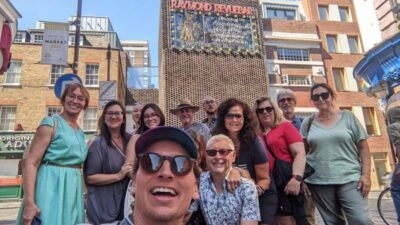 ★ 4.9London: Soho Music and Historic Pubs Walking TourFrom $39836 reviews
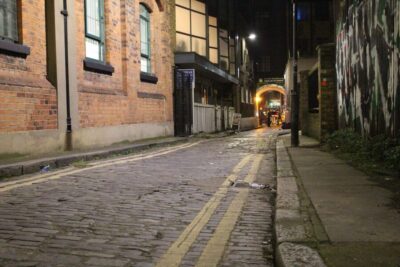 ★ 4.5Jack The Ripper Tour in London’s East EndFrom $22718 reviews
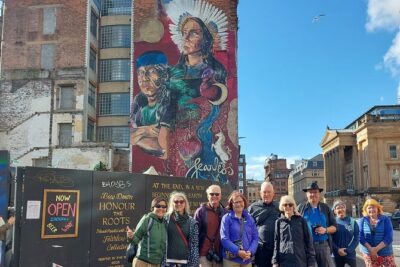 ★ 5.0Glasgow Street Art Daily Walking Tour: 2pmFrom $19648 reviews
Also filed under