
REVIEW · YORK & THE YORKSHIRE DALES
York: J&M’s City Sightseeing and History Walking Tour
York can feel like a museum. This tour makes it feel like a living street story with surprises around every corner. You start at the Constantine the Great statue area, and you end up with York’s past connected in a way that actually sticks, helped by clear storytelling and practical city walking. My two favorite parts are the climb up York’s defences and the way you get the “why” behind buildings, not just names and dates. One thing to consider is that it includes heights and uneven streets, so wear grippy shoes.
If you like history that doesn’t talk down to you, this hits the sweet spot. You’ll pass major York landmarks, plus the smaller lanes where you can sense how people moved through the city, worked, and worshipped. The guide keeps the pace moving while still giving you time to make sense of 2,000 years of change.
The main drawback? The route works best when everyone in your group can handle steps and uneven ground, and it runs in all weathers, including cold or rainy days.
In This Review
- Key highlights to look for
- A 6,000-year York you can actually picture
- Finding the meeting point by Constantine the Great
- York Minster to Ogleforth lanes: starting with meaning
- Kings Square, Black Swan, and the power of everyday places
- The Shambles: where street layout tells the story
- Merchant Adventurers’ Hall and the craft behind York’s skyline
- City walls and Clifford’s Tower: defence as a point of view
- Viking York at Jorvik Viking Centre
- Finishing at All Saints’ Pavement and making York click
- How the guide keeps 6,000 years engaging
- Who this tour is best for
- Should you book this York history walking tour?
- FAQ
- Where is the meeting point for the tour?
- What is the price per person?
- How long is the tour?
- Is the tour conducted in English?
- Does the tour run in bad weather?
- Is the tour wheelchair accessible?
- What are some of the main stops along the way?
- Can I reserve now and pay later?
- What is the cancellation policy?
Key highlights to look for
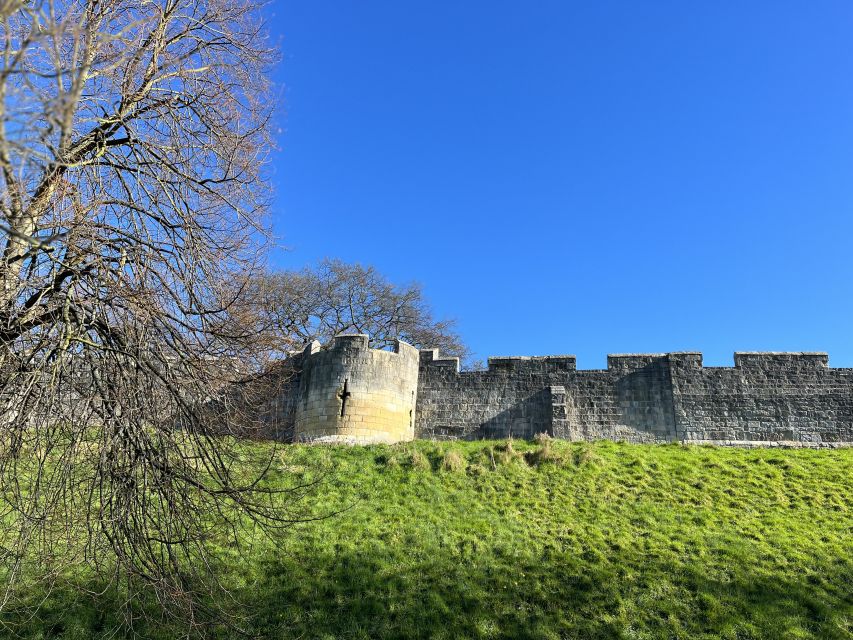
- Climb York’s city walls and learn how defence shaped daily life
- Myth-busting stories that explain what’s likely true and what’s not
- Shambles and Kings Square where you’ll connect street layout to power and trade
- Jorvik Viking Centre as the big Viking-focused stop
- Craftsmanship that built the skyline, not just monuments you pose beside
More of York and the dales beyond it
- Mad Alice’s The Bloody Tour of York -Best Tour Award Europe
★ 5.0 · 2,749 reviews - York: Daytime Sightseeing Boat Cruise with Live Commentary
★ 4.2 · 2,618 reviews - Comedy Horror Show: York Ghost Bus Tour
★ 4.4 · 2,496 reviews
A 6,000-year York you can actually picture
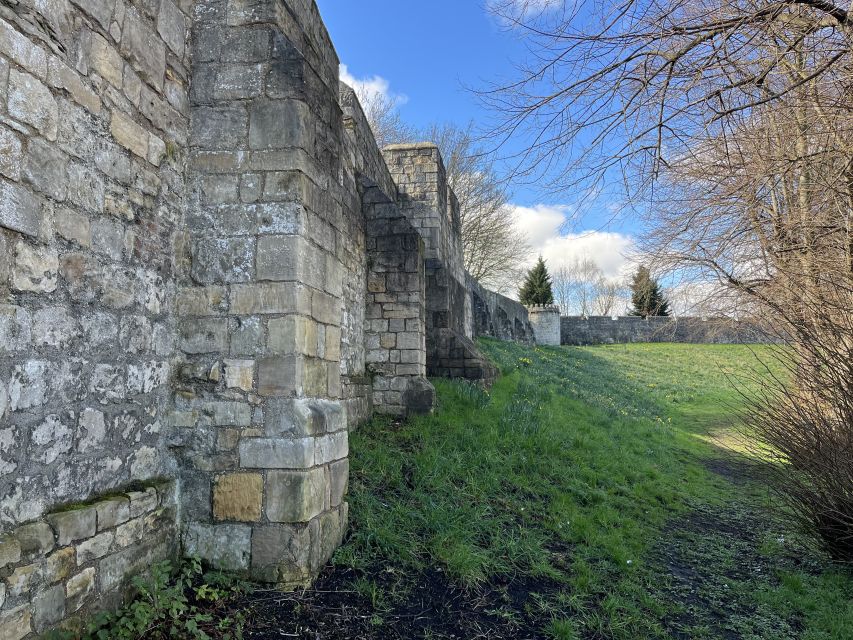
York is one of those places where the stones feel older than your memory. This tour turns that feeling into something you can follow, with a storyline that moves from Roman era threads, through Viking influence, then into the world of kings, emperors, and the everyday people who lived under their choices.
I love that it treats York like a system. You’re not just seeing sights. You’re learning how power, trade, faith, and protection shaped the city, so when you look at a wall, a window shape, or a street bend, you start seeing function behind the form.
At about $16 per person for a guide-led day of major stops, the value is the ratio of guidance to sites. You’re paying for a person who can connect the pieces for you, rather than spending your time hopping between places with no context.
Finding the meeting point by Constantine the Great
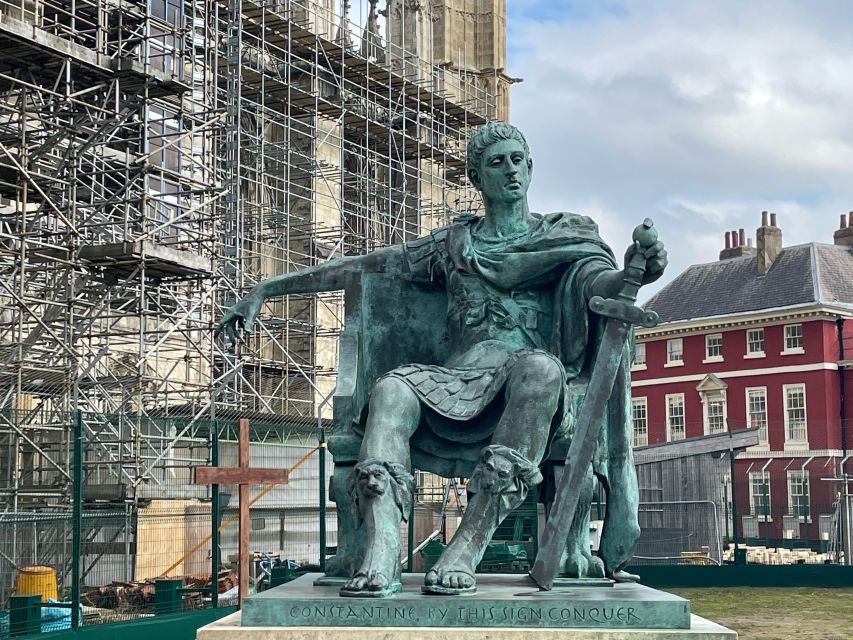
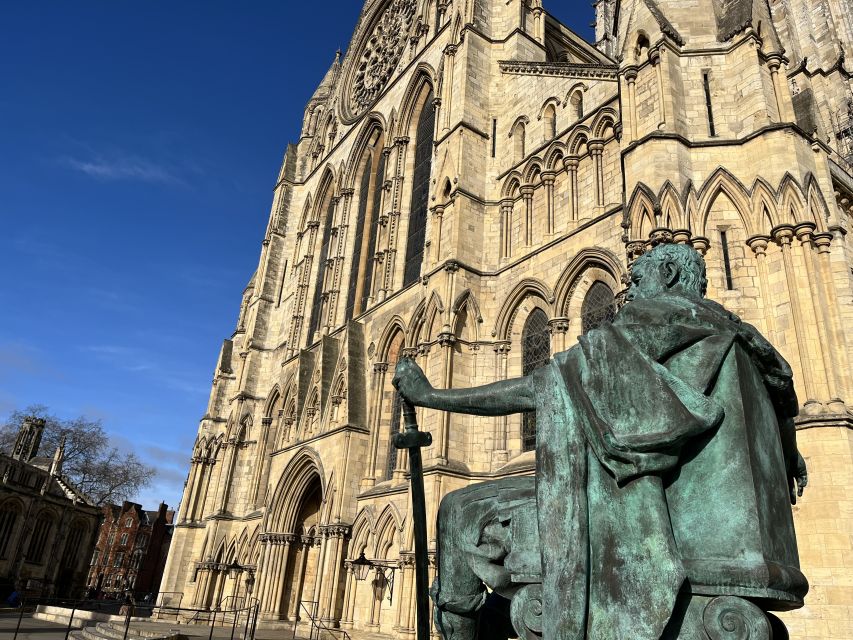
Logistics matter with walking tours in old cities, and this one is very specific about where you should start. Meet next to the statue of Constantine the Great on the south side of York Minster, opposite the Roman Column. The hint that saves time is to look for the circular rose window above the doors of the cathedral.
Your best move is simple: arrive on time, not early, not late. The tour departs on schedule and cannot wait for latecomers, so if you’re coming from the train station or a café, give yourself extra buffer time to find the correct side of the Minster.
York Minster to Ogleforth lanes: starting with meaning
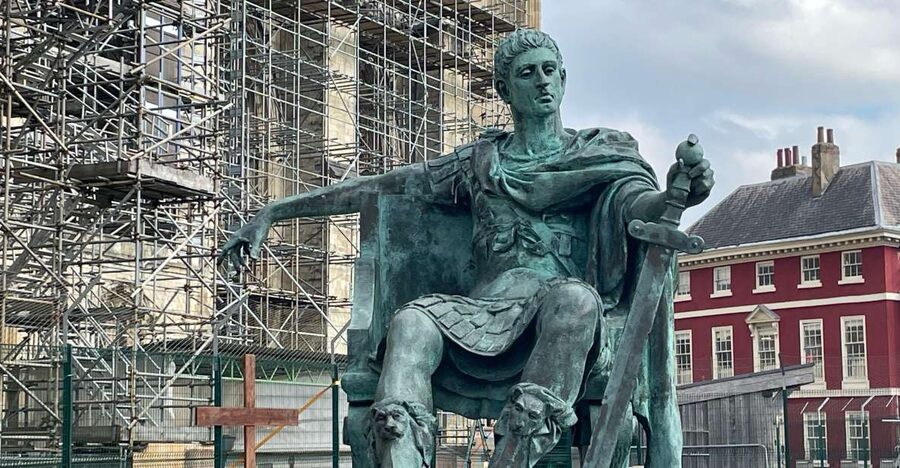
The day begins with Constantine the Great and then pulls you into York Minster for a short guided orientation. Even when the stop is brief, it sets the tone: how you should look at religious buildings, and how York’s story grew around them.
From there, you head through smaller streets and spaces like Ogleforth and St Cuthbert’s House of Prayer. These aren’t just “pretty” stops. They help you understand what lived experience looks like in York, where religious institutions, community spaces, and street life overlap.
If you’ve only seen York from the major attractions, this part is where you start noticing the city’s texture. The routes through the older streets also make it easier to understand why later stops like the Shambles feel so tightly connected to trade and daily routines.
Other open-top routes and day passes




Kings Square, Black Swan, and the power of everyday places
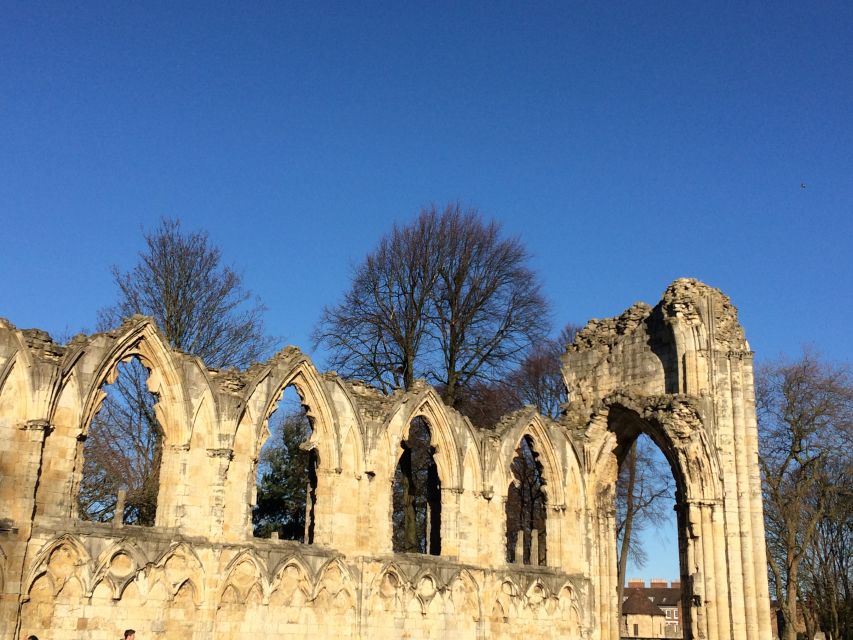
Once you’re in the centre area, you’ll pass through spots tied to leadership and public life, including King’s Square. This is one of those York junction points where history and city layout meet, and the guide uses it to frame bigger political stories without letting them float away from real streets.
Then comes a stop at Black Swan, which helps ground the tour in places you could easily walk past without thinking. A good walking guide uses these kinds of stops to explain how a city’s “regular” spaces still reflect shifts in wealth, safety, and status.
I like that the tour repeatedly links big names to ordinary people. You’ll hear about emperors and kings, but the tour keeps returning to how those decisions changed streets you can still walk today.
The Shambles: where street layout tells the story
The Shambles is the star for many people, but the tour approach is what makes it worth doing with a guide. You get time there for a focused guided stop, and the point is not just to admire buildings. It’s to understand why this street looks the way it does and what that implies about commerce and crowded urban life.
The guide also uses a myth-busting style, which is especially useful on the Shambles, because York’s most famous street often gets simplified into quick photo captions. With a guide, you can separate what’s likely from what’s just repeated.
You also get the practical payoff: after seeing how the guide reads the street, you start seeing patterns for yourself. Later, when you wander on your own, you’ll have a better sense of where trade routes, foot traffic, and older property lines likely shaped what you’re seeing.
Merchant Adventurers’ Hall and the craft behind York’s skyline
York’s skyline doesn’t happen by accident. It’s shaped by money, skill, and the trades that made building possible, then profitable, then prestigious.
That’s why stops like Merchant Adventurers’ Hall matter. The tour focuses on craftsmanship and the kinds of building work that turned wealth into architecture you can still spot from street level. If you’ve ever wondered why York’s buildings feel different from nearby cities, this is the part that helps you answer that.
The value here is interpretation. You’re not just told that a place is important. You learn what kind of people drove the building work and how that shows up in the cityscape. That makes the rest of York feel less like a list of landmarks and more like a result of decisions.
City walls and Clifford’s Tower: defence as a point of view
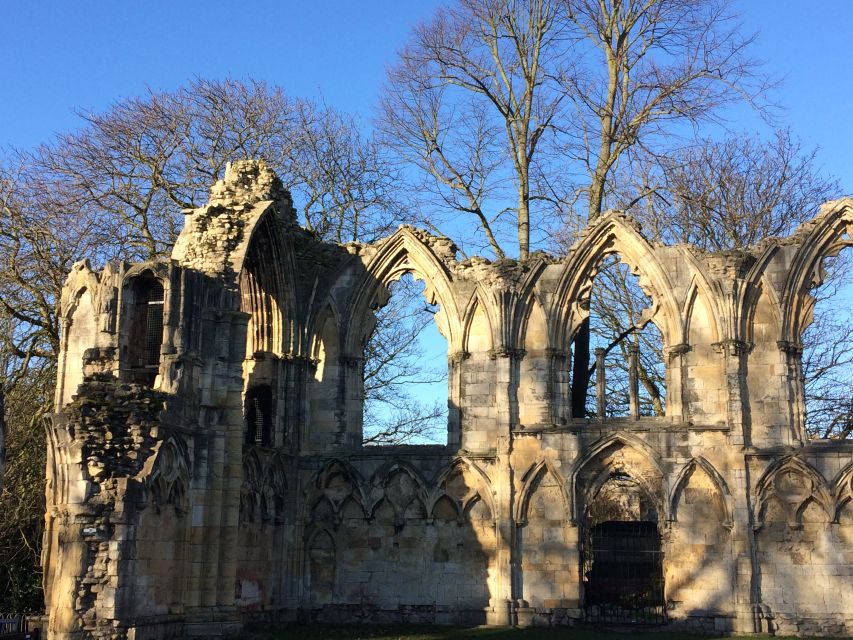
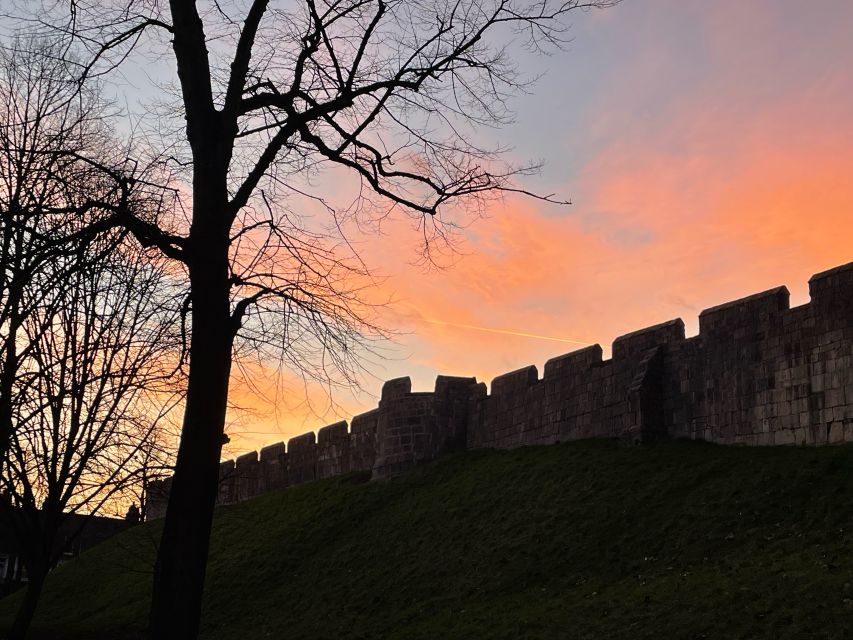
A highlight is climbing York’s city walls, and it’s not just for the views. From the walls, York becomes a system. You can see how defence lines up with geography, street patterns, and the practical need to control access.
The other key stop in this defensive section is Clifford’s Tower. The tour uses it to talk about centuries of conflict and authority, and it’s where the “how history shaped the city” idea becomes physical. You can feel how protection and power were designed into the urban layout, not added later.
This is also where the heights and uneven ground consideration becomes real. The tour includes heights, so plan for stairs and exposed sections, and keep an eye on footing if it’s wet.
Viking York at Jorvik Viking Centre
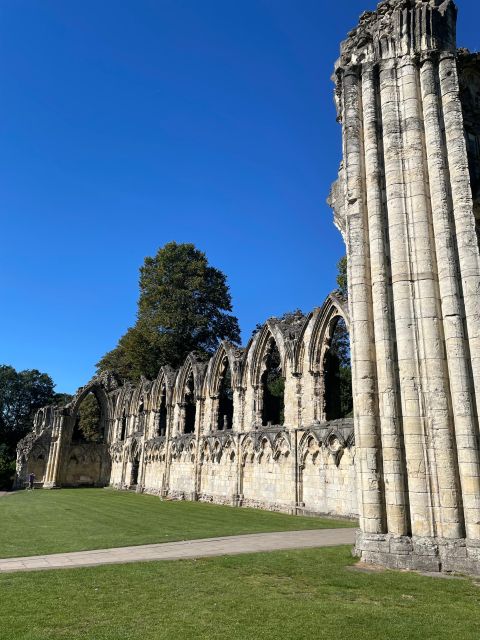
After the medieval and defensive focus, the tour lands at Jorvik Viking Centre for a longer guided Viking segment. This is the point where the tour shifts gear, giving you Viking context tied to what you see in York today.
I like that this isn’t treated like a quick photo stop. You get enough guided time to feel the Viking story as more than a theme. It’s connected back to how York changed, and why later eras built on older layers instead of wiping them clean.
If you’re visiting York for Roman and Viking history, this is a major reason to book. If you’re less focused on Vikings, the guide still uses the centre to connect the Viking period to the broader sweep of political change and urban life.
Finishing at All Saints’ Pavement and making York click
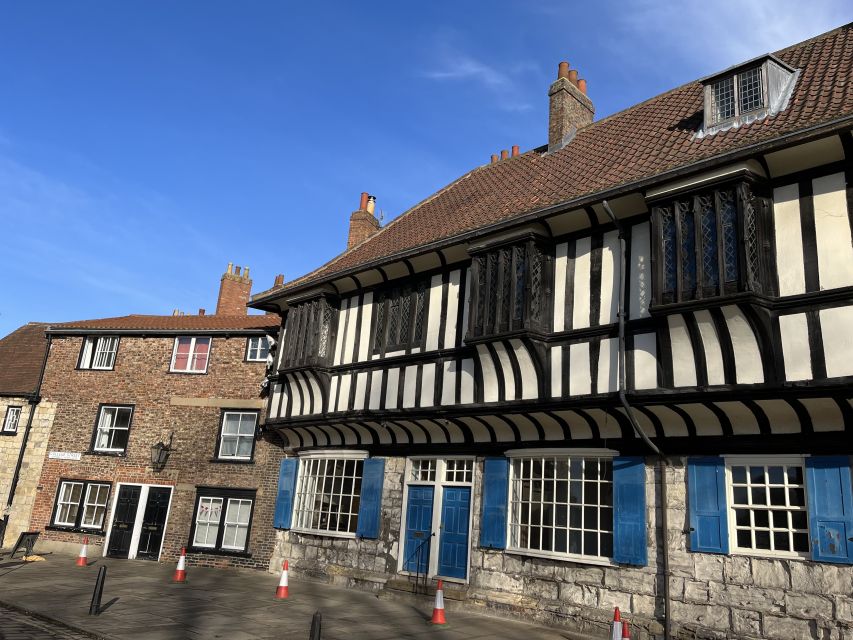
You wrap up at All Saints’ Pavement, and by then you’re no longer looking at York like a checklist. You’re looking at it like a timeline you can walk.
The practical benefit is navigation. After learning how the guide reads streets and landmarks, it becomes easier to choose what to revisit on your own, what to skip, and how to move between neighbourhoods without doubling back.
The other payoff is confidence. Even if you’ve only got one day, you leave with a clearer sense of what kind of city York was at different points in time, and you know what questions to ask when you glance at a building, a wall, or a lane.
How the guide keeps 6,000 years engaging
A lot of walking tours fail at one thing: they cram dates into your ears and call it history. This tour avoids that by using a storytelling rhythm that stays readable.
The guide uses humour to puncture heavy moments, and it helps the group stay with the narrative. Several different guides associated with the tour, including names like Nick and Liam, are described as clear and comfortable answering questions, which matters because York invites curiosity.
You also get a sense that the guide is connecting history to everyday life, not only spotlighting big rulers. That approach is why the tour works for people who love details and for people who just want a smart overview without feeling overwhelmed.
Who this tour is best for
This is a great fit if you want:
- a one-day plan that covers the big York themes, Romans, Vikings, medieval power, and trade
- a guide who explains what you’re seeing in plain language
- a walking route that goes beyond the usual front-of-the-postcard spots
It may feel less ideal if you:
- struggle with steps, uneven surfaces, or heights on city walls
- prefer fully indoor experiences, since it runs in all weathers
It’s also a smart option if you’re new to York and want to build a mental map fast. Even repeat visitors tend to get something useful out of it, because the guide’s focus on how the city functioned changes the way you read familiar streets.
Should you book this York history walking tour?
Yes, if you want your York day to feel like a story with a point of view. The tour’s best strength is how it connects major landmarks, like York Minster, the Shambles, Clifford’s Tower, and Jorvik, to the bigger question of how people lived, defended the city, and built what you still see.
Book it especially if you like your history explained with a bit of humour, and if you want the practical benefit of better navigation for the rest of your trip. Just go prepared for uneven ground and real weather, and you’ll get a memorable day for $16 that pays off long after you leave the walls.
FAQ
Where is the meeting point for the tour?
Meet next to the statue of Constantine the Great on the south side of York Minster, opposite the Roman Column. Look for the circular rose window above the cathedral doors, since map apps may lead you to the wrong side.
What is the price per person?
The price is $16 per person.
How long is the tour?
It is a valid 1 day experience.
Is the tour conducted in English?
Yes, the live tour guide speaks English.
Does the tour run in bad weather?
The tour takes place in all weathers.
Is the tour wheelchair accessible?
The tour is wheelchair accessible, but it includes heights and uneven streets, so it’s good to consider comfort with those conditions.
What are some of the main stops along the way?
The tour includes stops such as York Minster, Ogleforth, St Cuthbert’s House of Prayer, Black Swan, King’s Square, the Shambles, Merchant Adventurers’ Hall, Clifford’s Tower, and Jorvik Viking Centre, and it finishes at All Saints’ Pavement.
Can I reserve now and pay later?
Yes, you can reserve now and pay later.
What is the cancellation policy?
You can cancel up to 24 hours in advance for a full refund.
Bus Routes Around York
- Comedy Horror Show: York Ghost Bus Tour★ 4.4 · 2,496 reviews
- Ghost Bus Tour of York★ 4.5 · 2,404 reviews
- York: City Sightseeing Hop-On Hop-Off Bus Tour★ 4.6 · 954 reviews
- City Sightseeing York Hop-On Hop-Off Bus Tour★ 4.5 · 545 reviews
York, the Moors and the Dales
- Mad Alice’s The Bloody Tour of York -Best Tour Award Europe★ 5.0 · 2,749 reviews
- York: Daytime Sightseeing Boat Cruise with Live Commentary★ 4.2 · 2,618 reviews
- Comedy Horror Show: York Ghost Bus Tour★ 4.4 · 2,496 reviews
- Ghost Bus Tour of York★ 4.5 · 2,404 reviews
Fresh off the York review pile


York & the Yorkshire Dales, compared.
 ★ 5.0Mad Alice’s The Bloody Tour of York -Best Tour Award EuropeFrom $202,749 reviews
 ★ 4.2York: Daytime Sightseeing Boat Cruise with Live CommentaryFrom $202,618 reviews
 ★ 4.4Comedy Horror Show: York Ghost Bus TourFrom $262,496 reviews
 ★ 4.5Ghost Bus Tour of YorkFrom $272,404 reviews
 ★ 5.0Shadows of York: Ghost Walk and Horrible History.From $181,403 reviews
 ★ 5.0Private Historical Walking Tour of YorkFrom $1951,324 reviews
 ★ 4.5Daytime Sightseeing Boat Cruise in YorkFrom $201,256 reviews
 ★ 4.5York: Harry Potter Guided Walking TourFrom $181,231 reviews