
REVIEW · THE LAKE DISTRICT
8 Lakes and Magnificent Scenery – Afternoon Half Day Tour
This route is a smart way to see a lot. You get iconic Lake District scenery plus hands-on context from guides like Tim, Steve, and Gillian, with frequent photo stops instead of long stretches of nothing. The downside is simple: it is a half day, so every stop is brief and you will need to move fast when the best view pops up.
I also love the way the tour avoids stress. You ride in an air-conditioned minivan, it is a small group of up to 7, and you still get out a few times for fresh air and short walks. My only real caution is practical, if the van is full and you are seated at the back, your view out the side window can be partly blocked.
In This Review
- Key points to know before you go
- Why a half-day drive tour beats a rushed self-drive
- What makes the minivan part worth it
- Kirkstone Pass: Herdwick sheep, valley panoramas, and the highest road feel
- What to watch for while you stand still
- Small drawback: quick photos and windy conditions
- Ullswater: serpentine lake views and a Wordsworth line you can picture
- Why Ullswater hits emotionally
- A practical note about boat time
- Castlerigg Stone Circle and Ashness Bridge: ancient setting plus the most photographed stream view
- Castlerigg Stone Circle: 5,000 years of “why here?”
- Ashness Bridge: a single-track climb that pays off on camera
- Surprise View: the kind of panorama that makes your brain quiet
- Tip for getting the right shot
- The Derwentwater and Keswick area: a lake full of names, islands, and local lore
- Why I like this part of the tour
- Bassenthwaite Lake: protected shoreline, birds, and ospreys in the distance
- Wordsworth country at Grasmere and Rydal Water: poetry lakes, swimming nostalgia, and gingerbread
- Grasmere: a vale, a cottage, and still-living traditions
- Rydal Water: quiet, reed-lined beauty and a favorite seat
- Grasmere village and the gingerbread shop
- Windermere and the Victorian rail towns: Bowness, Ambleside, and why the rail changed everything
- Windermere village and the rail origin story
- Bowness: older streets, boats, and the kind of place you can wander
- Ambleside and Bridge House: slate buildings and that famous little bridge cottage
- Skirting the high mountains: Blencathra and Helvellyn without the hard climb
- Price and value: what you really get for about $123 per person
- Weather, packing, and the small comfort tweaks that matter
- Should you book this tour?
- FAQ
- How long is the 8 Lakes and Magnificent Scenery afternoon tour?
- What is the price per person?
- How big is the group?
- Is the tour in English?
- What is included in the price?
- What is not included?
- What should I bring or wear?
- Where do pickups happen?
- Is there any walking or climbing?
- FAQ
- Can I cancel for a full refund?
- What if the tour is canceled due to weather?
Key points to know before you go
- Up to 7 guests means quieter stops and easier questions for your guide
- Eight lakes in a half day works well when you want big variety fast
- Highest road views at Kirkstone Pass plus classic Lakeland photo points like Ashness Bridge
- Stone circle access at Castlerigg gives you a rare feel for a 5,000-year-old setting
- Weather can flip quickly, so bring a hooded waterproof even in summer
Other lakes, other passes
- Mountain Goat Full Day Tour: Ten Lakes Tour of the Lake District
★ 5.0 · 1,717 reviews - From Windermere: Ten Lakes Full-Day Tour of Lake District
★ 4.8 · 785 reviews - Beatrix Potter’s Half Day Lake District Tour Including Lake Cruise
★ 4.5 · 334 reviews
Why a half-day drive tour beats a rushed self-drive
If you want the Lake District in one afternoon, this style of tour is the easiest win. The driving does the heavy lifting. You sit back, and the guide turns the scenery into a story you can actually use when you go back later on your own.
The small group matters more than you might think. In practice, it means you are not fighting crowds at pull-offs. You also get a steadier pace, with regular comfort and photo stops. One of the most repeated compliments is that the time does not feel like you are trapped in the van the whole day, and I get why. Even when you are moving, you are usually moving between lookouts, lakes, and villages, not through dead stretches.
What makes the minivan part worth it
This tour runs in comfortable minivans with air-conditioning, WiFi, and charging points for most devices. That sounds like a luxury detail until you remember Lake District roads can be slow, curvy, and windy, especially around passes. Sitting somewhere warm and dry helps you enjoy the views instead of counting minutes.
You will also do a little walking. It is not a hiking trip, but you will step onto uneven or wet terrain sometimes, and at viewpoints you may need a quick climb or scramble to get the angle you want. Good shoes are a must.
Kirkstone Pass: Herdwick sheep, valley panoramas, and the highest road feel
Your afternoon starts with high road scenery that makes you understand why people come back to this region again and again. At Kirkstone Pass, you climb and twist upward to what is described as the highest road in the Lake District, and it delivers. When the group stops near the top, it is a breezy, wide-open world.
The views are the point, and you get a layered perspective. From up there, you look down toward the Windermere area, and on a clear day you can even see as far as Morecambe Bay. You are not just looking at one lake either. The guide talks you through the valley layout, so the shapes start to make sense.
What to watch for while you stand still
This is also the place where the landscape becomes character. You will likely spot Herdwick sheep roaming among dry-stone walls, and you may notice walkers looking small on ancient pack-horse trails. That contrast is good for photos, but it is also good for context. It reminds you this is a working rural area, not a theme park view.
On the way down, there is another photo chance looking toward Brothers Water as the road winds away.
Small drawback: quick photos and windy conditions
The pass can be gusty. Plan for cold hands and fast moving clouds. Bring a hooded waterproof so you can focus on the view, not your jacket flapping.
Ullswater: serpentine lake views and a Wordsworth line you can picture
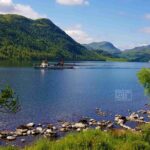
Next comes Ullswater, a long, dramatic lake with a serpentine shape. It is one of those places where the fells seem to rise directly out of the water. The tour frames it well, describing surrounding valleys, with hills that do not need to be climbed to feel huge.
You also get classic Lakeland woodland notes along the shore, especially examples of pre-plantation scenery with oak, birch, and hazel. In other words, you see the “old” Lake District look rather than a generic postcard version.
Why Ullswater hits emotionally
The guide brings in a William Wordsworth quote calling Ullswater the happiest combination of beauty and grandeur found in the Lakes. Even if you are not a literature nerd, it lands because Ullswater really does balance softness and scale. The shorelines feel leafy and intimate, while the surrounding fells set the drama.
A practical note about boat time
The itinerary style can include lake time for certain seasons or departures, but the exact way that plays out can vary. If you care about a boat ride on Ullswater, ask your guide right at pickup so there is no surprise later.
Castlerigg Stone Circle and Ashness Bridge: ancient setting plus the most photographed stream view
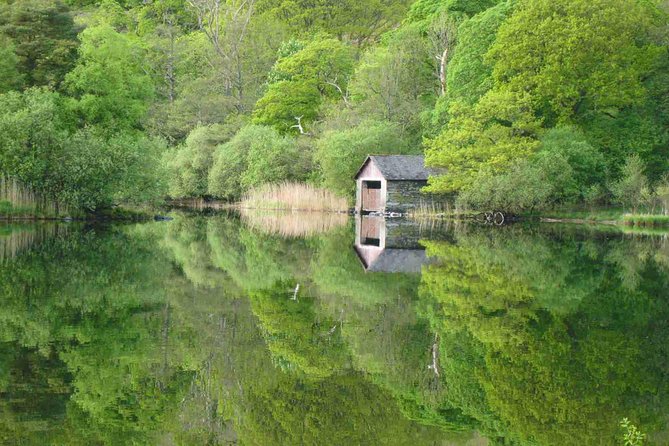
From Ullswater you move into a different kind of wow, one that is less about distance and more about atmosphere.
Castlerigg Stone Circle: 5,000 years of “why here?”
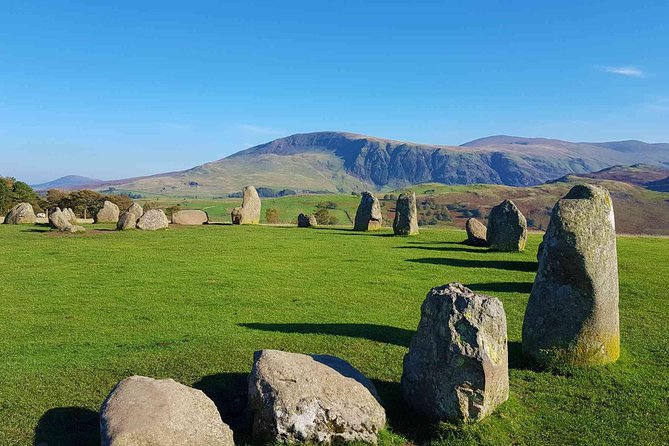
Castlerigg sits on a hill with mountains all around. You are looking at 48 stones set over 5,000 years ago. The romantic story you will hear is that Victorian-era imagination linked it to Druids, but the deeper point is that the circle still holds mystery. The setting is so strong that it makes the unknown feel powerful rather than frustrating.
You can also get closer than you would at many famous stone sites. The value here is direct contact with the circle and the sweeping mountain backdrop, so it is not just “look at rocks.” It is more like, feel how the place is positioned.
Ashness Bridge: a single-track climb that pays off on camera
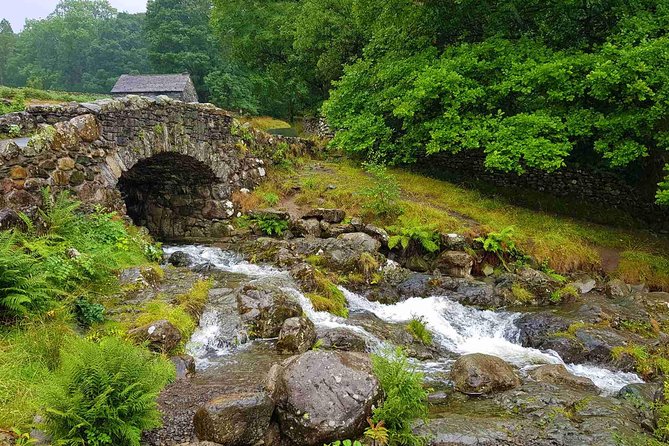
Then comes Ashness Bridge, one of the Lake District’s best photo stops. The approach is on a well-hidden single-track road, and you climb steeply for a short stretch to an old dry-stone packhorse bridge. From there you look across Derwentwater toward Skiddaw, with the stream tumbling fast underneath.
This is the kind of stop you do not want to miss even if the weather turns. In mist, the stream still has energy, and the mountains still form the frame.
Surprise View: the kind of panorama that makes your brain quiet
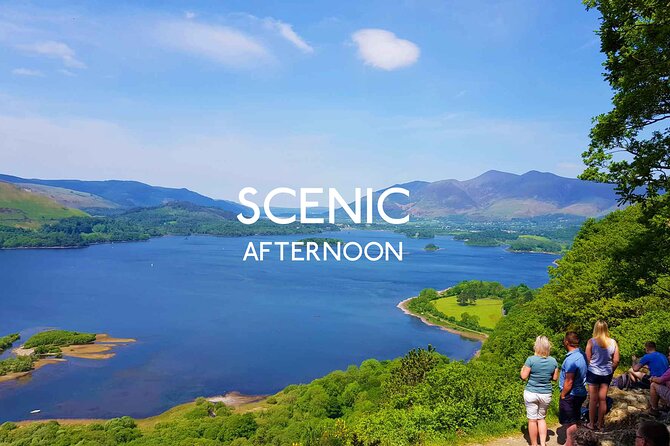
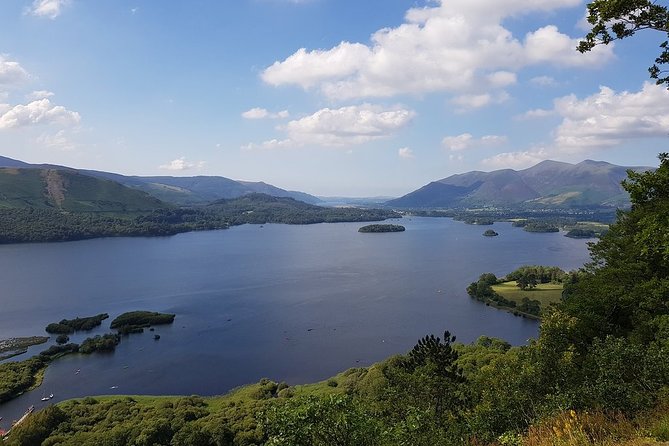
If you like vistas, Surprise View is where you feel it most. You get perched viewpoint energy on an oak-lined cliff edge, looking out across Derwent Water toward the Skiddaw range. The view is wide enough to include Borrowdale Valley, Keswick, Bassenthwaite Lake, and even distant Scotland on a good day.
This is a stop built for photos, yes, but it is also good for orientation. After you see this panorama, the Lake District map in your head clicks into place. You start to understand why certain towns and valleys became the “hubs” for visitors.
Tip for getting the right shot
You do not need fancy gear. What you need is timing. If the clouds break for 10 minutes, take them. The tour gives you a short window here, so keep moving but stay calm.
The Derwentwater and Keswick area: a lake full of names, islands, and local lore
As the route swings toward Keswick, Derwentwater comes in as a sparkling stretch with islands and craggy fells. The tour frames Derwentwater as one of the prettiest lakes, and you get the “Queen” nickname in a way that helps you remember it.
The drive along the shoreline includes a glimpse of Cat Bells and the dramatic jaws of Borrowdale, plus folklore that gives the lake a voice beyond scenery.
Then you reach Keswick, the northern tourist capital of the Lakes. It is described as packed with shops, cafes, bars, hotels, and Victorian guest houses. The tour adds history, connecting Keswick’s mining roots with later tourism, especially after the railway brought more visitors in 1865.
Why I like this part of the tour
You are not just getting views. You are getting a sense of how people live around the lakes now. The guide also points out the Moot Hall and other town details, including a museum and what Keswick’s name means in old English.
You get a short window and then you move on, which is perfect for a half-day schedule. You will likely want to return, but you leave with enough context to choose what to do next.
Bassenthwaite Lake: protected shoreline, birds, and ospreys in the distance
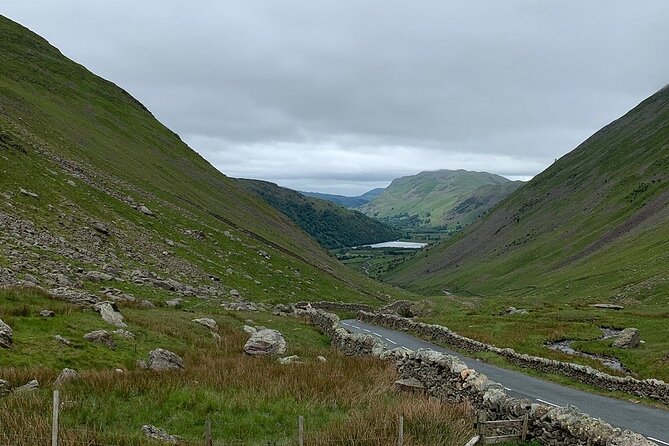
From the Surprise View area, Bassenthwaite Lake shows up in the distance as you approach the far end of the tour’s lake circuit.
This lake gets a strong natural-heritage spotlight because its shoreline is described as among the best protected in the National Park, with rich plants and animals. The tour points out that more than 70 species of birds and wildfowl winter and breed here, including ospreys.
It also mentions vendace, a small Arctic-related fish species found in only a few places in Britain. You do not need to be a wildlife specialist for this stop to feel worthwhile. It gives you a sense that the lakes are not just backdrops. They are ecosystems.
Wordsworth country at Grasmere and Rydal Water: poetry lakes, swimming nostalgia, and gingerbread
The Wordsworth segment is where the Lake District stops feeling like geography and starts feeling like culture.
Grasmere: a vale, a cottage, and still-living traditions
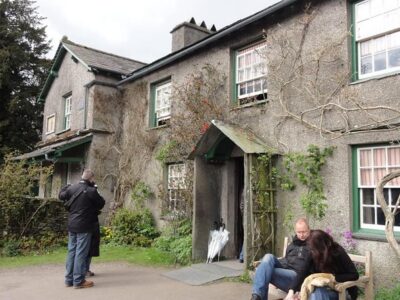
You get a stop for Dove Cottage, William Wordsworth’s tiny whitewashed home he found during a walking tour. The guide also ties it to Dorothy and Wordsworth’s family life there while he wrote famous poems.
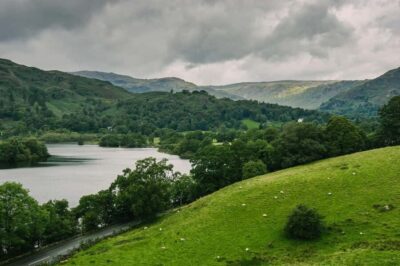
Then the tour moves to the lake itself, describing how Wordsworth, Dorothy, and John spent days swimming, fishing for pike, and rowing out for picknicks to an island. Today, the tour notes that wild swimming and rowboats still happen, so the old stories connect to modern habits.
Even if you are not into poetry, this stop gives you a reason to understand why Grasmere became a magnet for visitors for generations.
Rydal Water: quiet, reed-lined beauty and a favorite seat
Rydal Water is smaller than Grasmere, described with simple measurements, and it comes across as a lake that rewards stillness. It is associated with the Wordsworth family too, and the tour mentions Wordsworth’s favorite seat, reached via steps near a rocky knoll along the shore road.
The lake’s surroundings are also described in ways that feel sensory, gold and orange tones in mist or fall, and a glass-like look at times. If you like subtle beauty rather than dramatic peaks, Rydal is where you feel it.
Grasmere village and the gingerbread shop
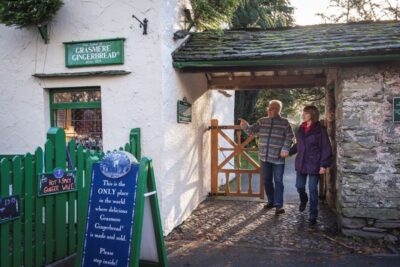
The tour includes a short look at Grasmere village, with a church still looking much as it did in Wordsworth’s time and a river Rothay nearby. The guide frames it as a calm village that draws literary and gingerbread pilgrims alike.
Then there is the Grasmere Gingerbread Shop stop. It gives you time for the iconic treat and a chance to buy extras like ginger-themed goodies and rum butter. It is short, but it is a fun payoff because it is part of the same cultural loop as the poetry sites.
One practical note: the guide asks you not to feed drivers and guides, because the stop is well liked. I cannot say I will forget that instruction.
Windermere and the Victorian rail towns: Bowness, Ambleside, and why the rail changed everything
No Lake District afternoon is complete without Windermere, and this tour gives it the “you are here” treatment.
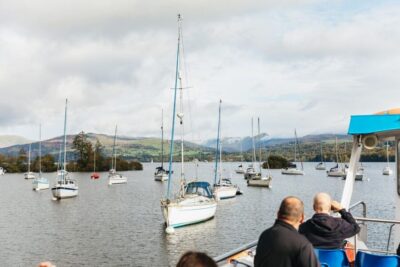
Windermere is described as England’s largest and most visited lake, and named after a Norse hero. The tour explains its appeal through variety: inlets, secluded bays, wooded heights, and grassy banks. You also hear about how it was created and how Romans and local life connect to the lake, plus boating details.
Windermere village and the rail origin story
The tour also stops by Windermere’s rail-linked center, describing how the Victorian railway shaped the village. You get an idea of how day-trippers arrive and why this place became the transport hub of the central Lakes.
Bowness: older streets, boats, and the kind of place you can wander
Then you get Bowness. The guide frames it as busier and more lively, with cafes, bars, hotels, and bed-and-breakfasts. It is also older than Windermere, with narrow streets behind the parish church dating back over 300 years.
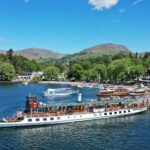
A walk along the promenade leads you toward boating areas where you can take big boats, smaller boats, or hire rowing boats to explore inlets. Even if your tour is only half day, this area gives you an easy next step when you want to slow down.
Ambleside and Bridge House: slate buildings and that famous little bridge cottage
Ambleside gets introduced as a hub of roads radiating out into central valleys. You also get details like Victorian slate buildings and the tiny Bridge House over Stock Ghyll stream, a heavily photographed building you pass by.
This part of the tour helps you understand how the Lake District tourist boom shaped the towns you see today, while still keeping the feeling of a place affected by weather and nature.
Skirting the high mountains: Blencathra and Helvellyn without the hard climb
The tour does more than lakes. It also gives you a taste of the high fell country you usually only see from a distance.
As you travel toward Keswick, you pass Blencathra. The guide explains its old name meaning saddleback in ancient Cumbric, and talks about how it changes color through seasons, including purple heather in summer and a snowy look in winter. You also get a mention of Sharp Edge and the famous ridge scramble, described as risky, not for faint hearts.
Then you get Helvellyn, introduced as the third highest peak in the Lake District. The key practical detail is that you do not have to climb it. You ride past it in a comfortable air-conditioned minivan, which matters if you have vertigo or just want the mountain presence without committing to the route.
The guide includes a few local stories, including Wordsworth’s favorite mountain and the poem about Foxie, a faithful dog. The point is not to test you. It is to make you feel the personality of the peaks.
Price and value: what you really get for about $123 per person
At about $123.62 per person for roughly 4 hours, the price is not cheap in the way a basic bus trip is cheap. But the value is in three places.
First, entrance fees are included for the locations on the route. That matters for a stop like Castlerigg and for several viewpoints and attraction areas along the way.
Second, you are paying for interpretation. Guides like Tim and Gillian do more than name-drop. They connect geology, history, and local habits so the lakes do not feel like random stops. Multiple guides were praised as humorous and engaging, with people highlighting that the drive did not feel like dead time.
Third, you get the driver talent for tricky roads, plus comfort breaks. If you have ever tried to self-drive these passes with limited parking and changing weather, you know what is hard. This tour removes that friction.
The best value move on your side is choosing this as an orientation day. If you go on your first afternoon in the Lakes, you come away knowing what you want to revisit.
Weather, packing, and the small comfort tweaks that matter
Lake District weather shifts fast. Even in summer, bring a waterproof coat with a hood. Plan for wind at high points like Kirkstone Pass and open cliff viewpoints like Surprise View.
Wear comfortable shoes. There is some uphill and uneven or wet terrain, especially at places where you step out for photos.
If you get vertigo, the good news is that the tour includes a pass-by of Helvellyn without requiring climbing. You still may see steep drops from the road side, so consider sitting toward the front if you are sensitive.
Also, pay attention to your seat. One person felt the van was very crowded and said long legs made it harder to see out the window for every passby. If you can choose, aim for a seat that gives you the best sightline.
Should you book this tour?
Yes, if your goal is a fast, low-stress overview of the Lake District with stops you would not easily stitch together yourself. I would especially book it if you want eight lakes in one afternoon, including the Wordsworth names like Grasmere and Rydal Water, plus the big view moments like Kirkstone Pass and Surprise View.
Book it less eagerly if you prefer long time at one place. This is a half day. You will get tastes, not hours. But those tastes come with context, so you leave with a short list of what to explore next.
FAQ
How long is the 8 Lakes and Magnificent Scenery afternoon tour?
It runs for about 4 hours.
What is the price per person?
The price is $123.62 per person.
How big is the group?
It is a small group with a maximum of 7 travelers.
Is the tour in English?
Yes, it is offered in English.
What is included in the price?
Entrance fees for the locations on the itinerary are included. The tour also includes the minivan with amenities like air-conditioning, WiFi, and charging points for most mobile devices, plus professional guide commentary and regular photo or comfort stops.
What is not included?
Food and drink are not included.
What should I bring or wear?
Bring a waterproof coat with a hood, and wear comfortable shoes since there is some walking on uneven or wet terrain and some uphill.
Where do pickups happen?
Pickups depend on your chosen option. The tour meets outside the railway station entrance in Windermere, outside Pier 1 beside the lake shore in Bowness, outside the ticket office at Oxenholme Station, and there are additional pickups near Ambleside.
Is there any walking or climbing?
There is a little walking involved at some stops, and you may step onto uneven or wet ground. The tour also mentions that you do not have to climb Helvellyn since it is passed by in the van.
FAQ
Can I cancel for a full refund?
You can cancel up to 24 hours in advance for a full refund.
What if the tour is canceled due to weather?
The experience requires good weather. If it is canceled due to poor weather, you will be offered a different date or a full refund.
Lakeland, Further Afield
- Mountain Goat Full Day Tour: Ten Lakes Tour of the Lake District★ 5.0 · 1,717 reviews
- From Windermere: Ten Lakes Full-Day Tour of Lake District★ 4.8 · 785 reviews
- Beatrix Potter’s Half Day Lake District Tour Including Lake Cruise★ 4.5 · 334 reviews
- High Adventure Mountain Passes & Muncaster Castle from Windermere★ 5.0 · 296 reviews
Fresh off the Windermere review pile
The Lake District, compared.
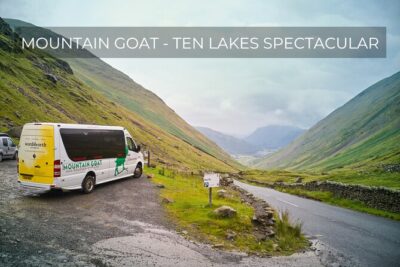 ★ 5.0Mountain Goat Full Day Tour: Ten Lakes Tour of the Lake DistrictFrom $761,717 reviews
 ★ 4.8From Manchester: Lake District Bus Tour & Windermere CruiseFrom $104927 reviews
 ★ 4.8From Windermere: Ten Lakes Full-Day Tour of Lake DistrictFrom $93785 reviews
 ★ 4.5Beatrix Potter’s Half Day Lake District Tour Including Lake CruiseFrom $120334 reviews
 ★ 4.6Manchester: Lake District Tour with Lake Cruise & Train RideFrom $92304 reviews
 ★ 5.0High Adventure Mountain Passes & Muncaster Castle from WindermereFrom $152296 reviews
 ★ 5.0Ghyll Scrambling Water Adventure in the Lake DistrictFrom $97283 reviews
 ★ 4.7From Liverpool: Lake District Sightseeing Adventure Day TripFrom $79278 reviews
Also filed under