
REVIEW · MANCHESTER & THE PEAK DISTRICT
Angel Meadow Manchester History Tour with Author Dean Kirby
One neighborhood can change how you see Manchester. This small-group tour with historian and writer Dean Kirby turns Angel Meadow into a real, walkable story, not a vague “industrial past.” You’ll move through the River Irk area and Angel Meadow Park, with clear context for how poverty, work, and city growth collided in Victorian Manchester.
What I like most is how much time you get with Dean Kirby. The group stays small (up to 15), so questions feel natural, not rushed. I also like that you’re pointed to best photo angles as you go, so you leave with sharper memories and less guesswork.
One thing to consider: redevelopment means you will not see everything exactly as it was. You’ll get the big picture and the human scale, but the physical fabric of the district has changed a lot since the Industrial Revolution.
In This Review
- Key things to know before you go
- Why Angel Meadow matters in Manchester’s story
- Meeting at Sadler’s Cat and getting your bearings
- St. Michael’s Flags and the River Irk walk
- Angel Meadow Park photo stops that actually help
- Industrial Revolution through one savage neighborhood
- Dean Kirby’s small-group format and real question time
- Price and value for a 90-minute Manchester history walk
- How the 2:00 pm timing fits a day in Manchester
- Weather, steps, and comfort tips that keep the tour enjoyable
- Who should book this Angel Meadow tour, and who might skip it
- Should you book the Angel Meadow Manchester History Tour with Dean Kirby?
- FAQ
- Where does the tour start?
- Where does the tour end?
- How long is the Angel Meadow Manchester History Tour?
- How much does it cost per person?
- What time does the tour begin?
- Is this a small group tour?
- What language is the tour offered in?
- Is it suitable for people who cannot negotiate steps?
- What happens if the weather is poor?
Key things to know before you go
- Author-led history from Dean Kirby, writer of Angel Meadow: Victorian Britain’s Most Savage Slum
- Max 15 people, so you can ask questions and get direct answers
- River Irk and Angel Meadow Park make the walk feel connected, not random
- Photo guidance included, so you know where to stop and why
- A less-famous area of Manchester, with context for a part of the city many people skip
Manchester on foot, Peak days too
- The Manchester City Stadium Tour
★ 5.0 · 4,176 reviews - Manchester: Canal & River Cruise
★ 4.4 · 3,761 reviews - Etihad Stadium: The Manchester City Stadium Tour
★ 4.8 · 3,096 reviews
Why Angel Meadow matters in Manchester’s story
Angel Meadow is Manchester at street level, not museum-level. This tour focuses on an area tied to the city’s rise during the Industrial Revolution, when cotton mills and massive labor needs were pulling people toward work, even when life conditions were brutal.
Dean Kirby frames the district with strong historical anchors. Friedrich Engels described the area as Hell upon Earth, and the tour explains why that label fit. You’ll hear how the neighborhood sat in the shadow of major mills and how thousands of people lived in overcrowded conditions.
The key value for you is that this isn’t just gloomy background. It connects poverty and survival to the city’s growth, including how the district and its residents helped shape one of the world’s great industrial cities.
Meeting at Sadler’s Cat and getting your bearings
The tour meets at Sadler’s Cat on Hanover St, Manchester (M60 0AB). The start time is 2:00 pm, and you’re looking at about 1 hour 30 minutes on the ground.
Because it runs as a walking experience with a moderate fitness level, you’ll want to dress for comfort first, history second. Wear shoes you trust on uneven sidewalks, and keep an eye on stairs along the way, since the tour is not recommended if you cannot negotiate steps.
The ending point is near St Michael’s Flags and the entrance area for Angel Meadow Park (Old Mount St, M4 4TF, with the park entrance noted around M4 4GU). If you want to get back to the start area, the guide will walk with you.
St. Michael’s Flags and the River Irk walk
The tour’s core experience centers around St Michael’s Flags and the Angel Meadow Park area, with the River Irk as a major thread. You’ll walk through streets and paths where the past is layered, including spots where new development sits close to what used to be there.
As you move along the River Irk, you’re given a clearer picture of why water mattered to industrial Manchester. The tour also talks about the living conditions tied to the riverbanks, including deep cellars and overcrowded lodging houses that shaped daily life.
Dean Kirby’s storytelling style matters here. Instead of reciting dates, he ties together people, place, and the pressures of rapid industry. When you hear about 30,000 souls trapped by poverty, it lands as a sense of scale, not just a number.
You’ll also get the social texture of the area. The tour describes how groups of scuttlers moved through the pavements outside the lodging houses, adding another layer to what survival looked like beyond simply having a job.




Angel Meadow Park photo stops that actually help
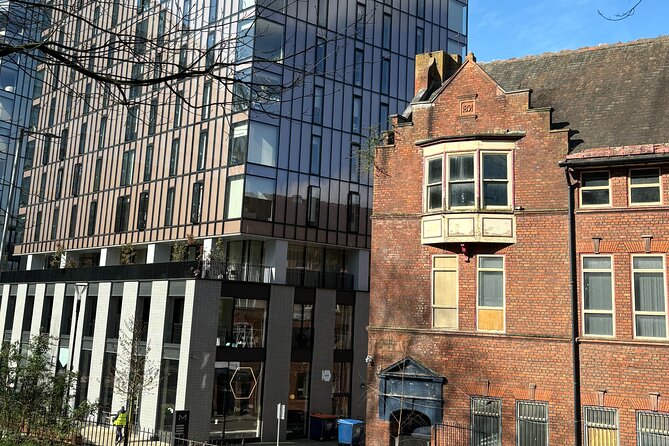
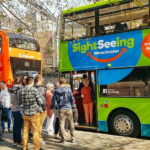
Angel Meadow Park is not just a green pause, it’s part of how the tour teaches you to look. As you walk into the park area, you get a different perspective on the neighborhood, with tree-lined paths that help you reset before the historical details continue.
One of the most practical touches is that the guide points out strong photography spots as you go. That can mean useful framing angles, good sight lines, and places where you can capture modern buildings alongside older echoes.
This is a small detail that pays off. When you know where to look, you understand the story faster, and you take better pictures without turning the walk into a constant stop-and-start routine.
Industrial Revolution through one savage neighborhood
The tour’s big theme is how the Industrial Revolution was built on labor and lives that were easy to ignore. In Angel Meadow, the story isn’t abstract. The guide gives concrete examples of how families struggled to keep body and soul together under intense pressure.
You’ll hear how overcrowding shaped life in lodging houses and cellars, and how gangs and predators could thrive around areas where people were already stretched thin. The aim is not shock for shock’s sake. It’s to explain how an industrial powerhouse could coexist with a neighborhood that felt trapped.
You also get a sense of what changed over time. The walk includes streets where new apartments sit alongside former ragged schools, so you see how education efforts and community survival attempts fit into the same district history as mills and poverty.
And yes, you’ll see gaps. Redevelopment has altered the physical neighborhood, which is exactly why the guide’s context matters. You’re not just admiring buildings. You’re learning how to read what remains and what has been replaced.
Dean Kirby’s small-group format and real question time
A lot of history tours sound great on paper and then feel like a one-way lecture. This one works better than that because the group stays small, with a maximum of 15.
That size difference changes the experience. You can ask follow-up questions when something clicks, and you can also ask for clarity when something feels too heavy. The guide also makes the overall tone relaxed, so the tour doesn’t feel like you have to keep up with a nonstop script.
Dean Kirby is also the kind of guide who connects information to story. Based on how the tour is run, his background as both historian and writer shows in the way he explains the district’s significance, while still letting you ask for specifics.
If you enjoy learning in a human way, this format is a strong match. You leave with answers, not just impressions.
Price and value for a 90-minute Manchester history walk
At $27.62 per person for about 1 hour 30 minutes, the price lands in the “worth it if you care about local context” range. The value comes from three things: an author-level guide, a small group size, and a focused route that covers a less-touristed part of Manchester.
You’re paying for interpretation, not just movement. Angel Meadow is not always top-of-mind for visitors, and without context, you might walk through and miss what makes the area historically important.
This tour is also priced like a practical add-on. If you’re already spending time in central Manchester, the meeting point and finishing area are workable with public transport. In other words, you’re not paying a premium just to get somewhere far away, you’re paying for what happens on the ground during the walk.
How the 2:00 pm timing fits a day in Manchester
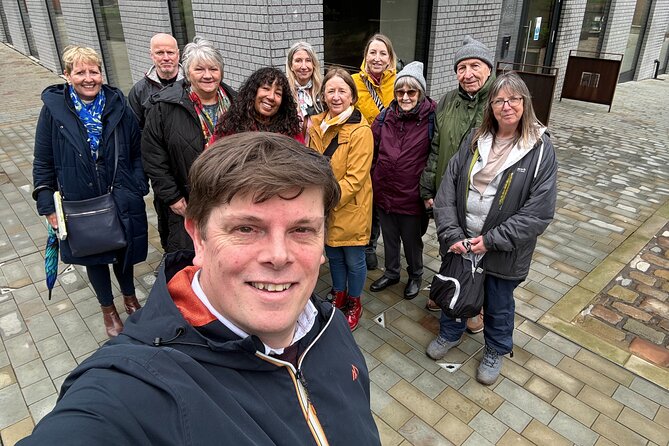
A 2:00 pm start is useful. It sits nicely after a morning activity, and it avoids the very late start that can turn a short tour into a long day.
Because the tour is based on walking and requires moderate fitness, I’d treat the afternoon start like a “steady pace” block. Plan something lighter afterward if you can, since you’ll likely want time to process what you just learned and maybe wander a bit on your own in the Angel Meadow Park area.
Weather, steps, and comfort tips that keep the tour enjoyable
This experience requires good weather. If the conditions are poor, it can be canceled and you’ll be offered another date or a full refund.
So when you book, check the forecast and pack smart. Even on good days, wear layers you can adjust. City walks can shift in temperature fast, and having a light rain shell is a simple way to protect your comfort if clouds roll in.
On the mobility side, the tour is not recommended for people who cannot negotiate steps. That’s the main limitation listed for physical ability, so if stairs are a concern, decide before you commit.
Who should book this Angel Meadow tour, and who might skip it
Book it if you want Manchester history that feels grounded. You like when a guide connects social conditions to real geography, and you enjoy asking questions in a group small enough that your curiosity gets answered.
It’s also a great fit if you’re the type who likes photos, but not the type who wants to constantly chase perfect shots. The built-in photo stops help you get images while still moving.
Consider skipping if you want only iconic landmarks or if you know you will feel uncomfortable dealing with the subject matter of poverty and harsh living conditions. Also skip if you cannot manage steps, since the tour is not recommended in that case.
Should you book the Angel Meadow Manchester History Tour with Dean Kirby?
If your Manchester trip includes more than just the headline sights, I think this is a smart book. The focus on Angel Meadow, the River Irk, and the context behind how Manchester grew makes the time feel purposeful, not generic.
The author-led angle with Dean Kirby is a major draw, especially in a small group where questions actually get room. Add in the photo guidance, and you get both understanding and good take-home memories.
Only you can decide how much you want to engage with a tough slice of industrial-era life. If that kind of history feels worthwhile to you, this tour is an excellent use of 90 minutes in Manchester.
FAQ
Where does the tour start?
It starts at Sadler’s Cat, Hanover St, Manchester M60 0AB, UK.
Where does the tour end?
It ends at St Michael’s Flags & Angel Meadow Park, Old Mount St, Manchester M4 4TF, UK. The tour finishes next to the entrance to Angel Meadow Park, about a six minute walk from Shudehill bus station, postcode M4 4GU.
How long is the Angel Meadow Manchester History Tour?
It runs for about 1 hour 30 minutes.
How much does it cost per person?
The price is $27.62 per person.
What time does the tour begin?
The start time is 2:00 pm.
Is this a small group tour?
Yes. It has a maximum of 15 travelers.
What language is the tour offered in?
The tour is offered in English.
Is it suitable for people who cannot negotiate steps?
No. It is not recommended for travelers unable to negotiate steps.
What happens if the weather is poor?
The tour requires good weather. If it is canceled due to poor weather, you will be offered a different date or a full refund.
Manchester and the Peaks
- The Manchester City Stadium Tour★ 5.0 · 4,176 reviews
- Manchester: Canal & River Cruise★ 4.4 · 3,761 reviews
- Etihad Stadium: The Manchester City Stadium Tour★ 4.8 · 3,096 reviews
- From Manchester: North Wales, Snowdonia, and Chester Tour★ 4.8 · 1,577 reviews
Fresh off the Manchester review pile




Manchester & the Peak District, compared.
 ★ 5.0The Manchester City Stadium TourFrom $354,176 reviews
 ★ 4.4Manchester: Canal & River CruiseFrom $163,761 reviews
 ★ 4.8Etihad Stadium: The Manchester City Stadium TourFrom $353,096 reviews
 ★ 4.8From Manchester: North Wales, Snowdonia, and Chester TourFrom $1021,577 reviews
 ★ 4.4Manchester: National Football Museum Admission TicketFrom $201,243 reviews
 ★ 5.0Alcotraz Prison Cocktail Experience in ManchesterFrom $701,216 reviews
 ★ 4.1Manchester: Sightseeing Bus TourFrom $181,204 reviews
 ★ 4.0LEGOLAND Discovery Centre ManchesterFrom $221,049 reviews
Also filed under