
REVIEW · MANCHESTER & THE PEAK DISTRICT
Manchester: Canal & River Cruise
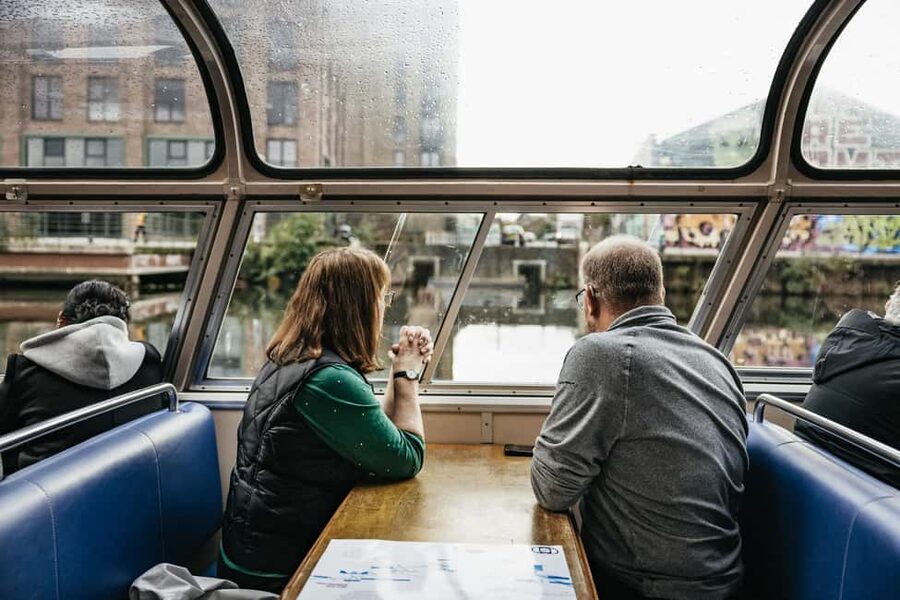
Manchester moves fast, but this cruise slows it down. You’ll float along the Manchester Ship Canal and the River Irwell, with a running narration that ties today’s skyline to the city’s industrial engine room. It is a simple hour, and still somehow feels like you saw a whole side of Greater Manchester most visitors miss.
I especially like two things here. First, the views are genuinely different, from the modern TV studios at Media City down to the old brickwork near the locks. Second, the on-board commentary is clear and structured, so you come off the boat knowing why these places matter, not just where they are.
One key drawback: it is not wheelchair accessible. Boarding involves steps (one step up and four steps down), so plan for that if mobility is an issue.
In This Review
- Key things that make this Manchester cruise worth your time
- A 1-hour cruise that turns Manchester’s waterways into a story
- Where you board at Salford Quays, and what that means for your plan
- From Salford Quays to Media City: watching modern Manchester from the canal
- Imperial War Museum, Pomona Docks, and why the industrial bits are the point
- Locks and the Hulme Lock area: engineering you can actually feel
- Stephenson’s 1830 railway bridge and the Ordsall Chord contrast
- Old Trafford and The Theatre of Dreams: sports views without the stadium noise
- On-board commentary: how the story is delivered during the hour
- Practical tips for the smoothest hour on the water
- What to wear and bring
- Where to sit
- Mobility and strollers
- Who this trip suits
- Value for money: why $16.16 feels fair here
- Should you book the Manchester Canal and River Cruise from Salford Quays?
- FAQ
- How long is the Manchester canal and river cruise?
- Where is the meeting point for the cruise?
- Where can I park near the meeting point?
- Which tram stops are closest?
- Does the cruise include commentary?
- Is food and drink included?
- Is the cruise wheelchair accessible?
- Are strollers allowed?
- Is this suitable for school groups?
- What is the cancellation policy?
Key things that make this Manchester cruise worth your time
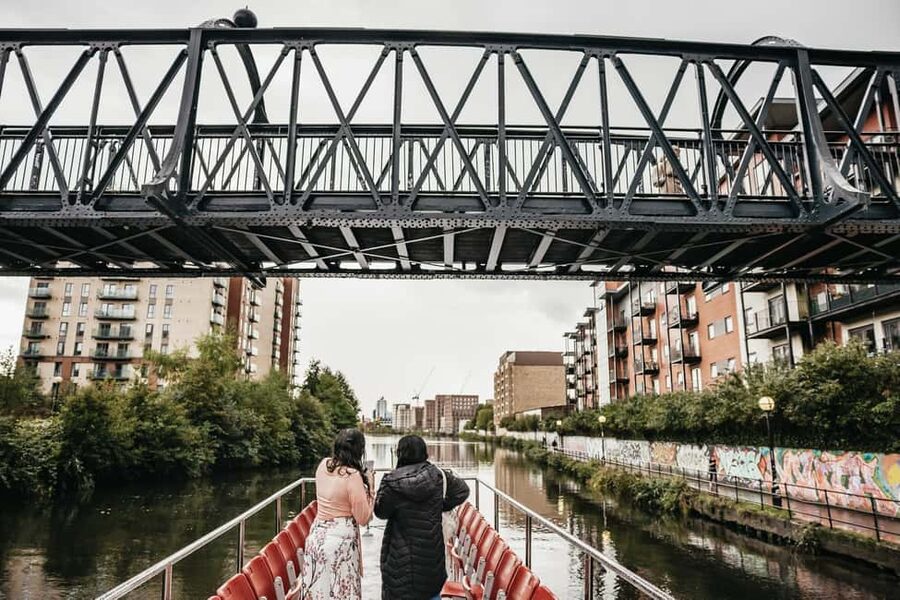
- Stephenson’s Railway Bridge (1830) plus the Ordsall Chord gives you a real before-and-after look at rail engineering.
- Media City, BBC and ITV’s Coronation Street sights, seen from the water where the city is less noisy.
- Manchester Ship Canal locks and Hulme Lock area show the muscle behind the Industrial Revolution.
- Old Trafford and The Theatre of Dreams viewpoints, without crowds from the street.
- Imperial War Museum and Pomona Docks add context beyond football and TV.
- English audio commentary ties the route together, with staff who keep the experience moving smoothly.
Still comparing? These Manchester tours came out well in our reviews too.
- The Manchester City Stadium Tour
★ 5.0 · 4,176 reviews - Etihad Stadium: The Manchester City Stadium Tour
★ 4.8 · 3,096 reviews - From Manchester: North Wales, Snowdonia, and Chester Tour
★ 4.8 · 1,577 reviews
A 1-hour cruise that turns Manchester’s waterways into a story
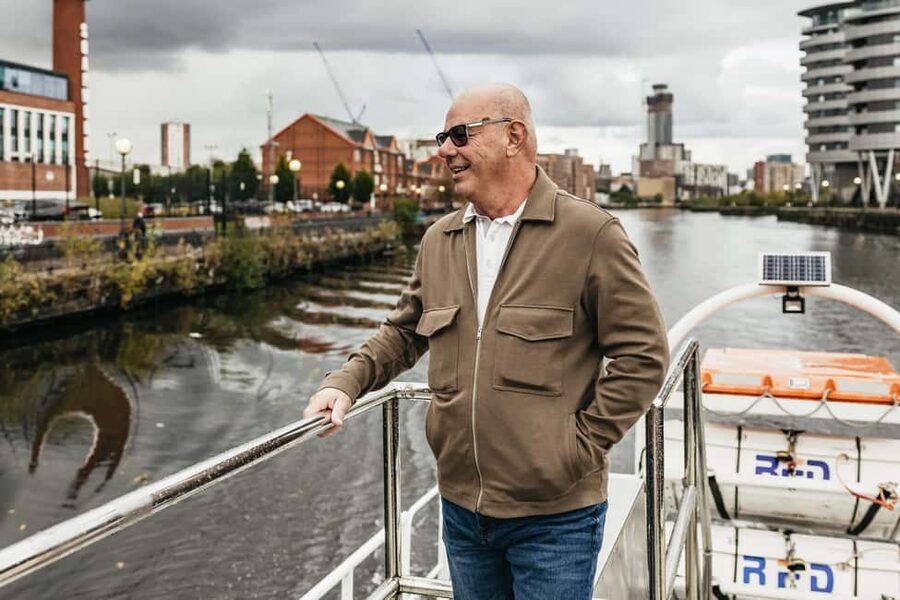
This is one of those trips that works because it stays focused. In about an hour, you get a guided sweep through Manchester’s biggest visual themes: industry, transport, and reinvention.
The Manchester Ship Canal and River Irwell are the kind of waterways that shaped the city’s fortunes. You’ll see that logic fast once you’re on the water. Buildings and bridges suddenly make more sense, because you’re watching the same lines trade used centuries ago, then match them to what’s there now.
You do not need special skills or patience. You just show up, take your seat, and let the narration do the heavy lifting.
Where you board at Salford Quays, and what that means for your plan
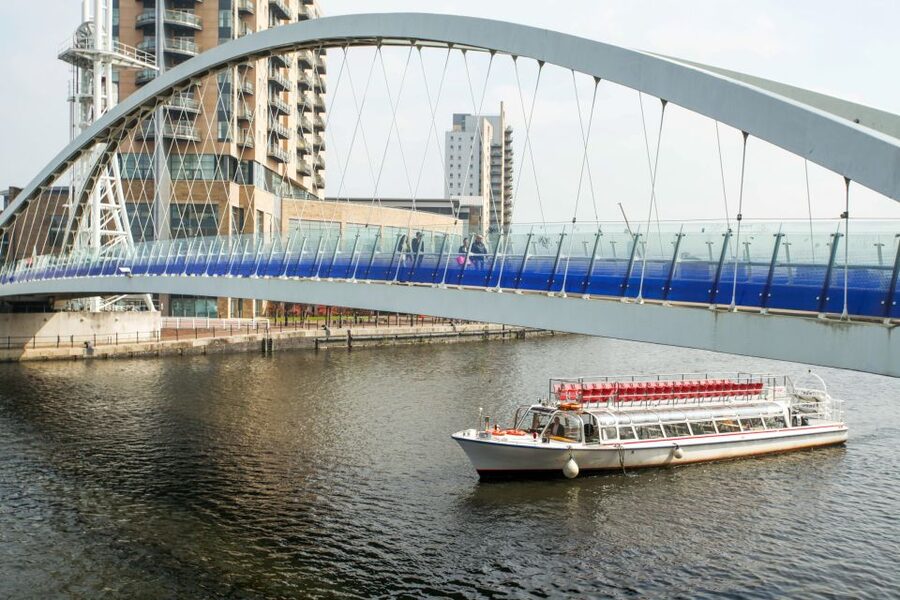
You board at Salford Quays, under the Millennium Lift bridge, a blue-and-white structure right near the Lowry Theatre. The nearest parking is at Quayside Mall, and the nearest tram stops are Media City or the Imperial War Museum.
This matters because boarding is from Salford Quays only. The city centre stop is not in operation, so plan your route to reach the Quays area first, then do the cruise.
The good news is that Salford Quays is already a logical base for a day out. You can pair this with a wander around the waterfront before or after you cruise, which makes the hour feel like part of a bigger outing instead of a standalone ticket.
From Salford Quays to Media City: watching modern Manchester from the canal
The cruise starts at Salford Quays, then heads past sights that put today’s Manchester on the map. One of the most interesting stretches is the approach to Media City.
Media City is now home to the BBC, and it is also the new home of ITV’s Coronation Street. From the boat, you get a clean view of how the waterfront setting supports that media footprint. It is not just a building tour from the road, you’re seeing the water-side context that makes this area work.
If you sit on the upper deck, you tend to get the best overall skyline view, but sound can be less audible higher up. So if you care about every detail of the narration, choose a spot where you can hear comfortably. You can also move around during the cruise to avoid people talking near you, since that can affect how much you catch.
Practical tip: bring a jumper or light coat if the weather turns windy. One hour on open water can feel cooler than you expect, especially with wind off the canal.
Manchester on foot, Peak days too





Imperial War Museum, Pomona Docks, and why the industrial bits are the point
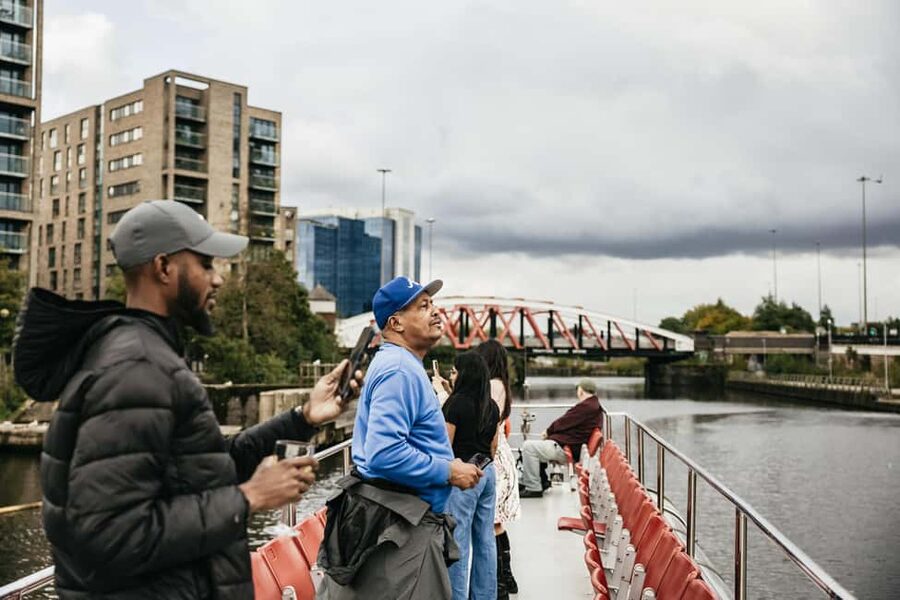
As you settle into the mid-part of the route, the cruise shifts gears. You pass key reminders of Manchester’s industrial era, including the Imperial War Museum and old Pomona Docks.
This is where the trip becomes more than sightseeing. The canal system was built for practical reasons: moving goods efficiently, connecting Manchester’s factories to broader trade routes, and keeping supplies flowing. Seeing these sites from the water helps you understand why the city developed in this particular shape.
You do not have to memorize dates or names. The narration gives you a thread, and it connects what you see, locks and infrastructure included, to the bigger story of how the Ship Canal changed jobs, growth, and movement.
If you like learning while you relax, this is a good match. You are not walking for hours in museums, and you are not stuck staring at a screen. You get movement plus context.
Locks and the Hulme Lock area: engineering you can actually feel
One of the route highlights is the canal’s locks. You’ll pass the first of the 120-meter-long locks of the Manchester Ship Canal, and later you’ll also see the railway arches over Hulme Lock.
Locks are one of those things most visitors never think about until they see them in action. Here, they are visible and part of the scenery. Watching a lock area from the boat helps you picture the scale of the system and how much effort went into making this waterway workable.
The Hulme Lock surroundings also bring back the transportation link. The railway arches over the lock area remind you that Manchester’s power was never just one mode of transport. It was all connected: rail, canal, docks, and industry feeding each other.
This is a strong section for photos too, especially if you like architecture that looks functional instead of decorative. The surfaces, shapes, and bridges look almost built for storytelling.
Stephenson’s 1830 railway bridge and the Ordsall Chord contrast

The cruise delivers one of its most memorable visual moments with George Stephenson’s railway bridge from 1830. This bridge is historic, but it also gives you a baseline for how railway engineering evolved.
Then comes the contrast: you’ll also see the Ordsall Chord. Standing on the water between the older bridge and the newer rail line, the comparison feels immediate. You get the same corridor idea, different eras of design and purpose.
If you are the type who likes transport history, this is the part to watch carefully. Look for how the structures frame the water and how the river corridor stays relevant even as the technology changes.
It is also a nice mental reset during the hour. After factories, docks, and locks, this is cleaner and more iconic, like the cruise briefly hands you a headline sight before moving on.
Old Trafford and The Theatre of Dreams: sports views without the stadium noise
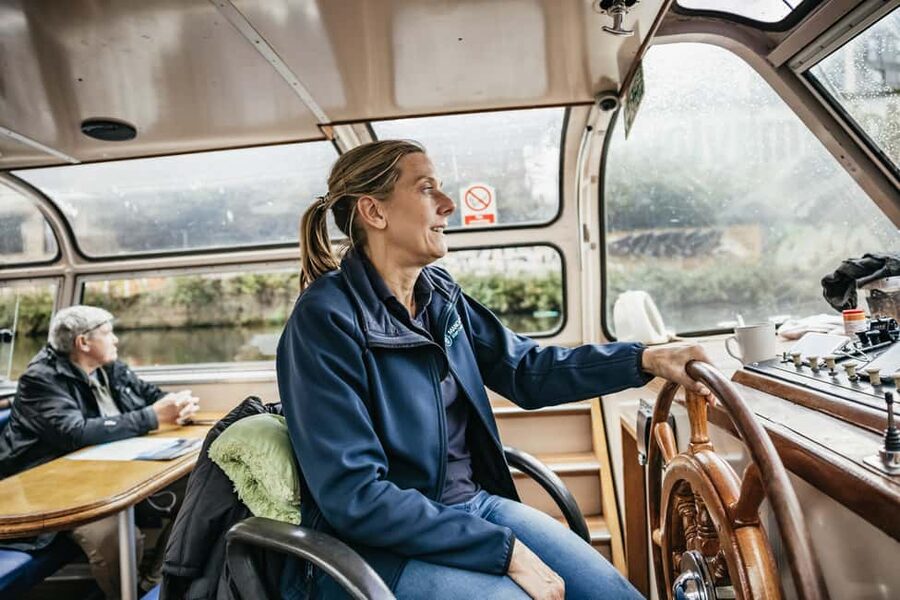
Manchester United’s home ground appears along the way. You’ll pass it with viewpoints that many visitors do not get from street level, and it is known as The Theatre of Dreams.
This is worth it even if you are not a die-hard football fan. The stadium is a huge landmark, and seeing it from the water gives you a different sense of scale. The river corridor also frames it in a way that makes the city feel layered, not flat.
The cruise timing keeps it relaxed, so you get this sight without queuing or fighting for a view in a public space. You can just sit, look, and let the narration explain where it fits in the city’s wider map.
On-board commentary: how the story is delivered during the hour
The commentary is included, and it is in English. It covers the history of the Manchester Ship Canal and the industries that helped make Manchester a powerhouse in the 19th century. It also talks about the future the city is building.
What I like about this format is that it is built for movement. The narration keeps pace with what you’re passing, so you’re not stuck hearing generic facts with nothing to connect them to.
The audio quality seems to work well for most people. Still, a couple of practical notes matter: you might find the upper deck less audible at times, and if someone nearby is talking loudly, it can cover parts of the announcement. My advice is simple, sit where you hear clearly, then adjust if you need to.
Another plus is staff attentiveness. The boat experience runs smoothly, and the crew is helpful with passengers boarding and settling in. That matters on a short trip, because you want your time to be spent looking, not figuring things out.
Practical tips for the smoothest hour on the water
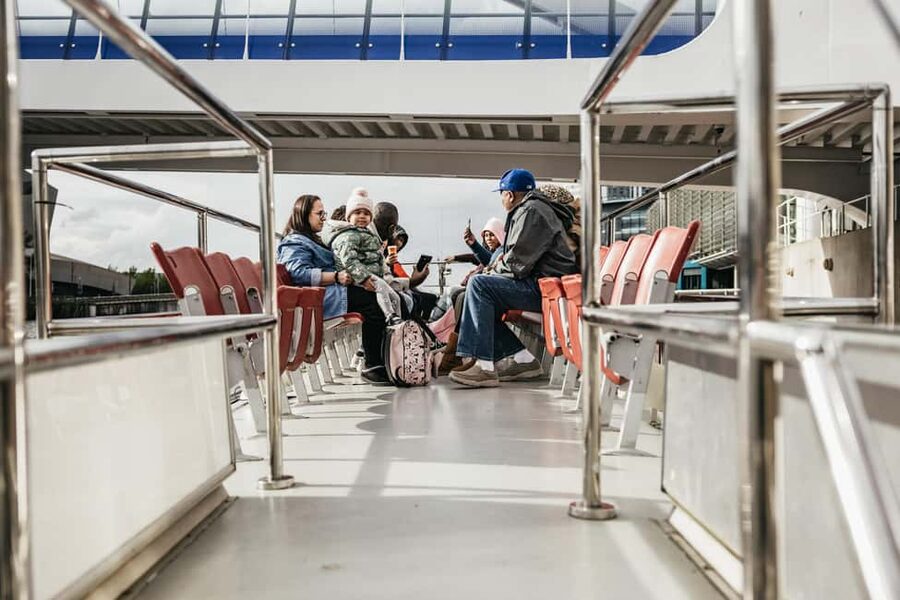
This cruise is short, so the small choices you make before boarding have an outsized effect.
What to wear and bring
- Wear layers. Wind off the water can make it feel cooler than you expect.
- Bring a light jacket or jumper.
- If you like photos, have your phone ready before the big bridge moments.
Where to sit
- For the best mix of views and audio, pick a seat where you can hear without craning.
- If people nearby are louder than the narration, shift location. You can move around during the cruise.
Mobility and strollers
- The boat is not wheelchair accessible.
- Boarding includes one step up and four steps down.
- Non-folding strollers are not allowed.
- Strollers must be foldable and stored under the seating, and full-sized baby strollers cannot be accommodated.
Who this trip suits
This cruise is a great option if you want an easy, scenic way to see Manchester’s key landmarks without committing to a longer day. It is especially good for:
- First-timers who want orientation fast.
- People who like industrial and transport stories.
- Anyone pairing football, Media City, and river scenery into one hour.
It is not a fit if you need wheelchair access, or if you are organizing a party group. School groups should be booked privately instead of using this scheduled style.
Value for money: why $16.16 feels fair here
At about $16.16 per person, this is good value because you get three things that usually cost more on separate tickets: guided context, landmark views, and a relaxed pace.
You are not paying for a big museum building or an all-day excursion. You are paying for one focused hour where the route is designed around specific sights, and the narration turns those sights into a coherent story.
Also, the cruise includes commentary, so you are not left wondering what you are seeing. That is a big deal for budget travel, because it reduces the need to research on the spot.
If your day in Manchester is packed, this trip can act like the reset button. It gives you a change of perspective without burning half a day.
Should you book the Manchester Canal and River Cruise from Salford Quays?
I’d book it if you want an hour of scenic views plus a real explanation of Manchester’s canal era. The combination of Media City and BBC and ITV sights with the industrial Ship Canal elements keeps it from feeling like one-note sightseeing. And the Stephenson’s bridge plus Ordsall Chord contrast is a standout moment you can’t easily replicate from the pavement.
Skip it if you need wheelchair accessibility, or if you know you will struggle with steps during boarding. If you care a lot about hearing every word, plan to sit where the audio is easiest for you, since upper-deck sound can be less clear at times.
If you are staying near Salford Quays or already plan to spend time in that part of the river, this is a low-effort, high-reward way to see Manchester from a different angle.
FAQ
How long is the Manchester canal and river cruise?
The cruise lasts 1 hour. Starting times vary, so check availability for the time that fits your schedule.
Where is the meeting point for the cruise?
You start under the Millennium Lift bridge (blue and white) just by the Lowry Theatre at Salford Quays.
Where can I park near the meeting point?
The closest parking is at the Quayside Mall.
Which tram stops are closest?
The closest tram stops are Media City or The Imperial War Museum.
Does the cruise include commentary?
Yes. A commentary and audio guide in English are included.
Is food and drink included?
No. Food and drinks are not included.
Is the cruise wheelchair accessible?
No. The cruise is not wheelchair accessible. Boarding involves one step up and four steps down.
Are strollers allowed?
Non-folding strollers are not allowed. Strollers must be foldable and stored under the seating, and full-sized baby strollers cannot be accommodated.
Is this suitable for school groups?
No. It is not suitable for school groups, as these should be booked privately.
What is the cancellation policy?
Free cancellation is available up to 24 hours in advance for a full refund.
Manchester and the Peaks
- The Manchester City Stadium Tour★ 5.0 · 4,176 reviews
- Etihad Stadium: The Manchester City Stadium Tour★ 4.8 · 3,096 reviews
- From Manchester: North Wales, Snowdonia, and Chester Tour★ 4.8 · 1,577 reviews
- Manchester: National Football Museum Admission Ticket★ 4.4 · 1,243 reviews
Fresh off the Manchester review pile






Manchester & the Peak District, compared.
 ★ 5.0The Manchester City Stadium TourFrom $354,176 reviews
 ★ 4.8Etihad Stadium: The Manchester City Stadium TourFrom $353,096 reviews
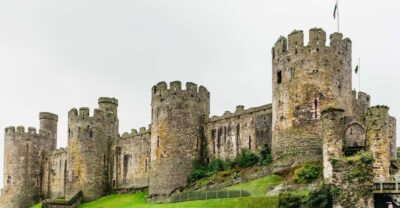 ★ 4.8From Manchester: North Wales, Snowdonia, and Chester TourFrom $1021,577 reviews
 ★ 4.4Manchester: National Football Museum Admission TicketFrom $201,243 reviews
 ★ 5.0Alcotraz Prison Cocktail Experience in ManchesterFrom $701,216 reviews
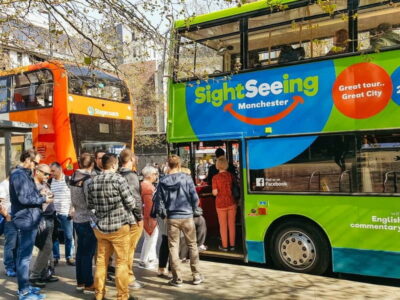 ★ 4.1Manchester: Sightseeing Bus TourFrom $181,204 reviews
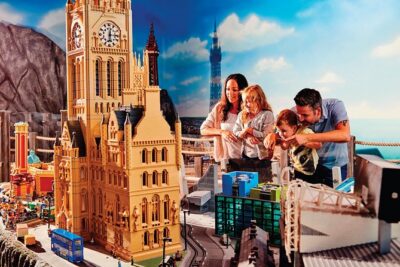 ★ 4.0LEGOLAND Discovery Centre ManchesterFrom $221,049 reviews
 ★ 5.0Manchester Afternoon Walking TourFrom $241,033 reviews