
REVIEW · BATH & THE ROMAN BATHS
Best of Bath Walking Tours – Georgian Tour
Georgian Bath makes instant sense on foot. On this guided 2 to 3 hour walk in central Bath, you connect the city’s Georgian architecture to the spa culture that made Bath famous, all without getting lost. I love the small-group feel, with a max of 15 people so you can actually hear the guide and ask questions.
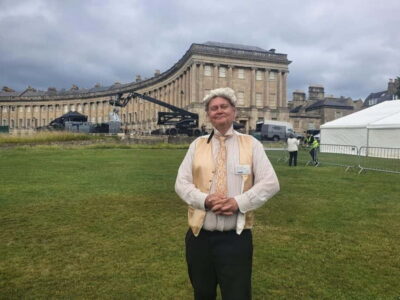
I also like Bob’s approach, story-first and very human. He brings a wry sense of humor, then slows down when you want details, which makes the stops feel more like a conversation than a lecture.
One thing to factor in: several big-name sights on the route have ticketed admission that is not included, so your total trip cost may go up once you decide to enter. Also, it’s a walking tour, so come with moderate fitness.
In This Review
- Key Things You Should Know Before You Go
- Why This Georgian Bath Walk Works So Well
- Starting at Abbey Churchyard, Then Getting Your Bearings Fast
- Queen Square to Circus: How to Read the Georgian Facades
- Royal Crescent and No. 1 Royal Crescent: The Big Georgian Sweep
- Roman Baths Area and the Spa Story Behind the Stones
- Assembly Rooms and Royal Mineral Water Hospital: When Bath Became a Stage
- Pulteney Bridge and Guildhall Market for Break Time Energy
- How Long the Walk Is, and What the Timing Feels Like
- Price and Value: What You’re Really Paying For
- Who This Tour Fits Best
- Should You Book Best of Bath Walking Tours Georgian Tour?
- FAQ
- What is the tour price and length?
- Where does the tour start, and where does it end?
- What time does the tour begin?
- How big is the group?
- Is the tour in English?
- Are admission tickets included for all stops?
- Is there a walking requirement?
- Is a mobile ticket provided?
- What is the cancellation policy?
- Does the tour require good weather?
Key Things You Should Know Before You Go
- Small group, big clarity: up to 15 people means fewer crowds and more back-and-forth with Bob
- Focus on Georgian design: Queen Square, the Circus, and the Royal Crescent are the main show
- Spa landmarks are part of the story: you’ll link the springs era to the later Georgian boom
- A route that helps you navigate: you follow a guided line through central Bath’s must-see spots
- Tickets for some stops are extra: Roman Baths and other interior sites are not included
More of Bath, Georgian and Roman
- Walking Tour of Bath with Blue Badge Tourist Guide
★ 5.0 · 1,877 reviews - Bath: City Walking Tour with Optional Roman Baths Entry
★ 4.7 · 1,401 reviews - Bath: Guided Walking Tour
★ 4.9 · 1,198 reviews
Why This Georgian Bath Walk Works So Well
Bath can feel like a postcard city until you learn what to look at. This tour gives you that key, right away. You walk through the Georgian core, but you also keep returning to one theme: Bath’s healing waters. The buildings make sense once you understand why people came, how they lived, and what they built for society, leisure, and health.
I like that the pace stays holiday-friendly. You’re not sprinting between photo stops, and you get time to absorb details at each landmark. With a group capped at 15, you avoid the usual problem of a long line where the guide has to talk to the back row the whole time.
You’ll also appreciate the way Bob handles questions. In a city like Bath, you end up noticing things you did not plan to notice. This guide makes it feel normal to ask, and then he works those answers into the flow.
Starting at Abbey Churchyard, Then Getting Your Bearings Fast
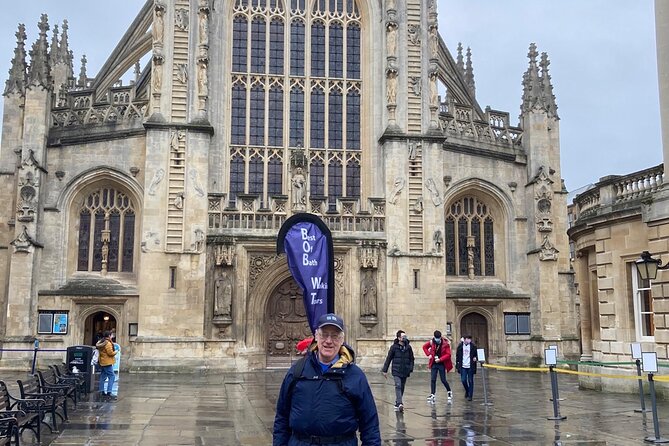
The tour begins in Abbey Churchyard, in front of Bath Abbey. The church is known as Saint Peter and Saint Paul, and it sits on a site with deep roots, reaching back to early medieval times. The guide uses the churchyard as your orientation point, so you are not just staring at one pretty building. You’re learning how the Abbey fits into the larger picture of Bath’s development.
Even if you already know Bath Abbey from photos, this start helps you see the city’s layout. You’ll get the sense of where the Georgian streets and crescents sit in relation to older city layers. I find that matters, because Bath’s center is compact, and after a while you otherwise blend everything together.
Expect a relaxed intro, then you move into the main walking stretch through central Bath. This is where you start building a mental map. That is one of the tour’s practical wins, especially if you have only a short window in town.
Queen Square to Circus: How to Read the Georgian Facades
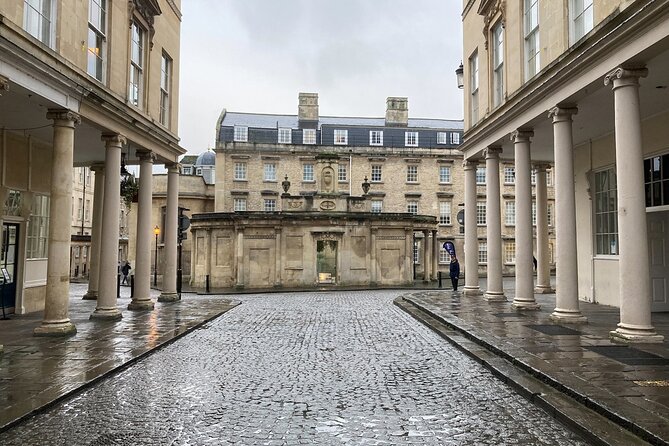
Once you get into the Georgian zone, Bob teaches you how to “read” the architecture instead of just admire it. Queen Square is a good first lesson. It’s made up of Georgian houses and it’s the start of a bigger architectural sequence in Bath, leading toward the Circus and the Royal Crescent. The buildings here are Grade I listed, which signals you’re looking at work considered exceptionally important.
From there, the Circus is the kind of landmark you recognize even before you know the name. It’s a ring of townhouses with three entrances, designed by John Wood, the Elder, and built between 1754 and 1768. The design trick is simple but clever: each segment faces one of the entrances, so you get a classical façade straight ahead as you walk toward it. It’s architecture that rewards slow movement, and this tour gives you that slow movement.
This is also where the humor and storytelling help. If you only hear facts, Georgian buildings can start to feel like museum labels. With Bob, the buildings are tied to the way people gathered and showed status. You end up seeing the same façade and noticing new things each time.





Royal Crescent and No. 1 Royal Crescent: The Big Georgian Sweep
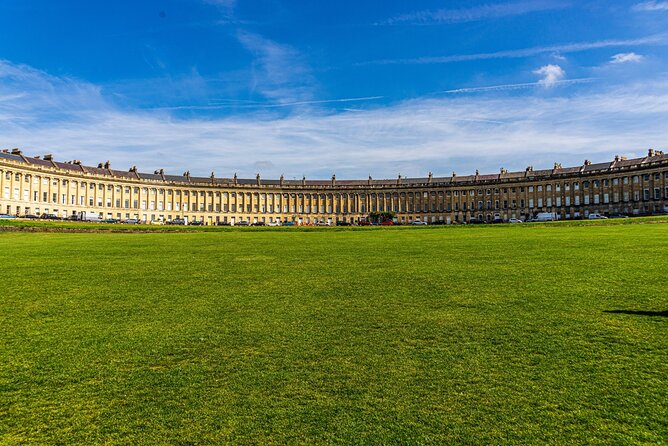
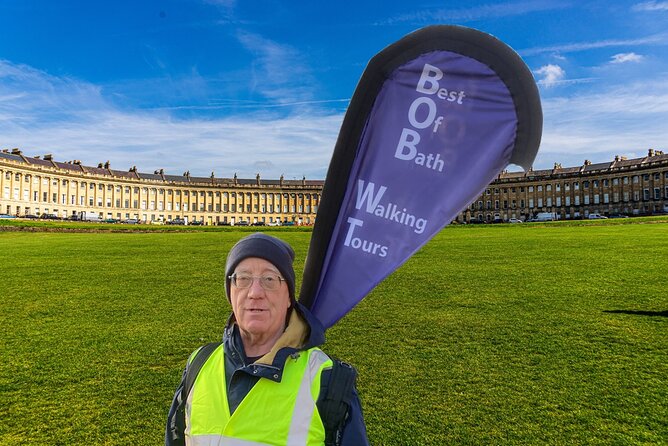
The Royal Crescent is Bath’s headline. Thirty terraced houses arranged in one elegant sweep across a crescent. Bob keeps the focus on why it works so well in real space, not just on paper. It was designed by John Wood, the Younger, and built between 1767 and 1774. It’s also Grade I listed, so you are standing in front of one of the United Kingdom’s major Georgian architectural statements.
At No. 1 Royal Crescent, you get a closer look at the standout address. The guide helps you understand how the crescent shape creates rhythm and uniformity, even though the details across the row create variety. That matters because from far away you might see “a long curve.” Up close, you start seeing craftsmanship and planning.
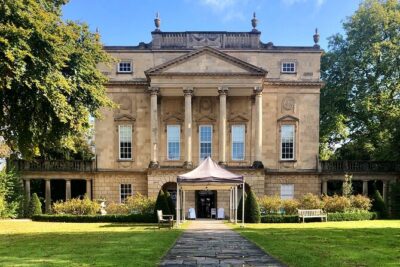
Practical note: this stop is not listed as including ticketed admission, so if you want to go inside, expect extra tickets. If you skip interiors, you still get plenty from the exterior and the guide’s explanations.
Roman Baths Area and the Spa Story Behind the Stones
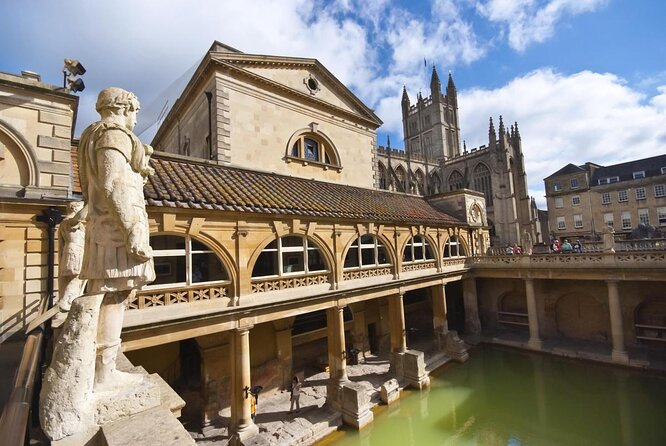
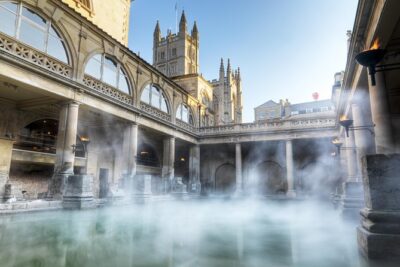
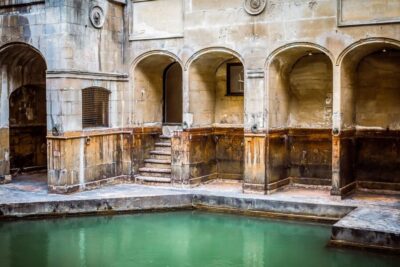
This tour threads Georgian Bath together with the older Roman-era spa setting. The Roman Baths are a well-preserved thermae built on the site between 60 and 70 AD in the early decades of Roman Britain. According to the Anglo-Saxon Chronicle, the earlier Roman baths fell into ruins a century later. Later, the surrounding area was redeveloped again in the early and late Middle Ages.
Even with a short stop, this context changes how you view the city. Bath is not only “Georgian.” It’s a palimpsest. The spa idea survives every era, even as styles change. When Bob points out how later redevelopment happened around the springs, the architecture stops being random and starts looking purposeful.
Important for your planning: the Roman Baths stop notes ticketed admission is not included. If the baths are a must for you, I’d treat this as a spot where you may want to add time and pay for entry.
Assembly Rooms and Royal Mineral Water Hospital: When Bath Became a Stage
The Georgian era in Bath was not only about homes and facades. It was about society. That’s why two stops fit this theme especially well.
Assembly Rooms were built in the early 18th century, then a new venue for balls, concerts, and gambling was planned between Queen Square, the Circus, and the Royal Crescent. The upper assembly rooms opened in 1771 and became the hub of fashionable society. The guide ties this to major literary names connected to Bath, including Jane Austen and Charles Dickens.
Again, ticketed admission is not included at this stop, so you’ll likely appreciate the exterior and the story rather than treat it as a guaranteed indoor visit.
Then there’s the Royal Mineral Water Hospital. Construction began in 1737, marking a period where faith and scientific ideas blended around the healing properties of Bath’s mineral waters. In other words, the spa was not only entertainment. It was also public belief, medicine-adjacent, and infrastructure.
If you like your travel with context, these two stops give you that. You can picture Bath as a place where people came for health, then stayed for status and social life.
Pulteney Bridge and Guildhall Market for Break Time Energy

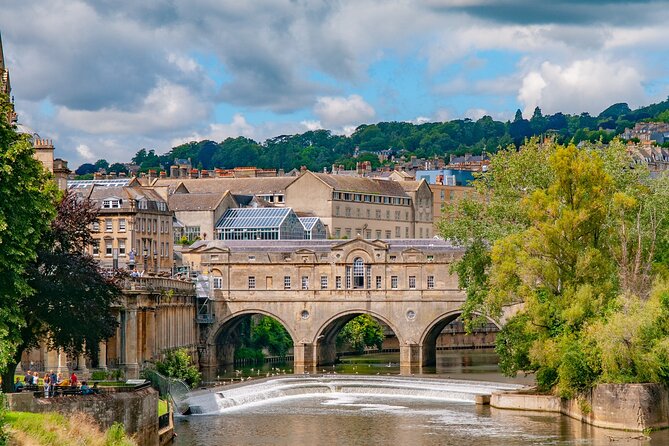
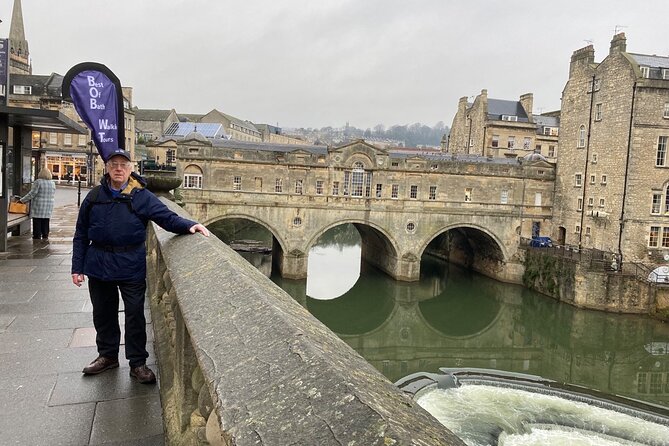
After the bigger architectural icons, the tour shifts into “everyday Bath,” which I love because it prevents fatigue. Pulteney Bridge is a great example. Completed by 1774, it connects Bath with the Pulteney family lands it aimed to develop. It was designed by Robert Adam in a Palladian style, and it’s highly unusual because shops sit across the full span on both sides of the bridge.
That shop layout gives the bridge more character than a typical river crossing. It also makes the bridge feel like part of the city’s economic heartbeat rather than a standalone landmark.
Then you end with Bath Guildhall Market. It’s an indoor market, housed in a beautiful building. The market has been established since 1284, which gives you instant perspective on how long this part of Bath has served as a meeting point and a buying point.
If you want a breather, these stops work well. You’re not racing for the next photo, and you can wander a bit in the market atmosphere.
How Long the Walk Is, and What the Timing Feels Like
On paper, the tour is listed as about 2 to 3 hours. In practice, the route is built around a main stretch of roughly 2 hours, with shorter segments at key landmarks. The tour starts at 1:00 pm, and it finishes back at Abbey Churchyard so you can keep your afternoon simple.
This is not a long-distance hike, but it is still real walking. The tour notes moderate physical fitness, so if you’re comfortable strolling around a compact historic center, you should be fine.
A detail I’d plan around: if you stop to read plaques, take lots of photos, or ask extra questions, you may stretch beyond the shortest end of the time range. That is not a bad thing here. The guide’s answers help you notice things you otherwise would miss.
Price and Value: What You’re Really Paying For
At about $27.73 per person, this is one of those “small price, big returns” tours, but it depends on your style of travel. If your goal is to see Bath’s top Georgian highlights with minimal planning, the value is strong because the guide helps you navigate the city’s layout and tells you what matters at each stop.
Here’s the balanced view. Several stops note ticketed admission is not included, so the total you spend can grow. If you are the type who wants to enter Roman Baths, Assembly Rooms, or other interior spaces, you’ll likely add more. If you’re happy with exterior views and explanations, you can keep costs under control.
The best part is that the tour does more than list sights. Bob’s format is built around making details stick. You finish with a better sense of Bath’s structure, and that makes the rest of your independent exploring easier.
Who This Tour Fits Best
This is a great pick if you want a guided introduction to Georgian Bath without spending hours researching ahead. It works well for first-timers who want the highlights, plus it can still be rewarding if you’ve been to Bath before, because the guide points out details you might otherwise skip.
It also fits solo travelers, couples, and small groups because the max group size keeps the experience personal. If you enjoy asking questions, you’ll probably get the most out of it.
If you’re someone who only wants museum-style visits with lots of time inside, you might find the stops a bit short. The tour is designed as a walk-and-learn experience, with optional ticketed entries where you decide.
Should You Book Best of Bath Walking Tours Georgian Tour?
Yes, if you want Georgian Bath to feel clear, not confusing. This tour gives you the big names, like the Circus, the Royal Crescent, and Pulteney Bridge, while also tying them to the spa story that made the city a destination in the first place. With Bob leading and a small group size, you get questions answered in real time, not after you’ve wandered off on your own.
Book it if you have a couple of hours to spend and you want your time to count. Consider booking something else if you want long indoor time at ticketed attractions every stop, because several key sites on the route are look-and-learn rather than fully included entry experiences.
FAQ
What is the tour price and length?
The tour costs $27.73 per person and lasts about 2 to 3 hours.
Where does the tour start, and where does it end?
It starts at Abbey Churchyard, Bath BA1, UK, and ends back at the same meeting point.
What time does the tour begin?
The listed start time is 1:00 pm.
How big is the group?
The group maximum is 15 travelers.
Is the tour in English?
Yes, the tour is offered in English.
Are admission tickets included for all stops?
No. The tour notes free admission for some stops, while admission is not included for others like the Roman Baths, Royal Mineral Water Hospital, Assembly Rooms, and No. 1 Royal Crescent.
Is there a walking requirement?
It’s a walking tour and is designed for travelers with moderate physical fitness.
Is a mobile ticket provided?
Yes, the tour includes a mobile ticket.
What is the cancellation policy?
You can cancel for a full refund up to 24 hours before the experience’s start time. Weather-related cancellations may offer a different date or a full refund.
Does the tour require good weather?
Yes. The tour requires good weather and may be canceled if conditions are poor, with an alternative date or refund offered.
Bath: Baths, Abbey and Streets
- Walking Tour of Bath with Blue Badge Tourist Guide★ 5.0 · 1,877 reviews
- Bath: City Walking Tour with Optional Roman Baths Entry★ 4.7 · 1,401 reviews
- Bath: Guided Walking Tour★ 4.9 · 1,198 reviews
- Bath: Guided Ghost Tour★ 4.8 · 1,036 reviews
Fresh off the Bath review pile




Bath & the Roman Baths, compared.
 ★ 4.5Stonehenge, Windsor Castle, and Bath from LondonFrom $11118,662 reviews
 ★ 4.5Stonehenge, Windsor Castle and Bath with Pub Lunch in LacockFrom $1237,402 reviews
 ★ 4.5Stonehenge, Windsor Castle and Bath Full Day Guided TourFrom $1235,346 reviews
 ★ 4.5London: Windsor, Stonehenge, Bath, and Roman Baths Day TripFrom $1205,131 reviews
 ★ 4.5Stonehenge and Bath Tour from LondonFrom $994,295 reviews
 ★ 4.4London: Windsor Castle, Stonehenge & Bath Full-Day TourFrom $1083,112 reviews
 ★ 5.0Windsor, Stonehenge and Bath Day Trip from London SpanishFrom $1232,656 reviews
 ★ 4.8From London: Stonehenge and Bath Day Trip with TicketFrom $1142,411 reviews
Also filed under