
REVIEW · WALKING TOURS
Burnings, Butchery & Black Death: A Walking Tour of London’s Bloody Past
London has always had a dark side.
This walking tour strings together a thousand years of upheaval in just about two hours, with stops that make the city feel hands-on, not like a museum label. I like how it keeps moving through real places tied to plague, food, gates, and even later Victorian infrastructure, so you leave with a stronger sense of how London changed.
I especially like two things: first, the small group size (max 15) that keeps the pace conversational, not rushed. Second, the guide style that mixes clear storytelling with humor and pointed detail, so even grim topics land in context.
One thing to consider is that the theme is intentionally heavy. If you prefer gentle sightseeing, this may feel too intense for your taste, but it is presented as history, not shock value.
In This Review
- Key Things I’d Book This For
- A 2-hour sprint through London’s grimest centuries
- Price, group size, and what you get for $27.73
- Getting oriented: Aldersgate start, Ely Place finish near Farringdon
- The 10 stops that make London’s bloody past feel real
- Stop 1: The Charterhouse, monastery and plague pit
- Stop 2: Smithfield Market, a one thousand year meat market
- Stop 3: St John’s Gate, the Knights Hospitallers connection
- Stop 4: Cloth Fair, a quiet alley with a noisy past
- Stop 5: William Wallace Memorial, the Braveheart echo
- Stop 6: Church of St Bartholomew the Great, London’s oldest surviving parish church
- Stop 7: Golden Boy of Pye Corner, Great Fire aftermath and ghost hysteria
- Stop 8: Holborn Viaduct, site of the River Fleet sewer
- Stop 9: Ye Olde Mitre, a pub tucked down an alley
- Stop 10: St Bartholomew’s Hospital Museum, the oldest surviving hospital
- The guide style that keeps the mood from turning grim
- Comfort, pace, and who this fits best
- Practical tips to get more out of every stop
- Should you book this tour?
- FAQ
- How long is the walking tour?
- How much does the tour cost?
- Where does the tour start and end?
- Is the tour in English?
- Are there any admission fees included?
- How big are the groups?
- Do I need to print tickets?
- What is the cancellation policy?
- Is the tour dependent on weather?
Key Things I’d Book This For
- One route, ten stops, about 2 hours: tight, focused, and easy to fit into a sightseeing day.
- Max 15 people: you can hear the guide and ask questions without fighting for attention.
- A cover-all-the-centuries approach: Middle Ages to Victorian times, without turning into a single-theme lecture.
- Places you’d miss on your own: alleyways, gates, and tucked-away corners around the City.
- No tired reruns: it’s not built around the usual London horror script, and the emphasis stays on this area’s past.
- Strong close-out stop: St Bartholomew’s Hospital Museum adds a tangible, human angle after the darker stories.
Still comparing? These London tours came out well in our reviews too.
- From London: Harry Potter Warner Bros Studio Tour
★ 4.7 · 26,588 reviews - London: Westminster to Greenwich River Thames Cruise
★ 4.5 · 22,836 reviews - Magical London: Harry Potter Guided Walking Tour
★ 4.7 · 22,044 reviews
A 2-hour sprint through London’s grimest centuries
London can feel layered on top of itself, but most sightseeing skims only the top paint. This tour tries a different approach: you walk through an area where centuries overlap in stone, street names, and surviving landmarks. You cover plague era sites, medieval trade, and later “modern” London systems all in a compact loop.
The pitch is simple, burnings, butchery, and Black Death, but what makes it work is the pacing. You are not handed one big lecture, then dropped at a monument. Instead, you keep stepping into the next clue, then the next. That format helps you connect the dots between disease, food supply, city power, and public life.
I also like that it is practical. The tour is offered in English, uses a mobile ticket, runs about two hours, and keeps the group limited so the guide can respond to questions.
Price, group size, and what you get for $27.73
At $27.73 per person for roughly a two hour walk, you are paying for two main things: a guided route through a concentrated part of London and storytelling that turns locations into meaning. The “value” is not that every stop requires paid entry. Most stops are free to access, and one key stop includes admission to St Bartholomew the Great.
The group cap matters too. With a maximum of 15, the tour doesn’t feel like a cattle line. You can listen without straining, and you can actually get answers. In the accounts for this tour, the guide is repeatedly praised for clear speaking and for keeping the room engaged, including humor and quick fixes when questions pop up.
If you are sightseeing on a tight schedule, this kind of guided compression is a smart spend. You cover a lot more than you would on your own in the same time, especially in the City area where the interesting stuff can hide behind ordinary streets.
Getting oriented: Aldersgate start, Ely Place finish near Farringdon
You meet at Underground Ltd on Aldersgate Street in the Barbican area (London EC1A 4JA). The walk ends on Ely Place, near Farringdon Station (London EC1N). That end point is convenient because it drops you near a major transport hub, which makes it easier to keep your day moving.
You should also plan around weather. This experience is stated to require good weather, and if it is canceled due to poor conditions you’ll be offered a different date or a full refund. Pack accordingly, wear shoes you can handle for a steady walking pace, and bring a layer, since City streets can feel exposed.
Because this is near public transportation and most travelers can participate, it’s also a good option if you want a solid London history hit without a long commute or complicated logistics.





The 10 stops that make London’s bloody past feel real
This is where the tour earns its name. Each stop is short, around 10 minutes, which means you get momentum. Here is how I’d think about each one and what to watch for.
Stop 1: The Charterhouse, monastery and plague pit
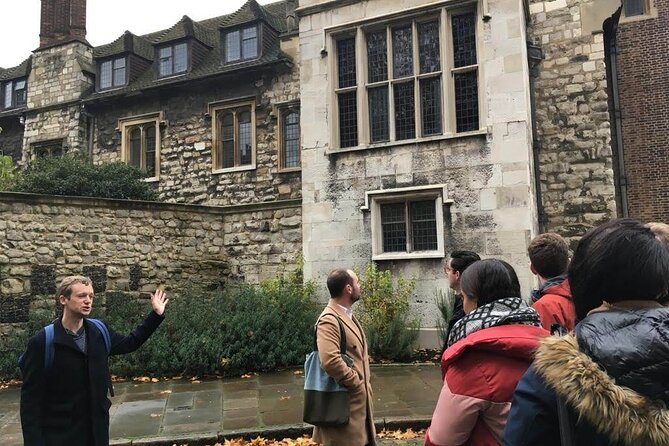
You start at the Charterhouse, a fourteenth century monastery tied to a plague pit. Even if you’ve read about the Black Death, standing near a place connected to it makes the event feel less like a chapter heading and more like a lived reality. The value here is perspective: disease wasn’t an abstract tragedy. It hit places with routines, buildings, and human decisions.
Possible drawback: because the subject is grim, this start can set a heavy mood. If you’re queasy about plague-era themes, mentally brace yourself for the tone right away.
Stop 2: Smithfield Market, a one thousand year meat market
Next is Smithfield Market, described as a meat market with a history reaching about a thousand years. This is a smart pairing after the plague connection, because food and public health have always been tangled. You’ll be thinking about supply chains, crowding, and how city life depends on systems that can also spread risk.
What to do with this stop: pay attention to how trade shaped the area. Smithfield is not only about meat. It is about where people gathered, where commerce created noise and movement, and how the City’s daily life left records in stone and street patterns.
Stop 3: St John’s Gate, the Knights Hospitallers connection
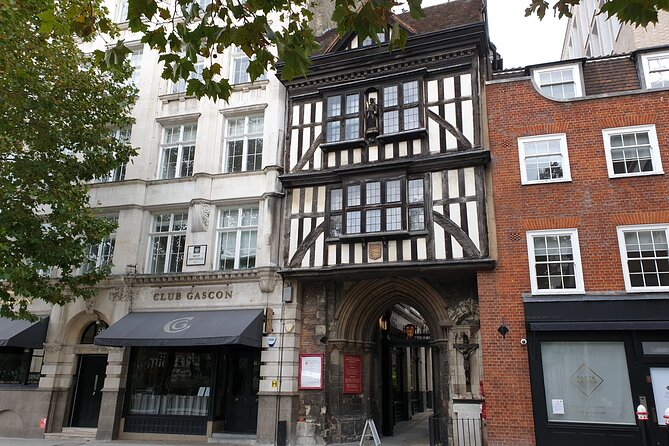
Then you reach St John’s Gate, tied to the medieval Knights Hospitallers. Gated entrances help you see how power moved through London. It’s not just “history happened here.” It’s that organized groups, religious institutions, and security needs shaped what you can still recognize today.
This stop is also useful for orientation. After the market and plague theme, the gate gives you a sense of the City’s structure, its boundaries, and who controlled access.
Stop 4: Cloth Fair, a quiet alley with a noisy past
Cloth Fair is exactly the kind of London contrast I love. It’s quiet now, but it carries a history associated with commerce and the movement of goods. The lesson is that London’s everyday lanes often once hosted activity on a much bigger scale.
Possible drawback: because it’s an alley and the time is short, this stop can feel like “just a street” if you are not listening for the story. The payoff comes from the guide connecting the quiet present to the louder past.
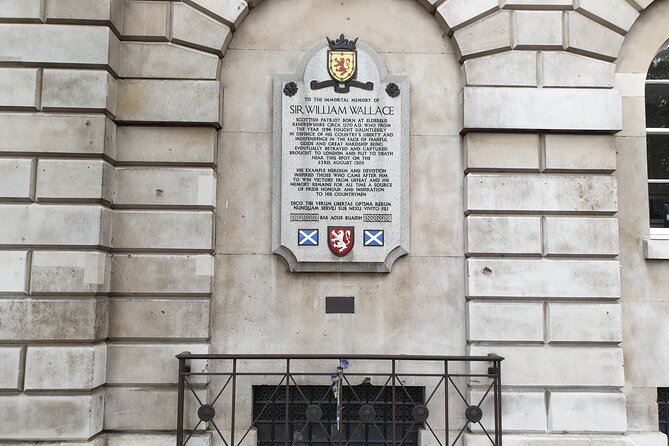
Stop 5: William Wallace Memorial, the Braveheart echo
You then pause at the William Wallace Memorial, tied to William Wallace, widely associated with Braveheart. This is a noticeable turn from plague and London-specific systems into a cross-Scotland layer of memory. It reminds you that history in London is not only local. People, legends, and politics show up in monuments too.
Why it matters on this route: it breaks up the darker theme without losing the idea that London collects stories from many directions.
Stop 6: Church of St Bartholomew the Great, London’s oldest surviving parish church
This is the stop with included admission: Church of St Bartholomew the Great. It is described as London’s oldest surviving parish church. When a tour includes entry, it signals that the inside matters, and here it gives you a deeper look than street-level storytelling.
Expect atmosphere and age. A church like this is a place where time is visible in construction and in the way it frames the City around it. It also changes the mood, bringing you from “dark city mechanics” toward something more anchored and enduring.
Stop 7: Golden Boy of Pye Corner, Great Fire aftermath and ghost hysteria
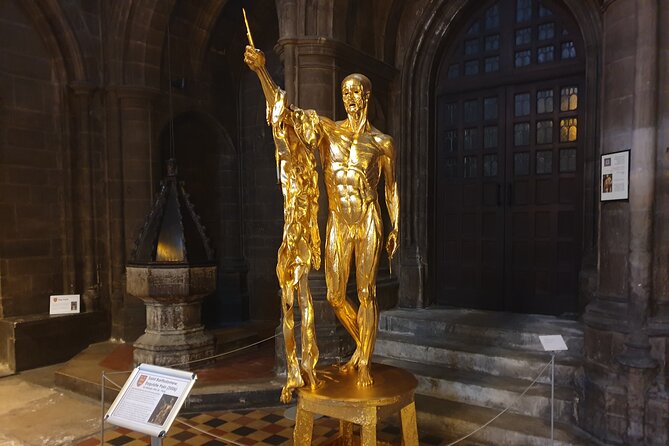
At Golden Boy of Pye Corner, the story shifts to the Great Fire of 1666, described here as the spot where the fire died out. The stop also includes references to later eighteenth century ghost hysteria. That mix matters. London’s fear did not end with the flames. It evolved.
What to watch for: listen for how the guide connects disaster to rumor. That pattern repeats across centuries, and it helps you interpret why cities produce ghost stories when people need explanations.
Stop 8: Holborn Viaduct, site of the River Fleet sewer
You move to Holborn Viaduct, tied to the River Fleet, described as Victorian London’s largest open air sewer. This is one of the most “modern” horror moments on the walk, because it shows how progress can still be a health risk before infrastructure catches up.
This stop is especially valuable if you like real-world cause and effect. You get a tangible sense of how sanitation shaped daily life and why the Victorians built to solve problems that older London couldn’t manage.
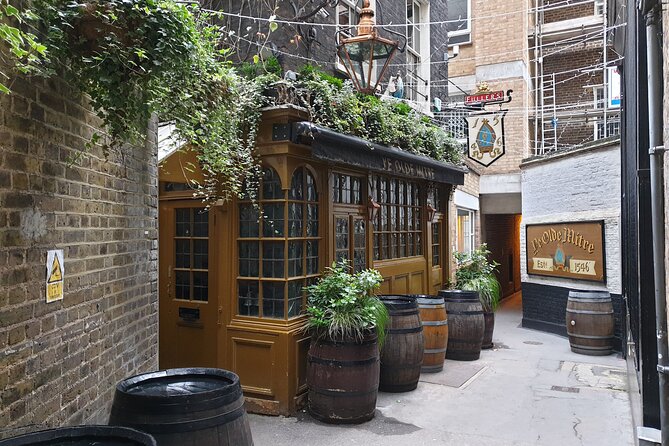
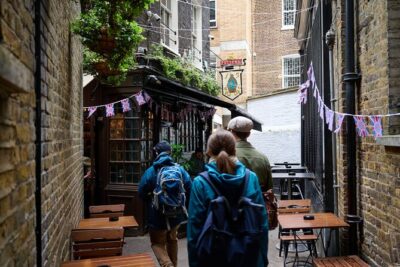
Stop 9: Ye Olde Mitre, a pub tucked down an alley
Then you hit Ye Olde Mitre, a pub down an alleyway. This is a breathing point. After plague, markets, fire, and sanitation, you get something social and human. It’s also practical for your day: you can take a break, order food, and reset your brain before the final stop.
A tip if you want to eat here: keep an eye on the kinds of pub classics people rave about in this area, like cheese toasties and pork pies. Even if you don’t eat, it is a nice moment to regroup.
Stop 10: St Bartholomew’s Hospital Museum, the oldest surviving hospital
You finish at Saint Bartholomew’s Hospital Museum, described as the oldest surviving hospital in the country. That last stop works because it adds a human-health thread after the darker parts of the walk. You are ending with the idea that London did build institutions to treat illness, even if those buildings and systems evolved over time.
If you like museums, this is a strong close. If you prefer just walking, you still leave with a better sense of how health care grew out of earlier crises.
The guide style that keeps the mood from turning grim
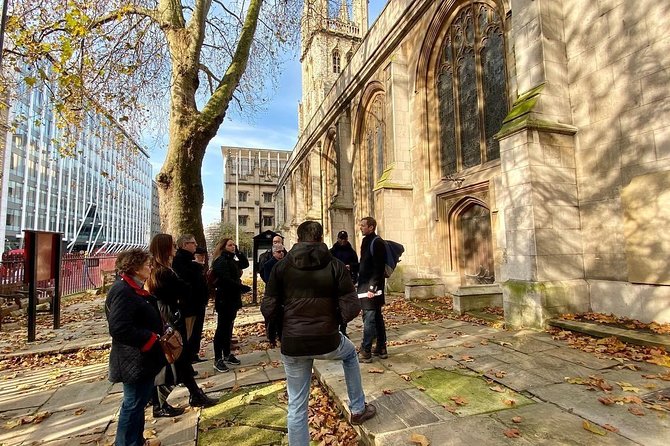
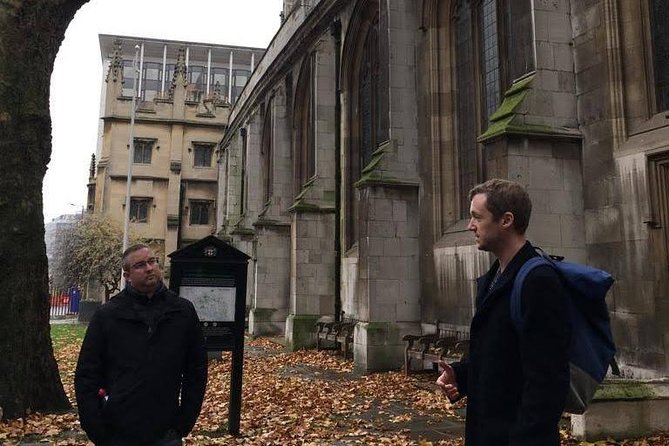
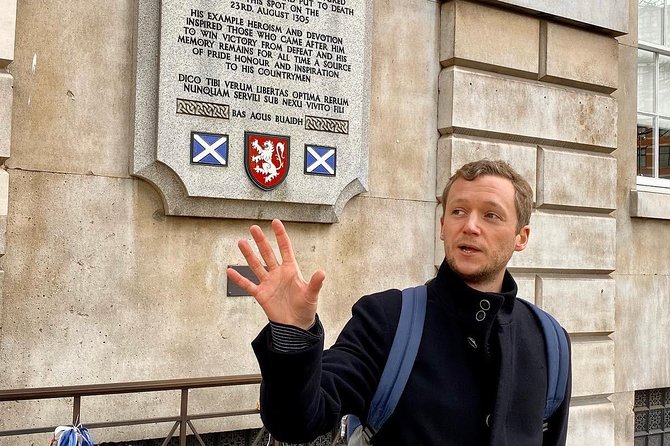
The tour is repeatedly praised for its delivery. In the accounts shared about this experience, the guide is often named Tom, and he’s described as clear, humorous, and comfortable answering questions. That combination matters on a tour like this, where the topic can easily tip into heavy or morbid.
I also like that the storytelling keeps a tight grip on London’s specific area instead of falling back on the same famous generic plot lines. If you’ve done other London walks that feel like repetition, this route can feel fresher because it focuses on the City’s own institutions and places.
You do not need to be a plague expert. The guide’s job is to connect the dots for you, and the structure of the walk supports that. Short stops mean you get context quickly, then move on.
Comfort, pace, and who this fits best
This is around two hours and most people can participate. That makes it a solid choice if you want something more than a quick drive-by, but less than a full-day marathon.
It also fits best if you like:
- history tied to real streets and surviving buildings
- dark themes presented with explanation and context
- a manageable walking pace with chances to ask questions
It may be less ideal if you:
- get stressed by disease or disaster topics
- want light entertainment rather than a serious historical thread
- prefer museums as your main format rather than on-foot storytelling
Practical tips to get more out of every stop
A tour like this is short, so a little prep helps.
- Wear comfortable shoes for steady walking.
- Keep your phone battery charged so you can use your mobile ticket smoothly.
- If you care about a specific period, ask early. Small groups make it easier to steer the conversation.
- At the pub stop, plan your break so you still have energy for the final museum visit.
If you’re trying to plan the rest of your day, the start and finish locations make it easier to connect with other sights. Ending near Farringdon means you can keep exploring without backtracking.
Should you book this tour?
I’d book it if you want a compact, guided way to understand how London worked during some of its toughest centuries. The price is reasonable for what you get: a ten-stop route, a small group, and a built-in “inside” moment at St Bartholomew the Great, plus a strong finishing point at St Bartholomew’s Hospital Museum.
Skip it if you are looking for a gentle introduction to London, or if heavy subjects will ruin your mood. But if you’re curious about plague era connections, medieval trade, and how later London tried to fix problems like sanitation, this tour is one of the more direct ways to learn without wasting time.
FAQ
How long is the walking tour?
It lasts about 2 hours.
How much does the tour cost?
The price is $27.73 per person.
Where does the tour start and end?
It starts at Underground Ltd, Aldersgate St, Barbican, London EC1A 4JA. It ends on Ely Place, around the corner from Farringdon Station, London EC1N.
Is the tour in English?
Yes, it is offered in English.
Are there any admission fees included?
Admission to the Church of St Bartholomew the Great is included. The other stops are listed as ticket free.
How big are the groups?
The tour has a maximum of 15 travelers.
Do I need to print tickets?
No, you get a mobile ticket.
What is the cancellation policy?
You can cancel for a full refund if you cancel up to 24 hours in advance.
Is the tour dependent on weather?
Yes, it requires good weather. If canceled due to poor weather, you’ll be offered a different date or a full refund.
Fresh off the London review pile


Walking Tours, compared.
 ★ 4.7Magical London: Harry Potter Guided Walking TourFrom $2022,044 reviews
 ★ 4.5Underground Vaults Walking Tour in Edinburgh Old TownFrom $338,506 reviews
 ★ 4.7London: The Original Jack the Ripper Walking TourFrom $257,833 reviews
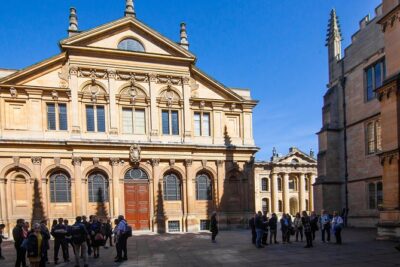 ★ 5.0Oxford University Walking Tour With University Alumni GuideFrom $416,905 reviews
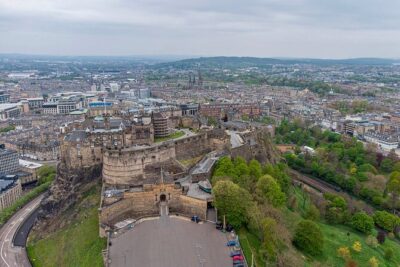 ★ 5.0Edinburgh Castle: Guided Walking Tour with Entry TicketFrom $515,540 reviews
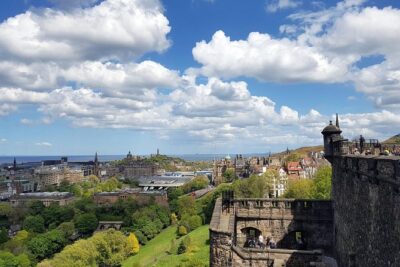 ★ 5.0Edinburgh Castle Guided Walking Tour in EnglishFrom $525,214 reviews
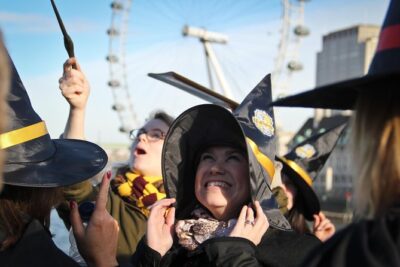 ★ 5.0Tour for Muggles The Ultimate Harry Potter Walking Tour in LondonFrom $234,684 reviews
 ★ 4.7Oxford: University and City Walking Tour with Alumni GuideFrom $404,429 reviews