
REVIEW · RAFTING, CANYONING & COASTEERING
Coasteering
Cold water. Big smiles.
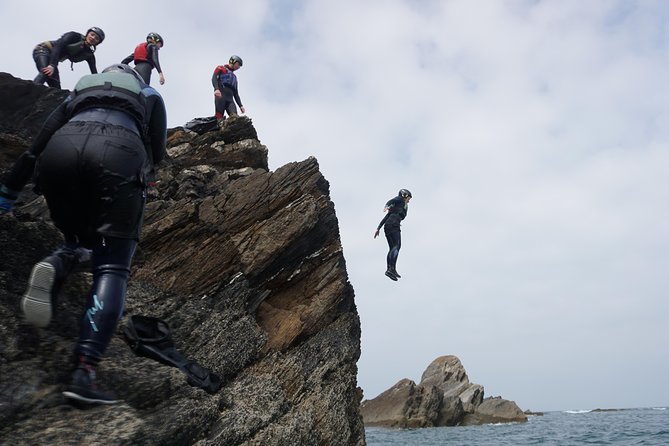
This is private coasteering in Devon, run along North Devon’s dramatic coastline, with a route picked for your group. You’ll move from viewpoint stops into the action: rock scrambling, sea swims, jumps, caves, and cliff-base traverses, all while someone watches your footing and timing.
Two things I really like about this: you get a worry-free setup with wetsuit, helmet, footwear, and buoyancy aid, and you’re not stuck in a crowded lineup of strangers. Also, the guides work at your pace, including for first-timers and kids, with clear safety checks and encouragement that keeps people calm.
One drawback to plan around: coasteering is weather-dependent and physical. You’ll need moderate fitness, plus you should be comfortable getting in choppy water and moving over uneven rocks.
In This Review
- Key takeaways before you go
- Private coasteering in Devon, built around safety and choice
- What the $83.34 price actually buys you
- The meeting point, the stops, and how the day flows
- Your gear checklist: wetsuit, helmet, buoyancy aid, and footwear
- What you’ll actually do: jumps, swims, caves, and cliff-base traverses
- Why the guides get the big praise: calm instruction and real follow-through
- Who this is perfect for, and who should think twice
- How to prepare, so you get the most fun out of every minute
- Weather matters, and that’s part of the reality
- Should you book this Devon coasteering experience?
- FAQ
- How long is the coasteering experience?
- Where does the coasteering start?
- Is this tour private or shared with other groups?
- What safety gear is provided?
- What fitness level do I need?
- What is the maximum group size?
- What language is the experience offered in?
- What if the weather is poor?
- Is there a cancellation window for a full refund?
Key takeaways before you go
- Private means no crowd shuffle, so your group gets more attention and smoother turns between spots
- Bespoke route for your day, with variety like swims, jumps, caves, and exploring cliff bases
- Safety gear is included, not something you need to sort out yourself
- Jumps build in stages, so you can try smaller ones first and level up
- Small group size, up to 16, which helps the guide spot issues early
More wet days with a helmet on
- Coasteering Geopark Adventure In Torquay
★ 5.0 · 150 reviews
Private coasteering in Devon, built around safety and choice
Coasteering sounds extreme until you’re standing on the shore with the right gear, the right guidance, and a plan that starts simple. This one is designed for that. You’re not just dropped into the sea. You’re taken through a process, then guided along a bespoke route that aims for variety, not chaos.
I like that it’s completely private, so the vibe stays focused on your group. That matters when you’re getting your confidence back after the first jump, or when someone is nervous about stepping from rock to ledge. It also means you’re less likely to feel rushed by other groups moving through at the same time.
You’ll spend about 2 hours 30 minutes doing the activity portion, then it wraps back at the meeting point. That’s a good length for first-timers, because you get enough time to try multiple things without turning the whole day into one long endurance test.
What the $83.34 price actually buys you
At $83.34 per person for roughly half a day, the value comes from three practical things.
First, the equipment is handled for you. You get a wetsuit, helmet, footwear, and buoyancy aid. That’s not just comfort, it’s risk reduction, especially when you’re dealing with slippery surfaces and cold water.
Second, you’re paying for the route and the guide brain. The itinerary isn’t a rigid checklist. It’s a bespoke plan that includes rock jumps, sea swims, cave time, and cliff-base traverses. That mix is what makes coasteering feel like more than one stunt.
Third, you’re paying for attention. With a maximum group size of 16, plus the private setup, the guide can do more than point at the water. You should get ongoing checks and coaching, which is exactly what people rave about.
The meeting point, the stops, and how the day flows
Your day starts at 23 Beach Rd, Ilfracombe (EX34 9QZ), and it ends back there. You’ll have two named stops on the plan, the Verity Statue and Croyde. Even if you’re not from the area, the value of that is simple: it gives you a route that covers more than one stretch of coast, instead of spending the whole time in one small patch.
Here’s how I’d think about the flow. The early minutes matter. Before you’re in choppy water, you need your bearings, your kit fitted, and your technique explained in plain terms. Then the middle portion is where the fun ramps up, with scrambling, ledges, and jump options that scale to each person. By the end, you’re usually warmed up, moving confidently, and thinking less about fear and more about timing.
A small consideration: because the activity is outdoors and weather matters, your exact feel of the day can change. If the sea is rougher, your guide might adjust the sequence to keep everyone safe and comfortable.


Your gear checklist: wetsuit, helmet, buoyancy aid, and footwear
The best coasteering days feel controlled. The best way to get there is kit that fits right and protects where it matters most. This experience provides the core safety gear, including:
- wetsuit
- helmet
- footwear
- buoyancy aid
From the way people describe their sessions, the kit isn’t just a formality. You can tell when someone’s gear is good, because people move more naturally on rocks and feel steadier when they hit the water.
What to do on your side: wear swim-ready clothing underneath if you want less hassle, and bring a plan for getting dry afterward, like a towel in your bag and something warm to change into. If you hate cold transitions, pack accordingly. Coasteering is exciting, but drying is real life.
What you’ll actually do: jumps, swims, caves, and cliff-base traverses
The headline is variety, and this tour delivers it. Expect a mix of:
- swimming through gullies and choppy water
- jumping off rocks into the sea
- exploring caves
- traversing along cliff bases
- taking in North Devon views while you move between sections
This is the part of the day that builds confidence fast. People repeatedly talk about the staged way jumps are handled. The general pattern you can expect is trying smaller jumps first, then stepping up once everyone is settled. One parent noted their kids started with manageable jumps and then gained trust quickly enough to take on bigger ones. Another person described going back for bigger jumps the next day, which is the clearest sign the experience is designed to scale.
Jump height varies by person and conditions. You might see small jumps as “practice,” and then options that are far more intense. Recent participants have mentioned a jump around 9 metres for one person, and around 4.5 metres for another, so don’t assume you’ll only ever do tiny drops. Your guide will match the plan to what you can handle.
Also, some groups mention a current that feels like rapids as you get back to shore. That’s not something you can count on in every session, but it’s a good reminder: this is an ocean setting, not a pool.
Why the guides get the big praise: calm instruction and real follow-through
Good coasteering is half ocean, half coaching. The guides here seem to do both, and the names show up in plenty of stories: Zac, Eli, Jess, Andy, Alex, and Matt.
What stands out across those comments is the human side of the safety talk. People mention that guides explain what will happen, kit everyone up properly, and keep checking that you feel good, not just that you’re moving. That’s huge if you’re bringing kids or if you’re the type who likes to know what comes next.
A few specific examples from what I’ve read:
- Zac is repeatedly described as patient and good at getting first-timers comfortable quickly.
- Eli and Jess are mentioned as strong team guides who keep the group safe during jumps and water time.
- Alex and Matt are credited with clear safety briefings and a jump build-up that helped kids move from worry to confidence.
- Andy gets props for making the last jump feel like a test of trust, in the moment, and doing it in a way that still feels safe.
The practical take: if you want an experience that feels guided, not just supervised, this is the kind of company you’ll likely enjoy.
Who this is perfect for, and who should think twice
This coasteering session is best for people who want an outdoor adventure with structure. You should have moderate physical fitness, because you’ll be scrambling over rocks and moving in and out of the water.
It’s also a good match for groups with mixed ages, because the activity is coached and jump options can scale. People describe sessions that worked for kids as young as 10 or 12, all the way up to adults, with the group staying together rather than splitting into separate ability tracks.
If you’re someone who panics at the first sign of water spray, this might still work for you, but only if you listen to the coaching and take the staged jumps seriously. On the other hand, if you have mobility issues that make rock scrambling difficult, you’ll likely find this too challenging.
How to prepare, so you get the most fun out of every minute
Coasteering has a simple formula: be ready for cold, be ready for wet, and don’t fight the learning curve. Here are practical things that help.
- Pack a warm change of clothes and something to dry off with. Your body will do the rest once the adventure starts.
- Plan for you to get wet during the whole session. Don’t bring items you can’t afford to ruin.
- Take the jump coaching seriously. The staged approach is what helps most first-timers relax.
- Bring a calm mindset. Your guide’s job is to guide your safety, but your job is to follow the steps you’re given, especially on the ledges.
If you’re traveling from elsewhere, you might appreciate that this is booked on average about 18 days ahead, which usually suggests it’s popular enough to plan rather than gamble.
Weather matters, and that’s part of the reality
This experience requires good weather. That’s not just a legal line. It affects wave conditions and how safe it is to do jumps and cave exploration. If the conditions aren’t right, you should expect a reschedule or a refund option.
My advice: if your trip is flexible, you’ll have an easier time. If your calendar is tight, keep a close eye on the weather in the Devon area the day before.
Should you book this Devon coasteering experience?
Yes, if you want a private, safe-feeling coasteering session with real instruction and variety. The combination of included safety gear, small group limits, and guides who focus on making first-timers comfortable is exactly what turns nervous energy into fun by the middle of the route.
I’d especially recommend it if:
- you want to avoid crowded shore time
- you’re bringing kids or a mixed-age group
- you’re after jumps, swims, and cave time, not just one photo moment
- you like the idea of build-up coaching rather than going straight to the biggest drop
Think twice if you’re not comfortable with choppy ocean conditions, don’t have moderate fitness for rock scrambling, or you hate the idea of being wet from start to finish.
If your goal is an authentic North Devon coastal adventure that feels guided and safe, this is a strong bet.
FAQ
How long is the coasteering experience?
It runs for about 2 hours 30 minutes.
Where does the coasteering start?
The meeting point is 23 Beach Rd, Ilfracombe EX34 9QZ, UK.
Is this tour private or shared with other groups?
This tour is completely private, so you can avoid the crowds.
What safety gear is provided?
You’ll be provided with a wetsuit, helmet, footwear, and buoyancy aid.
What fitness level do I need?
You should have a moderate physical fitness level.
What is the maximum group size?
The group size is capped at a maximum of 16 travelers.
What language is the experience offered in?
The experience is offered in English.
What if the weather is poor?
The activity requires good weather. If it’s canceled due to poor weather, you’ll be offered a different date or a full refund.
Is there a cancellation window for a full refund?
Yes. You can cancel up to 24 hours in advance for a full refund.
Rivers, Gorges and Sea Cliffs
- Coasteering Geopark Adventure In Torquay★ 5.0 · 150 reviews
Fresh off the Devon review pile



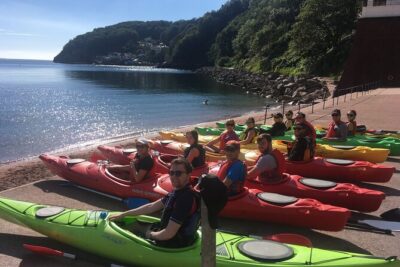
Rafting, Canyoning & Coasteering, compared.
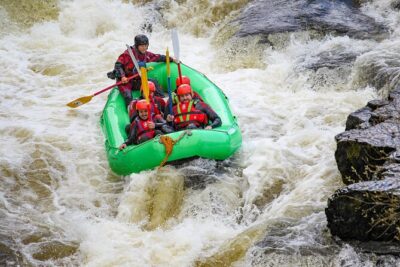 ★ 5.0Whitewater Rafting on the River Dee in LlangollenFrom $90939 reviews
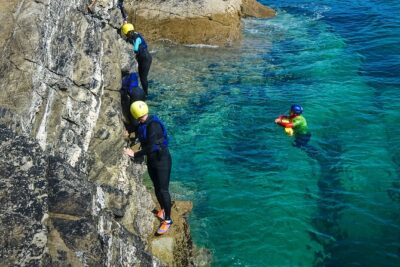 ★ 5.0Coasteering Experience in NewquayFrom $76465 reviews
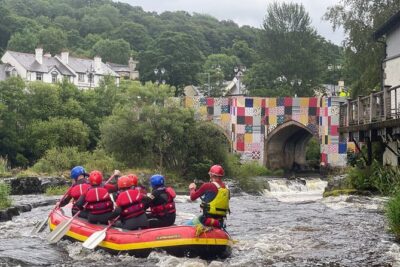 ★ 5.0White Water Rafting Experience in River Dee in LlangollenFrom $97465 reviews
 ★ 5.0Discover Canyoning at Bruar FallsFrom $97409 reviews
 ★ 5.0Ghyll Scrambling Water Adventure in the Lake DistrictFrom $97283 reviews
 ★ 5.0White Water Rafting on the River Tay from AberfeldyFrom $83268 reviews
 ★ 5.0Brilliant White Water Rafting in the Lake District UKFrom $131260 reviews
 ★ 5.0Half-Day Coasteering in Newquay CornwallFrom $76239 reviews
Also filed under