
REVIEW · WALKING TOURS
Hidden London Walking Tour
London turns up best on foot. This walk threads together Temple and Fleet Street with stories you just do not hear on the usual loops. You get a local point of view, frequent photo moments, and a guide who connects the dots between churches, legends, and everyday London streets.
Two things I especially like: the pace is relaxed and photo-friendly, and the guides, like Rachael, Paul, Joe, and Pepe, keep the facts human with myths and side stories you can repeat later. One thing to consider, though, is that this is a pass-through tour. You do not enter the buildings, so if you want interior views, you will need to plan a separate stop on your own.
In This Review
- Key points before you go
- Why Temple and Fleet Street work so well for a walking tour
- Price and logistics: the $27.73 you actually get for your time
- The 90-minute rhythm: what the walk feels like in real time
- Fleet Street: newspapers, power, and the street you think you know
- Temple Church: where the Knights Templar story shows up in the real world
- St Bride’s Church: the wedding cake origin story
- Samuel Johnson’s statue: dictionaries, reputation, and a quote-worthy legacy
- Photo stops, alleyways, and the advantage of moving slowly
- Guides like Rachael, Paul, Joe, Pepe, and Will make the stories stick
- What this tour is not, and who should think twice
- Should you book the Hidden London walking tour?
- FAQ
- How long is the Hidden London Walking Tour?
- Where do I meet and where does the tour end?
- Is the tour offered in English, and how big is the group?
- Do you enter buildings during the tour?
- Are admission tickets included for the stops?
- Is it okay to bring a service animal or a dog?
- What is the cancellation policy if I need to change plans?
Key points before you go
- Small group size (max 20) keeps the walk friendly and questions welcome
- Temple and Fleet Street in 90 minutes gives you a tight, off-the-beaten-track feel
- No building entry means you will tour the outside and focus on street-level details
- Frequent photo stops on foot lets you slow down without the hassle of parking
- Guide-led storytelling brings legends like the Knights Templar to life
- Moderate fitness required since the route includes hills
Still comparing? These London tours came out well in our reviews too.
- From London: Harry Potter Warner Bros Studio Tour
★ 4.7 · 26,588 reviews - London: Westminster to Greenwich River Thames Cruise
★ 4.5 · 22,836 reviews - Magical London: Harry Potter Guided Walking Tour
★ 4.7 · 22,044 reviews
Why Temple and Fleet Street work so well for a walking tour
If you picture London as big landmarks lined up on a sightseeing bus, this tour nudges you in a better direction. You spend your time in the Temple area and around Fleet Street, where old institutions, chapels, and working streets sit close together. That compact geography is what makes the whole thing click fast.
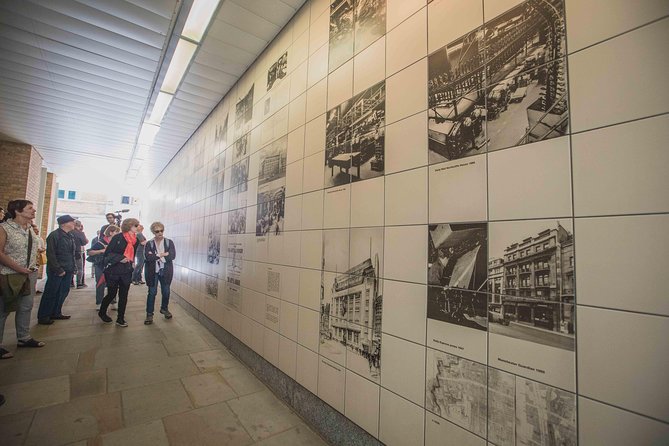
Fleet Street is famous for newspapers, and you will get more than a label. The guide frames it as a place where information, power, and publishing shaped daily life, then ties that context to what you see right now on the street. It is an easy way to start seeing London as a living network, not just a list.
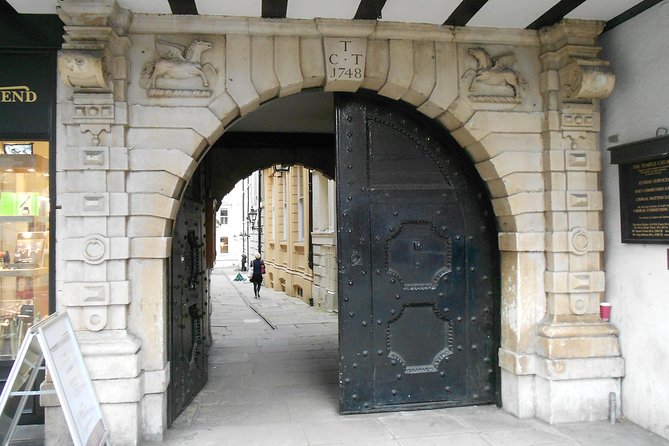
Then you shift to Temple, where the streets feel quieter than the big-name districts. You are in a part of town closely tied to the Knights Templar, and the tour uses that theme to point out details that most people miss while rushing past. Even if you have visited London before, walking through this pocket gives you fresh angles and better street context.
The big value here is how the guide builds a sense of place. You are not memorizing facts. You are learning how London got shaped, street by street, legend by legend.
Price and logistics: the $27.73 you actually get for your time
At $27.73 per person for about 1 hour 30 minutes, this is priced like a practical add-on. It is not trying to replace a full-day sightseeing plan. Instead, it fits perfectly when you want history and atmosphere without spending your afternoon in queues.
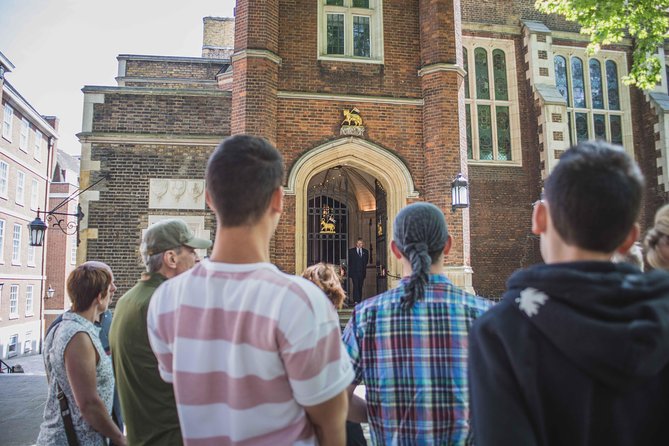
The tour includes a local professional guide and runs with a maximum group size of 20. That matters because it keeps the commentary easy to follow and makes it more realistic to ask questions when something surprises you. A small group also helps you move smoothly through narrower areas without getting stuck behind strangers every few minutes.
You will get a mobile ticket, and the tour is in English. That is a simple win if you are managing plans from your phone. It also means you can focus on walking and listening, rather than hunting for paper confirmations.
Two practical bits you should plan for: the tour includes hills, and it requires moderate physical fitness. Comfortable shoes are a must, because you will be on foot the whole time. Also, it is near public transportation, so you can build it into a day that already has tube and bus time.
One more point that affects your expectations: you do not enter buildings. Your value is in the street-level viewing, the stories, and the photo stops, not in paid interiors.
The 90-minute rhythm: what the walk feels like in real time
This is built as a short, steady walk with frequent stops. Expect the group to pause often so you can look, listen, and take photos without feeling rushed. That pacing is one of the reasons this tour earns such strong ratings for being fun and informative.
You start at Temple Station, Temple Pl, Temple, London WC2R 2PH, with a start time of 1:30 pm. Plan to arrive about 10 minutes early, because groups need a clean start. You end around Fleet Street, Fleet St, London.
Because the route stays concentrated, you get a lot of context in a small area. That also means you should bring a little patience if you are traveling with a mixed group, since the pace is more about listening than breaking records for distance. The advantage is that you will cover meaningful ground without turning it into a hike.
For families, children need to be accompanied by an adult. For pets, service animals are allowed, while dogs are not permitted except guide dogs. If you are traveling with someone who relies on a service animal, this is good to know in advance.
Overall, this feels like the kind of tour that helps you get your bearings fast. You leave with names, stories, and a sense of why this area exists, which then makes it easier to explore on your own afterward.





Fleet Street: newspapers, power, and the street you think you know
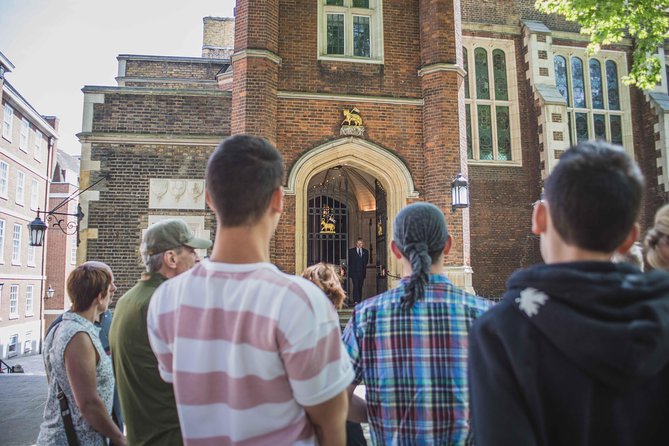
Your first stop is Fleet Street, and the theme is the newspaper industry. Even if you have never studied journalism history, you probably know Fleet Street as a symbol. The guide turns that symbol into a map of connections, explaining why the street mattered and what kind of city life it shaped.
This is the kind of start that helps you settle into the tour quickly. You get an immediate context hook, then you move on while London is still in “walking mode.” It is a smart setup, because you are not spending your whole tour waiting for the next interesting moment.
The stop time is about 5 minutes, and the admission is free. In practice, that means you will get just enough time to understand the why, snap a few photos, and move on.
One subtle benefit of starting here: it trains you to look at the street as you go. After this, when you see churches and small side streets, you will understand what details matter and why. The whole tour becomes easier to follow.
Temple Church: where the Knights Templar story shows up in the real world
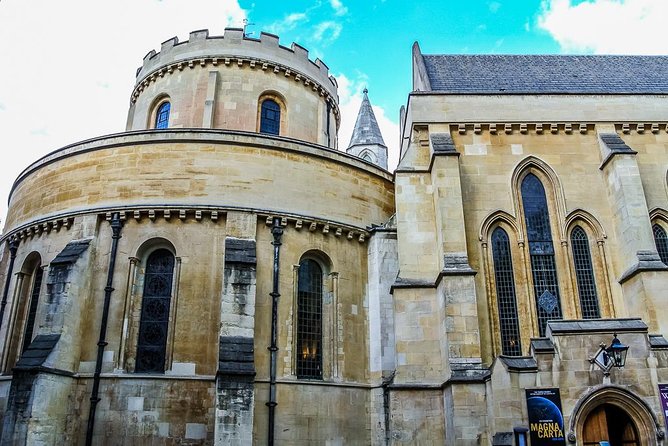
Next comes Temple Church, described as the home of the legendary Knights Templar. Even if Templars are not your usual topic, the guide uses the connection to help you read the area differently. You are not just seeing a church facade. You are standing in a neighborhood tied to a much larger medieval narrative.
Your time here is about 10 minutes. Admission is noted as not included, and the key point is that you do not enter buildings on this tour. So your focus stays on what you can see outside, plus the guide’s story framework.
This is also where you start to feel the “hidden” part of Hidden London. Temple is not the kind of place people always think to stop in the first place. Yet it is packed with references that make more sense once you have heard the guide’s explanation.
A small caution: if you are expecting interior rooms, you will not get them here. But if you like learning why a place matters, the exterior plus storytelling is often enough to make you want to research or return later.
St Bride’s Church: the wedding cake origin story
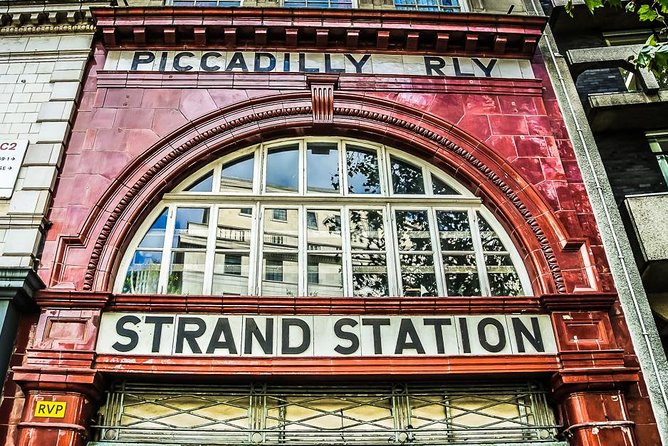
The tour then moves to St Bride’s Church, with a stop time of about 5 minutes. The theme is the church that inspired the wedding cake.
That sounds whimsical, and it is meant to be. The guide uses the connection to show how London legends and traditions travel from place to culture. You are seeing how a building can become a symbol beyond its original purpose.
Admission is not included for this stop, and again you do not enter. But the value is in how quickly you get a memorable detail you can carry with you. It is the kind of fact that sparks conversations later, because it is oddly specific and tied to a real address.
If you enjoy quirky history and stories that feel more human than academic, this is one of the stops that will likely stick with you.
Samuel Johnson’s statue: dictionaries, reputation, and a quote-worthy legacy
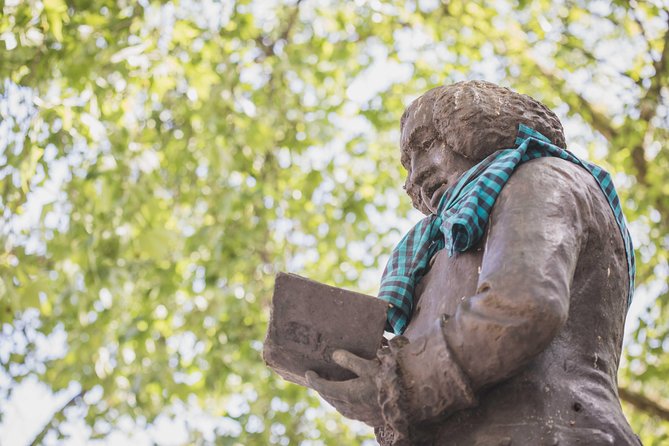
Stop four is the Statue of Samuel Johnson, with about 10 minutes here. The guide focuses on two specific points: Johnson as the inventor of the modern dictionary, and his place as the second most quoted man in the English language.
This is a great mid-tour moment because it shifts from medieval story to literary influence. It also gives you a different way to think about London history. Not everything has to be kings, battles, or dramatic reigns. Sometimes it is language, publication, and ideas that change the world.
Again, you will be looking from the outside, with no building entry. The stop works as a “story anchor,” letting you remember the tour’s themes of information and influence. If you started at Fleet Street thinking about newspapers, Johnson connects to that same idea from a different angle.
For me, this part is where the walking tour starts to feel like a mini lecture, but with streets instead of slides. And it helps you appreciate why these particular stops were chosen.
Photo stops, alleyways, and the advantage of moving slowly
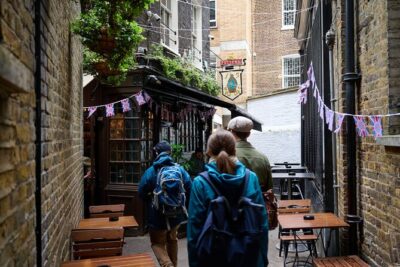
On a busy London day, it is easy to feel like you only ever see the front door of attractions. This tour is the opposite. You walk enough to notice the texture of the neighborhood, and you stop often enough to actually take photos without blocking someone else’s view.
The tour is designed for convenience. You do not deal with parking, and you are not stuck searching for the right entrance. That is a real advantage if you are doing multiple activities in one area.
From the way the guides talk about side streets, you can also expect the route to show you corners that typical sightseeing paths miss. You will be guided to lesser-seen views of Temple and the areas just off Fleet Street. Those are the spots where London feels older and quieter, even when you are only a short distance from major foot traffic.
If you like snapping pictures, plan for a little time at each stop to frame shots. Comfortable shoes will matter because you want your photos to feel intentional, not like you are standing there while your legs complain.
Guides like Rachael, Paul, Joe, Pepe, and Will make the stories stick
One of the strongest reasons to book is the human factor. The guide names mentioned across experiences, including Rachael, Paul, Joe, Pepe, Rosie, and Will, all point to a similar style: engaging street storytelling with enough detail to make it memorable, but not so much that it becomes heavy.
You will see this in how questions are handled. Several guides come across as open to follow-ups, which is useful if you hear something that sparks your curiosity. The best walking tours are not only about information delivery. They help you connect the dots with your own questions.
The content themes are consistent: Knights Templar lore, the wedding cake connection at St Bride’s, and Samuel Johnson as the dictionary-maker. But the delivery changes depending on the guide, and that is where the tour earns its high rating for being fun and relaxed.
If you get Paul, for example, you may hear lots of follow-up context, even if you already know London. If you get Joe or Pepe, you may notice a similar enthusiasm with a tight sense of story pacing.
The practical takeaway for you: choose this tour if you want to learn while you walk, not if you want a strictly scripted lecture. The guides seem built for real conversation.
What this tour is not, and who should think twice
This tour is not built around famous interiors or ticketed museum moments. You do not enter buildings, so if you want the full experience of being inside Temple Church or St Bride’s, you will have to plan that separately.
It also may not feel super “hidden” if you only define hidden as completely unknown to all tourists. Fleet Street and Temple are well known neighborhoods, but the tour goes after the quieter lines between famous points. If that is what you like, great. If your idea of hidden requires total anonymity, you might feel slightly underwhelmed.
Finally, think about your comfort with hills. The tour is described as requiring moderate physical fitness. You do not need to be an athlete, but you do need to be willing to walk steadily on uneven, hilly sidewalks.
Should you book the Hidden London walking tour?
Book it if you want a small-group, guide-led way to understand London beyond the biggest monuments. You get a compact route, frequent photo moments, and story-driven stops that connect street life to medieval lore and literary influence. At about $27.73 for 90 minutes, it is also a low-risk way to add depth to your day.
Skip it if you are primarily after inside-the-building sights, or if you dislike walking on hills. Also skip it if you only enjoy the kind of history that requires deep study, because this tour aims for approachable, memorable storytelling rather than academic completeness.
FAQ
How long is the Hidden London Walking Tour?
It lasts about 1 hour 30 minutes.
Where do I meet and where does the tour end?
The tour starts at Temple Station, Temple Pl, Temple, London WC2R 2PH. It ends at Fleet Street, Fleet St, London.
Is the tour offered in English, and how big is the group?
Yes, it is offered in English. The tour has a maximum of 20 travelers.
Do you enter buildings during the tour?
No. Please note that the tour does not enter buildings.
Are admission tickets included for the stops?
Admission is free at Fleet Street. Admission tickets are not included for Temple Church and St Bride’s Church.
Is it okay to bring a service animal or a dog?
Service animals are allowed. No dogs are allowed on the tour other than guide dogs.
What is the cancellation policy if I need to change plans?
Free cancellation is available. You can cancel up to 24 hours in advance for a full refund. If you cancel less than 24 hours before the start time, the amount you paid is not refunded.
Fresh off the London review pile
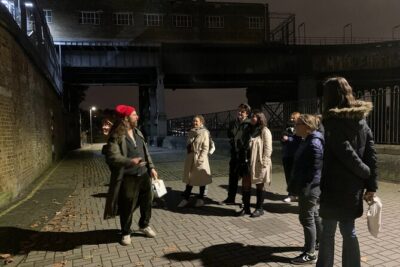


Walking Tours, compared.
 ★ 4.7Magical London: Harry Potter Guided Walking TourFrom $2022,044 reviews
 ★ 4.5Underground Vaults Walking Tour in Edinburgh Old TownFrom $338,506 reviews
 ★ 4.7London: The Original Jack the Ripper Walking TourFrom $257,833 reviews
 ★ 5.0Oxford University Walking Tour With University Alumni GuideFrom $416,905 reviews
 ★ 5.0Edinburgh Castle: Guided Walking Tour with Entry TicketFrom $515,540 reviews
 ★ 5.0Edinburgh Castle Guided Walking Tour in EnglishFrom $525,214 reviews
 ★ 5.0Tour for Muggles The Ultimate Harry Potter Walking Tour in LondonFrom $234,684 reviews
 ★ 4.7Oxford: University and City Walking Tour with Alumni GuideFrom $404,429 reviews