
REVIEW · LIVERPOOL & THE MERSEY WATERFRONT
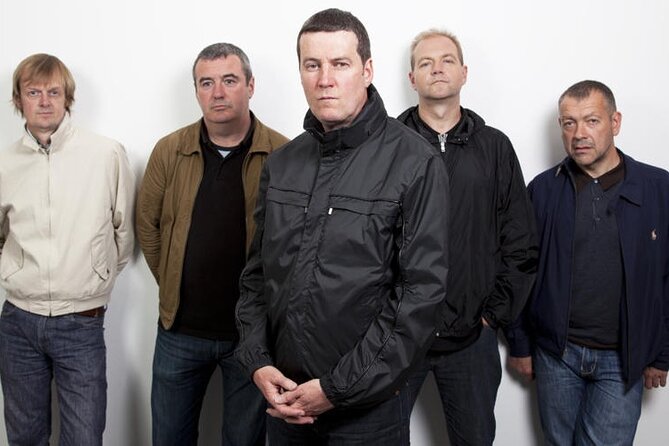
Liverpool Music Icons Tour led by a member of 90s band The Farm
Liverpool gets louder with a band-insider guide. I love getting Peter Hooton style stories tied to real streets and real venues, and I love the rehearsal-room focus that goes way beyond the usual sightseeing checklist. You should know one thing up front, though, this tour is strongly about the music scene, so it may feel less for you if you only want the biggest mainstream landmarks.
There is also a small practical catch: expect an easy, slow walk that still adds up to a couple of hours on your feet, plus a pub finale where you will be standing and mingling.
In This Review
- Key things to know before you go
- A band insider tour you can actually follow
- Starting at LIPA, founded by Paul McCartney
- Central Liverpool sites beyond the usual photo stops
- The studio complex and the dance-music clue
- Probe Records and the second wave you should know
- Rehearsal rooms where famous bands worked
- The Mathew Street finale: drink, chat, selfies, signatures
- Price and value: $82.68 for 2.5 hours that feels personal
- Who this tour fits best
- Should you book this Liverpool Music Icons Tour?
- FAQ
- How long is the Liverpool Music Icons Tour?
- Where does the tour start and end?
- What time does the tour begin?
- Is the tour in English?
- What is included in the price?
- Are tickets required for the stops?
- How big is the group?
- Do I get a mobile ticket?
- Are service animals allowed?
- Can I cancel for a full refund?
Key things to know before you go
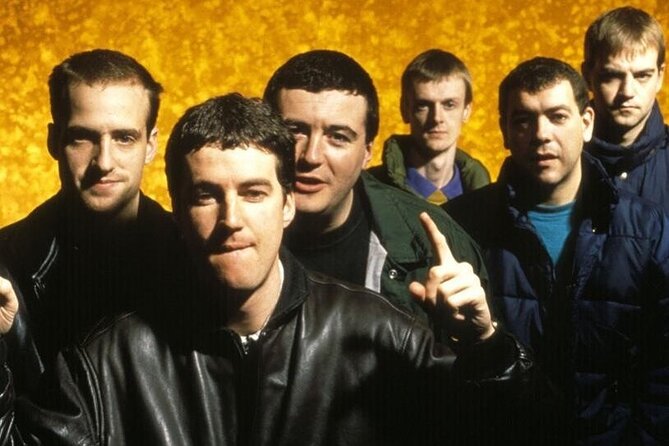
- A The Farm connection at street level: you are guided by a member of 90s rock band The Farm, with stories that match the places.
- LIPA and Paul McCartney’s school link: the tour starts at LIPA, founded by Paul McCartney, in the building where he went to school.
- Studios and venues you might not find alone: you see places tied to major sound, not just photo ops.
- Probe Records and second-wave Liverpool groups: you get context for how different waves of bands built off each other.
- Ministry Rehearsal Rooms and Crash rehearsal rooms: famous for the bands that rehearsed there, including Frankie Goes To Hollywood and The La’s.
- Mathew Street finale with a complimentary drink and memorabilia: you end with a chat, selfies, and signed items.
Other music trails through the same streets
- Liverpool: City & Beatles Tour with Live Guide & Live Music
★ 4.8 · 5,249 reviews - Liverpool: British Music Experience Ticket
★ 4.7 · 686 reviews - Skip-the-Line in The National Museum of Popular Music Ticket
★ 4.5 · 205 reviews
A band insider tour you can actually follow
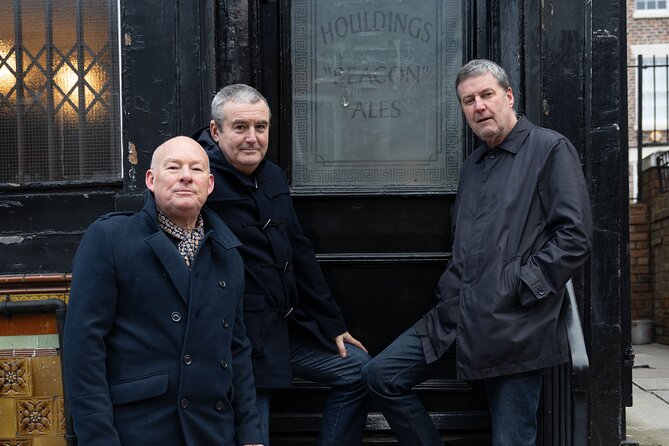
This is the kind of tour that works because it is human, not just factual. You are walking in central Liverpool with someone who has lived music, not just read about it. And the pace is built for listening. Think “slow, easy walk,” with lots of stops where you can look at the buildings, then hear how the music scene used to function around them.
I like that the tour is not trying to be a nonstop lecture. It is more like a conversation on the move, with the guide linking scenes across decades. That makes the stops feel connected, instead of random. You will also appreciate the small group size, with a max of 12, which means questions are actually possible.
The most important consideration is your taste. If you are shopping for a Beatles-only focus, this is not that. You will hear about Brian’s story in the 1980s and you will see music spaces tied to rock, dance, and the wider Liverpool ecosystem. If that is your thing, great. If you want only the headline monuments, you might feel slightly underserved.
Starting at LIPA, founded by Paul McCartney
The tour begins at LIPA, the school founded by Paul McCartney. The extra detail that makes this start matter is that it is in the building where he went to school. That single fact turns your opening minutes from sightseeing into origin story.
Even if you are not a student of Liverpool music, LIPA is a useful anchor. It reminds you that Liverpool treats music as a craft you can study and practice, not only as fame you watch from afar. When your guide then starts connecting that mindset to the places you will visit later, the tour gains momentum.
Practical tip: if you like good walking posture and photos, start by using this first stop to get your bearings. LIPA is a clear meeting point area, and it sets the tone for the rest of the route.
Central Liverpool sites beyond the usual photo stops
After LIPA, the tour moves into central Liverpool with a “you are meant to notice this” approach. The stops are designed to show you locations you might not spot on your own, especially if you are used to following the standard tourist trail.
One of my favorite parts of tours like this is when you get “small place, big meaning.” Here, that happens through a mix of gig venues, pubs, clubs, and recording spaces. The guide ties those spots to the bigger storyline of how Liverpool bands formed, rehearsed, and then got noticed.
You also learn that this is not a one-genre city. Liverpool’s scene shifts across decades, and the tour’s route reflects that. So even if you only know one era of music, you likely pick up new context as you go.
And because the group is small, you can ask follow-up questions in the moment, not after the fact. That matters here, because the guide’s stories are tied to the specific streets and buildings you are standing near.
More of Liverpool, docks included




The studio complex and the dance-music clue
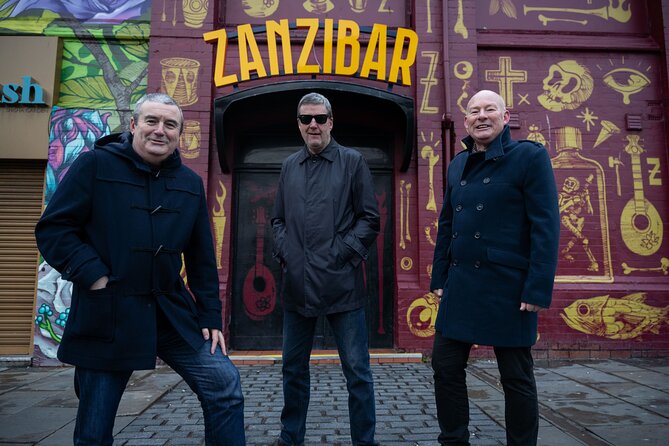
One stop highlights two big signals about Liverpool’s sound: the tour includes the biggest studio complex outside London and the first UK superclub that changed the face of dance music in the UK.
You might not recognize those descriptions from a museum label, but they are useful benchmarks. The “biggest studio complex outside London” detail tells you Liverpool had serious infrastructure, not just local talent. And the “first UK superclub” detail points to how nightlife and club culture pushed new music and new audiences.
This is also where listening helps. If you treat the city like a set of photos, you will miss what the guide is doing. The guide wants you to think about how studios and clubs shaped careers. Where bands made demos or rehearsed, where crowds gathered, and where the scene turned from local to wider attention.
If you love music production, this part tends to land well. If you only know dance music as a category, you still get the idea: Liverpool helped export a sound shape.
Probe Records and the second wave you should know
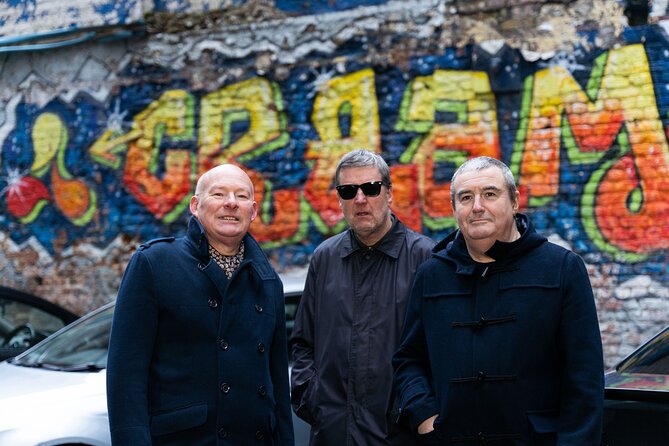
The tour also includes the location of Probe Records, tied to the second wave of Liverpool groups in the 1970s, 1980s, and 1990s. That time span matters because it explains how a city keeps renewing itself.
A lot of places have a “first famous wave,” then nothing. Liverpool’s story is more like cycles. One scene builds the next. Probe Records is mentioned as a home base for that later activity, and the guide’s explanations help you understand why newer bands could take off without starting from zero.
If you like social history, this stop can be a highlight. It is not only about famous names. It is about the machinery around them, the labels, the rooms, and the networks that turn practice into releases.
Rehearsal rooms where famous bands worked
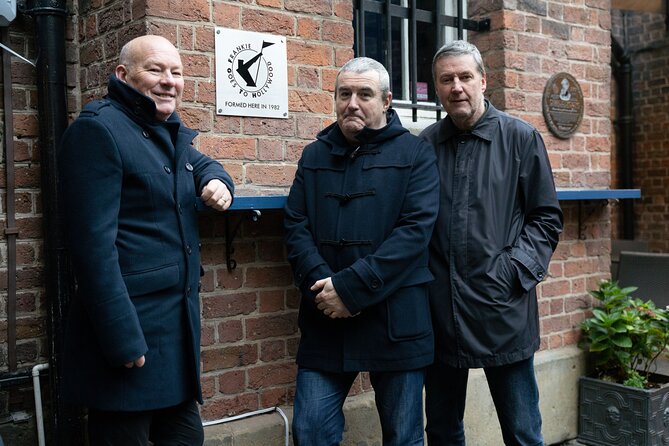
The most name-heavy part of the tour is the rehearsal-room section. You visit Ministry Rehearsal Rooms and Crash rehearsal rooms, places where many bands rehearsed, including Frankie Goes To Hollywood, The Farm, The La’s, Space, Cast, Flock of Seagulls, China Crisis, The Zutons, The Lightning Seeds, The Wombats, and Shack.
Why this matters to you is simple. Rehearsal rooms are where bands become bands. You can read about a hit single, but rehearsal rooms explain how the sound got tightened, how arrangements got tested, and how group chemistry formed.
Also, these are the kinds of places that feel slightly more real. You are not just looking at a “famous spot.” You are looking at a working space the guide connects to the creative grind.
From the way these stops are handled, the guide tends to bring in personal or behind-the-scenes stories, plus historical context. That blend is what makes the tour feel different from a standard walking route.
Practical tip: if you are taking photos, pause first, then shoot. The guide’s stories often tie into what you can see in front of you, like the layout of a building or the vibe of the street.
The Mathew Street finale: drink, chat, selfies, signatures
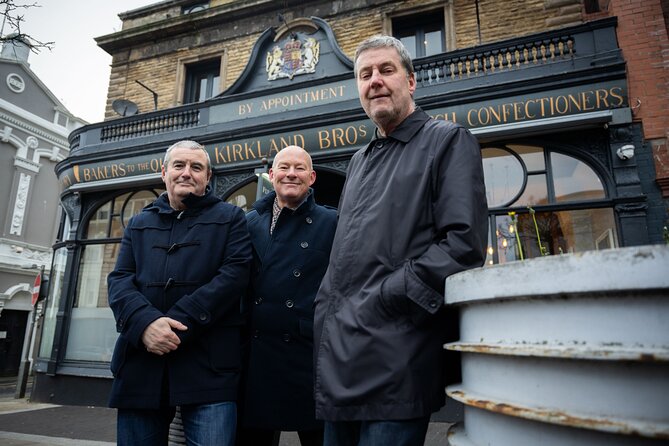
The tour wraps at Mathew Street, a central Liverpool music zone in its own right. Here, you get the payoff moment: a personal chat with your musical icon over a complimentary drink at an iconic pub.
This is where the small-group format pays off again. You can relax a bit, ask questions, and get pictures or memorabilia signed. You also receive a free item of memorabilia. Even if you do not want to talk much, the chance to meet the guide and keep the conversation going is a big reason this tour earns top marks.
I like that it ends in a place most people already associate with music culture, because it makes the whole experience feel complete. You start with education and origin at LIPA, you walk through the working places of studios and rehearsal rooms, then you finish where people go to talk, laugh, and remember.
Price and value: $82.68 for 2.5 hours that feels personal
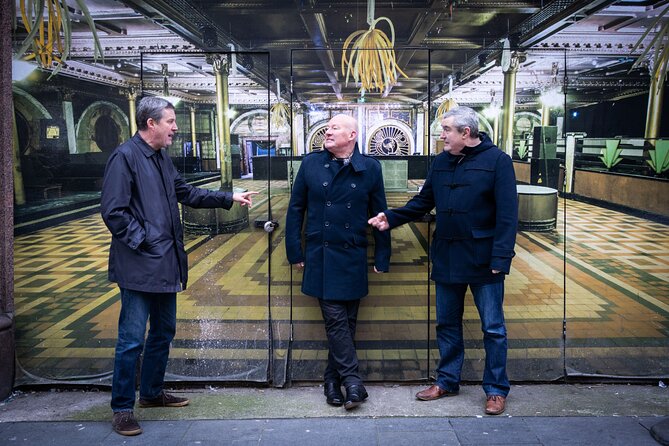
At $82.68 per person, this tour sits in the “worth it if you care” category. It is not the cheapest way to walk around Liverpool. But it is also not just a generic city stroll.
Here is what you are really buying:
- A guide with a real connection to Liverpool music, tied to The Farm.
- A route that prioritizes studios, rehearsal rooms, labels, and nightlife spots, not only postcards.
- A complimentary drink at the end.
- A free memorabilia item, with the option for signed pieces.
Add it up and the price starts to make sense if you are a music fan, or if you like stories you cannot easily get from a guidebook. The maximum group size (12) also raises the value, because your questions are more likely to get answered on the spot.
One heads-up on budgeting: gratuities are not included, though they are optional. If this guide brings the laughs and the stories the way people describe, it is the kind of experience where a tip feels normal.
Finally, timing note: the tour is commonly booked about 51 days in advance. If you travel in peak months or around big events, you should book early.
Who this tour fits best
This tour is a great match if you:
- Like Liverpool music and want context beyond the headlines
- Enjoy hearing how scenes work, rehearsal to recordings to clubs
- Want a relaxed walking pace with time for questions
- Appreciate a guide who shares stories from lived experience
It may not be your best fit if you:
- Want a classic sightseeing route with only the most famous attractions
- Prefer a purely academic format with no personal storytelling
- Are not comfortable with a couple of hours on your feet, even if the walk is described as easy and slow-paced
Should you book this Liverpool Music Icons Tour?
If you like Liverpool for more than one artist, book it. The strong point is the way the guide links places to how music actually grew there: schools and studios, label spaces, rehearsal rooms, and the club culture that helped shape dance music and beyond.
If you are mainly chasing the biggest mainstream landmarks, you may find the focus too music-scene specific. But if you are even slightly curious about how bands rehearsed and built momentum in Liverpool, this tour is a solid choice.
FAQ
How long is the Liverpool Music Icons Tour?
It runs for about 2 hours 30 minutes.
Where does the tour start and end?
It starts at Liverpool L1 9HF, UK, and ends at Mathew Street, Liverpool.
What time does the tour begin?
The start time is 11:00 am.
Is the tour in English?
Yes, it is offered in English.
What is included in the price?
The tour includes the services of your iconic guide. A complimentary drink and a free memorabilia item are part of the tour experience.
Are tickets required for the stops?
The tour notes that a ticket is free for the longer central stop, and the tour also includes the guided experience.
How big is the group?
The maximum group size is 12 travelers.
Do I get a mobile ticket?
Yes, the tour offers a mobile ticket.
Are service animals allowed?
Yes, service animals are allowed.
Can I cancel for a full refund?
Yes. You can cancel up to 24 hours in advance for a full refund.
Liverpool and the Waterfront
- Liverpool: Liverpool Football Club Museum and Stadium Tour★ 4.8 · 10,764 reviews
- Liverpool: “Blue Route” – City & Beatles Tour★ 5.0 · 8,562 reviews
- Liverpool: City & Beatles Tour with Live Guide & Live Music★ 4.8 · 5,249 reviews
- Liverpool: The Beatles Story Ticket★ 4.7 · 4,197 reviews
Music Tours, Track by Track
- Liverpool: City & Beatles Tour with Live Guide & Live Music★ 4.8 · 5,249 reviews
- Liverpool: British Music Experience Ticket★ 4.7 · 686 reviews
- Skip-the-Line in The National Museum of Popular Music Ticket★ 4.5 · 205 reviews
- Liverpool Music Icons Tour with Nasher from Frankie Goes to Hollywood★ 5.0 · 39 reviews
Fresh off the Liverpool review pile

Liverpool & the Mersey Waterfront, compared.
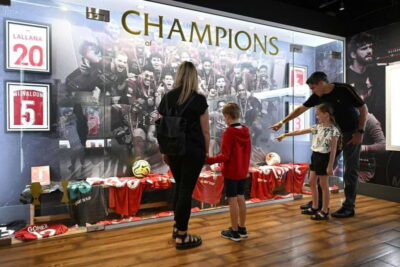 ★ 4.8Liverpool: Liverpool Football Club Museum and Stadium TourFrom $3310,764 reviews
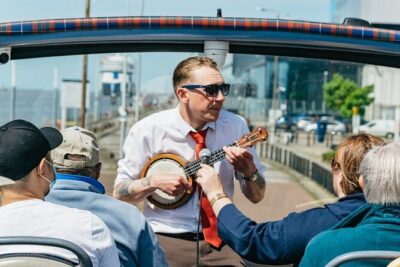 ★ 5.0Liverpool: “Blue Route” – City & Beatles TourFrom $278,562 reviews
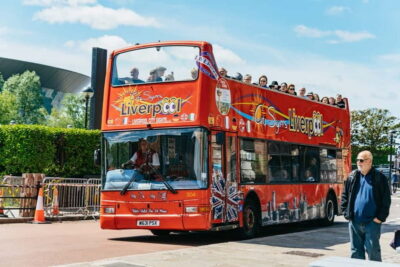 ★ 4.8Liverpool: City & Beatles Tour with Live Guide & Live MusicFrom $295,249 reviews
 ★ 4.7Liverpool: The Beatles Story TicketFrom $264,197 reviews
 ★ 4.4Liverpool: Sightseeing River Cruise on the Mersey RiverFrom $173,427 reviews
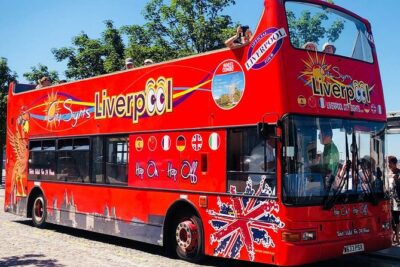 ★ 4.5Liverpool City Sights Hop On Hop Off City Tour – 24hr TicketFrom $192,555 reviews
 ★ 4.5Liverpool: River Cruise and Hop-On Hop-Off Bus TourFrom $331,864 reviews
 ★ 4.0Liverpool: 50-Minute Mersey River CruiseFrom $171,232 reviews
Also filed under