
REVIEW · HISTORICAL TOURS
London: Medieval History Walking Tour from The Tower
Two hours, and medieval London clicks into place. Starting at Tower Hill, you walk with a live historian and connect the dots between power, religion, daily life, and the river that shaped the city.
I love how the guided context makes famous landmarks feel specific, not just postcard pretty. I also love that you can ask questions and get full answers, not rehearsed blurts. The only real drawback is the walk is steady, so you will want comfortable shoes and a weather-ready layer since it runs in all weathers.
In This Review
- Key things to know before you go
- From Tower Hill to the Thames, you start with the right kind of drama
- The Tower of London: power, fear, and daily consequence
- Tower Bridge walk-through: the medieval city meets modern engineering
- HMS Belfast: a wartime interruption that makes the river feel real
- London Bridge to Borough Market: where people traded and argued
- Southwark Cathedral and the other side of the story
- Winchester Palace and Shakespeare’s Globe: how medieval streets feed later fame
- Millennium Bridge and St Paul’s: seeing London’s skyline as a timeline
- How to get the most from a 2-hour format
- Is this medieval walking tour good value at about $24?
- Should you book this Tower to Thames medieval walk?
- FAQ
- Where does the tour meet?
- How long is the London medieval history walking tour?
- How much does it cost?
- What sights are included on the walk?
- Is the tour wheelchair accessible?
- Will the tour run in bad weather?
- What language is the tour guide?
- What should I wear or bring?
- Is there free cancellation or the option to pay later?
Key things to know before you go
- Tower Hill start near Trinity Square, with your guide holding a flagpole so you do not waste time hunting
- Tower Bridge crossing paired with stories about how this landmark came to be
- HMS Belfast adds a 20th-century jolt to the medieval theme, right on the Thames
- Southwark and Borough Market bring you from royal power to commerce and church life
- Winchester Palace and St Paul’s help you see how London’s skyline evolved, stone by stone
- Shakespeare’s Globe gives you a bridge between medieval streets and England’s later cultural explosions
Still comparing? These London tours came out well in our reviews too.
- From London: Harry Potter Warner Bros Studio Tour
★ 4.7 · 26,588 reviews - London: Westminster to Greenwich River Thames Cruise
★ 4.5 · 22,836 reviews - Magical London: Harry Potter Guided Walking Tour
★ 4.7 · 22,044 reviews
From Tower Hill to the Thames, you start with the right kind of drama
The tour begins at Tower Hill, outside the western exit of Tower Hill tube station near Trinity Square and The Citizen M Hotel, by the Tower Hill Tram burger van. Your guide will be easy to spot, holding a flagpole with a flag flying from it, which matters because London crowds love to hide meeting points.
Right away, the tone is clear: this is not a walk where you only hear dates. You hear why certain places mattered, who used them, and what life looked like around them. That approach helps you understand the Thames as more than scenery. It is the city’s highway, its boundary, and often its defense line.
You also get a practical benefit from the route choice. You are not zigzagging across London for hours. In two hours, you cover a tight stretch of river landmarks that you could otherwise spend half a day piecing together on your own.
The Tower of London: power, fear, and daily consequence
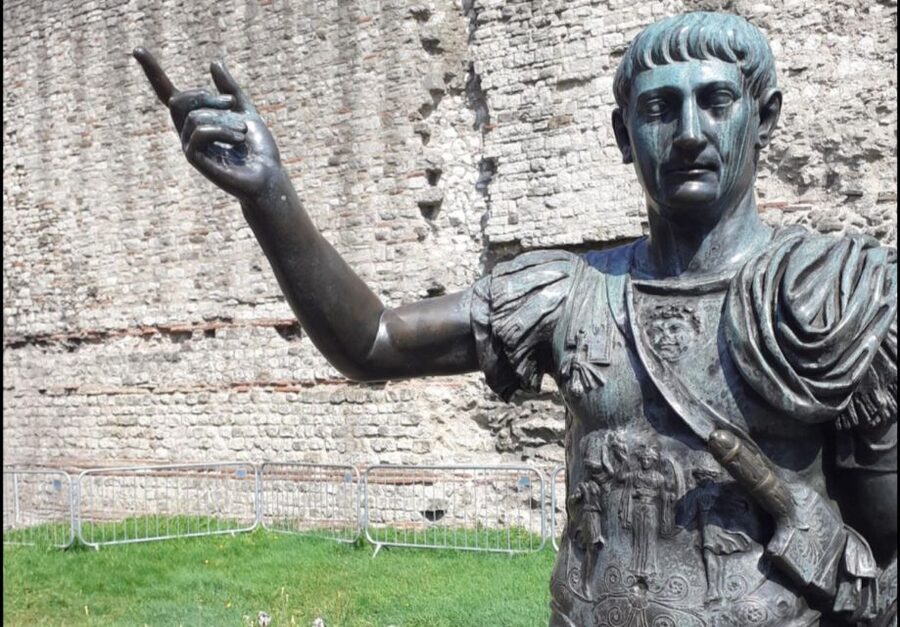
Meeting at the Tower of London area is a smart move, because it frames everything you will see next. You cannot talk about medieval London without the Tower, and this stop sets the “why” before the “what.” The focus is on how the Tower shaped politics and control over centuries, not just the headline stuff.
What I like about this kind of Tower tour is that it usually connects the Tower to real human stakes. In other words, you learn how authority played out in prisons, in ceremonies, and in the constant negotiation between crown and city. You also get a sense of continuity, since the Tower’s story stretches across many eras.
A word of caution: the Tower is a magnet. Even with a guided route, you may feel the pressure of people nearby. If you want photos, be ready to move a bit quickly and use your guide’s timing to grab your angles without getting stuck in the crowd.
Tower Bridge walk-through: the medieval city meets modern engineering
Next comes the iconic crossing over the Thames: Tower Bridge. This is where the tour does a nice job of switching gears. You get to enjoy a landmark that everyone recognizes, then you hear how it was built and why it solved a real problem for a working river.
The Thames keeps coming up in your head after this stop. Bridges here are never only about getting from A to B. They are about moving ships, controlling river flow, and managing the city’s edge. Tower Bridge becomes a story about London learning how to change without losing its place.
And since you are walking, you can actually see the relationship between the bridge and the river views around it. That helps you later when you look back toward the Tower area and realize how many decisions were made around the river corridor.





HMS Belfast: a wartime interruption that makes the river feel real
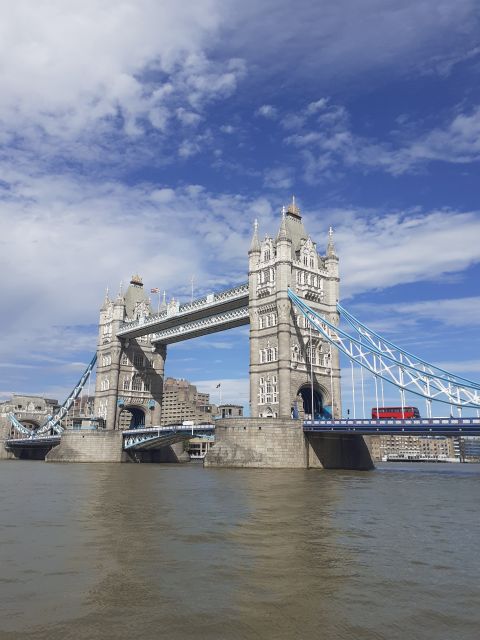
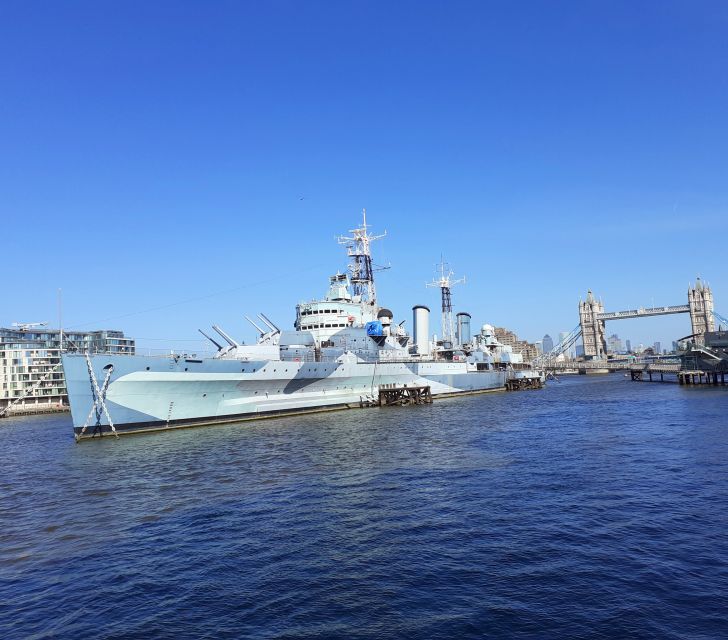
Most medieval-focused walks try to keep everything in the medieval lane. This one smartly includes HMS Belfast, which takes you into World War II history and reminds you the Thames was strategic long before modern museum labels.
You get a guided look at the ship and its role in D-Day landings. Even if you are not a military-history specialist, this stop adds emotional weight to the scenery. The river is no longer only a medieval trade route. It is also a stage for modern conflict.
Why this works for value is simple: it breaks the pattern. After the earlier stops are heavy with royal power and church influence, the ship gives you a different type of story. You end up with a more complete sense of what London has been through, even within a tight 2-hour window.
London Bridge to Borough Market: where people traded and argued
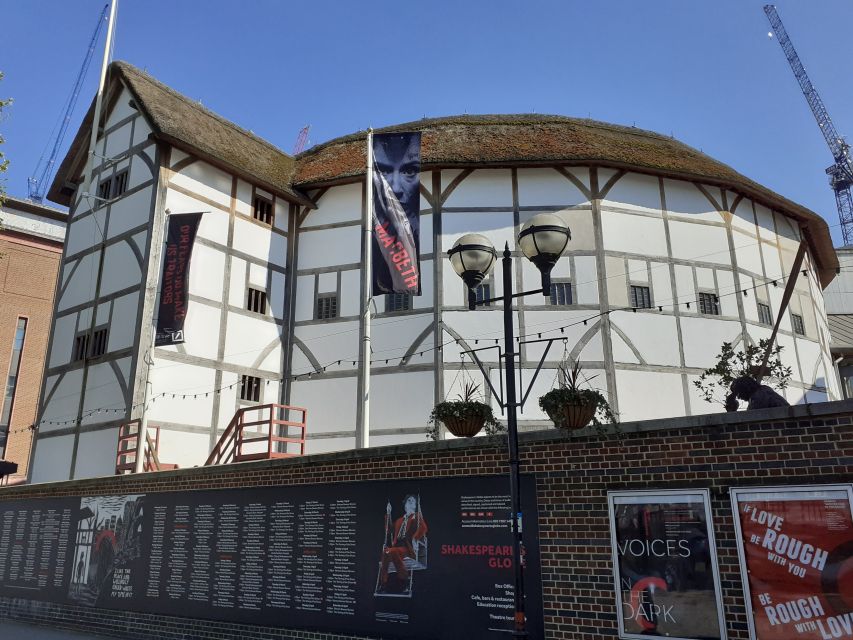
Crossing toward London Bridge and then heading to Borough Market shifts the lens from rulers to regular life. The market area helps you picture the city as a place where food, goods, and news moved through daily routines.
This is also where you start to get a “map in your mind.” You see how the political centers you have been hearing about connect to the economic engine along the river. When you understand that link, medieval London stops feeling like isolated monuments.
The market stop is useful even if you do not plan to buy anything. You learn what the space represents, how it fits the city’s geography, and why being close to the Thames mattered for getting supplies in and out efficiently. It is one of those moments where you look around and think, this is a city built on routes.
Southwark Cathedral and the other side of the story
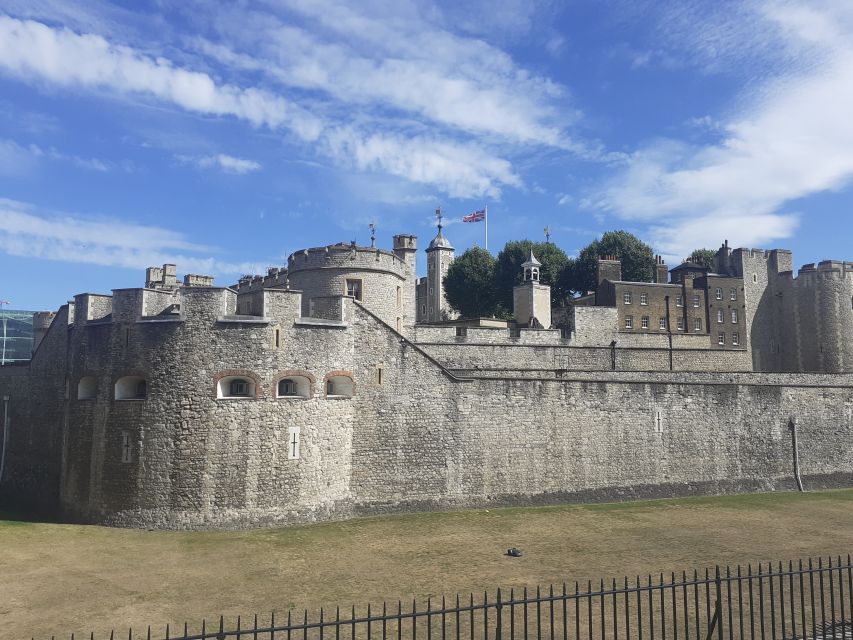
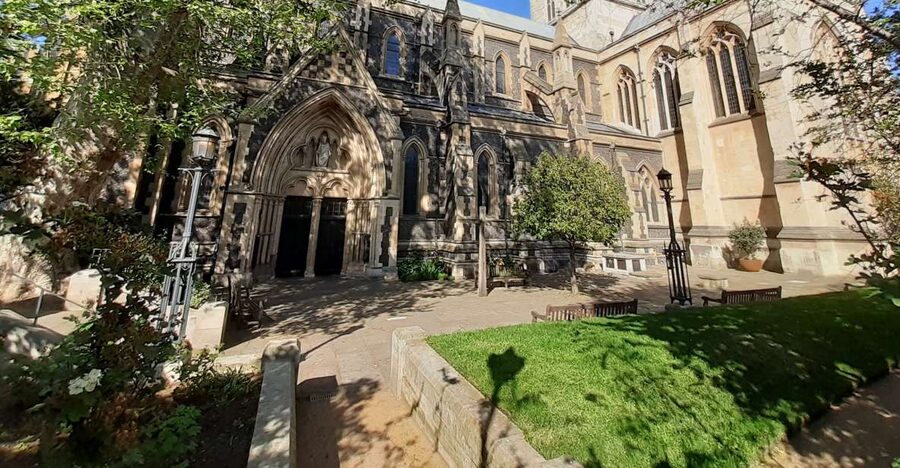
The tour then moves to Southwark Cathedral, a 15th-century site that you might miss if you were only chasing the obvious “big” landmarks. That is the strength of a good river walk. It mixes familiar giants with places that help explain how the city functioned in real time.
Southwark is a helpful theme because it reminds you London is not one single story. It is a collection of neighborhoods with different roles. A cathedral here is not just a pretty facade. It represents spiritual authority, community life, and the power of institutions that shaped the city’s habits.
Then you continue to the Golden Hinde stop, which is connected to maritime storytelling. You are shown the significance tied to exploration and seafaring culture, helping you understand why London had such a strong pull toward the sea. Seeing this in the same walk as market life and the river helps you connect the dots between trade, travel, and the city’s ambition.
Winchester Palace and Shakespeare’s Globe: how medieval streets feed later fame
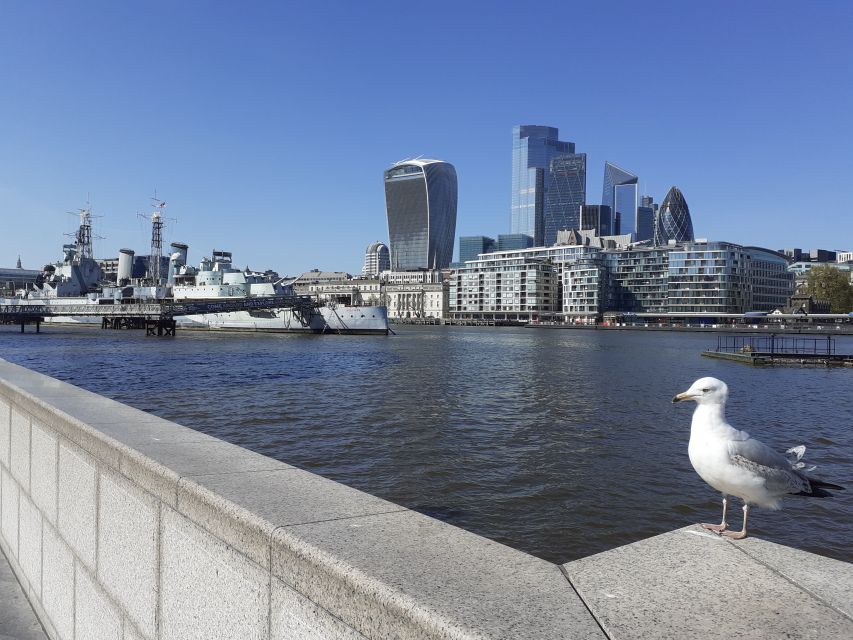
One of the most satisfying stretches of the walk is the transition to Winchester Palace, a 12th-century highlight. This stop gives you a taste of what aristocratic and institutional power looked like in medieval London. You also get a sense of scale, since palace buildings are where influence turns into stone.
From there, the tour heads toward Shakespeare’s Globe Theatre and the idea of walking in Shakespeare’s footsteps. This is not Shakespeare cosplay. It is a way to show that the same streets and river-adjacent routes lived on into later centuries, carrying the city’s earlier logic forward.
If you like theatre history, this stop gives you a meaningful context. You learn how performance culture and civic life grew in a city with long political and religious roots. And even if Shakespeare is not your main interest, the Globe area still works as a turning point. You shift from medieval institutions toward England’s later cultural identity.
Photo tip: Globe Theatre and the riverfront surroundings give you great framing. Stand where your guide suggests, because the best views are often slightly off the most obvious walking line.
Millennium Bridge and St Paul’s: seeing London’s skyline as a timeline
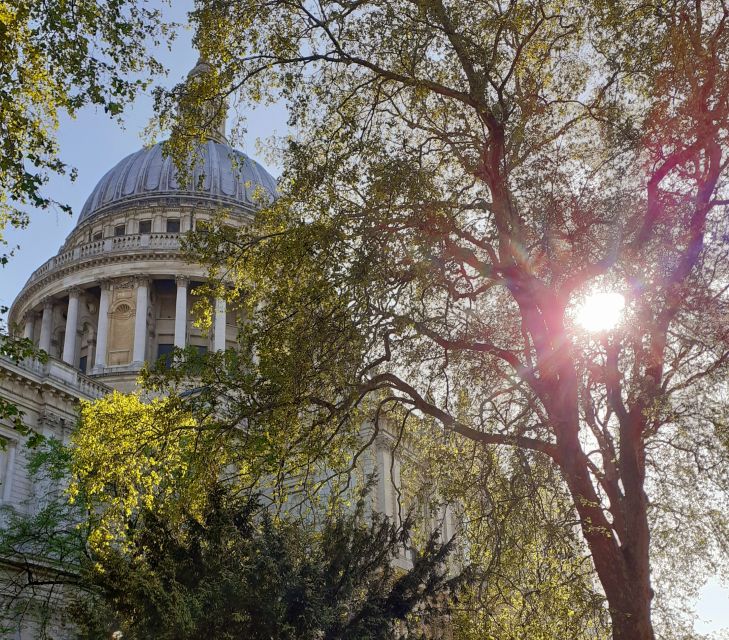
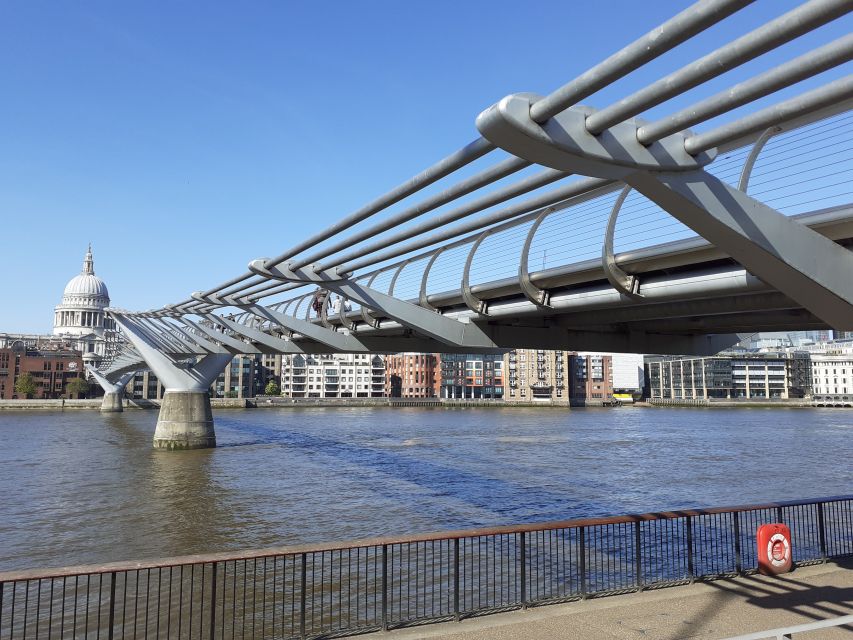
The last major stretch brings you toward the Millennium Bridge and finishes with St Paul’s Cathedral. This is a strong way to close the loop. You start with a medieval stronghold, then move along river landmarks that show each era making its own mark, and you end at a cathedral that instantly signals the city’s long-term religious and architectural ambition.
The Millennium Bridge stop acts like a visual reset. It is modern, clean, and glassy compared to what came before. But that contrast is the point. It helps you read the skyline like a timeline.
Then St Paul’s lands with real weight. Even if you have visited St Paul’s before, arriving from a guided river route changes how you see it. It feels less like a standalone monument and more like the outcome of centuries of building choices along trade, authority, and the river corridor.
How to get the most from a 2-hour format
A 2-hour walk is short enough to be doable and structured enough to feel complete. The key is pacing. Based on what you can expect from the guide’s style, the route is built for movement and quick context at each stop, so you are not stuck listening forever at one place.
Bring a simple strategy for questions. If something clicks, ask right away, because the guide can connect it to the next stop while the idea is fresh. This tour tends to run that way, with stories that link locations and themes rather than treating each landmark like a separate quiz question.
Also plan for the weather. The tour runs in all weathers, rain or shine, so you will want a comfortable shoe plus a layer you can adjust. If it is wet, you will appreciate sturdy soles and a bag that stays closed. You are walking along the Thames corridor, so conditions can change quickly.
Is this medieval walking tour good value at about $24?
At around $24 per person for a 2-hour guided walk, this is strong value if you care about context. You are not paying for transportation or a big bus trip. You are paying for a person who can explain how the river, the city, and the buildings connect across centuries.
What makes the cost feel fair is the range packed into the route: Tower of London, Tower Bridge, HMS Belfast, Borough Market, Southwark Cathedral, Winchester Palace, Shakespeare’s Globe, Millennium Bridge, and St Paul’s. You also get that rare bonus, the chance to ask questions and receive thoughtful answers that connect politics, religion, and daily life.
If you are the type who can read a plaque and move on, you might not feel the full value. But if you want the story behind the story, this tour is built for you.
Should you book this Tower to Thames medieval walk?
I think you should book it if you want an efficient “big picture” primer on medieval London plus the nearby landmarks that shaped later centuries. The route makes sense for first-time visitors because it gives you a logical chain from power (the Tower) to river engineering (Tower Bridge) to everyday life (Borough Market) to cultural aftershocks (the Globe) to the skyline conclusion (St Paul’s).
You might skip it if you are only after quiet, deep museum time or if you hate walking in unpredictable weather. This tour is built for motion, standing at points for views, and keeping your feet moving.
If you do book, show up ready to ask questions and watch the river relationship shift with each stop. That is where the walk becomes more than sightseeing. It becomes a map of how London keeps reinventing itself while staying tied to the Thames.
FAQ
Where does the tour meet?
Meet your guide outside the western exit of Tower Hill tube station, near Trinity Square, The Citizen M Hotel, and the Tower Hill Tram burger van. Your guide will hold a flagpole with a flag flying from it.
How long is the London medieval history walking tour?
The tour lasts 2 hours.
How much does it cost?
It is listed at $24 per person.
What sights are included on the walk?
You pass or visit major landmarks along the Thames, including the Tower of London, Tower Bridge, HMS Belfast, London Bridge, Borough Market, Southwark Cathedral, The Golden Hinde, Winchester Palace, Shakespeare’s Globe Theatre, Millennium Bridge, and St Paul’s Cathedral.
Is the tour wheelchair accessible?
Yes, the tour is wheelchair accessible.
Will the tour run in bad weather?
Yes. The tour takes place in all weathers, rain or shine.
What language is the tour guide?
The live tour guide speaks English.
What should I wear or bring?
Wear comfortable shoes and bring weather-appropriate clothing.
Is there free cancellation or the option to pay later?
Free cancellation is available up to 24 hours in advance for a full refund, and you can reserve now and pay later.
Fresh off the London review pile


Historical Tours, compared.
 ★ 5.0London Small Group Tour of Historical PubsFrom $4010,422 reviews
 ★ 5.0A History of Terror – Belfast City Centre Walking TourFrom $362,883 reviews
 ★ 5.0Old Town Walking Tour History and Tales in EdinburghFrom $242,168 reviews
 ★ 5.0Soho Music & Historic Pubs TourFrom $441,993 reviews
 ★ 5.0Old Town Historical and Underground TourFrom $271,574 reviews
 ★ 5.0Shadows of York: Ghost Walk and Horrible History.From $181,403 reviews
 ★ 4.5Multi-Sensory Small-Group Historic Vaults Tour in EdinburghFrom $371,384 reviews
 ★ 5.0Private Historical Walking Tour of YorkFrom $1951,324 reviews
Also filed under