
REVIEW · BELFAST TOURS & POLITICAL MURALS
A History of Terror – Belfast City Centre Walking Tour
Belfast walks you through fear and hope. This guided city center stroll uses headsets and landmark stops to make the story of The Troubles understandable, and then it lands on a hopeful note by the river.
I love that it is led by a local guide who brings the timeline to life with real neighborhood perspective, and I especially like how the pacing keeps you moving through major places, not just talking about politics.
One drawback to plan for, it is emotionally heavy. You will spend a lot of time listening while standing, so dress warm, and be ready for a subject that does not sugarcoat the past.
In This Review
- 4 to 6 highlights you should know before you go
- Why Belfast City Hall is the best place to start
- Stop-by-stop: City Hall, Donegall Place, and Castle Lane
- Belfast City Hall: the Troubles context, laid out
- Donegall Place: the nightclub bombing and the Ring Of Steel
- Castle Lane: the height of tension in a pedestrian area
- Spirit of Belfast and the Cathedral Quarter, where the city turns inward
- Spirit of Belfast: the Onion Rings and a 1971 catalyst
- Cathedral Quarter: street art, nightlife, and the road to peace
- Ann Street policing: how the city enforced order, then changed
- Beacon of Hope at the Lagan: ending with regeneration
- Who the guides are like, and why the tone feels human
- Price and value: what $36.06 buys you
- What to wear, what to bring, and how to make the story stick
- Is this the right tour for you?
- Should you book this A History of Terror walking tour?
- FAQ
- How long is the Belfast City Centre Walking Tour?
- Where does the tour start and where do you end?
- How much does it cost?
- What is included in the tour?
- Is there a lot of walking?
- Does the tour run in bad weather?
- Can I cancel and get a full refund?
4 to 6 highlights you should know before you go
- A 2.5-hour walk across a flat city center route, about 1.5 miles total
- Local guiding with clear audio, since everyone gets headsets
- Start at Belfast City Hall, where the tour sets the full context back to late 1960s beginnings
- Key Troubles-era sites in a tight area, including Donegall Place and Ann Street
- A regeneration ending at the Beacon of Hope on the Lagan waterfront
- Small group size (max 25), which helps you actually hear and follow the story
Other Belfast tours, city and political
- Titanic Belfast Entrance Ticket: Titanic Visitor Experience Including SS Nomadic
★ 4.5 · 3,698 reviews - Cab Tours Belfast Famous Black Taxi Tours
★ 5.0 · 3,633 reviews - A History of Terror – Belfast City Centre Walking Tour
★ 5.0 · 2,883 reviews
Why Belfast City Hall is the best place to start
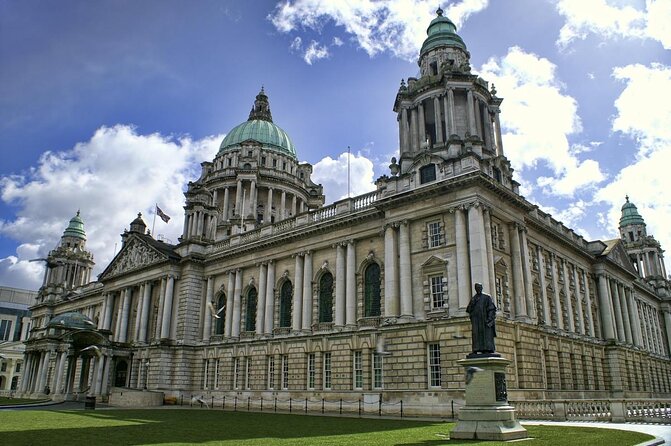
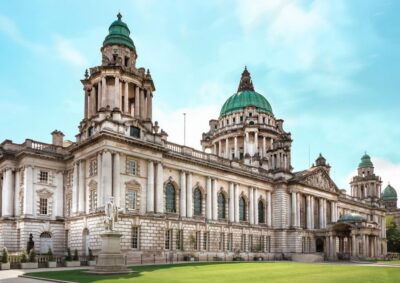
If you have only a day or two in Belfast, this type of tour is the fastest way to get your bearings. The meeting point at Belfast City Hall is central, easy to reach, and it also works as the tour’s storyline starting line.
Your guide begins with the big setup: the centuries-old relationship between the British and the Irish, then why the Troubles began in the late 1960s. That first explanation matters, because most of what you will see later on makes more sense when you understand what changed, when it changed, and why the conflict escalated.
I like that the tour keeps you from getting lost in one slogan or one side. Guides such as James, Mylie, Anne, Roisin, Rory, Chris, and Jim have been mentioned in past departures, and the common thread is clear storytelling that tries to explain facts without turning the walk into a spectacle.
Stop-by-stop: City Hall, Donegall Place, and Castle Lane
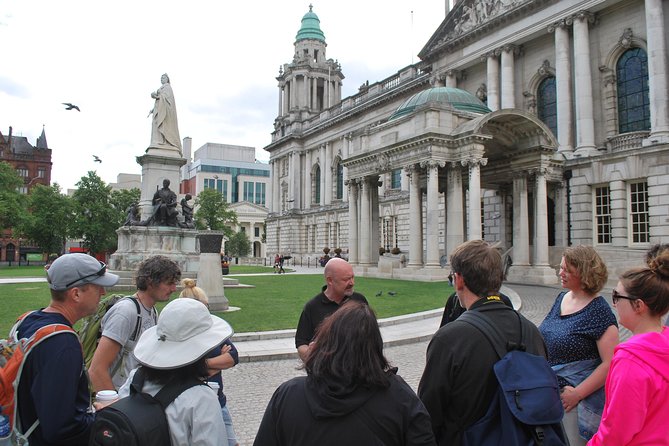
The tour runs about 2 hours 30 minutes, starting at 10:30 am. Expect a moderate amount of walking on a completely flat route, with no hills or steps. Still, plan for steady outdoor standing. Even when the group pauses, you are moving between points and focusing on details, so comfort matters.
Belfast City Hall: the Troubles context, laid out
At the City Hall grounds, you are not just checking a landmark. You get an intro that frames the later stops, including how and why violence took off in the late 1960s. This is where your guide also sets the tone for the rest of the walk, so by the time you get to the more specific incident locations, you are not seeing them as random tragedies.
Time here is about 20 minutes, so it is a good chance to ask yourself: am I learning the full arc or just grabbing headlines? You are here to learn the arc.




Donegall Place: the nightclub bombing and the Ring Of Steel
Donegall Place is Belfast’s main shopping street now, but the guide treats it like a time machine. You will hear the story behind a nightclub bomb attack there in 1971, and then you move into what became known as the Ring Of Steel.
What I like about this stop is the contrast. You see ordinary city life, storefronts, and everyday movement, then you learn what that same space meant during the height of the conflict. That contrast makes the past feel real, not remote.
This stop is about 15 minutes, which is long enough for the story, but short enough that you are not stuck in one place.
Castle Lane: the height of tension in a pedestrian area
Next is Castle Lane in the heart of the pedestrian precinct. Again, it is easy to pass through this area without thinking about what happened here. Your guide slows you down, walking you through the realities of life at the height of the Troubles.
You will also hear details of an event that still lives prominently in local memory. This is one of those stops where it helps to listen actively rather than trying to take notes. You will likely remember the emotional beats more than the dates.
Time is again around 15 minutes.
Spirit of Belfast and the Cathedral Quarter, where the city turns inward
The middle of the tour shifts from specific incidents to how Belfast processed survival, memory, and change. This is also where you get some of the most visually interesting parts of the walk.
Spirit of Belfast: the Onion Rings and a 1971 catalyst
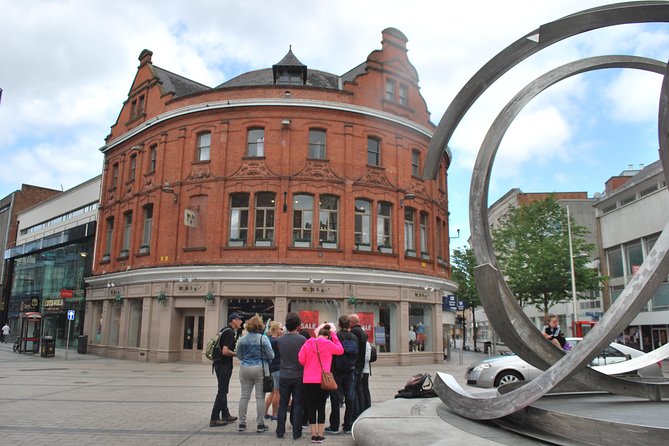
Your next pause is at the Spirit of Belfast artwork. It is intended to evoke resilience, but most people know it as the Onion Rings. Standing in its shadow is a clever choice, because it forces you to look at something modern and public, and then connects it to the series of events that began in a bar nearby in 1971.
Time here is about 15 minutes. The story at this point is less about one single incident and more about how momentum can spiral. It is also a reminder that conflict is not only about politics on paper. It is about what happens after one moment, then the next moment, then the next.
Cathedral Quarter: street art, nightlife, and the road to peace
The tour then moves into the Cathedral Quarter, a regenerated area that today is known for culture, street art, and nightlife. Your guide blends those visuals with a discussion of the beginnings of the path to peace.
Time here is about 20 minutes. This is a good stop for people who are worried the walk will feel like only tragedy. The guide does not erase the darkness, but it helps you understand how the city started shifting toward normal life.
Practical tip: if you like street art, bring your attention. It is not just scenery here. The guide helps you read the past into the present.
Ann Street policing: how the city enforced order, then changed
At Ann Street, you are beside the largest police station in Belfast. That choice of location is important, because it keeps the discussion grounded in daily life, not just political speeches.
Your guide explains how Northern Ireland was policed during the Troubles, then how policing has changed since the peace agreement. You also hear about the potential impact of Brexit on borders, which connects local history to the future in a way that feels current, not academic.
This stop is about 15 minutes. It is shorter than City Hall, but conceptually it is heavy, because policing is one of those topics where people’s experiences can be sharply different. The guide’s job, and the tour’s value, is to keep it factual and explain why institutions and rules shaped people’s day-to-day lives.
If you want a balanced feel, this is where you will notice it. Several guides mentioned in past departures have been praised for being fair and non-partial in the way they frame events.
Beacon of Hope at the Lagan: ending with regeneration
The final stretch takes you to the Waterfront on the banks of the river Lagan and the Beacon of Hope. This is the tour’s closing image, and it is the point where the walk stops being only a history lesson and becomes a story about what comes after.
Time here is about 20 minutes. The guide compares Belfast today with one of the darker days in local history, then talks about how the fragile peace was achieved and what the future may hold.
This stop is why I think the tour works as a whole. You do not end on a grave mood with no direction. You end with a place built for resilience and regeneration. It helps you carry the story without being trapped inside it.
The tour finishes on Oxford Street, and from there it is about a 5 minute walk back to City Hall. That makes planning easier if City Hall is where you want to meet friends or hop back onto public transport.
Who the guides are like, and why the tone feels human
The quality of a history walk lives or dies by the person holding the group together. This tour uses a local guide with headsets so you can hear clearly even when the group is gathered in different angles. That audio piece matters in a place where the story asks you to focus.
From the guide names shared with past departures, you can get a sense of the range of perspectives. Anne and Roisin have been described as having first-hand closeness to the Troubles, and James and Mylie have been praised for combining knowledgeable narration with an engaging, even funny, delivery when the mood can tolerate it.
What I like is that the tour aims for a neutral presentation. You still get emotion, and you still get names attached to the events, but it is not built to provoke. It is built to explain.
That balance is also why this tour is widely recommended. People come expecting history, but they often leave with context they can actually use when they read signs, see memorials, or talk politics with less confusion.
Price and value: what $36.06 buys you
At $36.06 per person for roughly 2.5 hours, the price is fair for a guided walking tour in a city center. The biggest value driver is not just that you have a guide. It is that you have a guide plus headsets for a group of up to 25, plus a route that hits multiple key locations without requiring you to pay for separate attractions.
The itinerary stops are marked as admission free, so you are not stacking extra costs on top of the tour fee. You are also not stuck in a vehicle, which means you see how the city looks now while you learn what it meant then.
One more value point: the tour helps you understand the present, including mentions of Brexit and border impacts. That makes it more than a museum replay of the past.
Also, this tour tends to book up in advance, with an average booking window of 24 days. If Belfast is tight for time, I would lock it in earlier rather than betting on last-minute availability.
What to wear, what to bring, and how to make the story stick
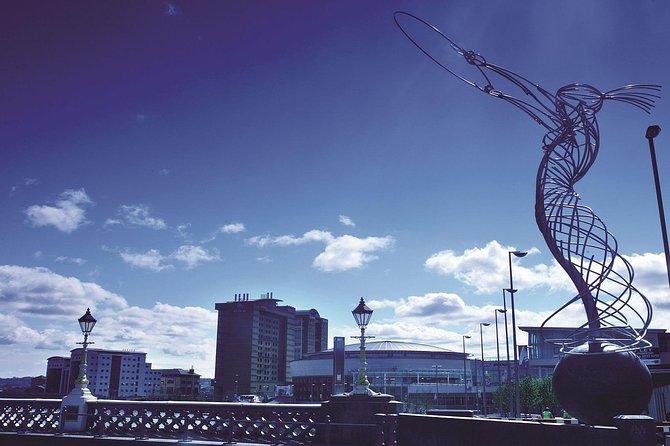
Because the tour takes place regardless of weather, plan for cold air and occasional showers. A waterproof jacket is recommended, and warm clothing makes a big difference in winter. The route is flat, but you will be outside for a while.
I also suggest bringing a small bag or pouch you can keep close, since you will be stopping often and listening for details. If you carry a phone, use it for quick notes only. The guide’s pacing will do most of the teaching if you let it.
If you are sensitive to audio, arrive a few minutes early and put the headset on right when you get it. The goal is to hear clearly, so you do not have to strain while standing still.
Finally, mentally prepare for a mixed emotional load. This is a tour about terror and escalated violence, but it ends on resilience. You will feel both. That is part of the point.
Is this the right tour for you?
This is a strong choice if you want context for Belfast fast, you like guided storytelling, and you want your learning anchored in real places you can point to later. It is also ideal as an early stop in your trip because it gives you a framework for everything else you will do.
I would especially recommend it if you appreciate balance. The tour’s goal is to present facts and help you understand why events happened and how policing and public life shifted. If you get unsettled by heavy topics, it helps that the tour does not try to turn suffering into a spectacle.
You might consider another option if you dislike standing and listening for stretches. Even though walking distance is modest at about 1.5 miles, the experience includes multiple stops where you are stationary and focused on the guide. That can feel slow if you are expecting more roaming.
Should you book this A History of Terror walking tour?
Yes, if you want a Belfast orientation that goes beyond landmarks and into the why behind them. The mix of clear audio, a tight city center route, and a finish at the Beacon of Hope makes it both informative and emotionally meaningful.
Book it early because it often fills. Wear layers, bring waterproof gear, and approach it as learning with purpose, not entertainment. If you do that, you will leave with a clearer understanding of Belfast’s past, and a stronger sense of how the city is trying to move forward.
FAQ
How long is the Belfast City Centre Walking Tour?
It runs for about 2 hours 30 minutes.
Where does the tour start and where do you end?
You start at Belfast City Hall, Donegall Square N, Belfast BT1 5GS. You end on Oxford Street (near the Beacon of Hope) at Belfast BT1 3NB, with about a 5 minute walk back to City Hall.
How much does it cost?
The price is $36.06 per person.
What is included in the tour?
You get a local guide and headsets to hear the guide clearly, plus a mobile ticket.
Is there a lot of walking?
The route involves a moderate amount of walking, about 1.5 miles total. Belfast city center is completely flat with no hills or steps, but comfortable footwear is still a good idea.
Does the tour run in bad weather?
Yes, it takes place regardless of the weather. You should check the forecast and dress accordingly. A waterproof jacket is recommended.
Can I cancel and get a full refund?
Yes. You can cancel up to 24 hours in advance for a full refund. If you cancel less than 24 hours before the start time, the amount paid will not be refunded.
Belfast: City, Murals, History
- Titanic Belfast Entrance Ticket: Titanic Visitor Experience Including SS Nomadic★ 4.5 · 3,698 reviews
- Cab Tours Belfast Famous Black Taxi Tours★ 5.0 · 3,633 reviews
- Game of Thrones and Giant’s Causeway Full-Day Tour from Belfast★ 5.0 · 2,291 reviews
- Private Black Taxi Belfast City Tour★ 5.0 · 2,188 reviews
Fresh off the Belfast review pile
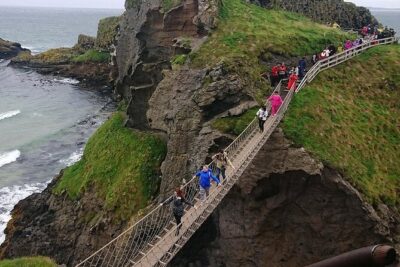
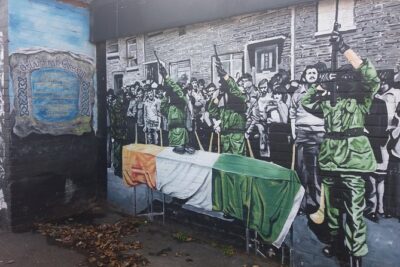
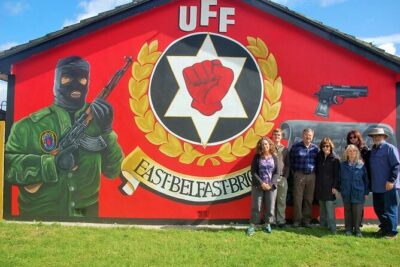
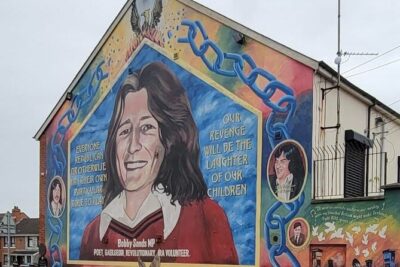
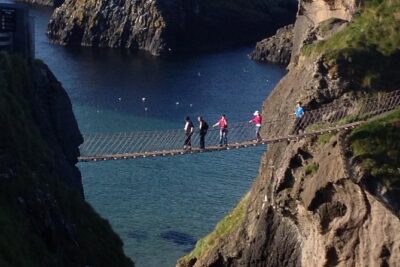
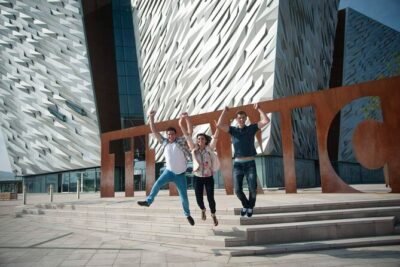
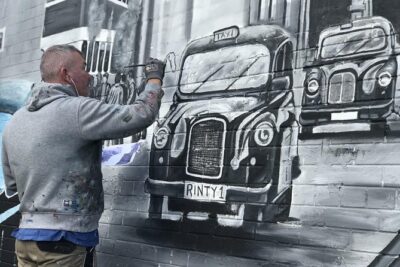

Belfast Tours & Political Murals, compared.
 ★ 4.8Giants Causeway, Dark Hedges, Dunluce & Belfast TourFrom $1128,843 reviews
 ★ 4.5Titanic Belfast Entrance Ticket: Titanic Visitor Experience Including SS NomadicFrom $373,698 reviews
 ★ 5.0Cab Tours Belfast Famous Black Taxi ToursFrom $1003,633 reviews
 ★ 5.0Game of Thrones and Giant’s Causeway Full-Day Tour from BelfastFrom $482,291 reviews
 ★ 5.0Private Black Taxi Belfast City TourFrom $1102,188 reviews
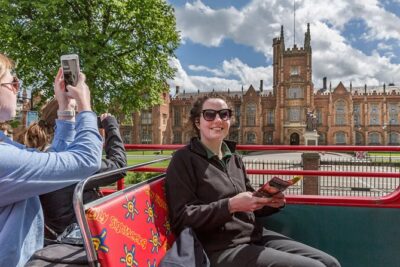 ★ 4.5City Sightseeing Belfast Hop-On Hop-Off Bus TourFrom $132,012 reviews
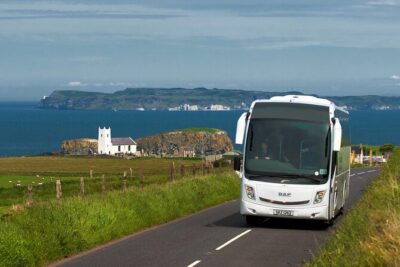 ★ 5.0Giants Causeway & Castles Tour from Belfast: Guided tourFrom $331,432 reviews
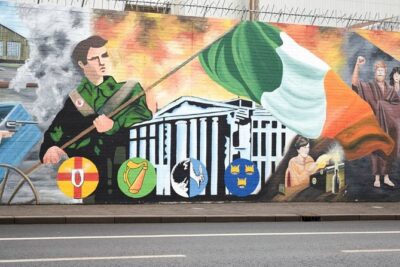 ★ 5.0Belfast’s Political Mural Taxi TourFrom $481,180 reviews
Also filed under