
REVIEW · LONDON MUSEUMS & GALLERIES
London: Tour of the British Museum
Mankind, mapped in London. In two hours, this British Museum tour uses an official guide and a subject expert to connect major civilizations you would otherwise miss in a very crowded building. You’ll move through big-ticket stops, from the museum’s Hall of Enlightenment to Ancient Egypt, Assyria, Greek sculpture, and finishing with objects tied to the Aztecs and Easter Island.
I love the tight focus on the essentials, because the British Museum is so huge that self-guided plans can turn into wandering and wishful thinking. I also like the way the tour gives context for what you’re seeing, so artifacts feel less like random displays and more like human stories across time.
One drawback to plan for is the meeting moment. The guide is holding a blue-green flag with the Paseando por Europa logo, and the flag can be easy to miss if you arrive late or don’t get there early enough to deal with entrance lines.
In This Review
- Key takeaways before you walk in
- Why this 2-hour British Museum tour actually feels worth it
- Great Russell Street meeting point and the reality of museum lines
- Hall of Enlightenment and King George III’s 60,000-book collection
- Ancient Egypt stop: funerary rites made human
- Assyria: reading power in stone
- Parthenon fragments: Greece without the guesswork
- Aztecs and Easter Island’s Hoa Hakananai’a to close
- How the guides shape the experience (and why it matters)
- Price and value: what $14 buys you in London
- Planning your museum day: where this fits in
- Who should book this tour, and who might skip it
- Should you book the British Museum Tour of the History of Mankind?
- FAQ
- How long is the British Museum tour?
- What languages is the live guide available in?
- Where is the meeting point?
- Is the tour wheelchair accessible?
- Is food or drinks included?
- What can’t I bring?
Key takeaways before you walk in
- Two hours, real pacing: you’ll see a curated set of major galleries without feeling like you sprinted
- Hall of Enlightenment first: start with the museum’s old-school anchor, then work forward through civilizations
- Ancient Egypt funerary rites: you get the meaning behind the objects, not just the labels
- Parthenon fragment stop: a Greek anchor point that helps you read the rest of the museum
- Easter Island’s Hoa Hakananai’a: a dramatic closing moment, more than two meters tall
- Bring your voucher: you’ll need the printed confirmation email or mobile voucher at the meeting point
Other museum and gallery tours we sat through
- Frameless – Immersive Art Experience in London
★ 4.5 · 3,660 reviews - London: Entry Ticket to Frameless Immersive Art Experience
★ 4.7 · 2,923 reviews - London: British Museum Guided Tour
★ 4.3 · 1,182 reviews
Why this 2-hour British Museum tour actually feels worth it
The British Museum can swallow a whole day. That sounds romantic until you’re standing ten minutes in front of something you cannot place, while the crowd squeezes your route into chaos.
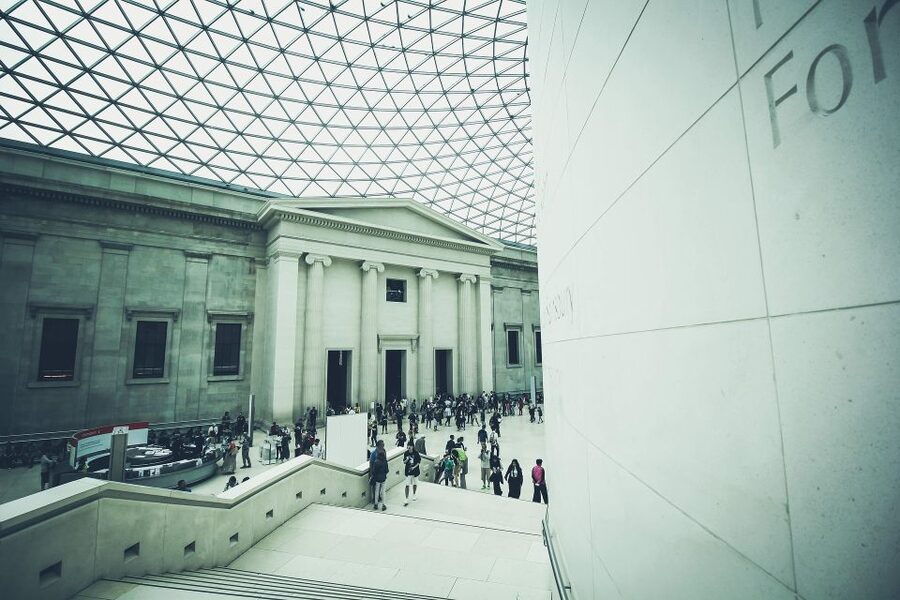
This tour is designed for the opposite problem. In two hours, you get a guided route that hits several of the museum’s most important civilizations, with enough story to make the artifacts click. You also get someone to translate the museum’s “here’s a thing” tone into “here’s why this matters.”
The big value is not only what you see. It’s how you see it. You get historical framing that helps you recognize patterns, like how belief systems, empire-building, and art styles show up across continents and centuries.
Great Russell Street meeting point and the reality of museum lines
Your meeting point is specific: the stairs to the main entrance of the British Museum on Great Russell Street, in front of Starbucks, after you pass the security checkpoint. Look for a guide with a blue-green flag with the Paseando por Europa logo.
Go early enough to handle entrance queues. That advice matters here because your whole tour start depends on finding your guide before the group starts moving. In practice, arriving right on time can mean you end up spending the first ten minutes scanning faces and flags instead of enjoying the first gallery.
Also plan to have your proof ready. You should show your printed confirmation email or your mobile voucher at the meeting point.
Quick planning note: no pets are allowed, oversize luggage is not allowed, and large bags and luggage are also not allowed. If you’re traveling with a bulky bag, plan to store it ahead of time.
Hall of Enlightenment and King George III’s 60,000-book collection
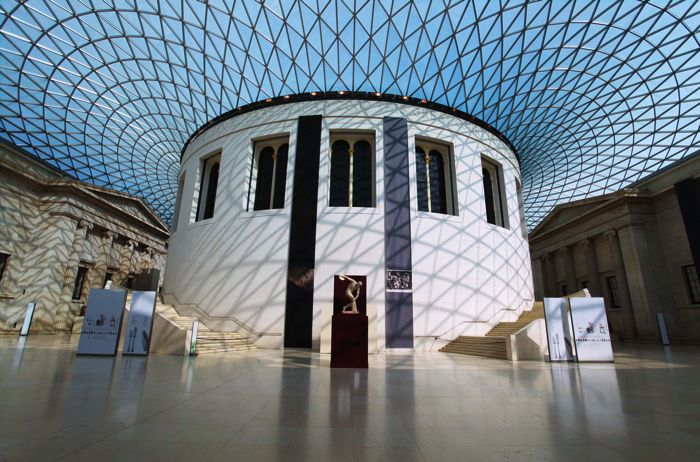
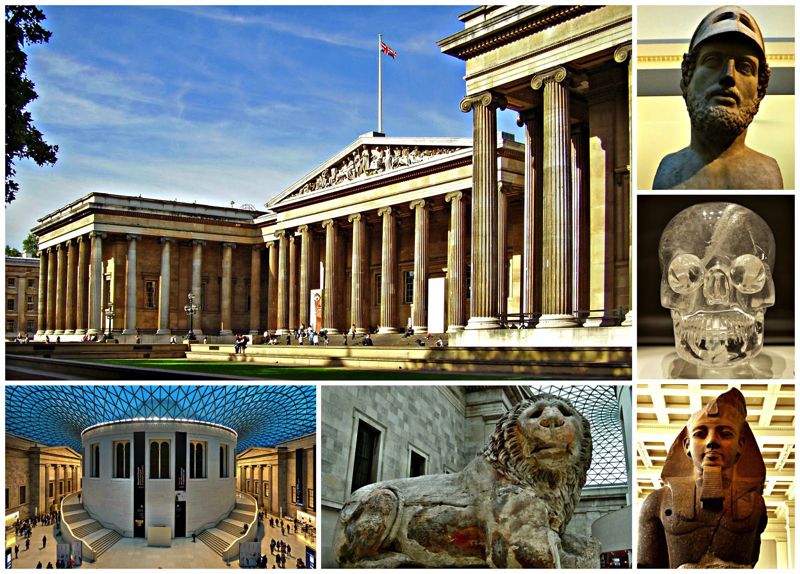
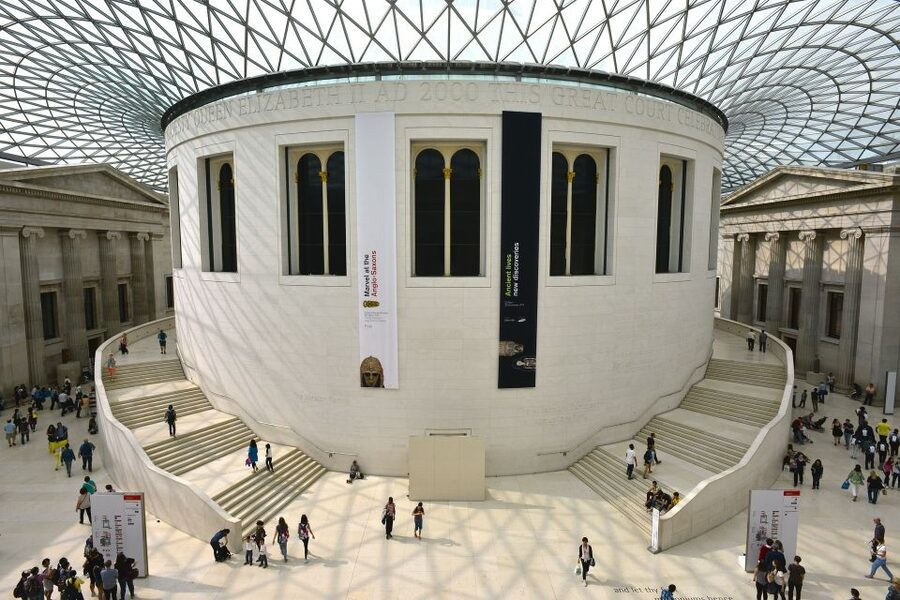
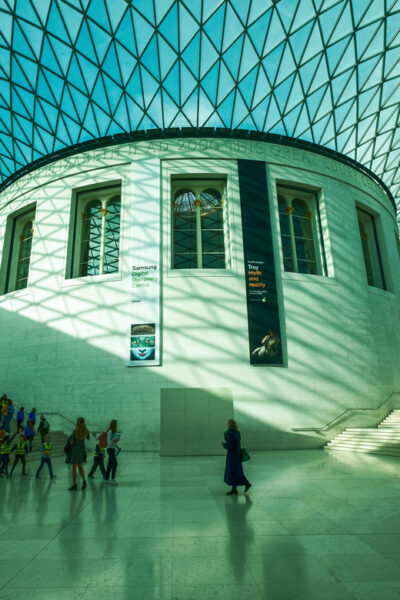
You start outside at the museum entrance, where the building’s classical look is part of the fun. Then you move into the Hall of Enlightenment, described here as the oldest hall in the museum.
This is your orientation stop. It helps you understand that the British Museum is not just a warehouse of artifacts. It’s also a historic space with its own collection story. The hall houses a collection of more than 60,000 books associated with King George III, which gives you a sense of how the museum grew into a knowledge machine.
This first gallery works well for new visitors because it sets a tempo. Instead of rushing straight into “wow objects,” you begin with an idea: that collecting, reading, and documenting are part of how humans preserve and understand their past.





Ancient Egypt stop: funerary rites made human

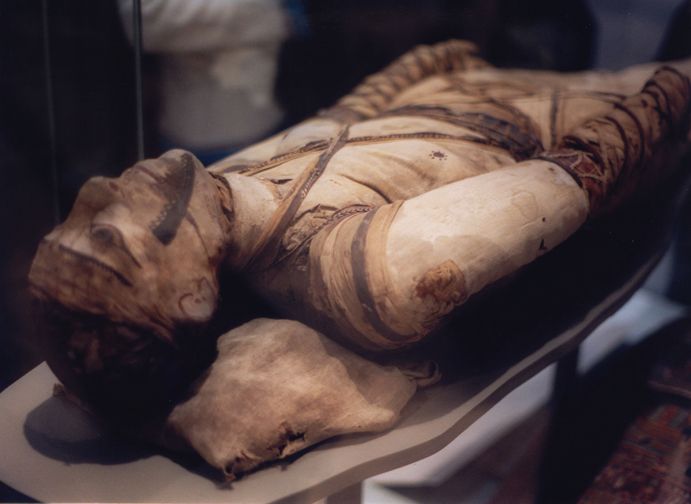
Next comes Ancient Egypt. The focus is on Egyptian funerary rites, meaning you’re meant to understand what these objects represented in life, not just what they look like now.
That difference matters. Funerary rites are all about belief, status, and the hope of continuity after death. When you learn that context, Egyptian artifacts feel less like puzzles and more like messages sent across time.
If you usually skip museum labels because they feel too dense, this stop can still work for you. A guide-led explanation gives the labels a spine, so you can follow along and ask questions without needing a crash course in Egyptology.
Assyria: reading power in stone
After Egypt, the tour continues into the Assyrian civilization portion. Assyria is a strong choice for a highlights route because it brings a clear “empire” vibe to the story of humanity.
You’ll be looking at remnants tied to that civilization, and the point is to connect what you see to what Assyrians built, ruled, and recorded. Even if you’re not a history buff, Assyrian art tends to communicate through detail and repetition, which makes it a good place for a guide to point out what your eye might miss on your own.
This is also a nice pacing break. Egypt can feel heavy on symbolism, and then Assyria shifts you toward governance, conquest, and visual storytelling.
Parthenon fragments: Greece without the guesswork
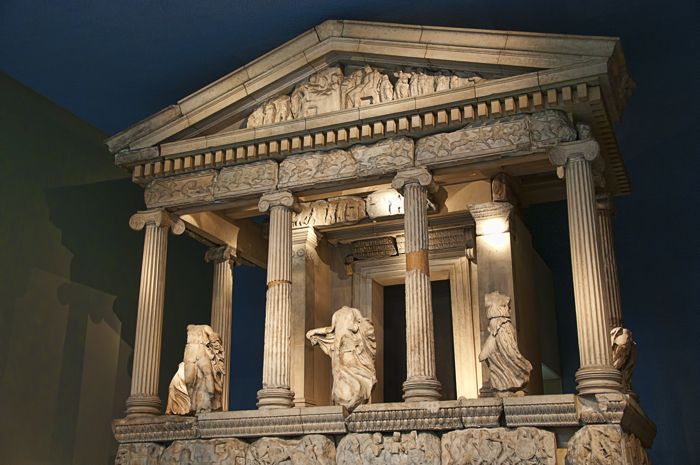
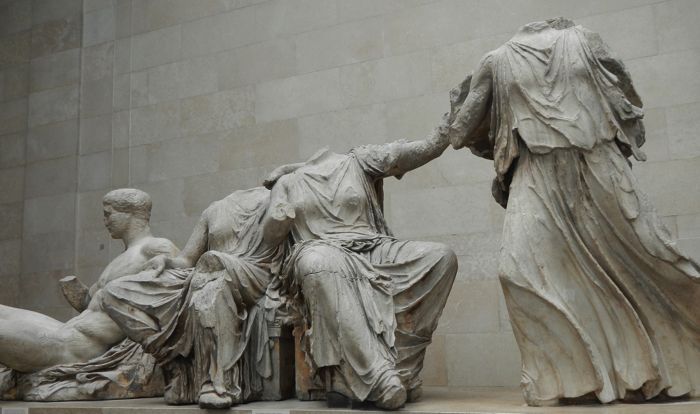
One of the biggest highlights is an important part of the structure of the Parthenon of Athens. If you’ve ever felt that Greek sculpture is hard to “read” unless you know the original setting, this kind of stop helps.
Greek material in a museum like this can feel like it’s missing the context of the temple or city that shaped it. A guide explanation gives you that missing context in a practical way, so you’re not just staring at stone. You’re seeing why the Parthenon mattered and what fragments can still tell you.
This stop also creates a bridge. It connects the museum’s classical architecture feel outside with the culture inside, so the whole visit starts to feel like a story rather than separate rooms.
Aztecs and Easter Island’s Hoa Hakananai’a to close
You end with pieces tied to the Aztecs, after meeting Hoa Hakananai’a, a moai from Easter Island that is more than two meters high.
This closing sequence is smart because it gives you contrast. You move from one complex cultural tradition to another, then land on an object that feels physically imposing. Hoa Hakananai’a is the kind of artifact that makes you slow down even if you thought you were already done with “wow.”
Finishing here can also change how you remember the whole tour. Instead of thinking only about Egypt or Greece, you end with a reminder that human culture is global and varied, even when you only have limited time.
How the guides shape the experience (and why it matters)
The tour is led by a live guide in Spanish and English, and the difference between a good museum visit and a forgettable one is often the guide’s ability to make connections quickly.
I like the way this tour is set up for conversation and questions. In past runs, guides such as Puri, Miguel, Eduardo, Fernando, and Ferran have been praised for being interactive, funny at times, and very strong at turning artifacts into stories you can actually repeat later. One guide even stood out for an academic style of explanation, and others for a more energetic, human delivery.
You’ll also feel the pace. Several people have said the pacing is just right for a quick highlights visit, which is the sweet spot for a museum of this size.
And one practical tip from real experience: guides can be hard to spot if the flag is small. I recommend you scan the entrance area early, not when your tour time is already starting. If you’re near the Starbucks side, you still need to look carefully for the blue-green flag.
Price and value: what $14 buys you in London
At about $14 per person for a two-hour guided walk, the price makes sense if you treat it as insurance against museum confusion.
Here’s the math you should do in your head:
- The British Museum is free to enter, but it is not free in time. Getting oriented, choosing what to see, and locating key objects can take hours.
- A guided highlights route helps you hit multiple core collections without spending your day doing guesswork.
So even though you are paying, you’re really buying time, direction, and context. And context is what turns a long list of artifacts into a meaningful visit.
Two more points to keep the day smooth: food and drinks are not included, so plan a snack break elsewhere if you need one. Also, the tour is a walking tour, so wear comfortable shoes.
Planning your museum day: where this fits in
Two hours goes fast in the British Museum. For me, this kind of tour works best as either:
- your first visit to get your bearings, or
- your middle plan if you already explored a few rooms and now you want the highlights you might have missed.
After the tour ends, you’ll be in a better position to keep exploring on your own. You’ll have names, themes, and locations in your head, which makes browsing afterward much more satisfying.
It can also help with crowd strategy. Museums during busy periods can feel like you’re being pushed down a hallway by sheer foot traffic. A guide gives you a route that keeps you moving toward the most important rooms without getting stuck in the same slow bottleneck all morning.
Who should book this tour, and who might skip it
I’d strongly recommend this if you:
- want a short, high-impact museum experience,
- prefer history explained by a guide rather than reading everything solo,
- like seeing major civilizations connected through a storyline.
It can also be a good choice for families with teenagers, since one of the guide writeups specifically called out that the tour works well across age groups. If you have younger kids, the structure can still help, but you’ll want to bring patience for crowds and walking.
You might skip it if:
- you plan to study fewer objects in depth and you don’t want a set route,
- you strongly dislike walking tours, or
- you already know exactly where everything is and what you want to see.
A final practical note: one person mentioned the museum gets packed around Easter. If you’re traveling during a peak season, arrive early and expect tighter movement than usual.
Should you book the British Museum Tour of the History of Mankind?
If you want a smart use of limited time, this is an easy yes. The route covers major civilizations you’ll feel good about seeing in a single morning or afternoon slot, and the guiding style is repeatedly praised for making the information usable, not just encyclopedic.
If you’re nervous about getting overwhelmed in a giant museum, book it. You’re buying orientation, pacing, and the stories that make artifacts feel personal. Just go early, find the blue-green flag guide, and keep your expectations aligned with a two-hour highlights tour.
FAQ
How long is the British Museum tour?
The tour duration is 2 hours.
What languages is the live guide available in?
The live tour guide is available in Spanish and English.
Where is the meeting point?
Meet at the stairs to the main entrance of the British Museum on Great Russell Street, in front of Starbucks, after passing the security checkpoint. Look for a guide with a blue-green flag with the Paseando por Europa logo.
Is the tour wheelchair accessible?
Yes, the tour is wheelchair accessible.
Is food or drinks included?
No, food and drinks are not included.
What can’t I bring?
Pets are not allowed. Oversize luggage and luggage or large bags are also not allowed. Smoking is not allowed. You should also bring your printed confirmation email or mobile voucher to show at the meeting point.
Museums and Galleries, Keep Going
- Frameless – Immersive Art Experience in London★ 4.5 · 3,660 reviews
- London: Entry Ticket to Frameless Immersive Art Experience★ 4.7 · 2,923 reviews
- London: British Museum Guided Tour★ 4.3 · 1,182 reviews
- Official tickets: Moco Modern & Contemporary Art Museum★ 4.5 · 1,157 reviews
Fresh off the London review pile




London Museums & Galleries, compared.
 ★ 4.5Frameless – Immersive Art Experience in LondonFrom $383,660 reviews
 ★ 4.7London: Entry Ticket to Frameless Immersive Art ExperienceFrom $372,923 reviews
 ★ 4.3London: British Museum Guided TourFrom $231,182 reviews
 ★ 4.5Official tickets: Moco Modern & Contemporary Art MuseumFrom $361,157 reviews
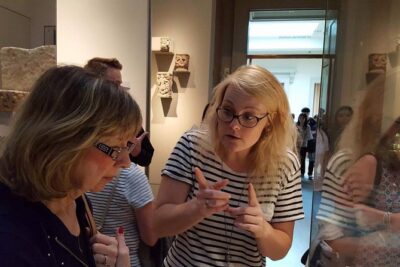 ★ 5.0British Museum London Guided Tour Semi-Private 8ppl MaxFrom $108984 reviews
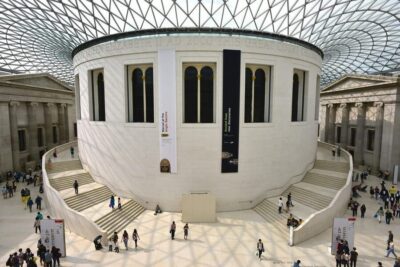 ★ 4.5London: British Museum Audio Tour & Priority Entrance TicketFrom $9631 reviews
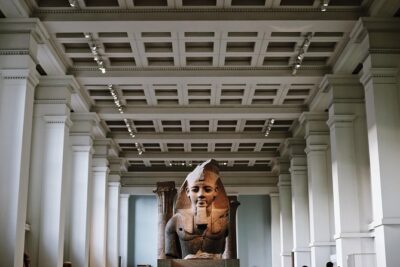 ★ 5.0The British Museum London – Exclusive Guided Museum TourFrom $108555 reviews
 ★ 4.2Afternoon Tea at the British MuseumFrom $58511 reviews
Also filed under