
REVIEW · LONDON MUSEUMS & GALLERIES
London: British Museum Guided Tour
Walk into the British Museum, then glide.
This 2-hour guided highlights tour turns a huge building into a clear route, with a licensed guide pointing out what matters and why it matters. I love the way the visit centers on big “can’t-miss” landmarks, especially the Great Court and Reading Room view, without trying to cover everything. It is also built for focus, with a planned flow through Egypt, Ancient Rome, and key cross-cultural objects. One possible drawback: two hours is short, so you will see top pieces, not deep study of every gallery.
My favorite part is the Rosetta Stone stop, because the guide explains how the breakthrough helped decode Egyptian writing, not just that it exists. The second thing I really like is the mix of cultures in one loop, from Egypt’s hieroglyphs and mummies to Rome’s reach, plus moments that bring up real ethical debates like the Parthenon sculptures.
The main consideration is pacing: you will be moving, and if your group contains kids or museum-shy adults, some may want more sitting time. In one case, an 11-year-old loved it, while younger kids found it harder to stay engaged for every stop.
In This Review
- Key Things to Know Before You Go
- Why the British Museum Great Court and Reading Room Views Make This Tour Work
- The Rosetta Stone Stop: How You’ll Understand Egyptian Hieroglyphs in Minutes
- Ancient Rome and the Elgin Marbles Question: Seeing the Parthenon Sculptures With Context
- Egypt Galleries: Mummies, Meaning, and Sutton Hoo’s Surprise Connection
- From Khorsabad’s Winged Bulls to Sutton Hoo Relics, You Get More Than One Era
- Guide Power: When Enthusiasm Turns Highlights Into Real Takeaways
- What the 2-Hour Route Feels Like on the Ground
- Logistics That Matter: Meeting Point, No Transportation, and What to Bring
- Should You Book the British Museum Guided Tour?
- FAQ
- How long is the British Museum guided tour?
- How much does the tour cost?
- What is included in the tour?
- Is transportation included?
- What languages are the live guide and commentary offered in?
- Is the tour wheelchair accessible?
- What is the cancellation window?
Key Things to Know Before You Go
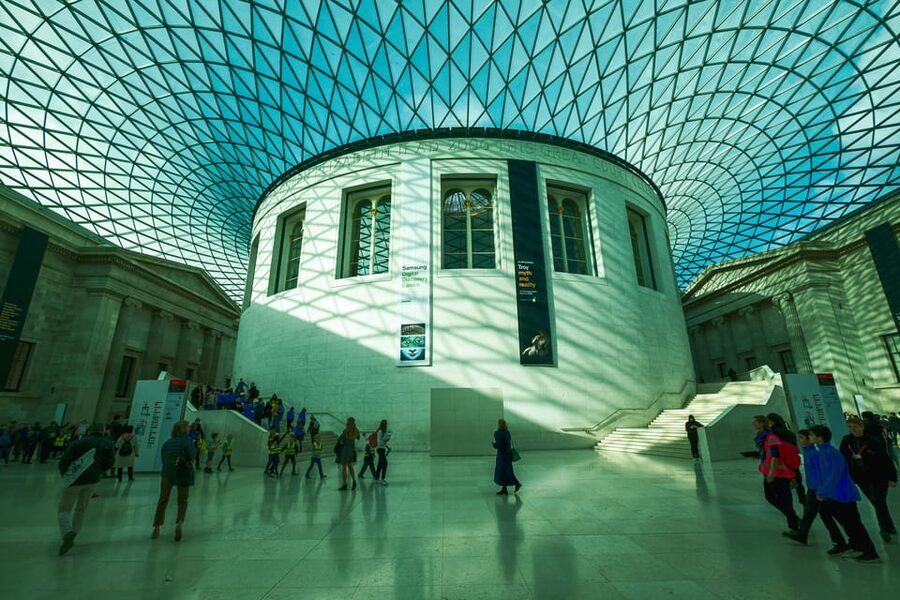
- Great Court first, context included: you get the iconic glass-roof view early, so the museum feels navigable from minute one.
- Rosetta Stone explained simply: the guide turns the decoding story into an easy takeaway.
- You’ll face controversy thoughtfully: the Parthenon sculptures stop includes the Elgin Marbles question in the conversation.
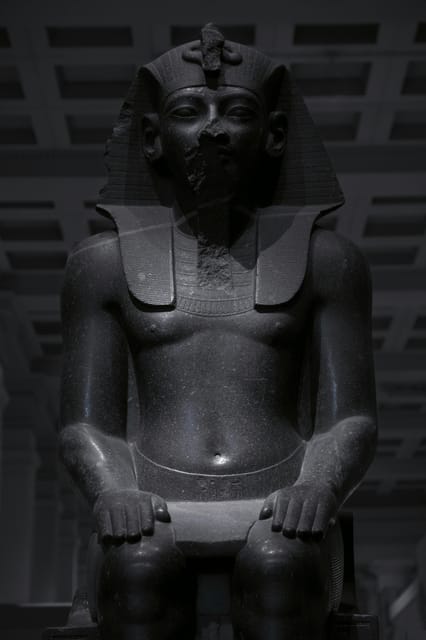
- Egypt galleries are a major anchor: expect hieroglyphs learning, mummies, and famous Egyptian set-pieces.
- Other world-famous objects show up, fast: Sutton Hoo burial relics and Khorsabad’s winged bulls make the route feel varied.
- Small-group feel, headset support: headsets are provided for groups over 6 people, which helps keep your attention on the guide.
Other museum and gallery tours we sat through
- Frameless – Immersive Art Experience in London
★ 4.5 · 3,660 reviews - London: Entry Ticket to Frameless Immersive Art Experience
★ 4.7 · 2,923 reviews - London: British Museum Guided Tour
★ 4.3 · 1,182 reviews
Why the British Museum Great Court and Reading Room Views Make This Tour Work
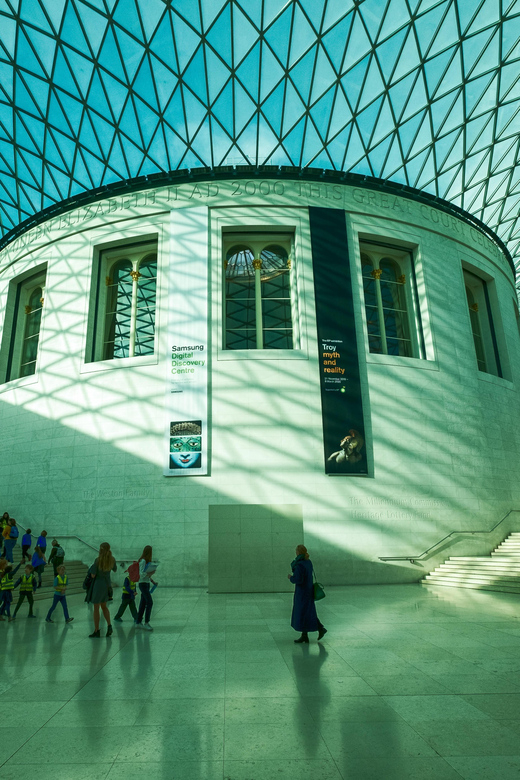
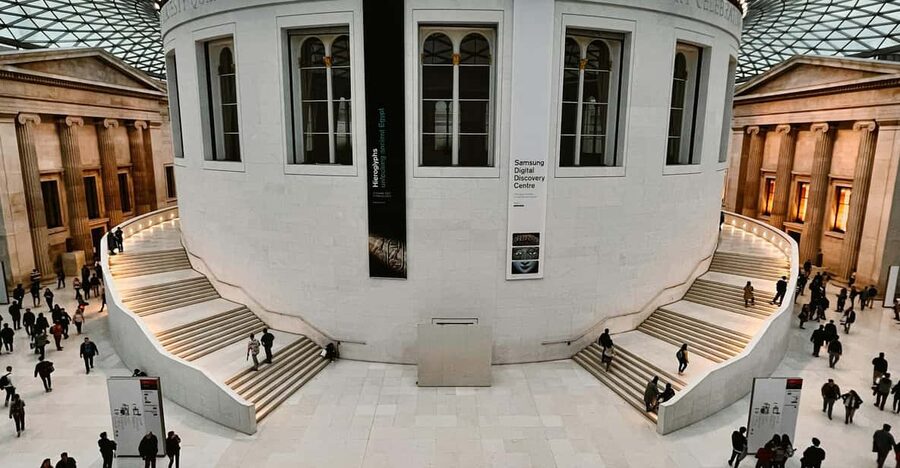
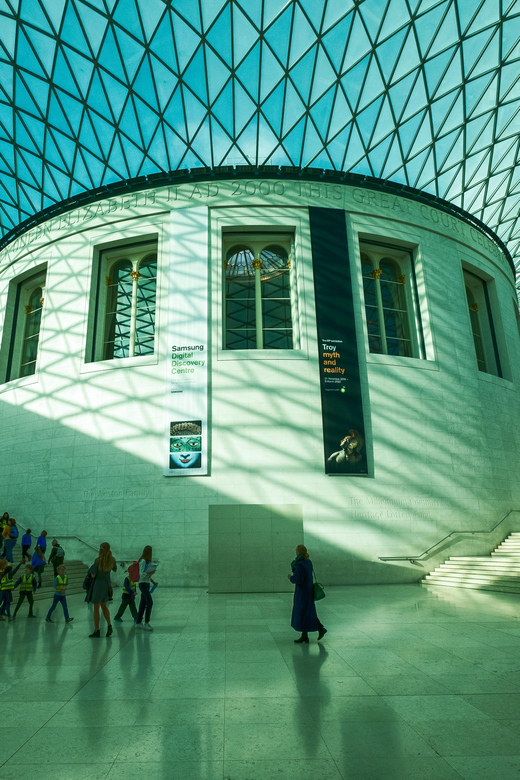
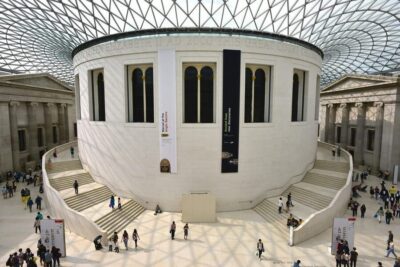
The British Museum can feel like a maze the first time you walk in. This tour starts by giving you one of the best orientation tricks in the whole place: it funnels you toward the Great Court, with its dramatic glass ceiling over the central space.
Here’s why that matters for your visit. Once you’ve seen the scale and the geometry of the Great Court, the museum stops feeling random. You start to understand where the major galleries sit and how to move between them. That makes the rest of the tour feel smoother, even when the building is crowded.
The Reading Room connection adds another layer. Even if you are not a book-nerd, that space helps you picture the museum not just as a warehouse of artifacts, but as an institution built around study and public access. It is the kind of moment that helps you care about the objects before you ever get close to them.
One more practical upside: starting with a visual anchor helps groups stay together. Reviews repeatedly praise how guides keep time and manage the flow, and the Great Court is a strong “meeting point in your mind” for the rest of the route.
The Rosetta Stone Stop: How You’ll Understand Egyptian Hieroglyphs in Minutes
If you only remember one artifact, make it the Rosetta Stone. On a self-guided visit, it can be easy to stand there and think, okay, neat. With a guide, you get the story you actually came for: why this object is the key to understanding Egyptian hieroglyphs.
The tour’s highlight framing is smart here. Instead of treating Egypt as a pile of mummies and statues, you get a bridge between language and power. You learn that deciphering was not automatic. It required a breakthrough, and the Rosetta Stone played that role by linking scripts and meaning.
You also get better museum reading habits out of this stop. After the Rosetta Stone explanation, you tend to look at Egyptian displays differently. You might spot patterns, notice how symbols are structured, and connect what you see to what the guide just explained.
This is one of the most praised parts of the experience across guide names, too. People describe the guide energy as a huge reason the tour clicks. That matters because the Rosetta Stone is surrounded by distractions, and a strong guide helps you focus on the point of the stop.
Ancient Rome and the Elgin Marbles Question: Seeing the Parthenon Sculptures With Context
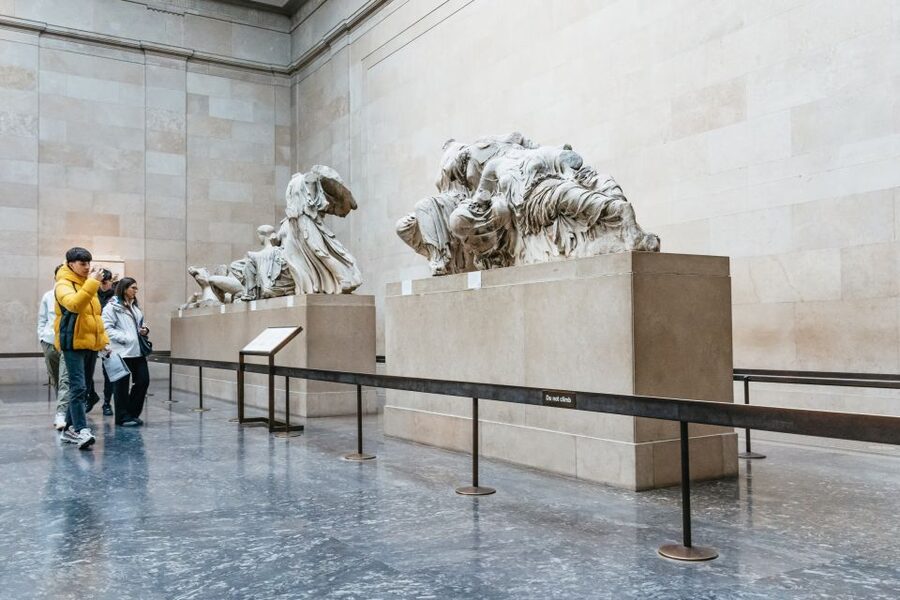
The British Museum’s Rome and Greece collections are world-class, and this tour makes sure you see at least one of the most famous pieces with a real conversation attached. The stop on the Parthenon sculptures, taken from the Parthenon in Athens by Lord Elgin, brings the Elgin Marbles controversy directly into your visit.
A good guide does not just point and move on here. They help you understand why the artifact is famous, but also why it is complicated. That is useful even if you already know the headline. You get the museum context, and you get a sense of how the story is framed within a museum setting.
Why this improves the value of your tour. Without context, a controversial object can either become background noise or a single argument you replay in your head. With context, you learn the questions the museum era created, and you see how collecting practices changed over time.
If you like history that includes politics and ethics, this stop will feel more alive than a standard “look at this statue” moment. If you prefer museums that avoid debate, you can still enjoy the craftsmanship and the scale. Just know the tour includes the controversy in the framing, not as an afterthought.





Egypt Galleries: Mummies, Meaning, and Sutton Hoo’s Surprise Connection
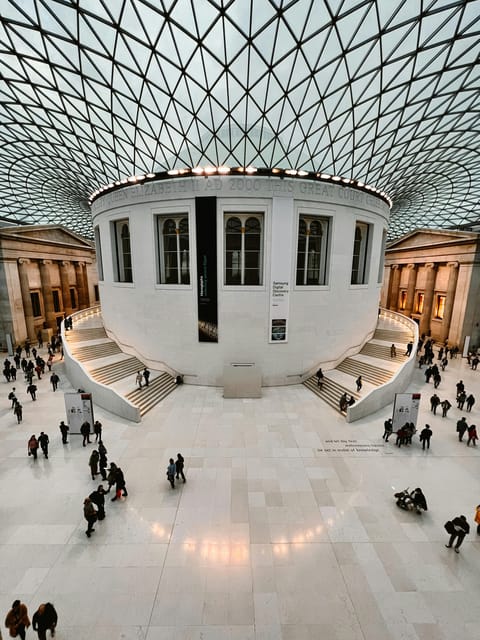
The Ancient Egypt galleries are a main anchor of this tour, and the route is designed so you do not treat Egypt as one stop. You get a sequence that starts with the writing story and then moves into the famous material culture that most people associate with the museum.
What you can expect in this section:
- You’ll see the museum’s large mummy collection.
- You’ll get guidance that helps connect objects to beliefs and timelines, not just appearance.
- You’ll also encounter other landmark finds connected to broader archaeology.
Now, here’s a clever part of the tour design: it connects Egypt to other ancient worlds so the visit does not feel like you are trapped in one theme. That is where stops like Anglo-Saxon Sutton Hoo burial relics and the winged bulls from Khorsabad help keep your brain engaged.
In practice, this matters because the British Museum is enormous. When your tour route has variety, you retain more. You also get a better sense of how the museum builds meaning across cultures, even when the objects come from very different places and centuries.
One caution: some visitors love mummy exhibits and move through them quickly. Others want more time near each case. Since the tour is only 2 hours, you might find yourself wishing for a longer moment at your favorite Egypt section. The good news is that after the highlights tour, you can often return at your own pace to linger.
From Khorsabad’s Winged Bulls to Sutton Hoo Relics, You Get More Than One Era
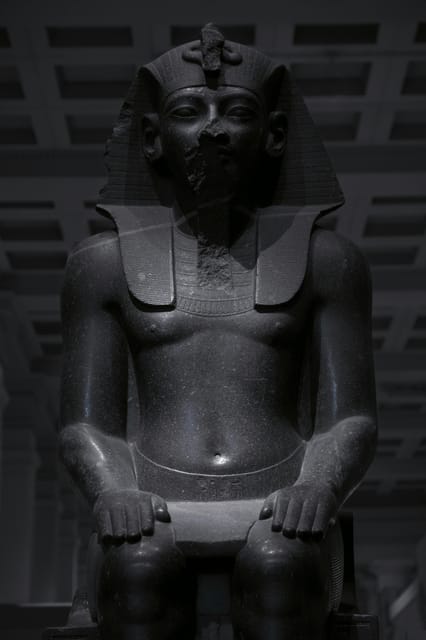
A highlights tour can sometimes feel like a greatest-hits playlist with no rhythm. This one avoids that by mixing time periods in a way that keeps each stop meaningful.
The route includes:
- Winged Bulls from Khorsabad, bringing Assyrian-era imagery into the conversation
- Sutton Hoo burial relics, a major Anglo-Saxon set of artifacts that shifts the spotlight to early England
Why I think these stops matter for your value. They broaden your understanding of the museum beyond its most famous names. Yes, Rome and Greece draw attention, and yes, Egypt grabs imaginations. But Khorsabad’s winged forms and Sutton Hoo’s burial artistry help you see the British Museum as a truly cross-regional collection.
These stops also tend to land well for mixed groups. Even when someone is not a devoted history fan, distinctive visual forms like winged bulls and ornate burial pieces create instant hooks. And if your group includes kids, the more visual anchors you have, the easier it is to keep attention.
Guide Power: When Enthusiasm Turns Highlights Into Real Takeaways
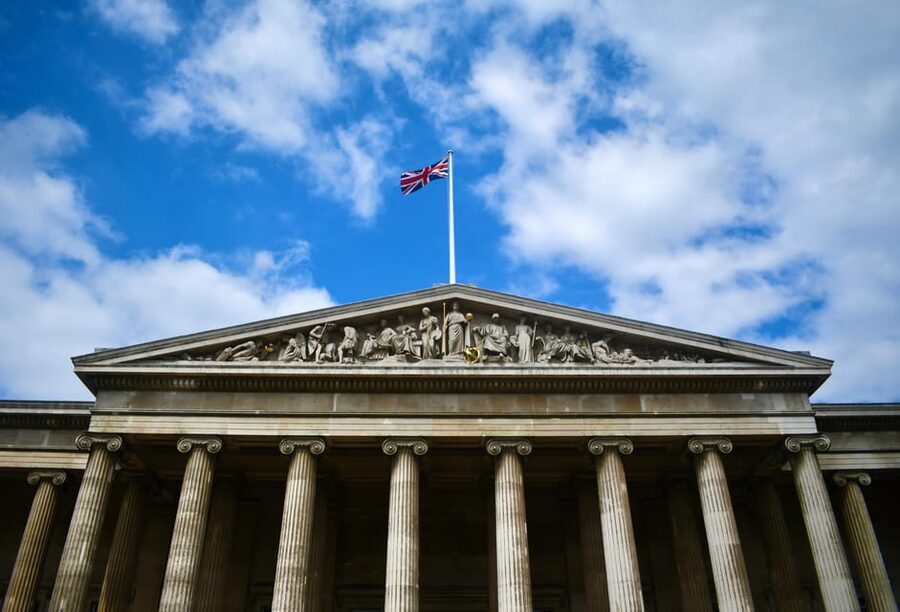
The tour lives or dies by the guide. And in this case, you are in a strong position. Many guide names come up with praise for energy, clear storytelling, and pacing that actually works in a museum this big.
A few examples from past experiences:
- Joe is repeatedly described as excellent with kids, communicating clearly, and keeping the group moving efficiently.
- Denise shows up as a favorite for explanations that feel fun and straightforward, and for guiding people smoothly through highlights.
- Paul gets credit for friendliness, strong communication, and being able to work around museum closures while keeping the tour on track.
- Dionysia stands out for tailoring explanations to a teenage daughter who did not want to go, with the tour engaging her by the end.
- Filomena is praised for a fun, engaging explanation style that keeps the 2-hour format from feeling rushed.
- Selena, Chiara, Andi, and Daniel also receive strong mentions for clarity, humor, and making artifacts feel connected to bigger stories.
Here’s the practical takeaway for you: if you care about more than just seeing objects, you want a guide who can connect the dots quickly. This tour’s best versions do that, and it is why many guests say it was worth it compared with trying to navigate the museum alone.
Balanced note: some people wished the guide spent a little less time talking about the museum itself and more time letting them stare longer at specific exhibits. That is a normal tradeoff for a 2-hour itinerary, and it can be eased by planning a follow-up self-guided lap afterward.
What the 2-Hour Route Feels Like on the Ground
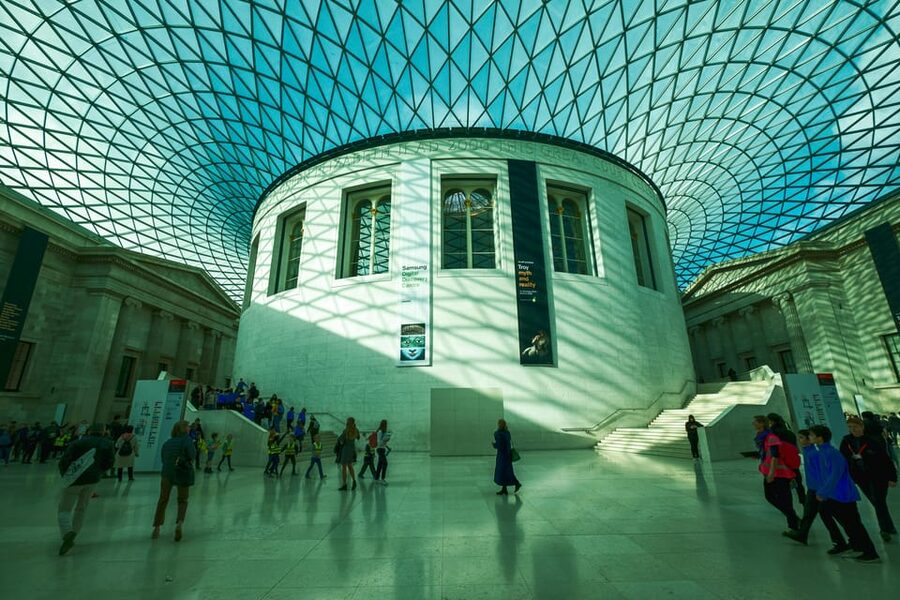
Two hours sounds short, but the tour is built for that reality. You get:
- a tailor-made highlight route that focuses on the most remarkable parts of the public museum
- a sequence that moves through major anchors: Great Court, Rosetta Stone, and then Egypt and other key collections
You’ll likely walk steadily, not sprint. Guides repeatedly get praised for efficient timelines and clear communication about what to see next. Also, headsets are provided for larger groups, which helps you hear the commentary without crowding or shouting across shoulders.
One detail worth knowing: the tour offers commentary in multiple languages. The listing specifies English plus other options, and headsets are used for groups over 6 people. In other words, even when your group includes different language needs, the setup is designed to keep everyone oriented around the same stops.
If you are sensitive to crowds, plan to be patient at the entrance. The museum can have long lines, and a tour start sometimes feels like it begins inside a queue. Once you are inside, though, a guide can make the time feel productive instead of stuck.
Logistics That Matter: Meeting Point, No Transportation, and What to Bring
This tour is about the museum experience, not getting you there. Transportation is not included, so you’ll want to arrive on your own using whatever method you prefer for central London.
The meeting point may vary depending on the option booked, so you should check the exact instructions attached to your reservation before you leave your hotel. Some stress can come from missing the precise location, and the British Museum area can be busy.
A few other practical notes based on the tour description:
- The guide is described as licensed, with live commentary in English and Italian.
- The tour is wheelchair accessible, which is helpful for anyone needing step-free navigation.
- Duration is 2 hours, so it fits well into a packed day in London.
What I recommend you bring:
- Your usual museum essentials, like a bottle of water and comfortable walking shoes.
- A way to read your meeting-point instructions quickly, like checking your phone before you enter the crowd.
Should You Book the British Museum Guided Tour?
Yes, you should book this tour if you want to:
- see the museum’s major highlights without getting lost
- get context on the Rosetta Stone and the Egypt galleries
- understand why the Elgin Marbles stop matters, not just that it exists
- handle a huge museum in a 2-hour time window with a guide shaping your route
Skip it only if your top priority is slow, gallery-by-gallery wandering with no structure. If you want that, you might do better with a self-guided plan plus a quick visit to the Great Court on your own.
One final decision tip: if you are traveling as a family or bringing someone who usually avoids museums, this format has the best chance of winning them over. The strongest versions of this tour are guided like a story, with enough standout artifacts to keep everyone looking up from their phone.
FAQ
How long is the British Museum guided tour?
It lasts 2 hours.
How much does the tour cost?
The price is $23 per person.
What is included in the tour?
You get a guided tour, commentary in English, German, French, Spanish, Italian, Russian, and Portuguese, and headsets for more than 6 people.
Is transportation included?
No. Transportation is not included.
What languages are the live guide and commentary offered in?
The live tour guide is listed in English and Italian, and the commentary is listed in English, German, French, Spanish, Italian, Russian, and Portuguese.
Is the tour wheelchair accessible?
Yes. The tour is wheelchair accessible.
What is the cancellation window?
The details show free cancellation up to 24 hours in advance for a full refund, and also state that bookings can be cancelled up to 72 hours prior to the tour with no penalty, with no refund after that time. Check your option at booking time to see which policy applies.
Museums and Galleries, Keep Going
- Frameless – Immersive Art Experience in London★ 4.5 · 3,660 reviews
- London: Entry Ticket to Frameless Immersive Art Experience★ 4.7 · 2,923 reviews
- Official tickets: Moco Modern & Contemporary Art Museum★ 4.5 · 1,157 reviews
- British Museum London Guided Tour Semi-Private 8ppl Max★ 5.0 · 984 reviews
Fresh off the London review pile





London Museums & Galleries, compared.
 ★ 4.5Frameless – Immersive Art Experience in LondonFrom $383,660 reviews
 ★ 4.7London: Entry Ticket to Frameless Immersive Art ExperienceFrom $372,923 reviews
 ★ 4.5Official tickets: Moco Modern & Contemporary Art MuseumFrom $361,157 reviews
 ★ 5.0British Museum London Guided Tour Semi-Private 8ppl MaxFrom $108984 reviews
 ★ 4.1London: Tour of the British MuseumFrom $14678 reviews
 ★ 4.5London: British Museum Audio Tour & Priority Entrance TicketFrom $9631 reviews
 ★ 5.0The British Museum London – Exclusive Guided Museum TourFrom $108555 reviews
 ★ 4.2Afternoon Tea at the British MuseumFrom $58511 reviews
Also filed under