
REVIEW · MANCHESTER & THE PEAK DISTRICT
Manchester Afternoon Walking Tour
Manchester can feel big and noisy if you arrive cold. This afternoon walk turns that feeling into easy orientation and a clean route through the center. I like how it strings together people, politics, industry, and pop culture in a tight loop, and I also like that you get a small-group human-sized pace with real guide commentary.
The itinerary is a true walking tour with plenty of stops, so if you hate standing and moving, plan for a workout. Also, a few places note admission not included, so budget for any paid entries only where required.
The best part is the vibe: guides like Gareth bring facts with humor, keep the story moving, and throw in practical food and drink ideas for after the tour. It’s a smart way to spend a limited afternoon without wasting time guessing where to go next.
In This Review
- Key Things That Make This Manchester Walk Worth It
- Price and What You Actually Get for About $24.27
- Where You Start (and Why It’s a Good First Move)
- From Manchester Central Library to Emmeline Pankhurst: Civic Manchester in Plain Language
- The Manchester Central Complex and the Downtown Core
- The Ship Canal Walk: Where Manchester’s Built Past Becomes a Stroll
- Palace Theatre, 39 Sackville Street, and Vimto: Pop Culture With Local Teeth
- Sackville Gardens and the Gay Village Heart
- Alan Turing Memorial: Tech Symbol in the Middle of the City
- Chinatown and Manchester Art Gallery: Food, Faces, and Creativity
- War Memorials and the Squares: Respectful, Not Heavy
- St Anne’s RC Church and Saint Anns Square: The City’s Old Layers Still Visible
- Royal Exchange Theatre and the Wayfinding Benefit
- The Shambles, Corn Exchange, and Manchester Cathedral: Old Buildings That Set the Tone
- Chetham’s Library: A Real Time Capsule Stop
- National Football Museum and AO Arena: Sport and the Modern Story
- Tips for Staying Comfortable on a Non-Stop Walking Route
- Should You Book This Afternoon Manchester Walking Tour?
- FAQ
- What time does the Manchester Afternoon Walking Tour start?
- How long is the tour?
- Where do I meet for the tour?
- Where does the tour end?
- How much does the tour cost?
- What language is the tour offered in?
- Is there a mobile ticket?
- How large is the group?
- Are service animals allowed?
- Is the tour dependent on weather?
Key Things That Make This Manchester Walk Worth It
- Small-group feel: capped at 25, and it often runs with a tight group size.
- A guide with a story: Gareth is praised for humor, clear explanations, and smart answers.
- Lots of famous stops in 2.5 hours: you cover the core fast, yet you still get context.
- Free sights are built in: many stops are free, with only a handful flagged as admission not included.
- Industry to identity: the route connects canals, theaters, community spots, and tech symbolism.
- A good rain plan: it’s designed for a standard afternoon loop, and weather can be managed.
Manchester on foot, Peak days too
- The Manchester City Stadium Tour
★ 5.0 · 4,176 reviews - Manchester: Canal & River Cruise
★ 4.4 · 3,761 reviews - Etihad Stadium: The Manchester City Stadium Tour
★ 4.8 · 3,096 reviews
Price and What You Actually Get for About $24.27
This tour costs $24.27 per person for roughly 2 hours 30 minutes, which is a fair price for central Manchester. The value comes from two things: the sheer number of major stops you touch in a short window, and the way the guide ties them together so you leave with an actual sense of how the city developed.
You also get a mobile ticket, the tour runs in English, and you get a specific bonus: a list of 101 things to do in the city. That matters because Manchester can be hard to plan when you are short on time. Instead of only seeing landmarks, you come away with a menu of next steps.
Bottom line: you are paying for route planning and guided context, not for luxury or transport. If you like walking and you want a practical introduction, the price makes sense.
Where You Start (and Why It’s a Good First Move)
You begin at Manchester Central Library in the city center, with a 2:00 pm start. Ending on Cathedral Street keeps you near more historic sights, so your last part of the tour naturally leads into further exploring.
Starting at a big, central landmark is a smart move. It helps you orient quickly, and it puts you in the middle of the action instead of trekking across town just to begin. The meeting point is also described as being near public transportation, which helps if you are arriving from elsewhere.
In the real-world experience, people say it is easy to find the guide, with Gareth specifically mentioned. That small detail makes a big difference when you are doing a walking tour after lunch.
From Manchester Central Library to Emmeline Pankhurst: Civic Manchester in Plain Language
The first stops set the tone: start with institutions and people, then connect that to the streets.
Manchester Central Library is your kickoff. Even if you only spend about 10 minutes, it is a useful anchor because libraries represent education, civic priorities, and Manchester’s self-image as a working, learning city.
Next you visit the Statue of Emmeline Pankhurst. The highlight here is the suffragist story. Expect the guide to explain why this matters in Manchester, not just recite names and dates. This is one of those moments where you see how activism shows up in the built landscape.
Then you move toward culture through the Bridgewater Hall, home of the Halle Orchestra. Admission there is not included, so treat this as a strong visual and narrative stop. Even without paying, it helps you understand that Manchester is not only industry and football. It is music and performance too.




The Manchester Central Complex and the Downtown Core
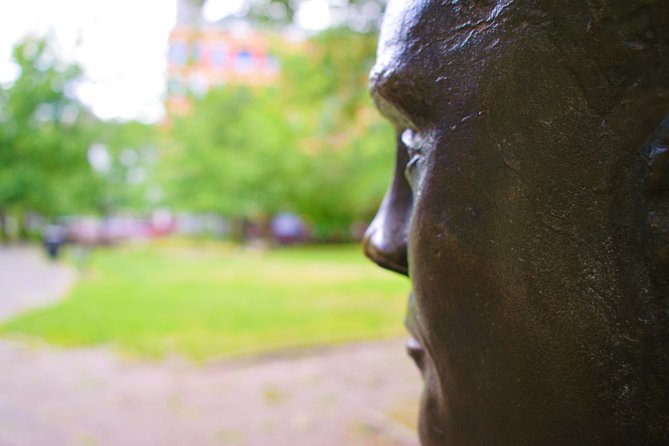
After the early civic stops, you hit Manchester Central, another quick 10-minute segment that keeps the pace moving. This part of the walk is about recognizing what kind of city center Manchester has been building over time.
These middle stops matter because they stitch the tour into one coherent loop. Instead of jumping randomly from landmark to landmark, you are gradually mapping the city’s “why” onto the “what.”
You will also hear commentary that helps you place neighborhoods and buildings in context. People praised how the guide kept the narrative flowing and answered questions without losing the thread.
The Ship Canal Walk: Where Manchester’s Built Past Becomes a Stroll
One of the most practical sections is the Manchester Ship Canal stop, flagged as admission included. This is your chance to walk through the route connected to the canal idea, including a reference to the first man-made canals.
Why this is valuable: canals are not just pretty water features. In a city like Manchester, they connect trade, industry, labor, and how goods moved. When a guide points this out, the canal stop becomes more than a photo stop. It becomes a story you can picture.
This is also the kind of stop that improves your later independent exploring. Once you understand the canal logic, lots of nearby streets and buildings start to make more sense.
Palace Theatre, 39 Sackville Street, and Vimto: Pop Culture With Local Teeth
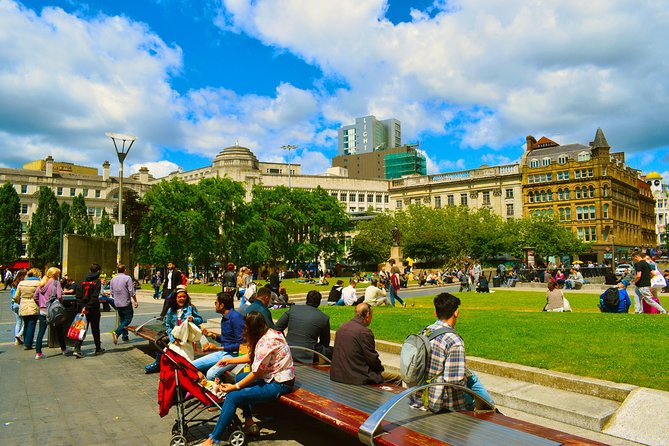
Next you swing into entertainment and local favorites.
The Palace Theatre stop is about 10 minutes and has admission marked as not included. Even if you do not go inside, it gives you a taste of Manchester’s performance culture.
Then you reach 39 Sackville St, described as one unique place dedicated to a drink. That shift from civic and industry into everyday pleasures is on purpose. It reminds you this is not a museum city. People live here, eat here, drink here, and gather here.
The walk continues with the Vimto sculpture, where admission is included. Vimto is a major Manchester identity marker, and this is the sort of stop that makes locals nod and first-timers grin. Expect the guide to frame why a drink becomes part of the city story.
Sackville Gardens and the Gay Village Heart
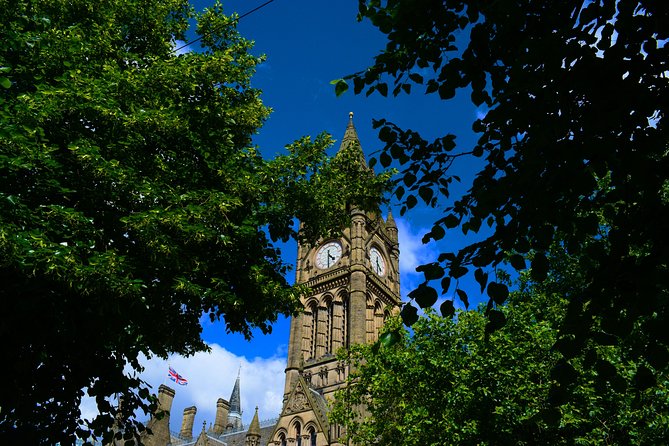
The tour’s “colorful and rainbows everywhere” moment lands around Sackville Gardens, described as the green heart of the gay village. Admission is included here.
This stop is worth your attention even if you are not specifically seeking LGBTQ+ history. Why? Because it shows how Manchester makes room for community life in the city center. You see how public space functions, not only what buildings look like.
It also helps balance the tour. After political and industrial talk, you get a human-scale neighborhood feel, with the kind of atmosphere you would otherwise miss if you only focused on the big-ticket attractions.
Alan Turing Memorial: Tech Symbol in the Middle of the City
The Alan Turing Memorial is a 10-minute stop and described as linking Turing to the early computing story and the Enigma code. Admission is free here.
Even with a short stop, this works because it breaks the usual “only politics and monuments” tour pattern. It also signals Manchester’s modern identity, not just Victorian-era or war-era themes. You get to connect the dots between the city you are walking through and the one that shaped technology.
If you like science or modern history, this is one of the quieter stops that still feels meaningful.
Chinatown and Manchester Art Gallery: Food, Faces, and Creativity
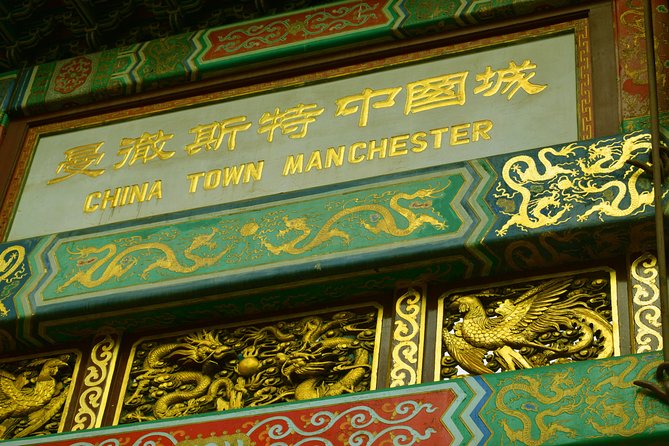
Next, the tour heads to Chinatown, described as the second largest in the UK and with admission included. This is a quick 5-minute stop, but it is timed well. After a long stretch of city stories, Chinatown gives you a clear sensory shift.
Right after that, you reach Manchester Art Gallery for about 15 minutes, and admission is included. This is another “smart pacing” choice. You get a place where art can act like a lens for everything else you just heard.
If you are the kind of person who wants your art with context, this stop is a good one. And if you prefer to keep moving, the guided time still gives you a direction for what to notice.
War Memorials and the Squares: Respectful, Not Heavy
Then the route turns toward remembrance and civic space.
You visit the Manchester Cenotaph (about 5 minutes, free). After that, you move through Albert Square (about 10 minutes, free), including the feeling that it is a central stage for events.
Stops like these can feel overly solemn if a guide keeps them too factual. Here, the advantage is that the tour keeps you moving with clear commentary, so you are not stuck in one place for too long. The structure makes remembrance part of the city story, not a detour from it.
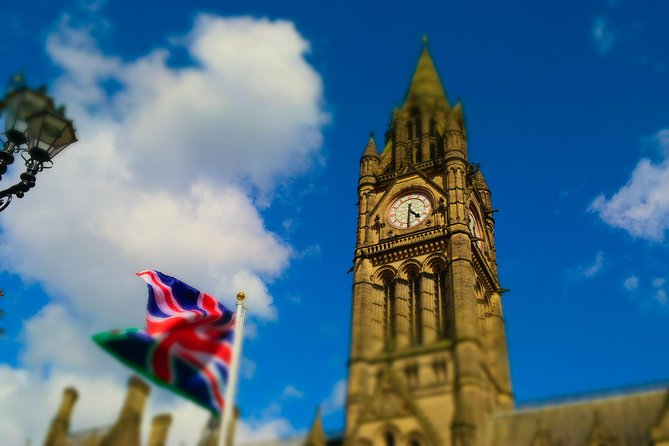
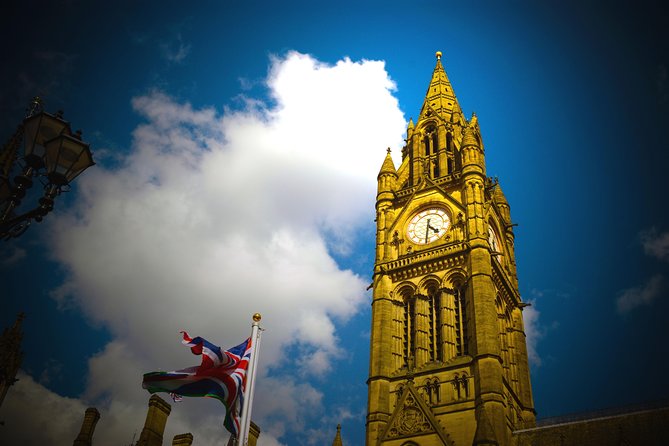
You also hit Albert Memorial and Manchester Town Hall, each listed as admission not included. Even without a paid entry, these are the kinds of buildings that change how you read the city center. They look like power, governance, and ambition, and the guide helps you place that meaning.
St Anne’s RC Church and Saint Anns Square: The City’s Old Layers Still Visible
A short walk brings you to St Anne’s RC Church, Manchester (about 5 minutes, free). Then you continue to Saint Anns Square (about 10 minutes, free).
This section is a nice reminder that Manchester does not just do modern glass and big venues. It also has older religious architecture and smaller public spaces with history built into the layout.
These stops work well for first-timers because you start to spot patterns. A city center is not only about famous attractions. It is also about where people gathered, worshipped, and lived their routines.
Royal Exchange Theatre and the Wayfinding Benefit
You then reach the Royal Exchange Theatre for about 10 minutes, with admission marked as included. It’s a meaningful stop because it sits at the intersection of old and modern city function.
After a walking loop like this, one of the biggest benefits is simple: you stop feeling lost. People liked how the tour helped get their bearings fast, and that is exactly what you get when a guide walks you through a concentrated downtown zone with landmarks spaced sensibly.
A good guide also gives practical after-tour suggestions. In particular, Gareth is praised for food and drink recommendations at the end, which turns the tour into a planning tool, not just a guided history lesson.
The Shambles, Corn Exchange, and Manchester Cathedral: Old Buildings That Set the Tone
Now you hit the older core.
The tour includes The Shambles, noted as the oldest buildings in the city centre of Manchester, with about 10 minutes there and admission not included. This stop is about texture: older streets and tighter urban geometry that make you feel how city life used to move.
After that, you visit Corn Exchange Manchester, about 10 minutes, and it is described as completely remade. Admission is not included, so expect the focus to be more on what changed and what that says about Manchester’s modern needs.
You also pass an “old newspaper factory” moment as part of the route. Since the specific name is not provided here, I would treat it as a guided clue: listen for what the guide connects it to, because these industrial media stories often explain why Manchester became such a major publishing and information hub.
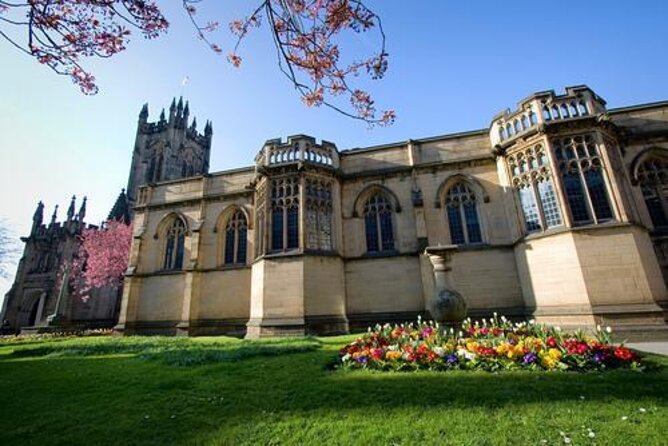
Then you reach Manchester Cathedral (about 10 minutes, free). This is a classic stop that often delivers on mood alone, even when the time is short. It is also a strong transition to the next library stop.
Chetham’s Library: A Real Time Capsule Stop
The tour ends up at Chetham’s Library for about 10 minutes, described as the oldest public library in the English-speaking world. Admission is free.
This stop feels different from most tourist attractions. It is less about spectacle and more about atmosphere and continuity. Even if you only have a short guided visit, you get to see a city institution that has lasted, and you get why people care about places that keep their original role.
One reason this matters for value: you are not spending all your time on modern venues. You are getting at least one “this still matters” location that gives Manchester depth beyond quick impressions.
National Football Museum and AO Arena: Sport and the Modern Story
The later part of the tour includes National Football Museum (about 5 minutes, admission not included) and AO Arena (about 5 minutes, admission not included). This is where the tour acknowledges that Manchester’s modern identity runs through sport and major venues.
Even without paid entry, these stops do two things. They connect Manchester to a global audience, and they show that history here includes recent public moments too, not only centuries-old architecture.
This section is short by design. It keeps the afternoon from dragging, and it leaves you with two options after the tour: either return for deeper museum time, or use what you learned to plan a match-day or venue visit later.
Tips for Staying Comfortable on a Non-Stop Walking Route
A few practical points will make this afternoon tour feel easy.
First, wear comfortable shoes. People specifically recommend that, and the route is a steady walking loop with standing at stops. The tour is not built like a slow museum stroll.
Second, plan for cold or rain if you are going in winter months. One review warned that January is cold and suggested packing warm clothes and an umbrella. Since weather can be part of the day, bring gear that keeps you upright and warm.
Third, consider your energy level. Some guidance is direct: the tour is non-stop walking and standing, and it may include a few steps. If you have mobility limitations or you are traveling with young children, think carefully before booking.
Should You Book This Afternoon Manchester Walking Tour?
Book it if you want a fast, guided way to get your bearings and learn how Manchester became Manchester. This tour is especially good for first-timers, people with limited time, and anyone who likes walking routes that link major themes together.
Do not book it if you hate standing and moving for long stretches, or if you need frequent long sit-down breaks. Also, if paid entry attractions are a top priority for you, note that some stops list admission as not included, so your final spend may depend on what you choose to do inside.
If you are on the fence, my take is simple: this is strong value for a 2.5-hour loop built around landmarks you will actually want to revisit later. Add the 101-things list to the mix, and you get a tour that does more than point and tell. It helps you plan your next hours in Manchester with less guesswork.
FAQ
What time does the Manchester Afternoon Walking Tour start?
It starts at 2:00 pm.
How long is the tour?
The duration is approximately 2 hours 30 minutes.
Where do I meet for the tour?
The meeting point is Manchester Central Library, Manchester M2 5PD, UK.
Where does the tour end?
The tour ends at Cathedral Street, Manchester M3 1SW, UK.
How much does the tour cost?
The price is $24.27 per person.
What language is the tour offered in?
The tour is offered in English.
Is there a mobile ticket?
Yes, the tour includes a mobile ticket.
How large is the group?
The tour has a maximum of 25 travelers.
Are service animals allowed?
Yes, service animals are allowed.
Is the tour dependent on weather?
Yes. It requires good weather, and if it is canceled due to poor weather, you will be offered a different date or a full refund.
Manchester and the Peaks
- The Manchester City Stadium Tour★ 5.0 · 4,176 reviews
- Manchester: Canal & River Cruise★ 4.4 · 3,761 reviews
- Etihad Stadium: The Manchester City Stadium Tour★ 4.8 · 3,096 reviews
- From Manchester: North Wales, Snowdonia, and Chester Tour★ 4.8 · 1,577 reviews
Fresh off the Manchester review pile






Manchester & the Peak District, compared.
 ★ 5.0The Manchester City Stadium TourFrom $354,176 reviews
 ★ 4.4Manchester: Canal & River CruiseFrom $163,761 reviews
 ★ 4.8Etihad Stadium: The Manchester City Stadium TourFrom $353,096 reviews
 ★ 4.8From Manchester: North Wales, Snowdonia, and Chester TourFrom $1021,577 reviews
 ★ 4.4Manchester: National Football Museum Admission TicketFrom $201,243 reviews
 ★ 5.0Alcotraz Prison Cocktail Experience in ManchesterFrom $701,216 reviews
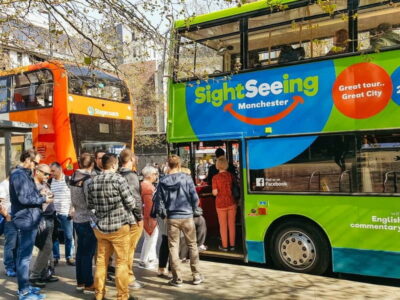 ★ 4.1Manchester: Sightseeing Bus TourFrom $181,204 reviews
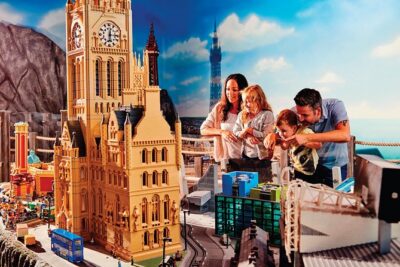 ★ 4.0LEGOLAND Discovery Centre ManchesterFrom $221,049 reviews
Also filed under