
REVIEW · GLASGOW TOURS
Merchant City Music Walking Tour of Glasgow
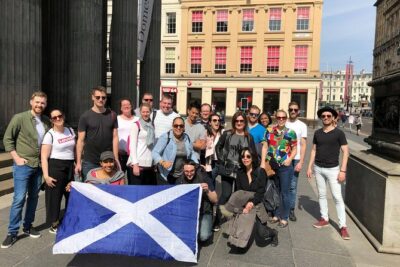
Glasgow’s music story is on your feet. This 2-hour Merchant City walk turns the streets into a soundtrack, with local music writers as guides who connect venues to the musicians and moments that shaped the scene. I loved the small-group pace, which keeps it intimate and still leaves time for photo stops and one comfort break. One thing to plan for, Britannia Panopticon may not be accessible right now, so you’ll hear the venue’s history without being inside.
You might meet guides such as Fiona, an arts journalist with a strong love for Glasgow and its musicians, or Phil, who blends music culture with sharp city context. The tour runs in English with a mobile ticket, and it operates in all weather, so you’re not relying on perfect skies to get value.
At $27.08 per person, this is a solid spend if you want a focused hit of the Glasgow music world fast. It also includes a voucher for 20% off food at Mono Cafe Bar, which is handy if you are planning lunch or an early bite after the walk.
In This Review
- Key highlights worth planning around
- Why this 2-hour Merchant City music walk is such good value
- Getting oriented: meet near Bridgegate, start at 11:00, stay weather-ready
- Stop 1: The Clutha Bar murals and the Glasgow live-music mood
- Stop 2: Britannia Panopticon Music Hall, stories with no inside access
- Stop 3: City Halls and Old Fruitmarket, where The Stranglers changed the mood
- Stop 4: Tron Theatre and the Hellfire Club connection
- Stop 5: Barrowland Ballroom, Glasgow’s beloved gig engine
- Stop 6: Barrowland Park artwork and big-name stories
- Stop 7: St Andrews in the Square, from 18th-century church to live music room
- Stop 8: Finish at King Street, theories about why Glasgow’s scene is so its own
- Pace, photos, and what to expect from the guide style
- Price and value: who gets the most out of $27.08
- Who should book, and who might skip it
- Should you book this Glasgow Merchant City music walk?
- FAQ
- How long is the Merchant City Music Walking Tour of Glasgow?
- What does the tour cost per person?
- What time does the tour start, and where does it meet?
- Where does the tour end?
- Is the tour offered in English?
- Does the tour run in bad weather?
- Is there a comfort break during the walk?
- Will Britannia Panopticon Music Hall be accessible during the tour?
- What is included with the ticket besides the tour?
- Is free cancellation available?
Key highlights worth planning around
- Local music writers guide the story with venue-to-artist context that feels grounded, not scripted
- Small group size (up to 26) helps you ask questions and stay on the same page
- A tight 2-hour route focused on major stages and the streets between them
- Comfort break built into the flow, so you can keep moving without rushing
- Britannia Panopticon may be closed, but the tour still delivers the backstory
- Mono Cafe Bar discount included, a small perk that can offset the ticket
Still comparing? These Glasgow tours came out well in our reviews too.
- Guided Celtic Park Stadium Tour
★ 5.0 · 3,136 reviews - From Glasgow: Oban, Glencoe, Highland Lochs & Castles Tour
★ 4.9 · 2,123 reviews - City Sightseeing Glasgow Hop-On Hop-Off Bus Tour
★ 4.5 · 1,873 reviews
Why this 2-hour Merchant City music walk is such good value
This tour works because it treats music like local culture, not just famous names. You walk a compact stretch of Glasgow, but you leave with a clearer map of how venues, neighborhoods, and scenes feed each other.
The price, $27.08, makes sense when you look at what you’re getting. You are not paying for transportation or a museum-style lecture. You are paying for a tight run of storytelling across several real performance spaces, led by people who live and write about music.
It is also designed for people who want context without committing to a whole day. If you have limited time in Glasgow, this is the kind of experience that helps everything else click, even if your musical tastes lean indie, punk, classic pop, or straight-up live-music fans.
Getting oriented: meet near Bridgegate, start at 11:00, stay weather-ready
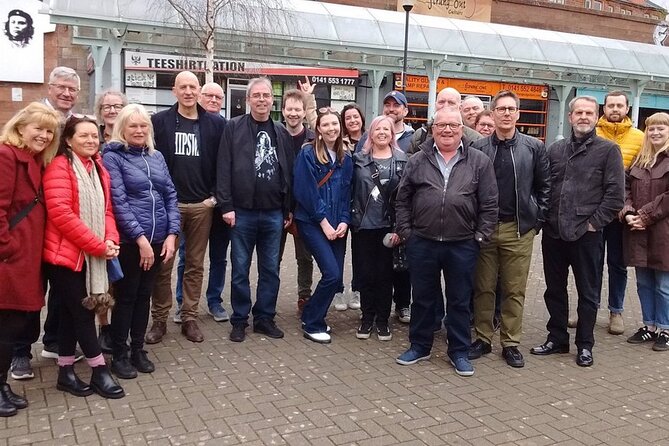
The walk starts at Clutha & Victoria Bar (159 Bridgegate, Glasgow G1 5HZ). It ends on King Street, near King St in the city center. Start time is 11:00 am, and the best move is to arrive about 10 minutes early so you are not standing around while the group gathers.
You will be outdoors, so dress for Glasgow weather. The tour runs in all conditions, which is great if your trip is limited, but you should bring a rain layer if clouds look suspicious.
Group size caps at 26, and that matters more than you might think. Smaller groups mean you are more likely to actually hear the details, especially in tighter streets and around mural-covered walls where people want to stop for photos.
Stop 1: The Clutha Bar murals and the Glasgow live-music mood
Your first stop is The Clutha Bar, a Clydeside live-music pub that locals love. The standout here is the wall art. Murals cover the space with visuals that reflect how wide the city’s music scene has been across the years.
This is a smart opening because it sets tone. Instead of starting with dates and big-name charts, you start with what you can see right away. You get the sense that Glasgow treats music like part of the everyday city identity, not something separate that happens only on stage nights.
It is also an easy, low-pressure first stop. There is no heavy climbing, and it is a good place to settle in and get your bearings for the route ahead. Admission for this stop is listed as free, so you are not adding extra costs early on.
More of Glasgow and what leaves from it

Stop 2: Britannia Panopticon Music Hall, stories with no inside access
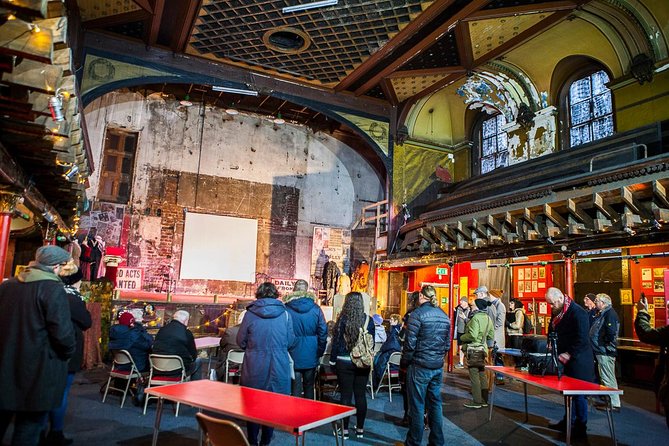
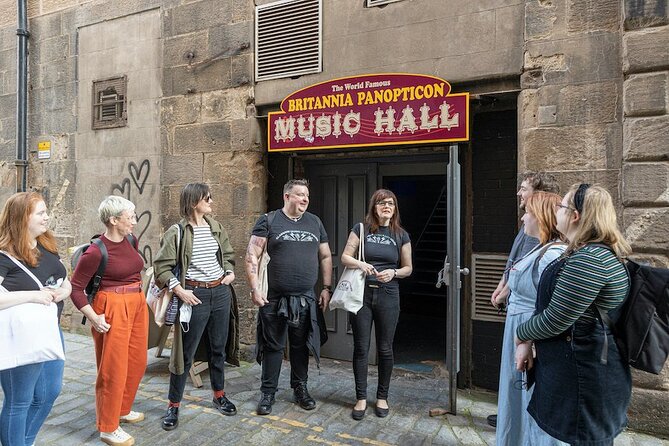
Next up is Britannia Panopticon Music Hall, described as Britain’s oldest surviving music hall and still a working venue. You also learn why it carries weight: it hosted Scottish performers like Harry Lauder, and it has stories tied to performers ranging from Cary Grant to Stan Laurel.
Here is the practical catch. Due to Covid, the tour notes that you do not have access to Britannia Panopticon right now. That means you may be watching from the outside while your guide brings the place to life through stories.
Even without entry, this stop is valuable because it anchors the whole tour in a real music-history place. You can connect the present day Glasgow gig experience to a building that kept the tradition alive through changing eras.
If you are the type who wants to photograph doorways and facades as much as interiors, you’ll likely enjoy this stop. If you need to go inside specific venues to feel satisfied, plan for the fact that this one may stay behind the scenes.
Stop 3: City Halls and Old Fruitmarket, where The Stranglers changed the mood
Then you move to City Halls and Old Fruitmarket, locations linked to major gigs. One of the most memorable connections is with The Stranglers concert, which helped lead to punk rock being banned in Glasgow.
That detail matters because it turns a music-story into a city-story. You are not just hearing about bands. You are seeing how public reaction, rules, and cultural tension shaped what got played, where it got played, and how scenes developed afterward.
This stop also makes a good mid-tour reset. It is time-efficient, and it helps you look at the area with fresh eyes. Once you know that this spot has held “this mattered” moments, it stops feeling like generic city-center architecture.
Admission is listed as free, so you can focus on listening. Take a moment to look around before your guide moves you along, since some of the best observations are the ones you catch while you’re scanning the scene.
Stop 4: Tron Theatre and the Hellfire Club connection
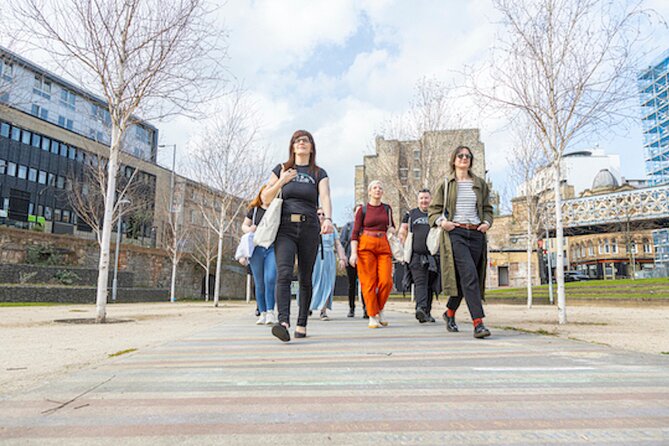
At Tron Theatre, the tour shifts from gig lore to the kind of building history that makes you pause. Today it is a leading theatre and concert venue, but the past includes a devastating date with the notorious Hellfire Club.
Why this works for a music walk: it reminds you that venues often live inside older stories. Glasgow does not treat the stage as a separate world. The stage is built on land and legends that existed before the next band took over the spotlight.
This stop is brief, about five minutes. Use that time to do two things. First, notice the exterior details your guide points out. Second, remember that even when you cannot go inside, the building itself is part of the performance story.
Stop 5: Barrowland Ballroom, Glasgow’s beloved gig engine
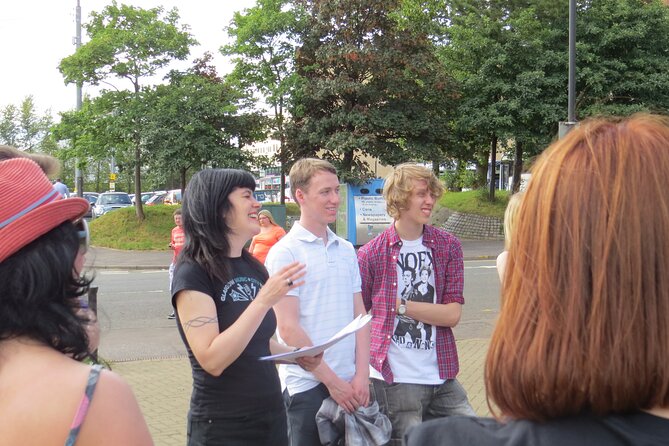
When you reach Barrowland Ballroom, you are in the part of the walk that feels most like a direct line to modern live music. This is a much-loved venue for Glasgow gig-goers, and its history is described as colorful.
This stop is one of the anchors of the tour because Barrowland Ballroom is the kind of place people talk about with real affection. You get stories about the vibe, and you also get a sense of why the ballroom matters in Glasgow’s music identity.
Practical tip: this is usually where you want to slow down for photos. The building and street feel are both part of the experience, and you’ll likely want at least a couple of angles to capture Glasgow’s “people gather for music” energy.
Admission is listed as free, so your cost stays focused on the tour ticket rather than add-on venue fees.
Stop 6: Barrowland Park artwork and big-name stories

From the ballroom area you head to Barrowland Park, plus Barrowland Pathway artwork. This is where acts get highlighted visually, and your guide ties those visuals to stories about many big names.
The walk mentions examples including The Smiths, Simple Minds, David Bowie, and Bob Dylan. You do not need to know every band to enjoy this stop, because the point is pattern recognition: Glasgow has a habit of drawing and amplifying artists, then reflecting that back into the streets.
This section feels like the tour’s “show me” moment. Instead of hearing only how the scene evolved, you see artwork that points to the evolution in real time.
If you like music memorabilia but do not want to spend time in shops, this is a great swap. It is city art connected to live performance, not a detached souvenir display.
Stop 7: St Andrews in the Square, from 18th-century church to live music room
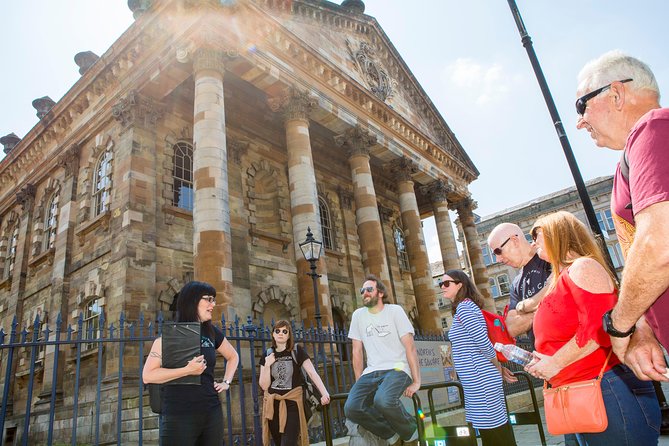
Next is St Andrews in the Square – Glasgow, an 18th-century church that has been turned into a live music venue. The contrast is part of the fun. A building that once held religious gatherings now hosts concerts and connects to the bigger cultural history of Scotland.
This stop helps you understand how Glasgow uses space. Music venues are not always purpose-built. Sometimes they are repurposed buildings with decades of atmosphere, and your guide helps you see what that transfer means for the sound, the crowd, and the feel of the night.
It is a short stop, about five minutes, but it usually lands well because it gives you variety. Up to this point you have leaned heavily toward classic music halls and gig landmarks. Here you get the “church-to-concert-room” story, which adds another layer to how Glasgow music lives in everyday places.
Stop 8: Finish at King Street, theories about why Glasgow’s scene is so its own
Your tour ends on King Street, around King’s Court, where your guide shares theories about why Glasgow developed such a unique music scene. You also hear about specific labels and venues connected to the modern ecosystem, including Postcard Records, The 13th Note, and Mono Bar.
This ending is more than a last stop. It helps you connect the dots from the earlier venues to the present day. After walking the circuit, you start to understand the “why” behind the “what,” even if you came in mainly chasing a few iconic names.
Also, this is where the discount voucher becomes practical. The included voucher gives you 20% off food at Mono Cafe Bar, so you can turn the tour into a light meal plan without scrambling for a place.
Pace, photos, and what to expect from the guide style
The walking is described as easy, and you can plan for about two hours on foot. You will not be racing across town, but you should expect regular movement between stops rather than long stays at any one place.
A comfort break is part of the experience, so you do not have to invent a solution midway. Still, bring water if you are sensitive to dry air or long walks, and wear shoes you like for uneven pavement.
What makes the tour stand out in the reviews is guide energy and clarity. Fiona is highlighted for deep knowledge and a strong love for Glasgow’s musicians, and Phil is praised for sharing info not only about music culture but also about the city itself. That blend matters because it helps you understand Glasgow as a place, not just a set of concert locations.
One more upside: the tour is praised for photo points. That means you should plan to pause and let your guide steer you toward angles and details you might miss on your own.
Price and value: who gets the most out of $27.08
This tour is best value if you match the vibe:
- You like live music and want to understand where it comes from in a city
- You enjoy walking tours when the stories connect to real landmarks
- You want a compact, curated route without spending hours researching
If you want a museum-like experience with lots of indoor access to specific venues, you may feel less satisfied because Britannia Panopticon may not be open to visitors right now. The tour compensates with storytelling, but it is still worth considering if inside access is a must for you.
For everyone else, the combination of multiple major sites, local guide storytelling, and the included Mono Cafe Bar discount makes the ticket feel like a smart shortcut.
Who should book, and who might skip it
Book it if this is your kind of trip: you’re in Glasgow for a short time, you care about how music scenes form, and you prefer walking with a narrative to reading about it later.
You might skip it if you cannot handle regular walking for about two hours, though the tour notes that most travelers can participate and you can contact the operator to discuss mobility issues. Service animals are allowed, which is good news for many visitors.
Also, if you are traveling at a high pace and hate scheduled stops, this may feel more structured than you want. But if you like a guided sequence, it’s ideal.
Finally, it is a popular tour. The average booking window is about 25 days in advance, so give yourself time to lock in the day that fits your schedule.
Should you book this Glasgow Merchant City music walk?
Yes, if you want Glasgow music culture explained through the actual places where it happens, this is a strong choice. For $27.08 you get a tight circuit of iconic and meaningful venues, guided by local music writers, plus the chance to turn your walk into a meal with a 20% discount at Mono Cafe Bar.
Consider a different plan only if you are specifically hoping to enter Britannia Panopticon right now. The tour still delivers the story either way, but if inside access is your top priority, check ahead.
FAQ
How long is the Merchant City Music Walking Tour of Glasgow?
The tour is about 2 hours.
What does the tour cost per person?
The price is $27.08 per person.
What time does the tour start, and where does it meet?
The tour starts at 11:00 am at Clutha & Victoria Bar, 159 Bridgegate, Glasgow G1 5HZ.
Where does the tour end?
It ends at King Street, King St, Glasgow.
Is the tour offered in English?
Yes, it is offered in English.
Does the tour run in bad weather?
It operates in all weather conditions, so you should dress appropriately.
Is there a comfort break during the walk?
You should expect an easier pace with about one comfort break during the roughly two-hour walk.
Will Britannia Panopticon Music Hall be accessible during the tour?
The tour notes that you do not have access to Britannia Panopticon due to Covid, but you will still hear its great stories.
What is included with the ticket besides the tour?
The ticket includes a voucher for 20% discount on food at Mono Cafe Bar.
Is free cancellation available?
Yes, you can cancel for free up to 24 hours in advance for a full refund.
Glasgow and Points West
- From Glasgow: Oban, Glencoe, Highland Lochs & Castles Tour★ 4.9 · 2,123 reviews
- City Sightseeing Glasgow Hop-On Hop-Off Bus Tour★ 4.5 · 1,873 reviews
- From Glasgow: Glenfinnan, Fort William, and Glencoe Day Trip★ 4.7 · 1,753 reviews
- From Glasgow: Loch Ness, Glencoe and the Highlands Tour★ 4.6 · 1,746 reviews
Fresh off the Glasgow review pile




Glasgow Tours, compared.
 ★ 4.9From Glasgow: Oban, Glencoe, Highland Lochs & Castles TourFrom $392,123 reviews
 ★ 4.5City Sightseeing Glasgow Hop-On Hop-Off Bus TourFrom $271,873 reviews
 ★ 4.7From Glasgow: Glenfinnan, Fort William, and Glencoe Day TripFrom $911,753 reviews
 ★ 4.6From Glasgow: Loch Ness, Glencoe and the Highlands TourFrom $651,746 reviews
 ★ 4.8Glasgow: Loch Ness, Glencoe and Highlands Tour with CruiseFrom $651,742 reviews
 ★ 5.0Oban, Glencoe, Highlands Lochs & Castles Small Group Day Tour from GlasgowFrom $501,432 reviews
 ★ 4.7From Glasgow: Loch Lomond, Trossachs & Stirling Castle TourFrom $711,397 reviews
 ★ 5.0Glasgow City Centre Walking Tour with Local GuideFrom $161,326 reviews