
REVIEW · PORTSMOUTH, SOUTHAMPTON & THE ISLE OF WIGHT
Small-group New Forest Discovery Walk from Lyndhurst
Heath, birdsong, and forest stories in two hours. This small-group walk out of Lyndhurst is a smart way to learn the New Forest up close, with expert wildlife guides like Marcus and Emily using what you see to explain how the Forest works. I love the slow, relaxed pace that still feels packed with facts, and I love how the route mixes panoramic views with old woodland so you’re not just watching from a distance. One drawback: it is wildlife watching and habitat learning, not a guarantee of specific animals on cue.
You start at the iconic Bolton’s Bench and head out for about 8 km at a moderate fitness level. The group stays small, up to 12 people, so questions land easily, and the guides have a talent for making nature feel personal, not academic.
In This Review
- Key highlights that make this walk worth your time
- Bolton’s Bench and The Ridge views, what you’ll notice first
- Denny Inclosure, ancient woodland under the canopy
- Commoning, ponies, and cattle, why people shaped the Forest
- Pondhead Inclosure and working coppice, a living woodland practice
- Wildlife surveyor style, from birdsong to fungi and invertebrates
- New Forest history on the trail, Parc Pale to wartime remnants
- Gear, pace, and practical walking tips for 8 km
- Price and value: is $23.30 fair for a 2-hour experience?
- Who should book this walk from Lyndhurst?
- Should you book the New Forest Discovery Walk from Lyndhurst?
- FAQ
- Where do I meet for the New Forest Discovery Walk from Lyndhurst?
- What time does the walk start?
- How long is the walk, and how far will we cover?
- How big is the group?
- What fitness level do I need?
- Are service animals allowed?
- Is a mobile ticket used?
- What happens if the weather is poor?
- Can I get a full refund if I cancel?
Key highlights that make this walk worth your time
- Bolton’s Bench and The Ridge views across heath and mire, with great angles for spotting birdsong.
- Denny Inclosure ancient woodland, where you get context for old trees and the wildlife they support.
- Commoning in action, plus how ponies and cattle have helped shape habitats for centuries.
- Working coppice at Pondhead Inclosure, a living forestry approach you can actually see.
- A wildlife surveyor style, from Dartford Warbler to fallow deer, wildflowers, fungi, butterflies, and invertebrates.
Other Solent days and island crossings
- Southampton: Post-Cruise Tour to London via Salisbury, Stonehenge and Windsor
★ 4.5 · 333 reviews - Guided Walking Tour of New Forest National Park in Hampshire
★ 5.0 · 31 reviews - Small-group New Forest Discovery Walk from Lyndhurst
★ 5.0 · 27 reviews
Bolton’s Bench and The Ridge views, what you’ll notice first
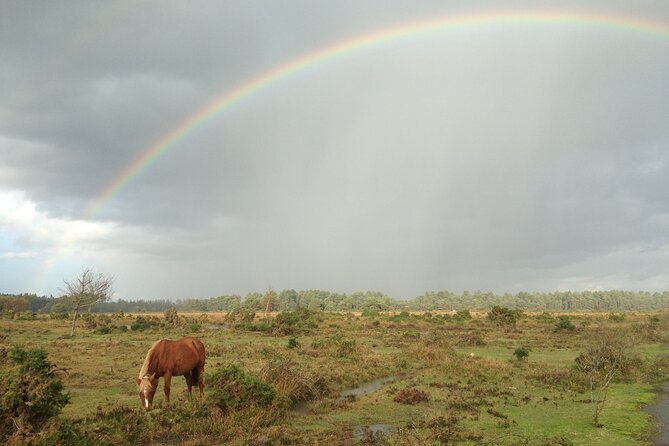
The morning begins at Bolton’s Bench in Lyndhurst, a classic New Forest landmark that also makes it easy to orient yourself in the area. From there, the walk follows The Ridge, and the big payoff is the view: classic heath and mire country spread out ahead, with distant patches of woodland.
This is where the guides set the tone. You’re not just staring at scenery. You’re looking with purpose. You learn what makes heath and mire special, and why certain birds and insects prefer these conditions. If you’ve ever wished someone would translate the Forest’s “background noise” into names, this is a good place to start. One of the standout guide skills is bird-focused listening, including identifying birds by their songs as you hear them.
You also get a sense of scale. The New Forest can look wild in a simple way, but it’s actually a patchwork of habitats shaped by long-term management. The Ridge gives you the big picture, before the walk sinks into the quieter, more shaded parts of the Forest.
Denny Inclosure, ancient woodland under the canopy
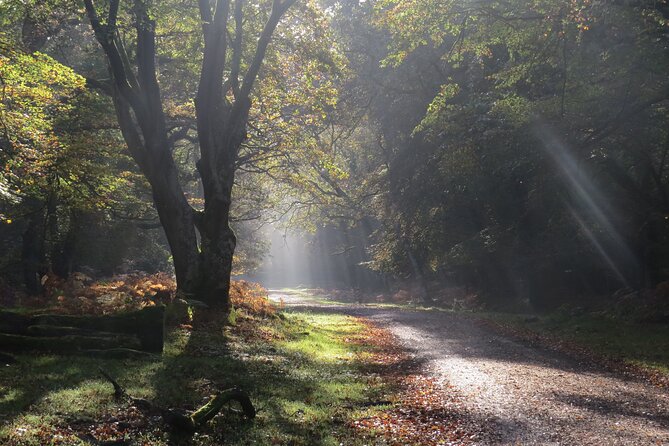
After the ridge views, the route turns into Denny Inclosure, an ancient woodland area. This change matters because woodland wildlife behaves differently than heath birds. Light levels shift, sound carries differently, and the plants become your main clues.
Expect the guides to focus on what makes these woods “old,” not just pretty. You might hear about beech and oak trees that are standing from a different era of time than most forests you’ll see elsewhere. And because old woodland creates stable conditions, you’re also more likely to encounter a wide range of life, including fungi and invertebrates that are easy to miss when you’re walking quickly.
This is also a good segment for families, as long as your group is comfortable walking at a relaxed pace. The canopy gives breaks from sun, and the stops feel purposeful. You’ll often pause to look closely at something the guide points out, then move on when everyone’s eyes adjust.
A small tip: if you want to maximize your bird and insect spotting, keep your hands free. Bag, jacket, and phone all come out less often when you’re ready to look without stopping your stride.
Commoning, ponies, and cattle, why people shaped the Forest
One of my favorite parts of this walk is that it explains the New Forest through the people who lived here long before modern conservation language took over. The story stretches back to communities living in the area 1000 years ago or more, and then continues through long-standing traditions.
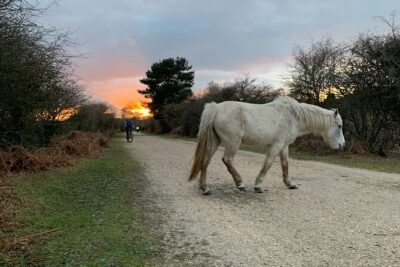
A key idea is commoning, the practice that helps shape the land. On this walk, you take time to understand how ponies and cattle fit into the picture. They aren’t treated like background animals. Instead, they’re part of how the habitat stays diverse enough for different species to survive, year after year.
Commoning is also the bridge between history and ecology. You might learn how grazing and land use affect vegetation patterns, which then affects birds, insects, and plants. The result is that the Forest you see around you starts to make more sense. It’s not random wilderness. It’s a managed landscape of old traditions and careful balance.
If you like places with a human thread, this section is a big reason to book. It’s also where the walk feels most “meaningful,” because it answers the unspoken question: why does the New Forest look the way it does?


Pondhead Inclosure and working coppice, a living woodland practice
On the way back, you pass through Pondhead Inclosure, described as working coppice woodland. This is a fascinating contrast to ancient woodland. Instead of simply protecting old trees and letting nature run, coppice management is an ongoing rhythm where cutting and regrowth create habitat variety.
You’ll likely get points on why that matters for wildlife. Different plants grow at different stages, insects respond to changes in sun and structure, and birds benefit when food and cover are available in the right mix. The guide’s job is to connect those dots while you’re walking, so it feels like real learning instead of a lecture.
Pondhead also keeps the walk feeling grounded. After the wider views of The Ridge and the slower, shaded feeling of older woods, working coppice gives you a sense of time in motion. The Forest isn’t a museum piece. It’s still being used and still being maintained.
If you enjoy photography, this is where you might want to pause without rushing. Coppice woods can look similar at first glance, but small differences in light, trunks, and undergrowth can reveal a lot, especially when you know what to look for.
Wildlife surveyor style, from birdsong to fungi and invertebrates
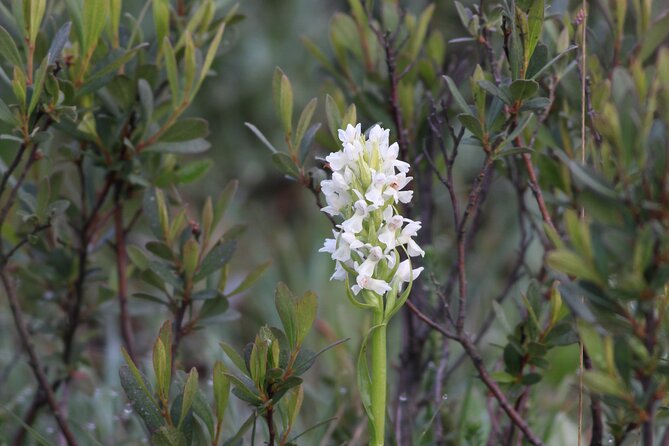
This walk earns its name because it’s built around wildlife spotting across multiple groups, not just one kind of nature. The guides are set up to notice a lot, and they also explain what the observations mean.
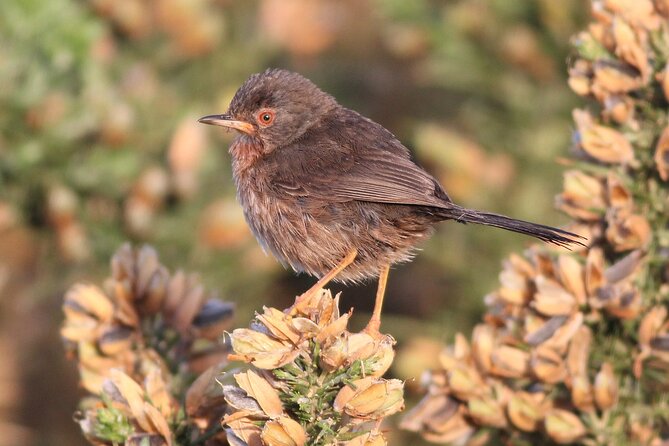
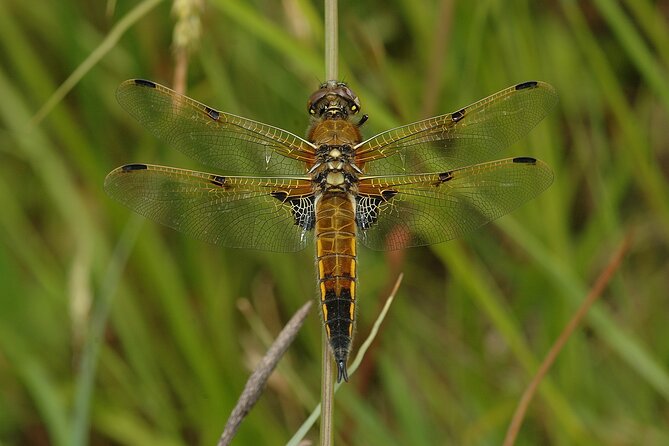
You might hear about iconic species such as Dartford Warbler, and you may also be told what to keep an eye out for, including fallow deer. Even when you do not see the animals themselves, you’ll often learn what signs to look for, like behavior, habitat clues, and where conditions are right.
The walk also covers seasonal life. The mix includes wildflowers, fungi, butterflies, and other invertebrates. In earlier experiences with these guides, people have been lucky enough to spot a young cuckoo, see species such as silver-washed fritillary, and even observe something like a bee-wolf colony when the timing is right. You should not treat those as guaranteed wins, but they are a good reminder that the Forest can surprise you when you slow down.
One of the strongest review themes is how the guide makes bird ID practical. If you struggle with birds that are heard more than seen, the focus on listening to birdsong is a big help. And if you’re the type who likes to ask questions, the small group size gives you more chance to do that.
There’s also a nice human side. In at least one group, a child had gotten unwell mid-walk, and the rest of the group and guides handled it calmly. That’s a sign the experience is not rigid or rushed, which matters if you’re visiting with family.
New Forest history on the trail, Parc Pale to wartime remnants
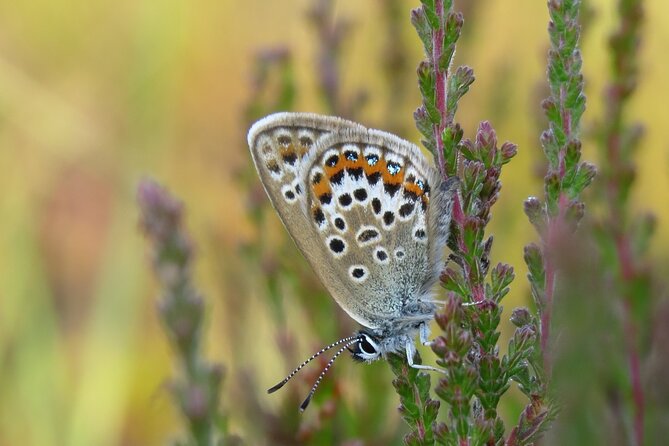
The Forest has layers, and this walk touches several of them without making it feel like you’re stuck reading signs. You may see or hear about remains connected to Parc Pale, a historic boundary system, and then later about a connection to wartime history, including a WW2 bombing range.
This is where the walk becomes more than biology. It gives you a reason why certain features exist where they do. The Forest has been shaped by land boundaries, conflicts, and later management, and those pressures left marks you can still interpret today.
The pacing helps. You’re not trying to absorb everything at once. Instead, you get quick, understandable context tied to what’s near you on the route. That makes it easier to remember later, when you’re looking back at maps or thinking about what you saw.
If you like outdoor experiences that include history but stay grounded in the real setting, this is a good mix. It respects both sides, nature and people, without turning either into background noise.
Gear, pace, and practical walking tips for 8 km
The walk covers about 8 km at a relaxed pace, lasting around 2 hours. That sounds simple, but it’s worth thinking about what “relaxed” means here: you’ll have time to stop, look, and ask questions, not just keep moving.
It’s suitable for walkers with moderate fitness, and it’s ideal for the whole family. Since the route goes through heath and mire country along with woodland, wear shoes you trust on natural ground. Even on good weather days, forest paths can be unpredictable.
Bring basics: water, a light layer, and something weather-ready. The activity requires good weather, so you’ll want to be ready to adapt if the date changes due to conditions.
Also, treat the walk like an observation game. If you come in thinking only about destinations, you’ll miss what the guides are doing. The real fun is in stopping to look where the guide points and letting your senses catch up.
If you’re traveling with kids or anyone who needs frequent pauses, tell the guide early. The group setup is built for questions, and there’s a calm, flexible vibe.
Price and value: is $23.30 fair for a 2-hour experience?
At $23.30 per person for a roughly 2-hour discovery walk with a maximum of 12 people, the price feels fair if you care about learning and not just walking. In this case, you’re paying for more than a route. You’re paying for interpretation: habitats, species, and the human history that explains why the Forest works the way it does.
You’re also paying for small-group time with expert wildlife surveyor guides. That matters because you’ll get answers in the moment, and you’ll be able to adjust your pace based on what you spot.
It’s also booked about 23 days in advance on average, which suggests this isn’t just a random timeslot. If you want a calmer experience and you’re visiting in busy periods, I’d plan ahead rather than hoping for a last-minute seat.
Overall, I see this as good value if you want a guided start to the New Forest, and especially if you want wildlife knowledge that you can take home and use when you explore on your own afterward.
Who should book this walk from Lyndhurst?
This is a great fit if you want a balanced nature outing: birds and mammals, but also plants, fungi, and invertebrates, plus the human history thread.
It’s especially good for:
- Families who want a structured walk that still feels relaxed
- Bird lovers who want help identifying birds by sound
- People who have visited Lyndhurst before but want a deeper, guided perspective
- Anyone who likes wildlife without needing to be a specialist
If you are an ultra-keen hiker chasing big elevation or long distance, you might find 8 km at a relaxed pace on the short side. But if your goal is to understand the Forest and see more because someone is pointing it out, this hits the sweet spot.
Should you book the New Forest Discovery Walk from Lyndhurst?
Yes, if you want a smart introduction that combines heath and mire views, ancient woodland, and practical ecology, with guides who make wildlife feel understandable. The best part is that the walk doesn’t feel like a checklist. It feels like learning how to look.
I’d pass only if you’re coming with very narrow expectations, like needing a specific animal to show up every time. Nature does not run on schedules. But the guides do a strong job of guiding your attention, so even when sightings are subtle, the experience still feels complete.
If you’re ready to slow down and let the New Forest reveal itself in layers, book it.
FAQ
Where do I meet for the New Forest Discovery Walk from Lyndhurst?
You meet at Bolton’s Bench, Beaulieu Rd, Lyndhurst (SO43 7DA, UK).
What time does the walk start?
The start time is 10:00 am.
How long is the walk, and how far will we cover?
The walk lasts about 2 hours and covers roughly 8 km.
How big is the group?
The group size is limited to a maximum of 12 travelers.
What fitness level do I need?
The walk is suited to travelers with moderate physical fitness levels.
Are service animals allowed?
Yes, service animals are allowed.
Is a mobile ticket used?
Yes, the tour uses a mobile ticket.
What happens if the weather is poor?
The experience requires good weather. If it’s canceled due to poor weather, you will be offered a different date or a full refund.
Can I get a full refund if I cancel?
You can cancel for a full refund if you cancel at least 24 hours before the experience’s start time. If you cancel less than 24 hours before, the amount paid is not refunded.
Solent Ports and the Island
- Southampton: Post-Cruise Tour to London via Salisbury, Stonehenge and Windsor★ 4.5 · 333 reviews
- New Forest Sunset Bike Rides★ 5.0 · 40 reviews
- Guided Walking Tour of New Forest National Park in Hampshire★ 5.0 · 31 reviews
Fresh off the South East England review pile



Portsmouth, Southampton & the Isle of Wight, compared.
 ★ 4.6Isle of Wight: Osborne Admission TicketFrom $271,165 reviews
 ★ 4.8Portsmouth: Historic Dockyard Ultimate Explorer TicketFrom $621,052 reviews
 ★ 4.5Southampton Pre-Cruise Tour: London to Southampton via StonehengeFrom $192469 reviews
 ★ 4.5Basingstoke iFLY Indoor Skydiving Experience – 2 Flights & CertificateFrom $110459 reviews
 ★ 4.6Portsmouth: Spinnaker Tower TicketFrom $26437 reviews
 ★ 5.0Journey Through Winchester’s PastFrom $16341 reviews
 ★ 4.5Southampton: Post-Cruise Tour to London via Salisbury, Stonehenge and WindsorFrom $228333 reviews
 ★ 4.5Southampton Port: London via Salisbury, Stonehenge & WindsorFrom $229298 reviews
Also filed under