

REVIEW · AUDIO TOURS
500 Years of Crime and Punishment: A Self-Guided Audio Tour
Aberdeen has teeth, if you listen. This self-guided audio walk turns the city’s streets into a living crime-and-punishment story, starting at the old Tolbooth gaol and ending near the Aberdeen Town House. You follow the route at your pace, guided by a VoiceMap audio track with offline maps and geodata, so you are not stuck hunting for clues while you are trying to enjoy the walk.
I like two big things about this tour. First, the flexibility is real: you can start whenever you want and stop as you need, which makes the timing painless. Second, the storytelling focus lands on specific places, not vague “history facts,” from where public announcements happened at the Mercat Cross to why the Anatomy Rooms mattered to Aberdeen’s darkest medical era. The main caution is route navigation and street conditions, since construction can make the start point harder to spot and some stretches feel less comfortable than others, so plan a calmer time of day and be ready to rely on your on-screen map.
If you enjoy walking tours but hate group schedules, this is a good match. You get a compact crime-themed route that’s short enough to fit into a half day, yet full enough to make Aberdeen feel sharper, stranger, and more memorable than a typical stroll.
In This Review
- Key highlights worth your time
- A crime story you can pace yourself through
- Price and value: $8.99 for a full walking experience
- Getting started at the Tolbooth, and why timing matters
- Stop-by-stop: how the route tells its crime-and-punishment story
- Tolbooth Museum, where prisoners were kept
- Mercat Cross, public announcements and punishments
- The Balmoral-style tower moment
- Seabury Court near St Andrew’s Cathedral
- Back toward the university: Anatomy Rooms and body-snatching
- The graveyard: morals, the mither kirk, and church punishment
- The Green: ancient living, modern street life, and the child-snatching gang
- Harbour punishments and the Maritime Museum option
- Navigation, headphones, and staying comfortable on the route
- Who this walk suits best, and who should think twice
- Should you book 500 Years of Crime and Punishment?
- FAQ
- What is the price of the Aberdeen crime and punishment audio tour?
- How long does the self-guided audio tour take?
- Where do I start and where does the tour end?
- Is the tour in English?
- Do I need to bring a smartphone and headphones?
- Is offline access available?
- Can I start the tour whenever I want?
- Are museum tickets included?
- Is this a private tour?
- Are service animals allowed?
Key highlights worth your time
- Old Tolbooth gaol start: kick off in the building that once held Aberdeen prisoners
- Mercat Cross public punishment: learn how announcements and punishments played out in the center of town
- Anatomy Rooms and body-snatching connections: medical students, dissections, and the city’s macabre side
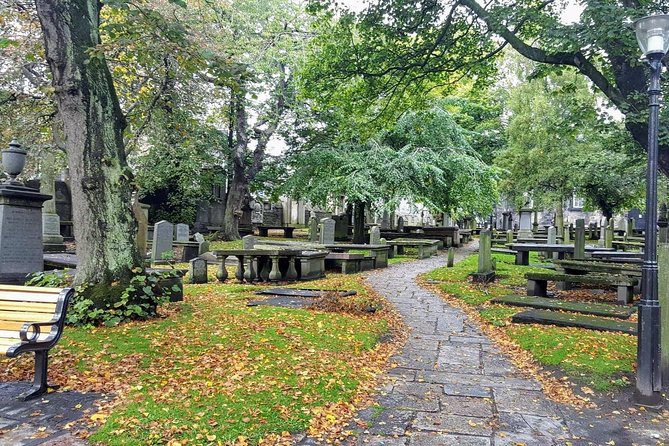
- Atmospheric graveyard stop: grave stories tied to church punishment and even witch imprisonment
- The Green street-level stories: hear about the child-snatching gang while you also see modern Aberdeen
- Optional Maritime Museum: a short breather to connect fishing, shipping, and oil-era history
Still comparing? These Aberdeen tours came out well in our reviews too.
- Loch Ness and the Highlands 1-Day Tour from Aberdeen
★ 4.8 · 340 reviews - From Aberdeen: Dunnottar Castle and Cairngorms Day Trip
★ 4.8 · 329 reviews - From Aberdeen: Balmoral Estate & Royal Deeside Tour
★ 4.9 · 243 reviews
A crime story you can pace yourself through

This is not a “stand here while someone talks” tour. It is an audio-led walk that treats the city like a set of clues. Expect a loop that moves steadily from the old criminal justice core toward the university area, then back through older religious ground, and finally toward the harbour-side stories.
Duration is listed as about 45 minutes up to around 2 hours 15 minutes. That wide range is not a gimmick. If you listen fully at each stop, take photos when prompted, and linger a bit in the graveyard, you will drift toward the longer end. If you move briskly and keep your phone volume steady, you can finish closer to the shorter end.
The tour is offered in English, and you get lifetime access, meaning it is not a one-and-done purchase. That matters if you want to revisit later in your trip, or you want to re-walk a section when you have more context from other places you visit.
Price and value: $8.99 for a full walking experience
At $8.99 per person, you are paying for three things: the audio storytelling, the route guidance, and the offline access. The smart value here is how low the cost is compared with paid guided tours, especially if your goal is to see the city’s key “dark history” locations without paying for timed tickets or a live guide.
Also note what you are not paying for. There are no entrance fees included for any museums you might pass, and it is not bundled with food or transport. In other words, you are buying the walk and the audio, then you decide if you want to pop into the Maritime Museum when you reach it.
For me, the best value is when you have already walked around Aberdeen and now you want a reason to slow down. This gives you that reason. It makes you look up at carvings, pay attention to street layout, and notice how power and punishment used to be staged in public spaces.
Getting started at the Tolbooth, and why timing matters
Your walk begins outside the Tolbooth Museum on Castle St (Aberdeen AB11 5BB). You end a few metres from there, outside the Aberdeen Town House on Union St (Aberdeen AB11 5BU). The route is near public transport at both ends, which is handy if you are mixing it with other plans.
You start the tour in the VoiceMap app, and you get offline access to audio, maps, and geodata. That is a big deal in old city areas where signal can be patchy. Still, offline audio only helps if you can find the starting point without a frantic detour.
One practical caution: construction can obscure or hide the start area, and it can make it harder to line up the first steps of the route. Do yourself a favour and give yourself a small buffer. If you arrive and cannot see the meeting spot immediately, open the app map, check your position, and use the on-screen guidance before you assume you are lost.





Stop-by-stop: how the route tells its crime-and-punishment story
Tolbooth Museum, where prisoners were kept
The first stop sets the tone. The tour begins at the Tolbooth Museum, a building that used to function as the gaol, where criminals in Aberdeen were held. You start with the concept of public punishment, and you get pointed to where hangings used to take place.
This is a strong opener because it grounds the whole theme in a real structure. Even if you are not a “dark history” person, standing at a former prison building helps your brain accept the rest of the story as something that happened close to where you are walking now.
Mercat Cross, public announcements and punishments
Next comes the Mercat Cross, where public announcements were made and punishment could be handed out. The structure is decorated with carvings of Scottish monarchs, and the tour focuses on one queen and how she dealt with an outbreak of treason.
Why this stop works: it explains how power operated in public. You are not just hearing about crimes. You are seeing the city’s “communication system” for fear, authority, and control. If you like political history but hate dry timelines, this angle is easier to hold onto.
A practical note for photos: the carvings and the shape of the cross give you a natural pause point. Take a moment here, then get back moving so the next sections do not feel like disconnected city sightseeing.
The Balmoral-style tower moment
As you continue, you pass a building with a tower modelled on the one at Balmoral Castle. The tour encourages you to treat it as a photo stop.
This is a lighter beat in the narrative, and it serves a purpose. It reminds you that you are walking through a living city, not a museum corridor. The contrast between royal-style architecture and the harshness of punishment stories around it is part of the effect.
Seabury Court near St Andrew’s Cathedral
You then go through Seabury Court next to St Andrew’s Cathedral. This part is about street form: winding lanes and the kind of old-city layout that makes it easy to imagine how people moved, avoided attention, or got caught.
If you are the type who enjoys imagining daily life, this stop will feel satisfying. It is not just “where to stand.” It is “look at how the city is built,” and that changes how you read everything you will see next.
Back toward the university: Anatomy Rooms and body-snatching
One of the most memorable sections is tied to the University of Aberdeen. The tour takes you around the back to the Anatomy Rooms, where dissections would take place, and it connects Aberdeen’s medical world with bodysnatchers.
This is the stop where the audio theme fully clicks. The story makes you consider a grim reality: knowledge and science were advancing, but people were still treated as objects in the process. If you have ever wondered how a city can be both academic and cruel, this part does a good job of showing how they can coexist.
Because this involves sensitive subject matter, keep it in mind if you prefer lighter themes. You do get to control your pace, but the tone here is definitely dark.
The graveyard: morals, the mither kirk, and church punishment
Next is an atmospheric graveyard packed with history. The tour points out the grave of a doctor whose morals left a lot to be desired, then shifts into the area’s religious center, including the ‘mither kirk’ of Aberdeen.
You will also hear about horrible church punishments and how witches were imprisoned.
This section is powerful, but also very easy to overrun if you rush. Give yourself time to stand, listen, and look around. Graveyards often make you slow down naturally. If you do not, you will miss the way the audio connects physical places to moral stories that once had real consequences.
The Green: ancient living, modern street life, and the child-snatching gang
You move on to The Green. People have been living here for thousands of years, but it does not feel stuck in the past. The tour frames it as a small hipster enclave with street art and independent restaurants and shops, then drops a darker story: a child-snatching gang that used to operate in Aberdeen.
This stop is a great example of why a self-guided format works. You can step aside from the noise, listen to the audio, then re-enter the lively street feel right afterward. The contrast makes the story hit harder.
If you want street photos, this is where you will likely get them. Just keep one hand free for your phone, since you will be reading the app map in between audio scenes.
Harbour punishments and the Maritime Museum option
Finally, the tour leans into Aberdeen’s harbour connection. Aberdeen grew up around the harbour, and the audio links that growth to some particularly unpleasant punishments.
As you approach the Maritime Museum, you get a chance to explore it on your own. The museum is described as small and focused, with themes that help you make sense of Aberdeen’s past, from fishing to the oil industry.
This last beat softens the mood without breaking the theme. You end in a more explanatory mode, so the walk does not feel like pure gloom. Instead, it gives you a bridge from “what happened” to “how this city works.”
Navigation, headphones, and staying comfortable on the route
This is built for phones and headphones, but smartphone and headphones are not included. Plan ahead. Bring wired or wireless headphones you already trust. Also make sure your phone battery is healthy, because the app is doing audio plus offline maps.
You can rely on offline access to audio, maps, and geodata. Still, construction can change sightlines, and some parts of a walking route can feel out of sorts depending on time of day and your own comfort level. If you are someone who prefers brighter, busier streets, do not treat this as a “wander without thinking” experience. Use the on-screen map, stick to well-lit main paths, and keep your awareness up.
One more practical tip: because the route runs continuously from start to finish, you do not want to constantly stop to re-orient yourself. When you reach a confusing corner, pause, check the map once, and then move. It keeps the story flow from breaking.
Who this walk suits best, and who should think twice

This tour fits best if you like crime history, urban history, and walking at your own speed. It is also a smart pick if you hate wasting time waiting for a group to gather or if you want to pause for photos, a drink, or a moment in a graveyard without feeling rushed.
You might think twice if you get uneasy walking through city stretches that feel less pleasant, or if you rely heavily on clear, obvious signage. The tour is self-guided, and that means your success depends on your ability to find the start and follow the next segments using the app map.
It also helps if you are comfortable hearing about public punishment, witch imprisonment, dissections, and body-snatching connections. The tour does not hold back on the darker side of Aberdeen’s past.
Should you book 500 Years of Crime and Punishment?

I would book it if you want a low-cost, high-control walking experience and you like history with teeth. For $8.99, you are not just paying for audio. You are buying a route that reframes Aberdeen’s landmarks, from the Tolbooth gaol to Mercat Cross and the Anatomy Rooms.
I would skip or at least approach carefully if your priority is gentle sightseeing. This is built around punishment and moral brutality, with a few quiet architectural and street-life stops used as contrast. Also, if your travel style depends on easy navigation in busy, clearly marked public spaces, bring a little extra patience for finding the start area, especially if construction is around.
If you time it well and use the offline maps, you get a strong sense of how Aberdeen used to punish, police, educate, and control, all while you are walking through the city that still carries those stories.
FAQ
What is the price of the Aberdeen crime and punishment audio tour?
The tour costs $8.99 per person.
How long does the self-guided audio tour take?
It is listed as about 45 minutes to 2 hours 15 minutes.
Where do I start and where does the tour end?
You start at the Tolbooth Museum, Castle St, Aberdeen AB11 5BB, UK. The tour ends outside the Aberdeen Town House, Union St, Aberdeen AB11 5BU, UK.
Is the tour in English?
Yes, the tour is offered in English.
Do I need to bring a smartphone and headphones?
Yes. A smartphone and headphones are not included.
Is offline access available?
Yes. Offline access to audio, maps, and geodata is included.
Can I start the tour whenever I want?
The tour is available with opening hours listed as 12:00 AM to 11:59 PM daily, so you can start at a time that works for you within those hours.
Are museum tickets included?
No. Tickets or entrance fees to any museums or attractions along the route are not included.
Is this a private tour?
Yes. It is private, so only your group participates.
Are service animals allowed?
Yes, service animals are allowed.
Fresh off the Aberdeen review pile








Audio Tours, compared.
 ★ 4.7London: Emirates Stadium Entry Ticket and Audio GuideFrom $475,513 reviews
 ★ 4.0Westminster Abbey Entrance Ticket Including Audio GuideFrom $41661 reviews
 ★ 4.5London: British Museum Audio Tour & Priority Entrance TicketFrom $9631 reviews
 ★ 4.5Golden Tours York Hop-on Hop-off Open Top Bus Tour with Audio GuideFrom $22468 reviews
 ★ 4.7Bath: Roman Baths Entry Ticket with Audio GuideFrom $30425 reviews
 ★ 4.6Canterbury Cathedral: Entry Ticket with Audio GuideFrom $31266 reviews
 ★ 4.6London: Churchill War Rooms Ticket & Political London AudioFrom $62224 reviews
 ★ 3.5Windsor Castle Tour from London with Transportation & Audio GuideFrom $94222 reviews
Also filed under