

REVIEW · CANTERBURY, DOVER & THE KENT COAST
Canterbury Cathedral: Entry Ticket with Audio Guide
Canterbury Cathedral is big, old, and full of stories. This audio-guided entry ticket helps you see the place in order, so you are not just wandering under the famous ceilings. You get access to the Chapter House, the Great Cloister, gardens, and up to three exhibitions, with a handset and headphones in your chosen language.
I especially love two things. First, the cathedral’s architecture keeps changing through the medieval period, so each room feels like a different chapter of the same long life. Second, the audio guide turns the stained glass, royals, monks, and martyrs into something you can actually follow while you walk.
One heads-up: navigation can be a little tricky inside a site this large. Some sections feel like they need clearer in-craft signage, so plan to move slowly at first and let the headset route you, not your instincts.
In This Review
- Key things that make this visit work
- Canterbury Cathedral with an Audio Route You Can Actually Follow
- What the History Timeline Covers as You Walk Through the Spaces
- Stained Glass and High Ceilings: How to See Without Missing the Point
- Chapter House and Great Cloister: The Spots That Feel Most Medieval
- Gardens and the Herbarium Reimagining: A Breather After the Stone
- Exhibitions and Your Best Strategy for Picking What to See
- Audio Guide Reality Check: What to Do If the Handset Acts Up
- Small But Important Rules That Affect Your Comfort
- Who This Ticket Is Best For (And When It Might Not Fit)
- Should You Book This Canterbury Cathedral Audio-Guide Entry Ticket?
- FAQ
- What is included with the Canterbury Cathedral entry ticket?
- How long should I plan to spend at the cathedral?
- Where do I pick up the audio guide and headphones?
- Is the audio guide self-guided?
- Can I take photos in every area?
- Is it wheelchair accessible?
- Are there restrictions on bringing food, bags, or pets?
Key things that make this visit work
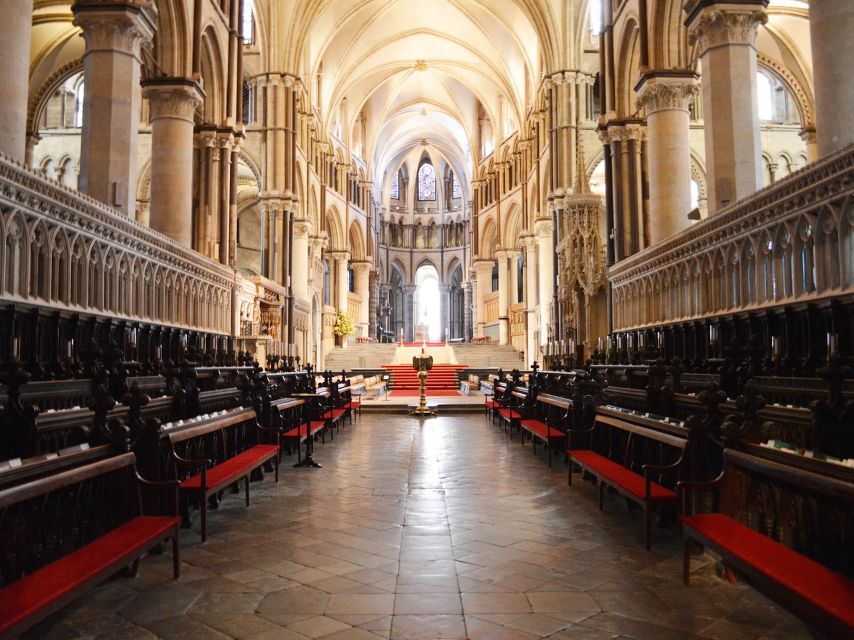
- Audio handset with headphones so you can pace yourself, pause, and look longer when something grabs you
- Old stained glass highlights that can take your breath away once you realize how early they are
- Chapter House access plus a ceiling so detailed it turns the room into a visual puzzle
- Great Cloister atmosphere that still feels like a place meant for quiet footsteps
- Three public gardens, including a reimagined medieval Herbarium, for a breather after the stone corridors
- Up to 3 exhibitions that add context beyond what you see in the main church spaces
Other Kent days, cathedral to cliffs
- Official Canterbury Guided Walking Tour – 11.00 Tour
★ 5.0 · 422 reviews - Canterbury Cathedral: Entry Ticket with Audio Guide
★ 4.6 · 266 reviews - Official Canterbury Guided Walking Tour – 14.00 Tour
★ 5.0 · 214 reviews
Canterbury Cathedral with an Audio Route You Can Actually Follow
You come to Canterbury to see one of England’s true spiritual and historical centers. The cathedral sits at the heart of the city, tied to major moments in Christianity, English kingship, and pilgrimage culture. With this ticket, you are not stuck relying on your eyes alone, because the audio guide gives you a guided storyline while still letting you choose how long to linger.
You have a small group setup, limited to 9 participants. That matters because you can get your media kit without a chaotic scrum, and you can start your route without feeling rushed by everyone around you. You also skip the ticket line, which is a real quality-of-life win in a place that draws crowds.
The big benefit here is control. You are free to move at your pace, and the audio segments are broken into digestible stops. When you want to slow down to really study a window or a doorway, you can. When you want to speed up to the next highlight, you can do that too.
If you are the kind of person who likes order, the suggested route helps. If you prefer wandering, the audio still gives you something solid to anchor on. Think of it like walking through a museum with a great curator in your ear.
What the History Timeline Covers as You Walk Through the Spaces
Canterbury Cathedral is famous for being ancient, but it is even more interesting because it is layered. The audio guide’s job is to help you notice that layering, not just admire it.
You’ll hear the origin story starting in 597 A.D. Pope Gregory the Great sent a monk named Augustine to England to spread Christianity. Augustine established his seat, called the cathedra, and founded a monastery in Canterbury, which is why the site became so central. That context is useful because it explains why this place is more than a beautiful church. It is a headquarters for centuries of religious life.
You also learn why pilgrimage took off. When people believed miracles were happening around the cathedral precincts, Canterbury became one of the most important pilgrimage centers in Europe. And yes, the audio connects the story to Geoffrey Chaucer’s Canterbury Tales, which helps you connect the cathedral to English literature, not only religious history.
Then you get the architectural explanation. A major turning point was a fire in 1174, after which parts of the cathedral were rebuilt using the Perpendicular Gothic style. The result is that you see medieval building and rebuilding choices stacked over time, which makes the site feel like a living record.
Stained Glass and High Ceilings: How to See Without Missing the Point
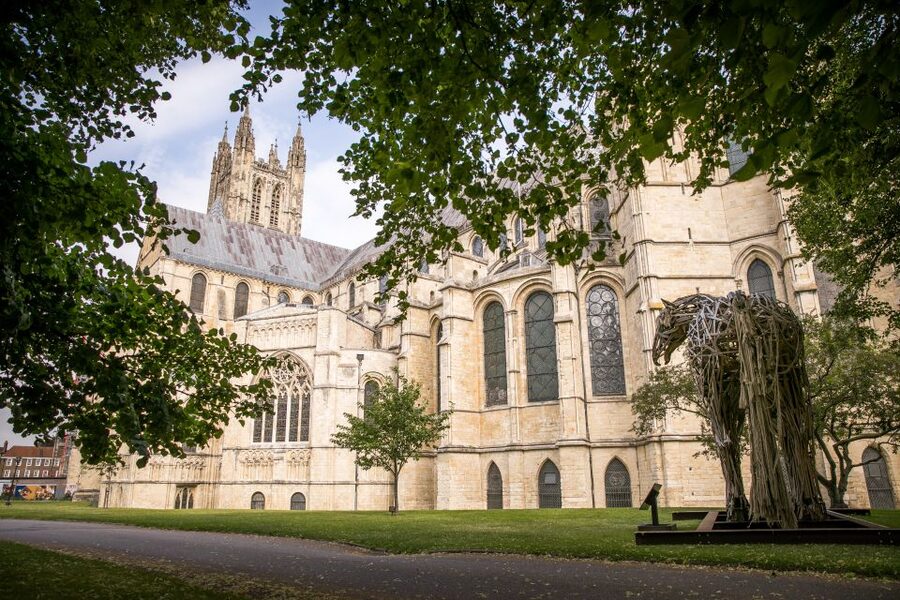
If you only look at Canterbury from one angle, you miss the best trick of this place. The cathedral is huge, and the windows and ceilings pull you upward. The audio guide helps you time your looking so you understand what you are seeing.
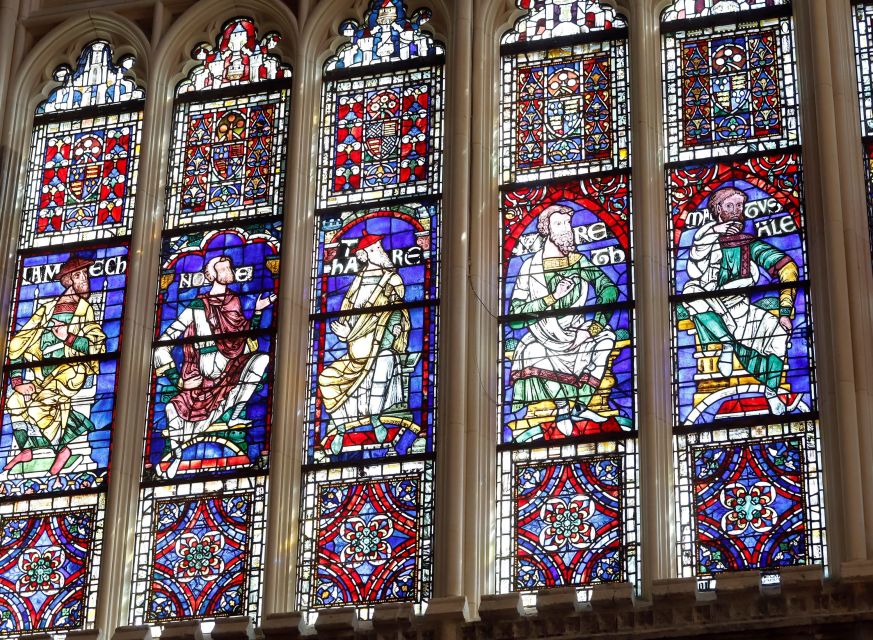
You are told that some stained glass windows are among the oldest in the world. That matters because old glass is not just pretty. It is a historic artifact, and it carries meaning about design choices and devotion in different periods. When you catch those windows on the right path, you start seeing the cathedral as a timeline of art.
The headset also frames the interior stories. As you walk under high ceilings, you hear accounts that bring together royals, monks, and martyrs. That mix helps you understand the cathedral as a space used by real people with real stakes, not just a monument for tourists to photograph.
Practical tip: as soon as you enter, take a short moment to orient yourself. The cathedral precincts have multiple routes, and uneven floors and stone steps can slow you down if you do not settle into a rhythm. Once you feel your footing and start the next audio segment, the visit clicks into place.



Chapter House and Great Cloister: The Spots That Feel Most Medieval

Two included stops deserve special attention because they are where Canterbury shifts from grand to intimate.
First up is the Chapter House. This room is known for a ceiling with extremely intricate detail. When you pause here, you realize why this part of the cathedral mattered to the people who used it. It was a working space tied to governance and worship, not an afterthought. With the audio on, you get a clearer sense of the symbolism and daily purpose of these church rooms.
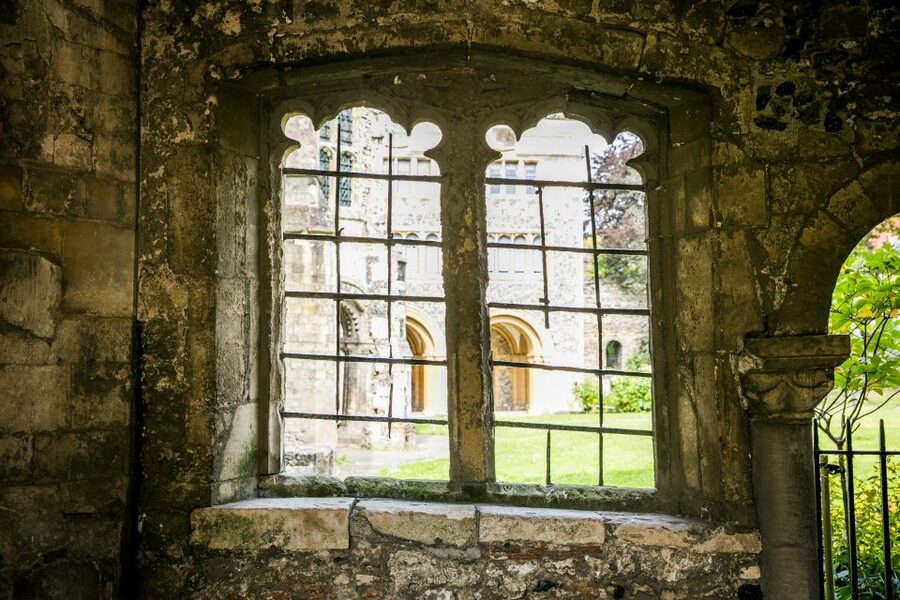
Next is the Great Cloister. Cloisters can look calm on postcards, but here the atmosphere is the whole point. The audio explains that monks walked these corridors for centuries, and you can feel how the space supports quiet routine. It is a good place to slow down and listen because the stone surfaces and the layout make your own footsteps part of the soundscape.
One small caution: some areas may close at short notice. If that happens, do not panic. Use the route segments you can access and treat the closure as an excuse to spend a bit longer in the places that stay open.
Gardens and the Herbarium Reimagining: A Breather After the Stone
Not everyone schedules garden time at a cathedral. I think you should, because your brain needs a reset after hours of history and architecture.
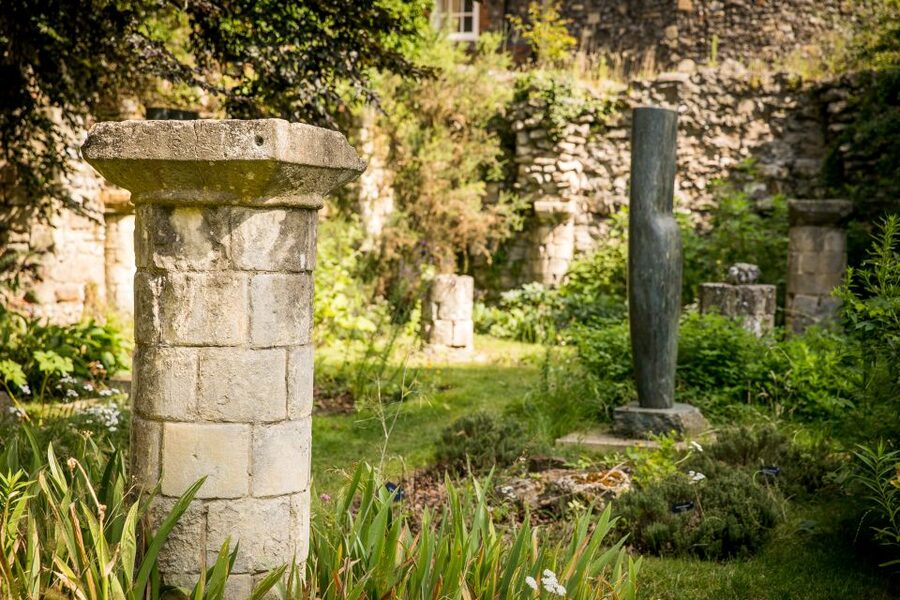
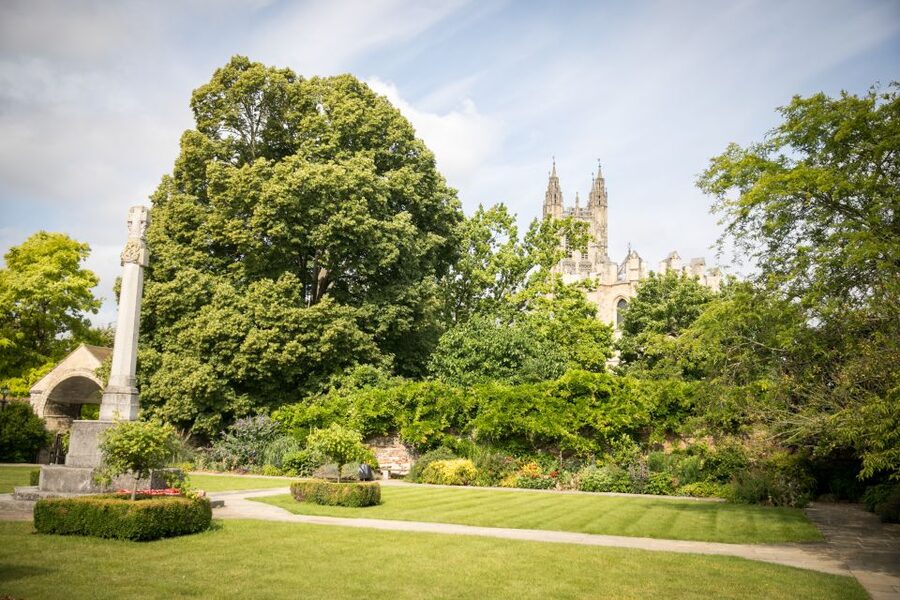
The ticket includes three public gardens, including a reimagining of a medieval Herbarium. That is a fun contrast because herbariums are practical. They connect plants to medicine, healing, and learning. Instead of only seeing the cathedral through religious art, you get a taste of daily life, study, and care that would have gone on around the site.
In a slow itinerary, gardens can become the best part of your day. They give your feet a break, and they help you process what you just saw. If you are traveling in the busy season, the garden paths can also feel like the only space where your thoughts catch up.
Practical tip: lighting levels can vary in different museum spaces, so bring a little patience. If you feel the contrast between bright outdoors and dim indoor corners, give your eyes a minute. You’ll enjoy the details more when you can actually see them.
Exhibitions and Your Best Strategy for Picking What to See

The ticket includes access to up to three exhibitions around the site. That flexibility is valuable because it lets you choose based on your mood, your interests, and what is open that day.
If you love visual storytelling, start with the exhibition that complements the stained glass or the pilgrimage context. If you prefer material culture and how people lived, pick the exhibition that focuses on objects and daily practice. And if you just want to rest your brain after cathedral rooms, choose something lighter and easier to pace.
A key reality check: the cathedral and precincts are not built like a modern museum with straightforward numbering. Some people find it a bit confusing to follow the route even with the audio guidance. The practical fix is simple: follow the audio segments first, and when you are done with a stop, look for the next audio prompt before moving too far.
Also note: museum lighting can vary, and floors can be uneven in places. If you tend to rush, you might feel slightly disoriented. If you move slowly and keep the route prompts in your head, the day feels smooth.
Audio Guide Reality Check: What to Do If the Handset Acts Up
This experience lives or dies by the audio guide working well. Most of the time, it does. People like that it is clear, thorough, and gives you suggested routes broken into natural breaks. I also like the fact that you can choose where to go next, which is perfect for a big building where your curiosity might pull you sideways.
Still, the smart move is to treat the first minute as setup time. Some visitors reported their handset kept crashing at the start, and others said the guide could feel confusing to use at first. You can reduce stress by testing right after you pick up your media kit. If something is wrong, address it immediately so you do not waste your best viewing time later.
If you do end up with an audio hiccup, do not feel like you have to power through blindly. You can take a breath, look around, and keep enjoying the cathedral. Many people said they had plenty of time to roam, so a little troubleshooting does not ruin the day.
Small But Important Rules That Affect Your Comfort
Canterbury is not relaxed about certain restrictions, so read the vibe before you arrive with the wrong bag or snack.
Food and drinks are not allowed. Large bags and luggage are not allowed either, and you should expect random bag searches on entry to the cathedral and precincts. Pets are not allowed, but assistance dogs are allowed.
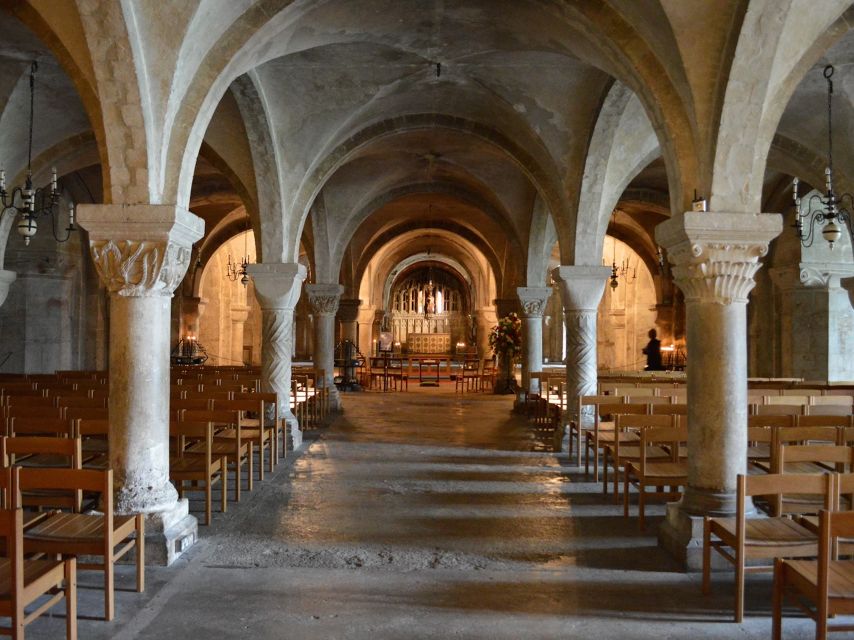
Also, no commercial photography is permitted. And in the crypt specifically, no photography or video recording is allowed at any time. If you think you will want to film, plan to keep your camera away in the crypt and stick to what is allowed elsewhere.
If you are traveling with kids, children under 16 must be accompanied by an adult at all times. Sit-on wheeled toys and throwing toys are not allowed, which is worth knowing if you are thinking of bringing a small car or toy on wheels.
Who This Ticket Is Best For (And When It Might Not Fit)
You’ll probably love this if you want a structured self-guided day. The audio route is perfect for history lovers who want context but do not want to wait for a group to move. The small-group setup also makes the start smoother than a free-for-all.
It is also great if you like pacing. Multiple people described spending about two to three hours inside and out, with enough time to absorb details rather than sprint. You can also take longer, especially if you enjoy architecture or stained glass.
You might want a different setup if you hate any chance of confusion. If you need perfectly numbered stops and ultra clear wayfinding, the cathedral’s scale can feel demanding, even with the audio prompts. In that case, build a forgiving mindset and move slowly at first.
For accessibility, the site is wheelchair accessible. Still, floors can be uneven, and some entryways have stone steps while some have access ramps. If mobility is limited, allow extra time to navigate the transitions and ask staff for the most convenient path once you arrive.
Should You Book This Canterbury Cathedral Audio-Guide Entry Ticket?
Yes, I think this is a smart booking for most people who want a high-value, self-guided Canterbury visit. For around $31 per person, you get more than entry. You get a guided history framework that helps you connect the architecture, stained glass, pilgrimage story, and key rooms like the Chapter House and Great Cloister.
Book it if:
- You want independence, but still want a real storyline
- You plan to spend at least a couple of hours taking it slow
- You like learning with audio while walking through major sites
Skip it or consider a different approach if:
- You feel strongly uncomfortable without numbered signage and step-by-step navigation
- You are likely to struggle with uneven floors and indoor lighting changes
- You need to photograph inside the crypt, since that is not allowed
FAQ
What is included with the Canterbury Cathedral entry ticket?
Your ticket includes Canterbury Cathedral entry, an audio guide, and the handset plus headphones. The audio guide is available in English, German, French, or Japanese.
How long should I plan to spend at the cathedral?
The visit is valid for 1 day. In practice, many visitors plan around 2 to 3 hours inside and out, and you may spend longer if you want extra time for gardens or exhibitions.
Where do I pick up the audio guide and headphones?
Present your voucher at Canterbury Cathedral. You will be directed to the desk to receive the media guide sets and headsets.
Is the audio guide self-guided?
Yes. You use the included handset and headphones to follow your own personal audio guide at your own pace.
Can I take photos in every area?
Commercial photography is not permitted. In the crypt, no photography or video recording is allowed at any time.
Is it wheelchair accessible?
Yes, the activity is wheelchair accessible. Some floors are uneven and some entryways have stone steps while others have ramps.
Are there restrictions on bringing food, bags, or pets?
Food and drinks are not allowed, and luggage or large bags are not allowed. Pets are not allowed, but assistance dogs are allowed. Random bag searches may happen on entry.
Kent: Cathedral, Castle, Cliffs
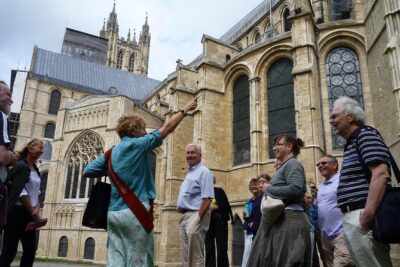
- Canterbury: Walking Tour with Green Badge Guide★ 4.8 · 709 reviews
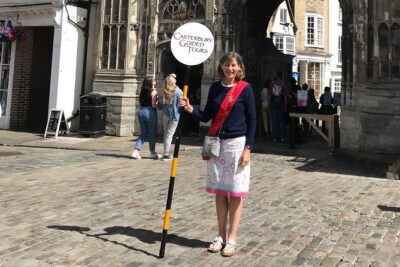
- Official Canterbury Guided Walking Tour – 11.00 Tour★ 5.0 · 422 reviews
- Official Canterbury Guided Walking Tour – 14.00 Tour★ 5.0 · 214 reviews
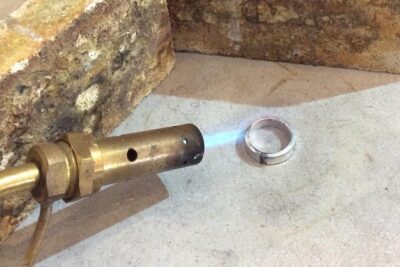
- Silver Ring Workshop in Kent, England★ 5.0 · 102 reviews
Fresh off the Canterbury review pile


Canterbury, Dover & the Kent Coast, compared.
 ★ 4.5Leeds Castle, Cliffs of Dover and Canterbury Day Trip from London with Guided Cathedral TourFrom $1452,820 reviews
 ★ 4.6From London: White Cliffs of Dover and Canterbury Day TripFrom $1062,623 reviews
 ★ 4.9London: South Downs White Cliffs Day Trip with Train TicketsFrom $1201,441 reviews
 ★ 4.6London: Canterbury Cathedral, Dover Castle, and White CliffsFrom $148973 reviews
 ★ 4.5Canterbury Cathedral, Dover Castle & White Cliffs Guided Day Tour from LondonFrom $152837 reviews
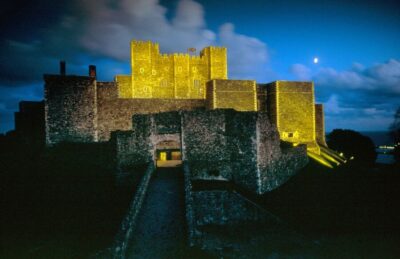 ★ 4.7Dover Castle Admission TicketFrom $33735 reviews
 ★ 4.4From London: Leeds Castle, Canterbury Cathedral & DoverFrom $141735 reviews
 ★ 4.8Canterbury: Walking Tour with Green Badge GuideFrom $20709 reviews
Also filed under