
REVIEW · BELFAST TOURS & POLITICAL MURALS
IRA Troubles Conflict Private Tour Museum Graves Murals and Political Analysis
If Belfast has a pulse, it is in its walls and graves. This private Troubles tour focuses on the Irish Republican perspective, with stops that feel like you are walking through a living argument in stone, paint, and names.
What I like most is the access and Q and A friendly pace, you are not rushed through set photos. A second big plus is the chance to get hands-on with the Peace Walls and memorial sites, including writing a peace message yourself.
The one thing to consider is the framing. This is firmly Republican in focus, so if you want a balanced Loyalist and British debate at equal depth, you may still learn a lot, but the story will not try to be evenly split.
In This Review
- Key highlights you will care about
- How the route keeps the story coherent, not chaotic
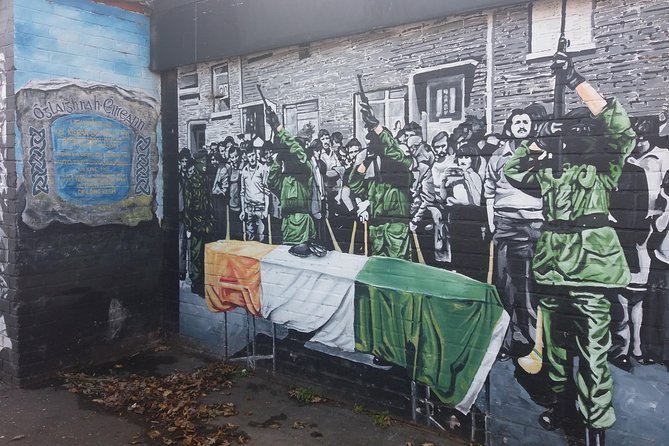
- Divis Street and the Falls Road murals: starting with a Republican lens
- Peace Walls up close: barriers, messages, and why they still matter
- Shankill Road murals and the Loyalist interface reality
- Clonard Martyrs memorial: names, dates, and the weight of memory
- Milltown Cemetery and Bobby Sands: the hunger strike you cannot miss
- Bobby Sands murals and D Company: connecting art to command
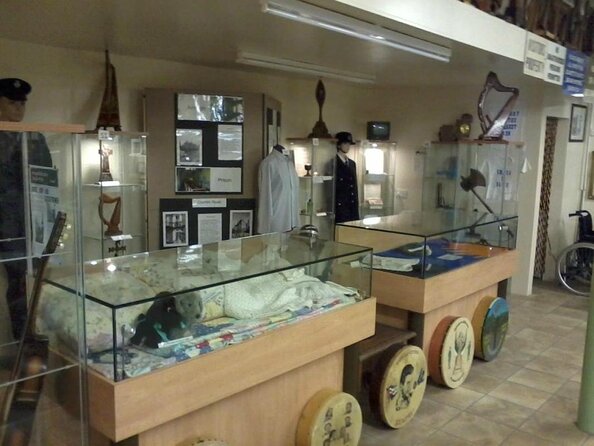
- The IRA history museum and that rare access feeling
- Clonard Monastery and Bombay Street: the interface in real time
- Ballymurphy and Divis Tower: murals plus the military watchpoints
- Peace Wall drive-bys and the Welcome Wall: what stays built
- Price and value for a $255.50 private Troubles experience
- Who should book this, and who should skip it
- Should you book this Belfast Troubles tour?
Key highlights you will care about
- Private guide time with room for questions, including political analysis and follow-ups
- Political murals up close around the Falls Road and Shankill Road
- Peace Walls first-hand, plus a chance to sign and write for peace
- Milltown Cemetery visits, including Bobby Sands resting place
- A rare museum stop with the lived-in feel of conflict history
- A street-level interface reality check, where neighborhoods still feel divided
Other Belfast tours, city and political
- Titanic Belfast Entrance Ticket: Titanic Visitor Experience Including SS Nomadic
★ 4.5 · 3,698 reviews - Cab Tours Belfast Famous Black Taxi Tours
★ 5.0 · 3,633 reviews - A History of Terror – Belfast City Centre Walking Tour
★ 5.0 · 2,883 reviews
How the route keeps the story coherent, not chaotic
This is a 3-hour private format, and that matters in Belfast. The Troubles can feel like a blur if you are hopping between sites on your own. Here, you get a guided through-line: where the conflict began, how it evolved for Republican communities, and why certain places still carry weight today.
The transport also helps. You get picked up from a central meeting point (the Leonardo hotel, with extra charges for other locations), then you ride in a private vehicle so you can actually look out the windows at murals and street fronts while your driver handles navigation. For a topic this heavy, less fuss at the start is a win.
If you opt for the VIP-style upgrade (when available), it is a nicer ride, but the main value is the guide and access. This tour is often booked well in advance, about 81 days on average, which is a good sign that people find it worth planning for.
Divis Street and the Falls Road murals: starting with a Republican lens
You begin in the interface zone vibe of Belfast, heading toward the Falls Road area. Your guide frames The Troubles from an Irish Republican perspective and walks you through how the conflict developed for Republicans, leading into the peace process and current politics.
One of the things I would pay attention to is the way murals are treated as historical evidence. You are not just looking at art, you are learning why certain images were painted, and how those visuals reflect prisoners and political movements. The tour also points out the Peace Walls as the physical split running through the city, and how that division hardened after violence in 1969.
This is where the guide choice shows up. Many people praised guides like Barry and Joe for bringing personal lived experience, plus a long view of Irish history before 1969. If you like to ask questions, this is a good time to do it, because the early context gives you something solid to build on later.
Peace Walls up close: barriers, messages, and why they still matter
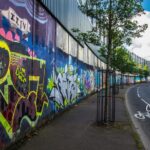
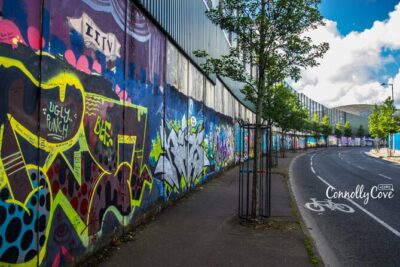
At the Peace Wall stop, you get more than a drive-by view. You visit both sides and learn why the separation barriers were built, plus what it means for day-to-day life. You will also sign your name and write a message of peace, which sounds simple, but it changes how you experience the place.
Here are a few details that help make sense of what you are seeing:
- The peace lines were first built in 1969 after sectarian riots.
- They were meant to be temporary, but they stayed, and the barriers grew longer over time.
- Around one-third of the walls appeared after 1994, when the IRA declared an effective ceasefire.
There is an easy trap with the Peace Walls: treating them as just a photo spot. Do not. Treat them like infrastructure. When you are on either side, you can sense how the city is still physically arranged around mistrust and memory.



Shankill Road murals and the Loyalist interface reality
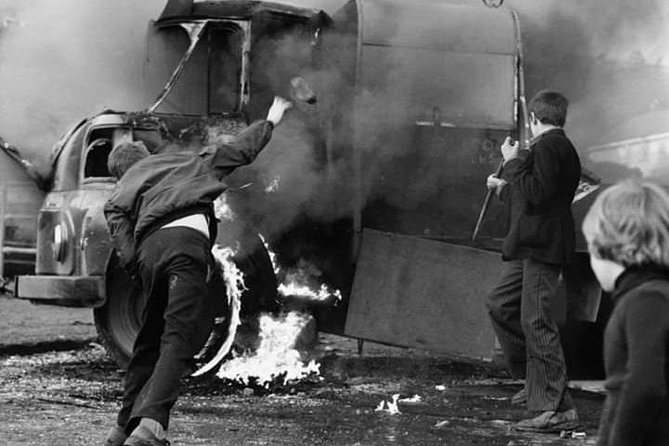
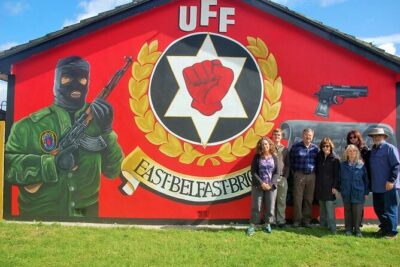
From the Republican side, you pivot toward the Loyalist Shankill Road. This is described as the heartland of Ulster Loyalism, with the area still associated with Loyalist paramilitaries such as the UDA and UVF.
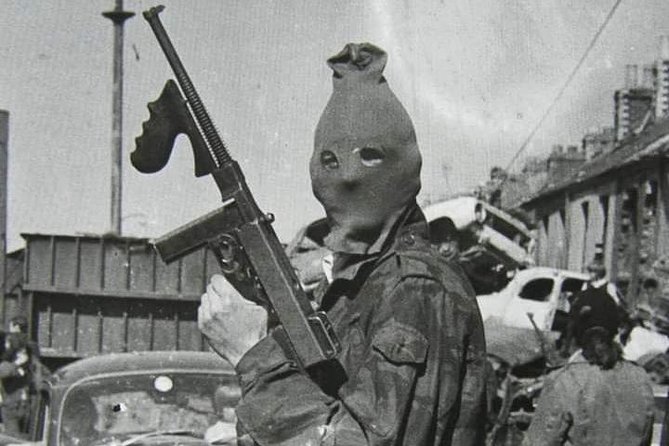
The murals here often feel harsher and more confrontational in imagery, including masked men wielding weapons. Your guide explains how Loyalism developed and evolved, and the role it played during the conflict. You also get picture time, and the best photos tend to come when you slow down and take in street context, not just faces.
One consideration: because your guide is telling the story through a Republican historical framework, you may find that the Loyalist side is explained as part of the overall conflict map rather than as a full independent case study. Some people love that structure. One person also flagged that it can feel one-sided. If you are the type who needs both arguments laid out equally, you may want to ask direct questions during the stop.
Clonard Martyrs memorial: names, dates, and the weight of memory
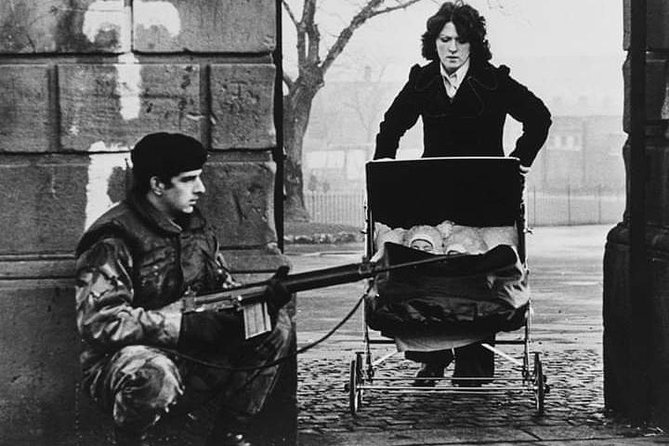
Clonard Martyrs is a memorial garden that does not hide what it is for. It commemorates fallen volunteers of a specific battalion and company, and it also acknowledges civilian casualties from the Greater Clonard area. The memorial is tied to Republican prisoners too, including those who died from the area between 1916 and 1970.
What makes this stop so powerful is the structure:
- The garden is divided into three separate yards.
- Plaques run along boundary walls with time ranges and lists of names.
- There are different panels that acknowledge Republican prisoners and also civilian deaths attributed in the memorial to loyalist and British forces during the conflict.
It is also grounded in specific events and timelines, including the claim that peace walls began as a simple solution to keep communities apart, and that walls expanded and were still present decades later.
If you are sensitive to emotionally intense content, this is one of the stops to take slowly. Also, bring patience. A memorial like this is not “quick look and move on.” It is a place where you will likely want time to read the plaques and absorb the names.
Milltown Cemetery and Bobby Sands: the hunger strike you cannot miss
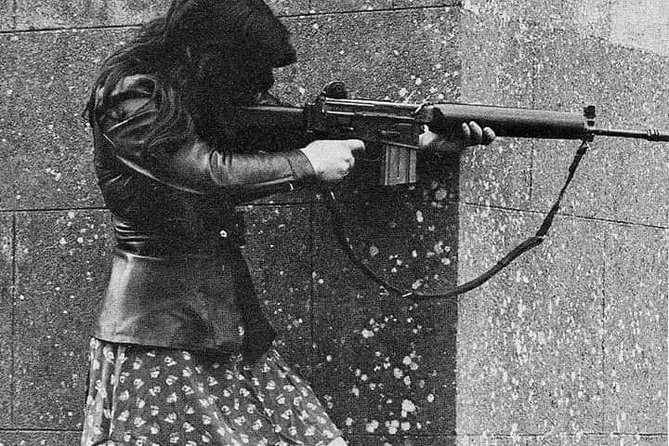
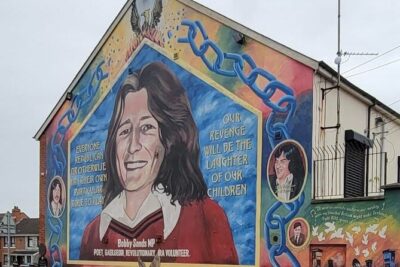
Milltown Cemetery is where the tour turns from street politics to burial history. You visit the Republican plot, and you learn about the people laid to rest there, including Robert Bobby Sands, who died on hunger strike in prison after being sentenced for firearms possession. Your guide connects him to the 1981 hunger strike and to his election as MP at the time of his death after 66 days.
The tour also highlights that much of the grave work is done by the National Graves Association in Belfast, and that graves marked with the Red Hand include IRA volunteers from different periods, including the 1920s and the Northern Campaign in the 1940s. The New Republican Plot includes the remains of 77 IRA volunteers, and the tour notes Óglach Mairéad Farrell among those identified.
This stop is often praised because it makes the political story feel human. It also explains why cemetery sites matter in Belfast culture, not as relics, but as an ongoing map of identity.
Practical note: plan your energy for a cemetery visit. Some people loved the time spent there, while at least one guest thought the tour spent too long at the cemetery. If you tend to get tired in quiet spaces, ask your guide how the timing will work for you.
Bobby Sands murals and D Company: connecting art to command
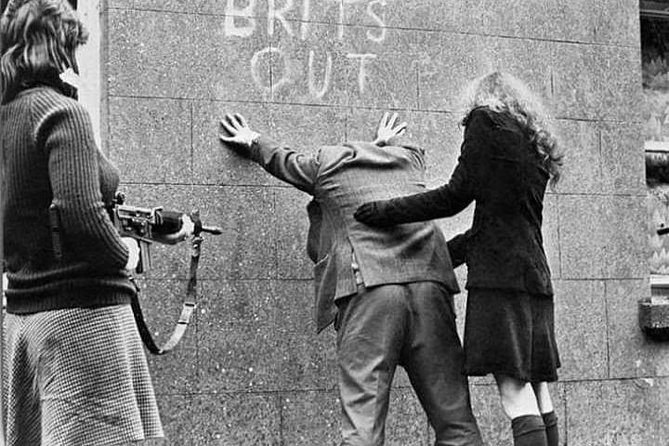
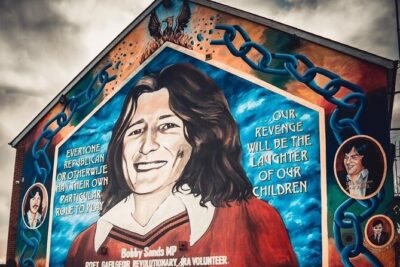
After the cemetery, you get pulled back into visual history. There is a Bobby Sands mural stop where you can photograph the Hunger Striker and learn about the Blanket and Dirty Protests that fed into the 1981 hunger strikes.
You also visit the 2nd Battalion IRA Garden of Remembrance, known as D Company, nicknamed The Dogs. Your guide connects it to events such as the Battle of the Falls in 1970 and the Falls Road Massacre in 1920. The tour also references seeing multiple hunger strikers, including 12 of the 22, with photographs.
This is one of the best segments if you like to see how symbols work. A portrait, a mural, a garden, a grave. Each one has a job, and the tour explains what that job is.
The IRA history museum and that rare access feeling
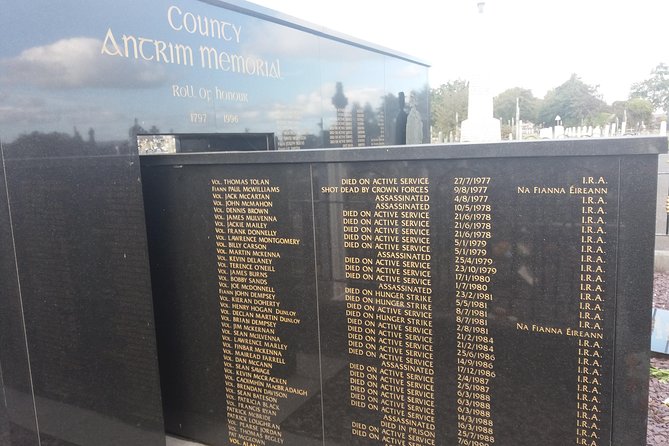
One of the most unique parts of this experience is the Irish Republican History Museum stop. You learn about resistance against British occupation and how that narrative is framed over centuries. The guide is described as an Irish history specialist, and you may meet ex-prisoners of war who share experiences of the conflict.
There is also a real-world timing detail: the museum only opens 10 to 2 Tuesday through Saturday. If it is closed, you do a substitute segment around Ballymurphy.
Why this matters for you: it reduces the chance of a disappointing stop. You still get content tied to the same overall story, and you do not end up with an empty gap. It also helps explain why the tour can be emotionally intense. You are not just passing sites, you are getting interpretive framing and direct voices.
Some guests singled out the museum as the best part. That tracks with what people typically remember here: a museum with personal accounts can make the rest of the street scenes click.
Clonard Monastery and Bombay Street: the interface in real time
Clonard Monastery sits in an interface area between the Catholic Falls Road district and the Protestant Shankill Road district. Your guide points out how the monastery relates to Bombay Street and Cupar Street, routes that historically led toward the Shankill Road.
You learn that on 14 August 1969 loyalist mobs from the Shankill Road launched attacks on houses owned by Catholics in those streets. Residents were forced to flee, and many houses were burnt, including the whole of Bombay Street. The priests at Clonard were actively involved early on in attempting to safeguard local residents.
The monastery stop also notes peace-focused clergy Frs. Alec Reid and Gerry Reynolds, who lived there. That detail is important because it shows religious actors are not always just bystanders in the Troubles story.
Expect this to feel sobering and grounded. It is a place you look at and instantly understand why interface geography became a survival issue.
Ballymurphy and Divis Tower: murals plus the military watchpoints
In the Ballymurphy and Divis area, the tour shifts into the idea that neighborhoods are archived on their walls. You see murals including An Gorta Mor (The Great Hunger), and you may drive through Republican Ballymurphy with murals honoring local volunteers, including Jim Bryson and his Big Louie Machine Gun, described as a tool used to terrify the British Army.
Then you reach Divis Tower, overlooking the Falls Republican stronghold. Your guide explains that the British Army had a snipers nest and spy post up until 2005. You also see the names and murals of the first two victims of the Troubles.
These are not tourist “views.” They are vantage points with a job. When you understand who watched whom, you start to read the city differently. Even a short stop can feel like stepping into the logic of control and fear that shaped everyday life.
Peace Wall drive-bys and the Welcome Wall: what stays built
The tour includes additional chances to spot key features, including the biggest Peace Wall in Belfast through a drive-by view, plus seeing the Welcome Wall and the Heartland of the Irish Republican Army around Divis.
Even though these segments can be brief, they matter. They connect the big named sites into a wider network. You end up with a better mental map of where the physical barriers, murals, and political spaces cluster.
This helps you do something useful after the tour: if you return to Belfast on your own, you will notice details you would have otherwise missed.
Price and value for a $255.50 private Troubles experience
At $255.50 per person for about 3 hours, it can feel like a lot until you break down what you are actually buying.
You are paying for:
- Private transportation in an air-conditioned vehicle
- Hotel pickup from a central area (with extra charges for other pickup points)
- A personal guide with political analysis and space for questions
- Multiple paid-inclusion elements, such as admission tickets at each stop
- Special inclusions that most Belfast tours do not offer, including handling plastic and rubber bullets used by British Crown forces
- Access that is not usually open, such as a private museum experience
For many people, the value lands because the guide is not reciting facts like a script. Multiple guides mentioned in participant feedback, including Barry and Paula, were praised for both detailed history and personal stories. That combination is what turns a city tour into a learning experience you remember.
If you dislike emotionally heavy travel or you need a neutral presentation only, this might not feel like value. But if you want the story through a Republican lens, and you want it organized and explained, the price starts to make sense fast.
Who should book this, and who should skip it
This tour is a strong fit if you:
- Care about politics and how street-level symbols reflect power
- Want to see the Falls Road and Shankill Road murals, not just the famous murals from far away
- Prefer a private format where you can ask questions without feeling rushed
- Are okay with emotionally intense stops like memorial gardens and cemetery plots
It may not be the best fit if:
- You want equal-time argumentative coverage of Loyalist and British perspectives
- You get overwhelmed by heavy memorial content and long plaque reading
- You struggle with listening to strong accents and fast explanations, since part of the experience depends on hearing the guide clearly (one guest flagged this as a problem)
Should you book this Belfast Troubles tour?
If your goal is to understand Belfast through murals, memorials, and the continuing physical divide of the Peace Walls, this is one of the most purposeful ways to do it. The museum stop, the cemetery visit tied to Bobby Sands, and the Peace Wall message writing are the kind of moments that help the city stop being abstract.
My take: book it if you are ready for a Republican-centered narrative and you want a guide like Barry or Joe type, who blends history with lived context. Skip it only if you truly need a balanced Loyalist and British debate as the main product, because that framing is not the point here.
Belfast: City, Murals, History
- Titanic Belfast Entrance Ticket: Titanic Visitor Experience Including SS Nomadic★ 4.5 · 3,698 reviews
- Cab Tours Belfast Famous Black Taxi Tours★ 5.0 · 3,633 reviews
- A History of Terror – Belfast City Centre Walking Tour★ 5.0 · 2,883 reviews
- Game of Thrones and Giant’s Causeway Full-Day Tour from Belfast★ 5.0 · 2,291 reviews
Fresh off the Belfast review pile


Belfast Tours & Political Murals, compared.
 ★ 4.8Giants Causeway, Dark Hedges, Dunluce & Belfast TourFrom $1128,843 reviews
 ★ 4.5Titanic Belfast Entrance Ticket: Titanic Visitor Experience Including SS NomadicFrom $373,698 reviews
 ★ 5.0Cab Tours Belfast Famous Black Taxi ToursFrom $1003,633 reviews
 ★ 5.0A History of Terror – Belfast City Centre Walking TourFrom $362,883 reviews
 ★ 5.0Game of Thrones and Giant’s Causeway Full-Day Tour from BelfastFrom $482,291 reviews
 ★ 5.0Private Black Taxi Belfast City TourFrom $1102,188 reviews
 ★ 4.5City Sightseeing Belfast Hop-On Hop-Off Bus TourFrom $132,012 reviews
 ★ 5.0Giants Causeway & Castles Tour from Belfast: Guided tourFrom $331,432 reviews
Also filed under