
REVIEW · BATH & THE ROMAN BATHS
Bath: Walking Tour of Bath and Guided Tour of Bath Abbey
Bath has a way of grabbing you fast, then keeping you curious. This walking and Abbey combo gives you the key sights of a UNESCO World Heritage City, with a qualified Blue Badge guide who mixes facts with a light, funny touch. I like that the tour is built around what you can actually see on foot, including Bath Abbey at the end, not just names on a map.
Two things I really enjoy are the way the guide connects architecture to real people and events, and how the walk lines up major stops like Royal Crescent, The Circus, and Pulteney Bridge so it all feels cohesive. One consideration: it is a steady, time-focused 2.5-hour format with about 4 kilometers of walking, so you will want comfortable shoes and a willingness to keep moving.
In This Review
- Key Points to Know Before You Go
- Getting Your Bearings in UNESCO Bath on One Solid Walk
- The Route Starts at Bath Abbey Churchyard, Then Builds Momentum
- Royal Crescent, The Circus, and Georgian Bath That Actually Makes Sense
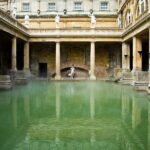
- Pump Room, Queen Square, and Bath’s Hot Springs Context
- Jane Austen, Bridgerton Filming, and Stories That Stick
- Bath Abbey Tour: Inside and Out, plus Why It’s More Than a Sight
- Skip the Line and the Value of a Guide at the Right Moment
- Who This Walking and Abbey Tour Fits Best
- A Few Smart Ways to Get More Out of the 2.5 Hours
- Should You Book This Bath and Bath Abbey Guided Tour?
- FAQ
- How long is the Bath walking tour and Bath Abbey tour?
- Where do I meet, and where does the tour end?
- What sights are included on the walking portion?
- Is entry to the Roman Baths included?
- Do I get to skip the line for Bath Abbey?
- What happens if Bath Abbey is not accessible?
- Is this tour wheelchair accessible?
Key Points to Know Before You Go
Blue Badge guide, guided walk plus Abbey time so you get context on the streets and then the building itself.
Skip-the-line Abbey access using a separate entrance, which helps the day run on schedule.
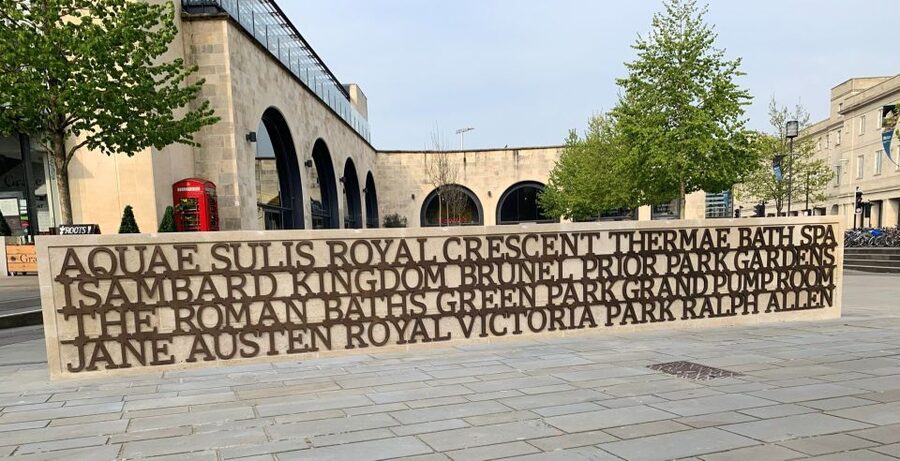
Georgian highlights in one loop including Royal Crescent, The Circus, and Pulteney Bridge.
Stories that connect Bath to pop culture and monarchy plus Jane Austen and filming locations for Bridgerton.
Roman Baths entry is not included even though you meet near the Roman Baths entrance.
Bath Abbey can close briefly at short notice and the provider states they will refund a proportion of your fee if they cannot visit.
More of Bath, Georgian and Roman
- Walking Tour of Bath with Blue Badge Tourist Guide
★ 5.0 · 1,877 reviews - Bath: City Walking Tour with Optional Roman Baths Entry
★ 4.7 · 1,401 reviews - Bath: Guided Walking Tour
★ 4.9 · 1,198 reviews
Getting Your Bearings in UNESCO Bath on One Solid Walk
If you want to understand Bath quickly, this tour is a smart way to do it. You get a guided 90-minute walking tour followed by a 30-minute Bath Abbey introduction, all wrapped into a practical 2.5 hours. That structure matters, because Bath is one of those places where the buildings are the story, and a guide helps you read the “why” behind the “what.”
I also like the tone. The guide approach is described as informative and light-hearted, and the guides are encouraged to field your questions. In past groups, specific guides like Andy, Nick, Jim, and Fred have come up for being humorous, patient with extra questions, and good at keeping the energy up. You should expect that kind of conversational guidance, not a lecture.
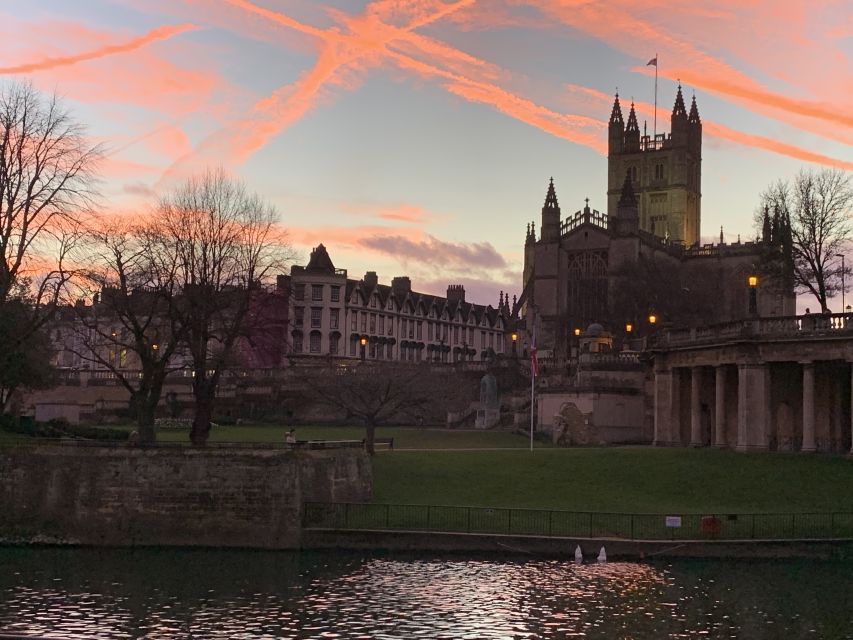
One more reason this works well: Bath Abbey is not a museum-only stop. It is a working church, so you are seeing it in a living context. When you add that to the city walk, your visit feels more grounded, not staged.
The Route Starts at Bath Abbey Churchyard, Then Builds Momentum
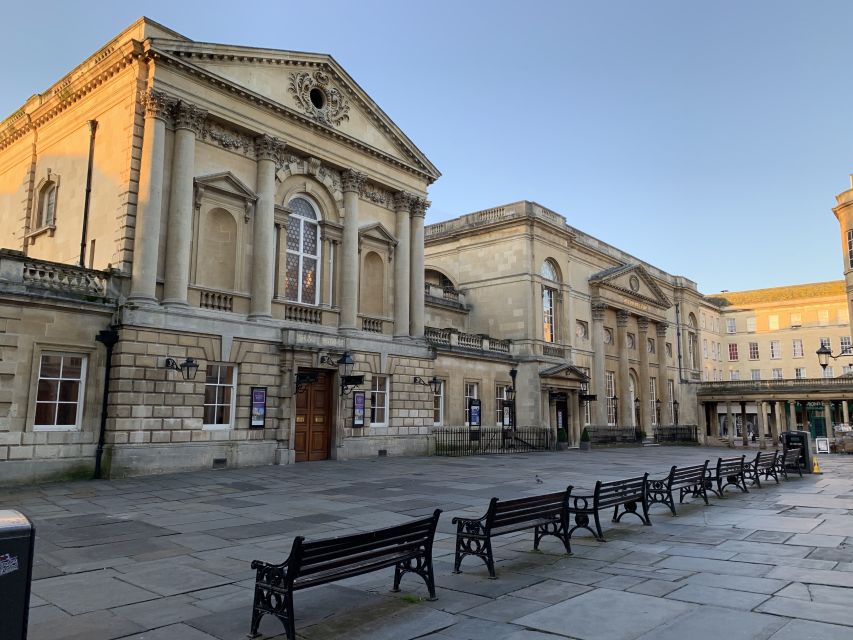
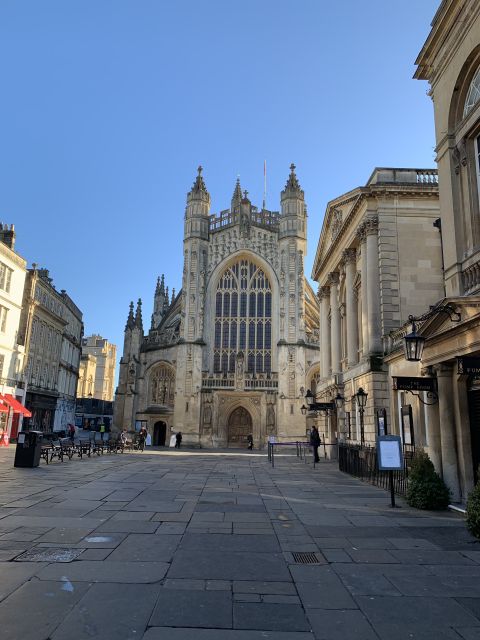
You meet in Abbey Churchyard, in front of Bath Abbey and near the entrance to the Roman Baths. Ending back at the meeting point means you are not fighting for wayfinding at the end of the tour. It is simply a loop that returns you to where you started, which is ideal if you plan to continue exploring afterward.
From a practical point of view, plan for about 4 kilometers of walking total. That is not a long hike, but it is long enough that you will feel it if you are in new shoes or you are carrying a heavier bag. The good news is that the stops are designed to give you a reason to pause, look, and listen, rather than just walking from one random street corner to another.
A small but important detail: the tour includes skip the line access through a separate entrance for the Abbey. In a busy historic site, that can be the difference between a smooth schedule and a stressful one, especially if you have plans after the tour.
Royal Crescent, The Circus, and Georgian Bath That Actually Makes Sense
Bath’s Georgian architecture can look like pretty stone at first. The magic is understanding how it was used and why it is arranged the way it is. This tour helps you see the city’s “big ideas” right away by weaving in the major landmarks as part of a story.
You will cover stops that include:
- Royal Crescent
- The Circus
- Pulteney Bridge
- And other key sights tied to Bath’s public life
Here is what to look for as you move. At Royal Crescent, pay attention to the uniform facades and the sense of rhythm across the curve. Your guide should explain how that style supported Bath’s social world, where visitors came for health, status, and conversation. The Circus is similarly designed to feel theatrical, but the point is not just the view. You should learn what such designs signaled to people living in that era, and how Bath marketed itself to visitors.
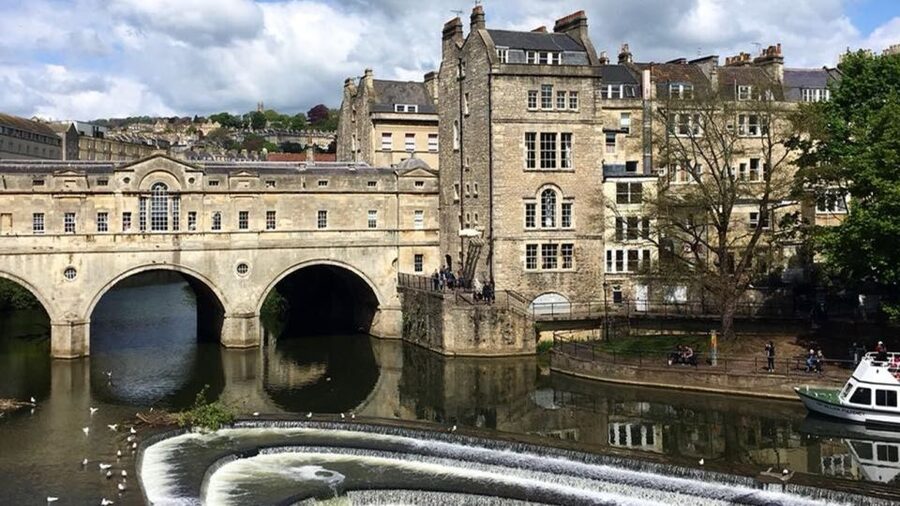
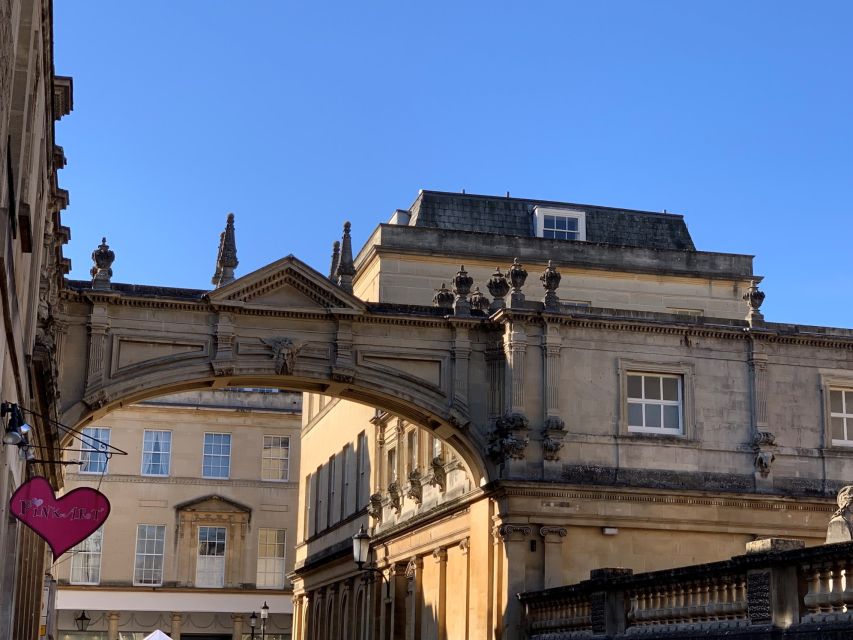
Then comes Pulteney Bridge. Bridges in Bath are not only about crossing water. They help define sightlines and bring energy into the cityscape. Watching the geometry from a guided vantage point helps you understand why photographers love it, but also why it mattered for movement and presence in daily life.
Drawback to keep in mind: because there is a lot packed into a 120-minute walk, you will not have unlimited time to linger at every spot. If you like to slow-walk and sketch for 30 minutes at each viewpoint, this may feel fast-paced. If you like structure, you will probably appreciate how much gets covered without making it feel chaotic.



Pump Room, Queen Square, and Bath’s Hot Springs Context
A big part of Bath’s identity is the link between hot springs and public life. The tour is designed to connect those dots so you do not walk through Bath thinking, I see the landmarks, but I do not know why they matter.
On this itinerary, you will hear about the Pump Room and Queen Square, as well as Bath’s hot springs. Even if you know Bath is famous for mineral waters, the guide’s job is to explain how the city built a social stage around that. The Pump Room, for example, is not just a building. It is part of the ritual of being in Bath, where the waters and conversation were tied together.
Queen Square is another useful anchor. It helps you understand how Bath organized public spaces and movement for visitors. When you connect those spaces to the hot springs story, it becomes easier to see Bath as a designed destination, not just a scenic town.
If you are the type who loves “how did they live” details, this section can be a highlight. Guides tend to make the chemistry of the place, the social habits, and the built environment feel like one picture.
Jane Austen, Bridgerton Filming, and Stories That Stick
Bath is one of those places where history overlaps with modern storytelling. This tour leans into that, including mention of Jane Austen’s role in the city and locations connected to Bridgerton filming.
Why that matters for your trip: pop culture references can be hit or miss if they do not connect to the real places. Here, the idea is to use those references as a shortcut to recognition. You might see a place and instantly think, I’ve seen it before, then your guide explains what it was in Bath’s own timeline. That turns a quick visual memory into real understanding.
Jane Austen’s presence also helps, because it reminds you that Bath was not only for elite visitors or “health tourism.” It was a place where manners, relationships, and social movement mattered. When your guide ties Austen to specific parts of the city, the stones start to feel like they have voices.
For me, the best tour stories are the ones that help you look differently. If your guide is doing their job well, you will start noticing patterns like frontage styles, the way people used streets, and why certain buildings faced certain public spaces.
Bath Abbey Tour: Inside and Out, plus Why It’s More Than a Sight
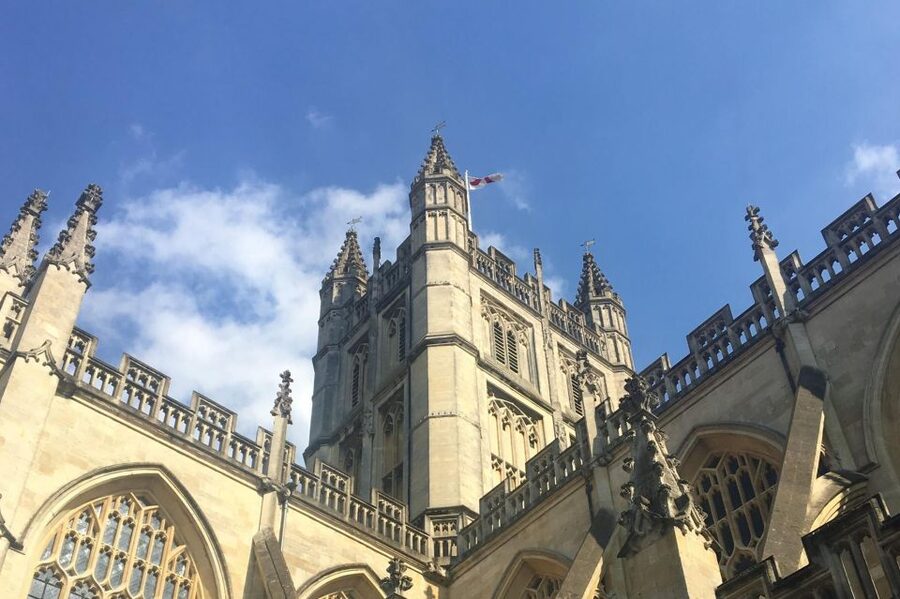
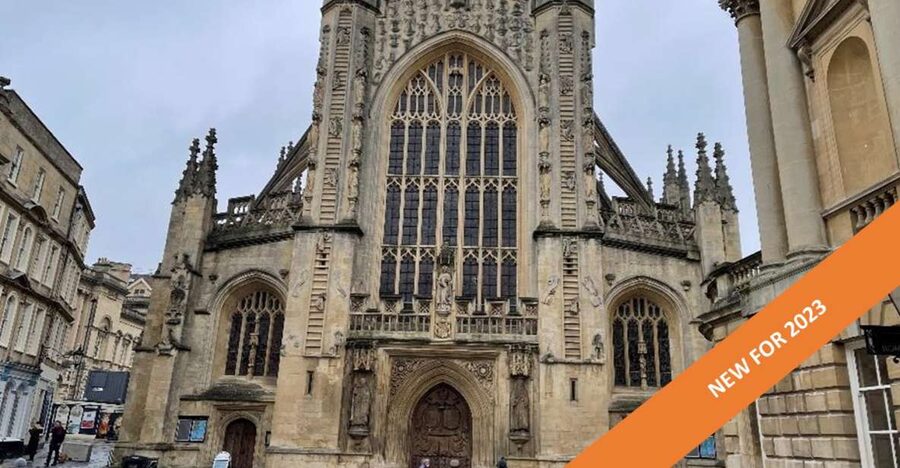
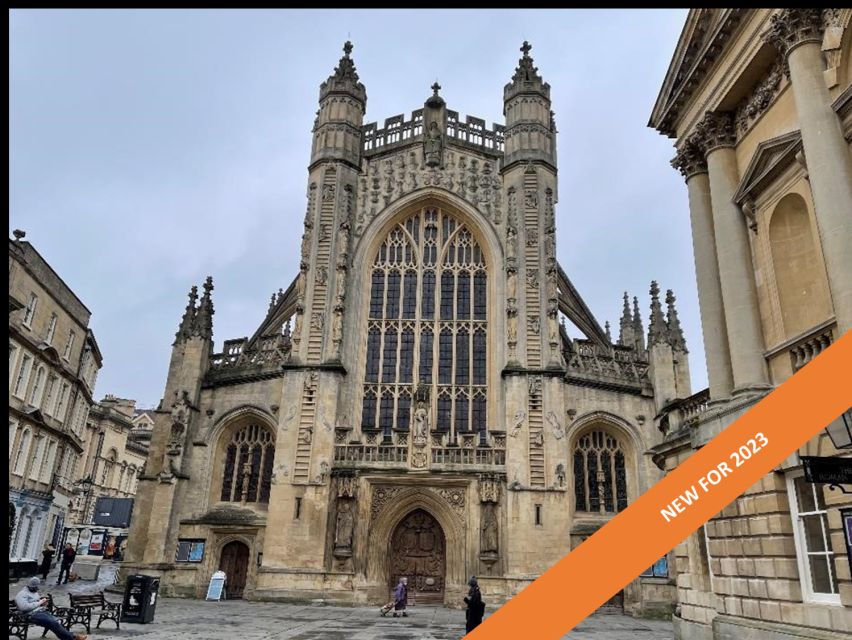
The second half of the experience is the Bath Abbey portion. After the walk, you enter the Abbey with your guide for a 30-minute guided tour, described as a first class introduction to the building and its history. The timing is important. After you see the city’s architecture outside, you walk into a building that is part architecture, part faith, and part civic identity.
What you should expect is a guided experience that covers Bath Abbey inside and out and explains its significance, including its importance in the history of the monarchy of England. Even with basic knowledge, this kind of Abbey talk can change how you read the space. You begin to notice features as symbols, not just ornaments.
Because Bath Abbey is a working church, access can change. The provider notes that from time to time the Abbey might not be accessible at short notice. If that happens and you cannot visit, they state they will refund the difference between the daily walking tour and your fee. Translation: they want you to have a fair outcome even when circumstances change.
One more point: the tour is designed to make the Abbey portion feel like the payoff. Many people remember that the Abbey intro is what set the whole day off properly. That makes sense. The city walk gives context, and the Abbey gives meaning.
Skip the Line and the Value of a Guide at the Right Moment
At $53.88 per person, you are paying for two main things: (1) a guided walk through Bath’s major highlights and (2) a guided Abbey visit with skip-the-line entry. Whether that is good value comes down to what you would otherwise do on your own.
If you were planning to wander independently, you would likely still see some of the landmarks. But without narration, Bath can be a bit like a beautifully illustrated book with no captioning. A good guide helps you:
- understand what you are looking at
- place events in the right context
- and avoid spending your energy trying to figure out what matters
The guided structure also reduces friction. You get a clear meeting point, a defined route, and timed Abbey access through a separate entrance. That means less planning stress and more time paying attention to details.
Also consider the “time math.” At around 2.5 hours with a guided Abbey component, this is a realistic way to fit Bath’s essentials into a day without turning your schedule into a puzzle. If you have other stops planned like the Roman Baths, this tour can serve as your orientation piece, even though the Roman Baths visit itself is not included.
Who This Walking and Abbey Tour Fits Best
This tour is a strong match if you want Bath’s headline sights with a guide who can explain them in a way that feels human. It suits:
- First-time visitors who want Bath explained fast
- People who enjoy architecture stories that connect to real life
- Anyone who wants both city context and a guided stop inside a major church
It also works well if you are traveling with kids or mixed ages, because guides described as cool under questioning pressure tend to keep the group moving while still answering curiosity. Since the tour encourages questions, it is often more engaging than a rigid script.
If you want a quiet, slow, photo-only wander, this may feel too structured. If you want a clear route and a guide who can answer your questions as you go, you will likely feel at ease with the pace.
A Few Smart Ways to Get More Out of the 2.5 Hours
Even with a guide, your attitude shapes your experience. Here are practical tips that fit the tour format:
- Wear shoes you can walk 4 kilometers in without regret. Historic streets are often uneven.
- Bring curiosity. The guide is there to answer questions, and asking about specific facades, the Abbey’s features, or Bath’s social life can turn a look into understanding.
- If you care about repeat visits, ask what to revisit and when. The tour is designed to offer insider knowledge on the best times to revisit certain sights.
- If Roman Baths are on your must-do list, plan that separately. This tour does not include Roman Baths entry tickets or a Roman Baths visit, even though you meet near the Roman Baths entrance.
Should You Book This Bath and Bath Abbey Guided Tour?
Book it if you want a smart, structured way to see Bath’s top Georgian sights and understand how they connect to the city’s people and story. The format is efficient, the Abbey portion adds a meaningful “inside” payoff, and the guide style is described as professional and light-hearted, with a track record of handling questions well.
Consider a different plan if you are mainly looking for independent time at your own pace or if you want Roman Baths included in the same ticket. This tour is about orientation and meaning, not everything in Bath.
If you want one guided experience that helps Bath click, this one is hard to beat. You finish with both the city’s big shapes and the Abbey’s deeper context, ready to explore the rest of Bath with better eyes.
FAQ
How long is the Bath walking tour and Bath Abbey tour?
The total duration is about 2.5 hours, with a 90-minute guided walking tour of Bath and a 30-minute guided tour of Bath Abbey.
Where do I meet, and where does the tour end?
You meet in Abbey Churchyard in front of Bath Abbey and the entrance to the Roman Baths. The tour ends back at the same meeting point.
What sights are included on the walking portion?
The tour includes major sights around Bath such as Pulteney Bridge, Royal Crescent, and The Circus, plus stops and explanations tied to Bath Abbey, the Pump Room, Queen Square, and the hot springs.
Is entry to the Roman Baths included?
No. The tour does not include a visit to the Roman Baths or Roman Baths entry tickets.
Do I get to skip the line for Bath Abbey?
Yes. The tour offers skip-the-line entry through a separate entrance for Bath Abbey.
What happens if Bath Abbey is not accessible?
Bath Abbey is a working church and can close at very short notice. If the Abbey is not accessible and you are unable to visit, the provider states they will refund the difference between the daily walking tour and your fee.
Is this tour wheelchair accessible?
Yes, the tour is wheelchair accessible. The tour is also noted as accessible to all, with only assistance dogs.
Bath: Baths, Abbey and Streets
- Walking Tour of Bath with Blue Badge Tourist Guide★ 5.0 · 1,877 reviews
- Bath: City Walking Tour with Optional Roman Baths Entry★ 4.7 · 1,401 reviews
- Bath: Guided Walking Tour★ 4.9 · 1,198 reviews
- Bath: Guided Ghost Tour★ 4.8 · 1,036 reviews
Fresh off the Bath review pile



Bath & the Roman Baths, compared.
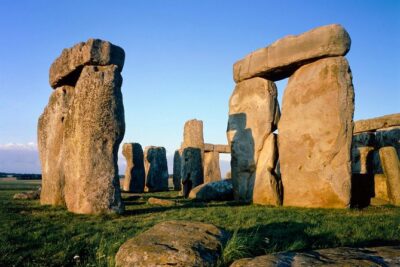 ★ 4.5Stonehenge, Windsor Castle, and Bath from LondonFrom $11118,662 reviews
 ★ 4.5Stonehenge, Windsor Castle and Bath with Pub Lunch in LacockFrom $1237,402 reviews
 ★ 4.5Stonehenge, Windsor Castle and Bath Full Day Guided TourFrom $1235,346 reviews
 ★ 4.5London: Windsor, Stonehenge, Bath, and Roman Baths Day TripFrom $1205,131 reviews
 ★ 4.5Stonehenge and Bath Tour from LondonFrom $994,295 reviews
 ★ 4.4London: Windsor Castle, Stonehenge & Bath Full-Day TourFrom $1083,112 reviews
 ★ 5.0Windsor, Stonehenge and Bath Day Trip from London SpanishFrom $1232,656 reviews
 ★ 4.8From London: Stonehenge and Bath Day Trip with TicketFrom $1142,411 reviews
Also filed under