
REVIEW · BATH & THE ROMAN BATHS
Roman Baths and Bath City Walking Tour
Bath’s story comes alive fast. This guided Roman Baths and Bath city walk strings together UNESCO sights, Bath Abbey drama, and Georgian set-pieces like the Royal Crescent. I especially like the small group feel, plus the option to upgrade and include Roman Baths entry, so you are not stuck choosing between history and time.
One thing to watch: Roman Baths access depends on the option you book, and the meeting point is simply Bath Abbey at BA1 1LT, so arrive a few minutes early and look for your guide.
In This Review
- Key highlights you will notice right away
- Bath’s Roman-to-Georgian story, in about two hours
- Start at Bath Abbey, then find your guide in the crowd
- Walking the Roman trail: Pulteney Bridge to the Great Bath
- The Georgian town center stops that make Bath feel like Bath
- Royal Crescent, Circus, and Pump Rooms, what you should pay attention to
- Price and value: where the optional Roman Baths entrance changes everything
- Pacing, shoes, and group size: the small-tour advantage
- Who should book this tour, and who might skip it
- Should you book the Roman Baths and Bath city walking tour?
- FAQ
- How long is the Roman Baths and Bath city walking tour?
- Is the tour available in morning and afternoon?
- Does the tour include entry to the Roman Baths?
- Where do I meet the guide?
- What language is the tour offered in?
- How many people are in the group?
- Does this include hotel pickup or drop-off?
- What fitness level is needed?
- Do I need good weather for the tour?
Key highlights you will notice right away
- Small group, up to 15, so you can actually ask questions without fighting the crowd
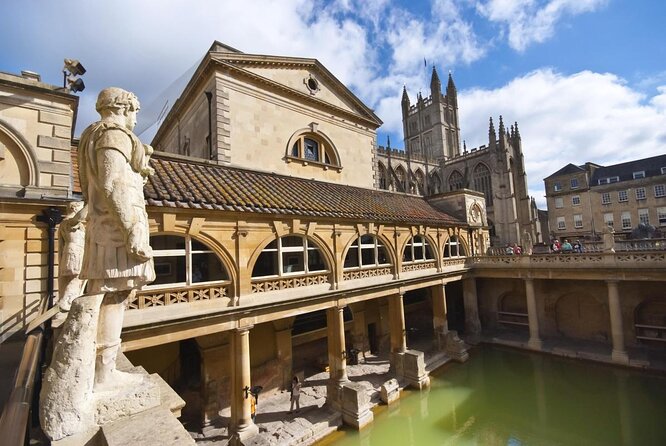
- Pulteney Bridge, Bath Abbey, and the Roman Baths in one smooth storyline
- Georgian Bath at full speed, with Pump Rooms, Upper Assembly Rooms, Royal Crescent, and Circus
- Royal Crescent and Circus are photo stops with context, not just backdrops
- Upgrade option for Roman Baths entrance, which can change the value a lot depending on what you already planned
More of Bath, Georgian and Roman
- Walking Tour of Bath with Blue Badge Tourist Guide
★ 5.0 · 1,877 reviews - Bath: City Walking Tour with Optional Roman Baths Entry
★ 4.7 · 1,401 reviews - Bath: Guided Walking Tour
★ 4.9 · 1,198 reviews
Bath’s Roman-to-Georgian story, in about two hours
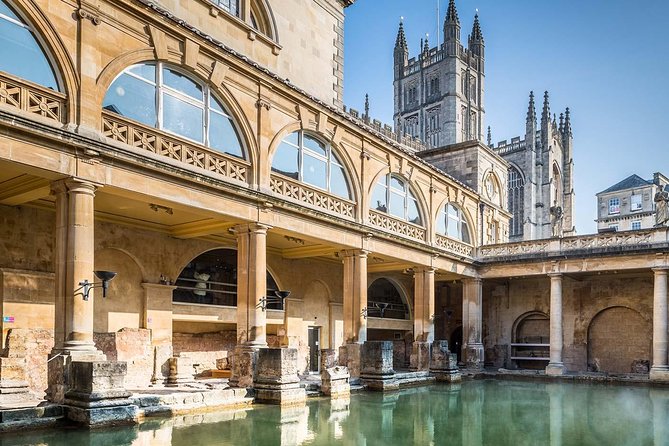
Bath is one of those cities where the street views look pretty, but the meaning is hiding in plain sight. This tour is a practical way to get the big picture, because it links the Roman thermal spa roots to the 1700s Georgian glow that still shapes how Bath feels today. You walk the key town center pieces while a guide connects buildings, dates, and purpose, so you are not just ticking off landmarks.
What I like about this approach is that it is not a long lecture or a rush-job sprint. The tour is about two hours (approx.), and it stays focused on the core sights most people want on a first visit. At the same time, it leaves enough room to look closely at stonework and details, especially around the Georgian terraces.
Also, you get a real choice: a walk that includes the Roman Baths experience only if you select the entrance upgrade. That matters, because Roman Baths tickets are often what make or break your total cost and schedule.
Start at Bath Abbey, then find your guide in the crowd
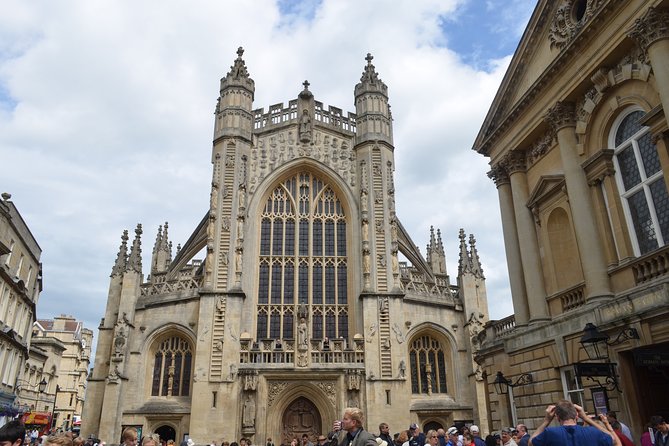
The tour meets at Bath Abbey (BA1 1LT), and it ends back at the meeting point. In real life, Bath Abbey is big and there are lots of people nearby, so your first job is simple: be early and be visible.
Here is a helpful tip that comes up in the experience feedback: guides usually carry white and green umbrellas with a logo, making them easier to spot when there are multiple groups around the Abbey area. If you do not see an umbrella right away, wait a few minutes and look again before you assume you are in the wrong place.
The other practical point is sound. There have been a few comments about guides being hard to hear in some situations. So if you want clear narration, pick a spot closer to the guide when the group gathers. It is a small move that can make the tour experience feel much smoother.
Walking the Roman trail: Pulteney Bridge to the Great Bath
Once you start walking, the tour shifts into a clear Roman storyline. Expect key photo and context stops that show how Bath’s Roman identity still echoes through the modern city.
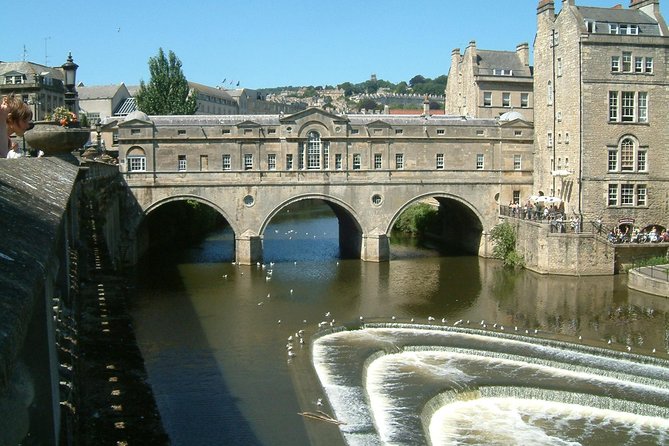
A standout early stop is Pulteney Bridge, an essential Bath landmark that helps you understand how the city’s layout works around water. From there, the route continues toward Bath Abbey, which the tour frames in a longer national story, including its role as the coronation site of England’s first king in 973. That kind of anchor helps your brain connect what you see with why the site mattered.
Then comes the star stop: the Roman Baths, either via the entrance upgrade or as your next step if you booked the walk-only option.
At the Roman Baths, you are guided through the big spaces that define the ancient complex, including:
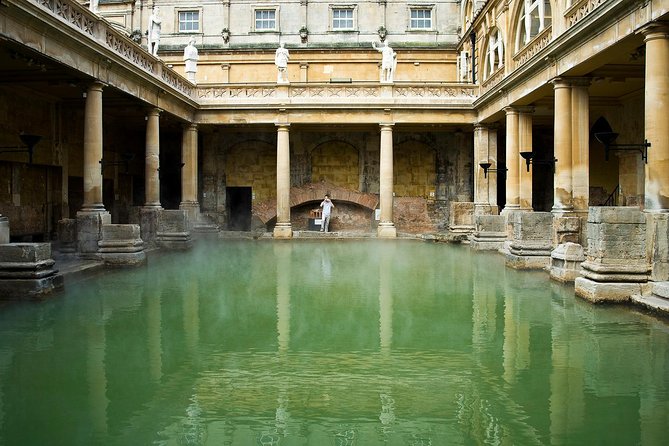
- the Great Bath, with its famous column-lined setting
- changing rooms and other areas tied to daily bathing routines
- hot pools and related facilities that show the spa system at work
- museum collection highlights, including Minerva’s Head and inscribed stone tablets
Even if you have seen photos, seeing the main artifacts in context is the whole point. The tour keeps you from just wandering, because the guide’s job is to connect what you are looking at with what Romans believed and how the site functioned socially and practically.





The Georgian town center stops that make Bath feel like Bath
After the Roman section, you shift into Georgian Bath, and this is where the city’s iconic architecture starts doing the talking. This part of the tour is especially helpful if you have not memorized Bath’s layout yet, because the guide points out patterns you can reuse later when you explore on your own.
You will see the Pump Rooms and the Upper Assembly Rooms, which are tied to Bath’s big 18th-century reputation as a social and health destination. These are not just pretty buildings. The tour’s storytelling helps you understand why people went there, how they spent time, and why the architecture catered to that lifestyle.
Then you hit two of Bath’s most famous showpieces:
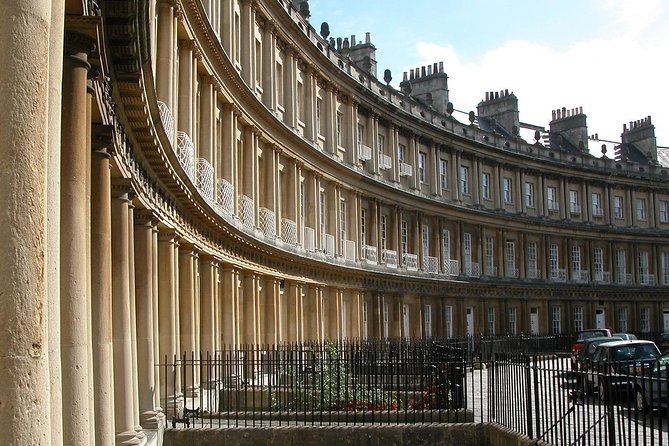
- Royal Crescent: a sweeping 18th-century terrace that looks stunning from a distance and even better when you study its symmetry up close
- Circus: a circular terrace shaped by curving segments, giving Bath one of its most distinctive architectural illusions
The guide’s value here is context. Without that, you might treat Royal Crescent and Circus as backgrounds for photos. With it, you start to notice how Georgian design creates rhythm and social hierarchy in stone.
Royal Crescent, Circus, and Pump Rooms, what you should pay attention to
If you want to get extra value from the walk, you can do it with a few smart attention moves.
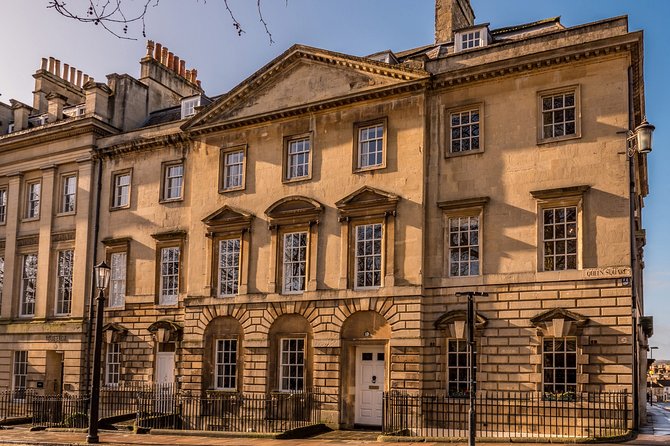
When you reach Royal Crescent, look at how the terrace reads as one composition rather than a scatter of buildings. The tour frames it as a showpiece, and that lens makes your eyes lock onto the big idea.
At Circus, pay attention to how the curved segments work together. It can look simple at first glance, but the geometry is part of why the place feels so memorable.
At the Pump Rooms and Upper Assembly Rooms, focus on the idea that Bath was a place to be seen as much as a place to recover. Even if you do not go inside everything, the stops help you understand how architecture supported daily life and social rituals.
These are the sorts of details that make your later self-guided strolls more satisfying. You will know what you are looking at, and why it matters.
Price and value: where the optional Roman Baths entrance changes everything
The tour price listed is $35.37 per person, and it runs about two hours. That is a fair baseline for a guided walk plus major sights, especially with a group cap of 15 travelers.
But here is the big value question: the Roman Baths entrance fee is not included unless you select the upgrade. If you already plan to visit Roman Baths anyway, choosing the entrance option is often the more efficient path, because you avoid time and ticket friction later.
If you booked the walk option without the entrance, you still get the Bath layout, the architecture highlights, and the guided wayfinding. You just will not have the Roman Baths interior access you might expect from the tour name unless you arrange it separately.
Either way, I would treat this tour as a plan-building tool. You are not just consuming sights, you are getting the city’s story in a way that makes your remaining hours in Bath more productive.
Pacing, shoes, and group size: the small-tour advantage
This tour runs with a maximum of 15 travelers, and that small size comes up as a big reason people love it. When the group is tight, the guide can slow down for questions, and you do not spend half the tour trying to read the next landmark over someone’s shoulder.
Pacing is another repeated theme in the experience feedback. People note the walk feels timed well, not too long, not too short, with enough stops to absorb the story. There are also comments about winter tours and the need to dress for the weather, including advice like comfy footwear and even warm gloves.
One more practical note: the tour lists a moderate physical fitness level. That is not a deal breaker, but it does mean you should plan for real walking time on sidewalks. If you know you struggle with sustained walking, consider whether Bath’s hillier streets will be comfortable for you later in the day too.
Who should book this tour, and who might skip it

This is a strong fit if you want:
- a first-time orientation to Bath’s Roman roots and Georgian architecture
- a guided route that helps you find the key sights efficiently
- a smaller-group experience where you can ask questions, rather than just listen from a distance
It can also work well for solo visitors. A few of the guide-focused comments mention solo travelers feeling comfortable because the tour stays professional while still feeling personal.
Families should check the stated rule: children must be accompanied by an adult.
You might want a different approach if:
- you expect a Roman Baths tour to be the long, standalone experience with unlimited museum time, because this is designed as a walking tour that combines multiple city segments
- you have trouble hearing guides in outdoor and crowded areas, since one feedback item mentioned low volume narration and a desire for clearer audio
Should you book the Roman Baths and Bath city walking tour?
Yes, if you are building a tight first day in Bath and you want the city to make sense fast. This is the kind of tour that helps you stop treating Bath as a list of photos and start treating it as a place with layers.
Choose the entrance upgrade if you want the Roman Baths to be part of the guided package and not something you still have to schedule later. If you skip it, you are still getting the walking overview and the architectural highlights, but you should plan your Roman Baths visit separately.
Finally, if you book this, do yourself a favor and arrive a few minutes early at Bath Abbey. Look for that white and green umbrella and start your walk on the right foot, literally and figuratively.
FAQ
How long is the Roman Baths and Bath city walking tour?
It runs for about 2 hours.
Is the tour available in morning and afternoon?
Yes, you can select a morning or afternoon departure.
Does the tour include entry to the Roman Baths?
Roman Baths entry is not included by default. You can upgrade to include the Roman Baths entrance fee.
Where do I meet the guide?
The meeting point is Bath Abbey, BA1 1LT, UK.
What language is the tour offered in?
The tour is offered in English.
How many people are in the group?
The tour has a maximum of 15 travelers.
Does this include hotel pickup or drop-off?
No. Hotel pickup and drop-off are not included.
What fitness level is needed?
You should have a moderate physical fitness level for the walking portion.
Do I need good weather for the tour?
Yes, the experience requires good weather. If it is canceled due to poor weather, you will be offered a different date or a full refund.
Bath: Baths, Abbey and Streets
- Walking Tour of Bath with Blue Badge Tourist Guide★ 5.0 · 1,877 reviews
- Bath: City Walking Tour with Optional Roman Baths Entry★ 4.7 · 1,401 reviews
- Bath: Guided Walking Tour★ 4.9 · 1,198 reviews
- Bath: Guided Ghost Tour★ 4.8 · 1,036 reviews
Fresh off the Bath review pile


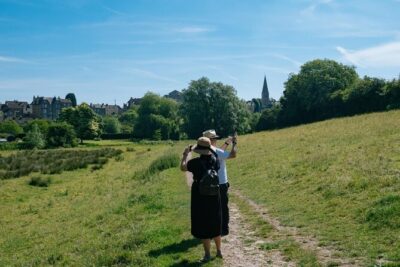




Bath & the Roman Baths, compared.
 ★ 4.5Stonehenge, Windsor Castle, and Bath from LondonFrom $11118,662 reviews
 ★ 4.5Stonehenge, Windsor Castle and Bath with Pub Lunch in LacockFrom $1237,402 reviews
 ★ 4.5Stonehenge, Windsor Castle and Bath Full Day Guided TourFrom $1235,346 reviews
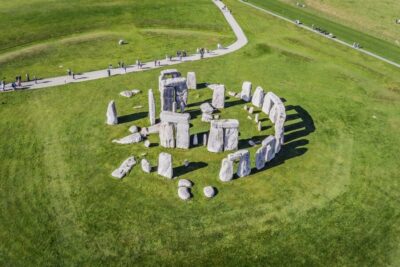 ★ 4.5London: Windsor, Stonehenge, Bath, and Roman Baths Day TripFrom $1205,131 reviews
 ★ 4.5Stonehenge and Bath Tour from LondonFrom $994,295 reviews
 ★ 4.4London: Windsor Castle, Stonehenge & Bath Full-Day TourFrom $1083,112 reviews
 ★ 5.0Windsor, Stonehenge and Bath Day Trip from London SpanishFrom $1232,656 reviews
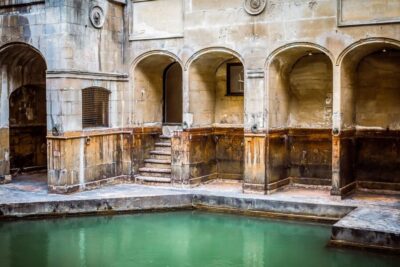 ★ 4.8From London: Stonehenge and Bath Day Trip with TicketFrom $1142,411 reviews
Also filed under