
REVIEW · BELFAST TOURS & POLITICAL MURALS
Belfast Troubles Tour: Walls and Bridges
Walls and bridges explain Belfast fast. This is a focused walking tour that covers the Troubles, but it also shows you the city’s everyday heartbeat, from the Albert Memorial Clock to the Cathedral Quarter. I especially liked the local, native-led perspective and the way the route mixes major landmarks with the Peace Walls in a story-driven order.
I also like that the tour feels personal. You get undivided attention from your private guide (max 16 people), and you are not just herded from sign to sign. The audio setup helps too, since headsets are used so you can follow along clearly.
One consideration: the material can be heavy. The tour is for age 14+, it includes graphic content, and you will hear straightforward descriptions related to violence and its impact.
In This Review
- Key things you will notice on this tour
- Walls and Bridges is more than a Troubles tour
- Getting started at City Hall: a small-group walk that moves
- City Hall, Dan George, and the landmarks that set the tone
- Divis Street murals, the Peace Wall, and why that wall is so specific
- The leaning Albert Memorial Clock Tower and the Cathedral Quarter’s energy
- First Presbyterian Church and the Belfast Entries: a calmer, thoughtful close
- Handling the graphic content and walking for 3 hours without burning out
- Price and value: what you get for about $33.29
- Should you book Belfast Troubles: Walls and Bridges?
- FAQ
- How long is the Belfast Walls and Bridges walking tour?
- Where does the tour start and where does it end?
- Is this tour private, or is it a large group?
- What language is the tour offered in?
- Is admission included for the stops?
- Is the tour suitable for kids?
Key things you will notice on this tour
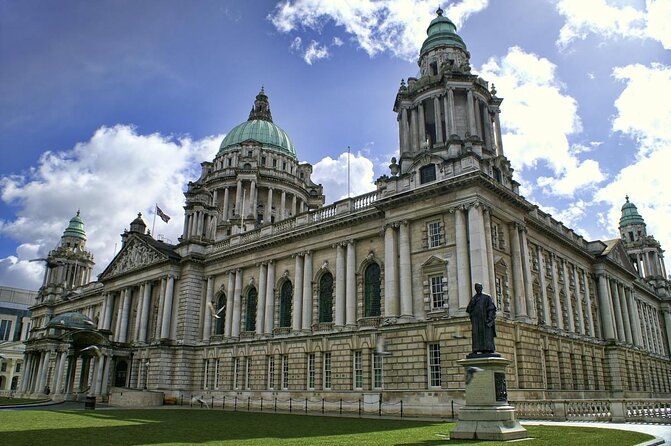
- City Hall as a wow-start: a dome height of 174 feet, plus stained glass and multiple marbles.
- Dan George’s central sculpture: Celtic motifs tied to Belfast’s industry and community identity.
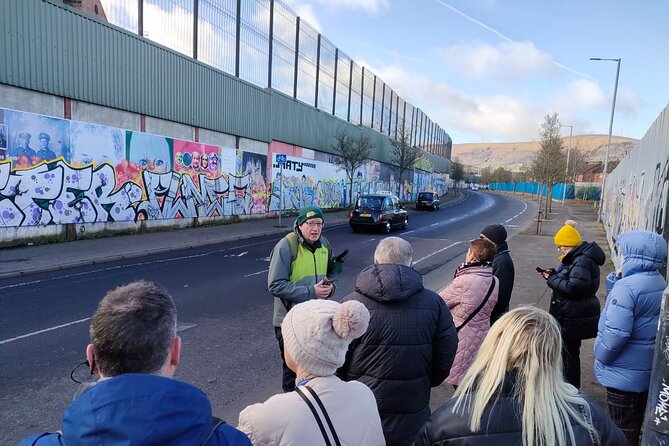
- Peace Wall photo time with context: 16-metre-tall walls topped with mesh to help stop petrol bombs.
- The Albert Clock Tower’s lean: 113 feet tall, leaning 4 feet, connected to Belfast’s founding spot.
- Cathedral Quarter streets that feel old and new: cobbles, murals, pubs, and the music energy.
- The Belfast Entries: narrow passageways you would miss unless a guide brings you through.
Other Belfast tours, city and political
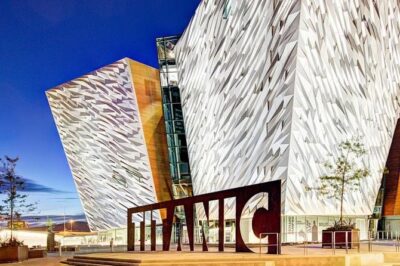
- Titanic Belfast Entrance Ticket: Titanic Visitor Experience Including SS Nomadic
★ 4.5 · 3,698 reviews - Cab Tours Belfast Famous Black Taxi Tours
★ 5.0 · 3,633 reviews - A History of Terror – Belfast City Centre Walking Tour
★ 5.0 · 2,883 reviews
Walls and Bridges is more than a Troubles tour
The biggest reason this walk works is the name. Walls and Bridges is not only about division. It also points you toward understanding, because the guide keeps tying big events to normal human life.
You will walk past landmarks you can see on any Belfast map, like City Hall and the Albert Clock Tower. But the guide uses those stops as anchor points for stories about identity, politics, and the daily reality that followed the Troubles for decades. That is what makes it feel like more than a themed history lecture.
I also appreciate the tone. The tour approach is direct and balanced, with room for questions. Based on what I’ve learned from people who took the walk with guides like Arthur Magee and Steve, the style is often a mix of honest facts, personal anecdotes, and humor that helps you keep going when the topic gets uncomfortable.
Getting started at City Hall: a small-group walk that moves
You meet at Belfast City Hall (BT1 5GS), a practical start because it is easy to find and right in the action. The tour ends at Rosemary St (BT1 1QB), so you do not feel stranded after the final stories. The First Presbyterian Church stop is within sight of City Hall, which makes the whole loop feel tight and efficient.
Expect a walking pace that fits normal city sidewalks, with moderate fitness required. It is not a sprint, but it is also not a sit-down tour. Plan for 2 hours 40 minutes to about 3 hours, and give yourself no pressure afterward.
One smart tip: wear shoes you trust. You are crossing cobbled areas in the Cathedral Quarter, and you will want stable footing when you pause often for photos and explanation.
City Hall, Dan George, and the landmarks that set the tone
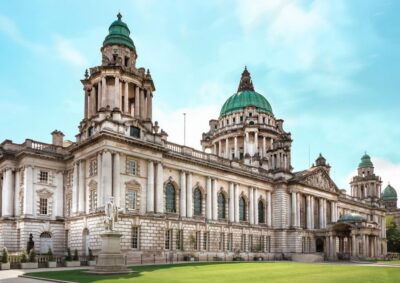
The tour opens at Belfast City Hall, and it is a strong choice because it reframes the city beyond conflict. The dome reaches about 174 feet high, and the interior is described as showing three types of Italian marble, including Cippilino marble from Greece, along with stained glass windows. Even if you never step inside, just being near the building gives you that wow factor people talk about.
This matters for your experience because it sets a baseline: Belfast is not only walls and memorials. It is also architecture, civic pride, and design you can measure in feet and materials, not just headlines.
Then you move through the city center to Dan George’s modern sculpture, set where people naturally pass. The work uses traditional Celtic design, and it reflects engineering, industry, and communities of Belfast. It is one of those stops that helps you feel the city’s mindset, especially if you are used to seeing Northern Ireland mostly through conflict-focused photos.
If you like a tour that uses visual clues to teach history, this opening section hits the sweet spot.


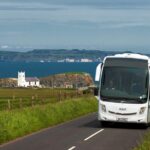

Divis Street murals, the Peace Wall, and why that wall is so specific
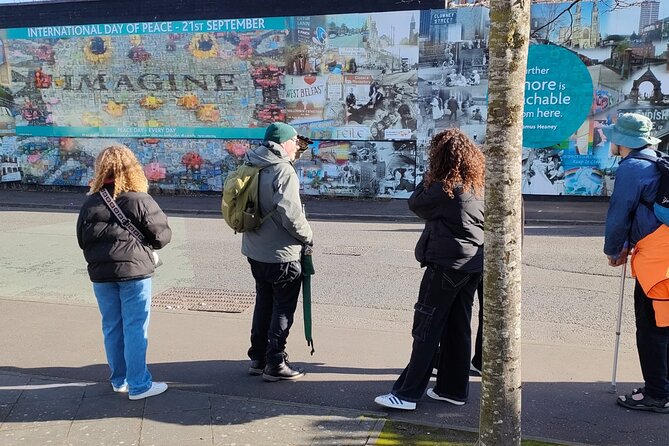
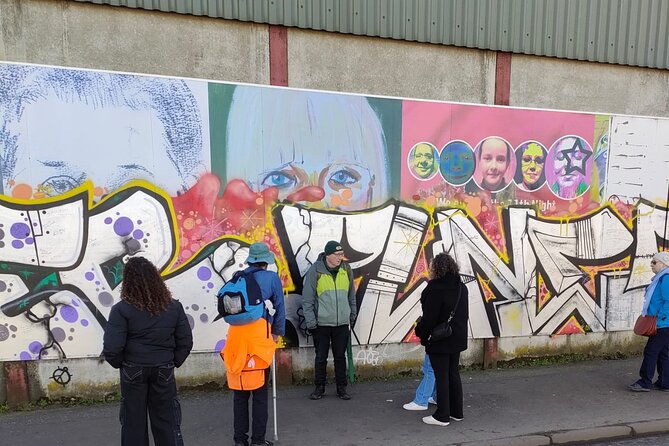
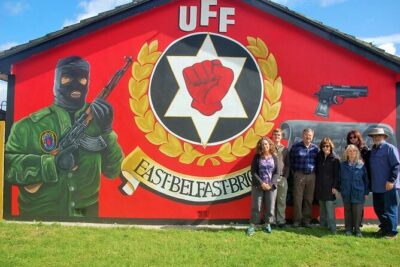
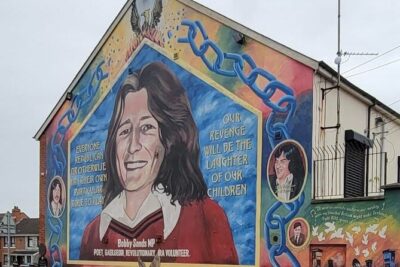
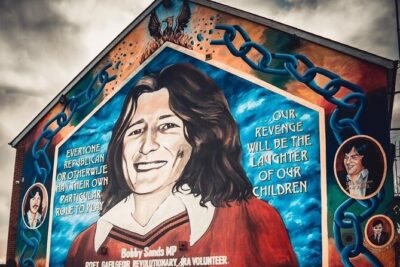
Next comes the International Wall of Murals near the Peace Walls, tied to the International Wall of Murals project. This is a quick stop, but it’s worth paying attention because murals here are often doing the work of public storytelling. They are not just decoration. They help mark identity and memory in a city where neighborhoods became political statements.
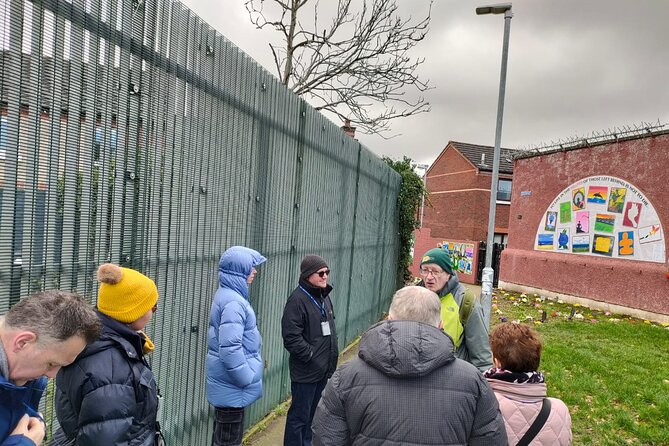
Then you reach the core stop: the Peace Wall. You get time to photograph and examine it, and the guide provides detailed explanation while you’re there. The tour notes the walls are about 16 metres high and topped with mesh meant to help stop petrol bombs. Knowing that physical detail changes how you see the wall. It is not an abstract symbol, it is engineered to stop real threats.
Here is the honest takeaway for you: this is the part that can feel emotionally heavy, but you also come away with clarity. You learn why separation hardened, and why daily life around it became complicated. You are not just shown a barrier. You are taught what it meant on the ground.
Also, the guide typically keeps the tone appropriate and neutral in delivery, with humor used carefully. That balance is one reason so many people give this tour a perfect score.
The leaning Albert Memorial Clock Tower and the Cathedral Quarter’s energy
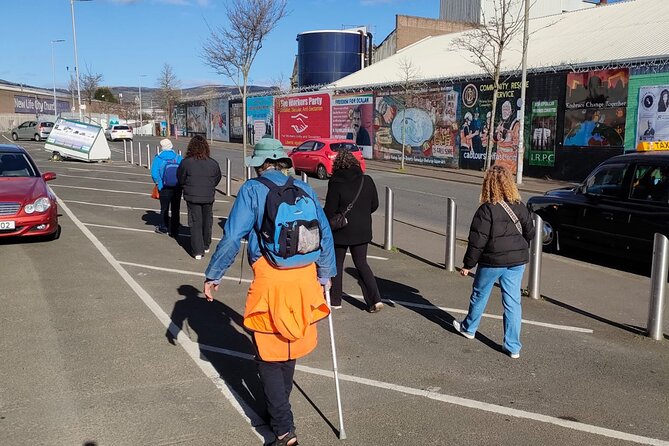
After the Peace Wall area, you head toward the Albert Memorial Clock Tower, Belfast’s leaning landmark. It stands about 113 feet tall and leans 4 feet off the perpendicular. It also has a statue of Prince Albert, and it is connected to the film noir Odd Man Out, starring James Mason.
This stop is short, but it’s useful. You see the oddity and charm of the tower, then the guide links it back to the spot where Belfast’s crossing point helped establish the town. That quick pivot matters because it reminds you that even when the Troubles dominate the story, the city existed long before the modern era of violence.
From there, you move into the Cathedral Quarter, often described as a newer, lively center with colorful murals, entries, pubs, and restaurants. You will notice cobbled stones that give the area an older feel. People also connect this part of town with major rock music moments, and that adds a sense of how Belfast rebranded itself through culture.
This section is your breathing space. It is not pretending the Troubles never happened. It is showing you how people built life again in the same city.
First Presbyterian Church and the Belfast Entries: a calmer, thoughtful close
The final stretch brings you to a building people call a hidden gem for a reason. First Presbyterian Church dates from 1783, and the guide explains stories that complicate the usual simple narrative about religious division. You cross the threshold and it feels like stepping back into the late 1700s.
You’ll hear that John Wesley preached from the pulpit and that the church is known for its elliptical shape. The guide also talks about members who made major stands for civil and religious freedoms. It is a different type of Belfast story than the street-level conflict narratives, which helps you end with reflection instead of only tension.
Then you finish with the Belfast Entries, historic passageways. These are narrow and easy to miss if you were exploring on your own. On the tour, you meander through them and pass sights related to revolution, intrigue, and pubs.
This ending works well because it gives you two things: atmosphere you can revisit later on your own walk, and a final reminder that Belfast life has layers. Even in a city shaped by conflict, there are shortcuts, side streets, and human-scale spaces that survived.
Handling the graphic content and walking for 3 hours without burning out
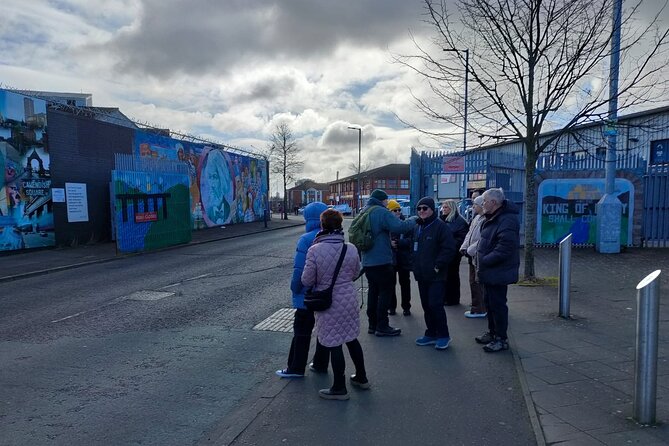
This tour is not aimed at children, and there is graphic content. The guide may include straightforward descriptions of violence and its effects. Some tours use headsets so you can hear the guide clearly, which is especially helpful when the streets get noisy or when other people are moving around you.
My advice for you is simple: decide in advance how much emotional intensity you can handle. If you are sensitive to details about murder, injuries, or violent events, do not treat this like a light sightseeing stroll.
What helps most is the way the guide structures time. You do not only hear worst-case stories. The route alternates between landmark visuals, moral questions, and the city’s other identities. One review-style point you should take seriously is that humor is used to keep things moving, but the tone stays respectful.
Also, this is a walking tour. Even when stops are only 5 to 10 minutes each, you are outside most of the time. Bring water, and dress for the weather, since Belfast can be damp and changeable.
Price and value: what you get for about $33.29
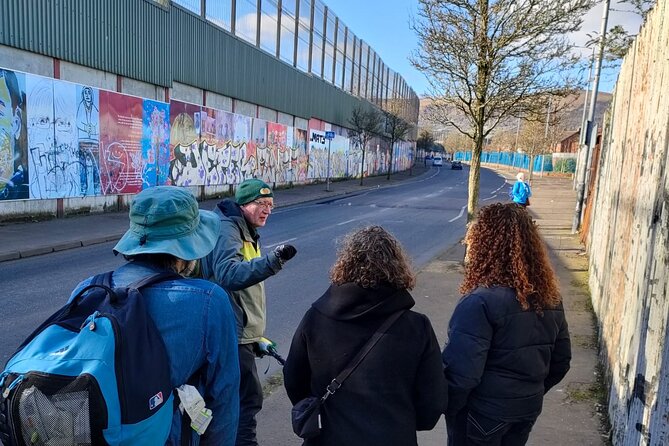
At about $33.29 per person, this tour is a strong value if you want both context and a guide who can answer follow-up questions. The tour is 2 hours 40 minutes to about 3 hours, and it is offered in English with a mobile ticket.
The stop structure also helps your money feel well spent. Many of the major stops are listed as admission free, including City Hall, the mural wall area, the Peace Wall viewpoints, the Albert Clock Tower area, and the Cathedral Quarter. The First Presbyterian Church admission is included, which means the main paid element is covered without you needing to hunt for tickets on the spot.
Add in the fact that this is a private tour style experience, with undivided attention, and the math gets even easier. If you are trying to learn Belfast’s Troubles without wasting time on guesswork, paying for a local guide is usually cheaper than spending hours doing your own research and still missing the meaning behind what you are seeing.
Should you book Belfast Troubles: Walls and Bridges?
Book this tour if you want a Belfast walkthrough that treats the Troubles seriously, but does not stop at the gloom. You will get a guided view that connects city landmarks, murals, and the Peace Walls into one coherent story. You’ll also come away with a better sense of how Belfast looks now, not just how it hurt then.
Skip it, or choose a different option, if you want a purely sightseeing day. This is a history and impact walk with graphic content. It is also best for adults or older teens, since it is set with a minimum age of 14 and is explicitly not aimed at children.
If you are deciding between doing it today versus later in your trip, I would do it early. The guide’s big-picture framing helps every other Belfast stop make more sense after you’ve learned what the walls, bridges, and streets were really saying.
If you can, ask who your guide is when you book. Names like Arthur (including Arthur Magee in past tours) and Steve show up in guide credits, and people tend to remember the combination of story, clarity, and personal perspective that makes the walk feel alive.
FAQ
How long is the Belfast Walls and Bridges walking tour?
It runs about 2 hours 40 minutes to 3 hours (approx.).
Where does the tour start and where does it end?
The tour starts at Belfast City Hall, Belfast BT1 5GS, and ends at Rosemary St, Belfast BT1 1QB.
Is this tour private, or is it a large group?
It is a private tour experience with a maximum of 16 travelers.
What language is the tour offered in?
The tour is offered in English.
Is admission included for the stops?
Outdoor stops are listed as admission free, and admission for the First Presbyterian Church is included.
Is the tour suitable for kids?
The minimum age is 14 years, and it is not aimed at children. The tour includes graphic content.
Belfast: City, Murals, History
- Titanic Belfast Entrance Ticket: Titanic Visitor Experience Including SS Nomadic★ 4.5 · 3,698 reviews
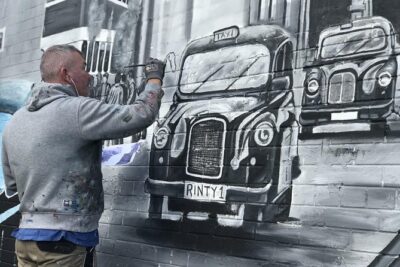
- Cab Tours Belfast Famous Black Taxi Tours★ 5.0 · 3,633 reviews
- A History of Terror – Belfast City Centre Walking Tour★ 5.0 · 2,883 reviews
- Game of Thrones and Giant’s Causeway Full-Day Tour from Belfast★ 5.0 · 2,291 reviews
Fresh off the Belfast review pile

Belfast Tours & Political Murals, compared.
 ★ 4.8Giants Causeway, Dark Hedges, Dunluce & Belfast TourFrom $1128,843 reviews
 ★ 4.5Titanic Belfast Entrance Ticket: Titanic Visitor Experience Including SS NomadicFrom $373,698 reviews
 ★ 5.0Cab Tours Belfast Famous Black Taxi ToursFrom $1003,633 reviews
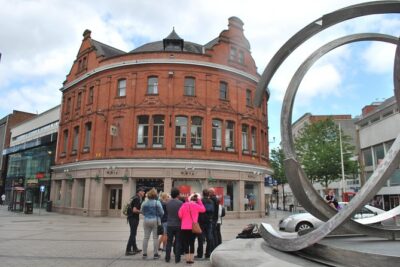 ★ 5.0A History of Terror – Belfast City Centre Walking TourFrom $362,883 reviews
 ★ 5.0Game of Thrones and Giant’s Causeway Full-Day Tour from BelfastFrom $482,291 reviews
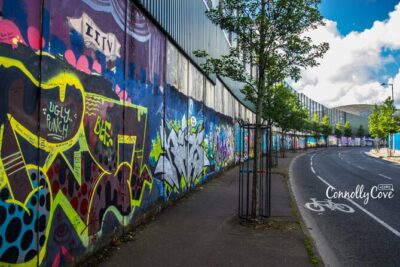 ★ 5.0Private Black Taxi Belfast City TourFrom $1102,188 reviews
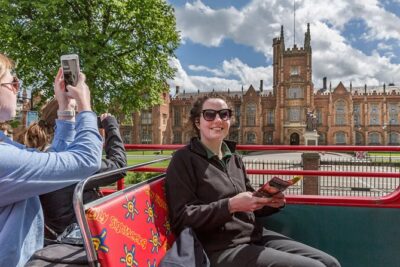 ★ 4.5City Sightseeing Belfast Hop-On Hop-Off Bus TourFrom $132,012 reviews
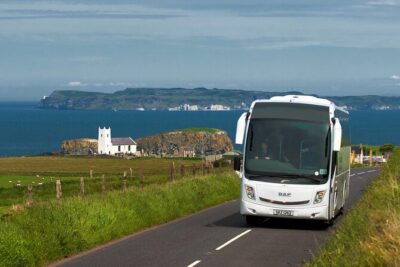 ★ 5.0Giants Causeway & Castles Tour from Belfast: Guided tourFrom $331,432 reviews
Also filed under