
REVIEW · LONDON MUSEUMS & GALLERIES
British Museum Guided Tour with Priority Timeslots(Small Group)
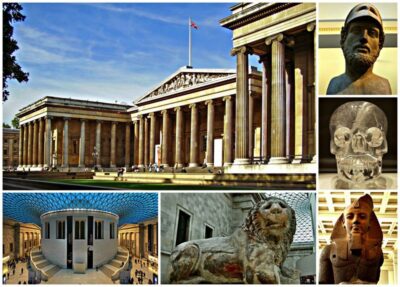
Two hours at the British Museum, no guesswork. I love the priority timeslots that help you slip inside when the museum is already crowded, and I love the headsets that keep your guide’s live commentary clear even in noisy galleries. It is an efficient way to see famous anchors like the Elgin Marbles and a Ramesses II bust, while an expert guide like Daniel or James helps the objects make sense.
The main thing to consider is simple: it is a highlights tour, not a full museum crawl. With a fixed 2-hour window, you will leave with a great starter map and big names in mind, but you cannot see everything in the 8,000,000-object museum.
In This Review
- Quick hits before you go
- Entering the British Museum with priority timeslots that actually help
- How a max of 15 people changes the whole experience
- The 2-hour route: what you’ll see at the British Museum
- The Elgin Marbles and Parthenon sculptures
- Rosetta Stone, the key that unlocks a readable past
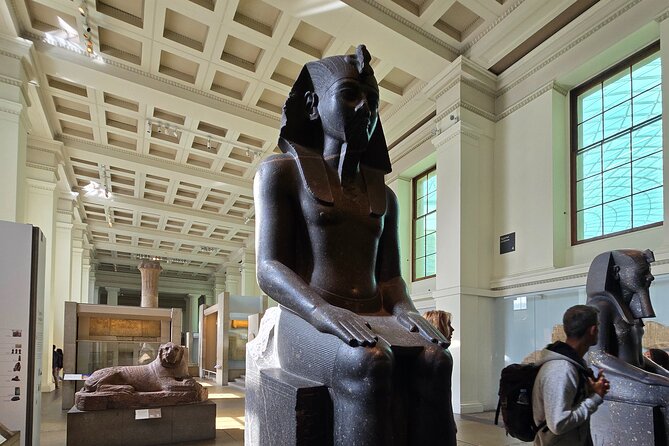
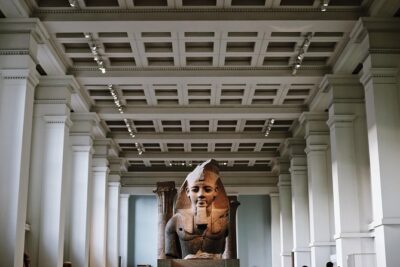
- Egyptian royal power, including a Ramesses II bust
- Mesopotamian and Assyrian drama, plus the winged bull
- Easter Island Moai: massive faces, no context needed
- Sutton Hoo ship burial: British discovery with a global feel
- Lewis Chessman: art, craft, and a human-sized puzzle
- Why the headset matters more than you think in London crowds
- The value of a guided highlights tour when you only have part of a day
- What to do after the tour ends, so you feel like you won the visit
- Price, duration, and who this tour fits best
- Who should consider a different plan
- Should you book the British Museum Guided Tour with Priority Timeslots?
Quick hits before you go
- Priority entry saves time in one of London’s most popular free museums
- Small group (max 15) means you can actually follow the route and ask questions
- Headsets available so you hear commentary clearly during crowd bottlenecks
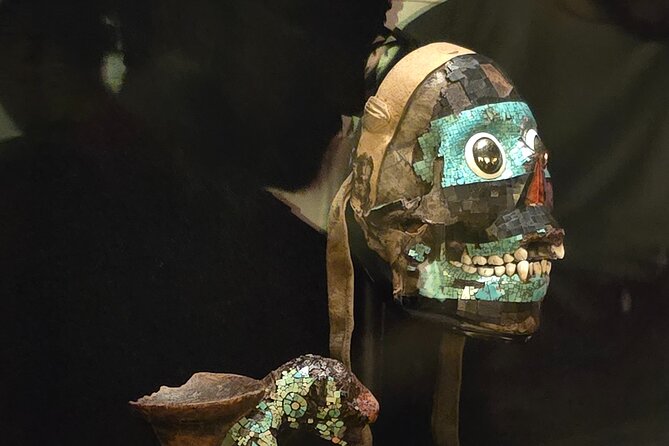
- Big-name highlights like Elgin Marbles, Rosetta Stone, and Egyptian royal pieces
- Expert-led route helps you navigate a museum with 70+ galleries
- Free after the tour to continue at your own pace with your new bearings
Other museum and gallery tours we sat through
- Frameless – Immersive Art Experience in London
★ 4.5 · 3,660 reviews - London: Entry Ticket to Frameless Immersive Art Experience
★ 4.7 · 2,923 reviews - London: British Museum Guided Tour
★ 4.3 · 1,182 reviews
Entering the British Museum with priority timeslots that actually help
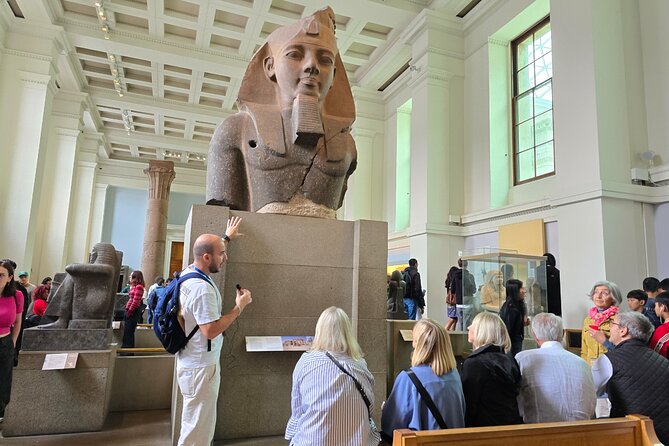
The British Museum is free, which is fantastic. It also means the place runs at full steam with lines, shoulder to shoulder crowds, and people stopping everywhere for photos. If you show up unplanned, you can spend a shocking amount of your visit just deciding where to go next.
That is why priority timeslots matter. This tour includes an admission ticket for the main entrance with priority entry, so you are not stuck waiting as long as everyone else. Add in a small group cap of 15, and the experience feels more like a guided walk through the museum’s best landmarks, not a mad dash.
I also like the “short but not shallow” format. Two hours is long enough to see real highlights and still get context for them, but short enough that it works on a packed London schedule.
How a max of 15 people changes the whole experience
In a giant museum, the real challenge is not finding objects. It is getting a path that makes sense. A larger group often turns into a slow moving line with constant regrouping. With a maximum of 15, the guide can keep the pace moving while still holding the group together.
This is where names like Daniel, Joey, and Antonio come up in a big way. Guides are praised for clear routing and for sharing stories that you will not get from signs alone. When you can hear the guide and stay oriented, you end up spending your energy looking at artifacts instead of trying to decode the museum layout on the fly.
The best part for first timers is that you are not left to guess what matters most. The British Museum has over 70 galleries and more than 8,000,000 objects. Your brain can only hold so much before it turns into a blur. A good guide turns that blur into a sequence.
The 2-hour route: what you’ll see at the British Museum
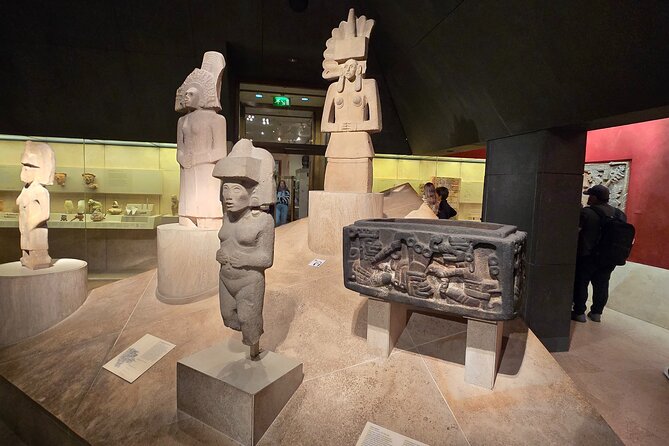
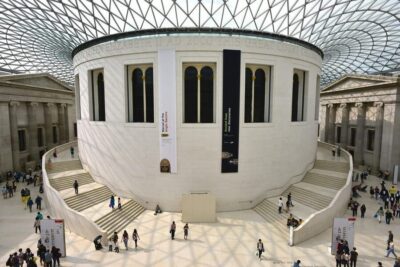
This tour focuses on one main stop, the British Museum itself, for about two hours. The guide leads you through key galleries and highlights, then you get time afterward to wander freely.
Here are the headline pieces you should expect to encounter, either directly or as part of the story the guide builds:





The Elgin Marbles and Parthenon sculptures
One of the big targets is the Parthenon sculpture tradition, including the Elgin Marbles. Even if you have seen photos, seeing these sculptures in person changes the scale and detail. You can also better understand what people mean when they talk about classical Greek art as a system of ideas, not just a style.
A good guide will connect the sculptures to what the museum is doing, why they are displayed the way they are, and how they fit into the wider collection. This is especially helpful if your interest is more than just “I want to see famous stuff.”
Rosetta Stone, the key that unlocks a readable past
The Rosetta Stone is another must. The reason it matters is not just its fame, it is its role in helping decipher Egyptian writing. When you hear that explained alongside the museum setting, the object stops feeling like a single artifact behind glass and starts feeling like a tool that changed how historians read ancient Egypt.
This is the kind of stop that works well in a highlights tour because the explanation makes the object instantly legible.
Egyptian royal power, including a Ramesses II bust
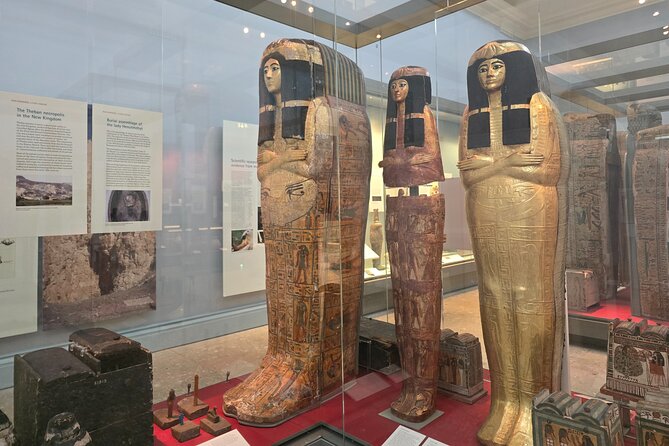
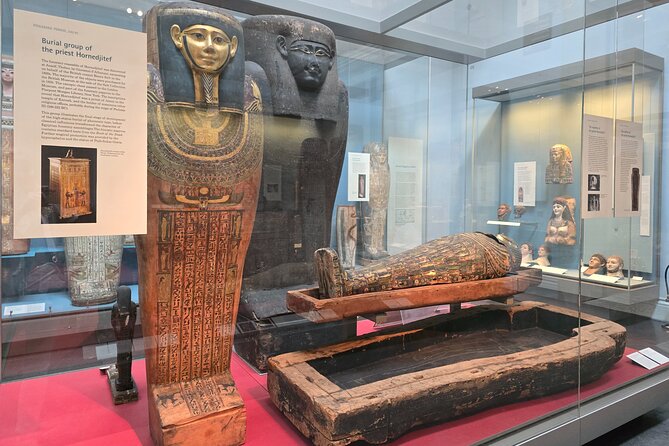
You also get Egyptian highlights. The itinerary messaging points to Egyptian statues and mummies, and the tour highlights include a Ramesses II bust. If you like pharaohs, dynasty politics, or the idea of royal imagery as propaganda, this is a strong set of stops.
Even without going super deep into everything Egyptian, the guide can give you a thread to follow, like how royal portraiture communicates authority and how the museum helps you compare different time periods.
Mesopotamian and Assyrian drama, plus the winged bull
The museum’s Near Eastern galleries are packed with story-driven objects. Expect a stop featuring the Assyrian winged bull, a famous carved guardian figure. These objects feel powerful even when you only have a few minutes, and the guide’s job is to explain why they were made and how they functioned in the original context.
One practical note: in a highlights format, the route may spend extra time where your guide feels the most story value is. That can be a win if you like that theme, but if you have very specific must-sees outside the route, you will still want to plan a bit after the tour.
Easter Island Moai: massive faces, no context needed
Then there are the Easter Island Moai. They are easy to recognize, and hard to forget. What makes them great in a guided highlights tour is that you get the context quickly, so you know what you are looking at before you move on.
Moai stops are also a nice break in pacing. They are visually striking and tend to make the group pause naturally.
Sutton Hoo ship burial: British discovery with a global feel
The Sutton Hoo ship burial is one of the museum’s most famous connections to Britain’s early history. Even people who only know it from headlines usually want to see it in person.
A good guide will help you connect the object to why it is so significant, and how the British Museum places it alongside artifacts from around the world. It is a reminder that the museum is not just “foreign stuff,” it is also a showcase of how different cultures and eras connect.
Lewis Chessman: art, craft, and a human-sized puzzle
Finally, keep an eye out for the Lewis Chessman. Chess pieces can sound niche, but in a museum context they become a mini lesson in craftsmanship, medieval life, and how everyday games turned into collectible art.
In a two-hour window, including pieces like this is smart. It gives you variety, and it gives you something you might want to study again afterward.
Why the headset matters more than you think in London crowds
Headsets are an optional feature, but they are included as an option on this tour. In a museum like the British Museum, crowd noise and distance can make a standard group tour frustrating.
Here’s the practical takeaway: if your hearing is not perfect or you prefer to stay attentive without leaning in, the headset is worth it. One of the common points you can expect from this kind of tour is that the museum can get crowded in certain areas, and the headset helps you keep up with the guide’s exact talking points.
Even if you decide you do not need a headset, know this: a highlights tour often moves quickly between popular objects where lines of sight get blocked. Clear audio keeps your attention on what you are seeing, not on figuring out what you missed.
The value of a guided highlights tour when you only have part of a day
Let me frame the value in plain terms.
The British Museum entry itself is free to the public. But the museum is also huge, and it is popular. So your “real cost” is time and decision fatigue. This tour adds paid guidance to reduce both.
For $48.60 per person, you are buying:
- an expert guide for about two hours
- priority timeslots for main entrance entry
- optional headset support
- a route designed to hit key objects that most people want to see
If you were going solo, you could absolutely put together an itinerary. But two things make that hard: the museum’s scale and the crowds. A guide solves the “what should I see” problem, and priority entry solves the “how long am I standing in lines” problem.
In short, this is strong value when you:
- have limited time in London
- want to see the top artifacts without losing half your visit to navigation
- prefer a plan you can trust, not just a list of photos
What to do after the tour ends, so you feel like you won the visit
The tour ends back at the meeting point, and you are free to keep exploring on your own afterward. This matters because a highlights tour works best as a primer.
Here is the smartest way to use that extra time. Take your new “mental map” and choose what you want to repeat or expand. If you loved Egyptian royal imagery, drift back toward more Egyptian galleries. If you got hooked by classical sculpture, spend more time around Greek works. If you liked the more unusual objects like chess pieces or Moai, follow the route logic your guide introduced.
You will likely notice something important during your unguided wandering: you can spot what you remember. That is the real payoff. A good guide helps you see patterns, not just objects.
Price, duration, and who this tour fits best
At $48.60, this is not a budget activity, especially since museum admission is free. But you are not paying for admission alone. You are paying for guide time, priority timeslots, and the headset option that makes a short visit easier to enjoy.
The duration, about 2 hours, is also a selling point. It gives you a concentrated experience you can stack with other nearby stops in London without burning your whole day at one museum.
This tour is a great fit if you are:
- visiting for the first time
- traveling as a couple or small group that wants a plan
- someone who learns best through conversation and real-world stories
- short on time but still wants the major highlights, not random browsing
Who should consider a different plan
Two scenarios might change the recommendation.
First, if you want to spend a long, slow day in the British Museum and deeply explore one or two themes, a highlights tour may feel too quick. You can still see a lot on your own, but you would be giving up the “guided pacing and explanations” that make the highlights tour feel worth it.
Second, if you have very specific must-see galleries that are not likely to be prioritized on a highlights route, you might feel like the time is concentrated. The good news is you can still continue afterward, but you should be ready to follow up independently.
Should you book the British Museum Guided Tour with Priority Timeslots?
Book it if you want the best of the British Museum in a short window, and you value a plan that gets you inside faster with clear commentary. Priority timeslots plus a small group plus optional headsets is a practical combo for a museum that can otherwise eat your time.
Skip it only if you want a long, slow museum day built around deep wandering, or if you already have a very detailed personal route and you are comfortable navigating the crowds yourself.
If you are the type who likes to come away with names, stories, and a sense of where everything fits, this is a smart buy for your London itinerary.
Museums and Galleries, Keep Going
- Frameless – Immersive Art Experience in London★ 4.5 · 3,660 reviews
- London: Entry Ticket to Frameless Immersive Art Experience★ 4.7 · 2,923 reviews
- London: British Museum Guided Tour★ 4.3 · 1,182 reviews
- Official tickets: Moco Modern & Contemporary Art Museum★ 4.5 · 1,157 reviews
Fresh off the London review pile




London Museums & Galleries, compared.
 ★ 4.5Frameless – Immersive Art Experience in LondonFrom $383,660 reviews
 ★ 4.7London: Entry Ticket to Frameless Immersive Art ExperienceFrom $372,923 reviews
 ★ 4.3London: British Museum Guided TourFrom $231,182 reviews
 ★ 4.5Official tickets: Moco Modern & Contemporary Art MuseumFrom $361,157 reviews
 ★ 5.0British Museum London Guided Tour Semi-Private 8ppl MaxFrom $108984 reviews
 ★ 4.1London: Tour of the British MuseumFrom $14678 reviews
 ★ 4.5London: British Museum Audio Tour & Priority Entrance TicketFrom $9631 reviews
 ★ 5.0The British Museum London – Exclusive Guided Museum TourFrom $108555 reviews
Also filed under