
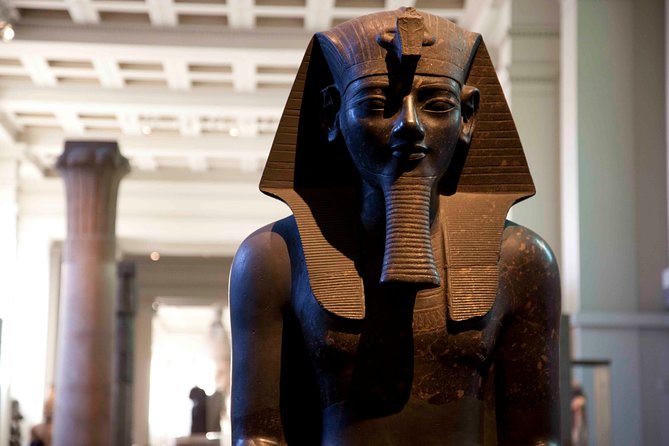
REVIEW · LONDON MUSEUMS & GALLERIES
British Museum Highlights Private Tour in London including the Rosetta Stone
The British Museum is too big to wing. This private highlights tour in London gets you to the right rooms fast, with time to ask questions as you go, especially around the Rosetta Stone. I also like the way the format keeps things tight and organized, so you do not waste your limited hours getting lost across 70 galleries and almost a million square feet.
The main drawback is locating your guide at the start. The meeting point is specific, Montague Place by the north entrance, near the stone lions, and one unhappy group said there was no clear sign when they arrived. If you hate uncertainty before you even start, plan extra time and double-check you are at the right spot.
In This Review
- Key things to know before you go
- British Museum Highlights in 2.5 Hours: the value of a guide
- Where you meet at Montague Place, and why it matters
- Your 2.5-hour route: how you actually move through 70 galleries
- Stop inside the British Museum: the Rosetta Stone moment
- Egyptian Rooms and mummies: death and the afterlife made clear
- Parthenon Frieze and Athenian marbles: see Greece through London
- Sutton Hoo and Anglo-Saxon artifacts: Britain gets a turn
- Choosing your pace: private Q&A vs. staying on schedule
- After the tour: what to do once you are free to roam
- What you get for $141.56: admission included, and time is the real currency
- A note on guide variation, and how to protect your experience
- Who this private British Museum tour fits best
- Should you book the British Museum Highlights Private Tour with the Rosetta Stone?
- FAQ
- Where do I meet the guide for the British Museum Highlights tour?
- How long is the private tour?
- Is museum admission included?
- Is this tour private?
- What language is the guide?
- Can I cancel for a refund?
Key things to know before you go
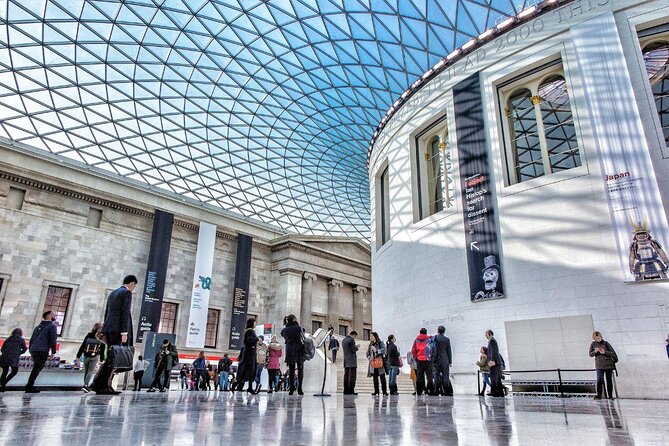
- A private guide at the British Museum means you can ask follow-up questions instead of rushing past labels.
- The Rosetta Stone is a guaranteed stop, explained for how it helped crack Egyptian hieroglyphs.
- Egyptian Rooms and mummies come with context about death and the afterlife in Ancient Egypt.
- Parthenon Frieze passes by as a major highlight linked to the Acropolis in Athens.
- Anglo-Saxon England, including Sutton Hoo adds a distinctly British thread to the tour.
- 2 hours 30 minutes with admission included makes it a strong choice if you have limited time.
Other museum and gallery tours we sat through
- Frameless – Immersive Art Experience in London
★ 4.5 · 3,660 reviews - London: Entry Ticket to Frameless Immersive Art Experience
★ 4.7 · 2,923 reviews - London: British Museum Guided Tour
★ 4.3 · 1,182 reviews
British Museum Highlights in 2.5 Hours: the value of a guide
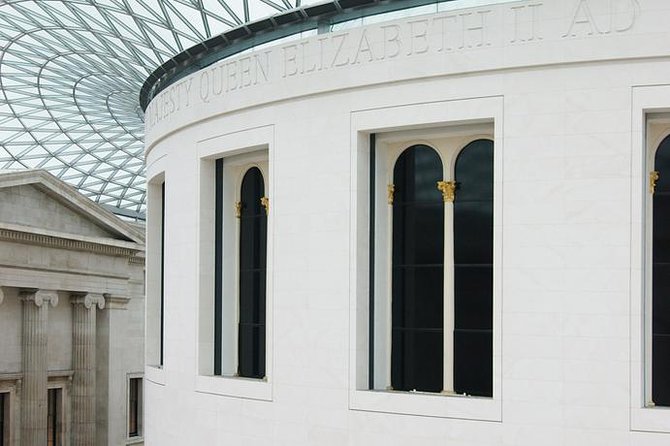
The British Museum is not a normal museum. It is an entire world of objects, spread across huge halls and countless rooms. The museum says it holds over eight million pieces of history across roughly two million years, and that scale can feel intimidating once you are inside.
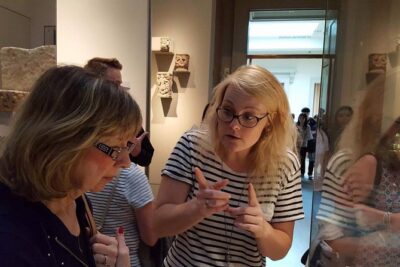
That is where this private highlights approach earns its keep. You get a guide who leads you through the most famous anchors and the stories people actually want explained, including how the Rosetta Stone fits into deciphering Egyptian writing. You also get permission to ask questions, which is the difference between reading labels and understanding why an object matters.
I love that the tour is built for time-pressed visitors. You are not expected to “do it all.” You are given a route through key rooms, then you can keep wandering after the tour ends with a clearer sense of where everything is.
Where you meet at Montague Place, and why it matters
The tour begins at Montague Place, by the museum’s north entrance, at the spot with the stone lions outside. Your guide is supposed to be holding a sign, and the whole plan depends on you finding each other quickly.
This is the one part I do not want you to treat casually. The best experiences start on time, with the guide waiting clearly and early. In a great example from past tours, a guide named Rob Smith showed up ahead of schedule and was easy to spot at the location. On the flip side, there are also reviews where people had trouble finding the guide because the sign was not visible, and they had to contact the tour company to locate them.
So here is my practical advice: arrive a few minutes early, locate the stone lions first, then get your bearings before you search. If you are coming during a busy time, expect crowds at the museum entrances.
Your 2.5-hour route: how you actually move through 70 galleries
The tour’s core idea is simple: do not let the museum’s size swallow your day. Instead of trying to “self-tour” your way to the headline items, your guide keeps you moving through key sections and points out what you should look for.
You can think of it as a guided shortcut plus a history lesson. You go from the Athenian materials to the Egyptian wing, then into British collections, so the museum stops feeling like random rooms. The guide also helps with context, so the objects become part of a bigger human story rather than isolated artifacts.
Because it is private, you can tailor the balance slightly. The tour description highlights that your guide can adapt parts to your interests and exhibits you want to see. In real life, that flexibility matters. If you care most about Egypt, you get more explanation there. If Greek art pulls you in, you can spend a bit more time around the classical pieces your guide brings you to.





Stop inside the British Museum: the Rosetta Stone moment
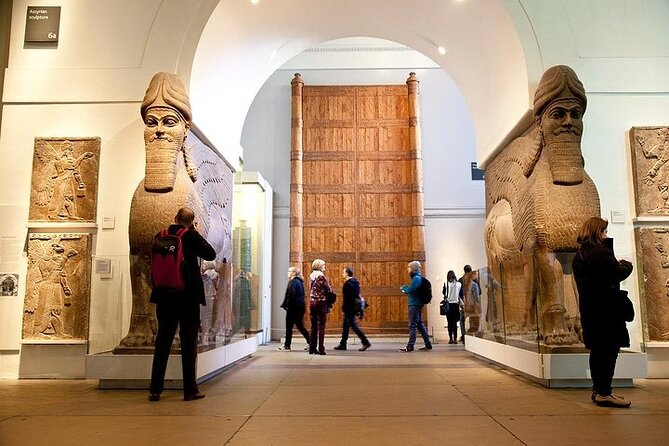
Let’s talk about the headliner. The Rosetta Stone is on display here, and this tour treats it like the turning point it really is.
Your guide explains what most people only half-remember from school: this is not a magic decoder ring, it is a real stone that played an instrumental role in helping scholars decipher Egyptian hieroglyphs. Standing in front of it, you finally get the scale and presence you cannot get from a photograph.
And this matters even if you do not plan to study ancient languages. The Rosetta Stone is a story about how knowledge gets unlocked across cultures and centuries. A good guide connects that moment to the bigger Egyptian world you are walking through in the same visit.
Egyptian Rooms and mummies: death and the afterlife made clear
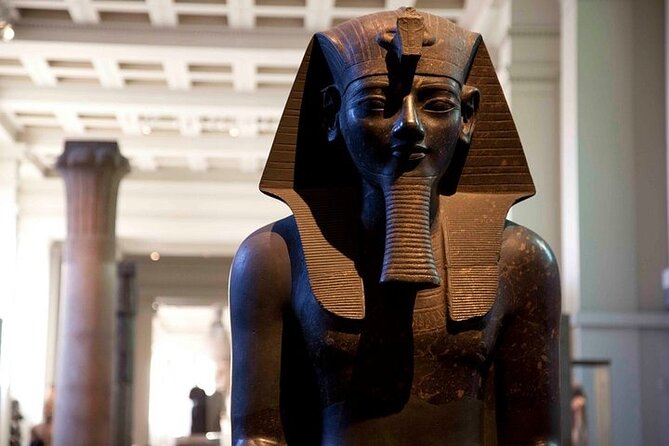
If you want Ancient Egypt to feel more real, this is the part. The tour highlights the Egyptian Rooms and their collection of mummies, but the key is what your guide focuses on.
Your guide explains the significance of death and the afterlife in Ancient Egyptian culture. That theme gives you a lens for what you are seeing. It is not just bodies in cases. It is belief systems, ritual, and the way people tried to manage the next world.
In a couple of guides mentioned in reviews, that storytelling approach really landed. One guide named Trudy was praised for bringing background to the objects so they felt understandable instead of intimidating. Another guide named Norma was described as enthusiastic and sharp about the museum, which matters a lot in the Egyptian rooms where details can blur if you only rely on text on the wall.
If you have only a few hours in London and you want Egypt to be more than a quick stop, this is the section you should count on.
Parthenon Frieze and Athenian marbles: see Greece through London
This tour also gives you a classic route through the museum’s Greek highlights, including the Parthenon Frieze.
Your guide will pass by the Parthenon Frieze, which once stood in the Acropolis in Athens. The tour description gives vivid scale: just over three feet high and 525 feet long. That is the kind of detail that makes you pause, because it hints at the original environment, not just the artifact now behind glass.
The practical benefit is that the guide can explain why this frieze is so important surviving work of classical Greece, instead of leaving you to figure out the story from fragments. If you have seen the Acropolis photos online, this stop helps you connect the dots between Greece as a place and Greece as an influence you can see far away in London.
Sutton Hoo and Anglo-Saxon artifacts: Britain gets a turn
One of the smartest things about this tour is that it does not go all-in on Egypt and Greece. It also gives you a look at artifacts from the British Isles, including Anglo-Saxon culture.
The star example mentioned here is the burial find connected to Sutton Hoo, including the ship burial. Your guide shares the story of how these objects survived for centuries and the grim fact that grave robbers were part of the historical reality. That is a strong reminder that the past is not only ancient monuments. It is also ordinary people and messy human behavior, preserved in surprising ways.
For you, this section is the payoff if you want a tour that feels like London, not just a world history grab bag. You get a sense of how the museum weaves Britain into the wider story of empire, power, and cultural change.
Choosing your pace: private Q&A vs. staying on schedule
Private tours have one job: help you see more with less stress. This one does that by keeping the pace focused on must-see items, while still leaving room for questions.
Do not expect a full museum day. This is a compact highlights format, designed for a total time of about two and a half hours. You will see several anchor rooms, but you will not see everything. A positive way to think about it is this: you are buying clarity and direction, not exhaustion.
That approach also matches what I see in the best guide comments in the feedback. People praised guides for giving the right amount of info, orienting them to where things are, and then sending them off better prepared to explore on their own.
If you hate rushing, this might not feel relaxing. But if you love having a map in your head before you wander, it can be perfect.
After the tour: what to do once you are free to roam
At the end, the tour finishes back at the meeting point. Then you are set up to explore independently.
This is a real advantage because the British Museum is too big to “wing” your way in. When you come out of a highlights tour, you usually remember locations better, and you know which rooms you want to revisit for longer.
If you are doing this early in the day, you can often turn it into a smart two-part plan: highlights tour first, then pick one or two wings you cared about most. If you are tight on time, you at least leave with a strong hit list and context for what you saw.
What you get for $141.56: admission included, and time is the real currency
The price is listed as $141.56 per person for a private tour of about 2 hours 30 minutes, with admission ticket included. That is important because the British Museum is free to enter on your own. So what are you paying for?
You are paying for:
- A guide who handles the route across a very large space
- Context that turns objects into stories
- Efficiency so you spend less time wandering and more time learning the right things
- A private format where your questions do not get cut off by a large group
In other words, this tour is less about paying to see the museum, more about paying to understand it quickly. If your London schedule only allows a half-day to a full day at most, the value often makes sense fast.
Is it overpriced if you have plenty of time and you enjoy self-guided browsing? Maybe. But if the museum is intimidating and you want the Rosetta Stone and major highlights explained, this is a reasonable way to avoid disappointment.
One more practical detail: the listing notes group discounts, and the tour is offered in English. It is also described as something many people book about 59 days in advance, which tells me you should plan ahead if you want specific times.
A note on guide variation, and how to protect your experience
The best experiences in the feedback focus on guides who were friendly, energetic, and clear, and who knew how to pitch the museum for a short visit. Names like Rob Smith, Norma, Trudy, Guy, and ZoZo show up with strong praise for making objects feel meaningful, not just reading display cards.
But the downside is that not every guide interaction lands well. One negative account mentions difficulty finding the guide because there was no sign and the guide was hard to understand, plus concerns about how information was presented. Another mentions using a flashlight in an exhibit where the lighting was intentionally low, which is a reminder that you should never feel awkward speaking up if something seems off to you.
So how do you protect yourself?
- Arrive early at Montague Place and confirm you have the right person at the start.
- Bring patience for crowds inside the museum. Even with a guide, you are still in a major public site.
- If the guide’s approach is not working for you, ask a question immediately. Private tours live or die on whether you can steer the conversation.
Who this private British Museum tour fits best
I think this works best for you if:
- You have only a half-day or short window in London and want the museum’s biggest anchors.
- You care about Egypt, Greece, and also want a stop that connects to British history through Anglo-Saxon finds.
- You like asking questions and getting explanations that are not limited to wall text.
- You want a clear route through key rooms, then time to wander on your own after.
It may not be your best choice if:
- You plan to spend most of the day in the museum and you prefer to explore slowly at your own pace.
- You dislike structured routes and want zero time pressure.
- You need stroller access, since baby strollers are not permitted.
Should you book the British Museum Highlights Private Tour with the Rosetta Stone?
Yes, I would book it if you are short on time and the British Museum feels like a place you might struggle to navigate. The tour is built for your first visit with a guide who helps you hit the Rosetta Stone, Egyptian Rooms with mummies and afterlife context, the Parthenon Frieze connection to Athens, and Anglo-Saxon highlights like Sutton Hoo.
Book it with one mindset adjustment: you are buying direction, not total coverage. If you do that, you end up leaving with both stories and a much better map for whatever you want to see next.
FAQ
Where do I meet the guide for the British Museum Highlights tour?
You meet at Montague Place, by the north entrance of the British Museum, at the spot with the stone lions by the doorway.
How long is the private tour?
The tour runs for about 2 hours 30 minutes.
Is museum admission included?
Yes, the admission ticket is included.
Is this tour private?
Yes. It is a private tour where only your group participates.
What language is the guide?
The tour is offered with a professional English guide.
Can I cancel for a refund?
Yes. You can cancel for a full refund up to 24 hours in advance of the experience’s start time.
Museums and Galleries, Keep Going
- Frameless – Immersive Art Experience in London★ 4.5 · 3,660 reviews
- London: Entry Ticket to Frameless Immersive Art Experience★ 4.7 · 2,923 reviews
- London: British Museum Guided Tour★ 4.3 · 1,182 reviews
- Official tickets: Moco Modern & Contemporary Art Museum★ 4.5 · 1,157 reviews
Fresh off the London review pile



London Museums & Galleries, compared.
 ★ 4.5Frameless – Immersive Art Experience in LondonFrom $383,660 reviews
 ★ 4.7London: Entry Ticket to Frameless Immersive Art ExperienceFrom $372,923 reviews
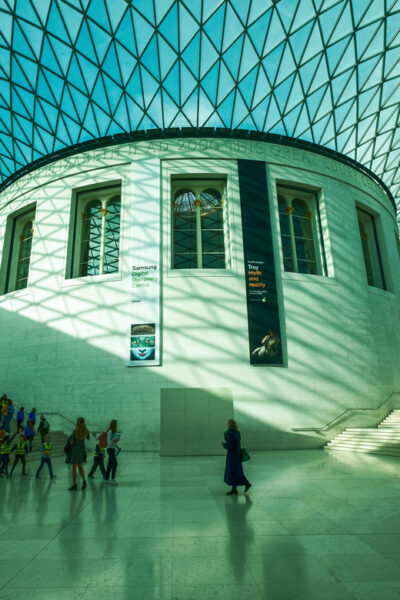 ★ 4.3London: British Museum Guided TourFrom $231,182 reviews
 ★ 4.5Official tickets: Moco Modern & Contemporary Art MuseumFrom $361,157 reviews
 ★ 5.0British Museum London Guided Tour Semi-Private 8ppl MaxFrom $108984 reviews
 ★ 4.1London: Tour of the British MuseumFrom $14678 reviews
 ★ 4.5London: British Museum Audio Tour & Priority Entrance TicketFrom $9631 reviews
 ★ 5.0The British Museum London – Exclusive Guided Museum TourFrom $108555 reviews
Also filed under