
REVIEW · JACK THE RIPPER & VICTORIAN CRIME WALKS
Crime and Policing London Walking Tour
Crime stories feel different on London sidewalks.
What makes this walk worth your time is the mix of big-name landmarks with a guide who brings real policing context, plus the chance to look at historic police regalia. I also love how the route is built around places you can still recognize today, like Scotland Yard and Trafalgar Square. The one thing to consider is that the subject matter is dark at times, and each stop is short, so you’ll want to ask questions if anything hooks you.
I’m a fan of tours that give you a map of how the city works, not just a list of photos. This one does that by connecting policing history to government and public life, while you move at a gentle pace with a small group capped at 20 people. Guides like Francis Mullan (a former police officer) and David have led this experience, and that “inside eyes” perspective shows in how the stories get explained.
In This Review
- Key highlights at a glance
- Why a policing-themed walk makes London click
- Price and value: what you get for $48.61
- Before you go: meeting point, route flow, and timing
- Bow Street: policing roots and the Bow Street Runners
- Aldwych area: an unsolved murder and espionage threads
- Charing Cross: a Blue Lamp story and the busiest station beats
- Sherlock Holmes Pub break, then Great Scotland Yard
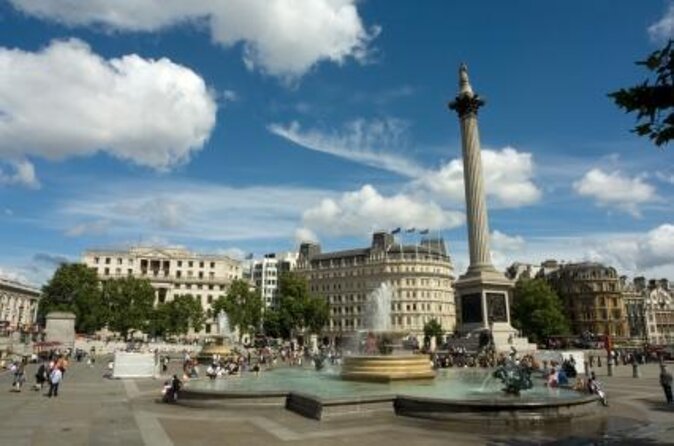
- Trafalgar Square: the smallest police station watching big moments
- Whitehall and Downing Street: government, women in policing, wartime roles
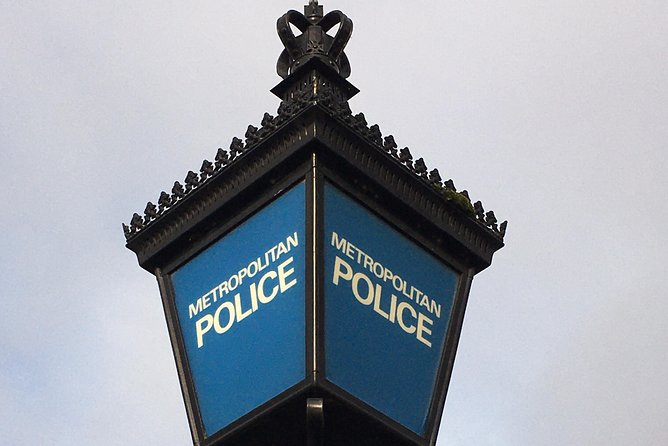
- Great Scotland Yard to the Metropolitan Police revolving sign
- What you can realistically expect from the guide experience
- Practical tips to make the most of your 2h15 walk
- Who should book this tour
- Should you book this Crime and Policing London Walking Tour?
- FAQ
- How long is the Crime and Policing London Walking Tour?
- How much does the tour cost?
- What language is the tour offered in?
- Where do I meet the guide, and where does the tour end?
- Is the ticket mobile?
- Are there admissions or entry fees at the stops?
- What is the group size limit?
- Is the tour dependent on weather?
- Can I bring a service animal?
Key highlights at a glance
- Former police officer perspective on how policing evolved in London
- Real historic police regalia to examine as part of the tour kit and equipment
- Short stops at major sites including Scotland Yard, Trafalgar Square, and Downing Street
- Busiest and smallest police-station stories at Charing Cross and Trafalgar Square
- Stops are free to enter at each listed viewpoint
Other Whitechapel walks at the same dark hour
- London: The Original Jack the Ripper Walking Tour
★ 4.7 · 7,833 reviews - London Jack the Ripper Guided Tour with Ripper-Vision
★ 4.5 · 4,840 reviews - London: Jack the Ripper Small Group Tour
★ 4.7 · 3,159 reviews
Why a policing-themed walk makes London click
London can feel like a museum you walk through at random. This tour avoids that. Instead of asking you to memorize dates, it shows you why certain locations mattered to law enforcement, and how those same locations still shape the city today.
I like that the guide approach is practical. You’re not just told what happened. You’re shown how policing was organized, what officials were trying to do, and how public order got handled as London grew. It’s part history lesson, part field-note storytelling, with a former officer who can explain the “why” behind the rules and routines.
The pace also helps. It’s a walking tour at a gentle pace, and you get a realistic amount of time at each stop, roughly 10 minutes for most. If you’re the type who needs a little breathing room to look around and take photos, you’ll appreciate that.
Price and value: what you get for $48.61
At $48.61 per person, you’re not paying for a fancy museum ticket. You’re paying for interpretation and context, plus access to the guide’s policing background.
Here’s the value equation that makes sense:
- You cover a concentrated chunk of central London linked to policing history, so you save time compared with trying to piece it together on your own.
- Stops at each listed site are admission ticket free, so you’re not stacking fees on top of the tour price.
- You get included kit and equipment with the chance to examine real historic items of police regalia, which is the kind of “small detail” that usually makes a guided tour feel worth it.
If you like London landmarks but you’re tired of hearing the same standard patter at every corner, this is a smart switch. It’s also good value because the group size is kept small, which makes it easier to ask questions and actually get answers.
Before you go: meeting point, route flow, and timing
You start in the Covent Garden area at Long Acre (Covent Garden Underground Ltd, WC2E 9JT). That’s a convenient launchpad because you can usually get there easily by Tube, and you’re already in the heart of visitor-friendly central London.
The tour ends at 35 Victoria Embankment, near Westminster Underground. That ending location matters because you can roll right into other sightseeing in the Westminster area without needing to travel back across the city.
Expect:
- About 2 hours 15 minutes total
- A maximum group size of 20 travelers
- A walking pace designed to be manageable for most people
- Comfortable footwear as a must, especially if London weather turns sloppy
Also, plan your mindset. This is a crime and policing tour, so you’ll hear grim stories and cases that are described as sad or shocking. If you’re traveling with kids, you might want to skim the content first or use it as a teachable moment, but the tone can be heavy.




Bow Street: policing roots and the Bow Street Runners
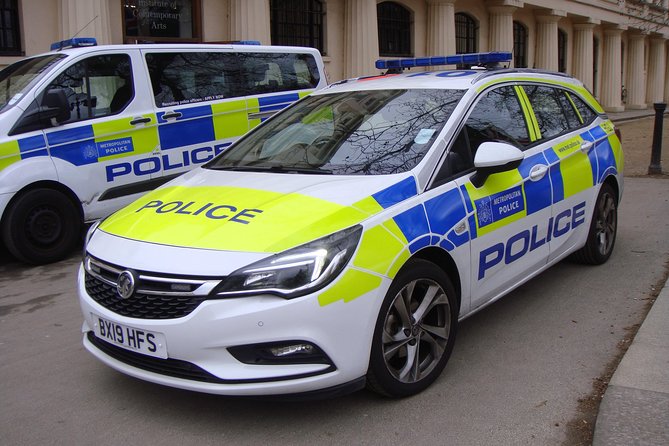
Bow Street is where the story begins to feel real. You’ll see the Police station and Magistrates Court, and your guide ties it to the heart of how policing was introduced in London.
This stop has two appeals. First, it’s an origin point. Instead of treating policing as if it just appeared fully formed, you get the sense of how it took shape, and why Bow Street mattered. Second, you’ll hear about the Bow Street Runners, an early policing force that helped shape public expectations of law enforcement.
Time here is short, about 10 minutes. That’s enough for orientation and storytelling, but not enough if you want to linger and read every sign. My advice: treat Bow Street like your “starter briefing.” Use the next stops to follow the threads your guide gives you.
Aldwych area: an unsolved murder and espionage threads
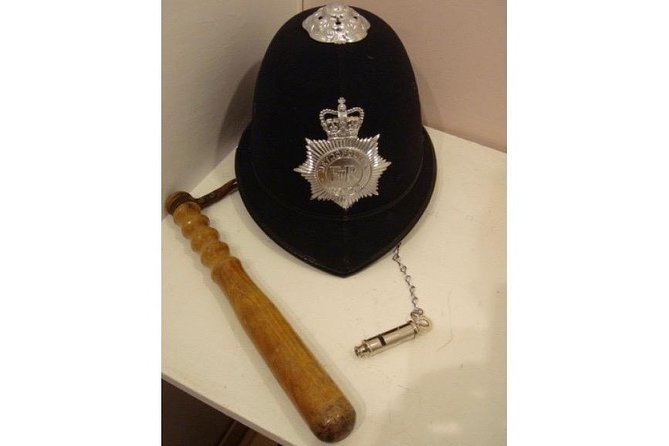
From Bow Street you move toward the Aldwych area, where the tour pauses for one of the saddest unsolved murders in London. The guide also connects the case to international espionage and murder, adding a darker, geopolitical angle to what could otherwise be a purely local crime story.
This stop is only about 10 minutes too, so you won’t walk away with every case detail. But you will come away with something more useful: a sense of how crime investigations intersected with wider fears and intelligence work, especially in a city that attracted visitors and attention from everywhere.
Drawback to consider: if you hate unresolved mysteries, you might find this stop emotionally heavy. If you’re the type who likes crime history because it shows how investigations evolve, you’ll probably enjoy it.
Charing Cross: a Blue Lamp story and the busiest station beats
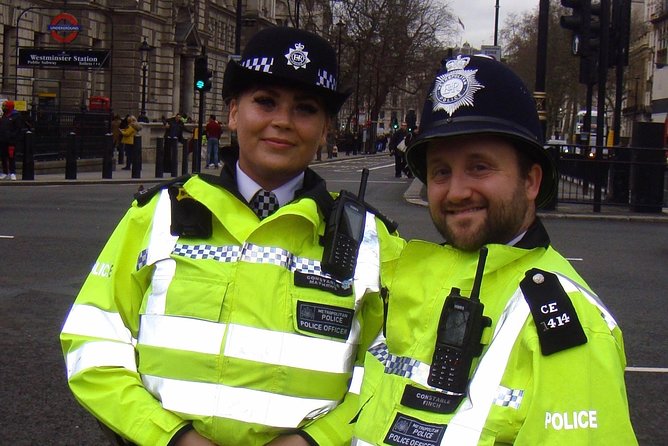
At Charing Cross, you’ll hear tales of grisly murder and mayhem, and you’ll see one of the busiest police stations in Europe. This is where the tour starts to feel like it’s living inside the present.
Two features make this stop memorable:
- The Blue Lamp of London, referenced as a famous symbol connected to policing.
- The way the guide frames crime and order in a high-traffic location, showing you how policing has to respond when crowds, transit, and attention collide.
Again, this is a short stop, around 10 minutes. So I’d use it to ask follow-up questions if something stands out. If your guide can explain the real policing context, you’ll get more value out of those last few minutes than you would by standing quietly and trying to read everything yourself.
Sherlock Holmes Pub break, then Great Scotland Yard
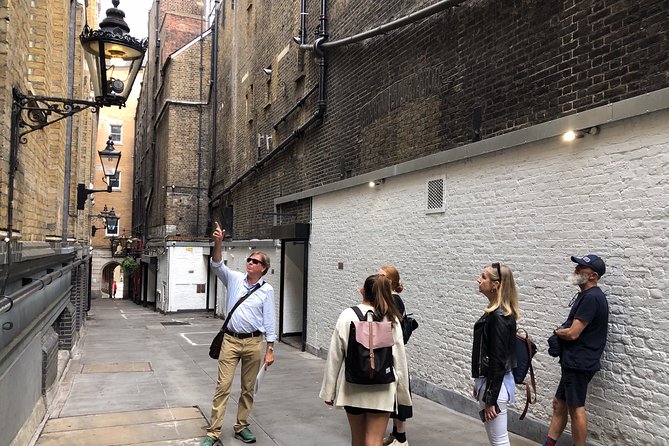
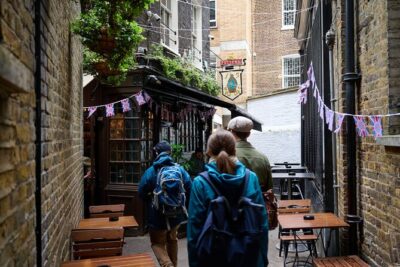
Next comes the Northumberland Avenue area, including a drink stop at the famous Sherlock Holmes Pub, tied to Arthur Conan Doyle’s fictional detective. Even if you’re not a deep Holmes fan, this is a smart breather in the middle of a heavier tour.
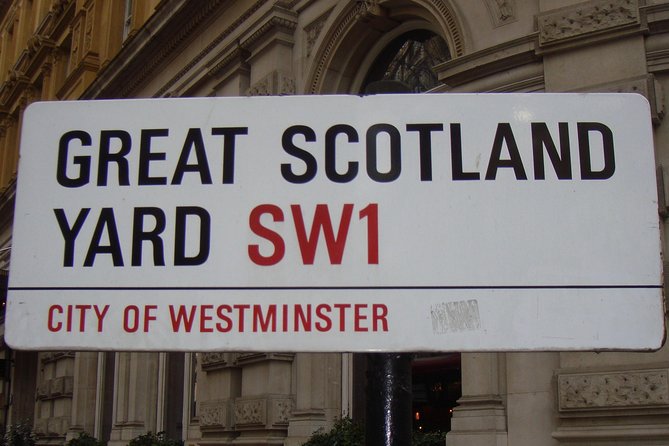
Then you cross over to Great Scotland Yard, where the guide discusses where policing was invented. The shift is the point. You start with a pop-culture stop, then snap back to real-world policing origins.
Two ways this helps:
- It keeps the tour from feeling like a nonstop lecture.
- It shows you how London turns real institutions into stories people still repeat, even when the details change.
Practical tip: since there is a planned drink stop, wear something comfortable and bring a plan for hydration. London weather can surprise you, and short breaks make the rest of the walk easier.
Trafalgar Square: the smallest police station watching big moments
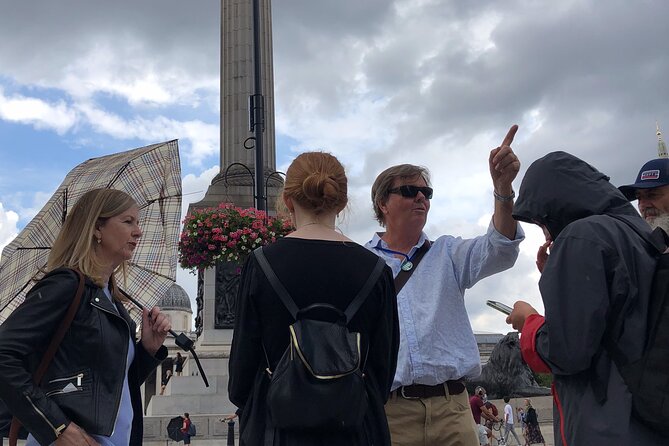
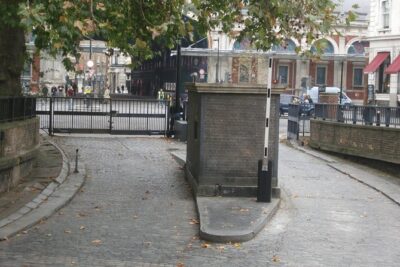
Trafalgar Square is a “wow” location, even when you’re not thinking about crime. During the tour, it becomes a stage where national celebrations, demonstrations, and riots have happened under the watchful eye of what’s described as the world’s smallest police station.
This is the kind of stop that helps you understand crowd control as part of policing, not just street-level crime. The guide’s story here is about how order gets maintained when the public moves in large groups and emotions run high.
Time is about 10 minutes. That’s enough to get the story and look around, but if you want extra time for photos of the square, you’ll need to keep an eye on the group schedule.
Whitehall and Downing Street: government, women in policing, wartime roles
At Whitehall, you’ll see the heart of government at Downing Street, and you’ll learn about the role of women in policing, plus policing in wartime London.
This stop matters because it widens the lens. If you’ve been picturing policing as only a uniform, street-facing job, this is where you see how institutions adapt. The connection to wartime also adds urgency, showing how roles and responsibilities shift when a city is under pressure.
The tour keeps it brief here, about 10 minutes, so treat it as a structured highlight. If this is the topic that grabs you, ask the guide where to read more or what to notice in London’s official buildings around this area.
Great Scotland Yard to the Metropolitan Police revolving sign
Later, the tour takes you to Great Scotland Yard again in the flow, described as where London Police was created, including the first police HQ. Then you’ll see the Metropolitan Police and its iconic revolving sign, known worldwide.
Why I like this section: it gives you physical landmarks that feel symbolic. A sign design, an office location, a historic HQ. Those details become shorthand for the policing brand and the way authority communicates to the public.
This leg is also around 10 minutes per stop. So if you’re the kind of person who wants to study details, be strategic:
- Look up and orient first.
- Listen for what your guide points out.
- Use your free seconds for quick photos, then move on.
What you can realistically expect from the guide experience
A key part of this tour is that it’s led by a former police officer, and guides such as Francis Mullan and David bring that perspective into the stories. That changes the tone. Instead of only recounting incidents, you’ll get explanations that connect the incident to procedures, the mindset of officers, and why certain locations became important.
Reviews also point to a strong theme: guides will answer questions and adjust to what people ask. In my opinion, that’s where a small-group tour wins. When you only have a few minutes per stop, the ability to ask one good question can multiply your value.
You’ll also get included kit and equipment, with the opportunity to examine real historic items of police regalia. That is not the kind of add-on you get on every city walk, and it’s often what makes the tour memorable after the photos fade.
Practical tips to make the most of your 2h15 walk
Here’s how to set yourself up for a great experience without overthinking it:
- Wear comfortable shoes. You’re covering central London streets at a steady pace.
- Bring a small water bottle, especially in warm weather.
- If you need a break, plan to take it when your guide offers options for refreshment or toilet stops.
- Since the tour depends on good weather, have a flexible plan in case it needs to shift due to conditions.
Also, remember this is a guided walk, not a self-guided museum circuit. If you want the best experience, listen first, then look. Let the guide tell you what to notice, and your photos will turn out better.
Who should book this tour
This is a strong pick if:
- You like London landmarks but want a different angle than the usual royal and museum script.
- You’re curious about how policing evolved, especially in a dense, high-attention city.
- You enjoy crime history that connects stories to institutions and public life.
It may not be your best fit if:
- You’re sensitive to darker stories.
- You prefer tours where you can spend longer inside one site.
Should you book this Crime and Policing London Walking Tour?
I’d book it if you want a compact, high-context way to see central London while learning why certain places mattered to policing. At a bit over two hours, it’s not a huge time commitment, and the $48.61 price feels reasonable for what you get, especially the chance to handle or examine historic police regalia and hear stories from a former officer.
It’s also a good value if you like small groups and question time. With a cap of 20 people and a route that ends near Westminster, it’s easy to build the rest of your day around what you learn.
If the crime topics sound like your kind of history, this tour gives you a sharper view of London than the standard sightseeing route.
FAQ
How long is the Crime and Policing London Walking Tour?
It runs for about 2 hours 15 minutes.
How much does the tour cost?
The price is $48.61 per person.
What language is the tour offered in?
The tour is offered in English.
Where do I meet the guide, and where does the tour end?
You start at Covent Garden Underground Ltd, Long Acre, London WC2E 9JT. The tour ends at 35 Victoria Embankment, London SW1A 2JH, near Westminster Underground Station.
Is the ticket mobile?
Yes, you receive a mobile ticket.
Are there admissions or entry fees at the stops?
The listed stops are described as admission ticket free.
What is the group size limit?
The maximum group size is 20 travelers.
Is the tour dependent on weather?
Yes, it requires good weather. If it’s canceled due to poor weather, you will be offered a different date or a full refund.
Can I bring a service animal?
Yes, service animals are allowed.
Ripper Walks and Victorian Crime
- London: The Original Jack the Ripper Walking Tour★ 4.7 · 7,833 reviews
- London Jack the Ripper Guided Tour with Ripper-Vision★ 4.5 · 4,840 reviews
- London: Jack the Ripper Small Group Tour★ 4.7 · 3,159 reviews
- London Jack The Ripper Guided Walking Tour★ 5.0 · 3,131 reviews
Fresh off the London review pile

Jack the Ripper & Victorian Crime Walks, compared.
 ★ 4.7London: The Original Jack the Ripper Walking TourFrom $257,833 reviews
 ★ 4.5London Jack the Ripper Guided Tour with Ripper-VisionFrom $274,840 reviews
 ★ 4.7London: Jack the Ripper Small Group TourFrom $263,159 reviews
 ★ 5.0London Jack The Ripper Guided Walking TourFrom $03,131 reviews
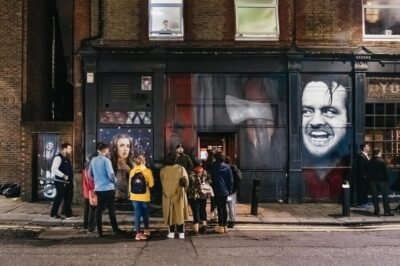 ★ 4.6German Language : Original Jack the Ripper TourFrom $241,805 reviews
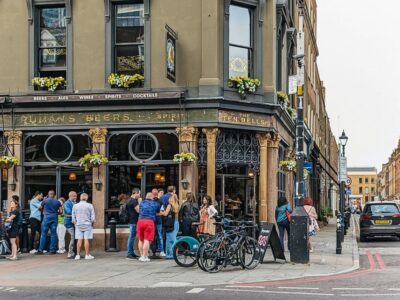 ★ 4.5London: Jack the Ripper Walking Tour – Ripper Vision ToursFrom $261,752 reviews
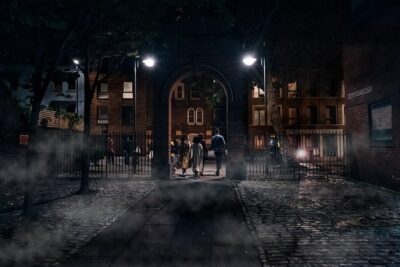 ★ 5.0Ultimate Jack the Ripper : Guided Tour of LondonFrom $271,495 reviews
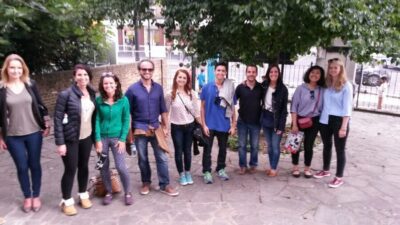 ★ 4.9London: Jack the Ripper Evening Walking TourFrom $331,449 reviews
Also filed under