
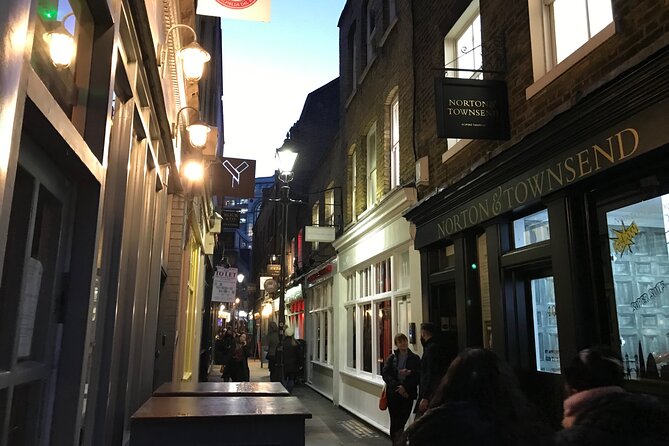
REVIEW · JACK THE RIPPER & VICTORIAN CRIME WALKS
London: Jack the Ripper Small Group Tour
Jack the Ripper comes alive on real streets.
I like the high historical accuracy and the small group format, which keeps the pace human and the questions welcome. It also has an interactive style, with stories, physical evidence, and short re-enactment moments that turn a basic lecture into something you can follow street by street. The main catch: it is not suitable for wheelchair users, since this is a walking tour with uneven street space.
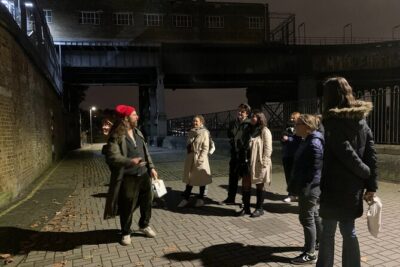
Guides such as Becky and Cova lead you through the neighborhoods connected to the killings, including Whitechapel Road, Spitalfields, and the Ten Bells Pub area. You’ll get context for the era, then watch how the case pieces fit together as the walk moves from stop to stop.
In This Review
- Key things I’d mark on your planning list
- From Aldgate East station to Whitechapel: how the tour sets the mood
- Whitechapel Road: when the walk becomes a case file
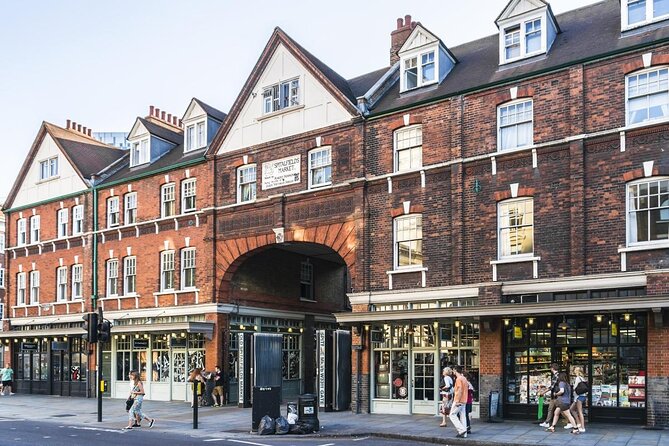
- Spitalfields Market: the neighborhood context that makes the story click
- Ten Bells Pub: the stop where rumor and investigation blur
- Brick Lane contrasts: street art today, grime and survival in the mind
- Aldgate East closing logic: tying the investigation back to the route
- How the guides keep graphic material human and respectful
- Small group size and Q&A: why it feels different from a big bus tour
- Practical tips for a 2-hour walk in East London weather
- Price and value: is $26 for a 2-hour Ripper tour fair?
- Who this tour is best for (and who should skip it)
- Should you book the London Jack the Ripper small group tour?
- FAQ
- Where is the meeting point for the Jack the Ripper tour?
- How long is the tour?
- What languages are available?
- Is the tour wheelchair accessible?
- What is the price per person?
- Can I cancel for a full refund?
Key things I’d mark on your planning list
- Small group pacing so you can ask questions without getting rushed
- Street-by-street route through Whitechapel Road and other key locations
- Evidence and re-enactments that add clarity without turning it into a shock show
- Stops tied to names you recognize, like Ten Bells Pub and the wider Aldgate East area
- Photo and visual support mentioned across guide performances, which helps you picture what you’re seeing
- Language options you can choose at checkout (English or Spanish are offered), plus live guide languages listed as English and French
Other Whitechapel walks at the same dark hour
- London: The Original Jack the Ripper Walking Tour
★ 4.7 · 7,833 reviews - London Jack the Ripper Guided Tour with Ripper-Vision
★ 4.5 · 4,840 reviews - London: Jack the Ripper Small Group Tour
★ 4.7 · 3,159 reviews
From Aldgate East station to Whitechapel: how the tour sets the mood
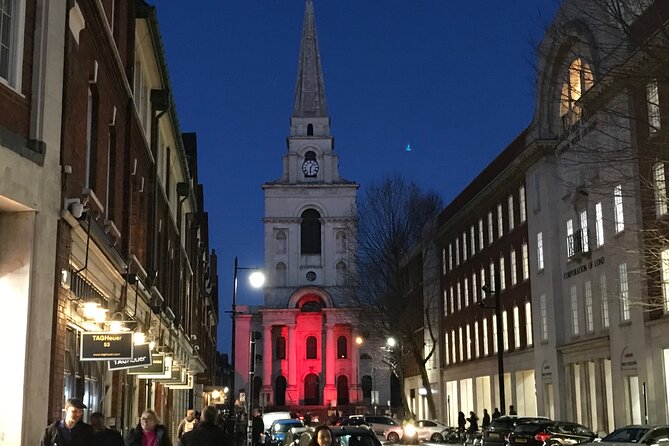
Most tours start with a name on a map. This one starts with where you can actually meet and orient yourself. Your meeting point is right by Aldgate East station, next to Fashion Warehouse. That matters because the whole experience depends on getting you into the story fast, before you wander off in East London traffic and confusing exits.
From there, you head into Whitechapel. The tone is not just spooky atmosphere. It is case-work energy: what happened, when it happened, and why the details mattered to investigators at the time. The best part is that you are not stuck staring at a board. You are walking the same kinds of streets the story is built on, so names like Whitechapel Road stop being abstract.
One practical tip from how guides run the walk: Aldgate East has multiple exits, so if you want a stress-free start, arrive early and confirm which direction the guide is likely standing.
Whitechapel Road: when the walk becomes a case file
Whitechapel is where most people picture Jack the Ripper, and this tour leans into that reality. You spend time in the area described as the epicenter of the murders, including Whitechapel Road, where many of the victims met their fate.
What makes this stop work is how the guide connects geography to the timeline. You are not just hearing where things occurred. You’re learning how distance, local routes, and street layout would have shaped what people could see, hear, and report. That turns the neighborhood into an evidence map in your head.
Also, the tour is designed to stay interactive. You are encouraged to ask questions as you go. In small groups, that matters. You can challenge an interpretation right there, then move on with the rest of the route with your doubts clarified instead of carried all evening.
Spitalfields Market: the neighborhood context that makes the story click
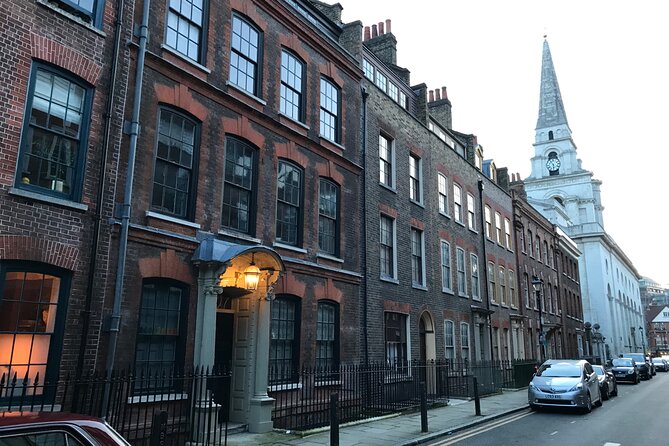
After Whitechapel, the tour shifts toward Spitalfields. The highlight here is the Spitalfields Market area, tied to the Victorian-era environment that surrounded the killings.
This is the stop that helps you understand why the story stuck in public memory. The guide connects what the area looked like and how daily life operated. You are not expected to know the East End from scratch. Instead, you get just enough social and street context to make the later moments feel grounded.
Spitalfields also helps you get a sense of how London changes over time. It is not only about the crimes. It is about the people and the systems around them, and how those systems shaped the investigations.
If you like history that feels connected to real streets, this is where the tour starts earning its value. You stop thinking of the Ripper story as a distant legend, and start seeing it as something that fit into the everyday movement of a working neighborhood.





Ten Bells Pub: the stop where rumor and investigation blur
One of the most talked-about moments on the route is Ten Bells Pub. The tour brings you to this area because several of the victims were said to have frequented it.
Here’s what to expect if you’re wondering how the guide handles the line between fact and folklore. The approach is to keep the discussion anchored, then acknowledge that the Ripper case is full of competing theories. You get the evidence and the reasoning style, not just a spooky storybook.
This stop is also a good example of why the tour format matters. A small group means you can ask how a claim is supported, or what historians think is strong versus shaky. That’s the difference between hearing a headline and understanding a case.
If you do not drink, you’re still fine. Food and drink are not included, and the point of the pub stop is the location and the story, not a mandatory pint.
Brick Lane contrasts: street art today, grime and survival in the mind
Brick Lane is next, and this is where the tour makes a clever move. The neighborhood is known for street art and a lively modern scene, but the guide pulls the focus back toward the older grit and survival that shaped the East End.
What I like about this stop is the contrast. When you can see a street where the vibe looks totally different today, it makes the past feel more real. You start noticing what might have changed and what still reads as familiar.
For planning, treat Brick Lane as your cue to slow down with your photos and your attention. You’ll likely want to look up at architecture and street angles, since the tour’s best moments depend on you visually matching what the guide describes to what you see.
It’s also a good moment to ask about theories. Some guides, like the ones described as using their own theories or answering questions in detail, take advantage of this part of the route to discuss possible suspect ideas and how people justify them.
Aldgate East closing logic: tying the investigation back to the route
Aldgate East is not only where you begin. It also shows up again through its ties to the broader investigation and the mysteries that still linger.
The value of ending near Aldgate East is that it helps you wrap your mental map. You start at a transport hub, walk into a specific murder geography, and then come back with a clearer sense of the overall case movement. Even if you remember the story as famous names and dates, you leave with a better understanding of where everything sits in East London.
This stop also reinforces something the guide keeps returning to: the Ripper case is not only about what happened. It’s about how people tried to understand it with the evidence available at the time. The tour’s interactive style, with evidence and reenactment elements, is meant to give you that investigative feel.
How the guides keep graphic material human and respectful
Let’s be honest: this subject is violent. The tour does not try to sanitize it, and it’s not meant for people who want a soft, ghost-story version.
What you can control is your comfort level, and the tour’s direction seems built for that. Multiple guides are described as using sympathy and sensitivity in how they recount events. That helps a lot if you are coming for history but still want the victims treated with care.
I also like how the story gets told from the victims’ viewpoint, as described in feedback. That choice changes the tone. It keeps the focus from turning into pure spectacle and instead frames the murders as something that affected real people and real lives.
If you’re prone to being queasy with details, go in with realistic expectations. Then if you want a gentler night, choose a later start when you can wear warmer layers and control your nerves with the walk, rather than fighting cold while you listen.
Small group size and Q&A: why it feels different from a big bus tour
A walking tour can be either a group shuffle or a real conversation. This one aims for the second.
Because it’s a small group format, guides can address the questions you actually care about. In feedback, the best moments are tied to guides answering questions and keeping the group informed as they go. Some guides, like Ollie, Sarah, and Becky as named in experiences, are praised for being friendly while also staying on topic and moving at a pace that lets you process the details.
There’s another benefit: hearing how different guides explain the case. Some guides are described as bringing pictures and other visual evidence into the tour. Others add their own theories. That doesn’t mean the tour is random. It means you get a sense of how interpretation works when experts do not always agree.
If you want one final takeaway from the group style, it’s this: you’ll likely leave with more questions answered, not just new questions added.
Practical tips for a 2-hour walk in East London weather
This tour runs about 2 hours. That’s long enough to make the route feel substantial, but short enough that you won’t be out in the cold all night.
Weather matters here. Reviews describe the experience as still strong in wet and grey conditions, and one guide’s energy helped keep things on track even when it was cold. So yes, bring layers. Also consider a rain jacket, especially if you are booking in winter.
Footwear is key. The tour is not wheelchair accessible, which is a hint that you should expect uneven pavement and normal street walking challenges. I’d wear shoes you can stand and walk in for the full window, and I’d keep your phone battery topped up for the route photos.
Finally, be early. The tour notes that late arrivals are not waited for. Even if you’re local to London, the simplest way to avoid stress is to get there a few minutes early and confirm the exact exit near Aldgate East station.
Price and value: is $26 for a 2-hour Ripper tour fair?
At $26 per person for a 2-hour guided walk, you’re paying for more than storytelling. You’re paying for (1) a guide-led route through specific sites, (2) interactive elements like evidence and re-enactments, and (3) the small group format that lets you ask questions.
If you compare it to typical museum audio tours, this is more expensive but far more direct. You are getting street context as part of the package. If you compare it to large group night tours, you’re often getting better attention because the group is smaller.
You also have strong proof in the overall rating and volume: the tour sits at 4.7 out of 5 with 3159 reviews. That’s not a guarantee, but it does suggest consistency in how guides deliver the walking story.
Bottom line: if you want Jack the Ripper history tied to real street locations and you like interactive explanation, $26 feels like a good deal for the time you spend outside.
Who this tour is best for (and who should skip it)
This tour is a great match if you want:
- a guided walk through Whitechapel and nearby districts tied to the case
- an evidence-led storytelling style with re-enactments
- a small group where you can ask questions
- a respectful tone that acknowledges the victims
Skip it if:
- you use a wheelchair, since it is not suitable for wheelchair users
- you cannot handle violent subject matter or graphic discussions
If you’re traveling solo, it can still work well because the small group keeps you involved rather than lost. If you’re with friends, the conversation style makes it easier to share opinions about theories as you go.
Should you book the London Jack the Ripper small group tour?
I think you should book this tour if you want a focused, street-based Ripper experience with high historical accuracy, interactive elements, and a small group vibe that makes questions possible. It’s also a strong pick if you like your history grounded in specific locations like Whitechapel Road, Spitalfields, Ten Bells Pub, Brick Lane, and the Aldgate East area.
If you dislike walking in cold or wet weather, or you need wheelchair-friendly routes, then look for a different option. And if you’re the type who hates sensitive topics even when handled respectfully, this may be the wrong style for your evening.
If you do book, my advice is simple: arrive early at Aldgate East near Fashion Warehouse, dress for the weather, and come ready to ask one good question about evidence or theories. That’s where this tour seems to hit its stride.
FAQ
Where is the meeting point for the Jack the Ripper tour?
The meeting point is next to Aldgate East station. Look out for Fashion Warehouse, and your tour guide will be waiting there.
How long is the tour?
The tour lasts 2 hours.
What languages are available?
The activity lists live tour guide languages as English and French. It also states you can select English or Spanish at checkout.
Is the tour wheelchair accessible?
No. The tour is not suitable for wheelchair users.
What is the price per person?
The price is $26 per person.
Can I cancel for a full refund?
Yes. Free cancellation is available up to 24 hours in advance for a full refund.
Ripper Walks and Victorian Crime
- London: The Original Jack the Ripper Walking Tour★ 4.7 · 7,833 reviews
- London Jack the Ripper Guided Tour with Ripper-Vision★ 4.5 · 4,840 reviews
- London Jack The Ripper Guided Walking Tour★ 5.0 · 3,131 reviews
- German Language : Original Jack the Ripper Tour★ 4.6 · 1,805 reviews
Fresh off the London review pile

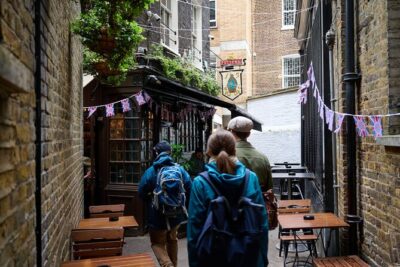
Jack the Ripper & Victorian Crime Walks, compared.
 ★ 4.7London: The Original Jack the Ripper Walking TourFrom $257,833 reviews
 ★ 4.5London Jack the Ripper Guided Tour with Ripper-VisionFrom $274,840 reviews
 ★ 5.0London Jack The Ripper Guided Walking TourFrom $03,131 reviews
 ★ 4.6German Language : Original Jack the Ripper TourFrom $241,805 reviews
 ★ 4.5London: Jack the Ripper Walking Tour – Ripper Vision ToursFrom $261,752 reviews
 ★ 5.0Ultimate Jack the Ripper : Guided Tour of LondonFrom $271,495 reviews
 ★ 4.9London: Jack the Ripper Evening Walking TourFrom $331,449 reviews
 ★ 5.0The Original Jack the Ripper : Guided TourFrom $221,264 reviews
Also filed under