
REVIEW · CITY TOURS
Daily Leeds City Walking Tour (10:30am)
A quick way to see Leeds in motion. This Daily Leeds City Walking Tour is built for first-timers who want the lay of the land without a long day out, with a route that strings together major landmarks and shopping streets in about 90 minutes. I like that it mixes grand buildings with everyday city life, and I also like that it is easy to join if you have limited time.
Two standouts for me are the chance to compare old Leeds trading power with newer entertainment and civic spaces, and the fact that you walk away with a clear mental map for where to go next. One consideration: it is mainly exterior viewpoints and short stops, so if you want full museum time, you will likely need to add that separately.
In This Review
- Key highlights worth marking on your mental map
- Getting your bearings on Leeds city centre in 90 minutes
- Meeting on The Headrow, then Leeds Town Hall and Leeds Art Gallery
- Millennium Square: seasonal culture and the city’s public stage
- Leeds City Museum exterior: the big cat moment
- Leeds Cathedral: a stop built for context, not just photos
- The Light and City Varieties Music Hall: modern life next to old performance
- Briggate: from centuries-old commerce to a shopper’s corridor
- Victoria Quarter: glass-roof Victorian arcades and a free pause
- Kirkgate Market: Europe’s largest indoor market, scarred history and daily life
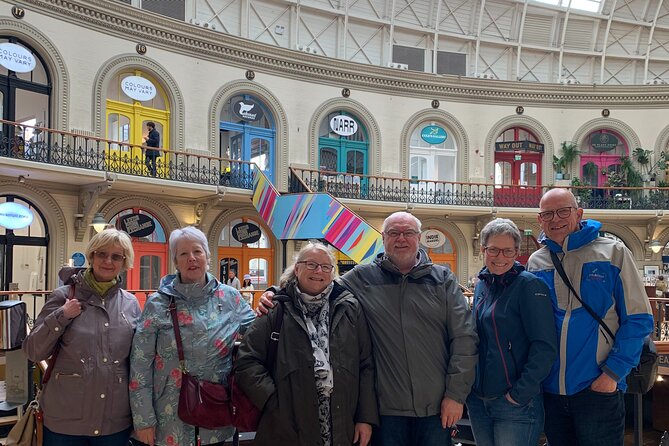
- Leeds Corn Exchange: grain trading roots and your final orientation point
- What you should know about admissions and stop length
- Price, group size, and timing: good value if you keep expectations right
- Footwear, weather, and how to make the walk work for you
- Who this Leeds city walk suits best
- Should you book the Daily Leeds City Walking Tour?
- FAQ
- What time does the Leeds City Walking Tour start?
- How long is the tour?
- How much does the tour cost?
- Where do I meet the guide?
- Where does the tour end?
- Is the tour offered in English?
- Are there admission tickets included?
- Is the tour wheelchair and stroller accessible?
- Can I cancel and get a full refund?
Key highlights worth marking on your mental map
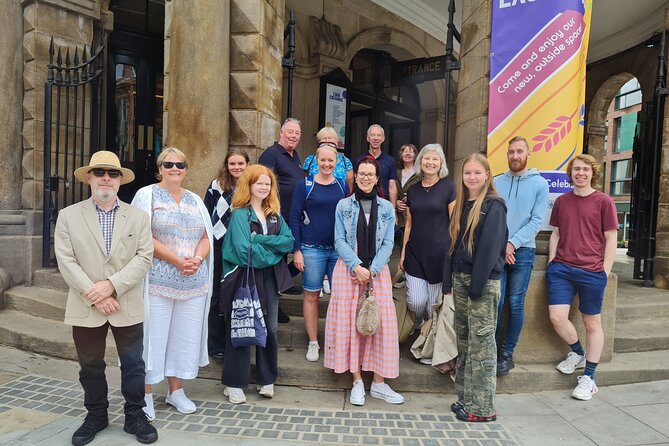
- Town Hall and Leeds Art Gallery set the tone fast, with exterior looks and quick context
- Millennium Square gives you a taste of seasonal culture, from food events to Christmas markets
- City Varieties Music Hall is a rare stop, tied to the idea of Victorian performance surviving to today
- Victoria Quarter and its glass-roof arcades are a pretty break in the middle of the walk
- Kirkgate Market is the big finale, an indoor market with a past that includes surviving bombs and fire
Still comparing? These Leeds tours came out well in our reviews too.
- Afternoon Tea Cruise in North Yorkshire
★ 5.0 · 388 reviews - 1-Hour Public Cruise
★ 4.5 · 307 reviews - Harrogate Walking Food Tour
★ 5.0 · 286 reviews
Getting your bearings on Leeds city centre in 90 minutes
Leeds can feel big the moment you step off the train. This tour works because it takes you through the city centre in a tight loop, with stops planned to keep your sense of direction growing. The walk is about 1 hour 30 minutes, and the group stays small, up to 15 people. That matters because you can actually hear the guide and ask questions.
The price is $19.43 per person for a guided orientation, which is solid value for a country that can charge a premium for “first-timer” experiences. You also get what you came for, a guided route through the places that anchor how Leeds looks today, without spending the day bouncing between far-flung districts.
One more practical plus: the tour uses a mobile ticket, and it is offered in English. You meet on The Headrow outside Leeds Art Gallery, then you end at Leeds Corn Exchange. That start and finish make it easier to plug into your own schedule before or after, like grabbing lunch nearby.
Meeting on The Headrow, then Leeds Town Hall and Leeds Art Gallery
The walk begins outside Leeds Art Gallery on The Headrow. You get a quick intro from your local guide, and then the focus is immediately on civic Leeds, not just tourist landmarks.
First stop is Leeds Town Hall, seen from the outside only. Even with an exterior view, the guide’s job here is important: Town Hall is one of those buildings that helps you understand how the city presents itself, formal, confident, and built for public life.
Then you move to Leeds Art Gallery for another exterior look. This is not random scenery. You are pointed toward how the art scene links with major cultural institutions in the city, including the Henry Moore Institute. In practical terms, this stop sets you up to notice art and design cues later, instead of treating them as decorations.
If your guide is Sarah or Brianna, that is where you usually feel the difference. People praise these guides for taking the usual facts and turning them into stories that make the buildings feel connected to real lives, not just dates on a plaque.
Millennium Square: seasonal culture and the city’s public stage
Millennium Square is one of the more “alive” parts of the route, because it is the kind of central square that can shift its mood quickly. You get about 10 minutes here, which is short, but it gives you enough time to look around and catch what kind of events the city stages.
This is where you see how Leeds uses open public space. The square is described as a home for Christmas markets and food and drink festivals, so if you visit during event season, you can feel how quickly the centre changes. Even when there is no big event happening, it still works as a visual anchor, with nearby civic buildings and cultural sites within reach.
The guide also points out details you might miss on your own, including a mention of the Electric Press area, civic hall surroundings, and even Leeds museum references in the same central zone. There is also a playful note about mysterious golden owls, which tells you the guide is paying attention to the small, memorable things.




Leeds City Museum exterior: the big cat moment
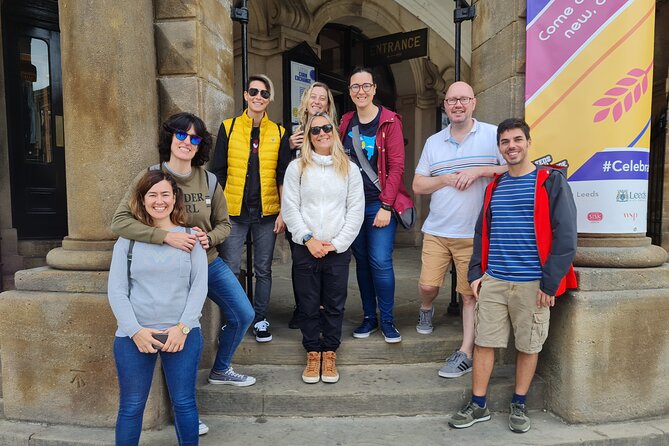
Next you head toward Leeds City Museum. Again, this is an exterior stop only, with about 10 minutes given to the area. Don’t treat this as “we’re passing by a museum” though. It is more like a teaser that helps you decide whether you want to return later.
The standout detail here is the mention of a very misshapen big cat. That is the kind of thing that makes a building feel like it has personality. It also gives you a simple target for your own look-around time, so you are not just staring at stonework, you are actually spotting a landmark feature the guide highlights.
If you are the type who likes to choose your own follow-up later, this stop is a good way to decide. You leave knowing there is more to see inside if you want it, but you do not get forced into paying admissions as part of the walk.
Leeds Cathedral: a stop built for context, not just photos
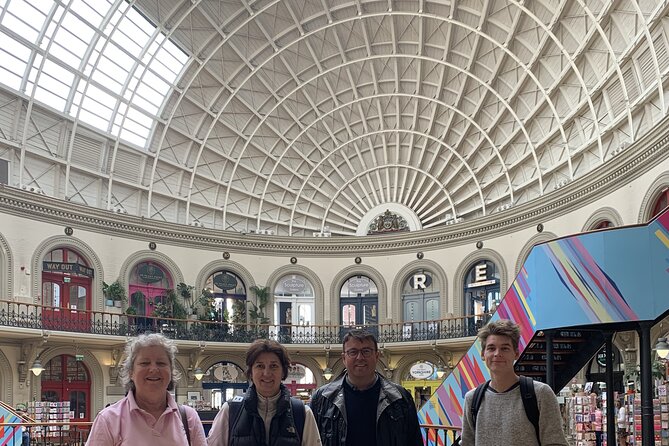
Leeds Cathedral is next, with about 5 minutes on the outside. This is one of those places where people often assume the story is only about architecture. The guide’s value here is the origin, a mission founded by a Dominican priest. That detail helps you read the building differently, because it frames the cathedral as part of a larger religious and community story, not just a pretty landmark.
When a tour does this well, it gives you something you can carry forward. After this stop, when you see other churches in the UK, you start looking for the “why” behind them, not only the “what.”
Time-wise, it stays short. So if you want longer cathedral time, plan to do it later, on your own. The good news is that the guided part makes you more likely to notice what matters once you do go back.
The Light and City Varieties Music Hall: modern life next to old performance
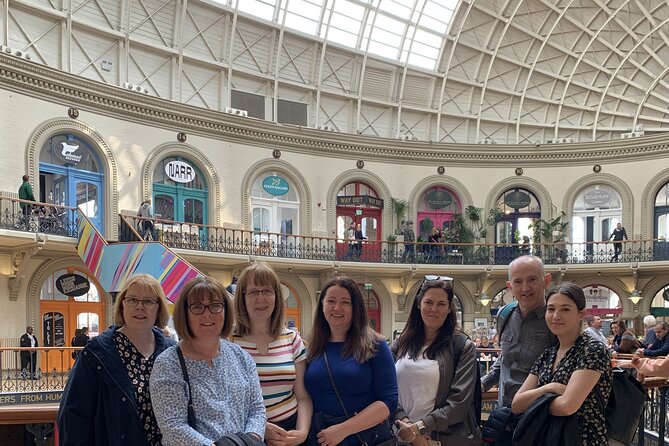
You then get The Light, described as a hub of entertainment. It is another exterior-only stop, around 5 minutes, but it helps illustrate how Leeds mixes eras. You are seeing how a city centre doesn’t freeze in time. It keeps changing uses while keeping key structures in view.
A few minutes later, you are at City Varieties Music Hall, also about 5 minutes. This is a major highlight because it is called the world’s oldest running music hall and a rare surviving relic of the Victorian era. That is not just trivia. It changes what you pay attention to when you walk past it. Suddenly, it stops being a “cool building” and becomes evidence that performance culture kept going, despite all the changes a city goes through.
This is also where the group energy often lifts. Stops around live performance and public halls have a way of making people ask more questions. If you want that classic “I can picture myself here later” feeling, this is one of the best points in the route.
Briggate: from centuries-old commerce to a shopper’s corridor
Briggate is next, another exterior-only stop of about 5 minutes. This is not the kind of stop where you stand still and look up at one building. It is where you absorb a street’s vibe and history at the same time.
The guide frames Briggate as a commercial hub since the 13th century, and it links that history to the present day: from textile power in Leeds to a shoppers paradise now. That is a useful contrast because it tells you Leeds has always been connected to trade and industry, even when the storefronts and goods change.
If you like to walk a city like a researcher, this is a great stretch. You can glance at signs, shopfront styles, and how the street feels wider or tighter depending on where you are. In a short tour, it gives you “street literacy,” the ability to understand what you are seeing after the guide moves on.
Victoria Quarter: glass-roof Victorian arcades and a free pause
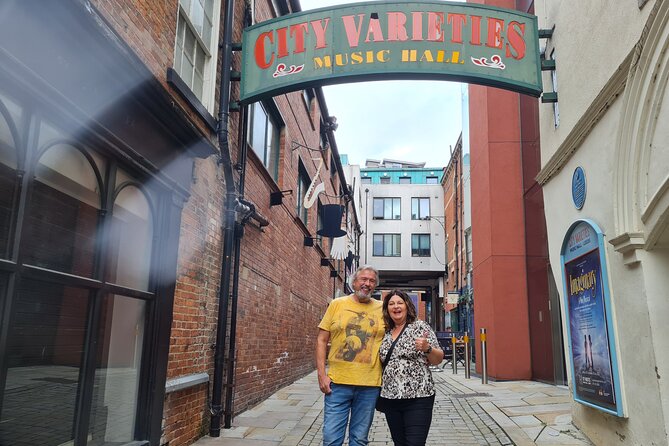
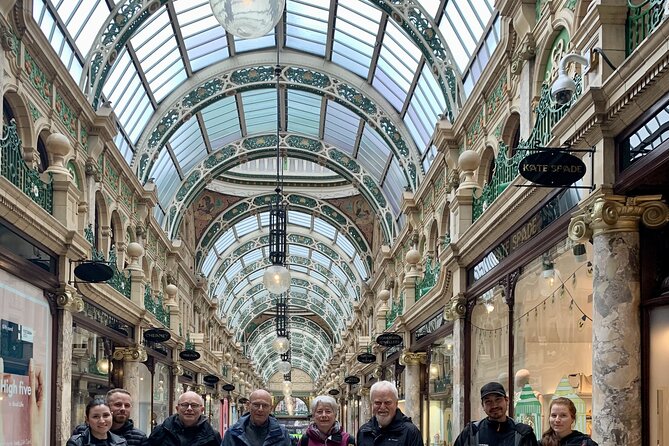
Victoria Quarter is one of the best stops for a break that still feels like sightseeing. It is exterior-only, around 5 minutes, and the admission is free. You are going to glass-roofed Victorian arcades, ornate and designed to make people slow down and look up.
Even in a short stop, this is where the route becomes photogenic. The guide’s job is likely to help you notice the architecture details that scream Victorian design. But the real value is practical: Victoria Quarter sits in the middle of the walking flow, so it works as a natural reset if your legs are starting to complain.
If you want a short snack or a quick coffee after, this area is a good place to do it since you are not leaving the tour in a random spot. You are still within the central city core.
Kirkgate Market: Europe’s largest indoor market, scarred history and daily life
Leeds Kirkgate Market is a strong capstone to the tour, about 5 minutes on the outside. You are stepping toward a place that is described as Europe’s largest indoor market, and it carries a past that includes surviving both bombs and fire.
That kind of history can sound heavy for such a quick stop, but it makes the market feel real. It is not just a “nice market to visit.” It is evidence of continuity, the fact that people kept coming back to buy food, sell goods, and run a living business even after major disruption.
A guided view also helps you focus. You know it is indoor, so you can look at the entrances and imagine the market inside. Even if you do not have time to go fully inside during the tour window, you now know this is the kind of place you should prioritize for a longer visit.
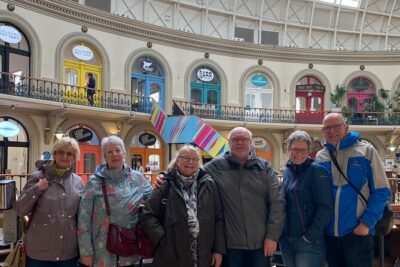
Leeds Corn Exchange: grain trading roots and your final orientation point
The tour ends outside Leeds Corn Exchange, around 5 minutes. This final exterior stop is a fitting way to close, because it ties Leeds to trade and industry one more time.
The Corn Exchange was built as an exchange for grain, which is a simple detail that gives the building a purpose beyond being a handsome structure. It is presented as a symbol of Leeds trading past, and that framing helps you connect it to earlier stops like Briggate.
Ending here also makes sense logistically. Corn Exchange is a familiar city-centre landmark, so it is easier to navigate from the end point to whatever you plan next, whether that is more shopping, museums, or a train ride home.
What you should know about admissions and stop length
Most stops on this route are exterior visits only, and admission tickets are not included for many of the key sights. The exceptions mentioned in the tour info are that Millennium Square and Victoria Quarter are free during the walk, and you are not expected to pay for time at those specific stops.
So what should you do with this? Plan for the tour as an orientation experience, not a museum marathon. If you want deeper time inside places like Leeds City Museum or any art-related venues, make a separate plan after the walk. This tour is designed to help you decide what is worth your money and time next.
The upside is you stay moving and you cover a wide range of Leeds without getting stuck in lines. The tradeoff is you will not feel “finished” with the city. You will feel ready to go back to pick what you like most.
Price, group size, and timing: good value if you keep expectations right
At $19.43 per person for about 1 hour 30 minutes, you are paying for a guided route plus the context that makes the landmarks connect. It is not expensive compared to what you would typically pay for a specialist guide just for one building. Here you get several major stops in one coherent loop.
The group cap of 15 people helps. It means your guide can manage questions without the tour turning into a human tide. Also, because the walk is set for 10:30 am, it fits nicely into a day that includes lunch and one or two independent museum stops.
One more helpful detail: this tour is often booked about 16 days in advance on average. If you are visiting during a busy week or you want the 10:30 am slot, booking ahead is a smart move, especially when weather can affect walking plans.
Footwear, weather, and how to make the walk work for you
Leeds in real life can mean rain, wind, or damp pavement. The tour requires good weather, which is a fair rule for any city walking route. Bring walking shoes. Not fancy shoes. Shoes with grip and comfort.
Also, keep your pace realistic. Stops are short, usually 5 to 10 minutes. That is plenty of time for a guided explanation and a few looks, but it is not enough for long photo sessions or slow wandering far ahead. If you want extra time at one spot, note it mentally and plan a return after the tour.
Who this Leeds city walk suits best
This tour is ideal if you want to get your bearings quickly, especially in the city centre. It is also a good fit if you like Victorian buildings, classic market culture, and civic landmarks, without needing ticketed museum time during the walk.
It is also designed for a wide range of mobility needs, since it is wheelchair and stroller accessible. Service animals are allowed too. The tour runs near public transportation, so it is easy to tie into a day with trains or buses.
If you are visiting Leeds for the first time and you want one good “orientation backbone,” this is a great way to start. If you already know Leeds well and want deeper dives into one museum, you might find the stops short.
Should you book the Daily Leeds City Walking Tour?
Yes, if you want a fast, guided orientation through Leeds city centre that covers the big names like Leeds Town Hall, Leeds Cathedral, City Varieties Music Hall, Briggate, Victoria Quarter, Kirkgate Market, and the Corn Exchange. You will walk away with a mental map and a shortlist of what to revisit, plus a clear sense of how Leeds shifted from trading power to modern city life.
Skip it only if your main goal is spending lots of time inside museums during the same outing. This tour is built as an exterior, walk-and-learn experience, so it works best as the first step, not the whole journey.
FAQ
What time does the Leeds City Walking Tour start?
The tour starts at 10:30 am.
How long is the tour?
It lasts about 1 hour 30 minutes.
How much does the tour cost?
The price is $19.43 per person.
Where do I meet the guide?
You meet at Leeds Art Gallery on The Headrow, Leeds LS1 3AA, UK.
Where does the tour end?
The tour ends outside Leeds Corn Exchange on Call Ln, Leeds LS1 7BR, UK.
Is the tour offered in English?
Yes, it is offered in English.
Are there admission tickets included?
Admission tickets are not included for most stops, and many stops are exterior visits only. Millennium Square and Victoria Quarter are listed as free.
Is the tour wheelchair and stroller accessible?
Yes, it is wheelchair and stroller accessible.
Can I cancel and get a full refund?
Yes. You can cancel up to 24 hours in advance for a full refund.
Fresh off the Leeds review pile


City Tours, compared.
 ★ 5.0Liverpool: “Blue Route” – City & Beatles TourFrom $278,562 reviews
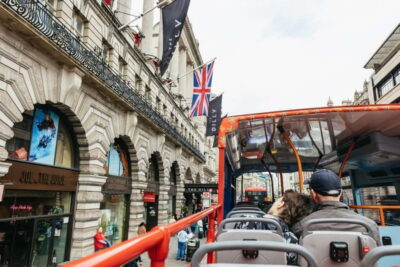 ★ 4.4London: City Sights Hop-On Hop-Off Bus & Bookable ExtrasFrom $566,579 reviews
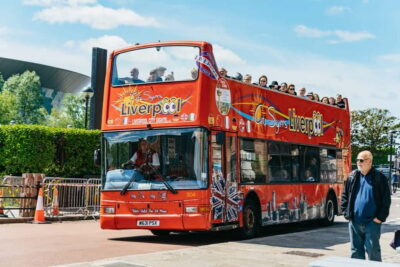 ★ 4.8Liverpool: City & Beatles Tour with Live Guide & Live MusicFrom $295,249 reviews
 ★ 4.7Oxford: University and City Walking Tour with Alumni GuideFrom $404,429 reviews
 ★ 5.0The Manchester City Stadium TourFrom $354,176 reviews
 ★ 4.8Etihad Stadium: The Manchester City Stadium TourFrom $353,096 reviews
 ★ 5.0A History of Terror – Belfast City Centre Walking TourFrom $362,883 reviews
 ★ 4.5City Sightseeing Edinburgh Hop-On Hop-Off Bus Tour + Kids Go FreeFrom $242,683 reviews
Also filed under