
REVIEW · LONDON MUSEUMS & GALLERIES
Explore Biblical Artifacts at the British Museum
London museums are big. This one comes with a Bible map.
I love the way guide David connects objects to specific people and stories, so the galleries stop feeling like random stone and start feeling like chapters with a timeline. Two standouts for me are the pre-tour study notes (plus Bible verses) and the focused museum route that mixes Assyrian, Egyptian, Greek, and Roman rooms in about half a day. The other big plus is that it is capped at just 10 people, so you can ask questions and keep up without getting lost in the crowd.
One thing to plan around: you will walk and stand for a few hours, and this is not ideal if you just landed after a long flight. If you are sensitive to standing on hard floors, you will want to grab one of the folding stools available inside the museum before the main route starts.
In This Review
- Quick hits: what you will notice right away
- Meeting at the British Museum, then getting your Bible in airplane mode
- The ground floor Assyrian and Egyptian route: Joseph and Moses in stone
- A practical note if your feet are already tired
- Greek galleries and the Parthenon sculptures: where Paul’s world takes shape
- Roman galleries: emperors, objects, and why Jesus and Paul fit in this setting
- Biblical people covered, and how the tour keeps it from becoming a list
- Optional Persia and Babylon galleries: how to choose without rushing
- Price and timing: does $77.50 buy real value?
- Who this is for, and who might want a different plan
- Should you book Explore Biblical Artifacts at the British Museum?
- FAQ
- How long is the British Museum Bible artifacts tour?
- Where does the tour start and end?
- Is the admission ticket included?
- What language is the tour offered in?
- Do I need to bring a Bible?
- How big is the group?
- Can I cancel and get a refund?
Quick hits: what you will notice right away
- Small group size with a guided pace that works in a huge museum
- David’s Bible timeline ties Scripture names to what you can actually see
- Offline Bible planning through a Bible app that works in airplane mode
- Assyrian and Egyptian anchors like 40-ton lamassu beasts and pharaohs
- Roman links to Jesus and Paul, using objects from the Roman galleries
- Optional Persia and Babylon stops if you have time and interest
Other museum and gallery tours we sat through
- Frameless – Immersive Art Experience in London
★ 4.5 · 3,660 reviews - London: Entry Ticket to Frameless Immersive Art Experience
★ 4.7 · 2,923 reviews - London: British Museum Guided Tour
★ 4.3 · 1,182 reviews
Meeting at the British Museum, then getting your Bible in airplane mode
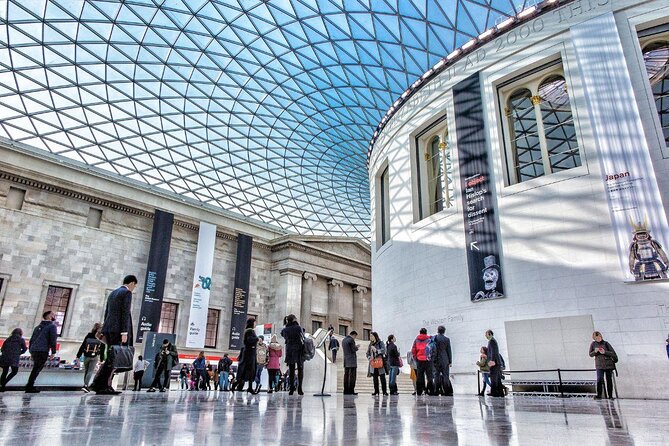
Your tour starts at the British Museum on Great Russell St (London WC1B 3DG). You meet back at the same spot at the end, which makes it easy to roll straight into the rest of your day in London.
The tour is in English and uses a mobile ticket, so you’ll want your phone with you. You also get clear advance messaging, plus a reminder system that you can catch through the Viator and Tripadvisor apps.
A smart move is setting up your Bible app ahead of time for offline use. You can use a Bible app like YouVersion, and the point is simple: you should be able to look up passages as David connects them to the artifacts, even if the museum wifi is spotty.
David also uses a short preface to help set the historical background, then keeps pointing you to what matters in each room. That structure is one of the reasons this tour works for both Bible-focused travelers and curious museum lovers.
The ground floor Assyrian and Egyptian route: Joseph and Moses in stone
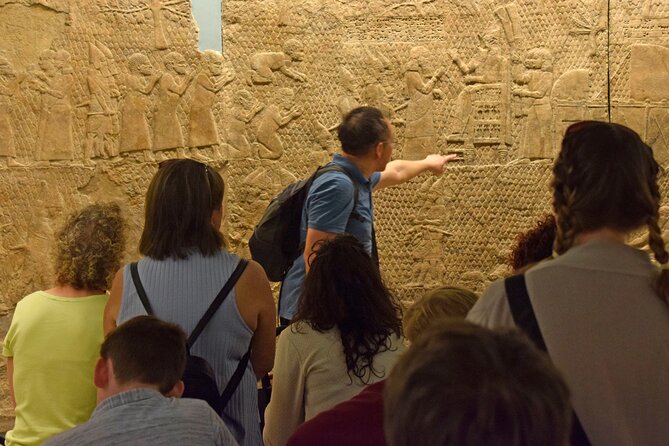
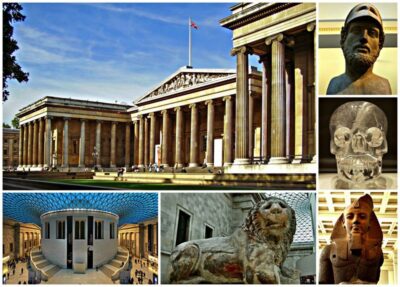
You begin on the ground floor with three museum zones that act like anchor points for the Biblical world. Expect a lot of visual scale right away, including 40-ton Assyrian lamassu beasts. These are not background props. They are the kind of power that ancient authors lived under, traded with, feared, or fought.
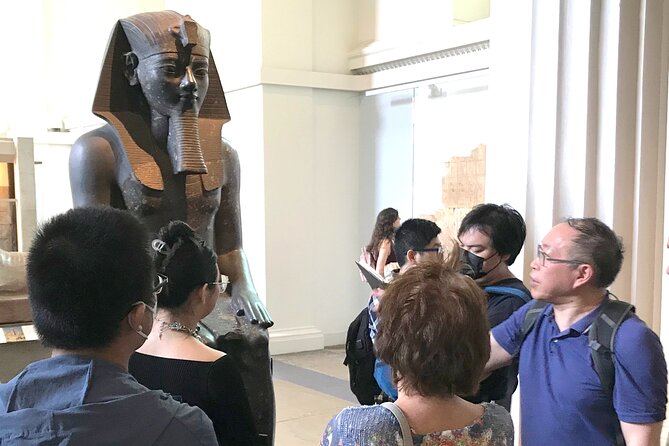
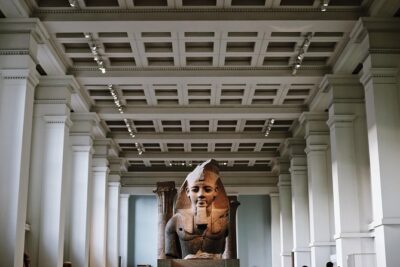
From there, you move through Egyptian displays, including statues of famous pharaohs. David connects these Egypt sections to the big Biblical through-lines like Joseph and Moses, so you are not just reading names. You are seeing the setting these stories grew out of.
A useful thing about this part of the tour is how David handles timelines. He keeps the sequence clear, so your brain stops trying to hold Old Testament names and ancient empires at once. You get a guided order that makes later stops easier to follow.
A practical note if your feet are already tired
This is about a half-day plan, but you still need to manage standing time. The museum offers folding stools, and having the option matters if you do not want to grit your teeth for three hours. If you are bringing family, older teens, or anyone who tires quickly, this detail is worth taking seriously.





Greek galleries and the Parthenon sculptures: where Paul’s world takes shape
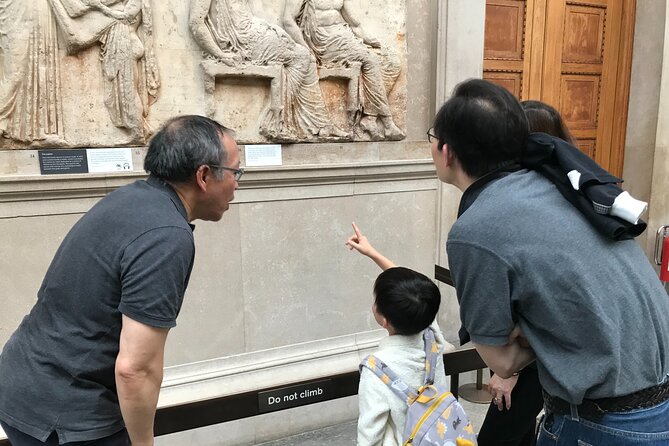
After a break, you head upstairs. Now the tour adds a different kind of context, Greek culture and the Parthenon temple sculptures of Athens.
This is where the tour gets especially helpful if you want the Bible to feel more like history you can picture. David uses the Greek room to connect the environment Paul traveled through, so Paul is not just a name on a page. He is a person moving through real cities, real ideas, and real cultural pressure.
You do not need to be a classics person to appreciate this stop. The goal here is orientation: what the Greek world looked like, and why it mattered for how Christianity spread.
Roman galleries: emperors, objects, and why Jesus and Paul fit in this setting
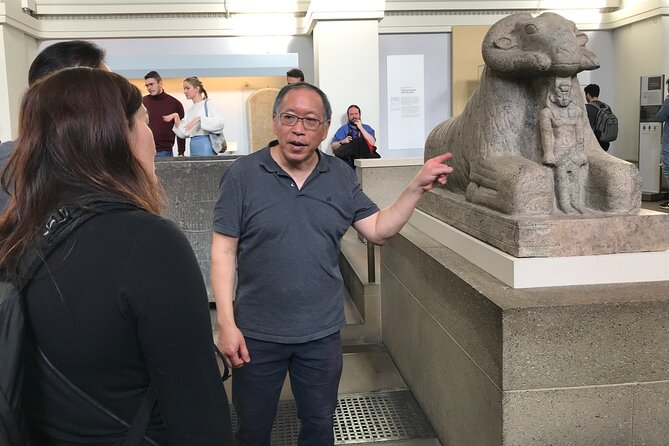
The heart of the upstairs plan is the Roman galleries. David focuses on Roman emperors and the objects that relate directly to Jesus and Paul.
This is where you start seeing how the Roman world forms a frame around major New Testament events. Even if you think you already know the story, artifacts help you slow down and notice what the text assumes you understand.
You can expect discussion of the kinds of rulers people met, the symbols they lived with, and the everyday objects that show up alongside major events. The tour connects these Roman elements to Jesus and Paul, giving you a tangible sense of how the New Testament landed in a specific empire, not an abstract time.
One of the best teaching moves here is how David ties the narrative to artifacts you can physically point to in the galleries. You end up with “faces” for references, rather than just dates and verses.
Biblical people covered, and how the tour keeps it from becoming a list
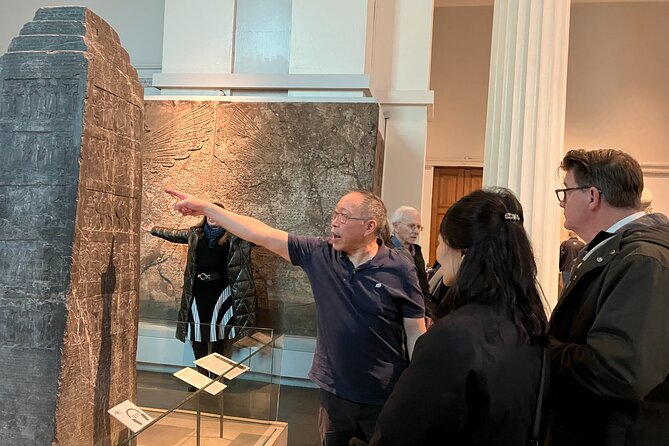
One of the strongest aspects of this experience is that it stays anchored to specific people from Scripture, not just broad themes. David brings up figures across the Old and New Testaments and threads them through the museum sections you are actually walking through.
You should expect coverage including:
- Egypt: Joseph and Moses
- Assyria: Jonah, plus kings tied to Ahab and Hezekiah
- Greek: Paul
- Rome: Jesus and Paul
If that sounds like a lot, it is. The value is that David presents it as a timeline you can track while you move from room to room. That pacing keeps it from turning into a crowded slideshow.
Optional Persia and Babylon galleries: how to choose without rushing
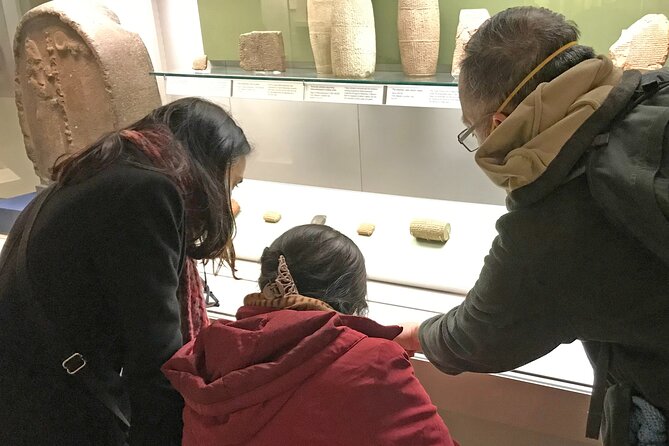
You may also have time for optional galleries, including Persia and Babylon, depending on how your route and your interests line up. This matters because those empires connect strongly to Biblical narratives that involve captivity, conflict, and shifting power.
If you love Old Testament settings, the Persia and Babylon add depth. If you are more focused on Jesus and Paul, you might prefer to spend extra time in the Roman sections instead.
This is the kind of flexibility that helps in a major museum. You can spend your attention where it will pay off most for you, not where the schedule blindly forces you.
Price and timing: does $77.50 buy real value?
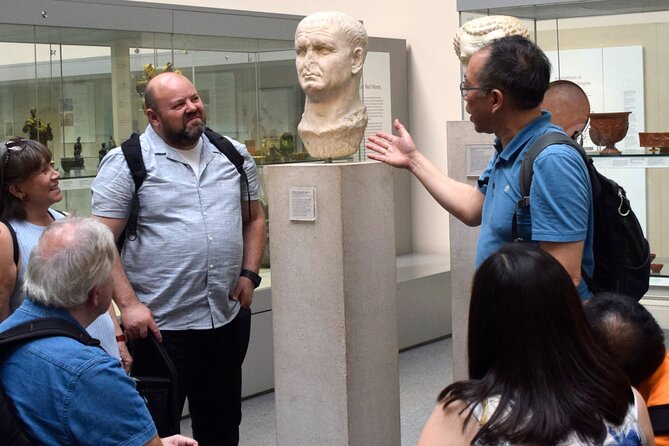
The price is $77.50 per person, and the tour runs about 3 to 4 hours. That cost can feel steep until you think about what you actually get: a guided route inside a museum that is huge, complex, and easy to wander in. You are paying for clarity, not just access to rooms.
A few value points that matter:
- The group is small, so you can keep asking questions instead of competing for attention.
- The study materials and verse connections help you build understanding as you go.
- You get a guided timeline, which is hard to recreate on your own when you are surrounded by hundreds of objects.
Also, the “3 to 4 hours” is a guide. If the group stays engaged and you ask questions, your time may stretch a bit. Plan your other London plans loosely, because this tour can take up most of a half day.
Who this is for, and who might want a different plan
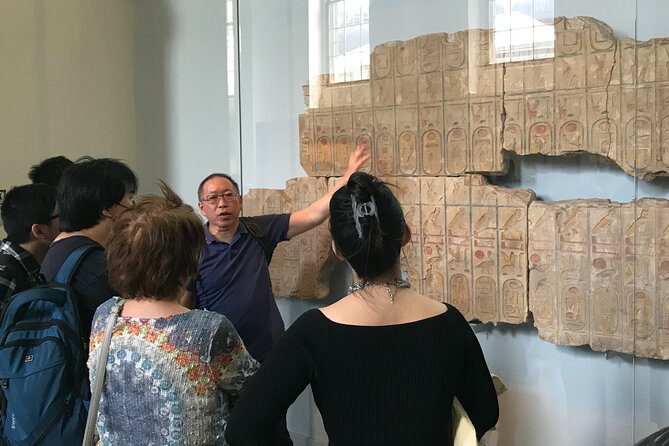
This works best if you want your Bible study to feel more concrete, and you like learning in a museum setting. It also suits you if you are curious about archaeology and ancient civilizations, because the tour does not treat Scripture as separate from the historical world around it.
You might skip this tour if you are arriving from a long-haul flight and you are wiped out. The tour is not positioned as a gentle stroll, and you will do best when your brain is fresh enough to follow a timeline.
It is also a good pick for families and teens who can handle some walking and discussion, especially if you want a faith-forward lens rather than a purely academic one. If you bring kids, the folding stool option and David’s pacing can make the experience more comfortable.
Should you book Explore Biblical Artifacts at the British Museum?
Book it if you want the British Museum to feel like more than famous rooms. This tour gives you a guided Bible timeline tied to real artifacts, and it is built for people who want Scripture connected to specific ancient settings you can actually see.
Pass if you hate standing in museums or you need a very low-effort sightseeing day. Also, if you only want broad museum highlights, you might find a Bible-specific lens too focused.
If you do book, do two things for the best experience: set up your offline Bible app in advance, and plan to use the folding stool if you want it. Then go in with an open mind, because by the time you reach the Roman galleries, the story stops being only text and starts feeling like a world.
FAQ
How long is the British Museum Bible artifacts tour?
It runs about 3 to 4 hours.
Where does the tour start and end?
It starts at the British Museum, Great Russell St, London WC1B 3DG, UK, and ends back at the same meeting point.
Is the admission ticket included?
The information provided notes admission ticket free.
What language is the tour offered in?
The tour is offered in English.
Do I need to bring a Bible?
It is recommended to use a Bible app that works in airplane mode, such as YouVersion, so you can look up verses during the tour.
How big is the group?
The tour has a maximum of 10 travelers.
Can I cancel and get a refund?
Yes. You can cancel for a full refund up to 24 hours in advance of the experience’s start time.
Museums and Galleries, Keep Going
- Frameless – Immersive Art Experience in London★ 4.5 · 3,660 reviews
- London: Entry Ticket to Frameless Immersive Art Experience★ 4.7 · 2,923 reviews
- London: British Museum Guided Tour★ 4.3 · 1,182 reviews
- Official tickets: Moco Modern & Contemporary Art Museum★ 4.5 · 1,157 reviews
Fresh off the London review pile




London Museums & Galleries, compared.
 ★ 4.5Frameless – Immersive Art Experience in LondonFrom $383,660 reviews
 ★ 4.7London: Entry Ticket to Frameless Immersive Art ExperienceFrom $372,923 reviews
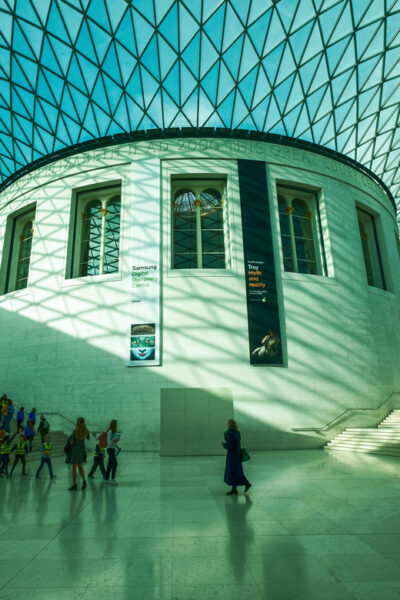 ★ 4.3London: British Museum Guided TourFrom $231,182 reviews
 ★ 4.5Official tickets: Moco Modern & Contemporary Art MuseumFrom $361,157 reviews
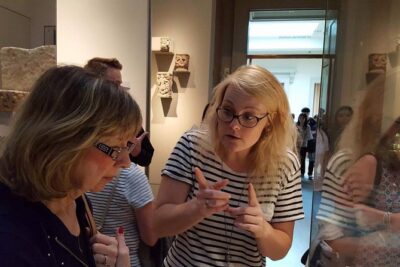 ★ 5.0British Museum London Guided Tour Semi-Private 8ppl MaxFrom $108984 reviews
 ★ 4.1London: Tour of the British MuseumFrom $14678 reviews
 ★ 4.5London: British Museum Audio Tour & Priority Entrance TicketFrom $9631 reviews
 ★ 5.0The British Museum London – Exclusive Guided Museum TourFrom $108555 reviews
Also filed under