
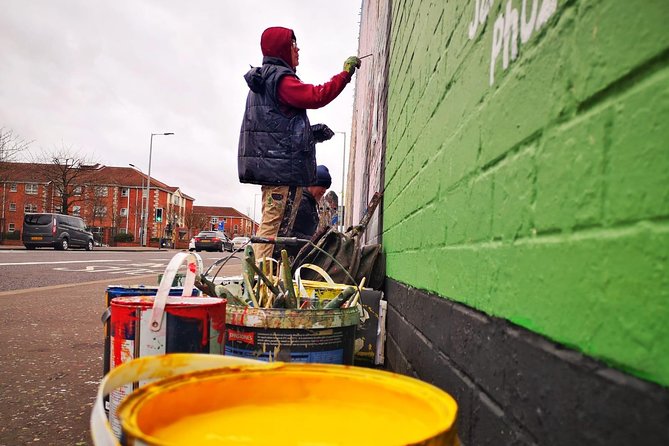
REVIEW · BELFAST TOURS & POLITICAL MURALS
Famous 1.5 hour Belfast Murals Tour
Belfast murals hit hard, fast. This 1.5-hour murals tour by van takes you to key painted sites across the city and explains how The Troubles shaped everyday life, politics, and identity in Northern Ireland. I love how the route mixes major landmarks like the Peace Wall with smaller wall details, so you do not just see art, you understand it. I also like the pace, quick photo stops paired with clear storytelling. One thing to consider: expect emotional, political history, and it is not the kind of tour that turns heavy topics into light entertainment.
The tour is small-group and runs in an air-conditioned vehicle, so you get comfort without losing focus. You will stop at six places, each about 10 minutes for photos and narrative, plus the drive time that makes it feel like a real loop, not a dash. If you want a better “how did we get here?” sense of Belfast, this format is a strong fit.
In This Review
- Key highlights you should care about
- Belfast murals tour in 90 minutes, what you will actually understand
- Price, included tickets, and whether $83.18 is good value
- Starting at Leonardo Hotel Belfast, then riding the loop in comfort
- Divis: the first chapter of Belfast in paint
- International Mural Wall on Divis Street: learning to read the famous murals
- Bobby Sands mural: why one face can carry a whole era
- Clonard Monastery: when the route turns from wall to place
- Peace Wall: seeing the symbol before you judge it
- Shankill Road: the final stop, where art meets lived neighborhood reality
- Guides, questions, and the rare gift of emotional but fair context
- Who this Belfast murals tour is best for
- Should you book this tour or choose something lighter?
- FAQ
- How long is the Belfast murals tour?
- What does the tour cost?
- Where do I meet, and where does the tour end?
- What times are available for pickup?
- What language is the tour offered in?
- What is included in the price?
- Are food and drinks included?
- Is the tour private?
- Is there a minimum age, and are service animals allowed?
- What is the cancellation policy?
Key highlights you should care about
- Stops built around the story, not just famous murals
- Six major points in about 90 minutes, easy to fit into a first day in Belfast
- Peace Wall time for the full symbolism, plus context you can actually explain later
- Guides with lived perspective, and lots of room for questions
- Photo-friendly pacing with short, purposeful time at each site
- Tickets for the stops included, so you are not scrambling for entry fees
Other Belfast tours, city and political
- Titanic Belfast Entrance Ticket: Titanic Visitor Experience Including SS Nomadic
★ 4.5 · 3,698 reviews - Cab Tours Belfast Famous Black Taxi Tours
★ 5.0 · 3,633 reviews - A History of Terror – Belfast City Centre Walking Tour
★ 5.0 · 2,883 reviews
Belfast murals tour in 90 minutes, what you will actually understand
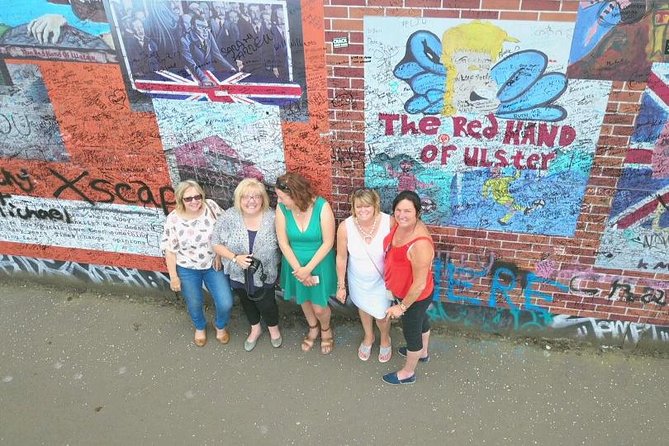
If you only have a day in Belfast, this tour works because it teaches the city in chapters. Street art here is not decoration. It is a public language, full of coded references, memory, and political messaging that people have used for years. The guide’s job is to translate what you see on the wall into what it meant to the people living through the Troubles.
I like that the tour is intentionally short, about 1 hour 30 minutes. That means you get momentum instead of fatigue. It also makes it realistic for first-timers: you can learn a lot without needing a full day of logistics. The guide keeps the stops tight, with time for photos, then quick context so the murals stop being random and start connecting.
From the guide style described by past guests, the biggest win is the human angle. Names that show up often in 5-star feedback include Joe McCullough, John, Jackie, Billy, and Kieran. People repeatedly mention how the tour feels informed, emotional, and fair, with space for questions. That matters, because the Troubles are complex. A mural can look simple, but the story behind it can be complicated fast.
Price, included tickets, and whether $83.18 is good value
At $83.18 per person for about 1.5 hours, the obvious question is value. Here is the practical way to think about it:
- You are paying for a professional guide who frames the sites and keeps the conversation balanced.
- You have an air-conditioned vehicle, which is not a trivial comfort detail, especially if Belfast weather is doing its own thing.
- You get admission tickets included at the stops on the route.
- The group format is small-group, and it is listed as private for your booking, meaning your party is the only group participating.
If you were to do this solo, you would spend time figuring out routes, finding the right walls, and piecing together the context yourself. Most people end up paying something for a guide one way or another, because the payoff is understanding. Based on the repeated praise for emotional clarity and balanced explanation, this is priced like an education experience, not a casual photo walk.
Starting at Leonardo Hotel Belfast, then riding the loop in comfort
The tour begins and ends at Leonardo Hotel Belfast, Great Victoria Street (BT1 6DY). That is helpful. You start in a central, walkable area, and you do not have to plan a separate pickup or fight with getting back to your hotel after you have had your head full of history.
Departure times range from 8:00am through 2:00pm. If you like structure, choose a midmorning or early afternoon slot, since the schedule is built for six short site visits plus driving time. Also, this tour is booked on average about 29 days in advance, so if your dates are tight, do not wait until the last minute.
One small practical note: the tour is in English, so if you want to get every detail, English is the language you should plan around. The tour is also listed as near public transportation, and service animals are allowed.

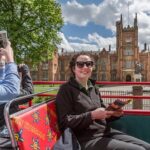


Divis: the first chapter of Belfast in paint
Stop 1 is Divis for a photo stop and historic narrative. Even though it is short, it sets the tone. Divis is where you start seeing how neighborhoods, memory, and political identity overlap. The guide’s narrative at this point matters because it gives you the context to read what comes next.
What I like about starting here is that it trains your eye early. You learn not just to look at images, but to notice style, placement, and what gets emphasized. That makes the next stops feel less like jump-scare “famous mural” moments and more like a coherent story.
Potential drawback: because you only get about 10 minutes, you need to be ready to listen. If you are the kind of traveler who likes to wander slowly and absorb every wall, you might want to do extra independent time afterward. On the other hand, if you want a guided framework fast, this opening works.
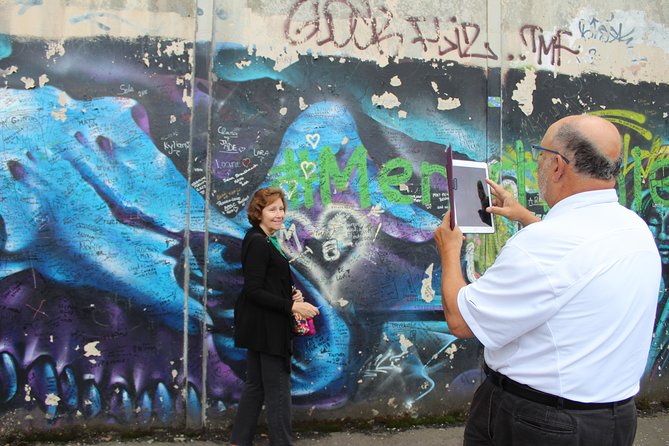
International Mural Wall on Divis Street: learning to read the famous murals
Stop 2 is the International Mural Wall on Divis Street. This is another photo stop with narrative, specifically focused on the stories behind the murals. This is where the tour starts to feel like a curated lesson, because the wall is known, and the guide is expected to connect that fame to the why.
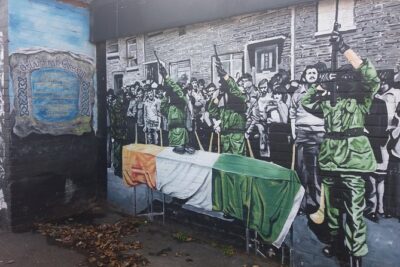
This stop is valuable because it changes how you interpret street art. You stop thinking of murals as individual artworks and start seeing them as a collective record. Many people find the biggest “aha” here is realizing how murals can function like public documentation. They are visible, repeatable, and meant to be seen by anyone passing through.
Photo note: bring your patience. This is a photo-friendly stop, but the point is context. Take a few pictures, listen fully, then take a second round of photos if you want. The guide typically builds the story in a way that makes those second photos more meaningful.
Bobby Sands mural: why one face can carry a whole era
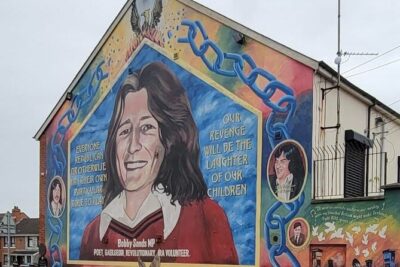
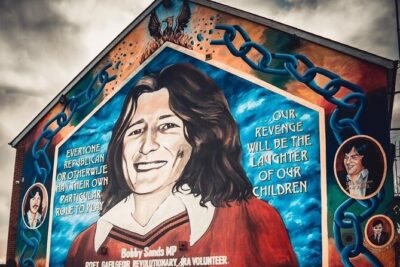
Stop 3 is the Bobby Sands Mural. It is another short photo stop with narrative. Bobby Sands is one of the most recognizable names tied to the era, and the mural acts like a focal point for understanding. The guide’s job here is to connect the image to the broader reality around it, not to turn it into a slogan.
What makes this stop effective is the structure. By the time you reach it, you already have context for how murals operate in Belfast. So the guide can spend the time explaining why this kind of figure appears in painted form, and what people were trying to communicate.
Consideration: this is emotional history. If you prefer lighter sightseeing, you might feel a tug at stops like this. But if you want to understand Belfast beyond postcards, this is the kind of moment that makes the whole city click.
Clonard Monastery: when the route turns from wall to place
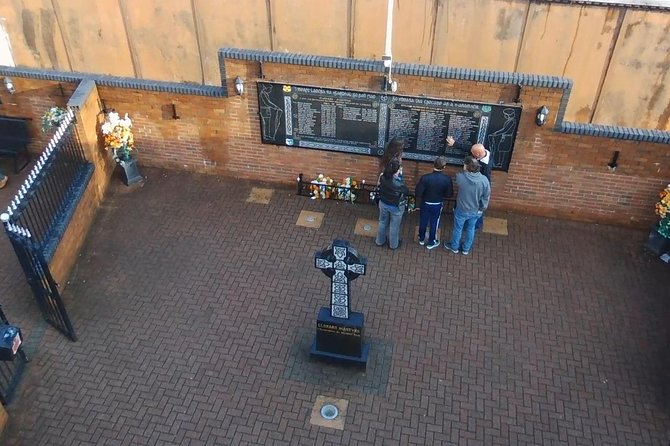
Stop 4 is Clonard Monastery for a photo stop plus visit and narrative. This is a nice shift. Up to now, you have been in street-art space. Here you add a more grounded sense of place, which can help you understand that the Troubles were not only about politics in headlines, they were also about community life, institutions, and long memories.
Why it matters: murals are public, but a monastery is not just another backdrop. It can change your understanding of how different parts of society held meaning and identity. Even with a short visit, the narrative is what ties the site into the larger story of Belfast.
Practical thought: since the visit is listed as about 10 minutes, plan to stay present and move with the group. If you want to linger, you may need extra time before or after the tour on your own.
Peace Wall: seeing the symbol before you judge it
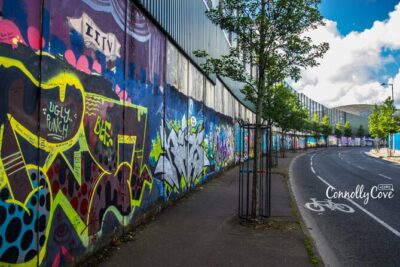
Stop 5 is the Peace Wall, listed for a photo stop plus sign wall and narrative. This is the stop many people remember, and for good reason. It is a physical reminder of separation, control, and the long effort required to move from conflict toward peace.
This is where your guide’s balance matters most. A wall can look like a barrier. But without context, you might miss what people were hoping for, what tensions shaped it, and how it became a visible part of daily life.
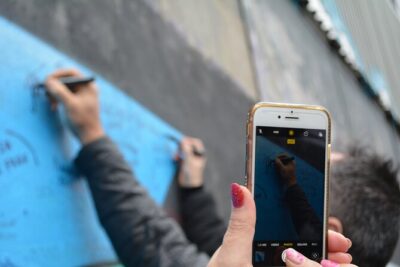
I also like that the stop includes time for you to actually look at the sign wall, not just pose for a photo. That small difference turns your photos from sightseeing snaps into documents you can explain.
Shankill Road: the final stop, where art meets lived neighborhood reality
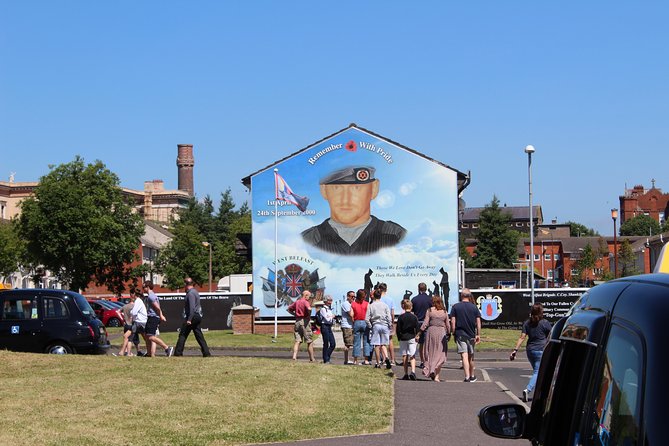
Stop 6 is Shankill Road for a photo stop and narrative. This is the last chapter, and the route ends with you carrying the context forward. If earlier stops taught you how murals speak, Shankill Road helps you place that language back onto the street where it belongs.
Why this works as a finale: you get to compare what you saw earlier with what you see here, so you leave with a sense of how different communities interpreted the Troubles and used murals as communication.
Potential drawback: because it is last, it can feel like the tour is moving on quickly. If you fall in love with a particular mural, consider snapping extra photos earlier, when the guide is still building context and you still have full attention. You will get more out of your pictures later.
Guides, questions, and the rare gift of emotional but fair context
The strongest theme in the praise is the guide’s delivery. People often highlight guides as emotionally connected, articulate, and willing to answer questions. Several names come up, especially Joe McCullough, plus John, Jackie, Billy, and Kieran. The point is not celebrity names. The point is the tone people describe: informative, engaging, and moving, with a sense of balance.
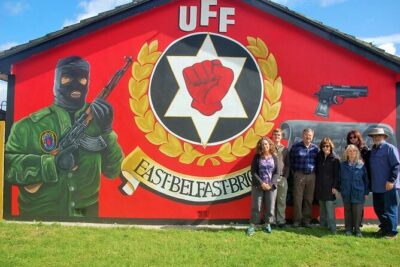
That balance is key for Belfast murals. You are seeing political messaging. You need context to avoid misreading it. Guides who lived through the era can explain why certain details matter and why certain symbols carry weight, including how perspectives differed on both sides.
If you are the question-first type, this tour fits you. If you prefer silent listening, it still fits, but you will get more out of it if you ask at least one question. Start with something simple like how a certain symbol connects to the Troubles, then let the guide steer you.
One more practical tip: bring a charged phone or camera, and bring a way to take notes. Even if you only jot a few keywords, it helps you remember the links between stops. The tour moves fast enough that facts can blur if you do not capture them.
Who this Belfast murals tour is best for
This works best if:
- You want a first-time Belfast foundation, especially for understanding the Troubles through street art.
- You like guided storytelling and want someone to translate what you see.
- You want a short day activity that still feels substantial.
It may not be ideal if:
- You want a purely upbeat, casual walk where nothing heavy is discussed.
- You dislike political history topics. This tour is designed around them.
- You need very long unstructured time at each wall. The stops are short by design.
If you are traveling with family, it can still work, since the tour is described as engaging and memorable, but you should think about how your group handles intense topics. Use your judgment and pace yourself.
Should you book this tour or choose something lighter?
Book it if you are in Belfast for a short trip and you want to understand the city fast. This is the kind of tour where the payoff is not just photos, it is context you can carry with you to other parts of town, and a more mature view of how conflict shapes everyday places.
Skip it or pair it carefully if you know you are sensitive to political history or you need a break from serious topics. In that case, consider doing the tour on a day when you have time afterward to decompress. Give yourself room to sit with what you learned.
Bottom line: at $83.18 for about 90 minutes, with a guide, air-conditioned van, and tickets built into the route, this is solid value for travelers who want meaning, not just murals.
FAQ
How long is the Belfast murals tour?
It runs for about 1 hour 30 minutes (approximately).
What does the tour cost?
The price is listed as $83.18 per person.
Where do I meet, and where does the tour end?
You meet at Leonardo Hotel Belfast, Great Victoria St, Belfast BT1 6DY, UK. The tour ends back at the same meeting point.
What times are available for pickup?
The available times listed are 8:00am, 9:00am, 10:00am, 11:00am, 12:00pm, 1:00pm, and 2:00pm.
What language is the tour offered in?
The tour is offered in English.
What is included in the price?
Included are a professional guide and an air-conditioned vehicle. Admission tickets are also included for the stops listed on the route.
Are food and drinks included?
No. Food and drinks are not included.
Is the tour private?
Yes. It is listed as a private tour or activity, with only your group participating.
Is there a minimum age, and are service animals allowed?
The minimum age is listed as 0 years, and service animals are allowed.
What is the cancellation policy?
Free cancellation is available. You can cancel up to 24 hours in advance of the experience start time for a full refund. If you cancel less than 24 hours before the start time, the amount paid is not refunded.
Belfast: City, Murals, History
- Titanic Belfast Entrance Ticket: Titanic Visitor Experience Including SS Nomadic★ 4.5 · 3,698 reviews
- Cab Tours Belfast Famous Black Taxi Tours★ 5.0 · 3,633 reviews
- A History of Terror – Belfast City Centre Walking Tour★ 5.0 · 2,883 reviews
- Game of Thrones and Giant’s Causeway Full-Day Tour from Belfast★ 5.0 · 2,291 reviews
Fresh off the Belfast review pile
Belfast Tours & Political Murals, compared.
 ★ 4.8Giants Causeway, Dark Hedges, Dunluce & Belfast TourFrom $1128,843 reviews
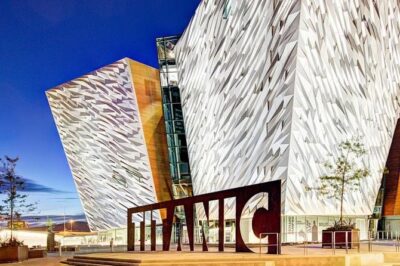 ★ 4.5Titanic Belfast Entrance Ticket: Titanic Visitor Experience Including SS NomadicFrom $373,698 reviews
 ★ 5.0Cab Tours Belfast Famous Black Taxi ToursFrom $1003,633 reviews
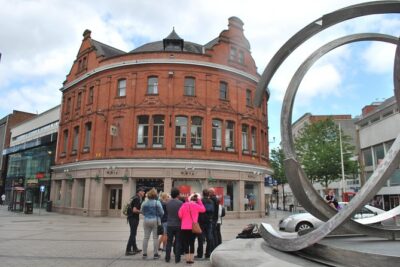 ★ 5.0A History of Terror – Belfast City Centre Walking TourFrom $362,883 reviews
 ★ 5.0Game of Thrones and Giant’s Causeway Full-Day Tour from BelfastFrom $482,291 reviews
 ★ 5.0Private Black Taxi Belfast City TourFrom $1102,188 reviews
 ★ 4.5City Sightseeing Belfast Hop-On Hop-Off Bus TourFrom $132,012 reviews
 ★ 5.0Giants Causeway & Castles Tour from Belfast: Guided tourFrom $331,432 reviews
Also filed under