
REVIEW · OXFORD UNIVERSITY & BLENHEIM PALACE
Fun, Flexible Treasure Hunt Around Oxford with Cryptic Clues & Hidden Gems
Oxford, but make it a treasure hunt. This self-guided game sends you around town with cryptic clues and maps on your phone, guided by Captain Bess, so you can wander at your own speed. I like that it is built for flexibility, you can start whenever you want and stop when you feel like a snack break.
The best part is how it mixes must-see Oxford sights with the smaller details you normally skip. You’ll get on-screen prompts and short stories as you hunt for answers, so places like the Radcliffe Camera and the Bodleian Library feel less like a checklist and more like a guided walk you control.
One thing to consider: if you want straightforward, simple sightseeing with no puzzle element, the clues can feel confusing until you reach the end, and that may not be your kind of fun.
In This Review
- Key things you’ll notice right away
- Why this treasure hunt fits Oxford so well
- From Oxford Castle to Carfax Tower, the route makes sense
- Oxford Castle & Prison: the starting push
- Radcliffe Camera: iconic Oxford, seen through a puzzle lens
- The Turf: a classic Oxford street-side moment
- Sheldonian Theatre: when your eyes learn faster
- Bodleian Library: the Oxford you’ll want to revisit
- Carfax Tower: a satisfying finish marker
- Captain Bess and the WhatsApp-style clue system
- Getting the most from cryptic clues (without losing the fun)
- How long it takes, and why flexibility is the real perk
- Value check: $20.83 for a 2.5-hour self-guided Oxford walk
- Practical advice before you start at Oxford Castle
- Who should book this Oxford treasure hunt, and who might skip it
- Should you book it?
- FAQ
- What is the price per person?
- How long does the Oxford treasure hunt take?
- Where does the tour start and end?
- Is it guided by a person you meet at the start?
- Do I need to download an app or print anything?
- Can I start at any time during the day?
- What are the main stops on the route?
- What if I cannot find an answer?
- Is this suitable if I have limited mobility?
- Is free cancellation available?
Key things you’ll notice right away

- Captain Bess guides the hunt via phone chats and treasure maps
- Flexible timing with no fixed group schedule
- Cryptic clue solving that gets you searching around famous Oxford landmarks
- Hint support if an answer doesn’t come quickly
- Walkable city route built around Oxford’s classic buildings
- Mobile-only experience with a mobile ticket, no printout and no app download mentioned
Other Oxford colleges and Blenheim days
- Oxford University Walking Tour With University Alumni Guide
★ 5.0 · 6,905 reviews - Oxford: University and City Walking Tour with Alumni Guide
★ 4.7 · 4,429 reviews - Oxford: City and University Tour, including college entry
★ 4.5 · 2,243 reviews
Why this treasure hunt fits Oxford so well

Oxford is a city you can enjoy at two speeds: the quick version where you hit the landmarks, and the slow version where you notice the carvings, the street corners, and the stories behind the stone. This hunt is basically designed for that second speed, but without forcing you to join a group timetable.
I like that you do not need to keep up with strangers. Instead, you follow maps and clue messages in your own rhythm. If you want to pause for photos, step into a shop window moment, or detour to a nearby side street, you can. That freedom matters in a place like Oxford, where the best details are often right next to what you came to see.
It also works well for mixed ages and interests. The route includes big-name architecture, but the way you experience it is through puzzle solving. Even if you are not a history buff, you still get a reason to look closely.
From Oxford Castle to Carfax Tower, the route makes sense
You start and finish at Oxford Castle, located at Oxford OX1. The hunt is set up as one continuous walking route that loops back to where you began, and it’s designed for about 2 hours 30 minutes on average. You can move faster or slower depending on how often you pause for hints, photos, or curiosity stops.
Here’s how the main stops shape the experience.
Oxford Castle & Prison: the starting push
The game begins at Oxford Castle and Prison, a strong opening because it gives you an immediate sense of place, not just a generic city center start. Starting here sets a slightly adventurous tone, and it is a good place to orient before you head into the more academic and scenic Oxford core.
Practical tip: give yourself a moment at the start to get comfortable with your phone view, map screen, and how clue messages appear. Once you’re used to the flow, the rest feels much easier.





Radcliffe Camera: iconic Oxford, seen through a puzzle lens
Next is the Radcliffe Camera, one of Oxford’s most recognizable buildings. In a normal sightseeing plan, you might glance, snap a photo, and move on. In this format, you are still looking at the Camera, but you’re also searching for an answer tied to what you see around you.
That changes your focus. Instead of only admiring the exterior, you end up scanning more carefully, which is where the fun lives. If you like architecture, you’ll enjoy the challenge. If you do not, the clue still gives you a reason to slow down.
The Turf: a classic Oxford street-side moment
Then you reach The Turf. This stop works nicely because it adds a different flavor to the route, something more street-level and everyday compared to the big formal institutions.
This is a good place to enjoy Oxford’s texture, the feeling of a lived-in city. It’s also a reminder that the hunt is not only about the postcard buildings. It’s about the connections between them too.
Sheldonian Theatre: when your eyes learn faster
Sheldonian Theatre is a showpiece, and the hunt uses that. You’ll be searching for clue answers while you’re standing in front of a building that already rewards attention.
The upside here is momentum. Once you’ve solved a few clue steps, your brain starts to play along. You look for patterns, wording tricks, and the sort of details that matter for cryptic-style questions.
Bodleian Library: the Oxford you’ll want to revisit
The Bodleian Library is a highlight, and it lands well in the middle-to-later part of the hunt. By the time you get here, you usually know how the game works and can focus on what matters: the building, the surroundings, and the clue trail that brings you there.
One common win with Oxford is that you think you know it, then you realize there are whole areas you’ve never properly walked through. This stop is a strong reason to slow down and take in the atmosphere, not just the famous facade.
Carfax Tower: a satisfying finish marker
The final major stop is Carfax Tower. Finishing here gives you a memorable anchor point, because Carfax is one of those Oxford junctions that feels like a mental map landmark.
It also makes the end of the hunt feel earned. You’re not just wandering to a random concluding point, you’re closing the loop at a place that helps you stitch the route together in your head.
Captain Bess and the WhatsApp-style clue system
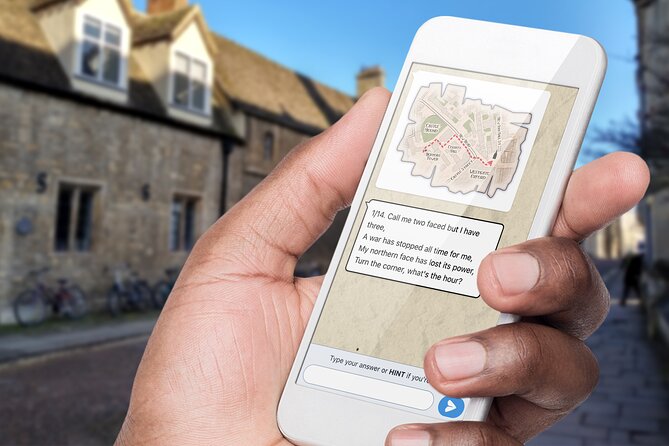
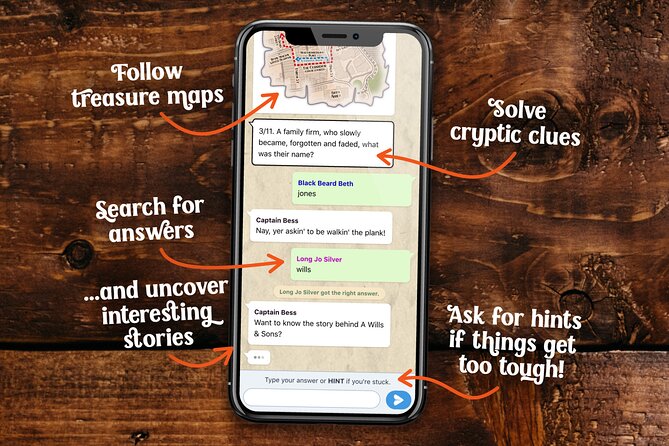
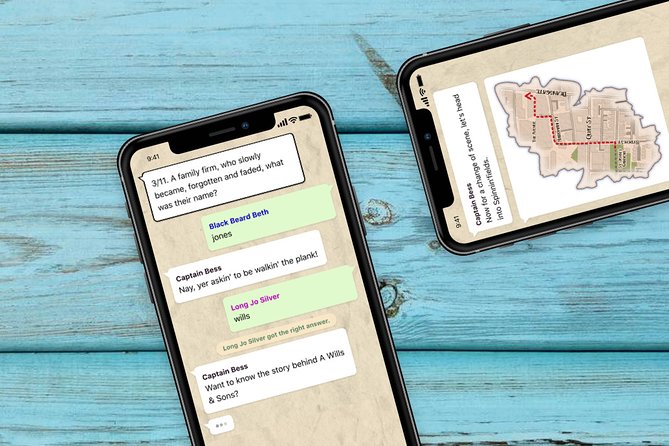
A big reason people like this format is that it behaves like a conversation. Captain Bess sends treasure maps to your phone and clue messages that guide you around Oxford. The whole system is described as working like WhatsApp, which means it’s built around quick messages and easy back-and-forth, not complicated menus.
You do not need to download anything or print documents, and the experience does not require phone permissions according to the info provided. That matters for hassle-free travel. In real life, the least fun part of many “interactive” tours is getting your phone to cooperate. This is designed to keep friction low.
If you get stuck, you can ask for hints. That’s an important point. The hunt is still yours to solve, but you’re not punished if your brain catches a wrong turn. Hints help keep the game moving so you can enjoy the route rather than getting stuck in one spot for long stretches.
Getting the most from cryptic clues (without losing the fun)
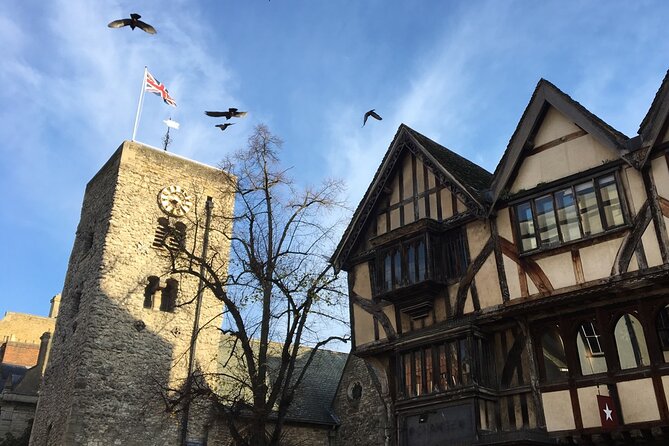
Cryptic clues are tricky by nature, so your mindset changes the experience. Instead of walking around hoping to recognize an answer instantly, you start looking for what the clue is pointing at: wording, location-based details, and small visible features.
Here’s how to keep it fun and not frustrating:
- Read the clue carefully before you move. A clue often narrows where you should look.
- Use hints when you stall. The point is to keep the flow.
- Take quick photos if something looks promising. Later you can zoom in on details on your phone.
- Allow for small detours. Oxford rewards side steps, and the hunt is flexible enough to handle it.
One review concern flagged that some clues can be confusing until the very last step. That is a real possibility with puzzle games. If you prefer a straightforward walk where every stop is instantly obvious, you might find this part frustrating. But if you enjoy figuring things out, the cryptic approach is the whole charm.
How long it takes, and why flexibility is the real perk
The average duration is about 2 hours 30 minutes. That’s a sweet spot. It’s long enough to feel like you saw more than the usual highlight loop, but short enough that you can still add dinner, a pub, or a second walk afterward.
The flexibility is what makes that timing work. Since there is no fixed schedule, you can start when you’re ready. If you get delayed by a museum entrance line, weather, or just wanting to stop for something interesting in a shop window, you can. You do not need to match a group’s pace.
This is also a private experience for your group, meaning you’re not sharing the game with random strangers. In a city like Oxford, where you might already be dealing with crowds around the major sites, that privacy feels like a quiet win.
Value check: $20.83 for a 2.5-hour self-guided Oxford walk
At about $20.83 per person, you’re paying for three things: the treasure hunt content, the phone-based map and clue delivery, and the route planning that links multiple Oxford landmarks into one story-like walk.
If you compare it to paying for a guided tour, the value is different. You are not buying someone to lead you through every detail. Instead, you’re buying an interactive way to explore without a group schedule.
I think it’s good value if you like doing a bit of work. That sounds odd, but it’s true. The hunt is most satisfying when you enjoy searching and solving. If you just want passive sightseeing, you may not feel the “payoff” as strongly.
The high rating and strong recommendation rate also suggest that the puzzle style lands for most people. Still, that one negative experience about confusion and boredom is a reminder that not every traveler likes cryptic clue formats.
Practical advice before you start at Oxford Castle

This hunt is designed around moderate physical fitness, so it’s a good idea to plan for walking in city conditions. You will be moving between classic Oxford sites, and you’ll want to stay comfortable enough to stop and look around.
A few more practical notes that help:
- Start during the window when Oxford Castle is open. The listed hours run from 8:00 AM to 6:00 PM, daily within the date range provided.
- Use public transport if you’re arriving from elsewhere. The experience is near public transportation.
- Bring a charged phone. Since everything is on your phone, low battery can turn a fun puzzle into extra stress.
- Go with your curiosity. If something in a window catches your eye, you can pause and turn your walk into a longer city wander.
The route is also described as an opportunity to plan your own extra stops. For example, if you decide you want food or a drink along the way, you can take that detour since the hunt doesn’t force you into a tight timeline.
Who should book this Oxford treasure hunt, and who might skip it
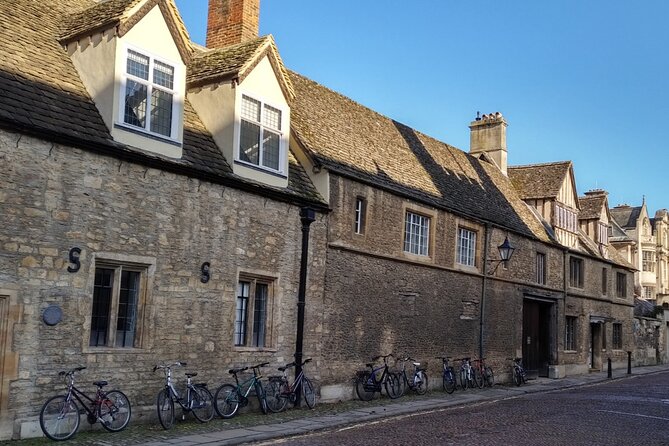
This is a great pick if you want Oxford in an active, playful way. It’s especially suitable for:
- couples or friends who enjoy puzzles
- families who want structure without a strict schedule
- independent travelers who dislike group pacing
- anyone who wants top landmarks plus the little streets and details around them
It might be less ideal if you want a purely historical walking tour with clear explanations at every step. The clue format means you sometimes have to work for answers. And if you are not in the mood for cryptic riddles, you may feel like the “interesting parts” arrive late.
Should you book it?
I’d book it if you like self-guided exploration and you’re okay with solving clues along the way. The flexible start and stop model is a real advantage in Oxford, where the best moments often happen when you’re not rushing.
I’d skip it if you hate puzzles or you know you get annoyed when clues feel unclear. In that case, you might prefer a traditional guided walk that gives answers out loud.
If you do decide to try it, go in with the right mindset: treat the cryptic bits as the entertainment, not a test. Then Oxford feels less like a checklist and more like your own roaming game.
FAQ
What is the price per person?
It’s listed at $20.83 per person.
How long does the Oxford treasure hunt take?
The duration is about 2 hours 30 minutes.
Where does the tour start and end?
It starts at Oxford Castle, Oxford OX1, UK, and ends back at the meeting point.
Is it guided by a person you meet at the start?
It’s self-guided. You receive maps and clues on your phone, guided by Captain Bess.
Do I need to download an app or print anything?
No download or printing is required. It uses a mobile ticket and phone-based maps and clues.
Can I start at any time during the day?
Yes. There is no fixed schedule, and you can start when you want within the activity’s operating hours.
What are the main stops on the route?
The hunt includes Oxford Castle & Prison, Radcliffe Camera, The Turf, Sheldonian Theatre, Bodleian Library, and Carfax Tower.
What if I cannot find an answer?
You can ask for hints if you get stuck.
Is this suitable if I have limited mobility?
It lists moderate physical fitness as the level required, so you should be comfortable with city walking.
Is free cancellation available?
Yes. You can cancel up to 24 hours in advance for a full refund. Cancellation less than 24 hours before the start time is not refunded.
Oxford Colleges and Blenheim
- Oxford University Walking Tour With University Alumni Guide★ 5.0 · 6,905 reviews
- Oxford: University and City Walking Tour with Alumni Guide★ 4.7 · 4,429 reviews
- Oxford: City and University Tour, including college entry★ 4.5 · 2,243 reviews
- Oxford: Harry Potter Walking Tour Including New College★ 4.6 · 1,446 reviews
Fresh off the Oxford review pile








Oxford University & Blenheim Palace, compared.
 ★ 5.0Oxford University Walking Tour With University Alumni GuideFrom $416,905 reviews
 ★ 4.4London: Full-Day Windsor, Stonehenge, and Oxford TourFrom $1205,368 reviews
 ★ 4.5Windsor Castle, Stonehenge, and Oxford Day Trip from LondonFrom $1235,292 reviews
 ★ 4.7London: Harry Potter Studio Tour and Oxford Day TripFrom $1745,098 reviews
 ★ 4.7Oxford: University and City Walking Tour with Alumni GuideFrom $404,429 reviews
 ★ 4.7From London: Cotswolds and Oxford Guided Day-TripFrom $1063,720 reviews
 ★ 4.5Oxford, Stratford-upon-Avon, Cotswolds & Warwick Castle Day TripFrom $1092,943 reviews
★ 4.5Windsor Castle, Stonehenge, and Oxford Day Trip from LondonFrom $1232,474 reviews
★ 4.5Oxford, Stratford-upon-Avon, Cotswolds & Warwick Castle Day TripFrom $1092,943 reviews
★ 4.5Windsor Castle, Stonehenge, and Oxford Day Trip from LondonFrom $1232,474 reviews