
REVIEW · OXFORD UNIVERSITY & BLENHEIM PALACE
Oxford Bike and Walking Tour
Oxford can feel like a maze, but this tour makes it manageable. You start on foot around the medieval streets, then switch to a bike for big postcard sights like the Radcliffe Camera and a scenic glide past Oxford colleges. You get both history and motion, so the city stops feeling like a checklist.
What I love most is the mix of college architecture and real stories tied to the people who studied there, plus the practical pacing that keeps you moving without rushing. Second, I like that you can steer the day toward your interests, especially Tolkien and Harry Potter, and your guide will try to work those references into the route.
One thing to consider is that this is weather-dependent and includes a moderate amount of biking and walking. Also, while the bikes are provided during the tour, you should expect the ride quality to vary a bit, so it helps to check your bike early.
In This Review
- Key points to know before you go
- Oxford in three hours, on foot and by bike
- Meeting at Broad Street and getting oriented fast
- The university stops that set the tone
- New College and the Oxford idea of continuity
- Balliol and the payoff of an included interior
- Trinity College, Rhodes House, and Einstein at Oxford
- Pitt Rivers Museum for the offbeat fun break
- Bodleian Library and Divinity School, when available
- Christ Church and the Harry Potter factor
- Radcliffe Square and Radcliffe Camera by bike
- Magdalen College, Examinations Schools, and Lewis and Oscar Wilde
- Eagle and Child, Tolkien evenings, and Port Meadow outdoors
- How the bike portion works, and what to watch for
- Price, value, and what you get for $68.53
- Which guide style you might get, and how to work with it
- Should you book this Oxford bike and walking tour?
- FAQ
- How long is the Oxford bike and walking tour?
- What is the meeting point and where does the tour end?
- Do I need to buy tickets for the sites?
- Is the bike provided?
- Can I use the bike after the tour ends?
- Is there a lot of walking or biking?
- Is the Divinity School visit guaranteed?
- What is the group size?
- What happens if the weather is bad?
Key points to know before you go
- On foot then by bike, so you get Oxford at street level and also from the saddle
- Bodleian Library plus major literary stops, with some interiors depending on availability
- Radcliffe Square and Radcliffe Camera, plus gargoyles and the so-called Narnia Door area
- Eagle and Child pub stop, linked to Tolkien and C.S. Lewis
- Small group size (max 9), which makes it easier to ask questions and keep everyone together
- Bike use is limited to the tour, so plan your onward travel without expecting extra wheels
Other Oxford colleges and Blenheim days
- Oxford University Walking Tour With University Alumni Guide
★ 5.0 · 6,905 reviews - Oxford: University and City Walking Tour with Alumni Guide
★ 4.7 · 4,429 reviews - Oxford: City and University Tour, including college entry
★ 4.5 · 2,243 reviews
Oxford in three hours, on foot and by bike
This is a half-day style tour that moves fast enough to cover a lot, but not so fast you feel pushed. Starting at 10:00 am in central Oxford, you’ll spend part of the time walking narrow streets and part pedaling between the sights. It is a smart way to see the university core without spending the whole day in cramped, slow traffic or hunting for parking.
The walking portion helps you read the city. You notice stonework, gatehouses, and how colleges sit like islands inside older neighborhoods. Then the bike portion lets you connect the dots quickly, so stops like Radcliffe Square do not turn into a long march.
I also appreciate the format because it suits different trip styles. If you love architecture, you’ll spot details as you pass them. If you love stories, you’ll get names, eras, and references tied to the places you’re actually standing in.
Meeting at Broad Street and getting oriented fast
You meet at 15 Broad St, Oxford, OX1 3AS, and the tour ends back at the same meeting point. That matters more than it sounds. Central Oxford is easy to get turned around in, and a return-to-start finish helps if you want to hop to another attraction afterward.
Bring comfortable shoes. The tour calls for a moderate amount of walking, and you’ll be on your feet through medieval streets and college-adjacent lanes. You do not need hiking gear, but you do need something you can stand in for a while.
You also get a mobile ticket, so you’ll want to have your phone charged. It is a small thing, but it saves time at the start.
The university stops that set the tone
Right away, you’re in the thick of the University of Oxford world. One early stop is the University of Oxford area, then you move through classic college names and facades that people always photograph, even if they do not always know what they’re seeing.
A few stops that shape how you understand Oxford:





New College and the Oxford idea of continuity
You’ll pass and learn about New College, officially The College of St Mary of Winchester. The point isn’t just the name. It shows how Oxford’s labels evolved, and how later colleges were sometimes named in relation to older ones.
Even when you are not going inside, these moments help you interpret the buildings. You start to see Oxford as a system, not just a string of landmarks.
Balliol and the payoff of an included interior
You’ll reach Balliol College, and here the tour notes admission is included. Balliol is often discussed as among the older colleges in Oxford, and getting that extra access helps the tour feel more than exterior sightseeing.
This is a good example of the value of the day. You are not only looking at Oxford, you’re also getting into a key place where history lives behind the doors.
Trinity College, Rhodes House, and Einstein at Oxford
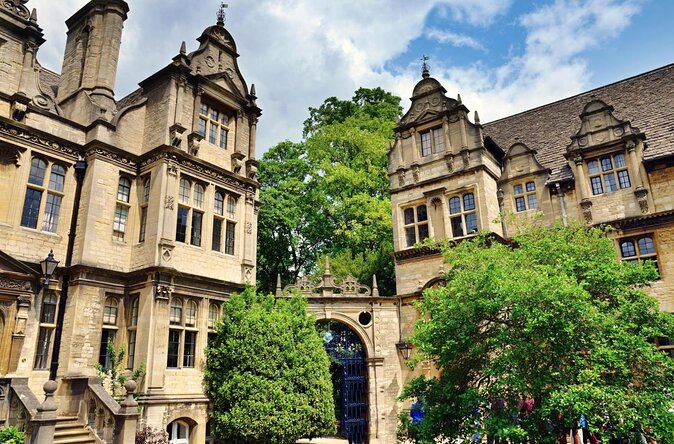
Trinity College is one of the most photogenic settings you’ll see, and the tour uses it to keep momentum while building your mental map of where colleges sit in the city.
Rhodes House is a different vibe. You learn it is tied to Cecil Rhodes, and you also hear the connection that Albert Einstein delivered a series of lectures while in Oxford. That detail matters because it shifts Oxford from only being about ancient traditions to also being about modern ideas and scholarship.
Pitt Rivers Museum for the offbeat fun break
After the college-focused stops, you get a museum interlude with Pitt Rivers Museum. It’s described as free admission and especially entertaining, with strange and wonderful collections from around the world.
This is a smart breather. You get a quick reset before the later literary and cycling stretch. If you like museums at all, this is one of the best “wait, Oxford isn’t just colleges” moments.
Bodleian Library and Divinity School, when available
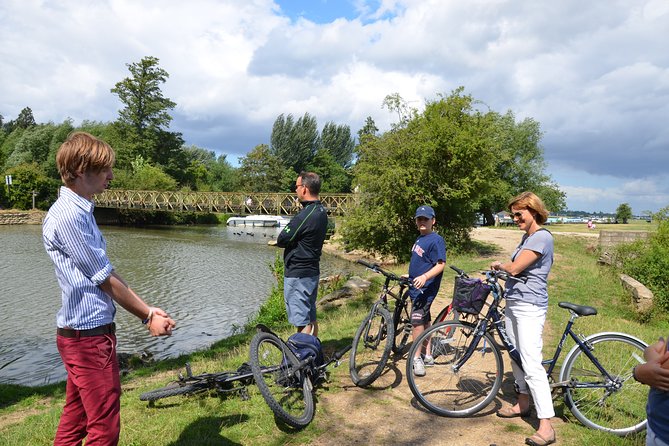
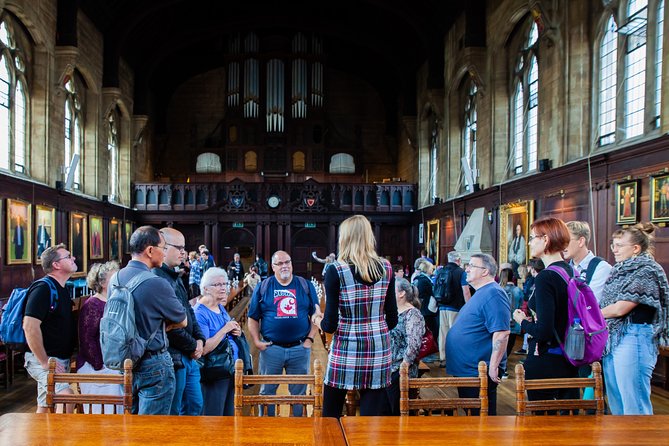
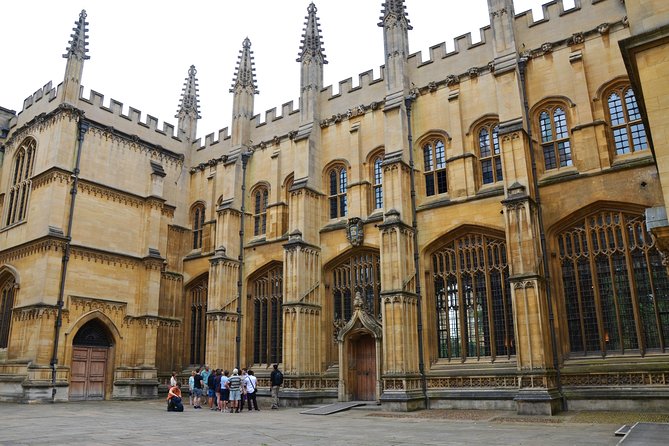
The tour includes a visit to the Bodleian Library and notes key facts that make it feel real fast. The library was built in 1602, and it holds over 12 million books, with documents dating back to the Pharaohs. That is a huge scale, and your guide’s job is to make that size feel graspable.
You’re not just admiring an old reading room. You’re stepping into a place where scholarship and collecting have been happening for centuries. It gives you context for why Oxford librarianship matters, and why the university invested in spaces meant to last.
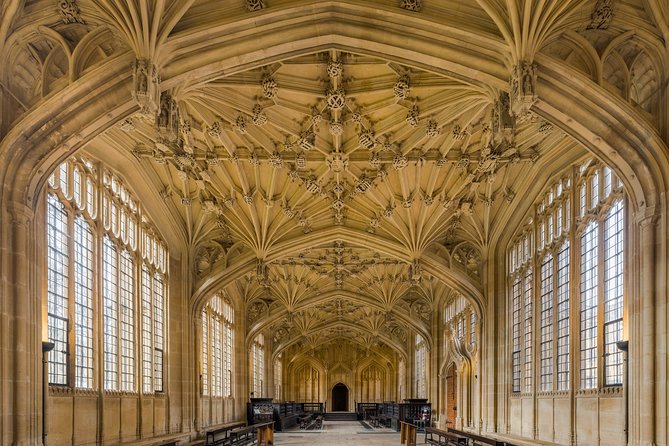
Divinity School is a major add-on, but it is subject to availability. If you can go, you’ll see its rib-vaulted ceiling, a classic Oxford interior detail that looks impressive in person and photographs even better. Because it is not guaranteed, I’d treat it as a bonus if you get in.
Christ Church and the Harry Potter factor
Christ Church is one of those Oxford sites that is a bit touristy, because it is popular for a reason. The tour includes it, and the Harry Potter connection is a big part of why people line up.
What I like here is the balance. You get the literary link, but you also learn about the buildings and why Christ Church is so central to Oxford’s identity. It’s not just a filming location type stop. It is a long-lived college with serious architecture.
If you’re a Harry Potter fan, this is one of the moments you’ll want to slow down and look closely. Even if you think you know the place from images, it helps to stand in the real spaces and understand how they function as part of the university.
Radcliffe Square and Radcliffe Camera by bike
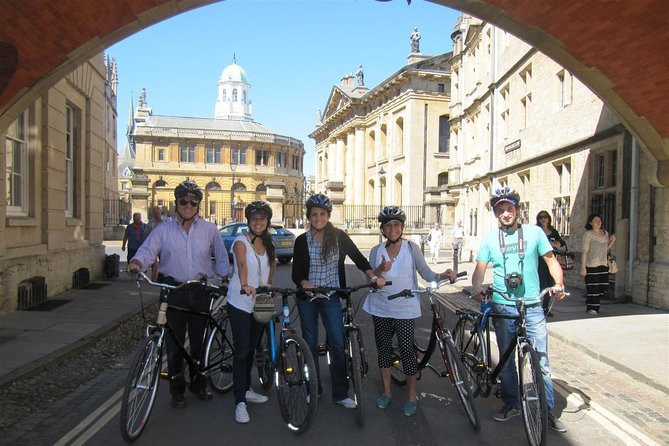
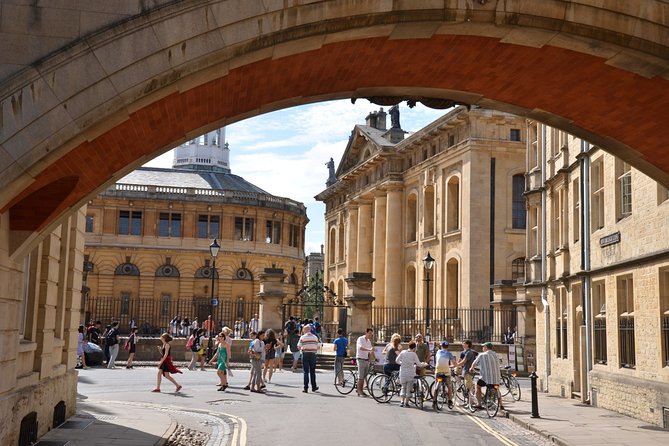
Then the tour switches gears. You hop on your bike and head toward Radcliffe Square for the Radcliffe Camera. This is the postcard Oxford stop, and the guide brings nuance so it does not feel like a one-note photo op.
You’ll hear that the Radcliffe Camera is used for a far different function than many people assume. That’s worth paying attention to, because it reframes what you’re looking at. You’re seeing a famous shell, but you’re also learning what it does now and why the university built it.
The tour also notes unusual gargoyles around the area. That’s one of those details you miss if you only look for the big “perfect” viewpoint. A good guide helps you notice the smaller stuff without turning the walk into a lecture.
If you’re into Narnia connections, you’ll also hear about the so-called Narnia Door in the area, said to have inspired C.S. Lewis’s The Lion, the Witch and the Wardrobe. Even if you take stories like this with a grain of salt, it’s fun context, and it connects Oxford to the books people carry in their heads.
Magdalen College, Examinations Schools, and Lewis and Oscar Wilde
Cycling continues, and you pass or visit Magdalen College, plus key university landmarks along the way. Magdalen matters in more than one way. The tour highlights that C.S. Lewis and Oscar Wilde studied there, and the college grounds are a major part of its identity.
You’ll also get the chance to admire views connected to the Botanic Gardens. Even if you do not stop for a deep garden visit, the sightline works as a reminder that Oxford isn’t only stone and arches. It’s also science, plants, and old academic routines.
Along the route you’ll pass the Examinations Schools. That stop puts a spotlight on the university’s entrance exam system. Oxford is famous for tradition, but it’s also a machine for selection and scholarship. Seeing the exam-focused buildings helps balance the romance.
Eagle and Child, Tolkien evenings, and Port Meadow outdoors
One of the most memorable stops is the Eagle and Child pub, which the tour links to Tolkien and C.S. Lewis. Even if you only know them through books, seeing the place name in real life helps the stories stick. It turns literary history into something you can point at.
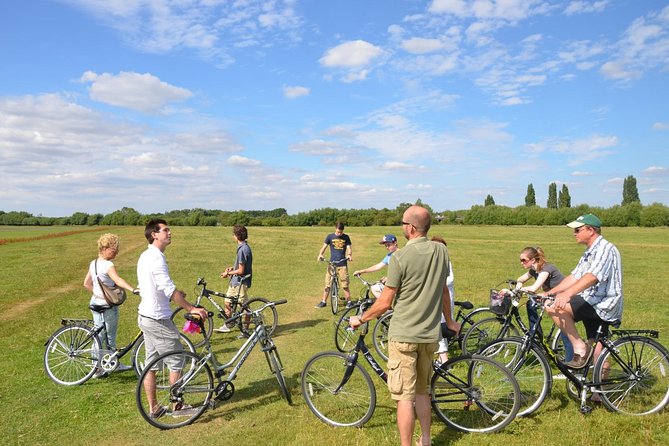
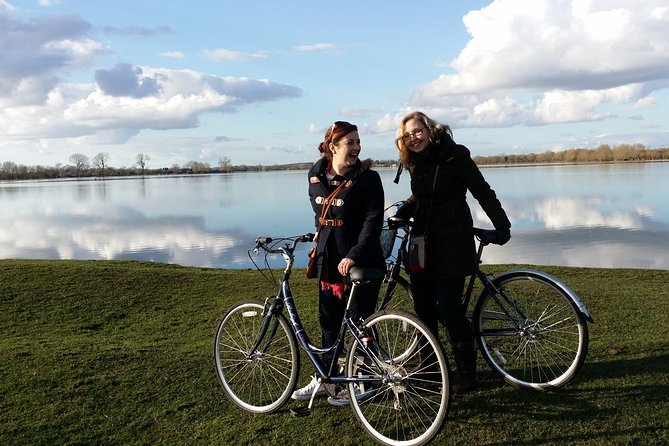
Then you coast around Jericho and Port Meadow. This is where Oxford feels less like a museum and more like a lived-in city edge. Port Meadow is common land still used for horses and cattle, and it’s described as Oxford’s oldest monument. The tour adds a legend that it has never been ploughed, or at least not for around 4,000 years.
Take that for what it is, a claim carried by local tradition. Either way, the practical value of this stop is the reset. The earlier parts of the tour are heavy on buildings and academic prestige. Port Meadow gives you open space, a slower pace, and a different kind of Oxford texture.
How the bike portion works, and what to watch for
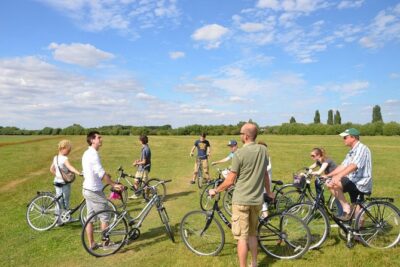
The tour is described as a moderate amount of biking. That usually means you should expect some steady pedal time and a few handling moments around city streets. Oxford is not flat, and even when the route is planned, hills can feel bigger when you are on a bike after some walking.
Here’s what I’d do based on real-world issues that can pop up. At the start, take a moment to check your bike. In one account tied to this type of tour, a bike did not have gears and had a bell that was not working. You can’t always request a totally different bike, but you can avoid surprises by trying the brakes and testing the basic controls before you get rolling.
Also remember that the bike is available during the tour only, and you cannot use it after the tour ends. If you want to keep riding, you’ll need your own rental plan afterward. The good news is that the tour ends back in central Oxford, so it is easy to connect to buses, walking routes, or onward reservations.
Price, value, and what you get for $68.53
At $68.53 per person for about 3 hours, this sits in the mid-range for Oxford tours that include both guided storytelling and a bike. The value comes from three pieces being bundled together:
First, you’re not paying extra for the bike during the experience. Second, the tour states that it includes entrance fees and bike usage during your tour. Third, you’re getting multiple high-demand sights in one package, including the Bodleian Library and Christ Church, plus free stops like Pitt Rivers and the Eagle and Child.
It also helps that the group size is capped at 9. Smaller groups often mean fewer bottlenecks at photo moments and more chance to ask questions.
If you’re traveling alone, a solo price still feels reasonable here because you’re buying convenience and pacing, not just a guide’s time. If you’re traveling as a couple, it can be a strong use of shared time, especially if one of you likes architecture while the other likes the literary references.
Which guide style you might get, and how to work with it
Your experience depends on the guide, but the structure is built for flexibility. The tour specifically encourages you to tell your guide if you are into J.R.R. Tolkien or Harry Potter so they can aim for those connections throughout the day.
From the guide examples tied to this tour, I’d expect a friendly, talk-forward approach rather than quiet, head-down guiding. One guide named Free is described as conversational and funny, with strong answers to questions. Another guide, Tim, is described as especially engaging even in rain, and there is mention of arranging access connected to Magdalen College.
On a different day, you might get a guide like Spencer, who can still be praised for strong guidance, but also one experience included concerns about bike equipment. That’s not a reason to skip the tour. It’s a reason to show up ready to check your bike quickly and ask for adjustments early if something feels off.
Should you book this Oxford bike and walking tour?
Book it if you want Oxford in one efficient, guided hit, with both walking and cycling. It’s especially worth it for:
- Literary fans who care about Tolkien and C.S. Lewis references like the Eagle and Child and the area-linked Narnia Door story
- People who want the Bodleian Library and Christ Church without spending half a day planning routes
- Visitors who like small groups and prefer a guide to keep things moving
Skip it or choose another option if:
- You dislike biking at all, even at a moderate level
- You’re traveling with very limited mobility or want a fully seated experience
- You’re only available on days when weather can spoil outdoor cycling, since the tour is described as requiring good weather
If your schedule is flexible, this is a smart way to see Oxford’s big names, plus a few stops that give the city personality, like Port Meadow’s open-air feel.
FAQ
How long is the Oxford bike and walking tour?
It runs for about 3 hours.
What is the meeting point and where does the tour end?
You meet at 15 Broad St, Oxford OX1 3AS, UK, and the tour ends back at the same meeting point.
Do I need to buy tickets for the sites?
The tour includes entrance fees and bike usage during your tour. Some stops are described as having admission included, while others are noted as free to visit.
Is the bike provided?
Yes, a bike is provided for use during the tour only.
Can I use the bike after the tour ends?
No, the bike cannot be used by you after the tour.
Is there a lot of walking or biking?
You can expect a moderate amount of both walking and biking. Comfortable shoes are recommended.
Is the Divinity School visit guaranteed?
Divinity School is listed as subject to availability.
What is the group size?
The tour has a maximum of 9 travelers.
What happens if the weather is bad?
The tour requires good weather. If it’s canceled due to poor weather, you’ll be offered a different date or a full refund.
Oxford Colleges and Blenheim
- Oxford University Walking Tour With University Alumni Guide★ 5.0 · 6,905 reviews
- Oxford: University and City Walking Tour with Alumni Guide★ 4.7 · 4,429 reviews
- Oxford: City and University Tour, including college entry★ 4.5 · 2,243 reviews
- Oxford: Harry Potter Walking Tour Including New College★ 4.6 · 1,446 reviews
Fresh off the Oxford review pile





Oxford University & Blenheim Palace, compared.
 ★ 5.0Oxford University Walking Tour With University Alumni GuideFrom $416,905 reviews
 ★ 4.4London: Full-Day Windsor, Stonehenge, and Oxford TourFrom $1205,368 reviews
 ★ 4.5Windsor Castle, Stonehenge, and Oxford Day Trip from LondonFrom $1235,292 reviews
 ★ 4.7London: Harry Potter Studio Tour and Oxford Day TripFrom $1745,098 reviews
 ★ 4.7Oxford: University and City Walking Tour with Alumni GuideFrom $404,429 reviews
 ★ 4.7From London: Cotswolds and Oxford Guided Day-TripFrom $1063,720 reviews
 ★ 4.5Oxford, Stratford-upon-Avon, Cotswolds & Warwick Castle Day TripFrom $1092,943 reviews
★ 4.5Windsor Castle, Stonehenge, and Oxford Day Trip from LondonFrom $1232,474 reviews