
REVIEW · JACK THE RIPPER & VICTORIAN CRIME WALKS
Jack the Ripper Walking Tour with Expert Ripperologist
Whitechapel gets real, fast. On this Jack the Ripper walk in London, you follow a tight 2.5-hour route through the streets of 1888, while your guide uses a 14-inch backlit tablet and some light costuming to show where key moments happened. I love how you do not need to check your map, because the guide steers you from stop to stop. The main drawback is you will be on your feet for about 2 hours 30 minutes, with very limited toilets along the way.
This is a history-forward tour, not a movie set. You get a focused, street-level way to understand why the murders happened in this place, during this time, and why the police and local vigilantes moved the way they did.
In This Review
- Key highlights you will care about
- Why this Jack the Ripper walk feels different
- Starting at Aldgate and St Botolph’s Church, where the story begins
- Aldgate Square: seeing Whitechapel 1888 beyond the headlines
- Mitre Street and the City boundary, Long Liz and Catherine Eddowes
- Goulston Street doorway clue: evidence, not just suspects
- From Martha Tabram to Mary Ann Nichols, stepping through the “likely first” theory
- Hanbury Street and Annie Chapman, then Puma Court and the Dear Boss letter
- The Ten Bells and Itchy Park: Mary Kelly’s pub and Christchurch Graveyard
- Old Spitalfields Market, the George Lusk letter, and ending at the London Fruit Exchange
- How the tablet visuals and costumed guide help you follow the story
- Practical stuff that affects your day: walking time, toilets, and what to bring
- Should you book this Jack the Ripper walking tour?
Key highlights you will care about

- 14-inch backlit tablet visuals that make the evidence and locations easier to follow
- Costumed guide with stage-ready pacing, keeping the mood engaging without turning it into a circus
- Clear stop-by-stop route so you can focus on the story instead of navigation
- City of London vs Metropolitan policing explained where it mattered on the map
- Victim-centered tone that keeps the focus on the women, not just the mystery
- Max 30 people meaning it can feel lively, and sometimes a bit tight, on busy dates
Other Whitechapel walks at the same dark hour
- London: The Original Jack the Ripper Walking Tour
★ 4.7 · 7,833 reviews - London Jack the Ripper Guided Tour with Ripper-Vision
★ 4.5 · 4,840 reviews - London: Jack the Ripper Small Group Tour
★ 4.7 · 3,159 reviews
Why this Jack the Ripper walk feels different
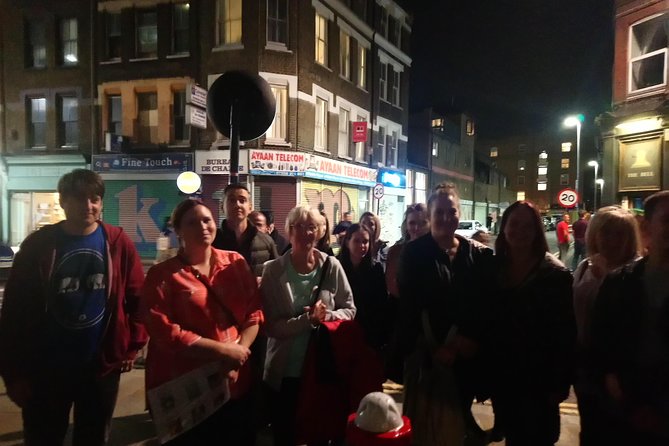
If you only know Jack the Ripper from Hollywood, this kind of walk helps you sort fact from dramatized fluff. What I like most is the way the guide keeps you oriented to real streets, real borders, and real conditions in Whitechapel in 1888. The tour is dark subject matter, but it is handled with care and clarity.
The big “how do they do that?” factor is the 14-inch backlit tablet. Instead of you squinting at tiny phone screenshots, the guide shows photos of the victims and sites, and you can actually connect what you are hearing to what you are seeing. In practical terms, it cuts down on confusion, especially when you are standing on a corner and trying to imagine the street as it was then.
One more thing that matters for the vibe: guides like Lindsey, Jenny, and Paul (names that show up in past groups) are described as upbeat, a bit witty, and serious where it counts. That mix helps keep attention during a long stretch of walking and standing.
Starting at Aldgate and St Botolph’s Church, where the story begins
Your tour starts at Aldgate Station on Aldgate High Street, which is a convenient launch point if you are using public transport. Once you meet, the guide starts laying track for you right away, so you are not left wondering where to look or what you are supposed to be seeing.
Stop 1 is St Botolph’s Aldgate. It is known as the Prostitutes Church because of how the area around the church was used in the past. You get a quick, sharp introduction outside the church before the walk moves into the deeper context of the neighborhood. This first stop works because it sets the tone early: this is not about one villain, it is about a whole web of poverty, street life, and vulnerability.
Aldgate Square: seeing Whitechapel 1888 beyond the headlines
From St Botolph’s, you head to Aldgate Square, right by the church. This is where the tour shifts from the legend into lived conditions. You will hear how Whitechapel was overcrowded, poor, and tense in 1888, with people living close to the edge of survival.
Why this stop matters: the murders are often described as a mystery, but the tour frames them within the reality of desperation. That context helps you understand why victims could be targeted and why it was so hard for authorities to prevent what happened next.
A practical note here is that you are mostly standing in the open and listening. In good weather, it feels like a focused street lecture. In cold or wet conditions, plan to dress for it, since you will not be inside much.





Mitre Street and the City boundary, Long Liz and Catherine Eddowes
Next you move to Mitre Street, near Aldgate and inside the City of London boundary. This stop centers on Elizabeth Stride, sometimes called Long Liz, and then it quickly connects to the killing of Catherine Eddowes, said to have happened only about 45 minutes later.
This is where the tour’s pacing is important. The guide ties multiple events together without turning them into a confusing jumble of names. You get a sense of the timeline, and you also start noticing how geography and jurisdiction mattered.
Then, you travel toward Petticoat Lane Market (often associated with Middlesex Street as you pass through). This section explains a key detail that people miss when they only study the crimes: the City of London and the Metropolitan area had separate policing. That split helps you make sense of why searches and responses could feel fragmented on the ground.
Goulston Street doorway clue: evidence, not just suspects
At Goulston Street, you stop at a doorway linked to the only clue found on the same route police took that night. The tour does not just toss out the clue and move on. It explains why that kind of evidence mattered in the first place, especially when the streets were noisy, crowded, and full of rumors.
The value here is that you learn to think like a detective for a moment. You start asking: What could the police actually see? What could they verify? And how do you investigate when everyone is trying to stay safe?
If you like problem-solving, this stop is a good one. If you mainly want pure drama, you might wish for more nonstop plotting. But for me, the clue-focused approach makes the tour feel more grounded and less like a storybook.
From Martha Tabram to Mary Ann Nichols, stepping through the “likely first” theory
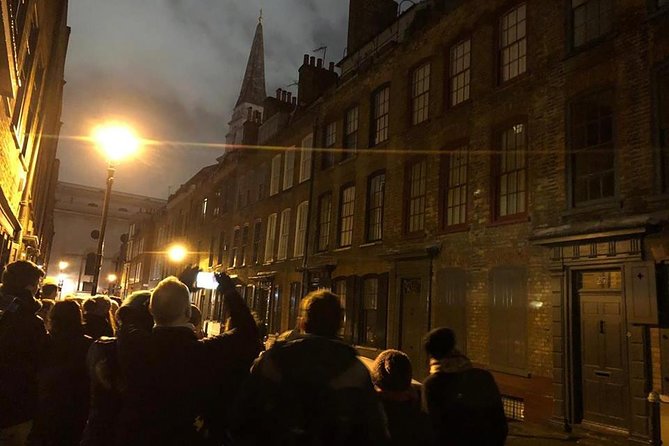
The tour continues to Gunthorpe Street, viewed from Wentworth Street, with the direction set toward George Yard Buildings. Here you hear about Martha Tabram, killed on 7 August 1888, and the idea that she is considered the most likely first victim in some theories.
Then you head to Thrawl Street, near the corner by the Frying Pan Pub, where the tour connects to Mary Ann Nichols. You learn about her last drink and the path she took before the killing in Bucks Row behind Whitechapel Station.
These two stops are linked by a theme: the tour keeps showing you that the murders were not random “events.” They were part of a pattern of vulnerability in specific streets, at specific times, with local routines and movement shaping what was possible.
Also, this section is where your legs will feel it. The walk is steady, and there are several “listen while standing” moments. If you know you struggle with long standing, it helps to wear supportive shoes early.
Hanbury Street and Annie Chapman, then Puma Court and the Dear Boss letter
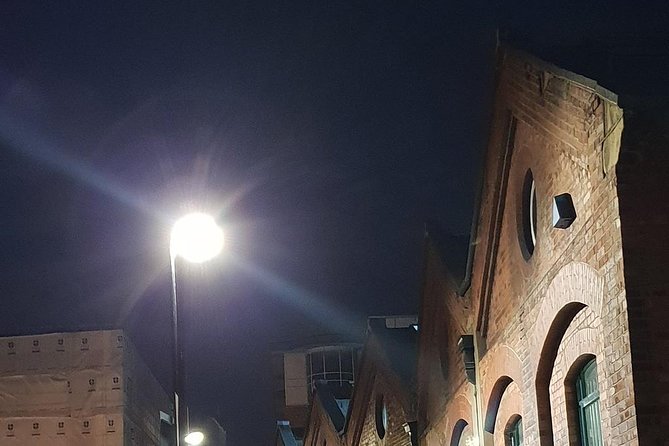
Moving into Hanbury Street, you talk about Annie Chapman, murdered in the back yard of 29 Hanbury Street. This is another stop that blends crime detail with street orientation. The guide helps you imagine what it would have been like to live, work, and navigate the area with limited privacy and limited protection.
From there, you turn through Wilkes Street, described as a street that has been largely untouched since the 1800s. You then walk toward Puma Court for the Dear Boss letter.
Why the letter stop works: it shifts you from physical evidence to written evidence and public pressure. You see how the case expanded beyond one neighborhood murder scene and into a wider public fascination that police had to deal with.
If you are the kind of person who likes the “how did this become famous” angle, Puma Court is one of the more satisfying stops on the walk.
The Ten Bells and Itchy Park: Mary Kelly’s pub and Christchurch Graveyard
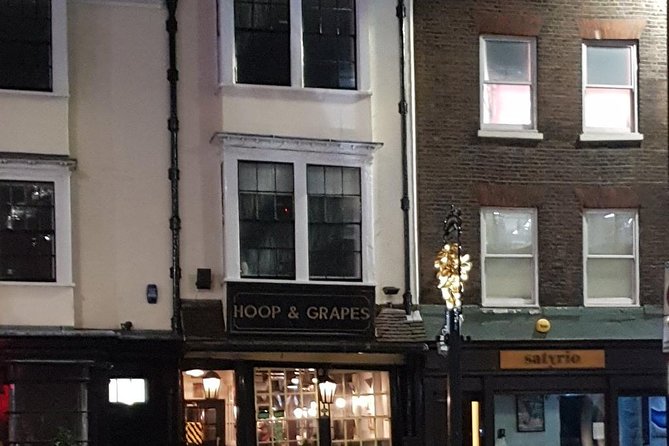
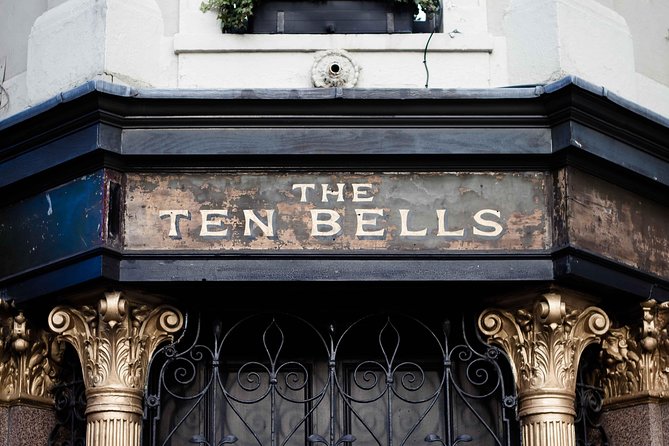
At The Ten Bells, you stop opposite Mary Kelly’s favorite pub and the tour also points you toward Christchurch Graveyard, nicknamed Itchy Park. You hear how homeless people would sleep there during the daytime.
This part is useful because it adds a layer many people overlook: the neighborhood was not only about crime and poverty, it was also about survival routines. When you understand that, the murders stop feeling like a single dark headline and start reading like the tragic end of broken circumstances.
The guide’s respectful tone matters here. The story can sound sensational if it is told carelessly, but the way it is framed keeps you focused on victims and life conditions rather than just shock.
Old Spitalfields Market, the George Lusk letter, and ending at the London Fruit Exchange
Next you reach Old Spitalfields Market, and you stop near the London Fruit & Wool Exchange entrance. You hear about a letter sent to George Lusk, head of the Whitechapel Vigilance Group. This gives you a window into local organizing, and how some communities tried to respond when formal policing was limited or stretched thin.
Then you finish in the square behind the London Fruit & Wool Exchange, where the tour ends with the murder of Mary Kelly, described as Jack’s last victim, killed on 9 November 1888. After the story wraps, it is a short walk to Liverpool Street station, with multiple tube lines from there.
Why this ending feels satisfying: you end not just with a crime date, but with the sense that the case involved public letters, local action, and a neighborhood that was being watched, discussed, and judged from the outside.
How the tablet visuals and costumed guide help you follow the story
A walking tour like this can fail in two ways: either you miss the geography, or you get lost in names. This one tries hard to prevent both.
The 14-inch backlit tablet is key. It lets you see photos of sites and victims while the guide explains where you are standing. It also helps when the streets look similar and your brain wants a quick way to anchor the story to reality.
The light costuming adds a theatrical edge, but it is meant to support pacing and attention. In the experience of past groups, guides also use energy and timing to keep the story moving without turning it into slapstick.
I also appreciated how the tour keeps a sensitive approach to the women victims. That is not just a moral choice, it improves your attention. When the guide treats victims as people and not props, you listen harder and remember more.
Practical stuff that affects your day: walking time, toilets, and what to bring
This tour lasts about 2 hours 30 minutes and you should plan on moderate walking and standing. It is not recommended if you cannot walk and stand for 2+ hours.
Toilets are very limited, so you will want to use the facilities before you start. That single detail can make or break the experience, especially on longer stand-and-listen stretches.
The tour is offered in English, uses a mobile ticket, and runs with a maximum of 30 people. That group cap is usually a good sign, but it still can feel busy, especially in narrower street areas or near entrances.
If you are going in cold or rainy weather, dress for it. The route is outdoors, and you will be moving from corner to corner rather than taking shelter inside often.
Age-wise, it is not allowed for children under 15. Ages 16-17 must be accompanied by an adult.
Should you book this Jack the Ripper walking tour?
Book it if you want a London Jack the Ripper experience that is grounded in streets, timelines, and city borders, and you like using visuals to connect names to locations. The tablet approach and the stop-by-stop navigation make it easier to enjoy without constantly getting lost.
Skip it if standing and walking for 2+ hours is not realistic for you, or if limited toilets would make the day stressful. Also consider that this tour is designed around history and victim-focused context, so if you are only chasing suspects and wild theories, you might want a different kind of tour style.
If you fit the walking, then this is one of the better ways to see Whitechapel with your eyes open, not just your imagination running.
Ripper Walks and Victorian Crime
- London: The Original Jack the Ripper Walking Tour★ 4.7 · 7,833 reviews
- London Jack the Ripper Guided Tour with Ripper-Vision★ 4.5 · 4,840 reviews
- London: Jack the Ripper Small Group Tour★ 4.7 · 3,159 reviews
- London Jack The Ripper Guided Walking Tour★ 5.0 · 3,131 reviews
Fresh off the London review pile

Jack the Ripper & Victorian Crime Walks, compared.
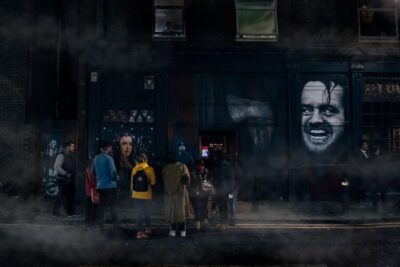 ★ 4.7London: The Original Jack the Ripper Walking TourFrom $257,833 reviews
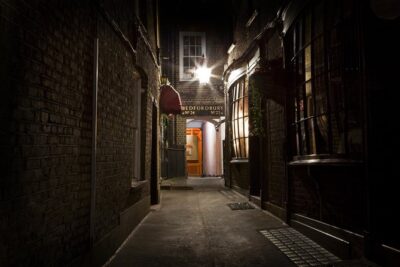 ★ 4.5London Jack the Ripper Guided Tour with Ripper-VisionFrom $274,840 reviews
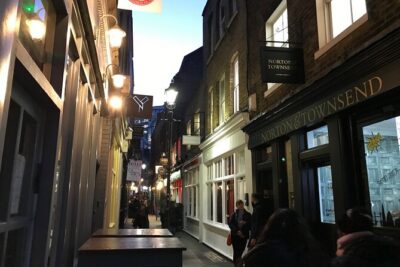 ★ 4.7London: Jack the Ripper Small Group TourFrom $263,159 reviews
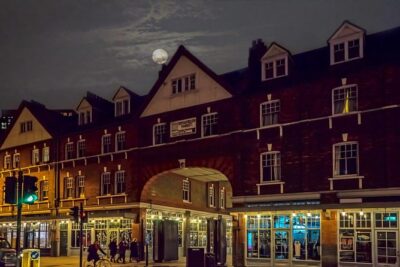 ★ 5.0London Jack The Ripper Guided Walking TourFrom $03,131 reviews
 ★ 4.6German Language : Original Jack the Ripper TourFrom $241,805 reviews
 ★ 4.5London: Jack the Ripper Walking Tour – Ripper Vision ToursFrom $261,752 reviews
 ★ 5.0Ultimate Jack the Ripper : Guided Tour of LondonFrom $271,495 reviews
 ★ 4.9London: Jack the Ripper Evening Walking TourFrom $331,449 reviews
Also filed under