
REVIEW · JACK THE RIPPER & VICTORIAN CRIME WALKS
London – Jack the Ripper Small Group Tour
Whitechapel at night feels too close. This small-group Jack the Ripper walk is interesting because it tracks the crimes through Whitechapel’s streets instead of just repeating the legend. I like that it stays victim-focused, humanizing the women and explaining the context that surrounded the murders, with your guide Richard Walker keeping the story clear. The main thing to consider is that you are on your feet for a good chunk of the evening, and some stops involve standing in one place longer than you might want.
This tour runs on select evenings with a maximum of 15 people and a 7:00 pm start. You meet at 279 Whitechapel Rd, then finish near Liverpool Street Station (a smart pick for easy transit, including the Elizabeth line).
In This Review
- Key things to know before you go
- Whitechapel after dark: why this walk feels different
- Price and value: what you are really paying for
- Logistics that make or break a night walk
- Meet Richard Walker: research, storytelling, and a clear thread
- The route in plain English: what each stop means
- Stop 1: Whitechapel Road and the London Hospital, Emma Elizabeth Smith
- Stop 2: Buck’s Row, Polly Nichols, and the first suspect thread
- Stop 3: Brick Lane to the lodging houses and a geography-based model
- Stop 4: Christ Church Spitalfields and Ten Bells Pub across the road
- Stop 5: Old Spitalfields Market and poverty you can feel in the streets
- Stop 6: Spitalfields, Annie Chapman’s home, Mary Kelly, and multiple suspects
- The tone: history and true crime without turning it into gore
- Who should book this tour (and who might want a different one)
- Quick planning tips so you enjoy it more
- Should you book this Jack the Ripper small-group tour?
- FAQ
- What time does the London Jack the Ripper small-group tour start?
- Where is the meeting point?
- Where does the tour end?
- How long is the tour?
- How large is the group?
- What language is the tour offered in?
- What is included in the price?
- Is entry to all locations included?
- Is the tour suitable for people with mobility issues?
- What is the cancellation policy?
Key things to know before you go
- Small-group size up to 15 means you can actually hear your guide and ask questions.
- Headsets and radio mic keep the talk audible in a busy, noisy neighborhood.
- iPad visuals help you picture how streets and locations looked in the late 1800s.
- Victim-first storytelling keeps the focus on the people targeted and the lived reality of Whitechapel.
- A geography-based approach to suspects uses policing-style thinking rather than pure rumor.
Other Whitechapel walks at the same dark hour
- London: The Original Jack the Ripper Walking Tour
★ 4.7 · 7,833 reviews - London Jack the Ripper Guided Tour with Ripper-Vision
★ 4.5 · 4,840 reviews - London: Jack the Ripper Small Group Tour
★ 4.7 · 3,159 reviews
Whitechapel after dark: why this walk feels different
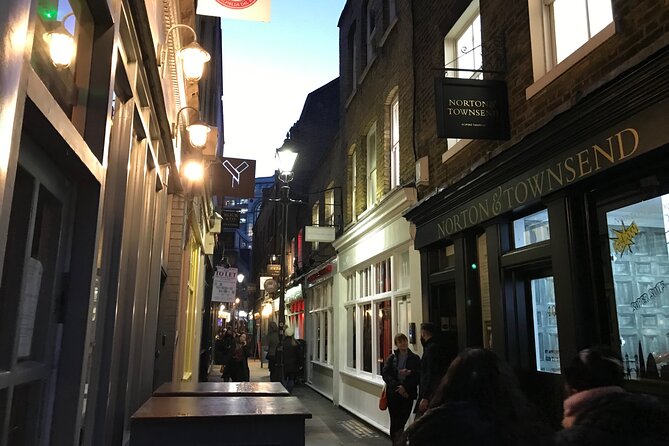
Jack the Ripper tours can fall into two buckets: either they feel like a checklist of “famous spots,” or they turn into generic scares. This one takes a third approach. You spend the evening in East London’s Whitechapel area with the guide pointing you toward locations tied to the murders, then layering in what was happening around those places.
That matters because Whitechapel is not a museum set. Even today, you are navigating real streets, real shops, and real housing blocks. So when the story shifts from one location to the next, you get a sense of movement and proximity that you simply miss when you are reading in a chair. The walk is also designed so you do not feel like you are lost in the dark. Your guide manages the route and the timing, which makes the experience feel organized rather than random.
Price and value: what you are really paying for
At $41.67 per person, this is not an impulse-cost tour. But it is also not priced like an all-day production. The value comes from three practical things you get for that time and money.
First, the small group is part of the deal. Even the “small” London tours can still be large in practice. Here, the cap is 15, which is a meaningful difference for hearing and for interaction.
Second, the audio system is not an afterthought. The tour includes radio mic and earphones, which is a big deal in Whitechapel at night, where street noise and nearby foot traffic can drown out voices on standard walking tours.
Third, the visuals help you process what you are seeing. An iPad is used to display images, so you are not just hearing about old addresses, you are also being shown how the places connect.
Logistics that make or break a night walk
Start time is 7:00 pm. You meet at 279 Whitechapel Rd, London E1 1BY. You finish at 126A Middlesex St, London E1 7HY, with the tour ending at Liverpool Street Station. That end point is convenient because Liverpool Street links well with multiple lines, including the Central, Circle, Hammersmith and City, Metropolitan lines, and the Elizabeth line.
One more practical detail: wear comfortable walking shoes. This tour is brisk-walking style, and you should expect about 1.5 miles of walking overall. The experience is also described as not suitable for people with walking difficulties, so if mobility is a concern, take that seriously and plan accordingly.
Also, bring a little patience for standing. A couple of guests have felt that some stops involve lingering in the same spot, so if you hate standing still for long stretches, keep that in mind and pace your expectations.




Meet Richard Walker: research, storytelling, and a clear thread
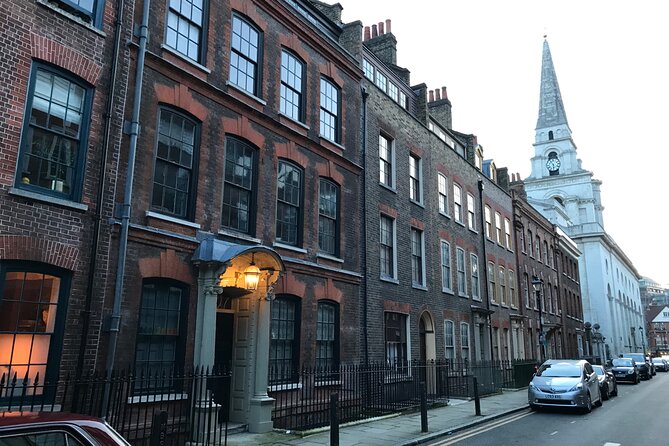
Your guide is Richard Walker, and he is known for presenting the case in a way that stays engaging even when the subject matter is heavy. One reason people click with this tour is that Richard does not treat it like a spooky street theater show. He talks through what is known, what is assumed, and how police-style thinking might connect the locations.
If you are the type who likes a story that includes theories and evidence, you will likely enjoy that balance. You may also hear Richard connect the legend to pop culture influences, with a quick nod to how films helped many people first learn the name of Jack the Ripper. He may also mention other cases when explaining how suspicion and storytelling can evolve. It is still focused on Whitechapel, but it can branch for a moment.
The route in plain English: what each stop means
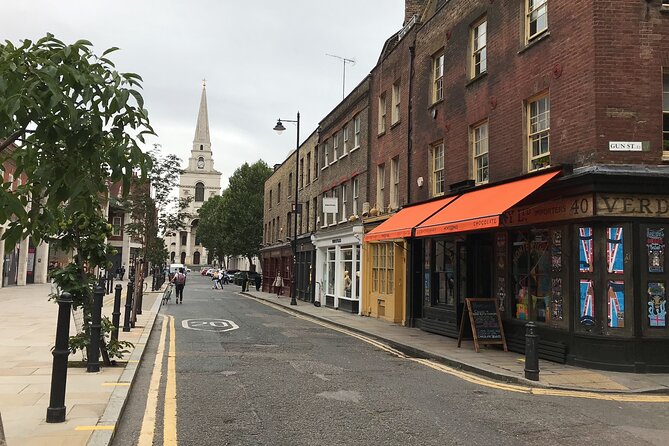
Stop 1: Whitechapel Road and the London Hospital, Emma Elizabeth Smith
You start on Whitechapel Road, opposite the London Hospital, at a spot connected to Emma Elizabeth Smith. She is presented here as the first victim of the Whitechapel murders, and you learn how her death tied to the broader outbreak of attacks in April 1888.
What I like about starting here is that it sets the tone immediately. Instead of leaping straight to “the killer,” you begin at the lived consequences. The walk gives you a point of reference for where events began and how the area responded.
Stop 2: Buck’s Row, Polly Nichols, and the first suspect thread
Next comes Whitechapel, with a stop at Buck’s Row. This is where the tour frames a “crime scene investigation” style discussion, focusing on when, where, and how the first murder is thought to have happened.
You also hear about Polly Nichols and how she became the first victim linked to Jack the Ripper storylines. This is also where the tour introduces a first suspect angle, so you are not just hearing names. You are learning how investigators and theorists try to build a case from limited evidence.
Stop 3: Brick Lane to the lodging houses and a geography-based model
Brick Lane is the next anchor point, and the tour uses it in a smart way. You get the practical geography of where multiple victims lived at the time, including mentions of Thrawl Street, Commercial Street, Wilmott’s Lodging House, and streets where Scotland Yard believed Jack might have been living.
The tour also brings in a second and third layer of place-based reasoning by referencing profiles used to map likely patterns. Specifically, the approach references FBI Special Agent John Douglas’s 1988 profile and Scotland Yard’s 2008 geographical profile. You can think of this as a shift from “who was it” to “what kind of movement makes sense.”
A nearby location associated with Annie Chapman is also part of this stretch, reinforcing how close some of these connections are on the map.
Drawback to note: this is the kind of stop where your brain needs a moment to connect street names to modern layout. The iPad visuals help, but if you do not like theories, focus on the “where and why” parts rather than the suspect talk.
Stop 4: Christ Church Spitalfields and Ten Bells Pub across the road
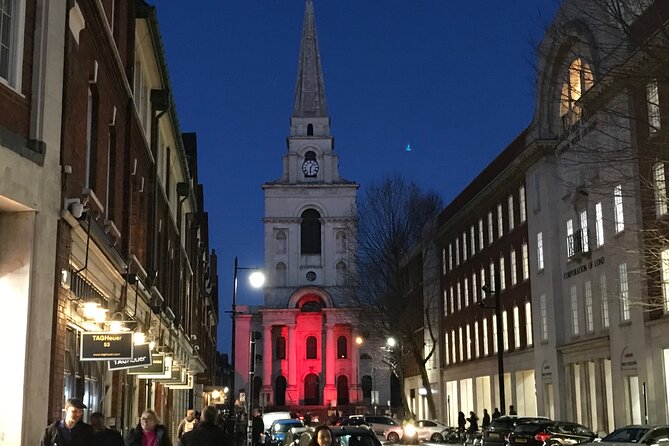
Christ Church Spitalfields is where the walk adds atmosphere in a grounded way. The church is next to the famous Ten Bells Pub, and the tour points out that the pub gets its name from the church across the road.
This stop matters because it reminds you these weren’t distant events happening in isolation. The women were part of everyday routines, and the story places social spaces right next to the sites tied to the crimes.
One practical note: admission for Christ Church Spitalfields is not included. So if you want to go inside or do more than look from the exterior, plan for that extra entry cost and time.
Stop 5: Old Spitalfields Market and poverty you can feel in the streets
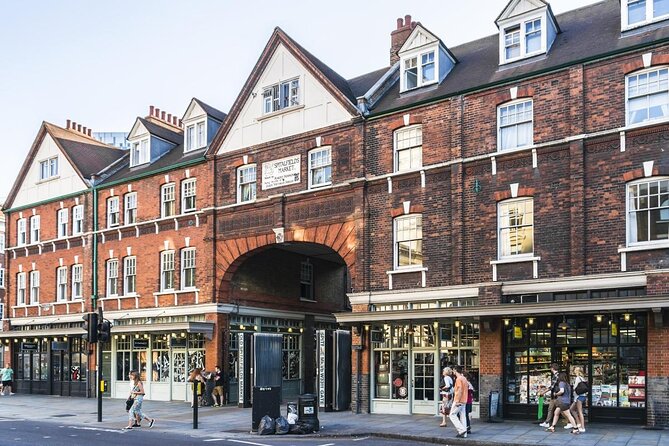
Old Spitalfields Market adds a different kind of context. You learn how writer Jack London witnessed the poverty conditions common in Victorian London, right in this area.
This is one of the tour’s biggest strengths. It helps you understand that the murders happened inside a social environment shaped by extreme hardship. When you connect that to what you have just been hearing about the victims’ lives, the case becomes less like a puzzle box and more like a human tragedy inside a failing system.
Stop 6: Spitalfields, Annie Chapman’s home, Mary Kelly, and multiple suspects
The final stop is Spitalfields, where the tour connects the dots between where Annie Chapman lived at the time of her murder and where Mary Kelly lived and was murdered.
Mary Kelly is framed as a different kind of victim in the story, and the tour uses her case to bring in another suspect angle. Like earlier portions, this is less about one definitive answer and more about how theorists try to fit the evidence into a coherent pattern.
If you like true crime that leans toward careful reasoning rather than gore, this ending likely hits the right note. It keeps the story anchored in people and places, then closes with the “what might fit” thinking rather than sensational shock.
The tone: history and true crime without turning it into gore
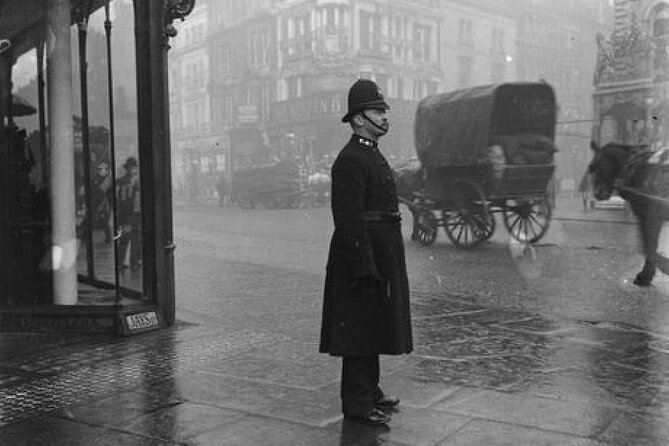
This walk is not built like a horror tour. The emphasis is on the women, the neighborhood, and the investigative logic behind theories. That focus can be a perfect match if you prefer substance over scare tactics.
At the same time, if you came expecting graphic descriptions or maximum shock value, you might find yourself slightly surprised by the restraint. A couple of guests have wanted more emphasis on the killer and more dramatic elements. If you want a “fact and theory” experience, rather than a “creepy and gory” one, this tour is more aligned.
Who should book this tour (and who might want a different one)
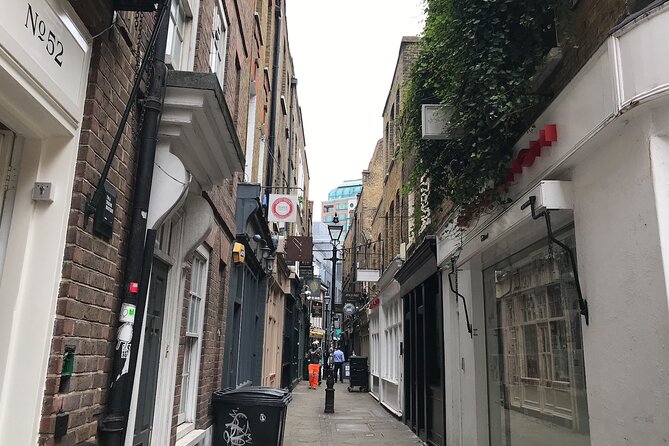
You should book if:
- You like small-group walking tours where you can ask questions.
- You care about the neighborhood context and how addresses connect on a map.
- You enjoy true crime presented with reasoning and multiple suspect possibilities.
You might want to skip or choose another option if:
- You need frequent seating or long pauses. This walk is brisk and mostly standing-focused.
- You want an action-heavy format, with lots of back-and-forth. The structure is mostly guided narration, with interaction depending on the group.
- You only want a killer-focused, gory-style telling.
Quick planning tips so you enjoy it more
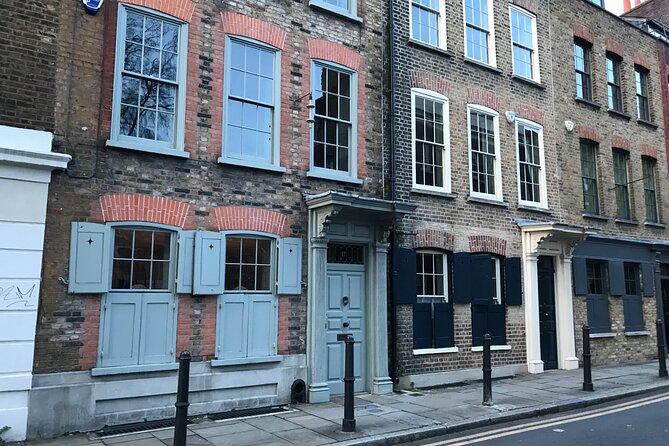
- Wear shoes you trust. Expect about 1.5 miles and a brisk pace.
- Bring a layer. Evening temperatures can drop fast, especially when you are outside for the full 2 hours 15 minutes.
- Use the headsets correctly. They are key for hearing clearly in the street noise.
- If you want to steer the conversation, save questions for moments when the guide stops and asks the group for them.
Should you book this Jack the Ripper small-group tour?
If you are interested in Jack the Ripper because of location, context, and theories, this tour is a strong choice. The combo of earphones, iPad visuals, and a 15-person max makes it feel more “organized and audible” than the bigger group versions, and the victim-focused approach gives the story more weight than the usual legend-only retellings.
If you want a creepy, gore-heavy performance or you cannot handle extended standing, you may feel a mismatch. For most people who enjoy serious true crime told with careful reasoning, this is a good use of an evening in East London.
FAQ
What time does the London Jack the Ripper small-group tour start?
It starts at 7:00 pm.
Where is the meeting point?
You meet at 279 Whitechapel Rd, London E1 1BY, UK.
Where does the tour end?
The tour ends at 126A Middlesex St, London E1 7HY, UK, with the endpoint at Liverpool Street Station.
How long is the tour?
It runs for about 2 hours 15 minutes.
How large is the group?
The maximum group size is 15 travelers.
What language is the tour offered in?
The tour is offered in English.
What is included in the price?
You get a radio mic and earphones, plus an iPad to display images.
Is entry to all locations included?
Admission is free at several stops, but Christ Church Spitalfields has an admission ticket that is not included.
Is the tour suitable for people with mobility issues?
The tour is described as not suitable for people with walking difficulties, and you should have a moderate physical fitness level.
What is the cancellation policy?
This experience is non-refundable and cannot be changed for any reason. If you cancel or ask for an amendment, the amount you paid is not refunded.
Ripper Walks and Victorian Crime
- London: The Original Jack the Ripper Walking Tour★ 4.7 · 7,833 reviews
- London Jack the Ripper Guided Tour with Ripper-Vision★ 4.5 · 4,840 reviews
- London: Jack the Ripper Small Group Tour★ 4.7 · 3,159 reviews
- London Jack The Ripper Guided Walking Tour★ 5.0 · 3,131 reviews
Fresh off the London review pile

Jack the Ripper & Victorian Crime Walks, compared.
 ★ 4.7London: The Original Jack the Ripper Walking TourFrom $257,833 reviews
 ★ 4.5London Jack the Ripper Guided Tour with Ripper-VisionFrom $274,840 reviews
 ★ 4.7London: Jack the Ripper Small Group TourFrom $263,159 reviews
 ★ 5.0London Jack The Ripper Guided Walking TourFrom $03,131 reviews
 ★ 4.6German Language : Original Jack the Ripper TourFrom $241,805 reviews
 ★ 4.5London: Jack the Ripper Walking Tour – Ripper Vision ToursFrom $261,752 reviews
 ★ 5.0Ultimate Jack the Ripper : Guided Tour of LondonFrom $271,495 reviews
 ★ 4.9London: Jack the Ripper Evening Walking TourFrom $331,449 reviews
Also filed under