
REVIEW · MANCHESTER & THE PEAK DISTRICT
Map Reading and Navigation Course in Peak District
Stop guessing. Read the hills.
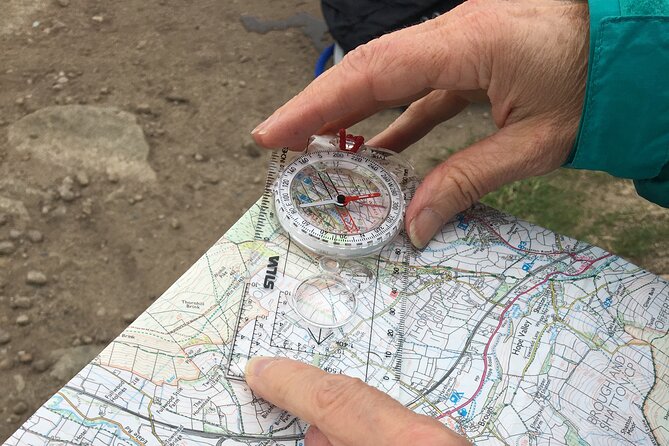
This one day Peak District map reading and navigation course turns nervous beginners into confident walkers by mixing plain theory with real field practice. I like how the guide talks you through how to use a compass to set your map and check direction, so the skills feel practical, not academic.
Two more things I really like are the small group size and the supportive teaching pace. With max 8 people, you get time to ask questions while you practise. One consideration: lunch is not included, so you’ll want to plan ahead for food during the day.
In This Review
- Key highlights you will feel on the ground
- Peak District navigation course, built for real beginners
- Starting at Bamford and launching from The Adventure Hub
- What the day covers: maps, grid references, and scale
- Learning compasses without fear or fake confidence
- Rights of way: the navigation skill people forget
- Coffee and tea, plus a realistic pacing
- Small group size means you get help when you need it
- Who this is best for (and who should be cautious)
- Weather reality: it operates in all conditions
- What to bring and how to prepare (so the skills stick)
- Price and value: $136.73 for a guided skills day
- How to fit this into a Peak District trip
- Should you book this navigation course?
- FAQ
- What is the meeting point and start time?
- How long is the Peak District map reading and navigation course?
- Is coffee or tea included?
- Is lunch included?
- Does the course run in bad weather?
- Is there a limit on group size, and is it in English?
- Can I get a refund if I cancel?
Key highlights you will feel on the ground
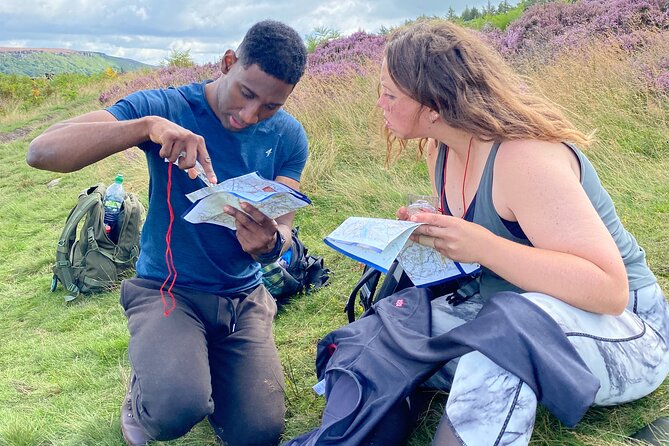
- Compass skills you can use immediately, including setting the map and checking bearings
- Map basics that click fast, such as grid references and scale use
- Rights of way know-how, so you understand what paths you should (and should not) follow
- A real Peak District setting, with moorland and tracks where navigation matters
- Coffee and tea included, a small comfort during busy outdoor practice
- A small group, capped at 8, which helps the guide keep an eye on everyone
Still comparing? These Sheffield tours came out well in our reviews too.
- Fun, Flexible Treasure Hunt Around Sheffield with Cryptic Clues & Hidden Gems
★ 5.0 · 61 reviews - Sheffield: Gin Distillery Tasting Visit with Guided Tour
★ 4.9 · 36 reviews
Peak District navigation course, built for real beginners
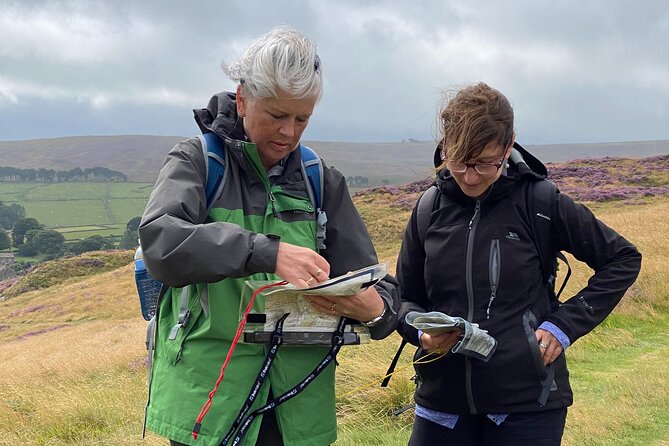
A lot of map courses sound good on paper. Then you try to use the kit in wind, cloud, and changing light, and suddenly it all feels shaky again. This one day Peak District navigation course is designed to fix that gap. You get the essentials for independent walking in the UK hills, then you practise the basics in the same kind of terrain you will actually meet outdoors.
The tone matters here. The course is aimed at beginners who want to start self-guided walks, and the instruction style shows up in the way people describe the teaching. In past experiences, guides like Gavin, Rick, Paul, Richard, and Guy are singled out for making the day feel friendly and doable, even if you have not touched a compass in years.
Starting at Bamford and launching from The Adventure Hub
The day starts at Bamford, Hope Valley S33, UK, with a 9:30 am start. You finish back at the meeting point, so you are not left thinking about logistics for the return trip. The course base is The Adventure Hub in the heart of the Peak District, which matters because it keeps the day efficient. You spend most of your time outdoors, not in transit.
This is also a good setup if you like “arrive, learn, then use it right away.” You are in the right region, with the right terrain feel, and you can connect each classroom idea to a visible problem in front of you.
What the day covers: maps, grid references, and scale
Expect a practical mix of theory and hands-on work. The course focuses on the fundamentals of map use, which is exactly where most beginners get stuck. You will work through things like:
- How to read map features and understand what they mean in the field
- Grid references, so you can locate where you are and where you are aiming
- Scale, so distances and effort make sense before you commit to a route
- How routes relate to rights of way, so you do not accidentally wander off a legally accessible track
If you have ever stared at a map and thought, I get it, but can I do it while walking, this is the part that helps you build that muscle memory. The goal is not speed. It is clarity, so you can keep checking yourself as conditions change.
Learning compasses without fear or fake confidence
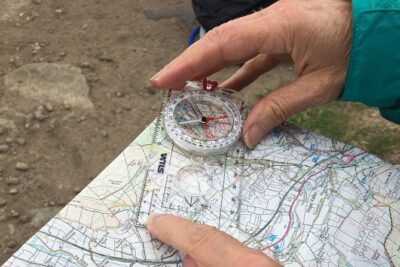
The headline skill is the compass, and the course teaches you to use it in a way that reduces guesswork. You learn about different types of compasses, then you use the one you have correctly, including:
- Setting the map so what is on paper lines up with what you see
- Checking direction, so you can correct course instead of hoping
This is the big confidence builder. A compass is not about magic. It is about turning a fuzzy sense of direction into a measurable one. Once you understand how to align map and ground, you stop relying on landmarks alone, which is especially important on moorland where visibility can swing quickly.
Rights of way: the navigation skill people forget
Most people plan routes around what looks interesting. The harder part is understanding what you are allowed to follow and how paths connect. This course includes rights of way basics as part of navigation theory and practice.
That is valuable for two reasons. First, it keeps you safer by reducing “off map and off plan” decisions. Second, it makes your future planning easier. After a day like this, you are more likely to check the path logic before you set out, so your walk feels smoother from the start.
Coffee and tea, plus a realistic pacing
The course includes coffee and/or tea, which sounds small until you are out practicing orientation and you realize you are making repeated checks. That little pause helps you reset without turning the day into a long meal break.
Also, since lunch is not included, you should think like a walker, not a tourist. If you need a proper lunch break, plan it for the day. Bring snacks if you like, and check whether you will have time to eat comfortably during the session flow.
Small group size means you get help when you need it
The group size is maximum 8 travelers, which changes the feel of the course. With a small class, the guide can spot the exact moment you are doing the right technique wrong, or mixing up steps like aligning the map first versus taking the bearing first.
It also makes the questions easier. Beginners often hesitate because they are not sure what they do not know. In a small group, you can ask without the embarrassment of holding up a crowd. That supportive vibe comes through in feedback about instructors creating an enjoyable learning atmosphere, even for people who felt nervous at the start.
Who this is best for (and who should be cautious)
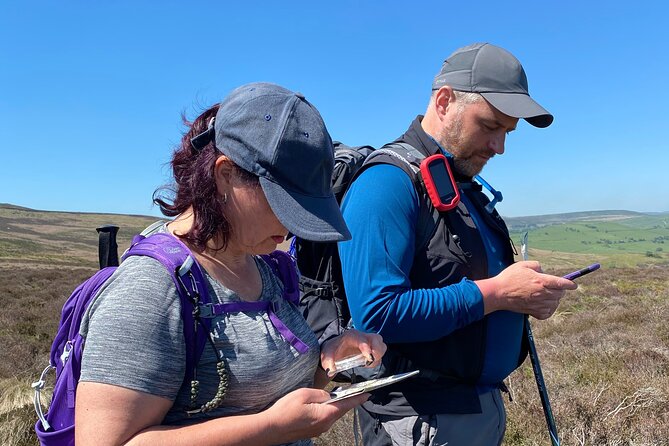
This one day Peak District navigation course is a great match if you are starting from zero or you want to refresh. It is aimed at beginners wanting the fundamentals for self-guided hill walking. You might also like it if you have tried map apps and felt like the phone did the thinking for you.
On the flip side, be honest with yourself about what one day can cover. You will learn the key tools, but complex route planning, advanced interpretation, and confidence under high-stress conditions take time. If you already navigate confidently using a map and compass, you may find it more foundational than challenging.
Weather reality: it operates in all conditions
The course runs in all weather conditions, and the instruction is to dress appropriately. That is not just a legal note. It is the nature of the Peak District and it directly affects navigation practice. Wind and cloud can reduce visibility, and rain can make maps harder to handle.
So treat this like an outdoor workshop, not a museum lesson. You will get more from the day if you show up ready to work your kit comfortably in wet or chilly conditions.
What to bring and how to prepare (so the skills stick)
You do not need to overpack, but you do want to be comfortable and ready. Since the course focuses on map reading and compass use, plan for a practical setup. Here are smart ideas based on what the day is about:
- Wear footwear you can trust on uneven ground
- Bring a rain layer even if the forecast looks mild
- Keep your map handling realistic, use a way to protect paper if you have one
- If you already own a compass, bring it so the guide can confirm you are using it correctly
- If you do not own a compass, you will still practise, but you may want to ask what the course expects you to use
Also, if you rely on an offline map app or your phone GPS, this course can still be useful. The phone can help you locate, but it does not replace the habit of orienting your map and taking direction checks. Use this day to build that habit, then your tech can become a backup rather than your primary navigator.
Price and value: $136.73 for a guided skills day
At $136.73 per person for about one day, this is not a bargain-price attraction, but it also is not “big tour pricing” for something intangible. You are paying for instruction, practical coaching, and a guide who can correct your technique while you are outside using the tools.
Two value signals help justify the cost. First, you get professional guidance plus a small group cap of 8, which typically means more individual attention than a larger class. Second, it is not only talk. You learn the fundamentals and practise them in the same kind of Peak District terrain you will likely walk on later.
If you want one navigation skill you can carry for years, this kind of course can be a strong investment. You are buying independence.
How to fit this into a Peak District trip
Because it starts in the morning at Bamford and ends back there, it fits well as a “learn first, explore after” plan. You can do this and then spend the rest of your trip walking with a new set of instincts. You will also be able to read the terrain on your own, rather than treating every walk like a guided loop.
And if you are travelling in a way that depends on public transit, the course is listed as near public transportation, which can make scheduling easier.
Should you book this navigation course?
Book it if you want the basics done properly and you feel uncertain about navigating on your own. If you are nervous about compasses, grid references, or rights of way, this is the kind of structured day that builds confidence without pretending you will become an expert overnight.
You might skip it, or pair it with additional learning later, if you already navigate confidently and are looking for advanced routing, or if you know you cannot commit to outdoor work in changing weather. Also think about food needs, because lunch is not included, so plan snacks or a lunch stop.
If your goal is to leave with practical skills you can repeat on your own walks, this is a solid choice. The small group, the hands-on compass focus, and the emphasis on rights of way are the ingredients that help navigation feel real.
FAQ
What is the meeting point and start time?
The course meets in Bamford, Hope Valley S33, UK and starts at 9:30 am. It ends back at the meeting point.
How long is the Peak District map reading and navigation course?
It runs for about 1 day.
Is coffee or tea included?
Yes. Coffee and/or tea are included.
Is lunch included?
No. Lunch is not included.
Does the course run in bad weather?
Yes. The course operates in all weather conditions, so you should dress appropriately.
Is there a limit on group size, and is it in English?
Yes. The group has a maximum of 8 people, and it is offered in English. Mobile tickets are used.
Can I get a refund if I cancel?
You can cancel for a full refund up to 24 hours before the experience start time. If you cancel less than 24 hours before, the amount paid is not refunded.
Fresh off the Sheffield review pile

Manchester & the Peak District, compared.
 ★ 5.0The Manchester City Stadium TourFrom $354,176 reviews
 ★ 4.4Manchester: Canal & River CruiseFrom $163,761 reviews
 ★ 4.8Etihad Stadium: The Manchester City Stadium TourFrom $353,096 reviews
 ★ 4.8From Manchester: North Wales, Snowdonia, and Chester TourFrom $1021,577 reviews
 ★ 4.4Manchester: National Football Museum Admission TicketFrom $201,243 reviews
 ★ 5.0Alcotraz Prison Cocktail Experience in ManchesterFrom $701,216 reviews
 ★ 4.1Manchester: Sightseeing Bus TourFrom $181,204 reviews
 ★ 4.0LEGOLAND Discovery Centre ManchesterFrom $221,049 reviews
Also filed under