
REVIEW · BELFAST TOURS & POLITICAL MURALS
Official World Famous Belfast Taxi Tour ™
Belfast’s murals talk fast. This private taxi tour uses short, well-chosen stops so you can get close to major street art and Peace Wall areas, and you will hear first-hand The Troubles stories from Belfast locals. It is also heavy material, with references to attacks and even a hands-on moment with replica bullets, so I’d think carefully about whether this is right for kids.
The whole thing runs about 1 hour 30 minutes to 2 hours, and it packs a lot into the city. There is a free hotel pickup at the Leonardo Hotel Belfast City Centre, plus round-trip drop-off back there, and you sit in an air-conditioned vehicle so you can focus on the views and the explanations. Also, because each photo stop is brief (often around 5 to 10 minutes), you should be ready to move and shoot quickly.
In This Review
- Key things you will like
- World Famous Belfast Taxi Tour ™: what this really is
- Price and what makes the $90.98 feel fair
- Starting at the Leonardo Hotel, and how the timing works
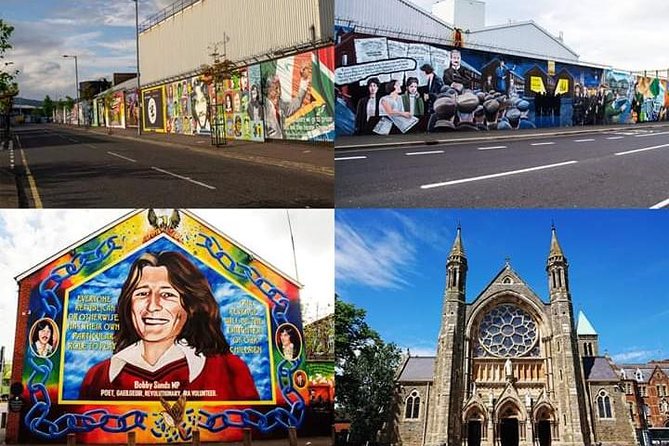
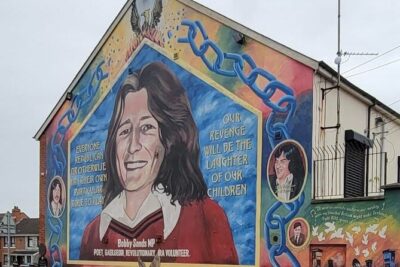
- Stop 1: Bobby Sands Mural at the International Wall
- Stop 2: Peace Wall, plus writing your message
- The middle-of-no-mans-land moment: Clonard Monastery
- Clonard Gardens: IRA C Company memorial space
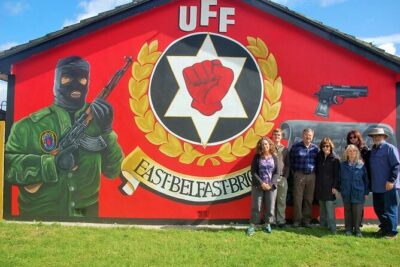
- Shankill Road murals: Loyalist UDA, UVF, and King Billy
- International Mural Wall on Divis Street: Belfast’s street art as a map
- Bayardo Bar attack stop: the 1975 bombing story
- St Peter’s Cathedral: construction roots and music inside
- Cupar Way peace lines: how the barriers actually function
- More Clonard memorials: Clonard Martyrs Memorial Garden again
- 56 Sherbrook Cl and armed mural photography
- Bayardo Memorial Garden on the loyalist side
- Garden of Remembrance and the IRA Belfast Brigade D Company
- Welcome Wall and Divis Tower: the sniper nest area
- When your guide lived The Troubles, the tour hits harder
- Photo, timing, and comfort tips that make a difference
- Should you book the World Famous Belfast Taxi Tour ™
- FAQ
- Is this a private tour?
- Where does the tour start, and is pickup available?
- How long is the Belfast Taxi Tour?
- What is included at the Peace Wall stop?
- Are any entry tickets included for stops?
- What is the cancellation policy?
Key things you will like
- Local guides who lived the era of The Troubles, not just studied it later
- Close-up mural time on both sides of Belfast’s divide, with plenty of photo chances
- Peace Wall participation, including writing your name and a message of hope
- Peace Walls and gates up close, including how they work day vs night
- Hands-on history moment, including real plastic and rubber bullets used by British Crown Forces
- Short, focused stops that cover major sites without turning the day into a slog
More tours run from the back of a cab
- Cab Tours Belfast Famous Black Taxi Tours
★ 5.0 · 3,633 reviews - Private Black Taxi Belfast City Tour
★ 5.0 · 2,188 reviews - Belfast’s Political Mural Taxi Tour
★ 5.0 · 1,180 reviews
World Famous Belfast Taxi Tour ™: what this really is
This is not a bus tour with distant windows. It is a private taxi-style tour built around seeing Belfast’s conflict-era street art and memorial sites, with your driver guiding you street by street. The pitch is simple: trade reading time for conversation time, and get dropped into the parts of Belfast that shaped the city people see today.
The value here is in pairing movement with context. You drive from mural to mural, then you get out for a tight window to look, take photos, and absorb what the guide is explaining. If you like history that feels personal, this format tends to land well.
Price and what makes the $90.98 feel fair
At about $90.98 per person, you are paying for three things at once: private transport, a local guide, and entry where it is included. The ride is about 1.5 to 2 hours, and the tour is designed so you do not spend that time hunting down locations on your own.
What boosts the value is that several stops include admission tickets, and at least one major mural site is listed as free. You also get hotel pickup and drop-off from the Leonardo Hotel Belfast City Centre, plus air-conditioned vehicle comfort. Group discounts are offered too, which helps if you are traveling with friends or family and can split costs.
The main trade-off is the tight timing. If you want long, slow museum-style pacing, this is more like an informed walkabout with the car acting as the connector.
Starting at the Leonardo Hotel, and how the timing works
You meet at the Leonardo Hotel Belfast City Centre, Great Victoria Street (BT1 6DY). The tour ends back at the meeting point, so you are not left scrambling for a ride at the end.
Start times run from 8am to 5pm in hourly slots (8am, 9am, 10am, and so on), and you choose your time slot when booking. This matters because Belfast daylight and weather can change quickly, and your ability to take photos at the right light is part of the experience.
This tour is offered in English, uses a mobile ticket, and is explicitly a private activity, meaning only your group participates.
Other Belfast tours, city and political
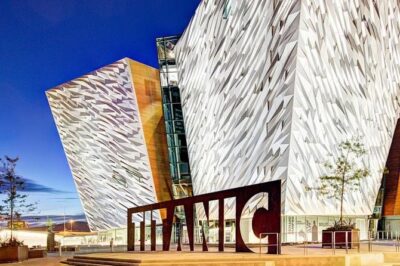
- Titanic Belfast Entrance Ticket: Titanic Visitor Experience Including SS Nomadic
★ 4.5 · 3,698 reviews



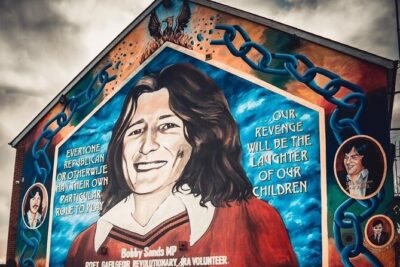
Stop 1: Bobby Sands Mural at the International Wall
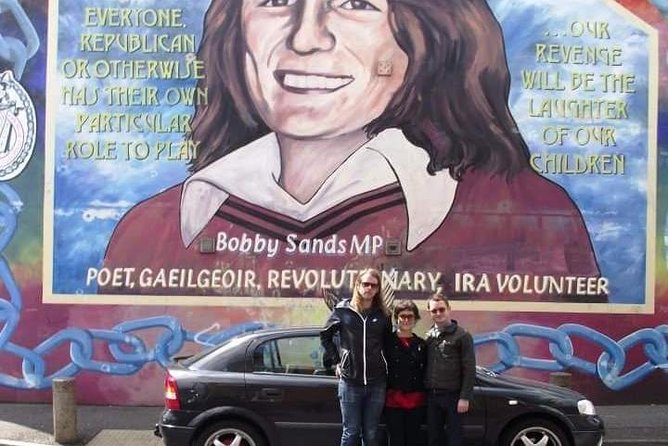
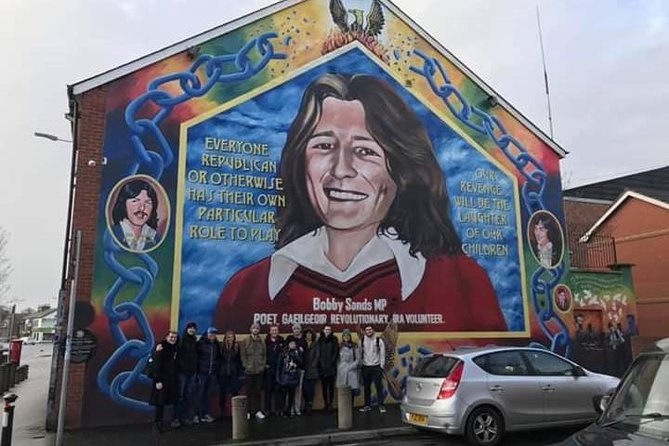
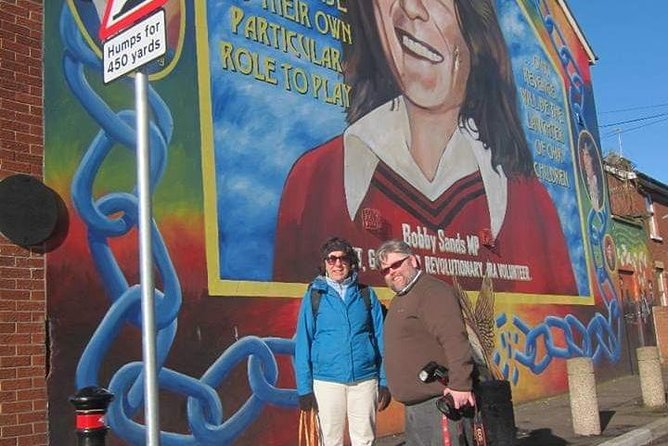
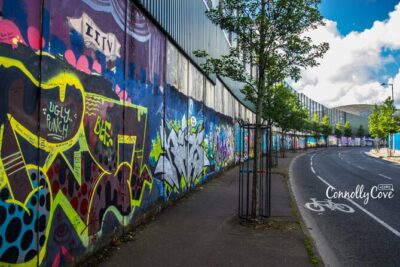
You kick things off at the World Famous Murals at the International Wall. This is the kind of place where the “history” is visible instantly. The theme is The Troubles, told through colorful murals made by different communities, including both Nationalist and Loyalist perspectives.
You get about 10 minutes here, with ample photo opportunities. You are also positioned to understand murals as messages, not just decoration. The murals are part of how neighborhoods communicate identity, memory, and political meaning, and your guide is there to explain what you are seeing.
A practical tip: bring your camera plan. With only around 10 minutes, you will want to do wide shots first, then close-ups, then one “I’m here” frame.
Stop 2: Peace Wall, plus writing your message
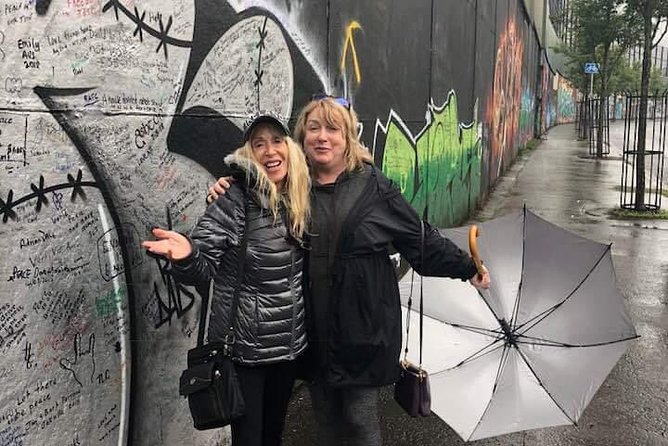
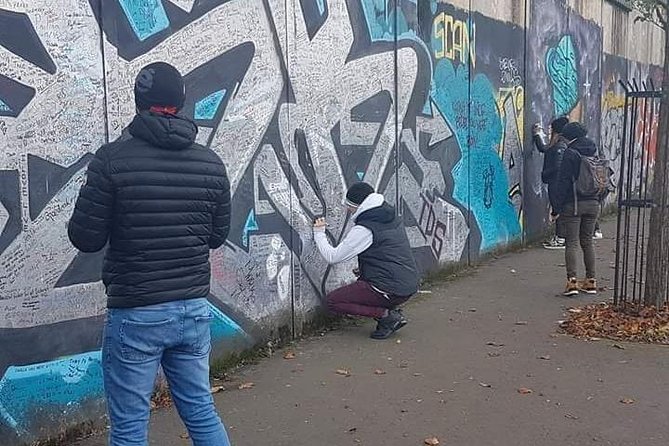
Next comes the Peace Wall, a physical divider that still separates Belfast neighborhoods. You will see and photograph the Peace Wall, and then you can write your name and leave a message of hope.
This is listed as included, and it is one of those moments that feels active rather than passive. The wall also has notable signatories mentioned in the tour details, including US President Bill Clinton and the Dalai Lama, which helps you understand how widely this symbol has traveled beyond Belfast.
Two things to be ready for: first, this is an area with strong emotions attached. Second, your time here is short, about 10 minutes, so use that time to read what you can and then write.
The middle-of-no-mans-land moment: Clonard Monastery
You also stop at Clonard Monastery, described as being right in the middle of no-mans land. That phrase is doing a lot of work. It signals how close violence and fear were to daily life during the conflict era.
This stop is not described with a numbered time box in the materials you provided, so I treat it as one of those “quick reality checks” stops. If your guide explains the spatial logic of the area, it can help you understand why murals and barriers matter so much here.
Clonard Gardens: IRA C Company memorial space
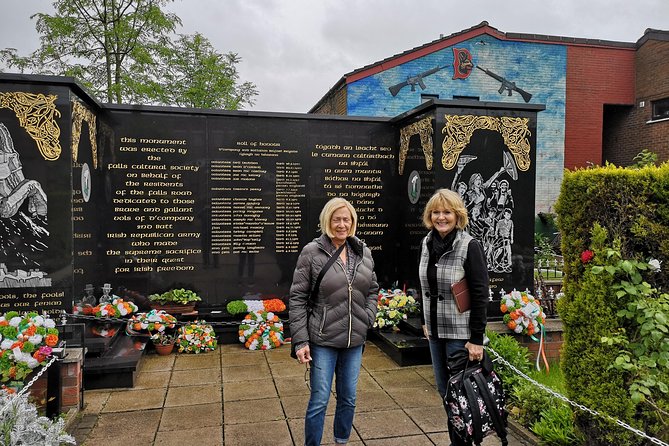
Then you move to Clonard Gardens, connected to the Irish Republican Army C Company Clonard Martyrs Memorial Garden on Bombay Street. You learn about the conflict beginning in 1969, and the memorial details include names and groups connected to those who are commemorated.
In the tour information, this garden includes recognition of fallen volunteers of IRA C Company, civilian casualties from the Greater Clonard area, and deceased republican prisoners from the area from 1916 to 1970. It also notes the dates the memorial elements were unveiled: 20 August 2000, and plaques unveiled on 11 March 2001, plus an annual commemorative march held around 11 March.
That is a lot of weight for a stop that is listed as 10 minutes. The benefit is that you are not just seeing a location, you are being guided through what the names and dates mean, and where to look.
If you are sensitive to dark topics, pace yourself. You can step out for photos, then step back and take a breath while the guide explains the rest.
Shankill Road murals: Loyalist UDA, UVF, and King Billy
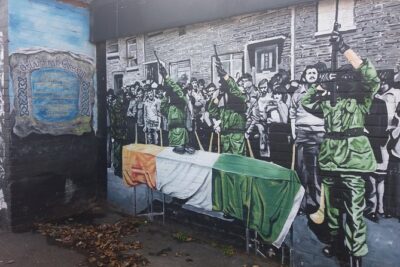
On Shankill Road, the focus shifts toward Loyalist murals. You will view murals associated with UDA and UVF and look for the King Billy reference, including a King William of Orange mural also called King Billy.
You are listed with about 10 minutes here, and the goal is visual reading. Murals on this side also function as public memory, showing names, symbols, and themes that matter to local communities.
Because the stops are short, I suggest you set expectations: you are not trying to memorize everything. You are getting orientation, then letting your guide’s explanation connect the dots.
International Mural Wall on Divis Street: Belfast’s street art as a map
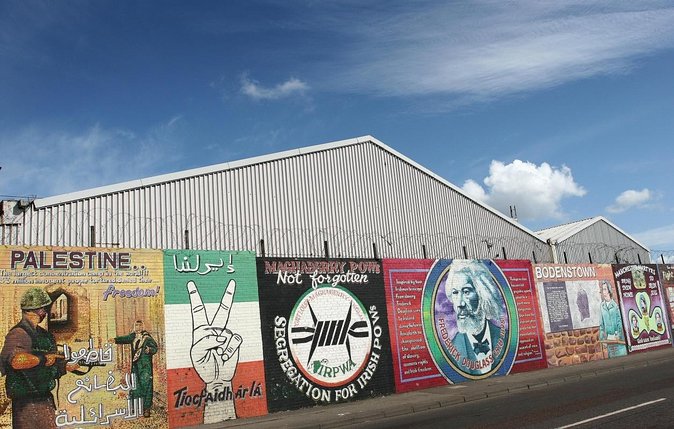
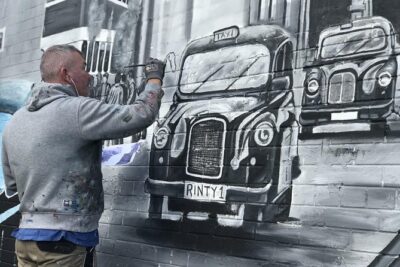
At the International Mural Wall on Divis Street, the tour turns into a lesson in how murals work as political communication. The materials you shared mention that Belfast and Derry are among the most famous political mural centers in Europe, and that about 2,000 murals were documented since the 1970s.
You also get a number that grounds scale in Belfast: the Belfast Mural Guide estimated around 300 quality murals on display in Belfast (back in 2014), with many more in varying states of age and decay.
The tour frames murals as culture and history in paint. It points out that themes vary by community, including Hunger Strike-era murals linked to Bobby Sands and Loyalist murals tied to paramilitary groups, while also noting that older historical themes like William III and battles are common too.
Even if you only spend a few minutes here, you are learning the lens. That lens helps you interpret every stop after this, because you start noticing symbols and messages instead of just seeing color.
Bayardo Bar attack stop: the 1975 bombing story
Another Shankill Road moment is connected to the Bayardo Bar attack on 13 August 1975. The details you shared say the attack was carried out by a unit of the Provisional IRA led by Brendan McFarlane, targeting a pub on Aberdeen Street in the loyalist Shankill area.
The tour information also includes the stated rationale from the attackers, plus the outcome: four Protestant civilians and one UVF member killed, and more than fifty injured.
This stop is listed as about 10 minutes with admission included. This is the kind of location where you should slow down. Photos can feel wrong here if you take them too quickly, so I would follow your guide’s pacing.
St Peter’s Cathedral: construction roots and music inside
You also pass by or stop at Saint Peter’s Cathedral in Belfast. The tour materials describe it as the Roman Catholic cathedral for the Diocese of Down and Connor, located in the Divis Street area of the Falls Road, with construction beginning in the 1860s.
It is also mentioned as home to St Peter’s Schola Cantorum (choir). Even if you are not going inside for long, a stop like this widens the frame beyond murals and barriers. It reminds you how religion, identity, and community buildings all sit inside the same geography.
Time is not explicitly listed for this cathedral stop, but it fits the pattern of a quick, explanatory pause.
Cupar Way peace lines: how the barriers actually function
One of the most practical parts of the tour is Cupar Way, described as part of the peace lines, or peace walls. This is where you learn what the barriers are built to do and what daily movement looks like.
The materials state these walls separate predominantly Republican and Nationalist Catholic neighborhoods from predominantly Loyalist and Unionist Protestant neighborhoods. They exist at urban interface areas in places that include Belfast, Derry, Portadown, and elsewhere.
You are also told the barrier basics: they range from a few hundred yards to over three miles, can be made from iron, brick, and/or steel, and can be up to 25 feet high. Some have gates, sometimes staffed by police, that allow passage in daylight but close at night.
Your stop here is listed at 5 minutes, free. Even with that short time, it can be a big mental shift. You start seeing walls not as a single grim landmark, but as part of a system that shapes daily life.
More Clonard memorials: Clonard Martyrs Memorial Garden again
You return to Clonard Martyrs Memorial Garden, and the details repeat the commemorations linked to fallen volunteers, civilian casualties, and deceased republican prisoners from 1916 to 1970. The stop is listed at 10 minutes, with admission included.
Hitting it twice can sound odd, but it may be about different angles or different elements of the same memorial space. Either way, it reinforces that this tour is not only about murals. It also treats memorial gardens as primary sources of memory.
If you feel overwhelmed, it is okay to let the second visit sink in more slowly. Focus on one plaque or one date, not everything at once.
56 Sherbrook Cl and armed mural photography
There is also a quick photo stop at 56 Sherbrook Cl to photograph armed Loyalist murals. This is listed at 5 minutes with admission included.
With only a few minutes, I would treat this as a snapshot moment. You get the imagery, then rely on the guide for what the symbols mean.
Bayardo Memorial Garden on the loyalist side
On Shankill Road, there is a visit to the Bayardo Memorial Garden on the loyalist side, also listed at 5 minutes with admission included.
This is a place to connect the earlier attack story to a space of remembrance. If you watched the guide link the pub attack to the memorial, you will likely understand why the tour includes both stops close together.
Garden of Remembrance and the IRA Belfast Brigade D Company
On the Republican side, you visit the Garden of Remembrance, connected to the IRA Belfast Brigade D Company. This stop is listed at 10 minutes, with admission included.
This part of the tour keeps returning to memorial sites, meaning the conflict is presented as lived memory, not a distant chapter. Even if you do not agree with the politics, you can still understand the human cost and why people keep these places maintained.
Welcome Wall and Divis Tower: the sniper nest area
You end up around the Bobby Sands area again, this time including the Welcome Wall and Divis Tower, described as where the British Army had a sniper’s nest, and framed as the heart of IRA territory.
This stop is listed for about 5 minutes, with admission included. It is short, but it is also one of the most emotionally loaded parts of the route, because it connects mural symbolism to claimed tactical geography.
Take your time with the guide’s explanation here, even if you are only standing still for a few minutes.
When your guide lived The Troubles, the tour hits harder
The tour materials make a specific point: the guides are Belfast locals who lived through The Troubles. That shows up in how the stories get told, including the way personal memory and public history combine.
In the guidance and the tone described through the experience, there is also a sense of openness to questions. I like that. You do not just get a script. You get a dialogue, with a guide like Paula, Barry, Billy, Neil, Joe, or Lorraine showing up in the tour experience details as people who can answer questions and tailor the moment to your interests.
This also means the tour may feel raw. One guide’s background can matter as much as the mural you are standing in front of. If that kind of storytelling feels like what you came for, you will likely feel satisfied even if the stops are brief.
Photo, timing, and comfort tips that make a difference
Because most stops are only 5 to 10 minutes, your success here is about preparation.
Bring:
- A camera or phone with enough storage for lots of murals
- Layers, because Belfast weather can swing fast
- Comfortable shoes for quick get-outs and short walks
Plan your mindset:
- Expect dark topics, including references to attacks and casualties
- Treat memorial and cathedral areas with respect, not like a photo backdrop
- If you are traveling with kids, check how your group handles graphic displays, since the tour includes hands-on replica bullet material
Should you book the World Famous Belfast Taxi Tour ™
Book it if you want a fast, guided way to understand Belfast through mural art, Peace Walls, and memorials, and if you appreciate a guide who lived the era rather than reciting a slide deck. The private setup, hotel pickup from the Leonardo Hotel, and the included Peace Wall writing moment add real value for the money.
Skip it or choose a different style if your group is not ready for heavy conflict material or you need long, quiet stops. The short stop times are great for efficient orientation, but they are not ideal if you want extended time on just one site.
If you are on the fence, the biggest question is this: do you want your Belfast history delivered by someone who saw it firsthand, while you stand in the same streets where the conflict left its marks? If yes, this tour is a strong fit.
FAQ
Is this a private tour?
Yes. It is listed as a private tour/activity, meaning only your group participates.
Where does the tour start, and is pickup available?
The tour starts at Leonardo Hotel Belfast City Centre on Great Victoria Street (BT1 6DY). Free pickup and drop-off are offered from this hotel. Pickup from other Belfast hotels or Airbnbs is available if requested, for an extra charge.
How long is the Belfast Taxi Tour?
The duration is approximately 1 hour 30 minutes to 2 hours.
What is included at the Peace Wall stop?
You can see and photograph the Peace Wall, and write your name and leave a message of hope. The Peace Wall stop lists admission as included.
Are any entry tickets included for stops?
Yes. Several stops list admission tickets as included, and one of the Bobby Sands mural stops is listed as admission ticket free. Other stops show included admission in the tour details.
What is the cancellation policy?
Free cancellation is available. You can cancel up to 24 hours in advance for a full refund, and changes within 24 hours are not accepted.
Belfast: City, Murals, History
- Titanic Belfast Entrance Ticket: Titanic Visitor Experience Including SS Nomadic★ 4.5 · 3,698 reviews
- Cab Tours Belfast Famous Black Taxi Tours★ 5.0 · 3,633 reviews
- A History of Terror – Belfast City Centre Walking Tour★ 5.0 · 2,883 reviews
- Game of Thrones and Giant’s Causeway Full-Day Tour from Belfast★ 5.0 · 2,291 reviews
Seen From a Black Cab
- Cab Tours Belfast Famous Black Taxi Tours★ 5.0 · 3,633 reviews
- Private Black Taxi Belfast City Tour★ 5.0 · 2,188 reviews
- Belfast’s Political Mural Taxi Tour★ 5.0 · 1,180 reviews
- Belfast black taxi tours★ 5.0 · 1,166 reviews
Fresh off the Belfast review pile


Belfast Tours & Political Murals, compared.
 ★ 4.8Giants Causeway, Dark Hedges, Dunluce & Belfast TourFrom $1128,843 reviews
 ★ 4.5Titanic Belfast Entrance Ticket: Titanic Visitor Experience Including SS NomadicFrom $373,698 reviews
 ★ 5.0Cab Tours Belfast Famous Black Taxi ToursFrom $1003,633 reviews
 ★ 5.0A History of Terror – Belfast City Centre Walking TourFrom $362,883 reviews
 ★ 5.0Game of Thrones and Giant’s Causeway Full-Day Tour from BelfastFrom $482,291 reviews
 ★ 5.0Private Black Taxi Belfast City TourFrom $1102,188 reviews
 ★ 4.5City Sightseeing Belfast Hop-On Hop-Off Bus TourFrom $132,012 reviews
 ★ 5.0Giants Causeway & Castles Tour from Belfast: Guided tourFrom $331,432 reviews
Also filed under