
REVIEW · BELFAST TOURS & POLITICAL MURALS
Peace Wall Taxi Tour
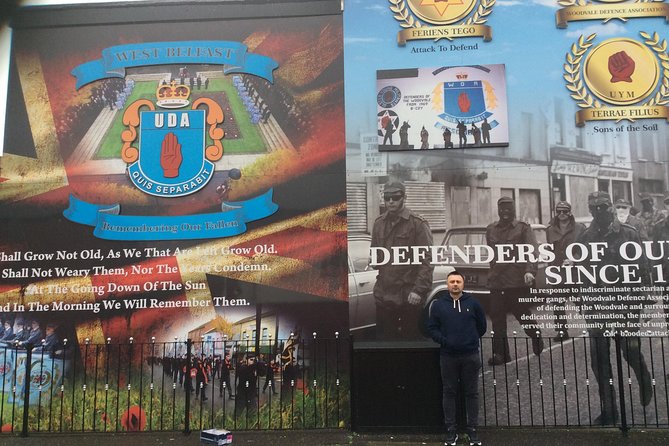
Belfast’s Peace Wall tells two stories at once. This private taxi tour lets you hop between key murals and conflict-era landmarks, with a guide who explains the Irish Nationalist and British Unionist viewpoints in plain English. What I really liked is the flexible itinerary, so you can ask for extra context as you go.
One thing to keep in mind: this is not a light sightseeing loop. You’ll be hearing about the Troubles and how the divisions still show up in everyday places, and the experience will feel more meaningful if you are ready for serious, sometimes emotional history.
In This Review
- Key Highlights You Should Know Before You Go
- Why Belfast Needs a Taxi Tour (Not Just a Walking Loop)
- Price and Value: What $55.56 Buys You in Belfast
- Getting Around: Pickup, Drop-Off, and Time on the Clock
- Stop 1: Bobby Sands Mural and the Irish Nationalist Side
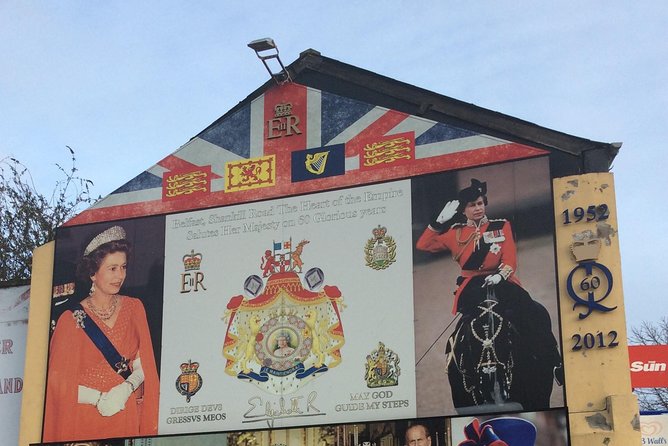
- Stop 2: Shankill Road and the British Unionist Perspective
- Stop 3: The Peace Wall, Two Sides, One Dividing Line
- Stop 4: Crumlin Road Gaol Pass-By and Prison Stories
- What Makes the Guide Part So Important
- Family-Friendly Timing, but Keep Expectations Real
- When This Tour Is a Great Fit
- Who Might Want to Think Twice
- Should You Book the Peace Wall Taxi Tour?
- FAQ
- How long is the Peace Wall Taxi Tour?
- Where does the tour start and end?
- Is pickup included?
- Which stops are included?
- Is this a private tour?
- Can I get a refund if I cancel?
Key Highlights You Should Know Before You Go
- Private taxi time with your own group, so questions do not get rushed or lost in a crowd
- Flexible stop-by-stop requests, which helps if you want more history at one site and less at another
- Peace Wall route that includes both sides, so you do not just see one perspective
- Four focused stops: Bobby Sands mural, Shankill Road, Peace Wall, and a pass-by of Crumlin Road Gaol
- Fast photo windows built into the route, plus plenty of time for street-level explanation
More tours run from the back of a cab
- Cab Tours Belfast Famous Black Taxi Tours
★ 5.0 · 3,633 reviews - Private Black Taxi Belfast City Tour
★ 5.0 · 2,188 reviews - Belfast black taxi tours
★ 5.0 · 1,166 reviews
Why Belfast Needs a Taxi Tour (Not Just a Walking Loop)
Belfast’s conflict history is hard to understand from a single street corner. The murals, neighborhoods, and memorial markers are spread out, and the meaning changes block by block. That is why a taxi tour works so well here: you can cover the essentials without trying to stitch together a self-guided route while also trying to read what you are looking at.
This experience is built around car time that feels practical, not fancy. You start in the city centre and move to specific places tied to the Troubles. Along the way, you can ask for details, and the guide can adjust what you focus on. If you like history but hate feeling like you are trapped inside a museum schedule, this format is a good fit.
Also, the tour is private. That matters more than it sounds. You can ask tough questions without worrying about derailing a big group’s day. It is one of those “small logistics” choices that turns into a bigger emotional comfort.
Price and Value: What $55.56 Buys You in Belfast
At about $55.56 per person for roughly 1 to 2 hours, you are paying for a driver-guide who connects locations into a story, not just a seat in a vehicle. For this kind of political and social history, that connection is the value. Seeing the mural is one thing. Understanding why that mural matters to the people living nearby, and how the other community reads the same geography, is the real payoff.
You also get a lot of built-in efficiency. Stops are short, and admission is listed as free at the four featured places. That means you are not spending your limited time hunting tickets or waiting in lines. Instead, you spend your time asking questions and taking photos when the guide says it is worth stepping out.
One more value point: pickup and drop-off can be customized within Belfast. The tour also offers group discounts, and you can use a mobile ticket. In other words, it is set up for real-world planning, not just a generic start point you must accept.
Getting Around: Pickup, Drop-Off, and Time on the Clock
The tour starts in Belfast city centre and ends back in Belfast. You can be dropped off wherever you need within Belfast. If you need to go further, you can ask. That flexibility helps if you want to tie the tour into dinner plans, a museum visit, or just a convenient return route back to your hotel.
Pickup is offered, but the data specifies an additional charge for pickup anywhere in Belfast and surrounding area. If you are staying outside the centre, this is worth factoring in early. The experience runs daily from 8:00 AM to 8:00 PM, so you can usually fit it into a morning, midday, or early evening slot.
Duration is listed as about 1 to 2 hours. Practically, that means you should treat it as a focused primer rather than a deep academic course. If you want slow pacing, plan to ask for more time at one stop and slightly less at another. The flexibility is there, and you will get more out of it if you steer it.
Finally, you will be using a taxi rather than a fixed walking route. That can be a big relief in Belfast weather, especially if rain shows up, as it often does.
Other Belfast tours, city and political
- Titanic Belfast Entrance Ticket: Titanic Visitor Experience Including SS Nomadic
★ 4.5 · 3,698 reviews





Stop 1: Bobby Sands Mural and the Irish Nationalist Side
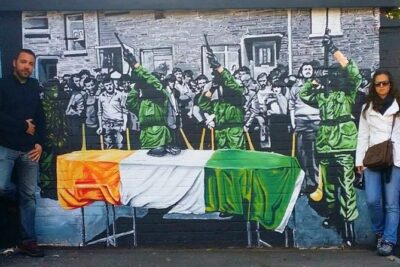
Your first major stop is the Bobby Sands Mural, with about 30 minutes allocated. Admission is listed as free, and the goal here is context. You are learning about the Irish Nationalist side of the Troubles, not just looking at artwork and guessing what it means.
The mural is a starting point because Bobby Sands is widely associated with that era’s hunger strikes and the broader nationalist struggle. A taxi tour makes sense here because the guide can connect what you see to the surrounding reality of neighborhoods and memory. You get history, but you also get explanation aimed at helping you interpret what you are seeing in the street-level world.
This stop is also a good checkpoint for your own comfort level. If you want more time on this theme, you can generally ask for it. If you feel overloaded by the emotional weight, you can keep an eye on the schedule and shift your attention to the next stop.
Possible drawback: because the time is fixed, you might not get every detail you would want. Bring questions. If something hits you hard, ask what it meant at the time, and what it means now.
Stop 2: Shankill Road and the British Unionist Perspective
Next is Shankill Road, again with about 30 minutes. This is where the tour makes its most important promise: you hear the British Unionist side of the Troubles, not just one community’s narrative.
For many people, the biggest surprise is how much the meaning of the same era depends on who is telling it and where they live. Shankill Road is a place where identity, memory, and political symbolism are tightly linked. When you hear an explanation that reflects the Unionist worldview, the murals and street cues start to make more sense.
This stop works best if you listen for cause and effect. Ask what people believed, what their fears were, and why certain symbols carried specific weight. You do not need to agree with the politics to understand the human logic behind them.
Drawback to watch: if you prefer a strictly neutral tone with zero current political references, you should know that the Troubles are not a sealed-off chapter. They still affect language, community identity, and how people interpret the present. A good guide will handle this carefully, but the subject itself is inherently ongoing.
Stop 3: The Peace Wall, Two Sides, One Dividing Line
The Peace Wall is the tour’s centerpiece, with about 30 minutes. This is where you see the dividing wall between the two communities in Northern Ireland, and you are taken to both sides. The tour also explicitly says the guide will explain the history on each side.
This stop is powerful because it turns abstract conflict history into something you can stand next to. You can see how division becomes a physical feature of daily life. That is why walking the distance is not the point. The point is understanding what a barrier means when it becomes part of your routine, a landmark that frames what people choose to notice and what they avoid.
I also like that this is built into the route with time to pause. You will want a few minutes to process what you are seeing before moving on. If your guide is the type who encourages questions, this is the moment to ask the “why does it look like that” questions you have been storing up.
Practical tip: bring a phone with enough battery and storage, and plan on taking photos quickly. The real value is not the picture, it is the explanation that makes the picture legible.
Stop 4: Crumlin Road Gaol Pass-By and Prison Stories
Your final stop is Crumlin Road Gaol, but it is a brief one, about 10 minutes. The tour notes that you will pass by the prison and hear stories about people who spent time there. Admission is listed as free.
This is the closest stop to a “pass-by” format, so it is easy to underestimate it. In my view, it still matters because the Troubles were not only about public protests and murals. They were also about arrests, imprisonment, and the long aftermath of incarceration.
That said, 10 minutes is short. Treat this as a directional note, not the full prison story. If you want more, you might need to plan a separate visit later. Use the taxi tour to understand what kind of experience this was and why the prison holds memory power.
The upside: it keeps the tour focused and moving. The risk: you might leave with more questions than answers. If that happens, ask your guide what to read or what site to prioritize next.
What Makes the Guide Part So Important
In Belfast, the difference between a good and a great tour can be the human piece. This taxi tour is designed for that. It focuses on lived experience and personal context, with room to ask questions along the way.
Several guides are praised for being engaging with both adults and kids. If you are traveling with a family, this can be a relief. The serious topics are still serious, but the explanations are said to be delivered in a way that connects to real life rather than sounding like a textbook lecture.
One guide detail that shows up in feedback: some drivers come prepared for weather, even bringing umbrellas, and they pause the taxi so you can get photos and ask questions at the right moments. Those sound like small touches until you are standing under rain wondering if you should just skip the shot. The better preparation helps you stay present.
One more thing: you will likely notice that guides can shape the tone. In a negative experience, the tour focus shifted away from the Troubles toward current geopolitical themes in a way that disappointed the customer. That is a reminder to set expectations clearly in the start of the ride. If you booked for the Troubles and Peace Wall context, say that up front and steer the conversation back if needed.
Family-Friendly Timing, but Keep Expectations Real
This is marketed in a way that suggests most travelers can participate, and families have had positive experiences. The route is short per stop, and you are not walking for hours. That makes it easier to manage attention spans and bathroom breaks.
Still, this is not a children’s theme park story. You are discussing conflict history and community division. If your kids are curious but sensitive, ask the guide to explain at an age-appropriate level. If your kids are older and already reading about history, you can let the discussion expand.
A good way to use the short time: pick one stop your family will remember most. For many people, it is either the Bobby Sands mural for the story start, or the Peace Wall for the physical meaning. Tell the guide your pick and ask for extra context there.
When This Tour Is a Great Fit
You should seriously consider booking if you want:
- A private, question-friendly setup where you can go at your own pace
- A route that covers both sides rather than treating Belfast as a one-note story
- A practical format for learning the Troubles context without planning a complicated self-guided route
- A time-efficient way to see major sites tied to murals and the Peace Wall
You might also like it if you enjoy street-level learning. This tour is built around seeing symbolic places and hearing what they mean to the people who lived through the era.
Who Might Want to Think Twice
Think twice if you are looking for a purely neutral lecture style with no emotional or political discussion. The Troubles are sensitive and still connected to present-day attitudes. Even when the guide handles the topic well, it will not feel like a detached audio tour.
Also, if you have specific accessibility needs, you should ask questions before you go. The service animals note is helpful, but wheelchair or mobility needs can still affect boarding and stopping locations. Build in time to confirm the vehicle setup and how easy it will be to access each stop.
Finally, if you strongly prefer black cab style tours over taxi format, understand that this is its own kind of experience. It may not match the vibe you are expecting, even if the information is strong.
Should You Book the Peace Wall Taxi Tour?
Book it if you want a fast, human, and practical way to understand Belfast’s conflict history and why the Peace Wall is still part of daily reality. The strongest reason is the structure: mural context on both sides, a Peace Wall visit that includes both sides, and short stops that keep you from burning half a day.
Skip it or be cautious if you cannot handle serious topics or you know you want a very specific tone from start to finish. In that case, message your expectations before meeting, and make sure you are clear you want Troubles and Peace Wall history as the center of the ride.
If you are on a tight schedule but want real understanding, this is one of the best uses of limited time in Belfast.
FAQ
How long is the Peace Wall Taxi Tour?
The duration is listed as about 1 to 2 hours.
Where does the tour start and end?
It starts in Belfast city centre and ends in Belfast. You can also be dropped off wherever you need in Belfast, and you can ask if you need to go further.
Is pickup included?
Pickup is offered. Pickup anywhere in Belfast and surrounding area has an additional charge.
Which stops are included?
The tour includes four main stops: Bobby Sands Mural, Shankill Road, the Peace Wall (both sides), and a pass-by of Crumlin Road Gaol.
Is this a private tour?
Yes. It is a private tour or activity, and only your group participates.
Can I get a refund if I cancel?
Yes, you can cancel for a full refund up to 24 hours in advance. If you cancel less than 24 hours before the start time, the amount paid is not refunded.
Belfast: City, Murals, History
- Titanic Belfast Entrance Ticket: Titanic Visitor Experience Including SS Nomadic★ 4.5 · 3,698 reviews
- Cab Tours Belfast Famous Black Taxi Tours★ 5.0 · 3,633 reviews
- A History of Terror – Belfast City Centre Walking Tour★ 5.0 · 2,883 reviews
- Game of Thrones and Giant’s Causeway Full-Day Tour from Belfast★ 5.0 · 2,291 reviews
Seen From a Black Cab
- Cab Tours Belfast Famous Black Taxi Tours★ 5.0 · 3,633 reviews
- Private Black Taxi Belfast City Tour★ 5.0 · 2,188 reviews
- Belfast’s Political Mural Taxi Tour★ 5.0 · 1,180 reviews
- Belfast black taxi tours★ 5.0 · 1,166 reviews
Fresh off the Belfast review pile



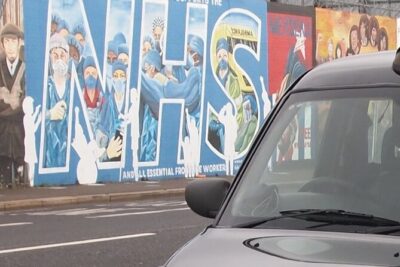
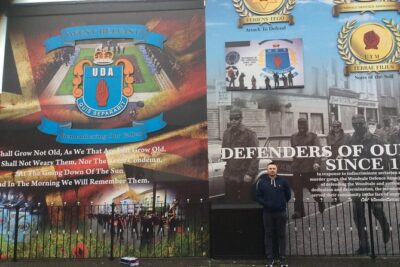
Belfast Tours & Political Murals, compared.
 ★ 4.8Giants Causeway, Dark Hedges, Dunluce & Belfast TourFrom $1128,843 reviews
 ★ 4.5Titanic Belfast Entrance Ticket: Titanic Visitor Experience Including SS NomadicFrom $373,698 reviews
 ★ 5.0Cab Tours Belfast Famous Black Taxi ToursFrom $1003,633 reviews
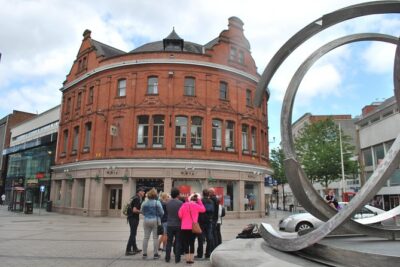 ★ 5.0A History of Terror – Belfast City Centre Walking TourFrom $362,883 reviews
 ★ 5.0Game of Thrones and Giant’s Causeway Full-Day Tour from BelfastFrom $482,291 reviews
 ★ 5.0Private Black Taxi Belfast City TourFrom $1102,188 reviews
 ★ 4.5City Sightseeing Belfast Hop-On Hop-Off Bus TourFrom $132,012 reviews
 ★ 5.0Giants Causeway & Castles Tour from Belfast: Guided tourFrom $331,432 reviews
Also filed under