
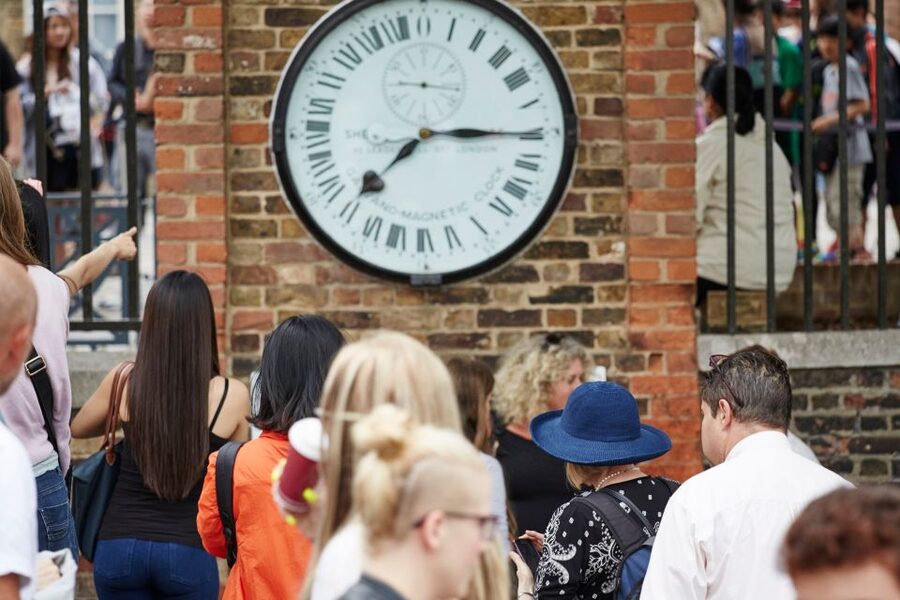
REVIEW · ROYAL PALACES, GREENWICH & KEW
Royal Observatory Greenwich & Prime Meridian Entrance Ticket
One place, two hemispheres, one standing spot. The Royal Observatory Greenwich turns the science of time and navigation into something you can actually see, from the Prime Meridian to the historic rooms tied to Britain’s top astronomers. I especially love the payoff of standing on the line, and the cinematic views from Greenwich Park, with a focus on real people like John Harrison. One thing to plan for: the hill up to the observatory is steep, and it can be tough if mobility is limited.
This is a self guided visit starting at Royal Observatory Greenwich, with an audio experience in multiple languages and a downloadable guide. If you like your London attractions with a purpose, this one has you thinking about longitude, clocks, and why a single line matters to the whole world.
In This Review
- Key things to know before you go
- Royal Observatory Greenwich: what your ticket actually delivers
- Getting there and planning the hill climb at Greenwich Park
- Flamsteed House and the Octagon Room inside the observatory
- Standing on the Prime Meridian at 0 degrees longitude
- The timekeeping story: Harrison, navigation, and why longitude needed clocks
- The views from Greenwich Park: a science visit with a skyline
- Optional add ons: astronomy center, meteorite touch, and planetarium shows
- Timing ball at 13:00 and how to catch the moment
- How to pace a self guided visit for maximum value
- Price and value: is $32.33 per person worth it
- Who should book this Royal Observatory Greenwich ticket
- Should you book this ticket or look elsewhere?
- FAQ
- What does the ticket include?
- Is the visit self guided?
- How long is the ticket valid?
- What time slot options are available?
- Does the ticket include the planetarium show?
- Where does the experience start and end?
- What languages are available for the audio guide?
- Is wheelchair access available?
Key things to know before you go
- Stand on the Prime Meridian with one foot in the eastern hemisphere and one in the west
- Flamsteed House Octagon Room gives you a rare, preserved interior designed by Sir Christopher Wren
- Astronomy themes are practical: timekeeping, star mapping, and navigation that helped ships at sea
- London views from Greenwich Park are a major side benefit, not just a backdrop
- Optional upgrades exist on site like the Peter Harrison Planetarium and a meteorite touch experience
- The visit is self guided, so you can control how long you linger in each room
Royal Observatory Greenwich: what your ticket actually delivers
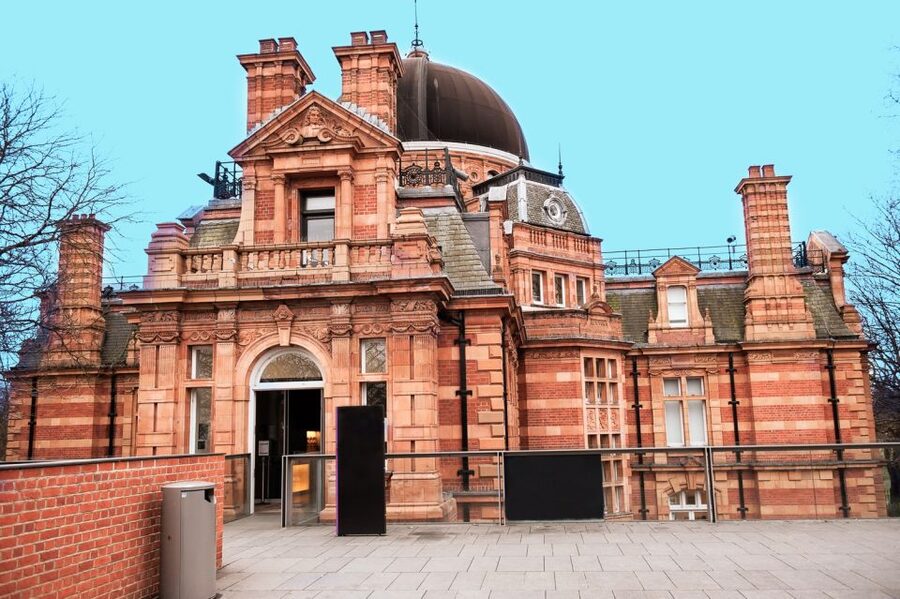
Your ticket covers the Royal Observatory Greenwich and the Prime Meridian, with a multilingual downloadable guide and an audio guide in Spanish, Chinese, English, French, German, Italian, Korean, and Portuguese. That matters because the site is packed with ideas, not just objects. You’re not only walking through exhibits, you’re also getting context for how people built the modern systems of time and navigation.
The heart of the experience is simple and memorable. You stand on the world famous Meridian Line, the one that marks 0 degrees longitude. The goal is not to rush. The best visits are the ones where you slow down just enough to let the location sink in, then move on to the rooms that explain how we got here.
This is also a great place if you like “how it works” history. The observatory was established in the 17th century, and it’s tied to the precise mapping of stars for navigation. Later, in 1884, the Greenwich Meridian was chosen as the Prime Meridian of the world. That turn in history is what makes this hilltop site feel globally important.
Getting there and planning the hill climb at Greenwich Park
Most people arrive with at least one plan in mind: stand on the Prime Meridian, then take in the views. The practical catch is the walk.
The observatory sits in Greenwich Park, on a hill. Several visitors note the uphill trek can be steep, especially if you’re coming from the riverside area or you’re already tired from earlier sightseeing. Even if the site is listed as wheelchair accessible, the reality of steep ground means you should plan your route carefully.
If you’re starting from a transit stop like Cutty Sark Station, double check how you’ll move from there. One common frustration is confusing signs. I’d rather you arrive early than fight your way up an unfamiliar path with limited time.
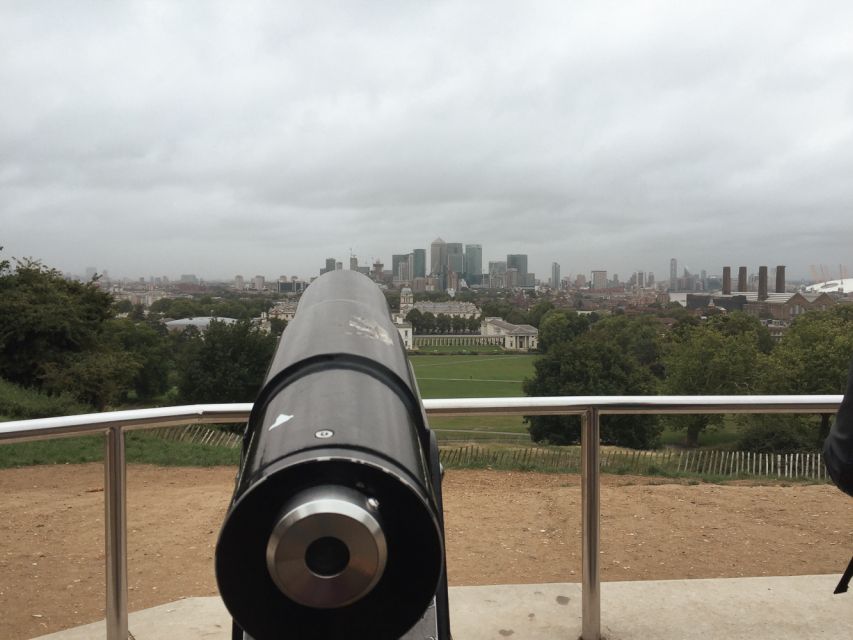
Good news: once you’re at the top, the payoff is immediate. You’re looking out across royal Greenwich, the City of London, and the River Thames. That vista helps you understand why kings, sailors, and astronomers cared about this spot.
Flamsteed House and the Octagon Room inside the observatory
Your ticket time is not only about the outdoor line. The inside spaces help you connect the dots between the world you see outside and the calculations that shaped it.
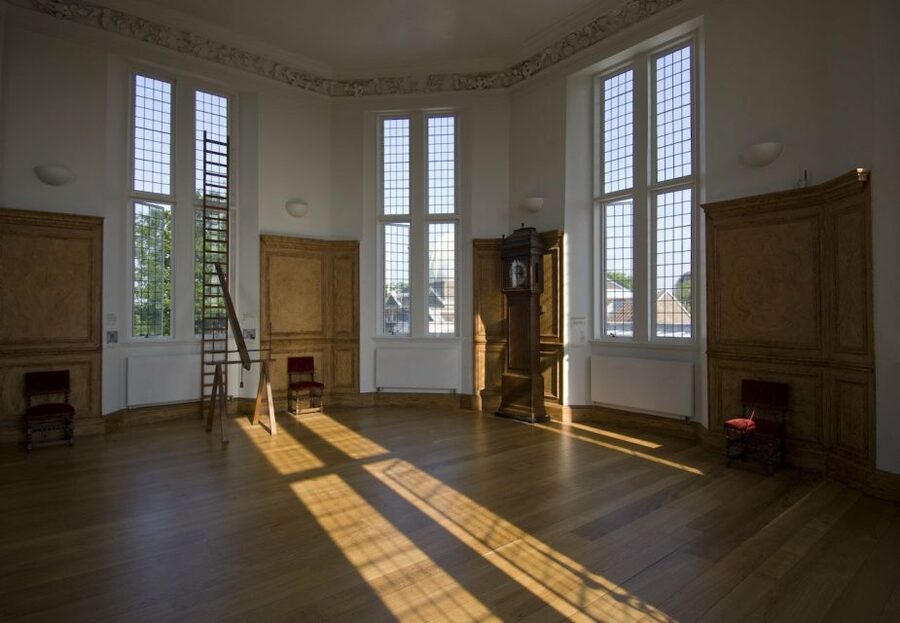
One standout is the Octagon Room in Flamsteed House, designed by Sir Christopher Wren. It’s described as one of his best preserved interiors in London, so it’s not a generic museum room. When you see it, it helps you visualize what observatory life looked like in earlier centuries, when measuring time was serious work with real consequences.
Here’s why this stop matters for you, even if you are not an astronomy nerd. The Octagon Room is where the building stops being an attraction and starts being a machine for thinking. You can feel the precision theme through the architecture and the exhibit structure.
I like pairing this room with a slower approach. Spend a little extra time early, while you’re fresh, then you’ll enjoy the Meridian Line even more later.
Standing on the Prime Meridian at 0 degrees longitude

Now for the moment everyone wants. You stand on the Meridian Line with one foot in the eastern hemisphere and one in the west. It’s a simple physical experience, but it connects you to an idea that shaped how the world communicates position.
The Greenwich Meridian’s “why” is worth understanding before you step onto the line. The site’s mission grew from the 17th century need to map stars accurately so navigators could find their way at sea. When people talk about longitude and time, this is where those concepts become tangible.
Two tips help you get more out of the Meridian Line stop:
- Take a minute to reorient yourself, then read the explanation tied to the line you’re on. The meaning is bigger than the floor marking.
- Use the moment to anchor your mental timeline. Think 17th century star mapping, then jump forward to 1884, when the Greenwich Meridian became the world’s Prime Meridian.
If you’re visiting with kids or teens, this part is especially friendly. It is instant understanding. Even if your group is mixed, this stop gives everyone a shared reference point.
The timekeeping story: Harrison, navigation, and why longitude needed clocks
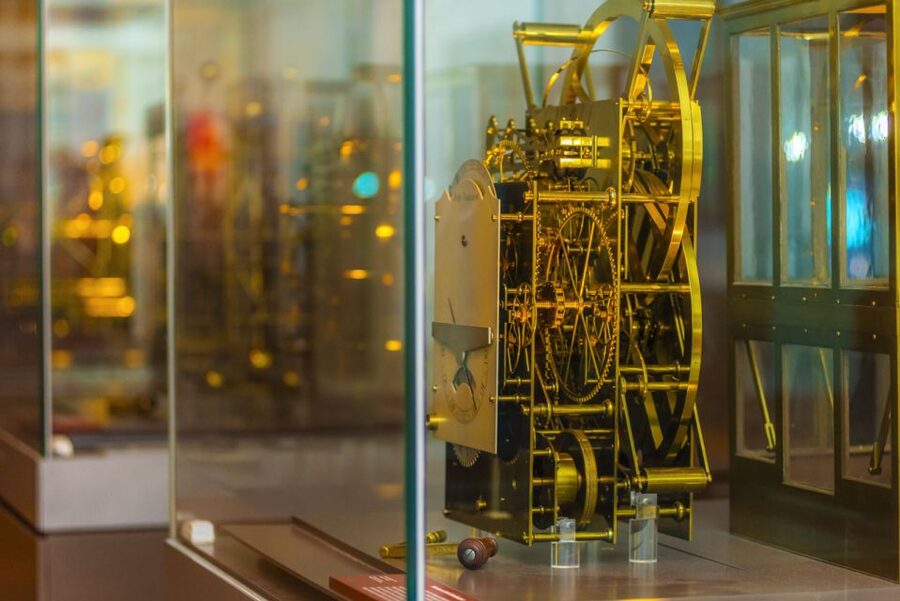
One of the best parts of this ticket is that it teaches time as a technology, not as an abstraction. The Royal Observatory links major scientific figures to how time measurement supported navigation.
The experience highlights astronomers and inventors associated with the observatory, including John Harrison, Isaac Newton, Edmond Halley, James Bradley, and George Biddell Airy. That lineup isn’t there to name drop. It’s there to show that measuring the heavens and measuring time were tied together through practical problems.
Harrison comes through strongly. You’ll encounter the story of Harrison marine clocks, the kind of breakthrough that helped sailors keep a more reliable sense of time during long voyages. And if timekeeping sounds boring, this is your antidote. The reason it mattered was straightforward: time allows navigation. Without trustworthy time, longitude remained frustratingly out of reach.
I also appreciate that the exhibits often feel guided even though the visit is self paced. The audio experience and guide help you connect a story beat to what you’re seeing in front of you.
The views from Greenwich Park: a science visit with a skyline
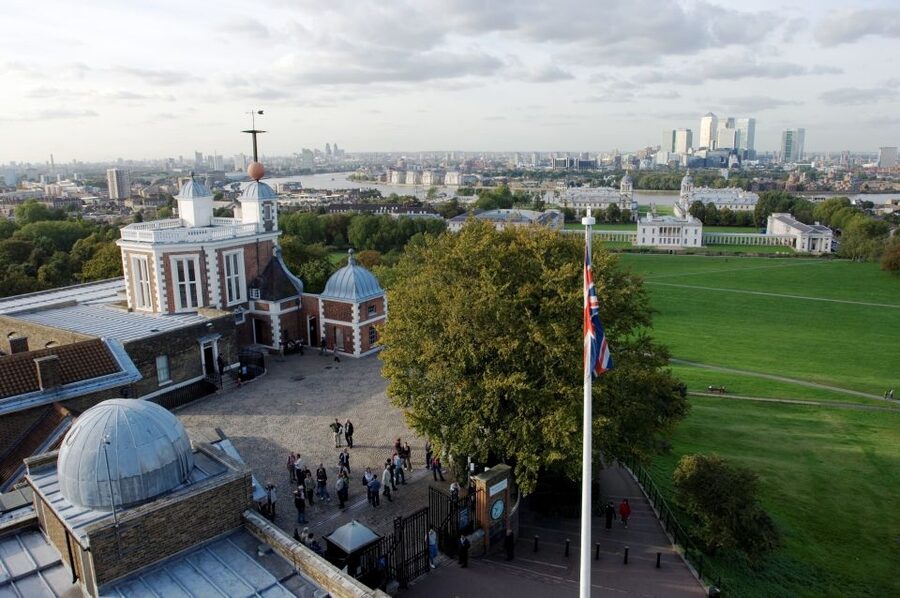
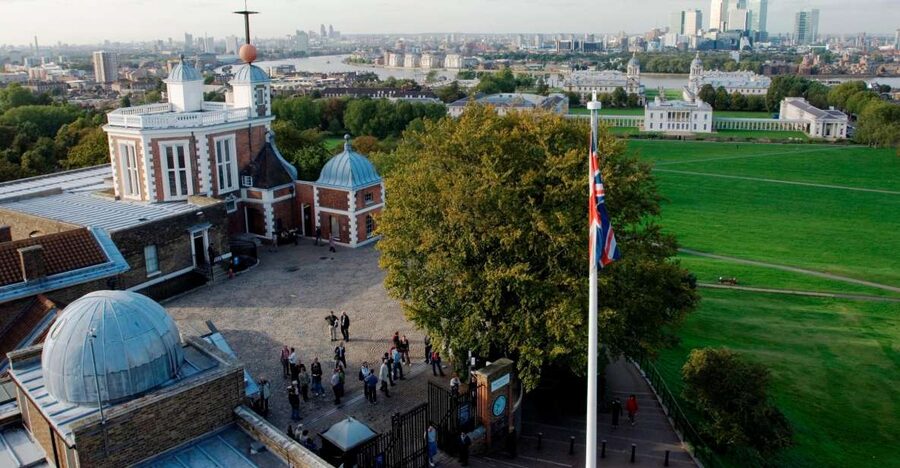
You get some of the best photo light when the weather cooperates, but the views are meaningful even without pictures. The observatory’s hilltop setting puts you above the surrounding areas, and you look out across royal Greenwich Park, the City of London, and the River Thames.
This is one of those “you can’t skip it” bonuses. Even if you come for the Meridian Line, you’ll feel like you got a complete outing when you also take in the skyline. The views help you understand why Greenwich mattered historically and why visitors still love returning here.
A smart pacing trick is to build in a short break after your indoor rooms. Stand for a few minutes, scan the horizon, then return to the theme of time and navigation. It makes the science feel grounded, not floating in a display case.
Optional add ons: astronomy center, meteorite touch, and planetarium shows
Your ticket focuses on the Royal Observatory Greenwich and the Prime Meridian, but the broader site experience includes other astronomy related stops that you might want to plan around.
The information here notes you can visit the modern Astronomy Centre, where you can touch a 4.5 billion year old meteorite from outer space. That detail is worth knowing because it turns a history museum day into something tactile and memorable.
You can also take an awe inspiring journey through the wonders of space at the Peter Harrison Planetarium. The key point is that the planetarium show is not included in this ticket. If you want it, you’ll need to handle it separately on the day.
If your group is short on time, here’s a fair way to choose. Do the Meridian Line and the Octagon Room first, then decide whether the Astronomy Centre and meteorite moment fit your energy level. The planetarium show depends on your interests and how much sitting you want to do.
Timing ball at 13:00 and how to catch the moment
One of the most fun, specific tips tied to the site is the timing ball. If it is operating during your visit, try to plan your arrival around the ball dropping at 13:00 precisely.
I suggest you aim to be in place before 13:00, not after. That gives you breathing room for delays, finding your way, and still enjoying the Meridian Line and indoor exhibits without rushing.
This is the kind of detail that can turn a good day into a “remember this” day, especially if you’re traveling with kids or you just love a clear moment in time.
How to pace a self guided visit for maximum value
Because this is self guided, the best strategy is to set a loose structure for yourself. Otherwise, you end up either rushing or accidentally spending too long in one corner and missing the part you actually came for.
I’d do it like this:
- Start with the inside highlights you want most, like the Octagon Room and the timekeeping exhibits.
- Then head out for the Meridian Line when you’ve got the context in your head.
- Finish with views from Greenwich Park, and add Astronomy Centre only if you still have energy.
The overall duration is flexible in the sense that your ticket is valid one day and you can choose a time slot for entry. One practical note from visitor experience is that the entry time slot may not be strict, and some people felt they could enter at any point of the day. Still, I’d treat your time slot as your target and not your suggestion.
If you’re visiting with mobility needs, plan for the uphill walk. You may be able to access the site, but the grade is real. Build in extra time so you’re not arriving sweaty and grumpy right before you want to stand on 0 degrees longitude.
Price and value: is $32.33 per person worth it
At $32.33 per person, this ticket is priced like a major London attraction. The question is value, not cost.
Here’s the value logic for you:
- You’re paying for a world famous location: the Prime Meridian with the physical one foot in each hemisphere moment.
- You get real museum content, including Flamsteed House and the Octagon Room designed by Sir Christopher Wren.
- The visit includes a multilingual downloadable guide and an audio guide in many languages, so you can actually understand what you’re seeing without hiring a human guide.
- You’re in Greenwich Park, so the views are built into the experience rather than added as a separate activity.
What can reduce value is if your group expects a fully guided tour. This is explicitly self guided, and a separate “guide” is not included. If you want a guide in the human sense, you’ll need to look for additional services on site or elsewhere.
Overall, for the combination of iconic location, historic rooms, and hands on astronomy related features nearby, I think the price makes sense for a one day Greenwich stop.
Who should book this Royal Observatory Greenwich ticket
This ticket fits best if you enjoy science, history, maps, and practical problem solving. It also fits families, because the Meridian Line is easy to understand and the day gives you multiple ways to learn.
You’ll likely love it if:
- You want a clear “I can point to that” destination in London, literally on 0 degrees longitude.
- You like timekeeping and navigation stories, including John Harrison and marine clocks.
- Your group includes mixed interests, because the views and the landmark location help everyone buy in.
You should be cautious if:
- Your group has trouble with steep walking, especially if you’re arriving from the riverside or after other busy days. Even with wheelchair access, the hill can still be a challenge in practice.
Should you book this ticket or look elsewhere?
Book this ticket if you want a distinctive Greenwich experience that goes beyond generic museum browsing. The Prime Meridian moment is the kind of travel memory that lasts, and the Octagon Room inside Flamsteed House adds real architectural weight to the day. Add the optional Astronomy Centre, and you get a nice mix of history and modern space themed experiences.
Consider other options if you only want a casual, low walking attraction, or if you need a fully guided narrative from a staff member. This one rewards curiosity and pacing.
FAQ
What does the ticket include?
The ticket includes entry to the Royal Observatory Greenwich and the Prime Meridian, plus a multilingual downloadable guide.
Is the visit self guided?
Yes, the visit is self guided.
How long is the ticket valid?
The ticket is valid for one day.
What time slot options are available?
The activity is scheduled with starting times, and you can check availability to see the starting times.
Does the ticket include the planetarium show?
No, the planetarium show is not included.
Where does the experience start and end?
It starts at Royal Observatory Greenwich and ends back at the meeting point.
What languages are available for the audio guide?
The audio guide is available in Spanish, Chinese, English, French, German, Italian, Korean, and Portuguese.
Is wheelchair access available?
Yes, the experience is wheelchair accessible.
Royal Palaces, Greenwich & Kew, compared.
 ★ 4.5London: Westminster to Greenwich River Thames CruiseFrom $2222,836 reviews
 ★ 4.6London: Kew Gardens Admission TicketFrom $323,252 reviews
 ★ 4.5Westminster to Greenwich Sightseeing Thames Cruise in LondonFrom $222,969 reviews
 ★ 4.0Kew Gardens Entrance TicketFrom $301,055 reviews
 ★ 4.5The Kensington Palace Gardens Royal High TeaFrom $158934 reviews
 ★ 4.5Leeds Castle, Canterbury, Dover & Greenwich Boat rideFrom $147604 reviews
 ★ 3.5Kensington Palace Entrance TicketFrom $28557 reviews
 ★ 4.5‘Cutty Sark’ Entrance TicketFrom $32373 reviews
Also filed under