
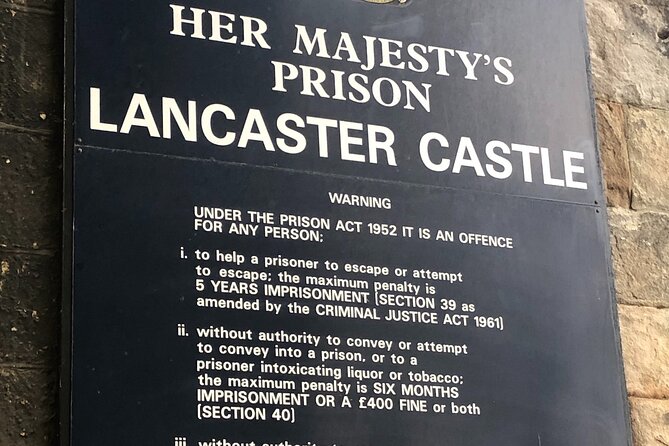
REVIEW · WALKING TOURS
Walking tour of Lancaster – Execution Slavery Industry
Justice and trade walk right beside you. This Lancaster tour links executions and the slave trade to the real streets you see today, with nine stops in about three hours. I love the easy start point at the castle front and the fact the group stays small, capped at 20.
What makes it especially rewarding is how much you cover without feeling rushed. You get guided stories at landmarks, and the stops are marked as admission ticket free, so you are not juggling extra entry fees. I also like that the storytelling has personality, one guide named Barrie is singled out for humour, stamina, and keeping the group moving at an easy pace.
One thing to consider is that you are walking and standing fairly regularly for roughly three hours. The tour also depends on good weather, so pack for cold or wet conditions and expect to get a bit tired by the end, even if the walking is gentle.
In This Review
- Key points I think you will care about
- Lancaster Castle, Quayside, and Canal Stories in One Easy Route
- Price and what you really get for $20.81
- Starting at Castle Approach, then moving like a local
- Lancaster Castle: trials, prisoners, and the city’s justice machine
- Saint George’s Quay: the River Lune and slavery connections
- Judges’ Lodgings: oldest house vibes and witchcraft link
- Church Street prince stories and the missing royal angle
- Market Street: two royal tales, one banner, and a lost shoe
- Dalton Square: murder, first forensic crime solving, and a bonus
- Lancaster Canal and White Cross Mill: the Storey Brothers and the canal heyday
- Penny’s Almshouses: still functioning, and how it was financed
- The Storey: a donations-founded institute that fed the university tradition
- Pace, comfort, and smart ways to get more from the guide
- Who this walking tour suits best
- Should you book this Lancaster Execution and Slavery Industry walking tour?
- FAQ
- How long is the walking tour of Lancaster?
- What is the price per person?
- How many people are in the group?
- Where does the tour start?
- Where does the tour end?
- Is the tour offered in English?
- Do I need an admission ticket for the stops?
- Will I get confirmation when I book?
- What if the weather is bad?
- Can I cancel for a full refund?
- FAQ
- Is service animal support available?
- Is the tour near public transportation?
- Is the tour mostly walking?
- Is there a minimum number of travelers?
Key points I think you will care about
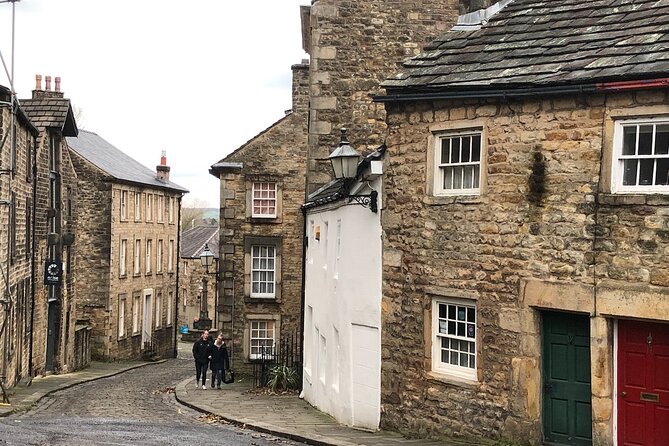
- Nine stops in about three hours, built for limited-time visitors
- Hard history in very specific places, from Lancaster Castle to the dockside
- Small-to-medium group, maximum 20 people
- Easy-to-find meeting spot at Castle Approach
- Admission marked free at the stops, so your money goes to the guide, not tickets
- Real walking and standing, plan for comfort and layers
Still comparing? These England tours came out well in our reviews too.
- British Motor Museum Entry Ticket in Gaydon
★ 5.0 · 288 reviews - Outdoor Rock Climbing Taster Day in Peak District
★ 5.0 · 74 reviews - Walking tour of Lancaster – Execution Slavery Industry
★ 5.0 · 71 reviews
Lancaster Castle, Quayside, and Canal Stories in One Easy Route
Lancaster can feel like a proper city, but you do not need a full day to understand its big themes. This walk is designed for people who want the main landmarks and the meaning behind them, fast. In three hours you move from old justice and prisons to the River Lune waterfront and then back through streets tied to court, crime, and local legend.
You are not just collecting dates. The route turns everyday corners into context: why certain buildings mattered, why certain events left a mark, and why the city’s trading past connected to world history. If you are adding on Lancashire to another trip, this is the sort of activity that makes a wider region feel less random and more connected.
Price and what you really get for $20.81
At about $20.81 per person for roughly three hours, this is strong value for a guided city walk. The reason is simple: you are paying for a focused route plus paid history stops that are marked as admission ticket free. You are also kept in a small group, which usually means more time for questions instead of being pushed along like a human tide.
English is the working language, and you get a mobile ticket. That matters on a short trip, because you can stay flexible and spend less time figuring out logistics. The tour is often booked about 19 days in advance on average, so if you are traveling in peak weeks, do not assume you can grab a last-minute slot.
Starting at Castle Approach, then moving like a local
Meet at Castle Approach, Lancaster LA1 1YN, UK. This is one of those meeting points that makes life easier if you are new to town, you are right in the action and you are not hunting for a hidden back door.
The tour ends back at the same meeting spot, which is helpful when you are planning dinner or catching public transport. Also, the route keeps you in the city core, so you are not spending a chunk of time getting across town on foot.
Lancaster Castle: trials, prisoners, and the city’s justice machine
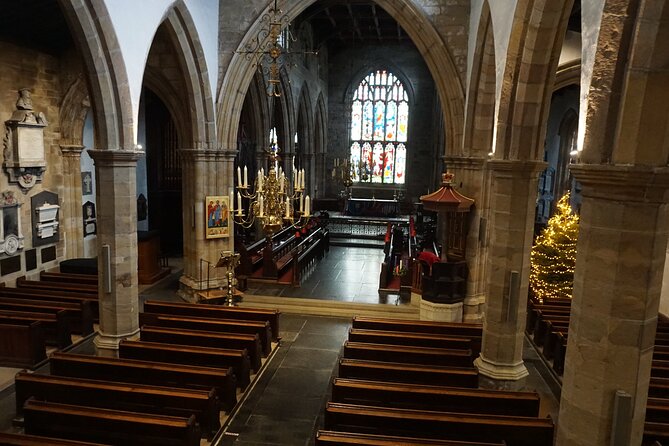
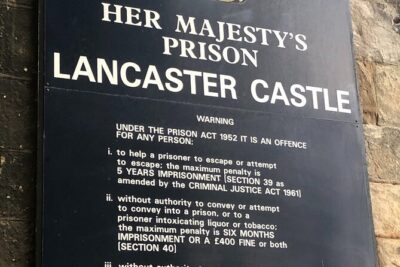
Stop 1 is Lancaster Castle, where the focus is the prison side of the story. You will learn about the castle’s place in history, including famous and lesser-known prisoners, along with trials and executions. It is a heavy topic, but it is handled as part of the city’s real story, not as a spooky roadside distraction.
Time here is about 20 minutes. That is enough to get the big picture and see how this building shaped public life, but not so long that it drags. If you care about how legal systems worked, why punishments were public, and how people moved through the justice process, this is the anchor stop.
Saint George’s Quay: the River Lune and slavery connections
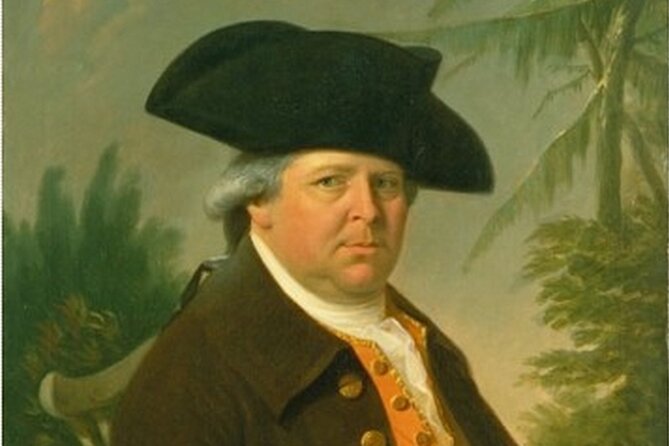
From the castle you head toward Saint George’s Quay on the River Lune. Here the story turns outward, to the eighteenth-century harbour and the area’s ties to the international slave trade. You also get characters connected with this waterfront, which helps the topic feel human and specific.
You spend about 15 minutes at this stop. It is not long, but it is built to give you a clear understanding of how Lancaster fit into larger trading networks, and how geography and docks mattered. If you want to picture ships and cargo rather than just reading about them, this is the moment to let your imagination do a little work.
Judges’ Lodgings: oldest house vibes and witchcraft link
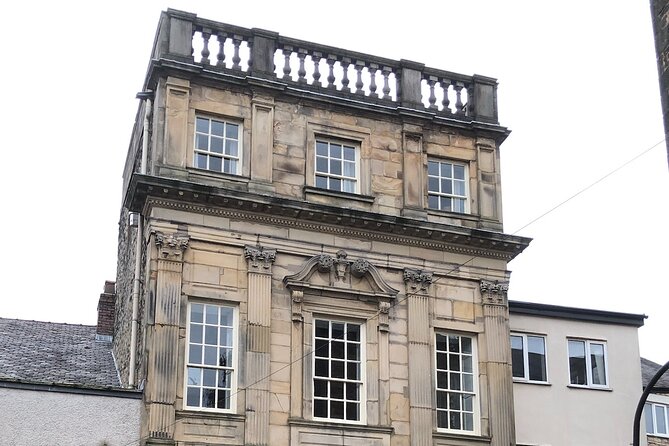
Next up is Judges’ Lodgings, described as the oldest house in Lancaster. In about 10 minutes you will hear who it was owned by, plus its link to witchcraft. That combination sounds odd at first, but that is often how history works, law and fear, authority and rumours, living close together.
This is a quick stop, so it is about orientation and story. If you enjoy tracing power structures, you will get why the building’s role mattered in daily life, not just in official cases.
Church Street prince stories and the missing royal angle
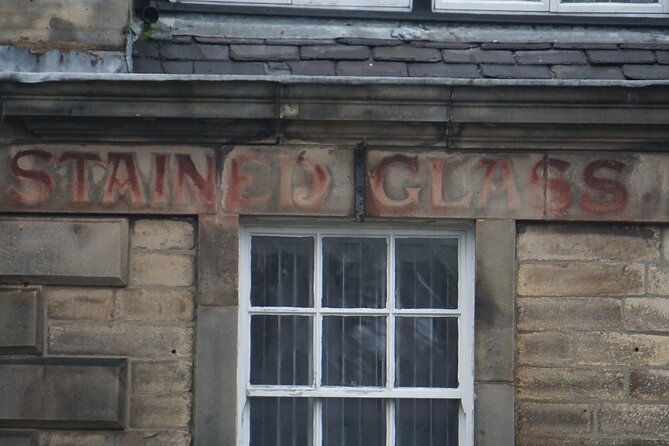
Church Street is one of the playful turns in the route. Here you hear about a prince going missing, plus stories about a potential king of England. Time is about 10 minutes, and it is the kind of stop that gives you a feel for how Lancaster collected myths and political intrigue alongside more formal history.
I like this kind of pacing because it prevents the tour from feeling like a single long lecture. It also gives you threads to pull later when you are reading or walking on your own.
Market Street: two royal tales, one banner, and a lost shoe
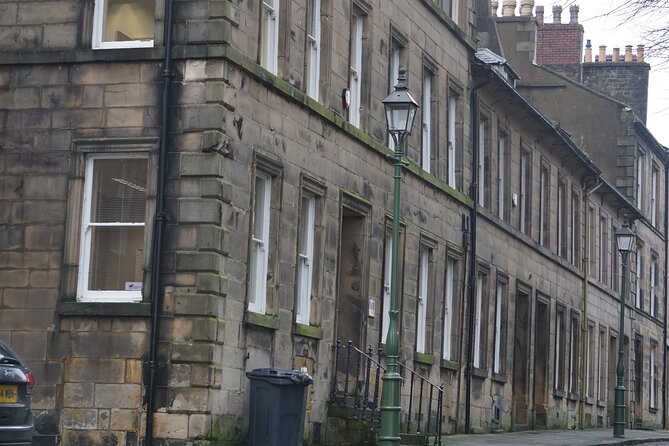
Then you reach Market Street, where the theme is royal stories spread across time. In roughly 10 minutes you will hear about a prince raising the banner, and a separate tale involving another royal and a shoe. It is the sort of odd detail that makes a city feel lived-in.
These short, story-driven stops are also useful if your legs are starting to complain. You get a burst of entertainment, then you move on, all within the same guided rhythm.
Dalton Square: murder, first forensic crime solving, and a bonus
Dalton Square shifts to darker ground again, with a murder story and what gets called a government bonus. This stop also points to the first murder solved by forensic science. It is about 10 minutes, but it packs a lot of meaning into a tight time slot.
If you are interested in how crime investigation changed, this is a great pause. You also get a perspective on the money side of justice, how incentives and rewards shaped who benefited from investigations and outcomes.
Lancaster Canal and White Cross Mill: the Storey Brothers and the canal heyday
At Lancaster Canal, the mood changes. You will hear about the White Cross Mill and the Lancaster Canal, plus the heyday of the canal and the Storey Brothers. Time here is around 10 minutes.
This stop matters because it shows Lancaster not only as a place of punishment and politics, but also as a place of work and movement. Canals were a big part of how goods and people traveled, and the store of stories tied to mills and canal life helps you understand the city’s economic engine.
Penny’s Almshouses: still functioning, and how it was financed
Now you get a more personal, community-facing stop: Penny’s Almshouses. In about 10 minutes, you learn what an almshouse is in practice, who founded it, and how it was financed. The fact it is still functioning today adds weight, because it links historic charity to modern community life.
This is a good counterbalance after the tougher topics. It helps you see Lancaster as a city where care, obligation, and social responsibility existed alongside cruelty and crime.
The Storey: a donations-founded institute that fed the university tradition
The final themed stop is The Storey, an educational institute founded by donations. You will also hear how it became a forerunner of the university tradition in the city. Time is about 10 minutes.
This stop is short, but it gives you a hopeful angle. A city’s legacy is not only what it punished, traded, or feared, it is also what it built for learning and future generations.
Pace, comfort, and smart ways to get more from the guide
This tour is easy to join, and it is designed for most people. Still, you are on your feet and you will do plenty of standing at the stops. Several people noted that the walking is gentle but still tiring at the end, so wear proper shoes and plan for a real little workout.
Cold weather came up in feedback, so bring layers. If you get cold easily, a hat and gloves make a bigger difference than you would think. Also, since the tour depends on good weather, check forecasts and dress like the city will be honest about what it feels like outside.
One practical tip that helps: start with curiosity. When you meet your guide, ask what else you should do once you get back out on your own. The route hits key landmarks, but a good guide will help you decide what to revisit later based on your interests.
Who this walking tour suits best
This is ideal if you are:
- Short on time and want the big Lancaster story in one outing
- Interested in how local places connect to larger world issues, like the slave trade
- Someone who likes stories with real names and real locations, not just broad history
It is also a smart add-on if you are spending time across Lancashire. Instead of treating Lancaster as a stopover, you use a guided walk to build a clear mental map of what shaped the city.
Should you book this Lancaster Execution and Slavery Industry walking tour?
If you like your history grounded in specific places, and you want a guided walk that mixes dark justice stories with dockside trade and canal-era life, this is worth booking. The pricing is reasonable for a three-hour route, and the fact that the stops are marked with admission ticket free helps you feel like your money is going to the guide.
The only reason I would hesitate is if you hate walking or standing for long stretches, because this route is set up for multiple short stops with frequent movement. If your trip timing is flexible, pick a day with decent weather so you can enjoy the full route without rushing or freezing.
FAQ
How long is the walking tour of Lancaster?
It lasts about 3 hours.
What is the price per person?
The price is listed as $20.81 per person.
How many people are in the group?
The tour has a maximum of 20 travelers.
Where does the tour start?
The meeting point is Castle Approach, Lancaster LA1 1YN, UK.
Where does the tour end?
The activity ends back at the meeting point.
Is the tour offered in English?
Yes, it is offered in English.
Do I need an admission ticket for the stops?
The stops are marked as admission ticket free, so you should not need separate paid entry for those parts of the route.
Will I get confirmation when I book?
Yes, confirmation will be received at the time of booking.
What if the weather is bad?
The tour requires good weather. If it is canceled due to poor weather, you will be offered a different date or a full refund.
Can I cancel for a full refund?
Free cancellation is available. You can cancel up to 24 hours in advance for a full refund, and changes within 24 hours are not accepted.
FAQ
Is service animal support available?
Yes, service animals are allowed.
Is the tour near public transportation?
Yes, it is near public transportation.
Is the tour mostly walking?
The format is a walking tour with multiple stops, and you should expect standing around at points of interest.
Is there a minimum number of travelers?
Yes. If it is canceled because a minimum number of travelers is not met, you will be offered a different date or a full refund.
Fresh off the England review pile


Walking Tours, compared.
 ★ 4.7Magical London: Harry Potter Guided Walking TourFrom $2022,044 reviews
 ★ 4.5Underground Vaults Walking Tour in Edinburgh Old TownFrom $338,506 reviews
 ★ 4.7London: The Original Jack the Ripper Walking TourFrom $257,833 reviews
 ★ 5.0Oxford University Walking Tour With University Alumni GuideFrom $416,905 reviews
 ★ 5.0Edinburgh Castle: Guided Walking Tour with Entry TicketFrom $515,540 reviews
 ★ 5.0Edinburgh Castle Guided Walking Tour in EnglishFrom $525,214 reviews
 ★ 5.0Tour for Muggles The Ultimate Harry Potter Walking Tour in LondonFrom $234,684 reviews
 ★ 4.7Oxford: University and City Walking Tour with Alumni GuideFrom $404,429 reviews