
REVIEW · BELFAST TOURS & POLITICAL MURALS
World Famous Belfast City Centre Black Cab/Taxi Tour 2 Hours
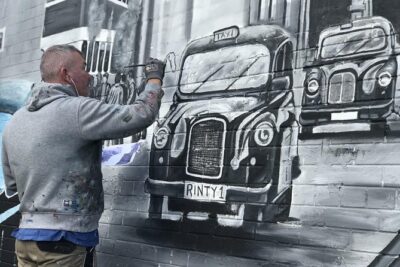
Murals tell Belfast’s hardest stories, fast. On this private black cab tour, you get a street-level lesson on Belfast’s Troubles, with hotel pickup so you spend your energy watching, listening, and making sense of what you see. In about two hours, you’ll ride comfortably through the divided city, spotting murals and peace-wall areas and hearing multiple versions of the history in a way that feels human, not textbook.
The main thing to consider is tone. This is not background scenery, it can feel intense, and the stops are short, so if you want slow, long museum time, you may feel a little rushed. Also, the tour stops are outdoors or quick-entry points, so you should plan on the tour being mostly walking and viewing, not paid admissions.
In This Review
- Key things you will notice on this Belfast black cab route
- Why a private black cab is the best way to read divided Belfast
- Divis Flats (and the Falls Road approach you recognize on screen)
- Bobby Sands Mural on the Falls Road: art that names a struggle
- An 1800s hanging gaol: when the past is still locked into walls
- Divis Street International Mural Wall: why the story expands beyond Belfast
- Shankill Road murals and 12th July: a different community memory
- Clonard Monastery: gothic calm and the peace talks behind closed doors
- Peace Wall on Belfast’s fault line: 1969 and the language of separation
- The guides make the difference: lived perspective, balanced routing
- Price and logistics: what $111.11 gets you in real terms
- Should you book this Belfast black cab Troubles tour?
- FAQ
- How long is the World Famous Belfast City Centre Black Cab/Taxi Tour?
- Is this tour private, or will I share the cab with strangers?
- Do I get hotel or port pickup and drop-off?
- What language is the tour guide using?
- Is WiFi provided on board?
- Are admission tickets included for the stops?
- Is this tour canceled for bad weather?
Key things you will notice on this Belfast black cab route
- Private black cab comfort with WiFi, plus an air-conditioned ride in a tight schedule
- Both sides of the divide in one run, from the Falls Road murals to Shankill Road streets
- Divis Street International Mural Wall, with changing themes like Palestine, Cuba, and Kurdish artwork
- Clonard Monastery and the peace talks, including the role of Father Alex Reid with Gerry Adams and John Hume
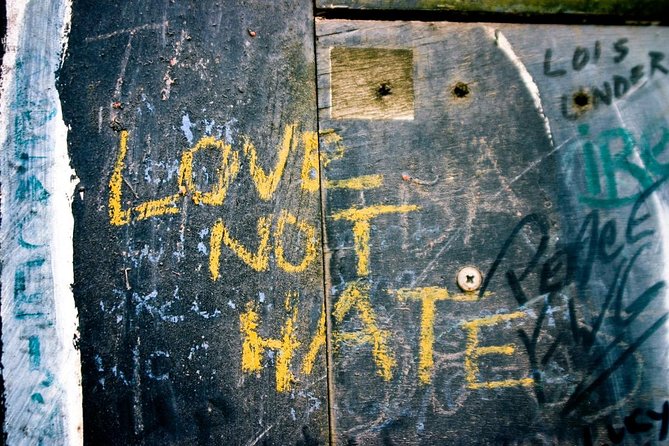
- The Peace Wall built in 1969, plus international messages for peace on the wall
- Short, photo-ready stops, so you can take pictures without feeling stuck for an hour at one corner
More tours run from the back of a cab
- Cab Tours Belfast Famous Black Taxi Tours
★ 5.0 · 3,633 reviews - Private Black Taxi Belfast City Tour
★ 5.0 · 2,188 reviews - Belfast’s Political Mural Taxi Tour
★ 5.0 · 1,180 reviews
Why a private black cab is the best way to read divided Belfast
Belfast’s Troubles are complicated, and they can feel even more confusing when you only catch the headlines or random documentary clips. This tour fixes that problem by using the city itself as the curriculum. In a regular bus stop-start, you get noise and distance. In a private cab, the story has room to land.
You also get a real advantage with timing. A two-hour format sounds tight until you realize that the key sights are close enough for a focused route, but spread enough that you need local navigation. Hotel or port pickup and drop-off means you do not lose time figuring out what side of town you are on. Add WiFi on board and you can kill dead time, check maps, and keep your phone battery alive.
One more practical plus: the route is designed around looking, not just driving. You will get out at multiple stops, usually long enough for a few photos and a clear explanation, then get back in and move to the next scene.
Divis Flats (and the Falls Road approach you recognize on screen)
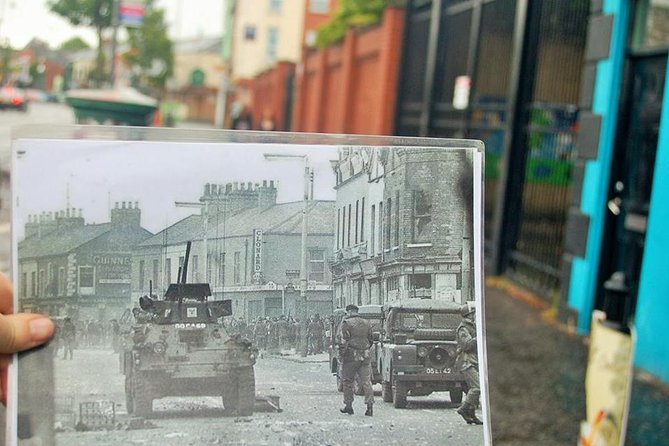
You start at Divis, where the physical layout already tells a story. Divis flats were used as a British Army base, with the top two floors occupied starting in 1969, and staying for more than 25 years. That matters because it explains why certain streets feel watched, pressured, and politicized in a way that is hard to understand from afar.
Your cab also threads through narrow streets connected to film, including The Name of the Father. That is a clever detail because it helps you connect media you may have seen to real geography. This stop is about atmosphere and context more than any single landmark.
A good expectation to set: this is mostly time outside for short viewing and then back into the cab. If you like taking photos, bring a phone strap or keep your camera ready, because the streets can look great in tight corners and alley angles.
Bobby Sands Mural on the Falls Road: art that names a struggle
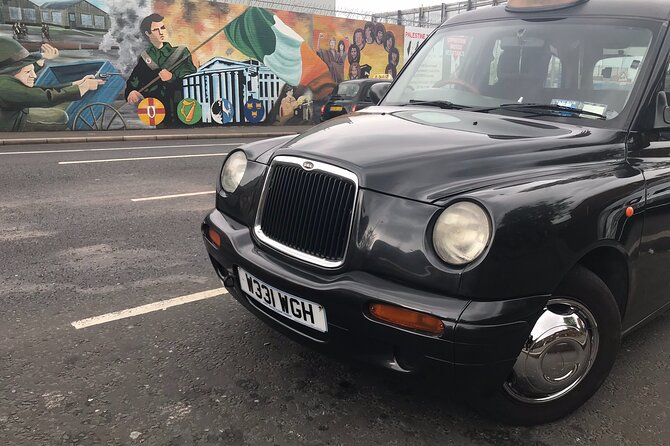
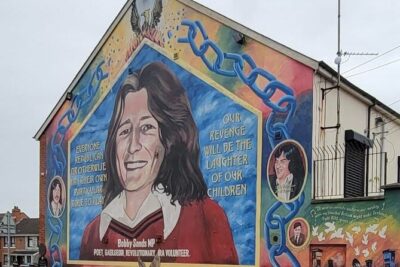
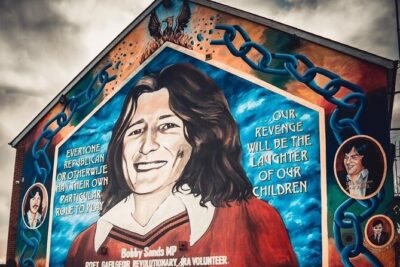
Next comes the Falls Road area, a major center for Republican history. You will see the world-famous Bobby Sands mural, tied to the birth place of the Provisional Irish Republican Army. The lesson here is not just who and when. It is the way communities preserve identity in public space.
You’ll learn how murals were painted by local people to explain the plight of the Catholic community, and you’ll also get the scale of the Falls Road, described as several miles long. That length is important. It means the conflict is not something that happened at one point in time. It shaped daily life across an entire corridor of neighborhoods.
This stop is also where the tour’s “multiple versions” of the Troubles can start to make sense. Even when your guide is presenting one clear narrative, you are still seeing material evidence that reflects a particular community memory. If you pay attention, you start to understand why people on different sides remember the past differently.
Tip for making this stop land: take a minute before you snap pictures. Look first, then listen. The explanations connect specific details in the artwork to real locations and lived experience.
Other Belfast tours, city and political
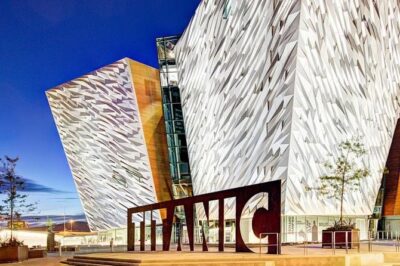
- Titanic Belfast Entrance Ticket: Titanic Visitor Experience Including SS Nomadic
★ 4.5 · 3,698 reviews



An 1800s hanging gaol: when the past is still locked into walls
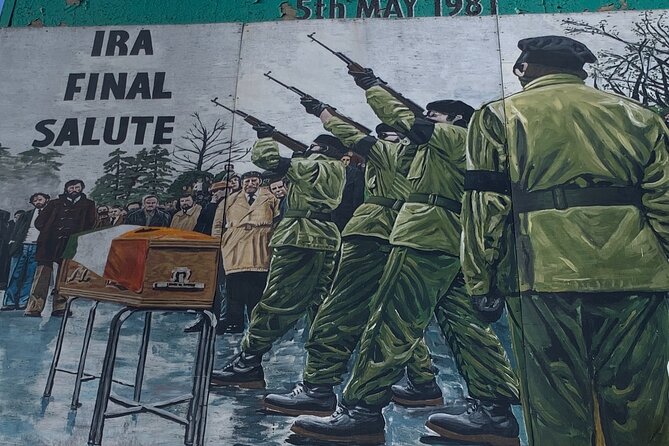
After the mural stop, you visit a prison site described as built in the 1800s and used as a hanging gaol. This matters because prisons are not just buildings. They become part of political mythology, recruitment stories, and family histories.
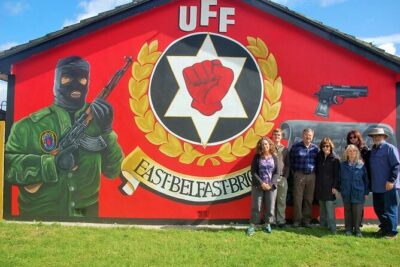
You will hear that this jail housed some of the most famous groups named as IRA, UVF, UFF, and INLA, and that it closed in the 1990s when prisoners were released due to the Good Friday agreement.
Even if you do not consider yourself a history person, prison history often gives you the emotional key to why the conflict intensified and why it took so long to soften. You are also getting an anchor event, the Good Friday agreement, which comes up repeatedly in later explanations, including in the peace-talk segment at Clonard.
This stop is a reminder to keep your expectations realistic. Two hours can cover many blocks of time, but the emotional weight here is real. If you are sensitive to heavy topics, take a breath, slow down, and give yourself a second before moving on.
Divis Street International Mural Wall: why the story expands beyond Belfast
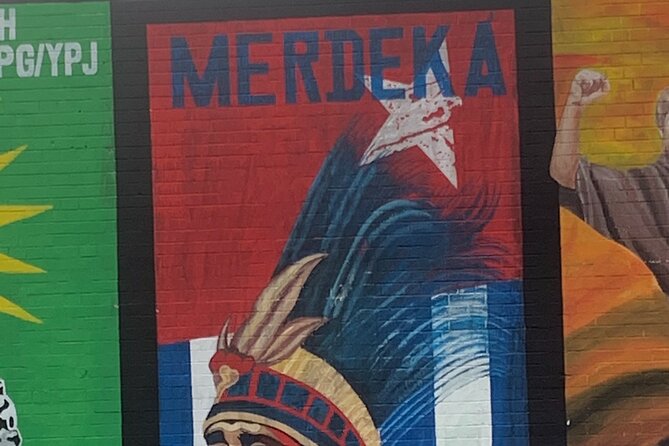
Then you head to the International Mural Wall on Divis Street. This is the part of the tour that can surprise people because it shows how Belfast’s mural culture did not stay trapped inside one neighborhood narrative.
You’ll see that the wall features over 40 murals that change monthly, with themes including Palestine, Cuba, and the Kurdish issue. Your guide will explain the connection of these international murals with Republican ideas and how protest art travels across borders.
This stop is valuable for a simple reason: it helps you stop thinking of The Troubles as a closed chapter. The tour nudges you to understand it as a living political language that still connects to global events.
Practical tip: because murals can change, your exact artwork might not match another person’s photos from online. That is normal. The point is the concept, not that one specific painted face must appear in your camera roll.
Shankill Road murals and 12th July: a different community memory
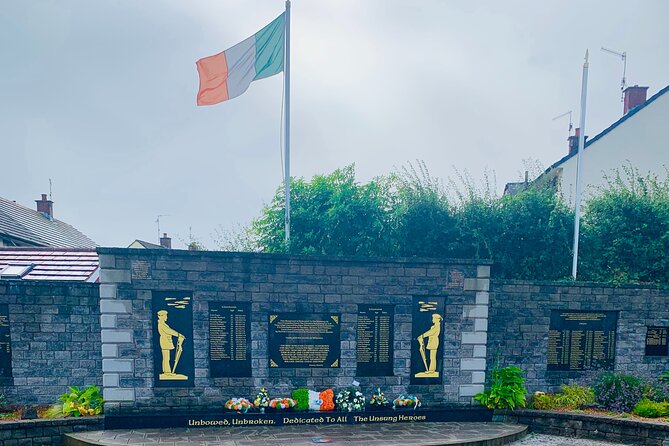
The route moves to Shankill Road, described as the heart of loyalism and associated with the birth place of the UDA and UVF. The lesson here gives you the other side of the street-level story. You’ll see murals and hear about bonfires around 12th July and the stated plight of the Protestant community and their fight against the IRA.
This is a key moment for anyone who came in with one-sided assumptions. You cannot fully understand the peace walls and the city’s division without grasping that loyalist communities built their own symbols, fears, and commemorations too.
One drawback to note, just so you go in prepared: if you are searching for a single neutral storyline, the route will not feel neutral. Even when the guide tries to be balanced, the materials on the street come from different communities with different definitions of justice. Treat it as learning how people remember, not as hunting for one correct version.
If you want maximum understanding, listen for how your guide connects the murals to geography. The streets are not random. They are part of why each community feels exposed or defended.
Clonard Monastery: gothic calm and the peace talks behind closed doors
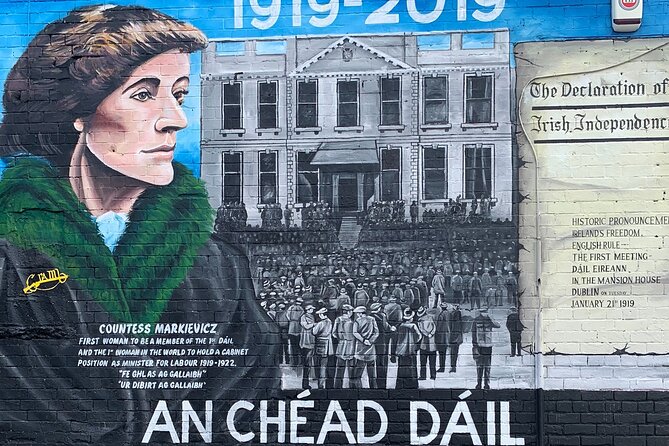
Clonard Monastery is a tone shift. You get a gothic monastery created by Italian craftsmen and locals, and the surroundings feel quieter than the major street corners. But the meaning is still political.
This is also where Father Alex Reid hosted secret peace talks between Gerry Adams and John Hume. That detail is powerful because it shows you that peace was not only signed at a distance. It was negotiated with real people in real rooms.
It helps to know why monasteries show up in this story. In Belfast, religious spaces can become meeting places, organizing hubs, and public moral symbols. Here, you are seeing that the peace process used all kinds of channels, not just formal government meetings.
Time at this stop is short, so focus on two things: the setting and the explanation. The building creates a mental pause, and the story gives that pause a reason.
Peace Wall on Belfast’s fault line: 1969 and the language of separation
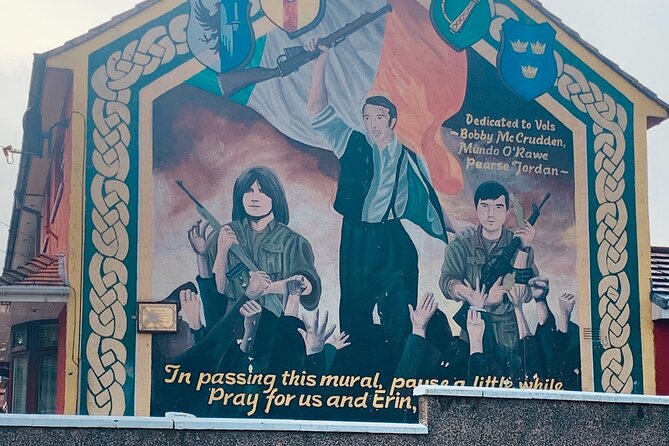
Finally, you reach the Peace Wall, a set of famous peace walls that stretch through Belfast. The tour explains that the walls were built in 1969 to keep loyalist and Republican communities apart.
That year matters because it marks how formalized separation became. It also helps explain why murals and memorials cluster around certain areas, why streets feel like boundaries, and why crossing lines can be emotional or even dangerous in different eras.
Your guide also points out quotes on the wall, including messages for peace associated with President Clinton, Tiger Woods, and Morgan Freeman. That part can feel odd at first, like the Troubles have now been translated into pop-culture and celebrity messaging. But it is also a lesson in how the world learned the story and how the idea of peace became shareable.
If you want to take something away, let it be this: peace walls are not just barriers. They are also reminders. They show both the need for safety and the cost of living with division.
The guides make the difference: lived perspective, balanced routing
Across the experience, the strongest feedback centers on the guides. Many people highlighted that they felt personal stories made the streets connect to events they had only heard about on the news.
You might hear narration shaped by lived experience and the kind of storytelling associated with guides such as Ricky, Brendan, Patrick, Davy, John R., Sean Mc., Kevin, George, and Jerry. The common thread is clarity plus human detail. People often come away feeling the tour connected the dots between what they saw on TV in the 70s, 80s, and 90s and the actual names of streets and neighborhoods.
Also, the tour route itself forces a more complete picture than you would get with a purely one-neighborhood approach. You see Republican-associated sites on the Falls Road side, loyalist-associated sites on Shankill Road, then move to the peace process at Clonard and the visible barrier at the peace walls.
Still, one consideration: a couple of accounts mentioned frustration when the tour time felt more opinion than sightseeing. That is why it helps to book with realistic expectations. You are paying for interpretation, not just a checklist of photo ops.
Price and logistics: what $111.11 gets you in real terms
At about $111.11 per person for roughly two hours, you are not buying a sightseeing bargain. You are paying for three things that usually cost more in Europe if you try to assemble them yourself: a private guide, a private black cab, and pickup plus drop-off.
If you are two or more people, private transport usually feels more reasonable because you are not splitting the cost across random strangers. Also, you avoid the hassle of figuring out which streets you can and cannot walk safely in different contexts. The tour does that navigation for you, and it does it with a local who can answer questions on the spot.
A small caution from real-world experience: some people ran into confusion over port charges. The tour includes port pickup and drop-off, but if you are arriving via cruise ship or a port, it’s wise to confirm that any port-related fees are truly covered in your booked total. If something costs extra, you want that clarity before you show up and start arguing with a timer running.
Finally, remember the weather requirement. You will spend time outside. In good conditions, it feels like an efficient city lesson. In rough weather, you might want to keep your coat ready and accept that the experience will be a bit less photo-friendly.
Should you book this Belfast black cab Troubles tour?
Book it if you want a fast, street-level understanding of Belfast’s division, and you’re open to hearing hard stories. The route hits the places that show up in the Troubles conversation, from Falls Road murals to the Shankill Road context, then balances it with peace-talk history and the Peace Wall built in 1969. If you care about context, this is one of the best ways to get it in a two-hour window.
Skip it if you want a light, feel-good highlights loop. This is emotional by design, and it asks you to sit with the meaning behind murals, boundaries, and prison history. If you do decide to go, go prepared: wear comfortable shoes, bring your camera, and give yourself permission to feel something.
FAQ
How long is the World Famous Belfast City Centre Black Cab/Taxi Tour?
It runs for about 2 hours.
Is this tour private, or will I share the cab with strangers?
This is a private tour/activity. Only your group will participate.
Do I get hotel or port pickup and drop-off?
Yes, pickup and drop-off are included, including hotel or port pickup and drop-off.
What language is the tour guide using?
The tour is offered in English.
Is WiFi provided on board?
Yes, there is WiFi on board.
Are admission tickets included for the stops?
Admission tickets are not included at the listed stops.
Is this tour canceled for bad weather?
Yes, it requires good weather, and if it is canceled due to poor weather you will be offered a different date or a full refund.
Belfast: City, Murals, History
- Titanic Belfast Entrance Ticket: Titanic Visitor Experience Including SS Nomadic★ 4.5 · 3,698 reviews
- Cab Tours Belfast Famous Black Taxi Tours★ 5.0 · 3,633 reviews
- A History of Terror – Belfast City Centre Walking Tour★ 5.0 · 2,883 reviews
- Game of Thrones and Giant’s Causeway Full-Day Tour from Belfast★ 5.0 · 2,291 reviews
Seen From a Black Cab
- Cab Tours Belfast Famous Black Taxi Tours★ 5.0 · 3,633 reviews
- Private Black Taxi Belfast City Tour★ 5.0 · 2,188 reviews
- Belfast’s Political Mural Taxi Tour★ 5.0 · 1,180 reviews
- Belfast black taxi tours★ 5.0 · 1,166 reviews
Fresh off the Belfast review pile

Belfast Tours & Political Murals, compared.
 ★ 4.8Giants Causeway, Dark Hedges, Dunluce & Belfast TourFrom $1128,843 reviews
 ★ 4.5Titanic Belfast Entrance Ticket: Titanic Visitor Experience Including SS NomadicFrom $373,698 reviews
 ★ 5.0Cab Tours Belfast Famous Black Taxi ToursFrom $1003,633 reviews
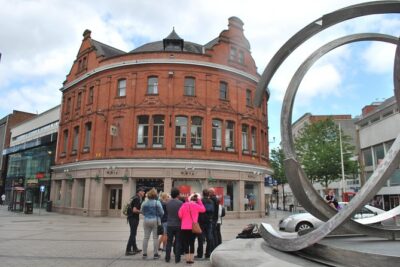 ★ 5.0A History of Terror – Belfast City Centre Walking TourFrom $362,883 reviews
 ★ 5.0Game of Thrones and Giant’s Causeway Full-Day Tour from BelfastFrom $482,291 reviews
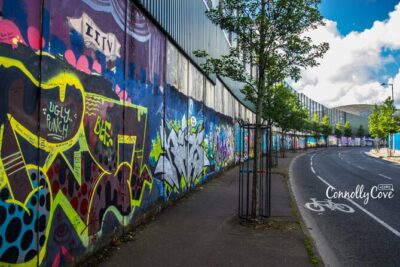 ★ 5.0Private Black Taxi Belfast City TourFrom $1102,188 reviews
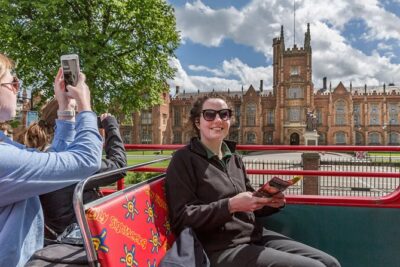 ★ 4.5City Sightseeing Belfast Hop-On Hop-Off Bus TourFrom $132,012 reviews
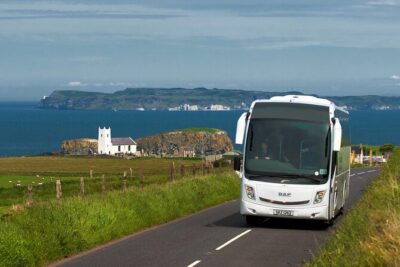 ★ 5.0Giants Causeway & Castles Tour from Belfast: Guided tourFrom $331,432 reviews