
REVIEW · BRISTOL, GLASTONBURY & THE WEST COUNTRY
Bristol: Air Raid Shelter & St. Nicholas Market Walking Tour
Bristol hides a shelter under your feet. This Bristol Air Raid Shelter and St Nicholas Market walk takes you from old trade streets to a WWII underground air raid shelter you cannot easily access on your own. Along the way, your guide in full WW2 costume stitches together what the city looked like before the bombings, what survived, and how Bristol kept changing.
I especially love the two-part structure here: first the story walk around the Corn Exchange area, then the time underground where the shelter feels preserved rather than staged. I also like that you finish above ground with St Nicholas Market and time to grab sweet and savory snacks on your own, plus the chance to browse for small souvenirs.
One key consideration: this is a subterranean experience, and the tour is not suitable for people with claustrophobia or mobility impairments.
In This Review
- Key highlights you should care about
- Meeting at the Corn Exchange, then walking through Bristol’s long trade story
- The WW2 air raid shelter experience, what it feels like underground
- The Corn Exchange angle: exclusive access beyond the lobby
- WWII lessons and the Blitz story you can actually picture
- 1960s music rooms and why that matters after the Blitz
- St Nicholas Market: where the tour turns into snacks and browsing
- Price and value: $16 is what you’re really paying for
- Guide style, pacing, and who this suits best
- Practical tips before you go underground
- Should you book the Bristol Air Raid Shelter and St Nicholas Market tour?
- FAQ
- Where does the tour start?
- How long is the tour?
- How much does it cost?
- Is the tour guided and in English?
- What is included in the ticket price?
- Do I have to pay for food and drink?
- Where do you end the tour?
- Is the tour suitable for people with mobility impairments?
- Is the tour suitable for people with claustrophobia?
- Can I cancel and get a refund?
Key highlights you should care about
- WWII access under the Corn Exchange: Bristol’s only subterranean tour, with entry to the air raid shelter
- A guide in WW2 costume: the storytelling is part history lesson, part live character performance
- Blitz damage and trading streets: see and understand the old-city layers that shaped Bristol over centuries
- Rooms linked to the 1960s music scene: you’ll hear about the kind of nights Bristol bands rocked
- St Nicholas Market time: shop and snack in the covered market where you can pick sweet or savory treats
- Margaret the ghost may pop up: some groups get a photo moment tied to the ghost story
More of Bristol and the West Country
- Blackbeard to Banksy – The Ultimate Walking Tour of Bristol
★ 5.0 · 1,961 reviews - Bristol: Blackbeard to Banksy Guided Walking Tour
★ 4.9 · 1,422 reviews - From Bristol: Stonehenge and Cotswold Villages Day Tour
★ 4.8 · 717 reviews
Meeting at the Corn Exchange, then walking through Bristol’s long trade story
Your tour starts at the main entrance of the Corn Exchange. That matters more than it sounds. This building sits right where commerce once pulled people into the city, and it becomes the launch pad for the tour’s central idea: Bristol is a stacked city. Even when you stand above ground, you’re walking through layers of centuries.
From there, you head into the old streets around the Corn Exchange area. Your guide connects visible architecture to what was going on in the city’s trading days, moving from ancient origins through to more recent eras. You’re not just looking at pretty stone and old shopfronts. You’re learning why Bristol became important in the way it did, and how that past shaped what the city experienced in the 20th century.
Then the story tightens as you approach WWII-era themes. You’ll see signs tied to the Blitz and talk about how German air raids affected Bristol, especially around the Corn Street and nearby areas. This is one of the best uses of a walking format: your feet keep you moving, so the history never becomes a lecture in one spot. You also get a clearer sense of scale. Bombing damage and rebuilding are easier to grasp when you can see how streets actually connect.
Practical tip: plan on good walking time between viewpoints and photos. Comfortable shoes are the main requirement, and it really is. Cobblestones and uneven sections around older city streets can make slick soles a bad idea.
The WW2 air raid shelter experience, what it feels like underground
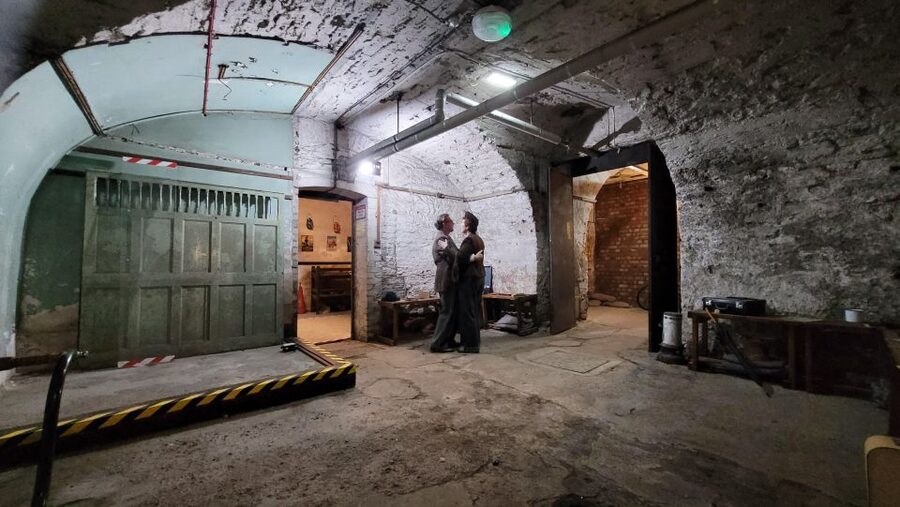
The real hook is what happens after you walk the streets. Your guide leads you beneath the city for a tour of Bristol’s biggest public air raid shelter. This is where the tour earns its reputation. You get entry to the shelter itself, plus the kind of behind-the-scenes access that usually stays off-limits.
The shelter is presented as a time capsule that has not been transformed into a modern showpiece. That can be refreshing if you’re tired of museum-speak. Instead, you’ll hear the stories tied to wartime conditions and the practical reality of what it meant to be underground during the raids.
You’ll learn how the shelter functioned, who used it, and what daily life could feel like when the sky was the threat. Your guide keeps things animated, and if you’re booking for entertainment value, you’ll probably be happy. Several guides associated with this tour, including Owen and Duncan, are noted for keeping the group engaged through energetic storytelling and clear delivery.
One charming detail: the tour may include the ghost story of Margaret. In one case, a group even got a photo moment related to Margaret. Even if you do not treat the ghost part as literal, the character adds a bit of theater to a serious setting, which can make the information easier to remember.
What to expect physically: this is underground. The tour is not suitable for people with claustrophobia, and it is also not recommended for people with mobility impairments. If that applies to you, do yourself a favor and choose a different Bristol history tour that stays above ground.
The Corn Exchange angle: exclusive access beyond the lobby
Another thing I like about this tour is that it treats the Corn Exchange as more than just a meeting point. You get entry to exclusive areas of the Corn Exchange, which helps connect the above-ground building to the underground story.
That “inside” access makes the tour feel more complete. Instead of you arriving, walking outside, and then disappearing underground with no tie-in, you get a sense that the building is part of the city’s working life and part of its survival story too. It also helps you understand why the shelter sits where it does and how the area’s role changed over time.
If you’ve visited Bristol and thought the Corn Exchange looked striking but never got a reason to linger, this tour gives you a reason to look closer. You’ll be thinking about function, crowds, and the way people moved through the space.




WWII lessons and the Blitz story you can actually picture
The tour uses the streets to make the Blitz understandable. You don’t get a vague overview of air raids that could fit any city. You get Bristol-specific details that help you picture the impact, especially around the Corn Street and surrounding areas.
This is also where the cost starts making sense. At $16 per person, you’re paying for more than a walk and a few facts. You’re paying for guided access to a shelter that many people never knew existed, plus the structured way your guide links wartime events to what you can see in the city today.
The storytelling also matters. Multiple people mention how committed guides are to the project and how the experience feels authentic, not manufactured. That tends to happen when a guide cares about accuracy and the human side of the story, not just delivering a script.
1960s music rooms and why that matters after the Blitz
Here’s a twist that I find smart: the tour does not stop at WWII. You’ll also see rooms connected to the 1960s music scene, including references to bands like the Rolling Stones.
That might sound random at first. But it actually reinforces the tour’s big theme: Bristol did not freeze in 1940-something. After the war, the city changed again. Music spaces, gathering spaces, and everyday culture returned, and that return is part of the story too.
So while you’re underground learning about survival, you’re also being shown how Bristol’s identity evolved. The tour helps you see the city as a timeline instead of disconnected chapters. That is one reason this tour can work for both history lovers and people who just want something different from the standard attractions.
St Nicholas Market: where the tour turns into snacks and browsing
After you go underground and cover the old-city story, you finish at St Nicholas Market. This is your chance to shift gears without leaving the day behind.
The market time is practical and flexible because food and drink are not included. You can choose what suits you, whether you want something sweet or something savory, and you can adjust your pace based on how hungry you feel. There’s also room for browsing, picking up small souvenirs, and taking a break.
I like that this part of the day stays with you as a real-world setting. Market wandering gives you a sense of what Bristol feels like right now, which helps the WWII material land better. You’re not just learning about the past in a bubble, you’re finishing where people actually go to eat and shop.
Keep in mind: the tour does not promise a sit-down meal. It’s more of a guided transition into market time, and you’ll likely spend the last stretch making your own food choices.
Price and value: $16 is what you’re really paying for
At $16 per person for a 75 minutes to 2 hours experience, the price looks good on paper, but the real value is in the access.
Your ticket includes:
- a guided tour
- entry to the WWII air raid shelter
- entry to exclusive areas of the Corn Exchange
- the guided walk that connects the city’s long timeline
Food and drink are not included, so yes, you’ll likely spend extra once you’re in the market. But that’s also part of why the cost stays reasonable. You’re not paying a bundled cost for meal choices you might not want.
If you’re the kind of traveler who enjoys “only I can do this here” experiences, the subterranean access is the core draw. Most city tours talk about wartime events from above. This one gives you the underground setting, and that changes how the story lands.
Also, the price is low enough that you can justify doing this even if you already have other Bristol activities booked. It’s a short block of time with a unique payoff.
Guide style, pacing, and who this suits best
This tour lives or dies on the guide. The experience is built around performance-style storytelling, with guides in WW2 costume guiding you through both streets and the shelter.
In the feedback you’ll see names like Owen, Duncan, and Theresa. Across those mentions, the common thread is engagement: guides keep the group entertained while staying on-topic. People also highlight that the tour length feels right for a couple of hours, with a pacing that works for a mixed age group.
That makes it a good pick if:
- you like history that feels human, not just dates and names
- you want an unusual Bristol experience beyond churches and viewpoints
- you enjoy tours where the guide clearly cares about the subject
- you are comfortable with a physical walk and a visit underground
It may not fit you if:
- you need step-free, accessible routes (mobility impairments are listed as not suitable)
- you get uncomfortable in tight or underground spaces (claustrophobia is listed as not suitable)
- you have weight limits listed for the experience (people over 300 lbs, 136 kg, are listed as not suitable)
- you are over 95 years (age over 95 is listed as not suitable)
If you’re traveling with teens or older kids who like “real places with stories,” this is the kind of tour that can turn a textbook topic into something you can picture.
Practical tips before you go underground
Here are the only prep details that really matter, based on what the tour requires.
- Wear comfortable shoes. You’ll be walking before and after the shelter portion.
- Expect the shelter to be an underground space. The tour explicitly is not suitable for claustrophobia.
- Dress for comfort. Even if Bristol feels mild above ground, underground areas can feel different once you’re inside.
Also, plan your day so you’re not rushing at the end. The tour ties into lunchtime, and you’ll likely want that St Nicholas Market time to actually eat, not just grab a quick snack.
For the tour language, it’s English. If you need another language, you’ll want to confirm in advance, since the info provided here lists only English.
Should you book the Bristol Air Raid Shelter and St Nicholas Market tour?
Book this tour if you want one of Bristol’s most unusual experiences: a WWII air raid shelter visit plus a city history walk, then market time above ground. The $16 price feels fair for the included access, and the guide-led storytelling is a big part of why it works.
Don’t book it if you have claustrophobia, mobility limitations, or the listed size or age considerations. For everyone else, it’s a smart use of time. You’ll leave with a clearer picture of how Bristol changed, not just what happened in one year.
If you’re choosing between a standard city highlights tour and something with a real sense of place, this one gets the nod. You’re stepping into a part of Bristol most people never see.
FAQ
Where does the tour start?
Meet at the main entrance of the Corn Exchange.
How long is the tour?
The tour duration is listed as 75 minutes to 2 hours.
How much does it cost?
The price is listed as $16 per person.
Is the tour guided and in English?
Yes, it is a live guided tour and the guide language is English.
What is included in the ticket price?
The tour includes a guided tour, entry to the WWII air raid shelter, and entry to exclusive areas of the Corn Exchange.
Do I have to pay for food and drink?
Food and drink are not included. You can purchase snacks and drinks at St Nicholas Market during your market time.
Where do you end the tour?
The drop-off locations are listed as St Nicholas Market and the Corn Exchange.
Is the tour suitable for people with mobility impairments?
No, the tour is not suitable for people with mobility impairments.
Is the tour suitable for people with claustrophobia?
No, the tour is not suitable for people with claustrophobia.
Can I cancel and get a refund?
Yes. Free cancellation is available up to 24 hours in advance for a full refund.
Bristol, Glastonbury and Beyond
- Blackbeard to Banksy – The Ultimate Walking Tour of Bristol★ 5.0 · 1,961 reviews
- Bristol: Blackbeard to Banksy Guided Walking Tour★ 4.9 · 1,422 reviews
- From Bristol: Stonehenge and Cotswold Villages Day Tour★ 4.8 · 717 reviews
- West Country Games – the most popular group activity in the South West!★ 5.0 · 315 reviews
Fresh off the Bristol review pile




Bristol, Glastonbury & the West Country, compared.
 ★ 5.0Blackbeard to Banksy – The Ultimate Walking Tour of BristolFrom $181,961 reviews
 ★ 4.9Bristol: Blackbeard to Banksy Guided Walking TourFrom $171,422 reviews
 ★ 4.8From Bristol: Stonehenge and Cotswold Villages Day TourFrom $120717 reviews
 ★ 5.0Shepton Mallet Prison – Entry TicketFrom $20478 reviews
 ★ 5.0West Country Games – the most popular group activity in the South West!From $62315 reviews
 ★ 5.0The House Magicians’ Comedy Magic Show at Smoke & Mirrors in Bristol (Sat 7pm)From $35296 reviews
 ★ 5.0Ghosts, Ghouls & Gallows :The Original Bristol Ghost WalkFrom $27262 reviews
 ★ 5.0Only Fools and Horses Tour of BristolFrom $48253 reviews